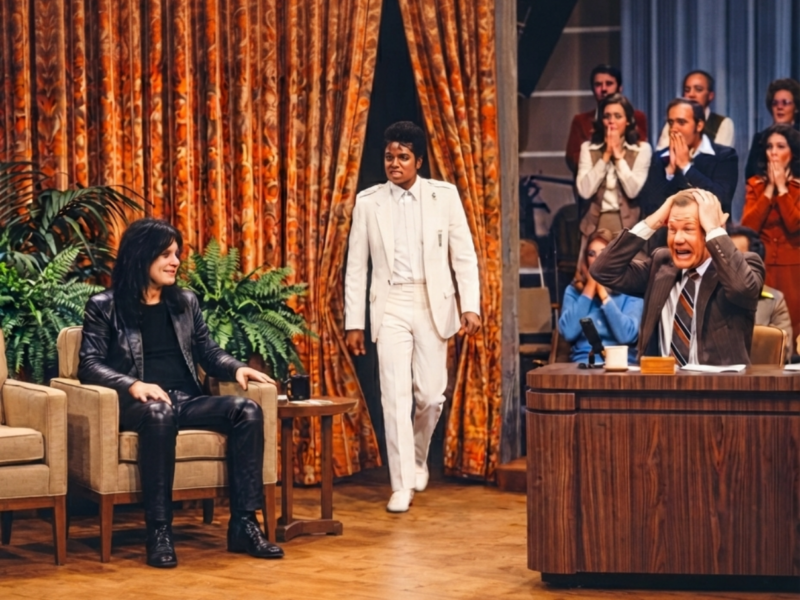
Ozzy Told the TRUTH About Michael Jackson on TV—Michael Walked On Stage and Nobody Expected THIS.
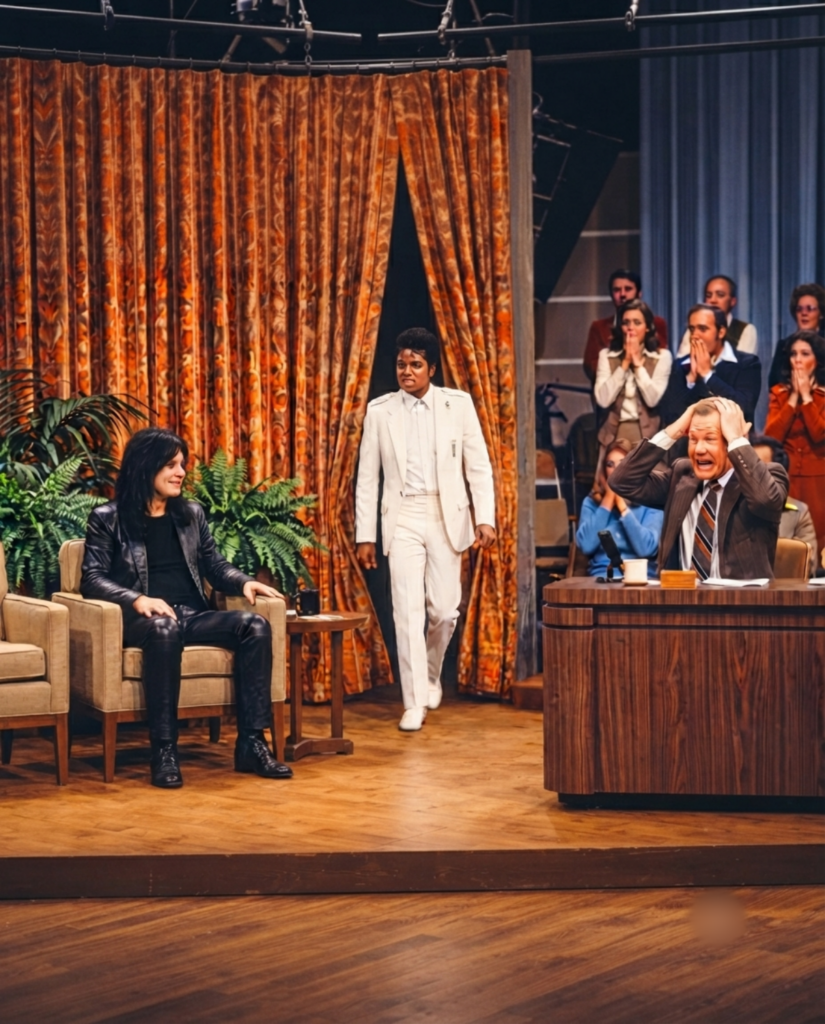
The Tonight Show with Johnny Carson.
NBC Studios, Burbank.
October 1983, 11:38 p.m. Pacific time.
Forty-two million people watching what they believed would be a routine Thursday night broadcast.
Ozzy Osbourne was there promoting his new solo record, still riding the strange, chaotic wave of a career that had somehow survived Black Sabbath, survived every headline written about him, and turned into something even bigger on his own.
Johnny Carson had his usual list of prepared questions.
Everything felt entirely normal.
Nobody knew that four floors below the studio, in a private room reserved for network executives, Michael Jackson was wrapping up a late meeting with CBS Records about the rollout for the next singles off Thriller.
Nobody knew he’d asked for a small television to be wheeled in so he could catch part of the broadcast while he waited.
Nobody knew that within fifteen minutes, one of the most talked-about moments in the show’s history was about to unfold.
If this story is already pulling you in, go ahead and hit that subscribe button right now.
Ozzy sat on the couch in a loose black shirt, sunglasses pushed up into his hair, more subdued than his stage persona but still carrying that restless, unpredictable energy that made people lean forward whenever he opened his mouth.
He’d done enough interviews by that point to know how the game worked.
Mostly.
Though he never quite played it the safe way other guests did.
Johnny liked that about him.
Liked that you never knew exactly what was going to come out next.
Tonight, for reasons that would become clear soon enough, Johnny decided the moment felt right to push a little.
Ozzy, Johnny said, you’ve built this whole career on being the guy nobody expected to make it this far.
Started in Sabbath, wrote some of the heaviest music anybody’s ever heard, and now here you are, bigger than ever on your own.
I’m curious what you make of the other end of the spectrum right now.
Somebody like Michael Jackson.
Biggest thing in music.
Full stop.
You two couldn’t be further apart.
Ozzy considered the question, scratching at his jaw a second before answering.
Kid’s got a gift.
I’ll say that straight out.
Best mover in this business.
Maybe ever.
But Johnny prompted, sensing there might be more underneath the polite answer.
Ozzy paused a moment, something working behind his eyes.
But I think there’s a difference between what he does and what real rock and roll is supposed to do.
His stuff, it’s built for everybody.
Built so nobody’s ever uncomfortable listening to it.
Mine, whatever you think of it, it’s built to make you feel something a little dangerous.
A little unsafe.
I don’t think that boy’s ever made anybody feel unsafe in his life.
The audience chuckled, sensing something building but not yet certain what.
You think his music’s too safe? Johnny asked directly.
I think it works for what it is, Ozzy said.
Pop music’s supposed to make you dance.
Supposed to make you happy.
Nothing wrong with that.
But there’s something in rock and roll, something real and messy and a bit frightening, that I don’t think that whole polished world he lives in got any room for.
If you’re enjoying the story so far, hit that like button before we continue.
Johnny leaned forward slightly, sensing the temperature of the conversation shifting.
That’s a fairly direct thing to say about the biggest recording artist in the world right now.
Ozzy shrugged, unbothered.
It’s honest.
Kid’s a genius when it comes to a beat, when it comes to moving his body.
Nobody’s arguing that.
But sometimes I think all that choreography, all them videos with a hundred dancers and a story built around every single song, sometimes I think it’s a way of never actually having to be alone up there.
Never having to just stand still and see if the song holds up without the whole circus around it.
That’s a strong statement, Johnny said.
It’s just true, Ozzy said.
Look, I think that boy’s voice is a genuine gift.
Something not many people get handed.
But there’s something almost too controlled about it now.
Like the whole point’s making sure nothing ever goes wrong.
Nothing ever gets messy.
Nothing ever actually costs him anything to sing.
The audience had gone quiet, sensing this had crossed from playful commentary into something with real edges.
Have you ever met him? Johnny asked.
Once, briefly, at some awards thing, Ozzy said.
Might be interesting to see if he could actually get up on a stage with nothing built around him and just sing something raw.
Or if the whole machine’s the only thing holding the voice up at this point.
Someone in the audience gasped audibly.
This story is about to take a turn nobody expected.
You think he’s incapable of doing something stripped down? Johnny asked, clearly trying to give Ozzy an opening to soften the statement.
I think he’s never had to, Ozzy said.
There’s a difference between not being able to and never being asked.
That boy’s been performing since he was a little kid, with a whole family and then a whole label building the show around him every single step of the way.
That’s not his fault.
That’s just how it happened for him.
But it means I don’t know if the world’s ever heard him without something huge propping him up.
Rock and roll, you strip all that away and see what’s left.
I don’t think pop music ever asks that question of anybody.
Johnny sat back slightly.
That’s going to get some attention, Ozzy.
I’m not saying anything I haven’t thought a good while, Ozzy said.
Just haven’t had anybody ask me straight out before.
Four floors down in that quiet meeting room, Michael Jackson sat with a cup of tea in his hand, half paying attention to the monitor playing in the corner while the label executives continued their conversation about which single to push next.
Then he heard his own name mentioned and his attention shifted entirely.
He watched as Ozzy continued, unbothered by the weight of what he was saying.
You know what I find interesting? Ozzy continued.
People act like all that production around a pop star is proof of how big they’ve become.
All them dancers.
All them special effects.
Everything mapped out to the second.
And it’s not proof of talent.
It’s proof of how much money’s riding on making sure nothing ever surprises anybody.
That’s not rock and roll.
Rock and roll is supposed to scare you a little.
Michael’s jaw tightened.
One of the executives noticed the shift in his expression.
Michael, you all right?
Michael didn’t answer immediately, his eyes fixed on the small screen.
If this story is teaching you something already, don’t forget to hit that like button.
On screen, Johnny pressed further.
So if you’re saying his approach doesn’t leave room for real risk, what would you consider real risk in a performer?
Somebody who can stand up on a stage with nothing but his own voice and see if it actually holds up, Ozzy said.
Somebody who’s willing to fail in front of people because that’s the only way you find out if there’s really something there underneath all the polish.
I don’t think that boy’s ever risked failing in front of anybody.
Everything he does is built so it can’t fail.
Michael set his cup down on the table, the sound sharp enough that both executives looked up.
Michael, one of them said carefully.
You want us to turn that off?
No, Michael said, his voice quiet but carrying an unmistakable edge.
I want to hear the rest of it.
Back in the studio, Johnny continued pressing.
You’re comparing your approach favorably to his.
I’m saying there’s more than one way to do this work, Ozzy said.
And I think sometimes the biggest stars, the ones who climb the fastest, they get so wrapped up in protecting what’s already working that they never actually take a real chance again.
That kid’s a phenomenon.
Nobody’s taking that from him.
But phenomenon and artist, those aren’t always the same word.
That’s a fine distinction, Johnny said.
It’s an important one, Ozzy replied.
I’d rather get up there and do something that might completely fall apart in front of everybody, something real, than do something so polished it can’t ever really surprise anybody.
Including the man singing it.
The audience had grown noticeably tense, several people exchanging uncertain glances, unsure whether to laugh or simply sit in stunned silence at the directness of what they were hearing.
If you’re gripped by this exchange, make sure you’ve already hit subscribe.
Four floors below, Michael stood up from the table entirely, his slight frame carrying a weight in the room that surprised both executives.
Get somebody from the production office in here.
Michael, what are you—
I said get somebody in here, Michael repeated, his voice carrying a quiet intensity that neither man had heard from him before.
That man upstairs wants to talk about me like I’ve never taken a real risk in my whole life.
Like everything I’ve ever made is just a machine running because it can’t fail.
I think it’s about time I gave him the chance to say that to my face.
One of the executives hurried out of the room.
Back on stage, Johnny attempted to steer the conversation elsewhere, sensing they’d already generated more than enough controversy for one segment.
Well, let’s talk about the new record a bit.
This one’s a real departure for you in some ways.
It is, Ozzy said, settling back into the easier rhythm of straightforward promotion.
Wanted to try some things I hadn’t done before.
Still scares me a little, honestly, putting it out there.
They talked for another few minutes about the record, about the strange, chaotic road that had led Ozzy from Black Sabbath to a solo career nobody had expected to work at all.
The tension from moments earlier began to dissipate slightly, the audience relaxing back into the comfortable rhythm of a normal interview.
Then Johnny’s expression shifted, his eyes catching something happening near the production booth.
He paused mid-sentence, listening to something coming through his earpiece.
Well, Johnny said slowly.
It appears we might be getting a response to some of what you said tonight sooner than expected.
Ozzy raised an eyebrow.
What do you mean?
Michael Jackson is downstairs, Johnny said.
And he’s asking to come out.
The audience gasped audibly, a wave of excited murmurs sweeping through the studio.
If this story is moving you, please subscribe before we continue.
Ozzy’s expression didn’t change much, though something in his posture straightened slightly.
Is that right?
That’s what I’m being told, Johnny said, clearly processing the reality of what was about to happen in real time.
Do you have any objection to that?
It’s your show, Ozzy said evenly.
Fifteen minutes earlier, Michael had stood in that small meeting room watching the monitor with an intensity that had genuinely alarmed both executives present.
When Ozzy had suggested Michael had never taken a real risk, never made anything that could actually fail, something in Michael’s expression had hardened into a look neither man had seen from him in years.
He’s saying I’ve never risked anything, Michael said quietly, more to himself than to either executive in the room.
Says everything I do is built so it can’t fail.
Says the world’s never really heard just me.
Michael, it’s just an opinion on a talk show, one executive offered carefully.
It’s an opinion in front of 42 million people, Michael said.
That’s not the same thing as some critic writing something nobody reads.
His assistant, a man named Frank who had worked with him for several years, appeared in the doorway, having heard part of the conversation from the hallway.
Michael, you’re not thinking about actually going up there.
I am.
That’s live television.
Whatever happens, happens.
No editing, no second take.
Michael’s eyes remained fixed and steady.
That man just spent five minutes explaining to the entire country why everything I’ve built amounts to a machine that can’t fail because it never actually risks anything.
I think I’ve earned the right to respond directly.
And if it goes badly, if I say something I regret, then I’ll deal with that afterward.
Right now, I intend to go up there and find out exactly what gives him the authority to make that judgment.
He walked toward the door.
Johnny turned to face the camera directly.
Ladies and gentlemen, something is happening tonight that I don’t believe has ever happened on this program before.
Michael Jackson, who was in the building for an unrelated meeting, heard our conversation and has asked to join us.
When we return, we’ll be joined by Mr. Jackson.
They cut to commercial.
The studio erupted into whispered conversation, crew members exchanging wide-eyed glances, several audience members visibly leaning forward in their seats, unable to believe what they were about to witness.
Johnny leaned toward Ozzy during the break.
You all right with this?
It’s your show, Ozzy said again, his composure entirely unbothered.
He’s going to be upset, Johnny said.
You basically told 42 million people he’s never taken a real risk in his career.
That the whole thing’s built so it can’t fail.
If that’s how he wants to take it, that’s his choice, Ozzy said.
I said what I think is true.
Doesn’t mean I said it to be cruel.
Johnny studied Ozzy’s expression, genuinely searching for any sign of nervousness and finding none.
You’re not worried about a direct confrontation with Michael Jackson on live television?
Why would I be? Ozzy asked simply.
I meant what I said.
If he wants to argue the point, I’m happy to have that conversation.
If you’re finding this story genuinely moving, please subscribe before we continue.
Backstage, Michael stood at the curtain, his heart rate elevated in a way that felt entirely unfamiliar to him.
He’d spent years cultivating an image of complete performance control.
And here he was, moments from walking onto live television with genuine hurt simmering beneath the surface.
No script.
No prepared statement.
Nothing but raw feeling and the certainty that something needed to be said.
Frank stood beside him, still visibly concerned.
You don’t have to do this, Michael.
Yes, I do.
What exactly are you planning to say to him?
I’m going to ask him what gives a man who spent his whole career on a stage screaming into a microphone the right to lecture me about what risk actually looks like, Michael said.
And if he’s got a real answer, I’ll listen to it.
If he doesn’t, I intend to make that clear, too.
Thirty seconds remained on the commercial break.
Michael took a slow breath, something he rarely needed to do before any performance.
The genuine unpredictability of the moment settling over him in a way that felt almost foreign after years of carefully controlled stages.
The cameras came back on.
Johnny faced the audience directly.
Ladies and gentlemen, please welcome Michael Jackson.
The curtain opened.
Michael walked out, and the energy in that studio shifted immediately.
This wasn’t the soft-spoken, gentle Michael audiences had come to expect at industry events.
All quiet charm and careful distance.
This was something harder.
More controlled.
Hurt simmering just beneath a carefully maintained exterior.
Ozzy remained seated, didn’t stand, didn’t extend his hand right away.
He simply watched as Michael crossed the stage and settled onto the couch.
The two of them now sitting close enough that the tension between them was almost palpable through the television screen.
Nobody spoke for a long moment.
Forty-two million people watched in silence.
Johnny attempted to break the tension.
Michael, thank you for joining us.
Michael didn’t look at Johnny.
His eyes remained fixed on Ozzy.
I was downstairs, he said.
Heard you were talking about me.
I was, Ozzy said evenly.
Heard some interesting things, Michael continued.
Heard a man tell the entire country I’ve never taken a real risk in my life.
That everything I make is built so it can’t fail because I’m too scared to fail.
Thought I should come see that for myself.
If this story is teaching you something real, hit that like button right now.
The audience remained silent, several people visibly holding their breath.
Ozzy leaned back slightly.
I said what I said because I believe it’s true, Michael.
Not to hurt you personally.
Didn’t feel personal to you, Michael said, his voice carrying a controlled edge.
Felt fairly personal from where I was sitting.
Let’s talk about your work, then, Michael continued, leaning forward.
Now, I’ve spent my whole life on stages since I was five years old.
You want to lecture me about risk, about what real artistry costs?
I’m not questioning your talent, Ozzy said.
I’m questioning whether you’ve ever really put yourself out there without a hundred dancers and a stage full of production to catch you if it falls apart.
You think a big show means it’s not real? Michael shot back, his composure cracking slightly for the first time.
I think it’s a different approach than mine, Ozzy said, still calm.
Doesn’t make it worse.
Just makes it different.
You said I’ve never taken a risk, Michael said.
Said my whole career is built so it can’t fail.
I said I don’t know if the world’s ever heard just you, Ozzy replied.
That’s an observation, not an attack.
It’s an insult, Michael said, his voice rising slightly now, the studio audience shifting uncomfortably at the escalating tension.
You’re sitting there acting like getting up on a stage screaming into a microphone is somehow braver than what I do.
If you’re gripped by this exchange, make sure you’ve already hit subscribe.
I never said screaming into a microphone makes it braver, Ozzy said.
I said mine’s raw.
Unfinished.
Could fall apart any given night and everybody in the room would see it happen.
That’s a different thing than what you do.
Unfinished, whatever, Michael repeated, the phrase carrying visible frustration.
You know what it takes to put together what I do?
Every single show, every video, every album.
That’s not me hiding from failure.
That’s me building something so big it can carry an idea that a single voice alone never could.
My songs come from one place, Ozzy said.
Just whatever’s actually inside me that night.
Different thing.
My work has complexity, Michael said.
Layers most people don’t even realize are there.
The choreography, the visuals, the storytelling.
It’s all working together to say something.
Your work has scale, Ozzy said.
Those aren’t the same thing, Michael.
The studio audience had gone completely silent now, the tension in the room thick enough that even the crew members near the cameras had stopped their usual quiet movement.
Everyone fully absorbed in the unfolding confrontation.
Michael’s jaw was tight, his hands resting on his knees in a posture that suggested real effort at maintaining control.
You want to talk about risk?
I’ve been performing since I was five years old.
Carrying my whole family’s future on my back before I understood what that even meant.
I understand something about what it costs to give everything you’ve got and have millions of people watching to see if you fail.
You’ve been doing this how long?
Mostly just screaming whatever comes into your head on stage in Birmingham.
I grew up in a house that had nothing, Ozzy said quietly.
No money, no direction, nothing but noise in my own head that I didn’t know what to do with until I found a microphone.
Music was the only thing that ever gave that noise somewhere to go.
We both know something about needing this business to save us from something.
The room went dead silent.
Michael’s face flushed, the unexpected admission landing harder than anything else said that evening.
That’s not—I’m not bringing it up to embarrass you, Ozzy continued, his voice still even.
I’m bringing it up because you’re arguing that everything you built is proof of how much you’ve given.
And I believe that.
But you’re also arguing that what I do, standing up there with nothing but a mic and whatever is actually happening inside me that night, that it doesn’t count as real either.
And that’s simply not accurate.
We both started with nothing but whatever was inside us and a room full of strangers we needed to convince.
The only real question is what we decided to build around that once people started paying attention.
If this story left an impact on you, please hit that like button before we finish.
Michael sat with that for a long moment, visibly working to control his response.
That’s beside the point, Michael finally said, though his voice had lost some of its earlier certainty.
I don’t think it is, Ozzy said.
I think it’s exactly the point.
You’ve built a whole world around you, Michael.
Dancers, choreographers, producers, engineers, down to the smallest detail of every single show.
But at the end of the day, we’re both doing the same fundamental job.
Standing in front of strangers and making them feel something true.
The only real question is whether you’re still comfortable doing that without any of it around you to lean on.
Johnny sat frozen behind his desk, genuinely uncertain whether to intervene, sensing that whatever was happening had moved beyond his usual ability to smoothly redirect a segment back toward safer ground.
Michael sat back slightly, something shifting in his expression.
The hurt still present, but now mixed with something more complicated.
Something closer to genuine reflection.
You think I couldn’t do that? Michael said slowly.
Just stand there with nothing.
I think it’s been a long time since anybody asked you to, Ozzy said.
I think it’s easy to stop trusting what’s just you when the whole world’s telling you the production is what makes you Michael Jackson.
I’m not saying that to be cruel.
I’m saying it because I think it’s worth actually considering rather than just getting angry at me for bringing it up.
Michael was quiet for a long moment, the studio holding its collective breath, waiting to see which direction this would break.
You’ve got some nerve, Michael finally said, though the heat had drained noticeably from his voice.
Sitting there telling me what I believe about myself.
You’re right, Ozzy said.
I don’t know exactly what you believe about yourself.
I only know what I’ve heard from you.
And what I’ve heard is somebody with maybe the greatest natural instrument this business has ever produced, being asked to carry so much production around it that it’s hard to tell anymore where the voice ends and the machine begins.
If this story about honesty is genuinely moving you, please subscribe before we continue.
Michael considered this for a long moment, something in his posture shifting, the confrontational energy that had carried him onto that stage beginning to give way to something more thoughtful.
You know, Michael said finally, when I was a kid, before all this, before the Jackson 5 even, my whole family used to sing together in our living room.
No band, no lights, nothing, just voices.
I remember loving that more than almost anything.
What changed? Ozzy asked, genuine curiosity entering his voice now for the first time.
Michael considered the question seriously.
Success changed it.
I think once you find something that works, once millions of people expect a certain thing from you every time you step on a stage, it gets harder to risk giving them less than everything.
Easier to keep building bigger.
Keep adding more because more feels safer than trusting just your own voice is enough.
That’s honest, Ozzy said.
Wasn’t planning on being honest, Michael admitted, a small rueful expression crossing his face.
Planned on coming up here and setting you straight.
Did I set you straight instead? Ozzy asked, something almost gentle entering his tone now.
Michael was quiet for a moment.
Maybe partially.
I still think you were harsh about it.
Still think there’s real value in what I’ve built, even if it takes a lot of people to build it.
There is real value in it, Ozzy said.
I never said there wasn’t.
I said sometimes all that production becomes a kind of armor.
And armor isn’t always bad.
Sometimes a person needs it, especially when the whole world’s been watching them since they were five years old.
I just think there’s room for both approaches, mine and yours, without either one needing to invalidate the other.
Michael sat with that for a long moment, the studio audience watching this transformation unfold with genuine fascination, the earlier tension gradually dissolving into something entirely different.
You really believe that? Michael asked.
That there’s room for both.
I do, Ozzy said.
I think the industry is big enough for people who need a whole world built around them and people who need nothing but a mic and whatever’s screaming inside their own head that night.
I think audiences need both.
Honestly, your shows give people something to marvel at, something bigger than their own lives for a couple hours.
Mine give people permission to feel something ugly and real they’ve been keeping quiet about.
That’s more generous than what you said fifteen minutes ago, Michael said, though something like a genuine smile was beginning to form at the corner of his mouth.
Fifteen minutes ago, I was answering a direct question about differences, Ozzy said.
Wasn’t trying to insult you.
Was trying to be honest about how I see my own work compared to yours.
If you’re enjoying this story so far, hit that like button before we continue.
Michael considered this.
I suppose I came up here expecting a fight and found something else instead.
What did you find instead? Johnny finally interjected, sensing the moment might allow him to safely re-engage with the conversation.
Michael thought about the question seriously.
Somebody willing to actually explain himself instead of just doubling down out of pride.
That’s rarer than you’d think in this business or any other.
The audience, sensing the genuine shift in the room’s energy, began to relax.
Several people visibly moved by the unexpected direction the confrontation had taken.
Can I ask you something? Michael said.
Go ahead, Ozzy replied.
Do you ever wish you could do it the way I do?
Big show, big production, something you could hide inside a little when it all got to be too much.
Ozzy was quiet for a long moment, genuinely considering the question rather than offering a rehearsed answer.
Sometimes, he said.
Nights it gets ugly up there.
Nights I don’t fully know what’s coming out of me until it already has.
Part of me wishes there was something bigger around me to catch it.
Some structure.
I told myself doing it raw was about staying honest.
Might have partly been that I never had anybody around who trusted me enough to build something bigger with me.
Might have been fear too, if I’m honest.
Fear of what happens if I let something that big in and it swallows whatever is actually real in me.
That takes courage to admit, Michael said.
Takes more courage than sitting here arguing with you, Ozzy said, a genuine tired smile crossing his face.
I came up here ready to defend the whole raw, ugly way I do things against a man I actually respect more than I probably led on.
Didn’t expect to end up questioning some of my own choices instead.
If this story is teaching you something powerful, don’t forget to hit that subscribe button.
For what it’s worth, Michael said, I don’t think you need to change how you work.
I think what you do, standing up there with nothing but your own voice and whatever’s inside you, that takes a kind of nerve I don’t know if I’ve got anymore.
I just think it’s worth occasionally asking yourself whether all that chaos is honest or whether it’s the only way you know how to feel like yourself.
Ozzy nodded slowly.
That’s a fair question.
Don’t know if I’ve got a clean answer for it.
Nobody does right away, Michael said.
Might take some time to sit with it.
Johnny, watching this exchange with genuine amazement, leaned forward.
I think what we’re witnessing here is something I genuinely didn’t expect when this segment started.
Two artists who came into this conversation from very different places, finding some kind of actual understanding.
Ozzy looked at Johnny, then back at Michael.
I owe you something of an apology, I think.
Came into tonight talking about you like I had you all figured out from the outside.
Instead, I got a genuine conversation I wasn’t expecting.
Don’t need an apology, Michael said.
You had every right to say what you believed.
I came up here just as ready to fight as you were to say it.
Would you have? Ozzy asked, genuinely curious now.
If somebody said something like that about your work, about your whole approach, on national television.
I did, Michael said, a dry laugh escaping him.
Twenty minutes ago.
Walked straight up here to do exactly that.
Ozzy laughed, a genuine warm sound that surprised even himself.
I suppose we’re not as different as either of us assumed walking into this.
If this story left an impact on you, please hit that like button before we finish.
The segment continued for several more minutes, the earlier hostility entirely transformed into something warmer, more genuinely engaged than either of them had likely anticipated when the evening began.
Michael asked Ozzy about his process, genuinely curious now rather than defensive.
How do you know when a song’s ready?
Working the way you do, no big production plan, no team mapping it out ahead of time.
You don’t, most of the time, Ozzy said.
You just get up there and find out live in front of people.
Same night, same room.
There’s no safety net.
Took me years to stop being terrified of that and start needing it instead.
That’s not so different from a live show for me, Michael said.
Even with all the production, there’s still a moment every night where it’s just me and the whole thing could go wrong in a heartbeat if I don’t give it everything.
Maybe we’re not as far apart as I figured, Ozzy admitted.
Ozzy asked Michael about his childhood, genuinely interested now rather than making a point.
You said your family used to sing together before any of the label stuff.
What’d that feel like?
Michael thought about it a long moment.
Safe, he said finally.
Before anybody was grading it, before it was a job.
Just us in a small house in Gary, Indiana.
Singing because it felt good, not because a single needed to chart.
That sounds a bit like what I chase every time I step on a stage, Ozzy said.
Trying to get back to something that felt like that before the whole world was watching and waiting for me to either save the show or destroy it.
Maybe that’s the same thing we’re both looking for, Michael said.
Just different roads getting there.
You know, Michael said at one point, when I was starting out, I wasn’t trying to build any kind of empire around myself.
I was just trying to make my family proud, keep working, keep getting better.
The whole idea of Michael Jackson as this global phenomenon, that came later.
Built up gradually by the label, by the press, by the fans themselves.
I’m not sure I ever consciously decided to become all that.
It just sort of happened around me.
That’s an interesting thing to sit with, Ozzy said.
Might be worth exploring in your work, actually.
Somebody who’s become a little trapped by an image he never fully chose for himself.
Michael considered this seriously.
Might be something to that.
As the segment approached its final minutes, Johnny began to wrap things up, though it was Michael who spoke up first, something unexpected in his tone.
I want to say something, Michael said, about what happened here tonight.
Go ahead, Ozzy said.
I came up here ready for a fight, Michael said.
And I think some part of me wanted that fight.
Wanted an easy villain to be upset at instead of actually sitting with anything uncomfortable you might have said.
You didn’t give me that easy villain to fight against.
You just kept explaining yourself calmly.
Honestly, even when I was clearly looking for a reason to stay upset.
Didn’t see the point in matching frustration with frustration, Ozzy said.
Seemed like it would just make things worse for both of us.
Michael nodded slowly.
That’s more wisdom than I expected tonight.
If this story about honesty and unexpected respect moved you, please hit that like button right now.
Ozzy extended his hand across the space between them on the couch, the same gesture that had been notably absent when Michael first walked out.
Michael looked at the extended hand for a moment, then reached out and shook it firmly.
The audience erupted into applause.
The specific kind that happens when a room understands something genuinely significant has just occurred.
Not a manufactured reconciliation, but something that had required both of them to be honest with each other in front of an enormous audience.
Johnny looked into the camera, visibly relieved and genuinely moved.
Ladies and gentlemen, I have hosted this show for years, and I don’t think I’ve witnessed anything quite like what just happened on this couch tonight.
Backstage, after the cameras had stopped rolling, Michael found Ozzy near the exit, both of them still processing the intensity of what had just unfolded in front of 42 million viewers.
I mean what I said out there, Ozzy said.
About the apology.
I know, Michael said.
Could tell it was genuine.
You know what’s strange, Ozzy said, shaking his head slightly.
I’ve spent my whole career building a reputation on being the one nobody could predict.
The one who’d say or do anything.
Tonight, in front of the whole country, I ended up being more honest and more careful than I’ve probably been in a decade.
Might be the most honest thing you’ve said all night, Michael admitted, a small genuine smile crossing his face.
Ozzy laughed, the sound carrying real warmth now.
Might be right about that.
If this story is genuinely moving you, please subscribe before we continue.
For what it’s worth, Michael added, I think what you said about the fear underneath, doing it all raw, all exposed like that, that’s worth exploring.
Might make for an interesting song someday.
Whenever you’re ready to write it.
Ozzy considered this seriously.
Might be right about that, too.
Maybe we should talk sometime.
Properly.
Not on live television in front of an audience waiting to see who wins.
I’d like that, Michael said.
They didn’t know it yet, but that conversation would eventually lead to something neither of them had anticipated walking into that studio that evening.
A cautious, unlikely respect that would surface occasionally over the following years, in interviews, in passing comments whenever the industry tried to reduce either one of them down to the caricature the press liked to sell.
The clip of that broadcast became one of the most discussed moments in the show’s history over the following weeks.
Entertainment columns dissecting exactly what had happened and why it had resonated so deeply with viewers across the country.
Most initial coverage focused on the drama of the confrontation itself.
Headlines running with phrases like Ozzy versus Jackson, Rock Bites Back at Pop’s King, and The Prince of Darkness Takes On the King of Pop.
But the deeper story that emerged in the days that followed centered on something more significant.
The way both of them had ultimately chosen genuine reflection over stubborn defensiveness, and how that willingness to actually listen had produced something far more meaningful than either the original criticism or a simple empty reconciliation could have provided.
Ozzy, in an interview weeks later with a national magazine, was asked directly about the incident.
People think I went up there, or rather I said something and he came up there to have a go at me, Ozzy said.
Truth is, I said what I believed, and Michael came up there upset, looking for a fight.
What I found instead was somebody willing to actually explain himself instead of backing down, and somebody willing to consider that maybe I had a few things worth thinking about regarding his own work.
That’s rarer than you’d think, especially from somebody with that much success already behind him.
If this story about honesty and unexpected growth moved you, please hit that like button right now.
Michael, when asked about the same exchange in a separate interview, offered his own characteristically thoughtful reflection.
He said what he believed was true, Michael said.
Didn’t expect I’d actually go up there and confront him directly.
Once I did, seemed like the only honest thing to do was keep explaining myself rather than either backing down or matching his directness with anger of my own.
Over the following years, Michael and Ozzy’s public relationship never quite settled into something simple.
Their careers sat so far apart, in such different worlds, that they crossed paths only rarely.
Mostly at award shows.
Mostly in brief, careful conversations that never made headlines the way that Carson broadcast had.
But something had passed between them that night that neither one ever fully let go of.
Ozzy would later reference that Carson appearance in his own reflections on his career, describing it as an uncomfortable but ultimately valuable turning point.
There are moments in this business that force you to actually look at yourself honestly, Ozzy said in an interview years later.
That night with Michael, that’s one of mine.
I went up there thinking I already understood exactly what he was, what his whole career amounted to.
What I found instead was a mirror I wasn’t quite ready to look into, held up by somebody with more depth than I initially gave him credit for.
The interviewer asked whether the confrontation had genuinely changed how Ozzy approached his subsequent work.
I think it did, gradually, Ozzy said.
Didn’t happen overnight.
But I started thinking more carefully about whether the chaos I put out there was actually honest or whether it was just the only shape I knew how to hide inside.
That’s a question worth asking yourself, no matter how long you’ve been screaming into a microphone.
Years later, music historians and entertainment writers occasionally revisited that particular broadcast when discussing significant unscripted moments in television history.
Noting how rare it was for two major stars from such wildly different corners of the industry to work through genuine tension in real time without producers cutting away or either one retreating into safe, rehearsed deflection.
What made that moment significant, one media historian noted in a retrospective piece years later, wasn’t the initial confrontation itself.
Plenty of talk show moments generate friction between guests.
What made it remarkable was the resolution.
Two enormously accomplished, enormously different artists choosing to work through an honest disagreement about the nature of their shared craft without either one backing down from what actually mattered to them, and without either one refusing to acknowledge when they had something genuine to learn from the other.
If this story about respect, honesty, and genuine growth moved you, please hit that like button right now.
Michael, reflecting on the incident decades later during a career retrospective interview, offered a final characteristically thoughtful summary.
People sometimes ask me about difficult moments in my career, Michael said, expecting me to talk about a hard tour or a show that didn’t go the way I wanted.
But that night on Carson’s show, walking down those four flights of stairs after hearing what Ozzy said about me, that stays with me for different reasons entirely.
Not because it was hard, exactly, but because it taught me something important about the value of honest disagreement.
About how much more can come from a real conversation than from either backing down or digging in out of pride.
Do you think Ozzy ever fully understood what that night meant to you? the interviewer asked.
Michael was quiet a moment, something warm crossing his face.
I think he did.
We both said things we believed and we both walked away having actually heard each other.
That’s rarer than most people realize in this business or any other.
Whatever the world decided to make of us afterward, pop versus rock, whatever headline they wanted to write, I always knew there was something real underneath it.
I think he did, too.
That’s the real story behind that October evening in 1983.
Not simply that two of the biggest names in American music had an unexpected, tense confrontation on live television, but what happened afterward.
Genuine reflection.
Genuine growth.
And ultimately a quiet, unlikely respect built from the foundation of one man’s uncomfortable truth and another man’s willingness to actually sit with it rather than simply defend against it.
Because that’s the thing nobody tells you about honesty.
It’s easy to give it.
It’s hard to receive it.
And it’s even harder, once you’ve heard something true about yourself that stings, to actually stop and ask whether the person saying it might be right.
Michael Jackson had spent his whole life being told he was perfect, the greatest entertainer alive, a phenomenon nobody could touch.
And in fifteen minutes, sitting on a couch across from a man he’d barely met, he found himself questioning something about his own art that he hadn’t questioned in years.
Ozzy Osbourne had spent his whole career being written off as chaos, as noise, as a man too wild for anybody to take seriously as an artist.
And in those same fifteen minutes, he found himself admitting in front of the entire country that the chaos he’d built his whole identity around might also be a kind of hiding, a wall he’d built to keep from ever having to trust anything bigger than himself.
If this story taught you something real, make sure you’re subscribed.
Hit that like button.
Share this with someone who needs to hear it.
That’s what happened on a Thursday night in October 1983.
Not a feud.
Not a scandal.
A real, honest, uncomfortable conversation between two people who had every reason to protect their public image and instead chose, under the brightest lights in the industry, to be genuinely honest with each other.
That’s the story nobody expected.
The night Ozzy told the truth about Michael Jackson on national television, and instead of running from it, Michael Jackson walked straight into it.









