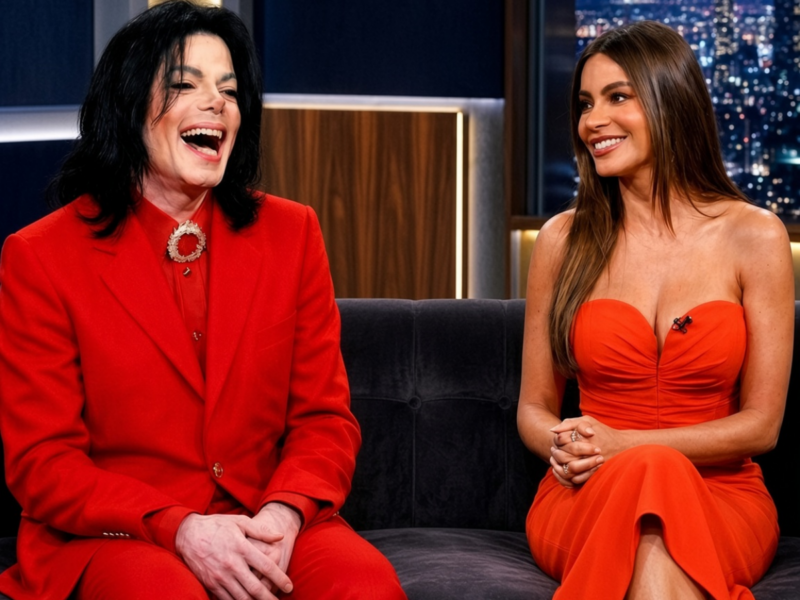
Nobody Knew Michael Jackson Had Only Hours Left To Live.
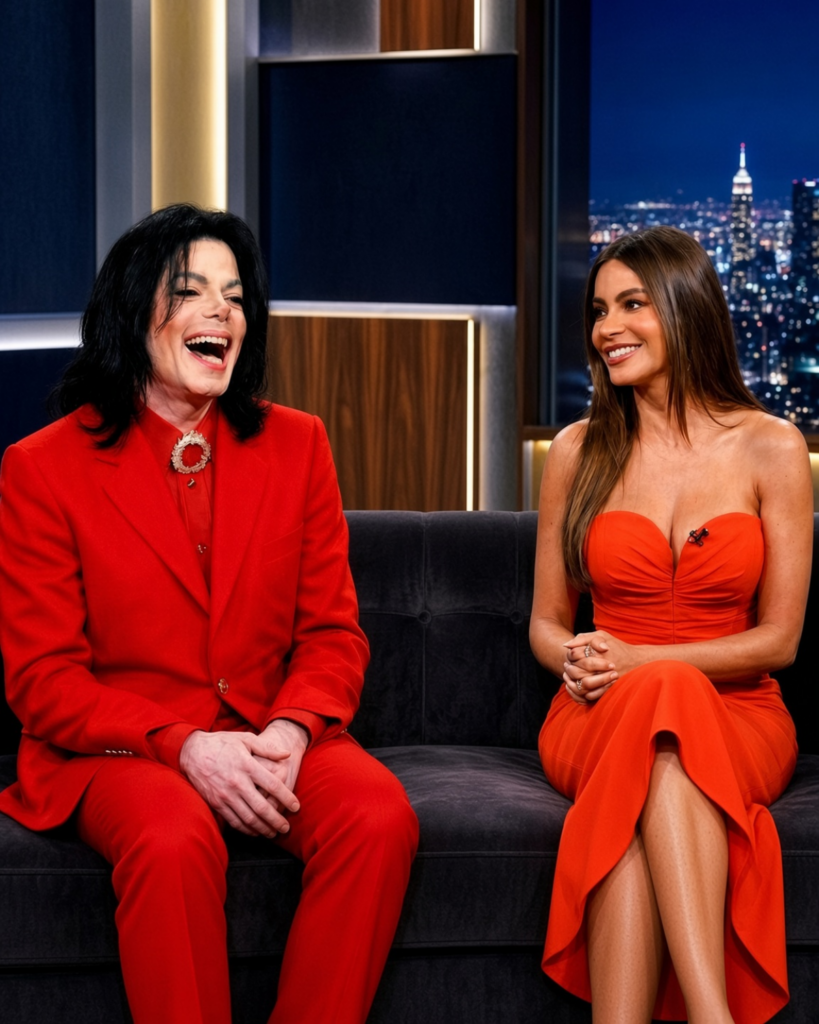
My name is Michael Jackson.
The real Michael Jackson.
“Please stand forward.”
“The tour just—”
“I don’t like it, though.”
“I know. But I go through hell.”
“I go through hell touring. It’s—”
“I’ll make it positive, then.”
“Yeah.”
“Action.”
“Michael—”
“I love to tour.”
“You guys.”
Chris Tucker revealed that Michael Jackson once arrived in a totally unexpected outfit and actually scared him for a moment because he didn’t recognize him.
“What’s that like? You know what? We go to the movies sometime. We go to the movies. Both of us like going to the movies. So, we go to the movies, but it’s hard because Michael got to sneak in the movie right before it starts. So, Michael come in there like with a ninja suit on. He’s hiding, and all black. All of a sudden, I’m sitting there—’Where’s Michael?’ And then I turn around, he’s like, ‘Hey, Chris.’ I’m like, ‘Oh, man. How long you been here?’ ‘About five minutes. I’m sorry. Did I scare you? Sorry, Chris.’ And then, you know, we sneak in, and all of a sudden we watching the movie—he’s the loudest person in there.”
“Really?”
“Yeah. He’s watching movies like he—”
“Say, Michael, would you set up for people see you?”
Michael Jackson revealed that he didn’t watch much TV because he hated tabloids.
Instead of following the gossip, he chose to distance himself from the negativity.
“I don’t talk about—I don’t watch TV. I don’t look at tabloids. I hate tabloids. I think we should have a tabloid burning. Just make mountains out of them. Just burn it all. I think people should be more aware that it’s completely not the truth.”
“Film this way, man. Film this guy. Look, look, look, look, look, look.”
“The police pulled him out.”
“What was he doing?”
“He was doing a Jackson dance.”
“He was doing all my—every time he starts, they police pull him out every time.”
Michael Jackson first met Lisa Marie Presley at a Jackson 5 concert when she was just seven years old, while Michael was seventeen.
“Jackson and Lisa Marie Presley. Welcome to Prime Time. Glad you’re here.”
“It occurs to me, looking at the two of you, I have got to start by asking how this marriage took place, how it began. Let me guess that it was not over miniature golf and a hot dog someplace. When did it start? When was the dating?”
“Well, we first met—she was seven years old and I was seventeen. This was in Las Vegas. Used to come and see my show all the time. And we had the only family show on the Strip—was the Jackson 5. And, um, she used to come as a little girl and sit right up front. She came quite often, but she came with a lot of bodyguards. Then she’d come backstage, then I’d—you know, talk and say hi, and then she’d come again. And I thought she was sweet and loving, and I always hoped I’d see her again.”
“And he—go ahead. You want to say what happened with contact?”
“You have a good memory.”
“No, you said you were going to say it. Our first argument here on this hour.”
“Um, who proposed? I mean, how did marriage actually get discussed?”
“Well—well, at first, this is what happened. When she was eighteen, I used to tell my lawyer, John Branca, ‘Do you know Lisa Marie Presley?’ He goes, ‘Well, I represent her mother.’ I go, ‘Well, can you get in touch with her? Because I think she’s really cute.’ And he’d laugh every time. He goes, ‘I’ll do my best.’ That’s what he’d say. Then he’d come back. I said, ‘Well, did you find out?’ He said, ‘No.'”
Emotional, Michael Jackson thanked his fans while accepting the award, saying their love and support meant the world to him.
“First, I’d like to thank—um—could you lift that up, please? It ain’t working. First, I’d like to thank—um—”
Michael Jackson supported HIV cottage’s awareness and stressed that compassion, education, and unity play an important role in social and economic development.
“Know your interest in the sideshow, but in the central issue that confronts real people’s lives—the issue of AIDS in Africa. We are grateful to Mr. Jackson for bringing all of your attention to this critical issue. And Michael Jackson will go to Africa on the Pacific basis of fighting the scourge of AIDS and economic development.”
On his birthday, Michael Jackson gave a heartfelt thank you to his mother and brother Jermaine for their unwavering support.
“My mother’s very shy. She’s like me. She won’t come up. I have three sisters, brothers who I love very dearly. All of them, including Jermaine.”
Michael Jackson revealed on live TV that he believed in God and said his faith played an important role in his life.
“Standing there, and there is a sea of people responding to you, screaming your name as they were. What does that feel like?”
“Love. You feel lots of love. And I feel blessed and honored to be able to be an instrument of nature that was chosen to give them what I give them. I’m very honored and happy about that.”
“Very spiritual. In what sense? I mean, do you meditate? Do you understand that there’s something bigger than yourself at work here?”
“I believe in God. Absolutely. Very much. Everybody comes to the world for a reason. Most of us spend our lives trying to figure out what the purpose of our being here is.”
“My purpose—oh boy. I think—um—to give in the best way I can, through song and through dance and through music. I mean, I am committed to my art. I believe that all art has as its ultimate goal the union between the material and the spiritual, the human and the divine. I believe that to be the reason.”
Michael Jackson revealed that during a Las Vegas shopping trip, he bought a costly chess set along with several other expensive collectibles.
“You bought that—the globe?”
“Yeah.”
“Right. Where did he go upstairs? We’re taking you upstairs. Hi. This one. This one. How about this table? This chess set. Isn’t it beautiful? This set.”
“Your chess set in your library is—”
“No, this one’s bigger.”
“Bigger? Wow. Oh, it’s sold. Look.”
“About this—is that one? Did we ever get this one? These ones?”
“It’s only $89,000.”
“No. Can you put that on the list?”
Michael Jackson revealed that Marvin Gaye used to visit his house and they would play baseball with Michael’s brothers.
“Every girl claimed that their son was related, you know, to one of my brothers.”
“Was Stevie Wonder a big influence on you when you were young? And did you know Marvin Gaye and other Motown artists? Was the atmosphere between the Motown artists competitive or friendly?”
“It was very friendly. Marvin Gaye used to come to my house at least twice a week to play basketball with my brothers. Stevie Wonder would come by for gatherings and parties, and I would go to the Supremes’ house—and, you know, I mean Diana Ross—where she would invite the other girls over. And there was really, sincerely, one happy family. We would have a baseball team where we played against one another.”
Michael Jackson said that without his mom and dad, he wouldn’t be where he is today, thanking them for their role in his success.
“Um, I’d like to say to our family, our children, our friends, and most of all, my mother and father. They’re here tonight. My mother and father, you were there to protect us with unselfish love. Because you were there, we are here.”
Michael Jackson revealed that he was hesitant to perform “Dirty Diana” in front of Princess Diana, but she told him it was actually one of her favorite songs.
“I met her first at a—um—a concert in London. She was, um, very kind, very loving, very sweet.”
“What did you two talk about?”
“I wrote a song called ‘Dirty Diana.’ And it’s not about Lady Diana. It’s about a certain kind of girls that hang around. So I wrote a song called ‘Dirty Diana,’ but I took it out of the show in honor of her royal highness. And she—she took me away and she said, ‘Get out of the show? No, I want you to do it. Do it. Do the song.'”
“So she had a sense of humor with you.”
“Yeah, of—”
But what almost nobody knew, on the night before Michael Jackson died, was that these small, human moments, the jokes, the shyness, the quiet faith, the gratitude to his parents, would soon be all that was left of him.
On June 24th, 2009, the night before Michael Jackson died, he was in Los Angeles, rehearsing at the Staples Center for what was supposed to be the biggest comeback in music history.
The This Is It concerts were scheduled to begin in London in just a few weeks.
Fifty shows.
Sold out in a matter of hours.
More than $85 million in tickets.
Michael was fifty years old, and he was exhausted, but he was also, according to the people who saw him that night, genuinely excited.
He rehearsed for hours.
He danced the way he always danced.
He stayed late.
He told the crew, the dancers, the musicians, the technicians, that they were going to do something the world had never seen before.
And then he went home.
That night, at 1:30 in the morning, Michael was still awake in his rented mansion on Carolwood Drive in Holmby Hills.
He had trouble sleeping.
He had had trouble sleeping for years.
His doctor, Conrad Murray, was there.
Murray had been giving Michael propofol, a powerful surgical anesthetic, to help him sleep, even though propofol is not supposed to be used outside of a hospital, and even though giving it to a patient at home, without proper monitoring equipment, without a breathing tube, without an anesthesiologist, was, in the words of one expert at Murray’s later trial, “the equivalent of playing Russian roulette with every dose.”
On the morning of June 25th, 2009, Michael Jackson had been up all night.
He had been given a series of sedatives, lorazepam and midazolam, beginning around 1:30 in the morning, and none of them had worked.
He was, according to Murray’s own account, desperate for sleep, because he had to be at rehearsal again that day.
He had to be sharp.
He had to be Michael Jackson.
So, around 10:40 in the morning, Murray gave him 25 milligrams of propofol, diluted with lidocaine, through an IV drip.
It was, according to Murray, a lower dose than he had given Michael before.
It was, according to the coroner, a lethal dose.
At some point after that, Murray left the room.
He later said he went to the bathroom for two minutes.
Two minutes.
He also said, at other times, that he was on the phone.
Phone records showed he made calls at 11:18 a.m., 11:27 a.m., and 12:12 p.m.
He was on the phone with his girlfriend at 12:13 p.m.
He was on the phone with another woman at 12:15 p.m.
By 12:18 p.m., by Murray’s own account, he came back into the room and found Michael Jackson not breathing.
He did not call 911 until 12:21 p.m.
Even then, according to the 911 call, Murray did not tell the dispatcher what he had given Michael.
He did not say the word propofol.
He did not say the word Michael Jackson.
He told the dispatcher, “He’s not breathing. He’s not breathing. We need an ambulance.”
The dispatcher asked, “Is he conscious?”
“He’s not breathing,” Murray said.
“Is he conscious? Is he breathing?”
“No, he’s not breathing,” Murray said.
“Do you have a doctor there?”
“Yes, we have a doctor.”
And then, at 12:26 p.m., Murray finally said, “It’s Michael Jackson.”
The paramedics arrived at 12:26 p.m.
Michael Jackson was already gone.
He was pronounced dead at 2:26 p.m. at Ronald Reagan UCLA Medical Center.
He was fifty years old.
Nobody knew, on that last morning, that it was the last morning.
Not his children.
Not his mother.
Not his brothers and sisters.
Not the dancers and musicians who were waiting for him at the Staples Center.
Not the fans who had bought tickets to see him in London.
Not the world.
On the night before Michael Jackson died, he had stood on a stage and danced like he had not danced in years.
On the morning of the day he died, he had asked for sleep, and the man who was supposed to be taking care of him had given him a drug that is only supposed to be used in an operating room, and then left the room.
And then Michael Jackson was gone.
In the hours after his death, the world went into a kind of shock that had not been seen since the death of John Lennon.
Twitter crashed.
Google crashed.
Wikipedia crashed.
The news spread around the planet in minutes.
In Paris, in Tokyo, in Lagos, in Rio de Janeiro, people stopped what they were doing and cried in the streets.
In Los Angeles, fans gathered outside UCLA Medical Center and stood in the street in a kind of silent vigil.
In Gary, Indiana, the little house on Jackson Street was surrounded by people.
In London, the O2 Arena, where Michael was supposed to perform in just a few weeks, was covered in flowers.
The world had lost, in the words of one writer, “not just a musician, but a whole language of music.”
But for the people who knew him, who loved him, who grew up with him, the loss was not about the music.
It was about Michael.
It was about the boy who used to take off his shoes and feel the bass through the floor.
It was about the man who stopped a concert for a deaf boy.
It was about the father who used to sing his children to sleep.
It was about the brother who called his mother every week.
It was about the friend who dressed up in a ninja suit to go to the movies.
It was about the man who, at fifty years old, was still shy, still kind, still trying to give the world the best he had.
The world lost a legend.
But his family lost a son, a brother, a father, a friend.
And nobody knew, on that last morning, that it was the last morning.
Nobody knew that the night before was the last time he would dance.
Nobody knew that the rehearsal at the Staples Center was the last time he would stand on a stage and look at the lights and feel the music in his bones.
Nobody knew that when he said goodnight to the dancers and the musicians, it was the last time he would say goodnight.
Nobody knew that when he called his mother that week, it was the last time he would call her.
Nobody knew that when he told his children he loved them, it was the last time he would say those words to them.
Nobody knew.
And that, perhaps, is the truest thing about the death of Michael Jackson.
It was not a musical tragedy.
It was a human tragedy.
It was the loss of a man who, in spite of everything, had tried to be good, and had been loved, and had loved in return, and had never stopped trying to give the world what he had.
He gave us “Billie Jean.”
He gave us “Thriller.”
He gave us “Man in the Mirror.”
He gave us the moonwalk.
He gave us a whole language of music that the world is still speaking today.
But he also gave us something smaller, and more human, and more true.
He gave us the boy on the stage of the Pontiac Silverdome, dancing barefoot with a deaf child.
He gave us the man who stopped a show for one kid in the dark.
He gave us the friend who put on a ninja suit and went to the movies.
He gave us the father who sang his children to sleep.
He gave us the son who called his mother every week.
He gave us the man who, at fifty years old, still believed in God, still believed in art, still believed that love was the most important thing in the world.
And that is what we lost.
Not just a pop star.
Not just a legend.
Not just the King of Pop.
We lost Michael Jackson.
And on the morning of June 25th, 2009, nobody knew, and nobody could have known, that the night before was the last night, and the morning was the last morning, and the small, human moments, the jokes, the shyness, the quiet faith, the gratitude to his parents, were all that was left of him.
He had only hours left to live.
And he spent them the way he spent his whole life.
Trying to sleep.
Trying to be ready.
Trying to give the world the best he had.
And in the end, that is what Michael Jackson was.
Not a controversy.
Not a tabloid headline.
Not a punchline.
A man who tried, and sometimes failed, and kept trying anyway.
A man who was loved, and knew it, and tried to love back.
A man who, on his last night on earth, stood on a stage and danced like he had not danced in years, and then went home, and tried to rest, and did not wake up.
He was fifty years old.
He had only hours left to live.
And nobody knew.
If this story moved you, if it reminded you that the people we love are only here for a little while, then share it with someone you love.
Tell them you love them.
Because you never know, on any given morning, that it is the last morning.
And you never know, when you say goodnight, if it is the last goodnight.
Michael Jackson spent his last hours on earth preparing to give the world one more show.
And the world, in return, is still listening.
Still dancing.
Still singing along.
Still, in the words of his most famous song, asking him to heal the world.
And somewhere, in a small house in Gary, Indiana, a little boy takes off his shoes and stands in his bare feet on the floor, and feels the bass come up through the boards, and dances.
And that is how Michael Jackson lives on.
Not in the tabloids.
Not in the headlines.
In the music.
In the dance.
In the small, human moments that nobody knew were the last.
Hi, my name is Michael Jackson.
And the world is still listening.









