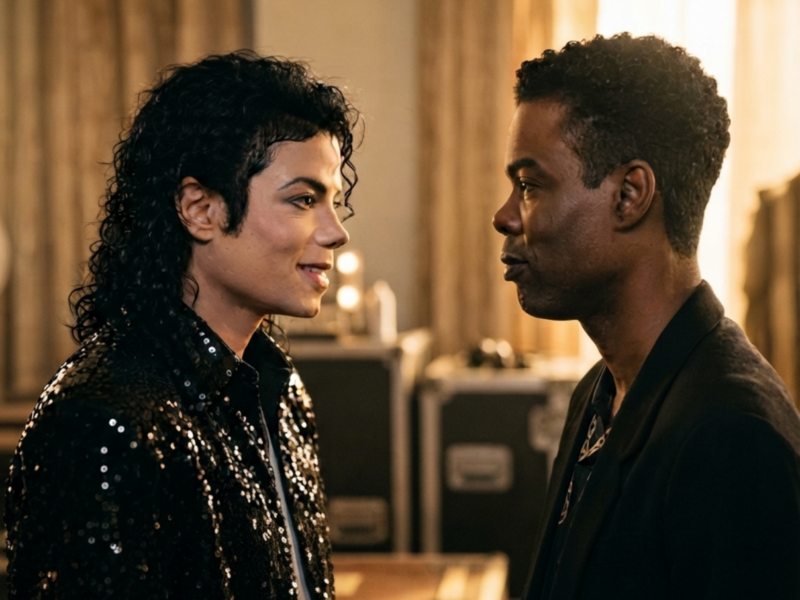
Nobody Knew How To Famous Around Michael Jackson —What Happened When Celebrities Met The King Of Pop.
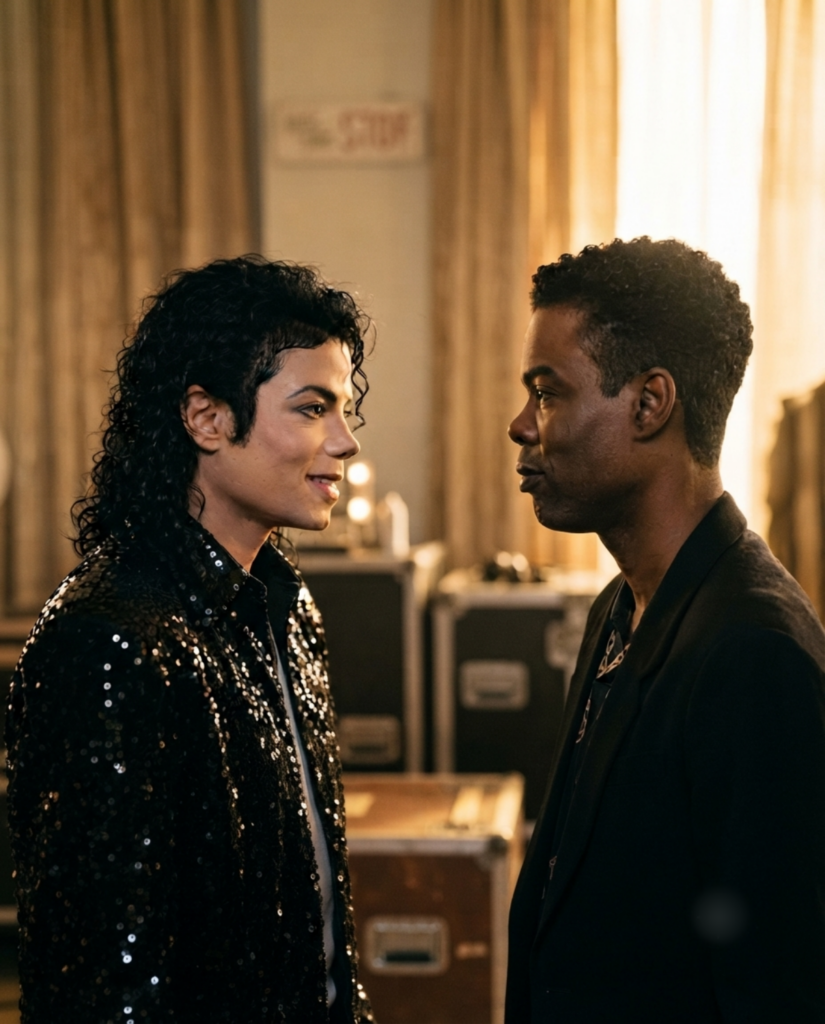
Nobody knew how to be famous around Michael Jackson.
Not the actors who had won Academy Awards.
Not the musicians who had sold a hundred million records.
Not the athletes who had broken every record in their sport and who had spent their careers in rooms where everyone wanted something from them.
When famous people met Michael Jackson, when they were in the same space, the same room, the same event, something happened to their fame.
It did not disappear.
It did not diminish in the measurable sense.
But it became suddenly and involuntarily smaller than it had been.
Not because Michael Jackson was trying to make it smaller.
Not because he was competing or performing or asserting the hierarchy of his position.
Simply because he was there.
And when Michael Jackson was there, the room reorganized itself around his presence in a way that the famous people in it had never experienced.
The experience of not being the most significant presence in the room they were in.
This is the story of what that was like for the people who experienced it.
And what it revealed about what fame actually is.
And what Michael Jackson actually was.
The distinction requires establishing clearly, because it is the distinction the entire story rests on.
Most famous people, when they are in the same room as other famous people, maintain their fame.
The room contains multiple significant presences, and each of them holds their own.
The social dynamic of celebrities together is usually the dynamic of equals, of people who recognize each other’s status and operate within that recognition.
There is a hierarchy, always.
Some people are more famous than others.
Some careers more significant.
But the hierarchy is usually subtle enough that everyone in the room can maintain the version of themselves that they are accustomed to being.
Michael Jackson did not operate within this dynamic.
He did not operate in it, not because he was trying to subvert it, or because he was arrogant about his position, or because he was performing his significance.
He did not operate in it because the ordinary dynamic of celebrity, the mutual recognition of status, the shared framework of what fame is and what it means, did not apply to him in the same way it applied to everyone else.
His fame was not a larger version of the same thing other famous people had.
It was a different thing.
A different category.
And when other famous people encountered it, they encountered the specific disorientation of finding that the category they had assumed was universal was not universal at all.
The basketball player Michael Jordan, who had by the mid-1990s become arguably the most famous athlete in the history of sport, and who was by every measure available one of the most recognizable human beings on the planet, has spoken about meeting Michael Jackson with the specific vocabulary of someone who does not often find himself in the position of not knowing how to be in a room.
He said, “I have been in a lot of rooms with a lot of famous people. I know what that is. I know how to be in those rooms. I’m comfortable in those rooms.”
He said, “I met Michael Jackson and I was not comfortable.”
He said it without embarrassment, with the directness of someone who has thought about it and arrived at honesty as the most interesting response.
He said, “It was not that he was intimidating. He wasn’t. He was warm. He was friendly. He was interested in me. It was something else. It was that I suddenly didn’t know what version of myself I was supposed to be.”
He said, “I am Michael Jordan. I know what that means, and I know how to be that. And then Michael Jackson is there, and somehow Michael Jordan doesn’t feel like enough of an explanation for who I am.”
He said, “I walked away thinking, what is fame if Michael Jackson makes my fame feel like a rehearsal?”
The question is not rhetorical.
It points at something real about the nature of what Michael Jackson was.
And about what fame at its ordinary levels is not.
Fame at its ordinary levels, even at the extraordinary levels of Michael Jordan or Madonna or Nelson Mandela, people whose names are known to billions, is a relationship between a person and the public’s knowledge of that person.
It is, in a sense, information.
The world knows who you are.
The world has a story about you.
You walk into rooms, and the room responds to the story.
Michael Jackson’s fame was this, but it was also something else.
Something that the word fame is not quite adequate to describe.
Something that had been produced by the specific, unrepeatable convergence of talent and timing and cultural moment and the particular quality of what he brought to the stage and the record.
A convergence that had produced not just a famous person, but a cultural fact.
Something that had embedded itself in the consciousness of the world, not as information about a person, but as an experience.
Something that people had not just learned about, but felt.
When you met Michael Jordan, you met someone whose story you knew.
When you met Michael Jackson, you met something you had felt.
The difference between these two kinds of encounter is the difference that the famous people in his presence were experiencing when they lost the thread of how to be themselves.
They had arrived with their stories, their careers, their achievements, their well-practiced versions of who they were in public.
And found that the encounter was not operating on the level of story.
It was operating on the level of feeling.
And feeling is not a place where the practiced public self operates comfortably.
The singer and actress Jennifer Lopez has described meeting Michael Jackson at a music industry event in the late 1990s with a candor that is characteristic of her, and that illuminates the specific quality of the experience from the perspective of someone who is, by any measure, extremely famous.
She said, “I have been in rooms with very famous people my whole career. I know what it’s like. You adjust. You find the version of yourself that works in that context, and you operate from there. It’s not difficult. It becomes natural.”
She said, “I was at this event and Michael Jackson walked in, and I watched every person in the room adjust. Not to him. Away from themselves. Like everyone simultaneously became a slightly less certain version of who they had been thirty seconds before.”
She said, “And then I felt it happen to me. This thing where I wasn’t quite sure who I was supposed to be. Not because he was doing anything. He was just standing there. He hadn’t even crossed the room yet.”
She said, “I remember thinking, this is what it is. This is the actual thing. Everything else is a version of this. And I understood in that moment that I was not this. That whatever I was, I was not this.”
The specificity of that last statement, “I was not this,” is the thing that makes her account more revealing than most.
Because Jennifer Lopez is by any measure significant.
Her career, her fame, her presence in a room, these are not small things.
She is not someone who habitually feels inadequate.
And yet, in the presence of Michael Jackson, she felt the specific inadequacy of someone who has encountered a category they cannot be in.
Not a hierarchy.
Not the simple sense of someone being more famous and therefore more significant.
A category.
A different kind of thing.
This quality, the quality of belonging to a different category than other famous people, was visible to people who observed Michael Jackson in public settings throughout his career.
The events and award ceremonies and industry gatherings where his presence was required produced consistently and without exception the same effect.
The room reorganized.
The conversation changed.
The famous people in the room became briefly and involuntarily something closer to regular people.
People who were in the presence of something they had feelings about and did not entirely know what to do with.
The comedian Chris Rock has spoken about the Michael Jackson effect in a comedy context, which is to say, with the specific analytical honesty of a comedian who uses the truth as material and who has therefore thought about things more carefully than most people think about them.
He said, “The thing about Michael Jackson is that he made everyone feel like a fan. Not a colleague, not a peer. A fan. And I have been in rooms with a lot of famous people, and usually I don’t feel like a fan. I feel like a person in a room with another person who happens to be famous.”
He said, “With Michael, I felt like a fan, and I am not used to feeling like a fan. I am Chris Rock. I don’t feel like a fan.”
He said, “And the crazy part is that he wasn’t doing anything to make me feel like a fan. He wasn’t performing. He wasn’t being Michael Jackson in the way that, you know, some famous people perform their fame. He wasn’t doing that. He was just being a person. But the person he was being was Michael Jackson. And Michael Jackson made you feel like a fan just by being there.”
And that is the most powerful thing I have ever encountered in another person.
The most powerful thing I have ever encountered in another person.
This is the formulation that Chris Rock, whose career is built on saying the most precise true thing, arrives at after thinking about it carefully.
Not the most talented, though the talent was extraordinary.
Not the most famous, though the fame was without precedent.
The most powerful.
The thing that reorganized rooms and made famous people uncertain of their fame and produced in everyone present the specific experience of being in the presence of something that exceeded the framework they had brought with them.
There is a story documented in several accounts from people who were present about what happened at a particular industry event in the mid-1990s where a significant number of the most famous people in entertainment were gathered in the same room.
The accounts of what happened next converge on the same image.
The room, which had been the specific kind of room that rooms full of very famous people are, the ambient hum of significant people in motion, the social choreography of people who are accustomed to being the most significant presence wherever they go, and who have developed the specific ease of operating at that level, went through a change.
It did not go silent.
The people in it did not stop moving.
The social choreography continued, but it continued differently.
With a quality that one attendee has described as recalibration, the specific involuntary adjustment of a room that has encountered something that requires its existing coordinates to be revised.
The famous people in the room became, briefly, simply people.
Not diminished.
Not made smaller in any way that matters.
But temporarily returned to something prior to their fame, the state of being a person who is in the presence of something significant and who is responding to it with the full human response of someone who has not yet managed the response into something presentable.
They stared.
Famous people do not stare.
It is one of the specific social competencies that fame requires, the ability to encounter other famous people without staring, without the involuntary response that most people produce when they encounter someone they have feelings about.
Famous people develop this competency early, because the alternative, staring at the people you meet, responding visibly to their significance, is a form of deference that undermines the equality that fame-to-fame encounters require.
At this event in the mid-1990s, the famous people stared.
They did not stare for long.
The social competency reasserted itself, as it always does after a moment.
The recalibration completed.
People went back to being their famous selves, doing the things that famous people do at industry events, talking to each other with the practiced ease of people who know how to do this.
But for a moment, before the competency reasserted itself, the room was full of people who had forgotten to be famous.
Michael Jackson has spoken about this effect, not directly, not with the analytical vocabulary of someone examining their own impact on rooms, but obliquely, in the way that he spoke about the things that were most true about his situation.
He has spoken about the loneliness of his fame.
About the difficulty of genuine connection in a context where everyone was responding to what they knew about him, rather than to him.
About the specific impossibility of meeting people as himself, rather than as Michael Jackson.
What he did not say, what the people who experienced the effect he had on rooms have supplied in their accounts across the years, is that the effect cut both ways.
That the thing which made genuine connection difficult for him was the same thing that produced, in the famous people who encountered him, the brief and involuntary return to simply being people.
He made famous people feel like fans.
And fans, whatever else they are, are people who feel something real about something outside themselves.
People who have not yet managed the response into something practiced.
People who are, in the moment of encountering the thing they love, briefly and completely themselves.
Michael Jackson walked into rooms full of famous people and made them, briefly, into fans.
Which is to say, he made them, briefly, into people.
Nobody knew how to be famous around Michael Jackson, because nobody’s fame was equal to his presence.
Not because his fame was larger, though it was.
Because his presence was something that fame, in its ordinary operations, was not designed to address.
He was not a famous person in the room.
He was the reason fame exists.









