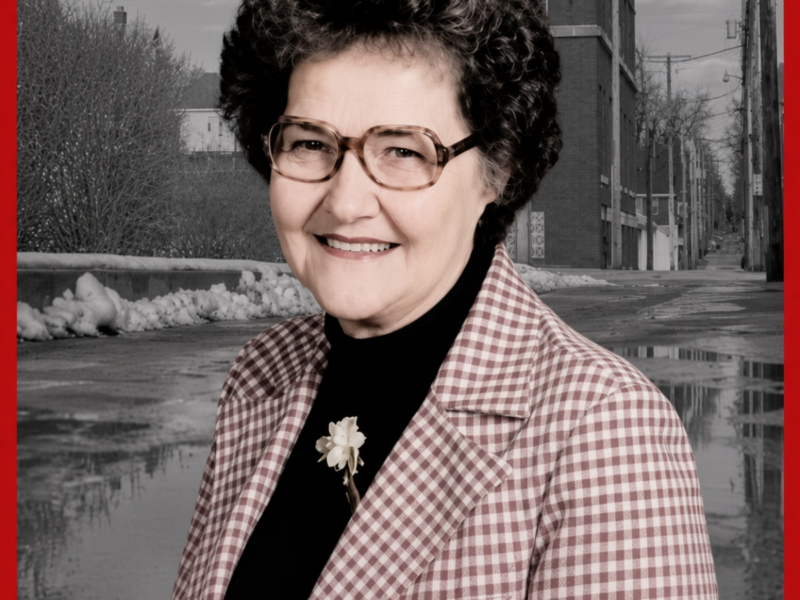
Nebraska 1985 Cold Case SOLVED —The Evidence Pointed One Way. Investigators Went Another.
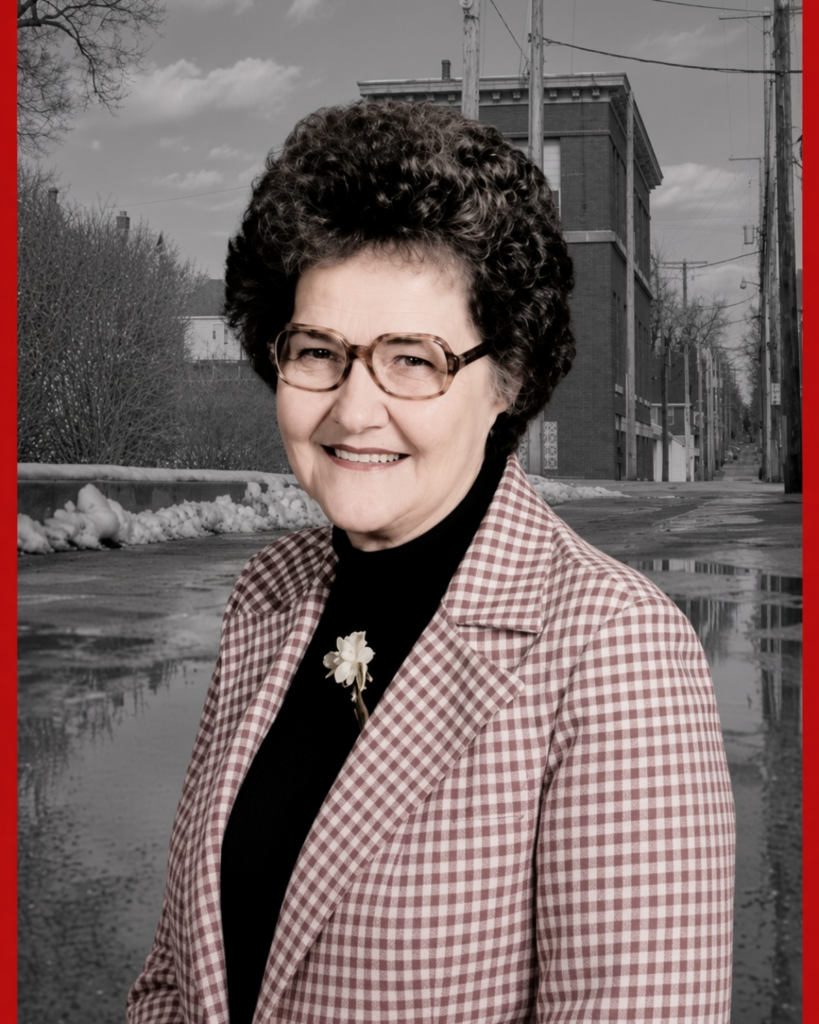
Six people found guilty for a crime they didn’t commit.
Did you ever believe the Beatrice 6 were guilty?
No.
But how did it happen?
The stories don’t match up at all.
In 1985, a woman was murdered inside her apartment in a quiet Nebraska town.
The crime was brutal, but when investigators began piecing together what had happened, they initially believed the answer was surprisingly simple.
One offender—one person had entered Helen Wilson’s apartment, attacked her, and left her dead.
But the investigation didn’t end there.
Four years later, police had a very different story.
Now they believed Helen Wilson’s murder wasn’t the work of one person at all.
There were six people involved.
Six people who, on the surface, had little reason to be connected to a crime committed years earlier.
One by one, investigators began building a case against them, and eventually all six would be convicted.
But there was a problem hiding underneath the entire case.
The blood was still there. The semen was still there. The fingerprints were still there.
And the physical evidence from that apartment pointed to one offender, not six.
So how did an investigation that began with the search for one killer end with six people being sent to prison?
And why did it take nearly two decades for anyone to realize that the entire theory of the crime was wrong?
This is a story of Helen Wilson and the six people who would spend years paying for a murder none of them committed.
Beatrice, Nebraska, in 1985 was a quiet farming town of about 13,000 people.
The kind of place where a murder like this simply didn’t happen.
Helen Wilson was sixty-eight years old.
She’d lost her husband to a heart attack years earlier and had lived alone ever since in a small apartment inside a red brick building in Beatrice.
She had raised her children in that town.
She had seven grandchildren and five great-grandchildren, and by every account she adored every one of them completely.
Her own grandson, Shane, would later describe her simply as the glue that held the whole family together.
In January of 1985, Helen traveled west to visit family.
During that trip, she developed a cough she couldn’t shake and stubbornly refused to see a doctor about it.
She came home to Beatrice on February 3rd.
By the evening of February 5th, her condition had clearly worsened.
Her son and daughter-in-law came by that night to check on her, bringing food and medicine.
They left around a quarter to ten.
Around midnight after they left, they tried calling her.
Nobody answered.
Sometime in the early hours of February 6th, a twenty-two-year-old man later identified as Bruce Allen Smith made his way into that apartment building.
According to Beatrice’s police chief, speaking at a news conference days later, Bruce pried the apartment door from its frame and slipped the lock.
He got inside, and he beat, raped, and suffocated Helen Wilson to death.
Helen’s sister found her body the next morning and called police just before 9:30.
Investigators searched the apartment and found something that should have shaped everything that followed.
Helen’s jewelry was still there. Her checks were still there.
Several large money market certificates were still in the apartment, and more than a thousand dollars in cash had been left behind.
Whoever did this hadn’t come for money.
The Beatrice Police Department brought in the FBI for assistance, and FBI agent Peter Klismet prepared an offender profile.
His conclusion was striking.
It was highly unlikely that two people had committed the crime.
His profile pointed to one person acting alone. One offender, no robbery motive.
Let that sink in, because four years later an entirely different theory would take over this case—a theory built around two persons supposedly intending to rob Helen, with several other people drawn in as accomplices.
The problem? The physical evidence never supported that theory.
Not in 1985, and not four years later.
What investigators did have was biological evidence—blood and semen recovered from the scene.
Testing at the time couldn’t produce anything close to a DNA profile, but it could narrow things down by blood type and something called secretor status.
Roughly 80 percent of people are secretors.
Their blood type markers show up not just in blood, but in other bodily fluids like saliva and semen.
The remaining 20 percent are non-secretors, and their fluids don’t carry those same markers.
The biological evidence from Helen Wilson’s apartment pointed to a killer with type B blood who was a non-secretor—a genuinely narrow combination.
A black-handled steak knife was recovered from the scene.
A piece torn from a five-dollar bill was found on the kitchen floor.
An overturned footstool. Fingerprints lifted from the knife itself and from a door frame.
Investigators preserved roughly 50 separate pieces of evidence in total—bedding, a pair of underwear deliberately laid out on the couch, even the section of carpet beneath where Helen’s body had been found.
Within days, investigators had a suspect.
His name was Bruce Allen Smith. He was twenty-two years old, and everything about him should have ended this case before it ever went cold.
Bruce had spent the evening drinking at a Beatrice bar before heading to an after-hours party in the nearby town of Blue Springs.
At the party he made an aggressive sexual advance toward a woman.
His advances were refused, and according to testimony, he announced he intended to get laid one way or another.
When he was thrown out for it, he threatened to get even.
A friend drove him back toward Beatrice to diffuse the situation and dropped him off blocks from Helen Wilson’s building.
Witnesses reported seeing him staggering in that direction sometime around a quarter to four in the morning.
The next day, people who saw him noticed scratches on his face and hands.
Smith already had a criminal record at twenty-two, and there was one detail that made him more than just a name that happened to be nearby that night.
His own grandmother lived in that same building as Helen Wilson.
He wasn’t a stranger who’d have looked out of place walking those halls.
He had a reason to be there that nobody would have questioned.
Investigators brought him in.
They collected his blood, his saliva, and hair samples.
The lab reported that Smith’s blood was type B, matching the crime scene evidence on that count.
But on the second, more specific measure—secretor status—the lab reported him as a secretor.
The killer’s profile called for a non-secretor.
According to that result, Bruce Allen Smith could not be the man who killed Helen Wilson.
That single result changed everything.
Smith walked away from the investigation, and Helen Wilson’s murder went cold.
What nobody in Beatrice knew at the time was the name of the person who had produced that result—Joyce Gilchrist, a forensic analyst working out of Oklahoma City.
Gilchrist would later become one of the most notorious figures in the history of American forensic science, eventually fired, with the Innocence Project specifically identifying her flawed forensic work as a contributing factor in wrongful convictions in multiple separate cases across the country.
In 1985, none of that reputation existed yet.
Her erroneous result was simply accepted as fact, and the investigation moved on without Bruce Smith.
Over the following months, investigators interviewed more than 300 people connected to Helen Wilson’s life and death, hoping to find someone whose blood would actually fit the profile.
Nothing did.
1985 became 1986. 1986 became 1987.
The case that the FBI believed had one offender and no clear motive simply sat there unsolved, while rumors about who might have done it circulated through a town of 13,000 people who all, in one way or another, knew each other.
At almost the exact moment Bruce was cleared, a former Beatrice police officer named Burt Searcey, who had left the force to run a hog farm, approached Helen’s family and asked permission to look into the case privately on his own time, unpaid.
They gave him their blessing.
In 1987, Searcey rejoined law enforcement as a Gage County Sheriff’s Deputy.
It would be two more years before his private theory of the crime became an official one.
Because what happens next is the part of this case that has haunted psychologists and legal scholars for decades—how investigators took a witness’s account, quietly reshaped it to fit what they already believed, and built an entire prosecution on memories that were never real to begin with.
In January of 1989, Sheriff Jerry DeWitt and the County Attorney formally authorized Searcey to reopen Helen Wilson’s case, assisted by two other deputies, Gerald Lamkin and a man named Wayne Price.
Searcey’s entire theory rested on one witness—a seventeen-year-old named Lisa Podendorf.
She told him she’d seen a group that included Joseph White, Thomas Winslow, and Ada JoAnn Taylor near Helen Wilson’s building the night of the murder.
She also said that Taylor came to her the following morning and confessed—told her she and White had done it together.
Here is the detail that court records later exposed.
Podendorf placed that confession conversation at around 7:30 in the morning.
Helen Wilson’s body wasn’t discovered until roughly 9:30.
Searcey’s own account of the story described police cars already sitting outside the building at the time Taylor supposedly confessed, but if Podendorf’s timeline was accurate, there would have been no police cars there yet at all.
The murder hadn’t even been discovered.
The detail that gave Podendorf’s account its urgency and credibility doesn’t hold up against the case’s own timeline.
That contradiction did not stop the investigation. It kept moving.
On February 13th, 1989, Searcey first interviewed Thomas Winslow, already in custody on an unrelated felony assault charge.
Winslow’s first account was limited—he said he’d loaned his car to Taylor, White, and Cliff Sheldon that night.
But on March 14th, after Searcey confronted him again, Winslow said he’d been driving Taylor and White around when he overheard them discussing robbing an elderly woman.
After further questioning, his story changed again, until he was placing himself inside Helen Wilson’s apartment.
In exchange for his cooperation, prosecutors offered him something concrete—use immunity for the Helen homicide itself, a reduction of his pending assault charge, and a lower bond.
On March 14th, 1989, Searcey and the county attorney filed the arrest affidavit.
The following day, Joseph White was arrested in Alabama and Ada JoAnn Taylor was arrested in North Carolina, both living out of state.
White denied any knowledge of the crime the moment he was questioned.
According to reconstructions of his interrogation, when he insisted he had never been there, investigators suggested the problem wasn’t that he was lying—it was that he simply couldn’t remember.
He kept saying it anyway. I wasn’t there.
He would keep saying it in one form or another for the next twenty years.
While White held onto that denial, Taylor’s own account was already coming apart in a different direction.
In her earliest telling, she described the crime taking place inside a house.
Helen Wilson was murdered in a brick apartment building, and when Taylor’s story didn’t match, she was steered toward the correct detail until her account lined up with the actual scene.
Then there’s the five-dollar bill.
Investigators had it—torn—sitting on the evidence table since 1985.
During questioning, suspects were asked if they remembered Joseph White having a habit of tearing currency in half.
This was a very particular kind of question.
It doesn’t ask a witness what they saw. It hands them a specific, verifiable fact from the crime scene and waits to see if they can hand it back.
Eventually, pieces of the five-dollar bill detail worked their way into the statements being collected, and those statements were then treated as corroboration—as though the suspects had independently supplied information only the real killer could have known.
They hadn’t. Investigators had already introduced the details during questioning.
That’s not a minor procedural flaw, but part of the mechanism by which five false confessions and statements were made to appear internally consistent enough to support a prosecution.
Wayne Price, the deputy assisting Searcey—who also had a background as a mental health professional and had, in fact, previously counseled Taylor in that exact capacity before this investigation ever began—became central to what happened next.
Price worked with Taylor on what he described as repressed memories, and what emerged was a name—Thomas Winslow—now placed by Taylor herself as the man in the apartment.
None of the three had type B blood.
White was type O. Taylor was type O. Winslow was type A.
None matched the biological profile investigators had been looking for.
Investigators did not release them. They kept looking for someone whose blood might fit.
They found Debra Sheldon next—a woman with documented mental health struggles and a history of suicide attempts.
She was first questioned in late March, and by April, investigators had drawn her into the same narrative everyone else was being drawn into.
Then James Dean, who denied any involvement entirely until Wayne Price worked with him using the same repressed memory approach he’d used with Taylor.
During his questioning, Dean was shown a diagram laying out where everyone had supposedly been positioned in Helen Wilson’s apartment.
Later, when Dean described what happened, he referenced that same seating arrangement.
Investigators hadn’t uncovered his memory. They had drawn him a picture and waited for him to describe it back.
Dean was also told he’d failed a polygraph—a test that isn’t actually the definitive truth detector it’s often presented as.
Caught between his own confusion and what he was being told the evidence showed, Dean accepted a plea deal admitting to aiding and abetting a crime he had nothing to do with.
Still no type B non-secretor match.
So they kept going, and found Kathy Gonzalez.
Price worked with her, too. She was also told she’d failed a polygraph.
And here is where the case came agonizingly close to its own internal logic actually working.
Gonzalez did have type B blood, but her complete serological profile did not match the biological evidence from the apartment.
The killer was a non-secretor. Even the one person who came closest still didn’t match.
Looking back on her own interrogation years later, Ada JoAnn Taylor described through the Innocence Project exactly what was going through her mind at the time.
She was newly married. She had a fourteen-month-old son.
She was told that if she didn’t confess, given everything investigators claimed they had on her, she would become the first woman in Nebraska sentenced to death.
Gonzalez, Taylor, and Sheldon all eventually pleaded guilty to aiding and abetting Helen Wilson’s murder.
Joseph White and Thomas Winslow did not plead guilty at first.
White’s trial began in October of 1989.
He was not a confident or articulate man in that courtroom, and by every account it showed.
He was convicted of first-degree murder and sentenced to life in prison.
Winslow, watching what had happened to his co-defendant, entered a no contest plea shortly after and was sentenced to fifty years.
Six people—Joseph White, who never confessed and went to trial anyway; Thomas Winslow, whose story grew across a series of interviews until it matched what investigators needed; Ada JoAnn Taylor, threatened with the possibility of becoming the first woman on death row in the state’s history; Debra Sheldon, drawn in through the same psychological process used on the others; James Dean, handed a diagram and later describing what the diagram showed him; Kathy Gonzalez, the one whose blood type came achingly close before the secretor distinction ruled her out, too.
All six convicted. All six innocent.
None of their blood or DNA profiles ever matched the physical evidence.
And there is one more detail that makes this failure almost impossible to sit with.
Dr. Regina Roy, the Nebraska State Patrol forensic scientist who analyzed the biological evidence from the crime scene, had concluded that none of the six defendants matched the biological evidence.
She was never called to testify at any of their trials.
Bruce Allen Smith died in Oklahoma City in September of 1992 of complications related to AIDS.
He was never charged with anything connected to Helen Wilson’s death.
He simply lived the rest of his life, and then he was gone—seven years after the murder, sixteen years before anyone would say his name in connection with it again.
Joseph White spent the next two decades in prison holding on to the one thing nobody else seemed to want anymore.
In 2005, an appellate attorney named Doug Stratton took on his case.
White kept fighting for the one thing the original 1989 trial never had—DNA testing.
In 2007, the Nebraska Supreme Court finally cleared the way for it.
And Stratton persuaded Gage County’s new county attorney to authorize testing on more than 40 separate pieces of evidence recovered from Helen Wilson’s apartment back in 1985.
The results started coming back in 2008.
White’s profile—no match. Winslow’s—no match. Taylor’s—no match. Sheldon’s—no match. Dean’s—no match. Gonzalez’s—no match.
One profile remained.
A special investigator named Tina Vath ran the comparison against Bruce Allen Smith—the same man whose blood had supposedly excluded him twenty-three years earlier.
It matched.
The same biological evidence that had once been used to try to build a case against six innocent people had, decades later, become the exact evidence that tore that case apart completely.
Smith had been dead for sixteen years by the time anyone said his name again.
On October 15th, 2008, Joseph White’s conviction was vacated and he walked out of prison.
Two days later, Thomas Winslow was released.
Ada JoAnn Taylor was released on parole on November 10th.
The following January, on the 26th of 2009, White’s five co-defendants were formally pardoned by the state of Nebraska, clearing all six of their names entirely.
Each of them had lost more than eighteen years.
In 2014, the Nebraska Supreme Court affirmed that Dean and Taylor, even though they had confessed, were still entitled to compensation under the state’s wrongful conviction act—because a confession obtained through psychological coercion doesn’t stop being a wrongful conviction just because someone said the words out loud.
The six of them then sued Gage County and the officers who had investigated them, arguing the case had been pursued recklessly and evidence had effectively been manufactured against them.
The first civil trial ended in a mistrial.
The second, in 2016, produced a verdict: $28.1 million split among six people and their families.
Gage County wasn’t adequately insured for a judgment that size.
In the years that followed, the county raised property taxes and pursued additional local revenue measures just to cover what it owed.
Joseph White—the one person among the six who never once confessed, who spent twenty years saying I wasn’t there and meaning it every single time—did not live to see that verdict.
In March of 2011, less than three years after walking free, he died in a workplace accident at an industrial site in Alabama.
He was forty-eight years old.
He had reconnected with his high school sweetheart. He was engaged to be married that May.
Debra Sheldon lived for years afterward before reportedly passing away from cancer in 2025.
Those who knew her described her as someone defined by an absolute trust in humanity—the very quality that decades earlier had made her vulnerable enough to be told her own memory couldn’t be trusted, and to believe it.
Here is what this case actually is underneath everything else.
Bruce Allen Smith’s real advantage in 1985 wasn’t cunning. It was proximity plus one erroneous lab result.
His grandmother’s address gave him a legitimate reason to be exactly where he needed to be.
A flawed secretor test performed by an analyst who would later be disgraced for exactly this kind of error gave him a legitimate reason for investigators to stop looking his way.
That’s the entire opportunity—an unremarkable connection and one bad piece of science working together.
But then something even more disturbing happened.
When that first, most obvious path to catching him collapsed, investigators didn’t just lose their best lead.
They built six new ones out of nothing.
Six people whose limited resources, whose personal struggles, whose position on the margins of their own community made them the path of least resistance for an investigation that badly needed a result and had run out of ideas.
Some of the most important pieces of corroboration they gathered—the seating arrangement, the torn five-dollar bill, and other details—had been supplied to suspects by investigators before appearing in their statements.
The system exploited the exact same kind of gap Bruce Smith exploited.
It just aimed that exploitation at different people for a different purpose entirely.
Smith’s opportunity lasted one night.
The opportunity the system created to fail six innocent people lasted twenty years.
Helen Wilson was sixty-eight years old.
She was, in her own grandson’s words, the glue that held her family together.
She deserved to have her actual killer found in February of 1985—not for one flawed test to clear him within days, only for six innocent people to spend a combined seventy-seven years of their freedom paying for what he did instead.









