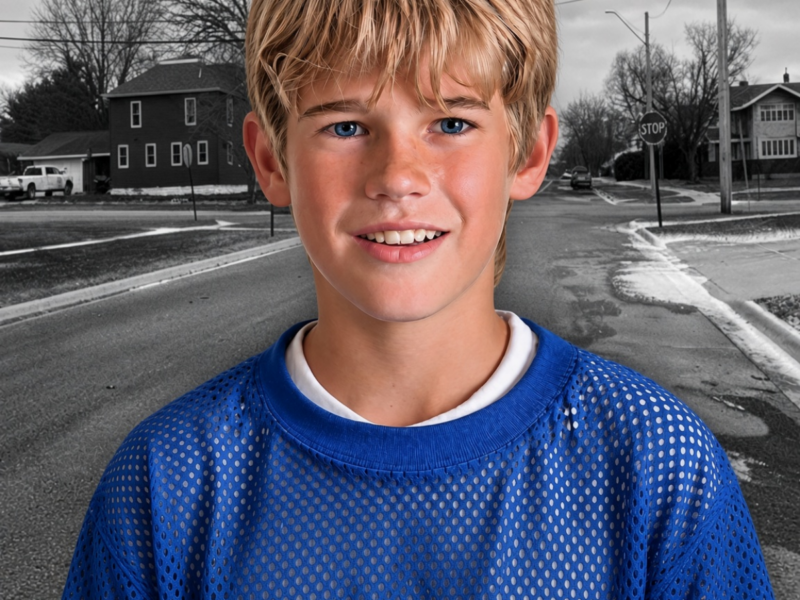
MINNESOTA 1989 Cold Case Was Finally Solved After 27 Years.
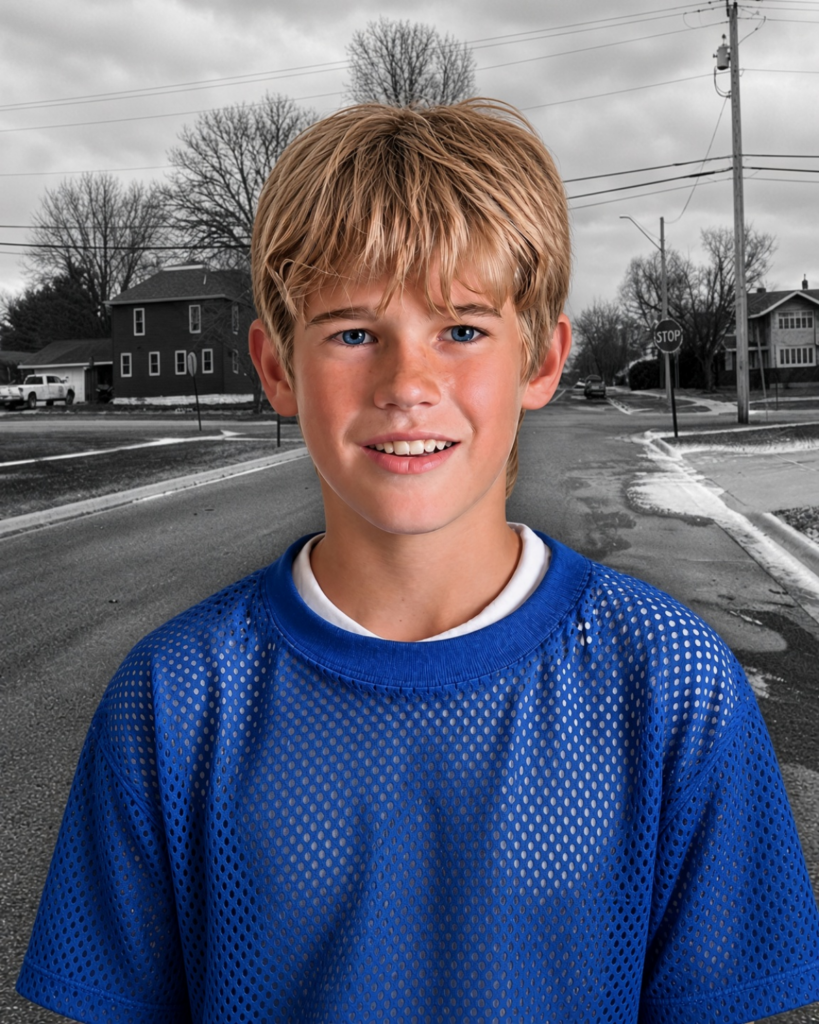
A boy disappeared into the dark on a quiet stretch of road just outside his own town.
And for almost thirty years, nobody could say what had happened to him.
The search that followed became one of the largest the state had ever organized, pulling in local police, federal agents, and the National Guard within hours.
Yet the answer stayed buried for nearly three decades.
Investigators questioned dozens of people and chased hundreds of leads and still came up empty.
Then, in a single week, decades of silence gave way all at once.
And the break didn’t come from a badge. It came from two people who refused to stop asking questions nobody else wanted to answer anymore.
Jacob Erwin Wetterling was born on February 17th, 1978, in Long Prairie, Minnesota, and grew up in the small town of St. Joseph, just west of St. Cloud.
He was one of several children in a close, tight-knit family. His mother, Patty, stayed home to raise the kids, and in her own words, “Those years were simple. They played together, and it was fun.”
His father, Jerry, worked locally, and the Wetterling household had the kind of steady, unremarkable rhythm most families hope for—the kind where nobody expects tragedy to ever find its way in.
By the time he was eleven, Jacob had already found the things he loved.
He played goalie for his hockey team and talked about wanting to be a football player one day. He’d also picked up the trombone, working through it the way most kids do—more enthusiasm than polish.
He was especially close with his younger brother, Trevor, who was ten, then with his sisters—and the two brothers spent most of their free time together, the way siblings close in age often do.
Jacob was, by every account, an ordinary kid living an ordinary childhood in a small Minnesota town where people generally knew their neighbors and doors weren’t always locked at night.
On Sunday, October 22nd, 1989, that ordinary life ended in the space of a few minutes.
That evening, Jacob, Trevor, and their friend Aaron Larson—also eleven—rode their bikes in St. Joseph to rent a video from a local convenience store.
It was the kind of short, unremarkable errand the boys had probably made dozens of times before.
They picked out a movie, headed back outside, and started biking home along the same road they always took—laughing about whatever eleven-year-olds laugh about on an ordinary Sunday night.
Just after 9:00 p.m., a man stepped out of a nearby driveway.
He wore a stocking cap pulled down over his face and carried a revolver, though it wasn’t loaded.
He ordered all three boys to throw their bikes into a ditch and lie face down on the ground.
Then he asked each of them, one by one, how old they were.
He told Trevor to get up and run toward a wooded area nearby—warning him not to look back or he would shoot him.
Trevor did exactly as he was told.
The man then demanded to see the faces of the two boys still lying on the ground. He looked at both of them for a moment, chose Jacob, and told Aaron to run in the same direction Trevor had gone.
With the same threat hanging over him, Aaron ran without looking back.
And that was the last time anyone other than Jacob’s abductor ever saw him alive.
Within hours, St. Joseph and the surrounding townships were swarming with searchers.
Local police, the FBI, and the Minnesota National Guard all joined what became one of the largest manhunts the state had ever organized.
Volunteers went door to door through the surrounding farmland in the cold October dark.
Search dogs worked the ditches and wooded areas near the abduction site while helicopters passed overhead.
Over the following weeks, thousands of tips poured in from across the country—and every single one of them had to be logged and checked.
Jacob’s parents quickly became the public face of the search, appearing at press conferences night after night and pleading for any scrap of information—at one point asking publicly where their son was, and insisting that somebody out there had to know.
Four months after Jacob disappeared, Jerry and Patty founded what became known as the Friends of Jacob Wetterling Center—built around finding their son and eventually protecting other children from the same fate.
For a region where kidnappings by strangers were almost unheard of, the abduction landed like a seismic event.
Stearns County Sheriff John Sanner would later describe it as the end of an age of innocence for central Minnesota—a case that changed how an entire generation of parents let their children move through the world.
Kids who had always walked or biked to a friend’s house alone suddenly weren’t allowed to anymore. Front doors that had never been locked started getting locked.
None of that brought Jacob home, but it marked, in a very real sense, the moment a small town’s sense of safety quietly ended.
But despite the scale of the response, the case did not break.
Investigators questioned a local man named Danny Heinrich early in the investigation, but at the time there wasn’t enough evidence to charge him with anything, and he was released without incident.
The FBI interviewed him again that December and even collected a DNA sample—a routine step at the time. But with nothing to compare it against and no way to hold him, they had no choice but to let him go a second time.
Weeks turned into months. Months turned into years.
And with no further sign of what had happened to Jacob, the case slowly went cold the way so many abduction cases eventually did—once the initial wave of publicity faded and the tip line grew quiet.
As investigators worked the file over the years that followed, they kept circling back to another crime that had happened just nine months earlier, about ten miles from where the boys had been stopped.
On January 13th, 1989, a twelve-year-old named Jared Scheierl was kidnapped in nearby Cold Spring, Minnesota, driven to a remote location, and sexually assaulted by an unknown adult man.
Before letting him go, the attacker warned Jared not to look back as he walked away—or he would shoot him.
It was almost the exact same threat the man in the stocking cap would use on Trevor and Aaron nine months later.
The similarity was hard to ignore. But for years, law enforcement was never able to connect the two cases in any way that held up in an investigative sense.
Jared carried the memory of that threat for decades, later saying it shaped how carefully he had to relearn trusting the world again.
There was a third thread running underneath all of it that almost nobody was paying attention to.
Between the summer of 1986 and the spring of 1987, five teenage boys had been attacked in the Paynesville area—not far from either St. Joseph or Cold Spring.
No one had ever been arrested for any of it. And over time, the cases had mostly been forgotten, filed away as unsolved and unrelated, gathering dust in a filing cabinet somewhere in Stearns County.
That changed because of two people with no official role in the investigation at all.
In the summer of 2013, Jared Scheierl agreed to work with an amateur investigator and blogger named Joy Baker—on the condition that his name stay out of it for the time being.
He had reason to be cautious. The man who had attacked him had threatened his life directly, and Jared had children of his own to think about by then.
Not long after they began working together, Joy came across a 1987 newspaper article buried in the archives of the local Paynesville press, describing the unsolved assaults on those five teenage boys.
Once she read it, she couldn’t let it go—and she called Jared almost immediately to tell him what she’d found.
Both of them later described those early months of digging as frightening in ways they hadn’t expected, saying the material they were uncovering felt disturbing even to two people who had spent years already thinking about the case.
Joy reached out to the Stearns County Sheriff’s Office and shared what she’d found. They asked her to send it along—but according to Joy and Jared, investigators made it clear the Paynesville cases weren’t something they were actively pursuing anymore.
Around that same period, the Minnesota Bureau of Criminal Apprehension and the Sheriff’s Office had reportedly been working since as far back as 2004 from a theory that Jacob’s abductor had traveled on foot rather than by car—a theory the BCA has since said was never its sole focus.
Whatever the case, Joy and Jared’s research pointed somewhere else entirely—and for a long stretch, almost no one in law enforcement wanted to hear it.
It got frustrating, Joy would later admit, more times than she could count.
They kept pushing anyway—through the fall of 2013 and into 2014.
They tracked down old victims from the Paynesville assaults, some of whom hadn’t spoken about what happened to them in over twenty-five years.
By Joy’s own account, there were stretches where she and Jared were contacting the sheriff’s department multiple times a week—and sometimes multiple times in a single day.
In May of 2014, after months of requests, they agreed to tell their story publicly for the first time, sitting down for an interview with a Minneapolis television station.
Patty Wetterling gave her own interview around the same time, saying that investigators had never told her family about the Paynesville cases—and that the connection could be significant.
A few months later, in September of 2014, Jared and Joy appeared on a true crime program hosted by John Walsh on CNN.
According to the FBI, it was that appearance that finally pushed the bureau to request a full cold case review of the Wetterling investigation that November—the first review of its kind in the case’s twenty-five-year history.
The review brought in an expert from the FBI’s Child Abduction Rapid Deployment team to go through the entire file with fresh eyes, cross-referencing details that had sat untouched in separate case files for years.
It led directly back to the same man investigators had questioned and released all the way back in 1989.
In October of 2015, Danny Heinrich was publicly named a person of interest for the first time in twenty-six years.
FBI agents had actually interviewed him just weeks after Jacob’s abduction and had even taken a DNA sample from him then. But without enough evidence to charge him, they let him go.
Now, more than a quarter century later, that old sample was compared against DNA evidence collected from the Jared Scheierl assault.
It matched.
There was a legal obstacle, though. The statute of limitations on the Cold Spring kidnapping had already expired—meaning Heinrich could never be formally charged for what he had done to Jared, no matter what the DNA showed.
But investigators still obtained a search warrant for his home in Annandale, Minnesota.
And when they searched it, they found child sexual abuse material stored on a computer and inside three-ring binders.
That discovery gave prosecutors something they could actually use.
On October 28th, 2015, Heinrich—then fifty-two years old—was arrested and charged with federal counts related to child pornography.
The months that followed moved slowly, in the way federal cases often do.
In December of 2015, the indictment against Heinrich expanded to twenty-five separate counts. He entered a formal not-guilty plea in February of 2016.
And throughout that spring, both sides continued preparing for a trial that, at the time, seemed like it was actually headed to a courtroom.
That April, investigators had also secretly recorded Heinrich during a follow-up raid on his property, gathering additional material that would later support the case against him.
And by May, a separate civil lawsuit had formally tied him to the original 1989 Cold Spring abduction as well—even though the criminal statute of limitations on that case had already closed the door on prosecution.
Behind the scenes, though, his attorneys and federal prosecutors began negotiating something else entirely.
In exchange for his cooperation, prosecutors offered a plea deal.
Heinrich would plead guilty to just one of the twenty-five counts—and in return, he would tell investigators what happened to Jacob and lead them to his remains.
As part of that same agreement, prosecutors also committed to something that would define the entire outcome of the case: they would never charge him with Jacob’s murder at all.
On September 1st, 2016, Heinrich held up his end of the deal.
He led investigators to a pasture near Paynesville—roughly thirty miles from the Wetterling home, and just a short distance from where he himself had been living back in 1989.
The next day, searchers recovered human remains and clothing from the site.
On September 3rd, a forensic odontologist working alongside the Ramsey County Medical Examiner confirmed through dental records that the remains were Jacob’s.
Patty Wetterling’s public statement was brief. All she could confirm, she said, was that Jacob had been found—and that their hearts were broken. She asked for privacy, saying she had no words yet.
In the days that followed, Minnesota’s governor, both of its United States senators, and members of its congressional delegation all issued public statements.
The state’s governor spoke of a family who had never stopped searching and never lost hope. The lieutenant governor said every Minnesota family had felt the Wetterlings’ loss alongside them for more than two decades.
One of the state’s senators, who described Patty as a personal friend, spoke about watching her turn grief into decades of advocacy.
The National Center for Missing and Exploited Children—which had been involved in the case from the very beginning back in 1989—released a statement of its own, calling the family’s perseverance an inspiration to searching parents everywhere.
The Jacob Wetterling Resource Center described the moment as one of deep grief, but also spoke of a choice the family had made decades earlier not to give in to bitterness—a choice that had already reshaped how the country handled missing children cases long before anyone knew how Jacob’s own story would end.
Three days after the remains were confirmed, on September 6th, Heinrich appeared before Judge John Tunheim in federal court and formally pleaded guilty.
As part of his allocution, he described in his own words what he had done nearly twenty-seven years earlier.
He said he abducted Jacob at gunpoint, handcuffed him, and drove him to a gravel pit near Paynesville, where he sexually assaulted and then killed him before burying his body.
He told the court he had avoided police that night by listening to a scanner from inside his vehicle as the search for Jacob was already getting underway just miles away.
He also said that roughly a year later, he returned to the site because he noticed Jacob’s jacket had become exposed above the ground—and he removed the remains to conceal them more thoroughly.
In that same hearing, Heinrich admitted to kidnapping and sexually assaulting Jared Scheierl back in January of 1989—the case that had ultimately unraveled his own alibi more than two decades later, long after he likely believed it never would.
As we remember, the plea agreement meant Heinrich would never stand trial for Jacob’s murder.
Under the deal, the maximum sentence he could receive was twenty years—tied entirely to that single child pornography count.
On November 21st, 2016, Judge Tunheim handed down that sentence.
Before doing so, he told Heinrich directly that the case in front of him was never really about child pornography.
He said it was about the decades that had passed while children and parents across Minnesota lived with the fear of a man still walking free—a man whose name by that point had become known to nearly every family in the state.
Legally, Heinrich could become eligible for release after seventeen years under federal guidelines. But Tunheim told him plainly that he doubted society would ever allow that—calling what he had done brutal beyond what any sentence could fully answer for.
As part of the same agreement, state authorities also retain the right to pursue civil commitment against Heinrich as a sexual predator once his federal term ends—a legal process that could keep him confined well beyond his twenty years, potentially for the rest of his life.
In January of 2017, he was transferred to a federal medical facility in Massachusetts to begin serving his sentence—for a case that had haunted an entire state for nearly three decades.
It was, in the end, a child pornography conviction—not a murder conviction—that closed the book on Danny Heinrich.
A legal outcome that still strikes many who followed the case as difficult to fully reconcile.
In the years since, more uncomfortable details have surfaced about just how much law enforcement missed the first time around.
According to people close to the Heinrich family, both Danny and his brother had themselves been sexually abused as children by a man named Duane Hart, who had been dating their mother at the time and later became a convicted sex offender in his own right.
What’s harder to explain is that Hart had actually gone to investigators as early as 1991, telling them Heinrich had once asked him how to dispose of a body—and that he’d seen suspicious items around Heinrich’s property.
That information was apparently never followed up on at the time, sitting in a file for more than two decades while the search for Jacob continued elsewhere.
Years later, an investigative podcast called In the Dark, produced by American Public Media, devoted its entire first season to examining exactly how the Stearns County Sheriff’s Office had handled—and repeatedly mishandled—the case over nearly three decades, drawing on internal documents that painted a picture of missed connections and dismissed leads stretching back to the very beginning.
For Joy Baker and Jared Scheierl, the outcome validated years of being told they were wrong. Neither ever received any formal recognition from the agencies they had spent years pushing.
But Patty Wetterling made a point of publicly thanking them both the same week Heinrich confessed—telling reporters that Jared had found the courage to say “this happened to me,” and that in doing so, he and Joy had found the others whose stories made the difference.
Looking back, both of them have said the lesson they took from the experience was simple: trust what you found, even when the people whose job it is to listen keep telling you that you’re chasing nothing.
Jacob’s disappearance changed far more than one family’s life.
The foundation his parents started in the months after he vanished eventually grew into the Jacob Wetterling Resource Center, which continues advocacy and education work today—decades after it began as a grassroots effort run out of a small Minnesota town.
In 1994, Congress passed the federal Jacob Wetterling Act, named in his memory—becoming the first law in the country to require states to maintain sex offender registries.
It was later expanded by Megan’s Law in 1996 and the Adam Walsh Act in 2006, both building directly on the framework his case had created and reshaping how the entire country tracked convicted offenders.
A bridge over the Mississippi River near St. Cloud—known as the Bridge of Hope—was also named in his honor, a quiet, permanent marker of a search that once involved an entire state and in time changed federal law.
Patty Wetterling and Jared Scheierl have continued speaking publicly together in the years since, turning what happened to both of them into advocacy for other families across the country.
Jared has said that for a long time he struggled with the question of why he survived when Jacob didn’t—and that becoming a father himself eventually gave him an answer to hold on to.
In 2021, Minnesota lawmakers eliminated the statute of limitations on sexual violence crimes entirely—a change that came far too late to ever let Jared see his own attacker formally charged for what happened to him, but one that ensures no future victim’s case could quietly expire the way his once did.
Patty, for her part, has said that after everything, she made a deliberate choice not to live inside the horror of how her son’s story ended—but to keep telling people about the boy he actually was.
The one who played goalie and dreamed of making the football team, and loved being with his brother and sisters more than almost anything else.
More than three decades on, both Patty and Jared have continued sitting for interviews about the case—revisiting it publicly again as recently as the summer of 2026, still fielding many of the same questions from a public that has never fully let go of Jacob’s story.
In one of those recent conversations, Jared reflected on the years he spent wondering why he had lived through his own abduction when Jacob hadn’t survived his—and said that becoming a parent himself was what finally gave him something solid to stand on.
Patty, meanwhile, has said she refuses to let the ending define how she remembers her son—choosing instead to hold on to the version of Jacob who loved hockey, loved his siblings, and was, for eleven ordinary years, simply a happy kid in a small Minnesota town.
Danny Heinrich remains in federal custody today, and the deal that let him avoid a murder charge still stands exactly as it was written back in 2016.
Whether that trade was the right one—giving up a murder prosecution in exchange for finally learning the truth—is a question that still divides people who followed the case closely, including some in law enforcement itself.
There was never a trial, never a jury verdict on the murder itself, and never a moment where Heinrich was made to answer for that specific charge in open court.
What there was, in the end, was a confession, a location, and a family that finally got to bring their son home and lay him to rest nearly three decades after he left the house on an ordinary Sunday night to rent a video with his brother—and never came back.
It’s the trade that finally brought Jacob home—decided nearly thirty years too late by two people who kept asking questions long after everyone else had been told to stop.









