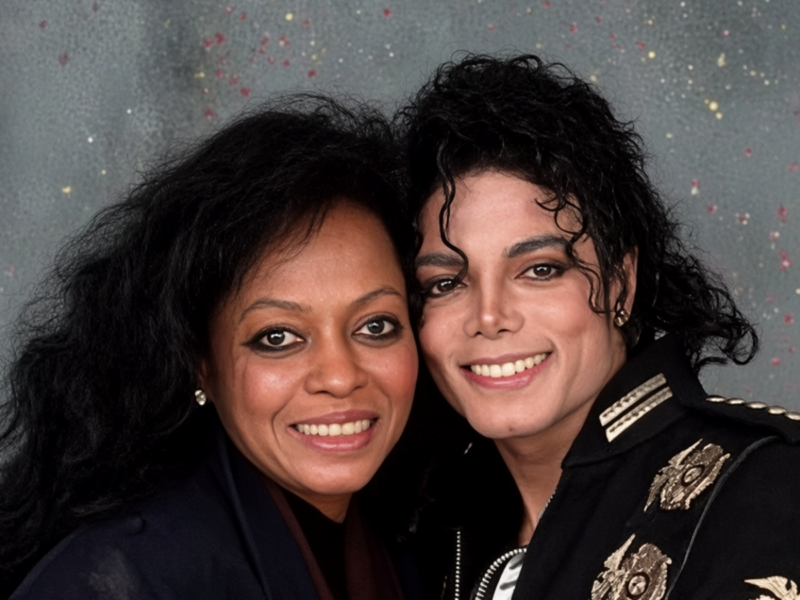
Michael Jackson’s Secret Finally Exposed By Diana Ross, And It’s Bad.
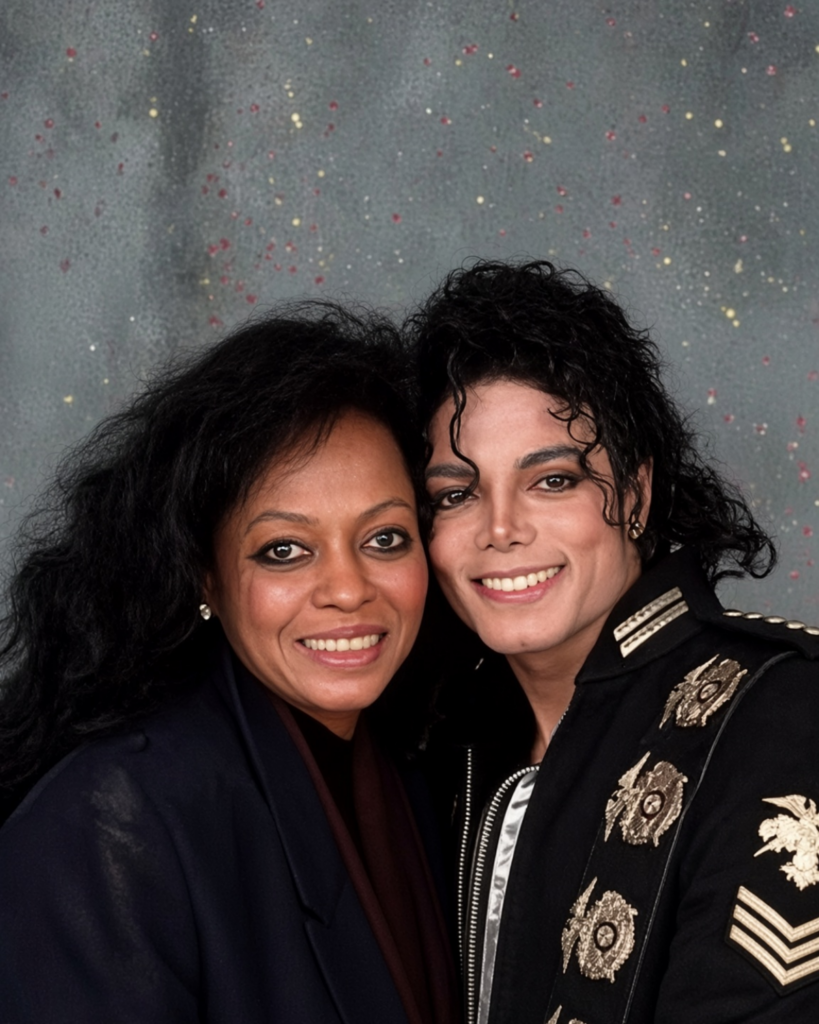
The most revealing thing Diana Ross ever said about Michael Jackson was not a confession of a secret romance.
It was a sentence that explained why their connection had survived for decades.
Even when the world tried to define it for them.
On July 7th, 2009, as millions of people watched Michael Jackson’s public memorial in Los Angeles, Diana was absent.
She had chosen to grieve privately.
But the message she sent to the service contained words that fans would remember long after the cameras stopped rolling.
Michael, she said, was a personal love of hers, a treasured part of her world, and part of the fabric of her life.
Those words immediately raised questions.
What did Michael Jackson mean to Diana Ross?
What had she meant to him?
How could a relationship that began when he was a child remain so significant throughout his adult life?
And why did he trust her with something as precious as the future of his children?
Over the years, rumors about their relationship grew into stories of secret romance, heartbreak, and an engagement that supposedly ended in tragedy.
Yet the documented history tells a more complicated story.
Michael openly spoke about his feelings for Diana, while she consistently described him as someone deeply important to her.
Their relationship involved mentorship, professional collaboration, affection, and a bond that neither fame nor public speculation could easily explain.
Then came the renewed attention surrounding the 2026 biopic Michael, which prompted fresh discussion about Diana’s place in his life.
Reports claimed she had little interest in watching the film, while her scenes, originally filmed for the production, were ultimately removed.
But those developments did not amount to a new confession from Diana herself.
To understand what her words really meant, we have to return to the beginning—when a nine-year-old boy from Gary, Indiana entered the world of Motown and encountered a woman who was already becoming a legend.
In the late 1960s, Diana Ross was one of the biggest stars associated with Motown Records.
As the lead singer of the Supremes, she had helped transform the group’s polished performances and memorable songs into an international success.
She possessed the elegance, discipline, and commanding stage presence that made her an icon.
By the time the Jackson 5 arrived at Motown, she had already established herself as one of the label’s most recognizable performers.
Michael Jackson was still a child when his family began pursuing opportunities beyond Indiana.
He had been performing with his older brothers since early childhood, displaying extraordinary energy and vocal ability.
The group eventually came to the attention of Motown through musician Bobby Taylor, who helped introduce them to the label.
Berry Gordy and his team recognized their commercial potential, and the Jackson 5 signed with Motown in 1968.
Diana played an important part in the group’s public introduction.
In August 1969, she presented the brothers to music industry insiders in Los Angeles.
Motown also released the album Diana Ross Presents the Jackson 5 later that year, placing her name alongside the group as its career began gaining momentum.
That title became part of music history, but it should not be mistaken for proof that Diana singlehandedly discovered the brothers.
Bobby Taylor, Berry Gordy, and other Motown figures also played important roles in the group’s rise.
Diana’s contribution was nevertheless significant.
She was already a star, and her association gave the young performers additional visibility at a crucial moment.
For Michael, who was only nine when the group began its breakthrough, Diana represented something extraordinary.
She could command an audience without appearing to struggle for attention.
She understood how to carry herself in front of cameras, how to present a polished image, and how to turn a performance into an experience people remembered.
Those were lessons a young performer could absorb simply by watching someone who had mastered the industry.
Michael grew up in an environment where work and performance occupied an enormous part of his life.
He was already a talented entertainer, but talent alone did not explain the level of discipline required to become a global superstar.
He watched the adults around him closely.
Diana was one of the successful performers whose example helped shape his understanding of entertainment.
However, the claim that Berry Gordy arranged for nine-year-old Michael to move into Diana’s Hollywood Hills home is not established by the reliable historical sources available.
Their connection did not need such an extraordinary story to be meaningful.
There is ample evidence that she became an important figure in his life through Motown, their shared work, and the affection he expressed for her as he grew older.
Michael’s admiration for Diana was not simply about her celebrity.
She occupied a distinctive place in his imagination.
He could look at her and see the qualities he wanted to develop: confidence, discipline, elegance, and the ability to hold an audience’s attention.
As his own career expanded, he increasingly understood how difficult it was to maintain that image while living under constant public scrutiny.
Their connection became even more visible in the 1970s when both appeared in the film adaptation of The Wiz.
The production brought them together as performers, with Diana playing Dorothy and Michael playing the Scarecrow.
The film was based on the Broadway musical inspired by The Wonderful Wizard of Oz, reimagined through African-American music and culture.
Filming took place in New York in 1977, and the finished movie was released in 1978.
For Michael, the project offered an opportunity to work with Diana in a different setting, away from the structure of the Jackson 5.
He was trying to establish himself as a solo artist while she was an experienced performer moving between music, television, and film.
The production also introduced Michael to Quincy Jones, who would become one of the most important collaborators of his career.
Their partnership led to Off the Wall, Thriller, and Bad—albums that helped redefine pop music and establish Michael as a performer capable of dominating the world stage.
Diana did not produce those albums, and her role should not be exaggerated, but she belonged to the wider network of experienced artists and industry figures who had helped Michael understand the possibilities of his career.
Their shared history connected his childhood beginnings at Motown with the remarkable success that followed.
Meanwhile, the nature of Michael’s feelings toward Diana became a subject of public fascination.
He admired her intensely, and he did not always hide that admiration.
In a December 1982 interview with Ebony magazine, he spoke openly about loving Diana and expressed a desire to marry her.
His comments were unusually direct, especially considering the difference in their ages and their long-standing relationship.
Michael’s feelings were therefore not entirely invented by later tabloids.
He had publicly acknowledged romantic interest in her.
But a crucial distinction remains.
His expressing a desire to marry Diana does not prove that she accepted a proposal, that the pair became engaged, or that they had a conventional romantic relationship.
The story that Diana accepted an engagement ring from Michael in 1981 and then ended their engagement under public pressure is repeated in some retellings, but it is not supported by reliable evidence establishing that such an engagement actually took place.
It should not be presented as a confirmed chapter of their lives.
The documented record is already intriguing enough.
Michael had developed a deep attachment to an older star who had been part of his world since childhood.
He could admire her as an artist, look up to her as a mentor, and express romantic feelings that went beyond ordinary friendship.
These feelings could coexist without proving that the relationship developed in the way later rumors suggested.
Michael’s autobiography, Moonwalk, published in 1988, offered another famous description.
He wrote that Diana was his mother, lover, and sister, all rolled into one.
The phrase has been repeatedly quoted, sometimes as evidence that the two were secretly together.
But his description expressed the intensity and complexity of his affection.
It does not establish that Diana reciprocated his romantic feelings or that they became partners.
The words also reveal how personally significant Diana was to him.
Michael often spoke about people who inspired him in emotionally heightened language.
For someone who had grown up in the entertainment industry, surrounded by work and expectations from an early age, a relationship that combined admiration, familiarity, and emotional attachment could hold extraordinary importance.
Diana, meanwhile, had her own life and relationships.
She eventually married Norwegian businessman Arne Næss Jr. in 1985.
The marriage was a real documented event, unlike the supposed engagement to Michael.
The couple had children together before their relationship ended in divorce.
Some accounts suggest Michael was hurt when Diana married, but the exact nature of his private reaction is difficult to establish from public evidence alone.
He did not need to have been her abandoned fiancé for the marriage to represent a change in the relationship he had imagined.
If he hoped for a romantic future, her decision to marry someone else would naturally have meant that the future he wanted was not going to happen.
That is a more responsible way to understand the situation than turning it into a dramatic tale of a broken engagement.
Michael’s own words establish that he expressed romantic interest.
Diana’s marriage establishes that she built a life with another partner.
The private conversations between them remain largely private, and the public record does not justify inventing details to fill those gaps.
Another rumor that followed their names involved Michael’s 1987 song “Dirty Diana.”
The title encouraged speculation that the song referred to Diana Ross, especially because of their close association.
But Michael explained that the song was about a different subject: the groupies who pursued performers backstage and around concert venues.
The confusion became even greater because the song was also associated with conversations about Princess Diana of Wales.
Michael later explained to Barbara Walters that he had removed it from a concert set list before meeting the princess because he did not want to offend her.
She reportedly told him she wanted him to perform it.
That story demonstrates how a familiar name can acquire a meaning that the artist never intended.
There is no solid basis for treating “Dirty Diana” as a confirmed message to Diana Ross or as proof of anger toward her.
The interpretation may be appealing to a dramatic narrative, but Michael’s own explanation points elsewhere.
As the years passed, Michael and Diana maintained an important connection.
Even though the public could not see every part of their private lives, they remained associated through their shared Motown history, their work on The Wiz, and the affection Michael expressed in interviews and in his autobiography.
One memorable moment came during a 1981 Diana Ross television special.
Diana teased Michael about being sexy, drawing out a shy and playful response.
He laughed and told her she was embarrassing him.
The exchange was light-hearted, but it revealed the comfort they could share in public.
She could tease him, and he could respond without the formality that often surrounded his superstar image.
It would be too much to claim she was the only person who could make him feel that way.
Michael had friends, collaborators, and other important relationships throughout his life.
Yet the clip remains a revealing illustration of their dynamic: an established star who had known him since childhood, and a younger performer who could still become visibly shy around her.
The most concrete demonstration of Michael’s trust came in his will.
In a document dated July 2002, he named his mother, Katherine Jackson, as the first choice to serve as guardian of his children if he died while they were minors.
If Katherine did not survive him or was unable or unwilling to serve, he nominated Diana Ross as the alternative guardian.
This was a significant decision.
Michael had three children: Prince, Paris, and Prince Michael II, better known by the nickname Blanket.
Choosing a potential guardian was not a declaration of romantic love.
It was a decision about trust, judgment, and the person he believed could care for his children if his first choice could not.
The will described Diana’s possible responsibility in formal legal language.
It did not say that she was the only person Michael trusted, nor did it establish that she was expected to replace Katherine.
She was named as the alternative.
Nevertheless, the choice showed that Michael believed Diana could be a suitable caregiver for his children.
She had raised children of her own, and she had known Michael for decades.
Their connection began when he was a child and continued through his adult life.
The fact that he retained her name in his will long after the earliest years of their association suggests that the relationship remained important to him.
Then, on June 25th, 2009, Michael Jackson died at the age of 50.
The news stunned the entertainment world.
His death prompted an international outpouring of grief from fans, fellow performers, and people who had known him at different stages of his life.
Attention quickly turned to his children, his family, and the people who had shared his journey.
Diana Ross released a statement expressing shock and sorrow.
She said she could not stop crying and that her heart was hurting.
She also expressed concern for Michael’s children and family.
The words were brief, but they made clear that the death affected her personally.
When the public memorial took place at the Staples Center in Los Angeles on July 7th, 2009, Diana did not attend.
Her decision generated speculation, with some people interpreting her absence as a sign of distance.
Her own explanation suggested the opposite.
She wanted to grieve privately and find closure in a way that felt right for her.
The statement she sent to the memorial became one of the most memorable tributes of the day.
Michael was, she wrote, a personal love of hers and a treasured part of her world.
She described him as part of the fabric of her life, adding that she could not find the words to express what he meant to her.
The phrase was powerful because it did not attempt to define the relationship with a label.
She didn’t call him an ex-fiancé or confirm a secret romance.
She described a deeply personal connection that had become part of her identity and life experience.
The statement was affectionate, intimate, and full of grief without resolving every question fans had asked about them.
Diana also addressed the responsibility Michael had left her in his will.
She said he wanted her to be there for his children and that she would be there if they ever needed her.
It was a promise made publicly during a moment of extraordinary loss, and it demonstrated that she understood the significance of the trust he had placed in her.
Her absence from the memorial had a practical explanation in the statement she provided.
She wanted privacy, not an opportunity to distance herself.
In an event watched by millions, she chose to express herself through words rather than appear before the cameras.
For someone who had spent decades as a public performer, the choice to grieve quietly was meaningful in its own right.
The following year, Diana honored Michael through her own music.
During her More Than Yesterday tour in 2010, she dedicated the shows to her late friend and performed a medley of his songs, including “You Are Not Alone.”
Reports said Michael’s children were among those attending a Los Angeles performance.
The tribute allowed Diana to recognize their shared history in a setting where both had spent much of their lives: the stage.
She did not need to recreate their relationship or answer rumors.
Performing his music was a way to honor the work that had connected them and to acknowledge the loss she had experienced.
In 2019, the documentary Leaving Neverland brought renewed scrutiny to Michael Jackson.
The film featured allegations by Wade Robson and James Safechuck, who said Jackson had sexually abused them when they were children.
Jackson denied allegations of abuse during his lifetime.
The documentary generated intense public debate, renewed media coverage, and strong reactions from people who believed him and those who did not.
Diana Ross responded publicly on social media.
She wrote that she believed and trusted Michael was a magnificent and incredible force to her and many others, ending with the phrase “stop in the name of love,” a reference to the Supremes’ famous song.
Her message expressed continued affection and support during a period of renewed controversy.
Her statement was not an investigation into the allegations, and it did not establish the truth or falsity of claims made in the documentary.
It showed where she stood emotionally and how she regarded someone who had been part of her life for decades.
Supporters saw loyalty from a longtime friend.
Critics questioned her willingness to defend him.
The post did not settle the debate, but it made clear that the relationship remained meaningful to her.
This distinction matters because public figures are often expected to reduce complicated relationships to a simple declaration.
A friend can express affection without possessing complete knowledge of every event in another person’s life.
Likewise, public criticism does not automatically erase a relationship’s history.
Diana’s message revealed her personal position, not a comprehensive verdict on every controversy involving Michael.
Michael Jackson’s life was filled with contradictions.
He was a public figure who guarded his private world.
A performer who gave audiences extraordinary access to his art while remaining difficult to understand as a person.
Diana Ross had her own demanding career and family life.
Their friendship crossed decades, industries, and different stages of adulthood.
It did not need a simple label to matter.









