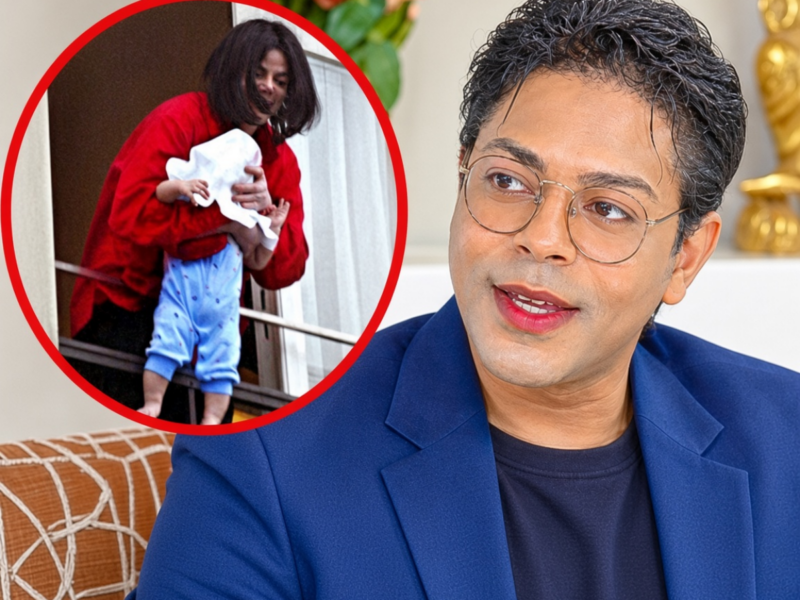
Michael Jackson’s Secret Biological Son B Howard Finally Breaks Silence.
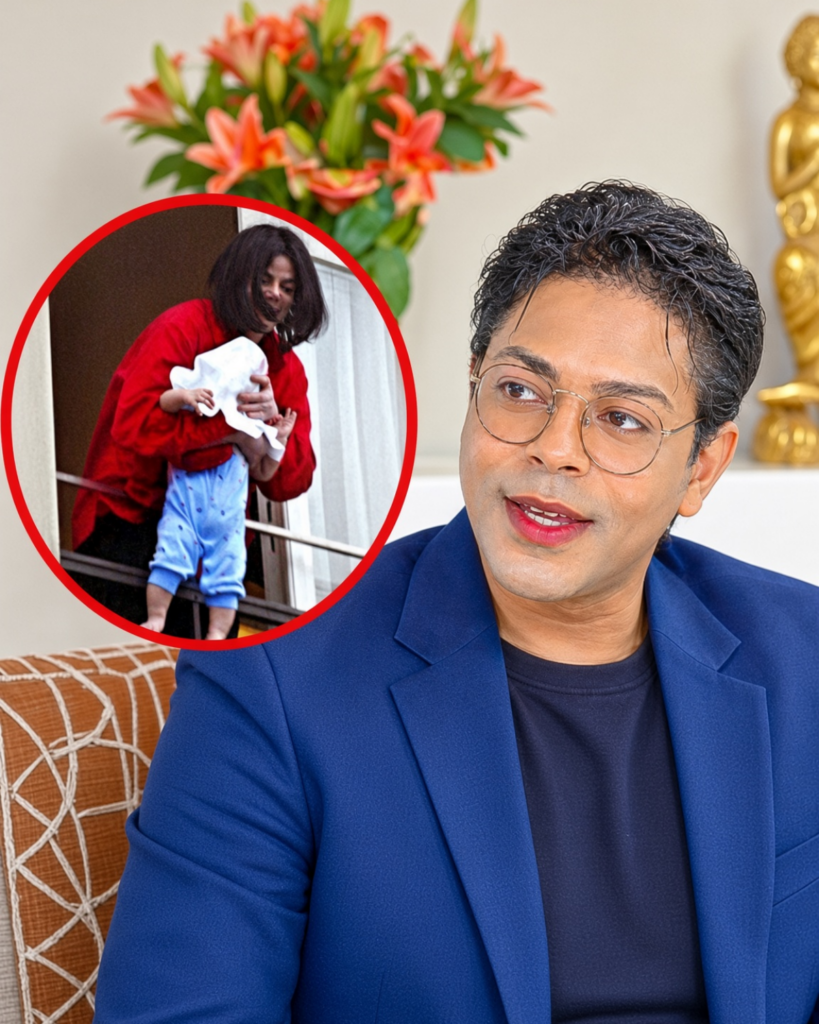
In 2014, a broadcast claimed to hold irrefutable scientific evidence.
Michael Jackson’s concealed biological offspring had finally been located.
That person was B. Howard.
He had the singing ability, the dance moves, and a face that stunned the internet.
Yet beneath the glaring headlines and spreading conspiracy chatter lay a multi-million-dollar media extravaganza built on hidden agendas, untruths, and a startling revelation that transformed everything.
When B. Howard first appeared on the music scene, playing several instruments, singing and producing, he possessed an ability that would soon prove both a gift and a burden.
An uncanny physical similarity, a natural grace in dancing, and a vocal quality sounding astonishingly like the King of Pop.
What another artist might have taken as respect, the media instead treated as an opportunity.
The rumor mill thrives on sensationalized narratives.
Over the years, routine business ties, shared family circles, and surface-level similarities were intentionally contorted into one of music’s most persistent celebrity legends.
Fueled by proliferating internet forums and clickbait headlines, the public became consumed by a single pressing question.
Was B. Howard actually Michael Jackson’s secret biological son?
This transcends mere tabloid gossip.
It centers on the conflict between authentic identity and marketable spectacle.
It explores how modern media can distort a performer’s genuine craft, forcing a dedicated artist to fight for his own identity while standing directly beneath the blinding spotlight of pop royalty.
We want to start with a comment from our previous video before continuing B. Howard’s story.
Thanks for sharing your thoughts with us.
After hearing B. Howard finally speak about his alleged connection to Michael Jackson, do you think his story could change how people view Michael’s private life and family history?
Share your thoughts in the comments, and one response could be featured in our next video.
Long before tabloids and internet forums began whispering about secret parentage, Brandon Howard was simply a young kid immersed in the sacred rhythms of American music.
Born on April 2nd, 1981, Brandon grew up surrounded by royalty.
Not the pop kind, but authentic R&B heritage.
He was entirely self-taught, absorbing every sonic texture he encountered, picking up instruments purely by ear and developing a distinctive approach to phrasing.
By his early 20s, Brandon, professionally called B. Howard, had steadily established himself as a highly sought-after songwriter and producer, creating hits behind the scenes for prominent artists like Ne-Yo, Marques Houston, Omarion, and Teddy Riley.
Yet despite his proven track record as a craftsman of sound, the public’s curiosity kept drifting away from his production accomplishments and latching on to his appearance.
Brandon possessed a high tenor vocal timbre, a slender frame, and an innate rhythmic instinct that bore a striking, almost unnerving resemblance to Michael Jackson.
When he sang, the tonal transition emerged effortlessly, but to an untrained ear, it felt like a ghost echoing from a bygone era.
Every studio session and public appearance ignited the same hushed speculation.
Who is he really?
To genuinely understand Brandon, one must first look at the extraordinary woman who brought him into the world, Alicia Michelle “Mickey” Howard.
Long before her personal life became fodder for gossip pages, Mickey Howard stood as a monumental presence in soul music.
Rising in the mid-1980s as the frontwoman of Side Effect, Mickey quickly forged a stellar solo career that carved her name into R&B’s rich history.
Driven by hit singles like “Come Share My Love,” “Baby Be Mine,” and her timeless classic “Love Under New Management,” she ruled the charts throughout the late ’80s and ’90s.
Mickey’s voice carried a fierce emotional intensity, earning her both critical acclaim and a legacy rooted in genuine creative power.
Mickey moved through top-tier musical circles effortlessly, working alongside legends and building a career rooted in dedication, vocal precision, and unyielding craftsmanship.
Raised under her wing, Brandon came of age within recording studios, backstage dressing rooms, and jam sessions where world-class musicianship was the norm, not the exception.
His musical instincts were never meant to mimic pop royalty.
They were molded by a mother who breathed classic soul in every single breath.
Brandon and Mickey had both built real, verifiable creative careers entirely through their own hard work.
They were working artists whose lives rested firmly on actual studio recordings, legitimate chart success, and decades of commitment.
Yet as Brandon grew into a solo artist in his own right, the music industry showed far less interest in his genuine R&B roots and far more fascination with the growing urban legends that threatened to consume his real identity.
Los Angeles during the 1980s formed a tightly woven web of genius where legendary artists shared managers, studios, and late-night recording sessions.
Within this highly charged creative world, Mickey Howard’s journey and the Jackson family’s journey crossed paths.
In the early ’80s, Mickey was managed by Joe Jackson, the formidable patriarch who had steered the Jackson 5.
Through this high-level professional connection, Mickey became a familiar figure within the Jackson orbit.
She met Michael, spent time at the family properties, and moved through the same elite artistic circles.
It was a completely routine business relationship built on talent and shared representation.
Yet years later, media gossip would twist this professional proximity into something far more scandalous.
Throughout Brandon’s childhood, the internet began stitching random details together to construct a gripping narrative.
Chief among these wild fan theories was the infamous “Billie Jean” urban legend.
Pop culture sleuths observed that Mickey Howard’s childhood nickname was Billie.
They eagerly speculated that Michael Jackson’s legendary 1982 hit “Billie Jean” was a secret confession written about Mickey, warning that the kid is not my son.
It made a compelling tale for tabloid covers, but basic chronological examination completely dismantles the myth.
Brandon Howard was born on April 2nd, 1981.
Michael Jackson had already written, recorded, and finished “Billie Jean” around that exact same period, drawing from real obsessive stalkers who claimed he had fathered their children.
The dates simply never matched.
Yet online forums stubbornly ignored the timeline in favor of sensational fiction.
For young Brandon, the Jackson family was never some mysterious tabloid dynasty.
They were real people in his everyday world.
Thanks to his mother’s professional relationships and a close connection with Jermaine Jackson and other relatives, Brandon spent portions of his boyhood visiting the famous Neverland Ranch.
He wandered its grounds, experienced the wonder of the estate, and formed genuine personal bonds with several Jackson family members.
He absorbed the Jackson influence both as a young visitor and as an emerging artist, taking in their commitment, stylistic flair, and performance standards.
Yet what the public mistook for inherited talent was actually the result of childhood exposure, mentorship, and deep artistic admiration.
While the world delighted in wild paternity theories, the actual story of Brandon’s biological parentage was never hidden.
Enter Augie Johnson, the renowned founder and lead vocalist of the R&B group Side Effect.
Augie and Mickey Howard shared an enduring personal and professional partnership throughout the late 1970s and early 1980s.
When Brandon was born in April 1981, Augie was there in the delivery room, proudly signing his name on the birth certificate.
Years later, after the Michael Jackson paternity rumors reached their height, Augie Johnson publicly stepped forward to set the record straight.
In unambiguous interviews, Augie confirmed he was Brandon’s biological father, detailing his continued role in Brandon’s life, their shared physical traits, and the undeniable fact of their blood relation.
Even with Augie’s clear, unwavering statements, the public’s hunger for a secret pop royalty heir proved far stronger than simple biological proof.
Myth, it seemed, was always preferred over the plain truth.
Firmly determined to prove his worth through creative excellence alone, Brandon Howard deliberately chose to build his career far from the glare of visible stardom.
He retreated into the recording studio, transforming himself into a formidable behind-the-scenes sonic architect.
Throughout the mid-2000s, B. Howard quietly shaped the soundscapes of mainstream R&B and pop.
His sharp instinct for arrangement, vocal layering, and rhythmic groove caught the attention of industry heavyweights.
Before long, he was co-writing and producing tracks alongside legend Teddy Riley, crafting records for hitmakers such as Ne-Yo, Omarion, Marques Houston, and Ginuwine.
He wasn’t relying on a famous surname or tabloid notoriety.
He was putting in the grueling studio hours, earning respect from veteran musicians purely through the strength of his production credentials.
Yet a talent built for the stage cannot remain hidden in the control room forever.
By 2010, B. Howard decided to step out from behind the mixing board and directly into the spotlight as a solo artist.
Knowing how intensely American media fixated on his appearance, he made a strategic move toward the Asian music market, signing an international deal to release his debut solo album, “Genesis,” in Japan.
The record was a vibrant mix of contemporary urban pop and infectious 1980s dance styles, featuring lead tracks such as “Dance Floor.”
When Japanese journalists and music executives witnessed B. Howard performing live, the reaction was immediate and electric.
On stage, his fluid moonwalks, precise body isolations, soaring falsetto, and trademark fedora and loafer style delivered an unmistakable homage to vintage 1980s pop grandeur.
International outlets instantly drew direct comparisons to Michael Jackson, hailing him as a spiritual successor carrying the pop torch into a new decade.
For Brandon, this global recognition proved to be both a blessing and a burden simultaneously.
Although “Genesis” earned critical acclaim and solidified his reputation as a compelling international performer, the constant comparisons reignited older suspicions.
The worldwide press began reading his authentic artistic choices, his decision to pay homage to the classic pop traditions he had grown up absorbing, not as genuine respect, but as calculated proof of a secret biological inheritance.
As footage of his overseas concerts filtered back to America and spread across the rising social media landscape, the stage was quietly set for a highly explosive media storm that would very soon threaten to derail his career entirely.
By early 2014, the faint murmur of speculation regarding B. Howard’s parentage detonated into an unprecedented global media circus, turning a quiet private existence into the centerpiece of a fabricated digital spectacle.
At the center of this storm stood billionaire media mogul Alki David, the eccentric founder of the live streaming platform FilmOn.TV.
Spotting a golden opportunity to generate massive web traffic, drive app downloads, and elevate his brand, David arranged a high-profile broadcast.
He pledged to provide definitive scientific proof concerning one of pop culture’s most persistent mysteries, whether Brandon Howard truly was Michael Jackson’s biological son.
On March 6th, 2014, FilmOn.TV aired a heavily sensationalized live press conference from Beverly Hills, California.
The atmosphere inside the studio was thick with manufactured theatrical tension.
Sitting on the panel directly beside Alki David was actor Corey Feldman, a former child star and longtime personal friend of the late King of Pop.
Feldman’s presence added a strange layer of Hollywood credibility to the event as he publicly expressed his belief in the physical resemblance and spiritual connection between Brandon and Michael.
At the climax of the broadcast, David revealed what he called an official genetic test report.
He told the viewing audience that DNA extracted from a genuine Beverly Hills dental impression, supposedly secured from a luxury auction holding Michael Jackson’s old dental molds, had been compared against Brandon Howard’s genetic material.
The result, David proclaimed with complete dramatic conviction, was an astounding 99.9% biological match.
As headlines instantly exploded across news outlets and gossip sites worldwide, Brandon Howard posted a pre-recorded Facebook video to establish an immediate boundary.
Looking straight into the camera, Brandon appeared composed yet clearly frustrated by the chaotic circus surrounding his name.
He addressed the public with complete transparency.
He stated plainly that he had never spoken to TMZ, had not supplied any story to the media, and had never claimed to be Michael Jackson’s son.
Most importantly, Brandon made clear that while he had voluntarily provided a DNA sample for a private personal matter, he had absolutely no involvement in Alki David’s broadcast spectacle.
Nor did he have any plans to sue the Michael Jackson estate for inheritance, money, or financial gain.
His only desire was to protect his personal dignity, restore his reputation, and focus on his genuine career as a working artist.
Despite Brandon’s immediate denial, the internet erupted into complete chaos.
But within mere hours of the live announcement, investigative journalists and sharp-eyed users began exposing the press event, revealing it to be a blatantly fraudulent operation.
Outlets like TMZ conducted a thorough forensic analysis of the official lab results paperwork distributed by FilmOn.TV.
The document purported to originate from a legitimate genetics facility named DNA Lab based in Ireland.
Online detectives quickly discovered that no such laboratory existed anywhere in Ireland.
Even more absurdly, the official logo printed on the DNA document turned out to be a generic digital image taken directly from promotional materials for the science fiction film “Terminator Salvation.”
The entire document was a complete fabrication pieced together from a stock movie poster graphic and made-up numbers.
The fallout from the exposed hoax arrived swiftly and severely.
Representatives and attorneys for the Michael Jackson estate issued scathing public statements denouncing the entire FilmOn broadcast as a pitiful, shameless publicity stunt designed to chase online traffic at the expense of Michael’s enduring legacy and a young artist’s reputation.
Jackson family members reiterated that while the Howard family had maintained friendly professional ties over the years, the secret paternity claims were completely baseless and legally meaningless.
Throughout the chaotic aftermath, Brandon’s mother, R&B icon Mickey Howard, maintained a steadfast, dignified silence, refusing to fuel the rumor machine or grant sensational interviews.
Mickey cited non-disclosure agreements connected to her earlier industry work and expressed a desire to protect her family’s privacy.
She chose to let her acclaimed musical legacy speak for itself, standing quietly by her son as he navigated the wreckage of a spectacle he had never asked to be part of.
The 2014 DNA circus served as a blunt warning about modern media manipulation.
Outside forces had converted a young artist’s physical likeness into a weapon, hijacked his personal identity, and staged a fraudulent performance for public consumption.
As the internet moved on to the next viral sensation, Brandon Howard was left to pick up the pieces of a hoax that had attempted to rewrite his real life into a corporate clickbait narrative.
In the wake of the 2014 media storm, Brandon Howard found himself navigating a peculiar career reality.
For any independent artist, building a genuine brand is a monumental challenge.
Doing so while trapped under the microscope of pop culture mythology requires immense psychological fortitude.
Wherever B. Howard performed, music critics and Jackson superfans subjected him to meticulous physical and artistic scrutiny.
They pointed to his natural high tenor vocal placement, his percussive glottal stops, his sharp shoulder isolations on stage, and even the subtle structural symmetry of his cheekbones and jawline.
Every vocal run and choreographic nuance was analyzed not as the deliberate craftsmanship of a trained musician, but as behavioral proof of a hidden bloodline.
For B. Howard, these parallels arose from a misunderstanding of what artistic mentorship genuinely entails.
In numerous interviews following the scandal, Brandon repeated his official stance time and again.
Michael Jackson was an inspirational figure, a musical standard, and a treasured mentor whose family was close to his own.
He explained how growing up surrounded by world-class performers inevitably shaped his creative identity.
Adopting sharp dance moves or classic 1980s pop production techniques was no different from a jazz saxophonist honoring John Coltrane or a guitarist drawing from Jimi Hendrix.
Yet because of his physical resemblance, the public constantly confused sincere tribute with forced imitation, interpreting his genuine artistic expression as a deliberate copy.
The professional fallout from the fabricated 2014 DNA announcement cut in two directions.
On one hand, the global scandal soaked his name in worldwide exposure.
On the other, it threatened to overshadow his genuine achievements as a producer and songwriter.
Major labels and potential corporate partners hesitated, wary of being pulled into the legal and tabloid baggage of the Jackson legacy.
The media uproar risked reducing a seasoned studio professional to the punchline of a debunked clickbait tale.
Rather than surrender to the scandal or walk away from the industry entirely, B. Howard demonstrated remarkable resilience through tireless creative output.
He channeled more energy into his craft.
Taking full command of his artistic narrative, he expanded his global footprint, embarking on world tours across Europe, Asia, and the Middle East, where audiences appreciated his electrifying, high-energy stage presence.
He continued releasing solo work, including polished melodic pop R&B tracks such as “Don’t Say You Love Me,” “Lose Control,” and notable international collaborations with artists like Siggy Jackson and Akon.
In the studio, he remained a sought-after sonic architect, consistently producing for worldwide markets and proving that his passion for music extended far beyond American tabloid headlines.
Ultimately, closing the chapter on these pop culture myths brings clarity that was long overdue.
The truth remains anchored in confirmed parentage, documented frauds, and B. Howard’s quiet resilience.
By refusing to let media spectacle define his identity, Brandon Howard reclaimed his own life narrative, proving that genuine artistic legacy is built not on inherited folklore, but on authentic talent, personal dignity, and self-determination.









