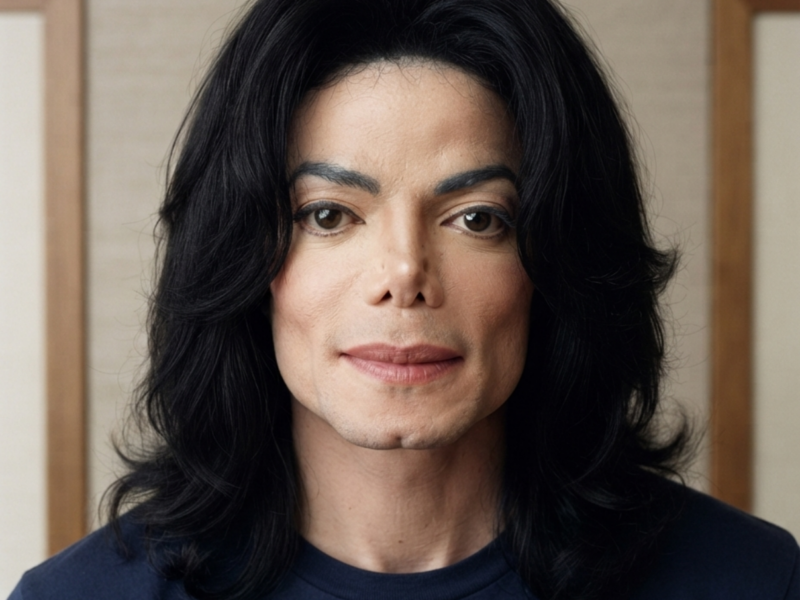
Michael Jackson’s Life Before His Death Was Heartbreaking.

“How do you think he died?”
“You’ve been quoted as saying you believe it may have been murder. Do you still think that?”
“Absolutely.”
“Why are you never—ever—think differently?”
“Because first of all, Michael told me that they were going to murder him. He was afraid. He was afraid.”
“The people that were involved in his life?”
“No, he said one side is very, very hot, one side is cold. I said, I don’t know what that could be. Maybe his heart, maybe his central nervous system. And at that point, I knew that somebody had given him something that hit that central nervous system because, you know, that’s all he wanted was to sleep. But he was in trouble. He was in trouble.”
Sunday, the coroner ruled his passing a homicide.
The jury reached a verdict of manslaughter, while his family maintained that it was murder.
“These will be my final show performances in London. This will be it. This is it. And when I say ‘this is it’—”
“This was definitely something that was premeditated, that they had planned to do, and they planned to take my brother out, and my brother knew it. And that’s why he told me repeatedly and repeatedly and repeatedly that this was going to happen to him.”
Michael Jackson was one of the most famous people in the world, had sold more records than any artist in history, and owned a music catalog worth billions.
Yet the final years of his life were marked by misery and heartbreak.
He was drowning in debt, struggling with severe health issues, and on top of it all, repeatedly warned those around him that someone was going to take his life.
But no one listened.
“He explained it to me. He explained it’s because of my catalog, which is my publishing, and they’re after it, and they want it, and they want their hands on it, and they want to take it away from me.”
So Michael developed this love-hate relationship with his catalog.
“I don’t want it because it’s going to destroy my life. No, it’s mine. I’m going to keep it. I’m not going to let them rip it apart and take it from me.”
This went back and forth.
According to La Toya Jackson, Michael Jackson repeatedly told her that his music catalog and publishing rights could ultimately cost him his life.
She said he was convinced that powerful people wanted control of his valuable assets and that they were willing to go to extreme lengths to get them.
La Toya recalled Michael telling her more than once that “they are after him” and explaining that his catalog was the reason he feared for his life.
“I began to see his personality change. Michael had notes in his house saying how he hates John Branca. He hates Randy Phillips. He doesn’t want them around. He’ll never fly with them. He just went on and on expressing how he felt about these people.”
She initially struggled to believe him but said his repeated warnings and fear eventually convinced her that he genuinely believed he was in danger.
After his passing, La Toya continued to argue that his concerns deserved greater attention, though her claims of a broader conspiracy were never established as fact.
“People were all involved. Mind you, the will—I truly believe and I know that the will is fake because Michael was in New York when the will was signed, and they’d say he signed it in LA, and he did not. There was another guy that was in the will, Barry Siegel, but he pleasantly removed himself from it. Why would he do that? Because he knew that it was fake and he wasn’t going to get involved in the skullduggery. That’s why.”
Michael Jackson’s final days were surrounded by multiple controversies.
He was preparing for a major comeback with another performance already scheduled when his condition took a devastating turn.
According to accounts from people around him, Jackson had been struggling to rest and repeatedly asked for medication that would help him sleep.
“He said, ‘Find me an anesthesiologist. I don’t care how much money they want. Find me an anesthesiologist to be with me here overnight and give me this IV.'”
His medical team had been administering powerful sedatives, including propofol, a substance normally used under carefully controlled medical supervision.
Those close to him later described how desperately he wanted sleep.
While concerns were raised about the risks associated with the medication—
“My doctor told me this is a safe medicine. I said, ‘It is not a safe medicine. I just called a friend of mine. It has a multitude of side effects.’ I said, ‘The central nervous system problems. There’s memory loss. I mean, the end result of this is death.’ I said, ‘You don’t want to do this.’ He said, ‘No, my doctor said it’s safe.'”
Eventually Jackson suffered cardiac arrest after receiving propofol and other drugs.
The official investigation concluded that acute propofol intoxication was the primary cause, with the manner classified as homicide.
“Quick and is safe. As long as somebody’s here to monitor me and wake me up, I’m going to be okay. Michael was fully aware of it. He said, ‘I had it before and I slept good.’ And I said, ‘Well, it is not safe. I don’t know why anyone is telling you it’s safe.'”
The case ultimately focused attention on the powerful medications being administered, the doctor responsible for his care, and the unanswered questions surrounding the circumstances of his final hours.
“Called me and said he was very frantic. And he said, ‘Michael needs to see you right away. Can you come and see him?’ And I said—and I can hear Michael in the background—’Tell her. Tell her that one side of my body is hot and one side of my body is cold.'”
Dr. Conrad Murray was alleged in this case.
However, he described Jackson as a close friend whom he genuinely cared about.
“You said you had a very strong relationship with Michael Jackson. How close was that relationship?”
“I was his closest friend. You see, indeed, I was Michael’s doctor, but I spent more time with him as a friend than taking care of him medically.”
After Jackson’s passing, Murray repeatedly insisted that he never intended to harm him and denied being responsible for what happened.
“I will mourn his loss forever. I am so sad that he’s not here.”
During his trial, his defense argued that Jackson had taken additional medication on his own, while Murray maintained that he had been trying to help him sleep and eventually wean him off propofol.
Murray later continued to defend himself, saying, “I’m not the cause of Jackson’s passing.”
“What would he make of your conviction?”
“Oh, this would be very distressing for Michael to see what I have gone through.”
He also described Jackson as a friend and said he felt a responsibility to protect him.
However, the jury ultimately rejected Murray’s defense and convicted him of involuntary manslaughter, finding that his actions were a substantial factor in Jackson’s passing.
“And what I am going through. But our friendship was inadvertently formed from trust and with no intentions of forming that bond between us. It just happened.”
Murray has admitted using propofol, a powerful intravenous anesthetic, to help Michael Jackson sleep.
Murray argues that he did not intend to make Jackson dependent on the medication.
Instead, he says his plan was to gradually reduce Jackson’s reliance on propofol and eventually stop using it.
“I don’t think anybody doubts your qualifications.”
“What they would say is, ‘You should have known better.'”
“I should have known better. What do you mean exactly?”
“You should have known better not to have given in to Michael Jackson.”
“Well, the question is quite open. And when you say ‘given in,’ I can still say, well, let’s narrow that down.”
He also claims Jackson had already received propofol from other doctors before Murray treated him, suggesting that the practice did not originate with him.
According to Murray, he managed to stop administering propofol for several days, which he presents as evidence that his approach was working.
“You should not have given him the treatment that killed him.”
“I did not give Michael Jackson any treatment that would kill him. Actually, what the world has misconstrued is that I was actually trying to take Michael Jackson off of a substance I think he should not have been using on his own.”
“But there’s no doubt—”
“Mhm.”
“You failed.”
However, the critics challenge this reasoning because propofol is an anesthetic, not a routine treatment for insomnia, and using it outside an appropriate medical setting carries serious risks, including respiratory and cardiovascular complications.
Murray eventually acknowledges this criticism by saying he would not use propofol for insomnia again.
“Successfully get Michael Jackson off propofol—”
“For two nights.”
“No, three days prior to the time he died. Three days.”
“Yes.”
“But he died.”
“He did not die while I was taking care of him.”
La Toya Jackson later put forward a much broader theory about what happened to her brother.
She claimed Michael believed he was being targeted by powerful people who had gained control over his life, finances, and valuable music catalog.
“The people that were involved in his life, the people that were controlling him. This book, ‘Starting Over,’ is about my life, and it’s about Michael’s life. It’s the parallel between the two of our lives. We share that same life.”
According to La Toya, Michael repeatedly warned her that these people wanted his publishing assets and that he feared they would ultimately harm him.
“People come into your life, wiggle their way in, control you, manipulate, control your funds, your finances, everything that you have, and you must do what they tell you to do. And that’s what Michael was going through.”
In interviews, La Toya claimed that there were additional people involved and that the investigation should have gone further.
She also argued that Dr. Conrad Murray was not the person ultimately responsible.
“And he knew that everything that was happening to him was not kosher. It wasn’t right, and it disturbed him greatly, and he kept saying it over and over.”
Describing him as a fall guy who had been used by others.
“Yes, Dr. Murray was the fall guy, but it’s more to it than just that. He named names. He told me people. He told me to be careful of this one and that one. And in the beginning, I didn’t—it’s not that I didn’t believe him.”
La Toya also claimed that influential people around Michael Jackson pressured him to perform more shows during his final concert run than he was physically capable of handling.
“People that surrounded themselves around him, people that worked with him, people that were with him the last day.”
“Any specific name?”
“Michael wasn’t capable of doing these shows that he was supposed to do. Michael only agreed—”
According to comedian TK Kirkland, Michael Jackson’s comeback was motivated largely by financial problems.
“And I think we had this conversation before about Michael Jackson, when—why—when Michael Jackson went broke. And I tell everybody that Michael Jackson went broke ’cause he stopped working.”
“Because see what people do—and I teach this to my children—again, when you spend, you got to replace. If you can’t replace it, don’t spend it.”
The idea is that despite Michael’s enormous fame and previous wealth, his finances had become complicated because of his spending, debts, legal expenses, and the costs associated with maintaining his lifestyle and properties.
“You can’t keep spending and think—and don’t put nothing back. Oh, yeah.”
“‘Cause it’s—you going to be on E.”
“Yeah. Right. Yeah.”
“Michael never downgraded his lifestyle after he stopped putting out albums. He still living lavage.”
“He still was living lavage, and that’s why he ended up broke.”
From this perspective, the planned “This Is It” concerts were not simply an artistic return or a desire to perform for fans.
They were also a practical way for Michael to generate substantial income and address financial pressures.
“Although I get—I’m just confused. Like I don’t get it, sir. Like I don’t get it.”
Kirkland’s argument therefore portrays the comeback as something Michael needed financially rather than something he pursued purely because he wanted to return to the stage.
“A gentleman told me years ago, gentleman named David Kleman, he said, ‘No matter how big your home is, the mattress is still going to be the same size.'”
Court documents concerning Michael Jackson’s finances revealed that at the time of his death in 2009, his financial situation was far more complicated than his image as one of the world’s wealthiest entertainers suggested.
Reports based on court filings described debts and financial obligations totaling roughly $500 million.
These liabilities reportedly came from a combination of loans, unpaid expenses, interest, legal costs, and other obligations accumulated over the years.
Even though he owned valuable properties and, most importantly, had significant interests in his music catalog and other intellectual property, Michael Jackson in the 1980s and early 1990s was the best celebrity at making money.
“He would put out albums and they would be instant bestsellers, and that was at a time when albums actually made money. He would do tours and make fifty to a hundred million dollars a year. He was really one of the best music acts at taking his fame, his songs, and monetizing it, and he was quite a brilliant man when it came to business.”
The problem was that much of his wealth was tied up in assets, while his debts and ongoing expenses required substantial cash.
The financial pressure helps explain why the planned “This Is It” concerts were potentially so important.
The performances could have generated major revenue while helping stabilize his finances.
Thus, the court documents portray Michael’s financial position as highly leveraged and under significant pressure rather than simply showing that he had no wealth.
“At the time of his trial in 2005, it was estimated that he was bringing in about $20 million a year. That came from royalties from songs, both his own and the Beatles catalog. He wasn’t going on the road anymore. And the way a musician really makes a lot of money is going out on the road. And so he was only bringing in $20 million a year, but he was spending $30 to $40 million a year. He would go on these lavish spending sprees in Las Vegas, in Europe, in Asia. And that was Michael Jackson’s really his downfall financially as his life grew to an end. He was spending on art, spending on houses, he was spending on meals, wine, you name it, Michael Jackson was spending on it.”
Many critics believe that the people responsible for managing Michael Jackson’s finances made serious mistakes that contributed to his financial difficulties.
Although Jackson earned enormous amounts of money throughout his career, his financial situation became increasingly complicated because of large expenses, loans, debts, legal costs, and other obligations.
Critics have argued that his financial managers should have exercised greater control over spending and developed a more sustainable long-term strategy for protecting his wealth.
Some also questioned whether Jackson received accurate or timely advice about his financial commitments and the risks associated with borrowing against his assets.
From this perspective, the problem was not simply that Jackson spent too much, but that the people managing his money failed to adequately protect his financial position.
“Michael Jackson as a businessman, how would you rate him?”
“Michael Jackson in the peak of his career was a stellar businessman. As his life wore on and he became more of a reclusive individual and less of an entertainer, enablers, entourages, handlers really screwed his finances up, and I think he withdrew from Michael Jackson the brand very much so and allowed people to kind of hijack his finances. And you know, he didn’t do himself any good by going on these lavish spending spurts.”
Music icon Akon said Michael Jackson believed he was treated unfairly by powerful people in the music industry.
According to Akon, Jackson repeatedly warned him that the powers that be were not good people and would use someone until they could no longer benefit from them, then try to destroy them and take what they had.
Akon said Jackson felt he had gained unusually significant power and ownership for a Black man in the entertainment business, particularly because of his business intelligence and his ownership stake in valuable music catalogs, including Sony/ATV.
“Did you guys ever have conversations about how he always felt attacked and how everyone always like—”
“Yeah, he did feel that, that, you know, the powers that be he used to always say treated him unfairly.”
“And he used to always say, ‘Man, you know those are not good people. They’re not good people. They’re not good people. Be very careful because they will use you until they can’t use you no more, and then they’ll find a way to destroy you, to grab everything that you have access to or possess, because they feel that he had too much access and real estate in the music catalog system, you know, arena, because Mike was very smart businessman.'”
Akon described Jackson as a smart businessman who understood the value of intellectual property.
He also said Jackson’s experience influenced him personally.
Seeing how valuable Jackson’s catalog was made Akon more cautious about managing his own music rights and business assets.
The broader point Akon made was that Jackson’s enormous ownership and influence may have contributed to his feeling that powerful interests were threatened by him.
“Right? He owned like half of Sony/ATV.”
“He was very, very smart.”
“So he had more power than a Black man should have in the business. Put it that way.”
“So he always felt like, you know, they were out to get him.”
“Yeah.”
“I mean, did that inspire you to sort of build up your catalog and own everything?”
“That inspired me to know how much catalog’s worth.”
Michael Jackson faced serious allegations involving children during his lifetime.
In 1993, a teenage boy accused Jackson of misconduct.
“Michael did in fact, you know, truly care about kids. And I remember when I interviewed Tom Mesereau, we talked about how that first allegation came and he settled that allegation. You know, people were in his ear like, ‘Listen, Michael, just give him a couple million dollars. You’re going to make way more money afterwards. It’ll go away.’ And so forth.”
Jackson denied the accusation, and the matter was resolved through a civil settlement.
Jackson was not criminally convicted in connection with that allegation.
In 2003, another boy accused Jackson of inappropriate conduct.
In retrospect, Michael told him that was the worst decision he ever made in his life.
“Right?”
“Because instead of it going into the rearview mirror, it opened up a door of people saying, ‘Oh, you got to be guilty for me.'”
“Well, well, there’s a check associated with this.”
This case became a criminal prosecution, with Jackson facing several charges related to alleged child molestation and other offenses.
Jackson consistently denied the accusations and maintained that he had never sexually abused children.
The case went to trial in 2005, where both the prosecution and defense presented witnesses and evidence.
After considering the evidence, the jury found Jackson not guilty of all criminal charges.
Therefore, it is important to distinguish between allegations and proven criminal conduct.
Jackson was accused of serious wrongdoing, but he was never convicted of child sexual abuse.
The allegations nevertheless had a major impact on his reputation, career, and personal life.
“You know, and then you have the whole ‘Leaving Neverland’ thing where the same kid that got on the stand and said that Michael never did anything to me, you know, he was always just a great person, now suddenly the story changes and he’s suing for $100 million, which end up getting thrown out in court. Anyways.”
“Wow.”
During Tyler Henry’s reading with La Toya Jackson on “Hollywood Medium,” a significant part of the conversation concerned what allegedly happened during Michael Jackson’s final moments.
Tyler said he received a message suggesting that someone had left the room shortly before Michael’s death.
This immediately stood out to La Toya because she already had questions about who was present, who was absent, and what happened immediately before Michael died.
She wondered whether Michael was suggesting that things might have turned out differently if the person had not left the room.
La Toya acknowledged that this possibility naturally crossed her mind, although she also recognized that nothing could be changed at that point.
“There was an awareness of what was done and what wasn’t, and it was just simply to help clarify the means of what happened in those last moments.”
“When it came through, he wasn’t angry. He wasn’t judgmental. He wasn’t upset.”
Tyler explained that according to what he sensed from Michael, the message was not intended to blame, accuse, or anger anyone.
Instead, Michael was supposedly providing clarification about those final moments because La Toya needed answers in order to find closure and move forward peacefully.
“He was just helping answer the question he knew La Toya needed to have answered for her to be able to move on with a deeper sense of peace, and he just wanted everyone to be okay.”
Before his death, Michael Jackson had reportedly become increasingly isolated and had lost contact with many of the people who had once been close to him.
“Out of nowhere, Michael Jackson dies at age 50.”
“Mhm.”
“Leading up to this, did you guys ever stay in contact?”
“No.”
Relationships that had been important during earlier stages of his career had gradually faded, leaving him surrounded by fewer trusted friends and familiar faces.
His extraordinary fame made ordinary relationships difficult, while constant public attention and controversy added another layer of pressure to his personal life.
“You know, Michael had lost contact with everyone who would say no to him.”
“Really? What do you mean by that?”
“I mean by that that, you know, especially when he was with Motown, there were people that say no. ‘No, that’s not right. No, you can’t do that. No, you can’t have this.’ And he had that. But then he got to the point where he divorced himself from everyone who would say no to him.”
By the final years of his life, the contrast was striking.
Someone who had once been connected to countless people around the world was reportedly living a much more isolated existence.
This sense of loneliness became one of the saddest aspects of his final years.
“He was just doing whatever he was doing his life, and he just was, you know, and so he got to—he got away from anyone who would correct him.”
Jackson was one of the most famous and recognizable people ever to live.
His popularity reached a level that few entertainers have experienced before or since.
His music, dancing, appearance, and performances made him a global cultural icon recognized by millions of people across different countries and generations.
“‘Cause I—you know, I talk about him and I talk about Elvis a lot, and that—if you look at it as a study of fame, that there’s a certain level of fame that you achieve that’s completely and wholly unmanageable, right? And it’s like the Elvis level. And I think he was like the first guy to really reach that level, and then it was Michael Jackson who went to a completely different place. Michael Jackson even surpassed that.”
Lionel Richie has spoken about just how extraordinary Jackson’s fame was, describing situations that demonstrated the almost unbelievable level of attention surrounding him.
According to Richie, Michael was so famous that people would even try to steal his clothes.
The story illustrates how Jackson’s personal belongings could become valuable simply because they had been worn by him.
This kind of fascination went beyond ordinary celebrity admiration.
Fans wanted a physical connection to Jackson, even if it meant possessing something as simple as clothing he had worn.
“I’d go down the hall and I’d say, ‘Um, where’s Mike?’ And they said, ‘He’s in the room.’ Okay. And meanwhile, what became normal was, ‘Watch out, be careful. The girls are coming. Watch out, be careful. Stay in the room. The girls are coming.'”









