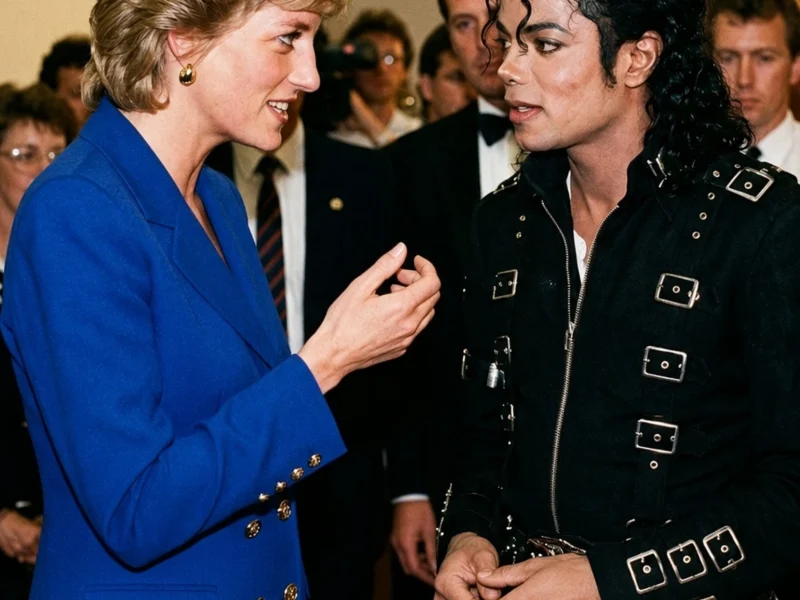
Michael Jackson REFUSED to Remove One Song for Princess Diana — What She Told Him.
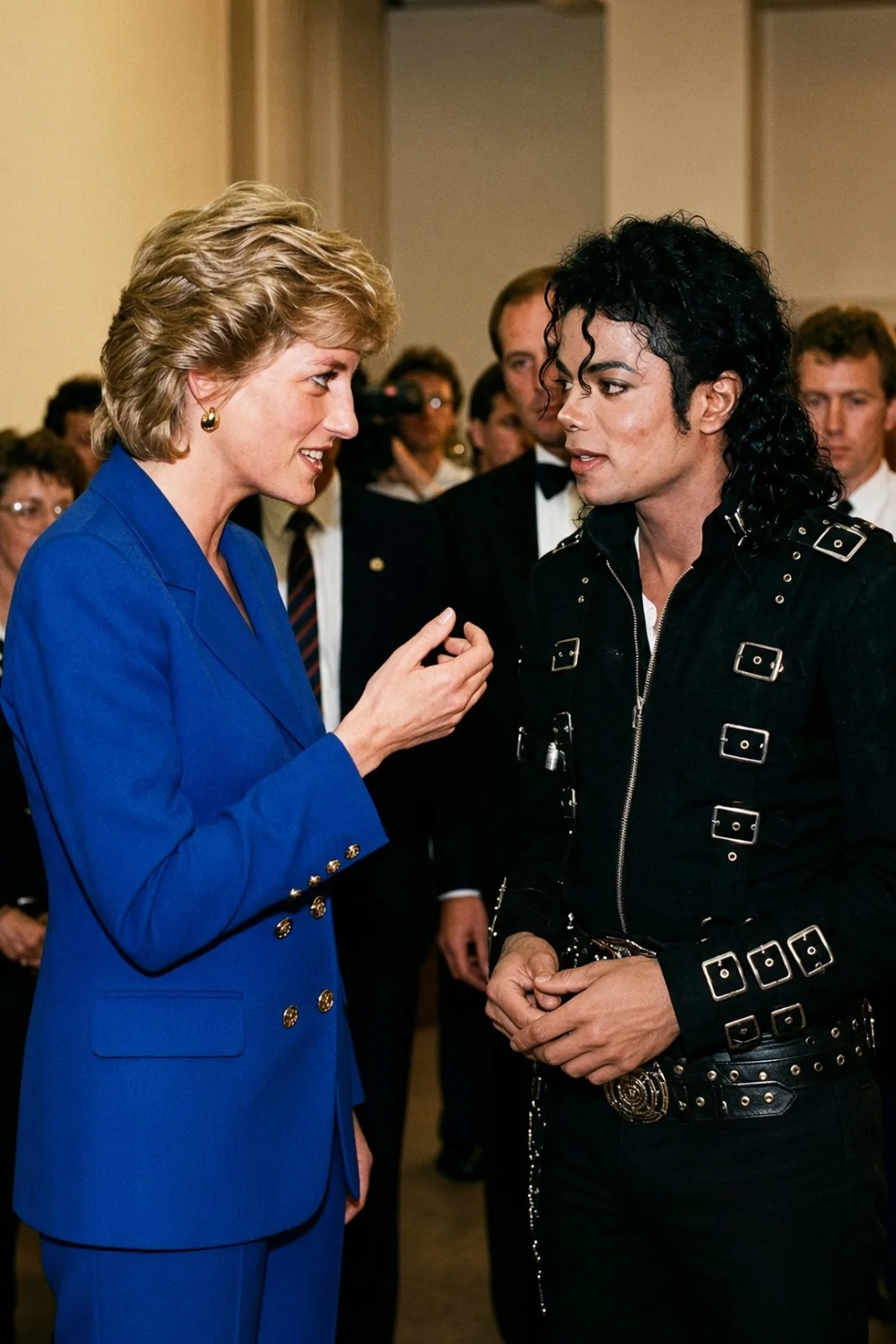
Michael Jackson once removed a song from his Wembley setlist because Princess Diana was coming to the concert.
The surprising part is that, by his own later account, Diana herself asked why the song was missing.
The story begins with a title.
The song was Dirty Diana.
But Jackson insisted it was never about the princess.
He had intended the change as a sign of respect.
Then during their Wembley meeting, he said Diana requested the exact track he had taken out.
The singer recalled that Diana specifically asked whether he would perform Dirty Diana.
Rather than treating this as a dramatic backstage dispute, the surviving sources point to a simple difference between an artist’s expectation and a guest’s preference.
The details matter more than the legend.
He explained that he had excluded it because of her presence, only to hear her ask him to perform it.
This is where the story becomes more revealing than a simple celebrity headline.
A decision made out of courtesy had consequences that Jackson later explained in his own words.
The story came from Jackson’s own 1997 interview, not from a secretly recorded backstage conversation.
The date and setting anchor the anecdote in a real public event.
They also let us distinguish what cameras captured from what Jackson described years afterward in a television interview.
That distinction matters.
We can report his account without pretending every word of the private exchange was independently documented.
Those details are relevant to the Wembley episode, but they should not be used to invent private feelings or backstage scenes.
The documented chronology already gives the narrative its shape.
Jackson and Diana met at Wembley Stadium on July 16th, 1988.
The wider context makes the episode understandable.
Jackson was preparing a stadium show, and a brief royal meeting brought a different set of public expectations into that concert environment.
She attended with Prince Charles, making the encounter a meeting between a global pop star and members of Britain’s royal family.
It is a useful reminder that a song’s subject, its title, and an audience member’s interpretation can be three different things.
Jackson’s own explanation keeps those distinctions clear.
Dirty Diana was a song from Jackson’s album Bad, released in 1987.
Nothing in this detail requires inventing an argument or secret intention.
The most reliable version comes from keeping the public performance, the later interview, and subsequent reporting clearly separated.
Its title sounded like a reference to the princess, but Jackson explained that it was not about her.
Here, the source of the information matters as much as the information itself.
Jackson’s interview establishes his recollection.
The concert record helps establish the performance outcome.
The song describes the world of groupies surrounding performers and touring musicians.
That small fact helps explain why the anecdote survived.
The surprising element was not a scandal, but the way a familiar song title became important during an otherwise ordinary pre-concert meeting.
Jackson told Walters that his experiences around concerts and clubs had informed the song’s subject.
The account is memorable precisely because it stays small and specific.
It describes a musical request, not a royal command, and an interaction rather than an invented public confrontation.
The title created a delicate coincidence on the night Diana attended the show.
That choice is worth examining, because the best evidence comes from Jackson’s later recollection, not a complete recording of the private exchange.
The concert itself supplies a separate record of what audiences actually heard.
A song with her first name and the word dirty could sound awkward in a royal guest’s presence, even though its subject was unrelated.
The surviving sources do not provide a transcript of every private remark, so this part of the story is best told with that limit in mind.
The difference between testimony and footage is central.
Jackson said his initial response was to take the song out of the show.
Rather than treating this as a dramatic backstage dispute, the surviving sources point to a simple difference between an artist’s expectation and a guest’s preference.
The details matter more than the legend.
He presented the decision as a gesture of respect, not as a request made by Diana or an order from palace officials.
This is where the story becomes more revealing than a simple celebrity headline.
A decision made out of courtesy had consequences that Jackson later explained in his own words.
Nothing in his public accounts suggest the princess demanded that a song be censored.
The date and setting anchor the anecdote in a real public event.
They also let us distinguish what cameras captured from what Jackson described years afterward in a television interview.
In fact, the surprise of the story is that she personally encouraged him to include the very track he had considered removing.
Those details are relevant to the Wembley episode, but they should not be used to invent private feelings or backstage scenes.
The documented chronology already gives the narrative its shape.
The 1997 interview was recorded after Diana’s death, giving Jackson an occasion to revisit the meeting.
The wider context makes the episode understandable.
Jackson was preparing a stadium show, and a brief royal meeting brought a different set of public expectations into that concert environment.
He described her as kind and sweet, while recalling one specific moment that had stayed with him from Wembley.
It is a useful reminder that a song’s subject, its title, and an audience member’s interpretation can be three different things.
Jackson’s own explanation keeps those distinctions clear.
The Bad World Tour had made Jackson a stadium attraction across the world.
Nothing in this detail requires inventing an argument or secret intention.
The most reliable version comes from keeping the public performance, the later interview, and subsequent reporting clearly separated.
By the summer of 1988, Wembley was one of the tour’s major venues, with a production designed for a vast audience.
Here, the source of the information matters as much as the information itself.
Jackson’s interview establishes his recollection.
The concert record helps establish the performance outcome.
Wembley was not a small, private engagement arranged for royalty.
That small fact helps explain why the anecdote survived.
The surprising element was not a scandal, but the way a familiar song title became important during an otherwise ordinary pre-concert meeting.
It was a full-scale public concert, and the presence of Diana and Charles added a high-profile encounter to an already important tour date.
The account is memorable precisely because it stays small and specific.
It describes a musical request, not a royal command, and an interaction rather than an invented public confrontation.
The tour promoted Jackson’s album Bad and included material from his earlier career.
That choice is worth examining because the best evidence comes from Jackson’s later recollection, not a complete recording of the private exchange.
The concert itself supplies a separate record of what audiences actually heard.
A typical show mixed new hits with older favorites, choreography, live musicians, and the elaborate staging associated with his performances.
The surviving sources do not provide a transcript of every private remark, so this part of the story is best told with that limit in mind.
The difference between testimony and footage is central.
Dirty Diana was one of the album’s rock-oriented songs.
Rather than treating this as a dramatic backstage dispute, the surviving sources point to a simple difference between an artist’s expectation and a guest’s preference.
The details matter more than the legend.
Its electric guitar sound and dramatic performance style made it different from the more dance-focused numbers in the Wembley program.
This is where the story becomes more revealing than a simple celebrity headline.
A decision made out of courtesy had consequences that Jackson later explained in his own words.
The song was released as a single in 1988 and became a major hit.
The date and setting anchor the anecdote in a real public event.
They also let us distinguish what cameras captured from what Jackson described years afterward in a television interview.
That public popularity helps explain why Diana might have known the song before she ever met its performer.
Those details are relevant to the Wembley episode, but they should not be used to invent private feelings or backstage scenes.
The documented chronology already gives the narrative its shape.
Accounts of the Wembley meeting often focus on the title, rather than the song’s actual subject.
The wider context makes the episode understandable.
Jackson was preparing a stadium show, and a brief royal meeting brought a different set of public expectations into that concert environment.
Jackson himself made the distinction clear in his interview.
The character in Dirty Diana was not Princess Diana.
It is a useful reminder that a song’s subject, its title, and an audience member’s interpretation can be three different things.
Jackson’s own explanation keeps those distinctions clear.
The name Diana belonged to a character within a pop song, not to a royal portrait.
Nothing in this detail requires inventing an argument or secret intention.
The most reliable version comes from keeping the public performance, the later interview, and subsequent reporting clearly separated.
Treating the track as a direct statement about the princess would misrepresent what Jackson said he had written.
Here, the source of the information matters as much as the information itself.
Jackson’s interview establishes his recollection.
The concert record helps establish the performance outcome.
Before the performance, Jackson had an opportunity to greet the royal guests.
That small fact helps explain why the anecdote survived.
The surprising element was not a scandal, but the way a familiar song title became important during an otherwise ordinary pre-concert meeting.
Photographs and footage document the encounter.
Although they do not independently capture the full conversation he later recounted.
The account is memorable precisely because it stays small and specific.
It describes a musical request, not a royal command, and an interaction rather than an invented public confrontation.
Diana’s presence placed Jackson in a setting where music and public ceremony briefly overlapped.
That choice is worth examining because the best evidence comes from Jackson’s later recollection, not a complete recording of the private exchange.
The concert itself supplies a separate record of what audiences actually heard.
He was meeting the princess as a performer, not participating in an official royal event of his own.
The surviving sources do not provide a transcript of every private remark, so this part of the story is best told with that limit in mind.
The difference between testimony and footage is central.
The exchange is frequently repeated as proof of Diana’s sense of humor.
Rather than treating this as a dramatic backstage dispute, the surviving sources point to a simple difference between an artist’s expectation and a guest’s preference.
The details matter more than the legend.
That interpretation comes partly from Barbara Walters, who raised the subject in her interview, and from Jackson’s affirmative response.
This is where the story becomes more revealing than a simple celebrity headline.
A decision made out of courtesy had consequences that Jackson later explained in his own words.
Jackson remembered Diana asking directly about the missing song.
The date and setting anchor the anecdote in a real public event.
They also let us distinguish what cameras captured from what Jackson described years afterward in a television interview.
Rather than describing a lengthy discussion of music, he singled out one short question as the turning point in his story.
Those details are relevant to the Wembley episode, but they should not be used to invent private feelings or backstage scenes.
The documented chronology already gives the narrative its shape.
According to Jackson, he told her the song had been removed for her sake.
The wider context makes the episode understandable.
Jackson was preparing a stadium show, and a brief royal meeting brought a different set of public expectations into that concert environment.
Her response, as he recalled it, was an unmistakable request that he perform it anyway.
It is a useful reminder that a song’s subject, its title, and an audience member’s interpretation can be three different things.
Jackson’s own explanation keeps those distinctions clear.
The interaction reversed the assumption behind his original decision.
Nothing in this detail requires inventing an argument or secret intention.
The most reliable version comes from keeping the public performance, the later interview, and subsequent reporting clearly separated.
He had tried to avoid giving offense.
In his telling, the person he was trying to honor actually wanted the song included.
Here, the source of the information matters as much as the information itself.
Jackson’s interview establishes his recollection.
The concert record helps establish the performance outcome.
There is no need to invent embarrassment, anger, or an argument to make the moment interesting.
That small fact helps explain why the anecdote survived.
The surprising element was not a scandal, but the way a familiar song title became important during an otherwise ordinary pre-concert meeting.
The documented recollection is already unusual.
A famous song was nearly excluded because of its title, and its namesake objected to the exclusion.
The account is memorable precisely because it stays small and specific.
It describes a musical request, not a royal command, and an interaction rather than an invented public confrontation.
Diana was known to follow popular culture, and later reporting describes her as a fan of Jackson’s music.
That choice is worth examining because the best evidence comes from Jackson’s later recollection, not a complete recording of the private exchange.
The concert itself supplies a separate record of what audiences actually heard, but the strongest direct evidence for this particular request remains Jackson’s own description of what she asked him at Wembley.
The surviving sources do not provide a transcript of every private remark, so this part of the story is best told with that limit in mind.
The difference between testimony and footage is central.
Some retellings say Dirty Diana was her absolute favorite Michael Jackson song.
Rather than treating this as a dramatic backstage dispute, the surviving sources point to a simple difference between an artist’s expectation and a guest’s preference.
The details matter more than the legend.
That stronger claim appears in later accounts.
Jackson’s Barbara Walters interview confirms that she asked him to perform it without requiring us to rank her favorites.
This is where the story becomes more revealing than a simple celebrity headline.
A decision made out of courtesy had consequences that Jackson later explained in his own words.
The actual July 16th concert setlist includes Dirty Diana.
The date and setting anchor the anecdote in a real public event.
They also let us distinguish what cameras captured from what Jackson described years afterward in a television interview.
That matters because it supports the basic outcome.
The song Jackson said he had removed was performed during the Wembley show.
Those details are relevant to the Wembley episode, but they should not be used to invent private feelings or backstage scenes.
The documented chronology already gives the narrative its shape.
The surviving concert recording offers a different kind of evidence from the later interview.
The wider context makes the episode understandable.
Jackson was preparing a stadium show and a brief royal meeting brought a different set of public expectations into that concert environment.
The interview explains Jackson’s recollection of the decision.
While the recorded performance shows that the song remained part of the night.
It is a useful reminder that a song’s subject, its title, and an audience member’s interpretation can be three different things.
Jackson’s own explanation keeps those distinctions clear.
It is possible to describe the sequence without pretending to know every backstage adjustment.
Nothing in this detail requires inventing an argument or secret intention.
The most reliable version comes from keeping the public performance, the later interview, and subsequent reporting clearly separated.
Jackson said he took the song out, and Diana asked for it back.
The public concert record shows that Dirty Diana was performed.
Here, the source of the information matters as much as the information itself.
Jackson’s interview establishes his recollection.
The concert record helps establish the performance outcome.
The concert also featured many of Jackson’s best-known songs.
That small fact helps explain why the anecdote survived.
The surprising element was not a scandal, but the way a familiar song title became important during an otherwise ordinary pre-concert meeting.
The set moved between material from Bad, Thriller, and earlier releases, giving Wembley audiences a broad view of his career.
The account is memorable precisely because it stays small and specific.
It describes a musical request, not a royal command, and an interaction rather than an invented public confrontation.
The royal meeting took place within a larger day of performances and charity activity.
That choice is worth examining because the best evidence comes from Jackson’s later recollection, not a complete recording of the private exchange.
The concert itself supplies a separate record of what audiences actually heard.
Reports note that Jackson made donations connected with children’s causes around the royal visit, adding a philanthropic dimension to the occasion.
The surviving sources do not provide a transcript of every private remark.
So, this part of the story is best told with that limit in mind.
The difference between testimony and footage is central.
Biographical reporting records a donation to the Prince’s Trust associated with the Wembley visit.
Rather than treating this as a dramatic backstage dispute, the surviving sources point to a simple difference between an artist’s expectation and a guest’s preference.
The details matter more than the legend.
It also describes support for Great Ormond Street Hospital, though specific amounts should be tied to the sources that report them.
This is where the story becomes more revealing than a simple celebrity headline.
A decision made out of courtesy had consequences that Jackson later explained in his own words.
The charitable context helps explain why the meeting attracted attention beyond music coverage.
The date and setting anchor the anecdote in a real public event.
They also let us distinguish what cameras captured from what Jackson described years afterward in a television interview.
It linked a performer famous for huge concerts with royal figures publicly associated with charitable work.
Those details are relevant to the Wembley episode, but they should not be used to invent private feelings or backstage scenes.
The documented chronology already gives the narrative its shape.
Still, the song anecdote should not be confused with the donations.
The wider context makes the episode understandable.
Jackson was preparing a stadium show, and a brief royal meeting brought a different set of public expectations into that concert environment.
They belonged to the same public occasion, but the reason Jackson gave for removing Dirty Diana was his wish to show respect.
It is a useful reminder that a song’s subject, its title, and an audience member’s interpretation can be three different things.
Jackson’s own explanation keeps those distinctions clear.
The song’s title supplied the irony that made the story last.
Nothing in this detail requires inventing an argument or secret intention.
The most reliable version comes from keeping the public performance, the later interview, and subsequent reporting clearly separated.
Had it carried a different name, the same song might never have prompted this particular exchange with the princess.
Here, the source of the information matters as much as the information itself.
Jackson’s interview establishes his recollection.
The concert record helps establish the performance outcome.
Jackson had built his public image through carefully choreographed performances.
That small fact helps explain why the anecdote survived.
The surprising element was not a scandal, but the way a familiar song title became important during an otherwise ordinary pre-concert meeting.
Yet, this anecdote concerns a simple judgment made before a concert, whether a title might be misunderstood by a guest.
The account is memorable precisely because it stays small and specific.
It describes a musical request, not a royal command, and an interaction rather than an invented public confrontation.
The story is sometimes described as Jackson refusing to remove the song.
That choice is worth examining because the best evidence comes from Jackson’s later recollection, not a complete recording of the private exchange.
The concert itself supplies a separate record of what audiences actually heard.
His own account says the opposite.
He initially removed it, then changed course after Diana asked to hear it.
The surviving sources do not provide a transcript of every private remark, so this part of the story is best told with that limit in mind.
The difference between testimony and footage is central.
That correction makes the event more specific, not less dramatic.
Rather than treating this as a dramatic backstage dispute, the surviving sources point to a simple difference between an artist’s expectation and a guest’s preference.
The details matter more than the legend.
The tension comes from a well-intended gesture being overturned by the person it was meant to honor.
This is where the story becomes more revealing than a simple celebrity headline.
A decision made out of courtesy had consequences that Jackson later explained in his own words.
Jackson’s recollection was shared in September 1997.
The date and setting anchor the anecdote in a real public event.
They also let us distinguish what cameras captured from what Jackson described years afterward in a television interview.
By then, the Wembley encounter was almost a decade old, and the interview took place in the aftermath of Diana’s death.
Those details are relevant to the Wembley episode, but they should not be used to invent private feelings or backstage scenes.
The documented chronology already gives the narrative its shape.
Barbara Walters asked Jackson about his memories of Diana.
The wider context makes the episode understandable.
Jackson was preparing a stadium show, and a brief royal meeting brought a different set of public expectations into that concert environment.
His answer moved from describing her personality to the story of Dirty Diana, showing which particular encounter he chose to share publicly.
It is a useful reminder that a song’s subject, its title, and an audience member’s interpretation can be three different things.
Jackson’s own explanation keeps those distinctions clear.
He described Diana as loving, kind, and sweet.
Nothing in this detail requires inventing an argument or secret intention.
The most reliable version comes from keeping the public performance, the later interview, and subsequent reporting clearly separated.
Those are his characterizations, and they should be attributed to him rather than presented as an objective account of everything she was like in private.
Here, the source of the information matters as much as the information itself.
Jackson’s interview establishes his recollection.
The concert record helps establish the performance outcome.
Walters also asked about the pressure of constant public attention.
That small fact helps explain why the anecdote survived.
The surprising element was not a scandal, but the way a familiar song title became important during an otherwise ordinary pre-concert meeting.
The discussion connected Jackson’s experience with celebrity photography to the intense media scrutiny surrounding Diana’s life.
The account is memorable precisely because it stays small and specific.
It describes a musical request, not a royal command, and an interaction rather than an invented public confrontation.
The two figures had different careers and public roles.
That choice is worth examining because the best evidence comes from Jackson’s later recollection, not a complete recording of the private exchange.
The concert itself supplies a separate record of what audiences actually heard, but Jackson told Walters that he recognized the difficulty of living under relentless observation.
A theme that shaped the wider interview.
The surviving sources do not provide a transcript of every private remark, so this part of the story is best told with that limit in mind.
The difference between testimony and footage is central.
Diana died in a car crash in Paris on August 31st, 1997.
Rather than treating this as a dramatic backstage dispute, the surviving sources point to a simple difference between an artist’s expectation and a guest’s preference.
The details matter more than the legend.
The loss was still recent when Jackson spoke to Walters, giving the conversation a markedly different context from the light-hearted Wembley anecdote.
This is where the story becomes more revealing than a simple celebrity headline.
A decision made out of courtesy had consequences that Jackson later explained in his own words.
Jackson said he had learned the news from his doctor.
The date and setting anchor the anecdote in a real public event.
They also let us distinguish what cameras captured from what Jackson described years afterward in a television interview.
In the interview, he described a strong physical and emotional reaction, making clear that Diana’s death had affected him deeply.
Those details are relevant to the Wembley episode, but they should not be used to invent private feelings or backstage scenes.
The documented chronology already gives the narrative its shape.
Those statements concern his reaction in 1997, not his thoughts backstage in 1988.
The wider context makes the episode understandable.
Jackson was preparing a stadium show, and a brief royal meeting brought a different set of public expectations into that concert environment.
Keeping the two periods separate prevents a later tragedy from being projected backward onto a concert meeting.
It is a useful reminder that a song’s subject, its title, and an audience member’s interpretation can be three different things.
Jackson’s own explanation keeps those distinctions clear.
Jackson also spoke about canceling a performance after learning of Diana’s death.
Nothing in this detail requires inventing an argument or secret intention.
The most reliable version comes from keeping the public performance, the later interview, and subsequent reporting clearly separated.
He later dedicated performances to her memory, as he explained in the same interview.
Here, the source of the information matters as much as the information itself.
Jackson’s interview establishes his recollection.
The concert record helps establish the performance outcome.
He described showing Diana’s image on large concert screens during a tribute.
That small fact helps explain why the anecdote survived.
The surprising element was not a scandal, but the way a familiar song title became important during an otherwise ordinary pre-concert meeting.
That later gesture belongs to the aftermath of her death, and should not be confused with the 1988 Wembley performance.
The account is memorable precisely because it stays small and specific.
It describes a musical request, not a royal command, and an interaction rather than an invented public confrontation.
In the 1997 interview, Jackson discussed the songs Smile and Gone Too Soon in connection with remembrance.
That choice is worth examining because the best evidence comes from Jackson’s later recollection, not a complete recording of the private exchange.
The concert itself supplies a separate record of what audiences actually heard.
The contrast with Dirty Diana is striking.
One song belongs to a humorous meeting, while the others belong to a later tribute.
The surviving sources do not provide a transcript of every private remark, so this part of the story is best told with that limit in mind.
The difference between testimony and footage is central.
The public record therefore preserves two very different kinds of memory.
Rather than treating this as a dramatic backstage dispute, the surviving sources point to a simple difference between an artist’s expectation and a guest’s preference.
The details matter more than the legend.
One is a light exchange about a concert song.
The other is Jackson’s serious response to the princess’s death years afterward.
This is where the story becomes more revealing than a simple celebrity headline.
A decision made out of courtesy had consequences that Jackson later explained in his own words.
Wembley remains important in Jackson’s performance history independently of the royal visit.
The date and setting anchor the anecdote in a real public event.
They also let us distinguish what cameras captured from what Jackson described years afterward in a television interview.
The July 16th concert was later issued commercially as Live at Wembley, making the show accessible beyond those who attended.
Those details are relevant to the Wembley episode, but they should not be used to invent private feelings or backstage scenes.
The documented chronology already gives the narrative its shape.
The concert footage is valuable for reconstructing the night’s music.
The wider context makes the episode understandable.
Jackson was preparing a stadium show and a brief royal meeting brought a different set of public expectations into that concert environment.
It does not by itself establish every detail of the conversation with Diana, which survives primarily through Jackson’s later testimony.
It is a useful reminder that a song’s subject, its title, and an audience member’s interpretation can be three different things.
Jackson’s own explanation keeps those distinctions clear.
The distinction between performance footage and interview testimony is essential.
Nothing in this detail requires inventing an argument or secret intention.
The most reliable version comes from keeping the public performance, the later interview, and subsequent reporting clearly separated.
One shows what happened on stage.
The other reports what Jackson said happened in a private conversation before the show.
Here, the source of the information matters as much as the information itself.
Jackson’s interview establishes his recollection.
The concert record helps establish the performance outcome.
Some modern summaries compress those two sources into one seamless narrative.
That small fact helps explain why the anecdote survived.
The surprising element was not a scandal, but the way a familiar song title became important during an otherwise ordinary pre-concert meeting.
A careful documentary keeps the evidence visible and avoids claiming that cameras recorded Diana making her request.
The account is memorable precisely because it stays small and specific.
It describes a musical request, not a royal command, and an interaction rather than an invented public confrontation.
The famous song was not written as a royal insult.
That choice is worth examining because the best evidence comes from Jackson’s later recollection, not a complete recording of the private exchange.
The concert itself supplies a separate record of what audiences actually heard.
Jackson said it came from the touring world and the people who followed bands, a subject separate from Diana’s public life.
The surviving sources do not provide a transcript of every private remark.
So this part of the story is best told with that limit in mind.
The difference between testimony and footage is central.
That explanation also clarifies why the decision to remove it was voluntary.
Rather than treating this as a dramatic backstage dispute, the surviving sources point to a simple difference between an artist’s expectation and a guest’s preference.
The details matter more than the legend.
The title might have seemed awkward, but Jackson’s account offers no evidence of an official demand to change his artistic program.
This is where the story becomes more revealing than a simple celebrity headline.
A decision made out of courtesy had consequences that Jackson later explained in his own words.
Diana’s reported request can be understood without assigning her a secret motive.
The date and setting anchor the anecdote in a real public event.
They also let us distinguish what cameras captured from what Jackson described years afterward in a television interview.
She asked for the song, according to Jackson.
We cannot know from that account exactly what she was thinking.
Those details are relevant to the Wembley episode, but they should not be used to invent private feelings or backstage scenes.
The documented chronology already gives the narrative its shape.
Jackson’s public answer to Walters included the princess encouraging him to do the song.
The wider context makes the episode understandable.
Jackson was preparing a stadium show, and a brief royal meeting brought a different set of public expectations into that concert environment.
That is the core of the reversal.
And it explains why this brief encounter became one of the most repeated stories about their meeting.
It is a useful reminder that a song’s subject, its title, and an audience member’s interpretation can be three different things.
Jackson’s own explanation keeps those distinctions clear.
The concert record provides the satisfying final detail.
Nothing in this detail requires inventing an argument or secret intention.
The most reliable version comes from keeping the public performance, the later interview, and subsequent reporting clearly separated.
Dirty Diana was part of the July 16th performance.
So, the song at the center of the misunderstanding reached the audience after all.
Here, the source of the information matters as much as the information itself.
Jackson’s interview establishes his recollection.
The concert record helps establish the performance outcome.
No fabricated backstage confrontation is needed.
That small fact helps explain why the anecdote survived.
The surprising element was not a scandal, but the way a familiar song title became important during an otherwise ordinary pre-concert meeting.
The story rests on a small decision, a request Jackson attributed to Diana, and a performance that audiences can still watch.
The account is memorable precisely because it stays small and specific.
It describes a musical request, not a royal command, and an interaction rather than an invented public confrontation.
What made the encounter memorable was the difference between a performer’s assumption and the guest’s request.
That choice is worth examining because the best evidence comes from Jackson’s later recollection, not a complete recording of the private exchange.
The concert itself supplies a separate record of what audiences actually heard.
Jackson tried to be considerate, but his own recollection shows that Diana preferred the music to remain unchanged.
The surviving sources do not provide a transcript of every private remark, so this part of the story is best told with that limit in mind.
The difference between testimony and footage is central.
It is tempting to treat the meeting as proof of a deep private friendship.
Rather than treating this as a dramatic backstage dispute, the surviving sources point to a simple difference between an artist’s expectation and a guest’s preference.
The details matter more than the legend.
The available account establishes a warm public encounter and Jackson’s later respect for Diana.
Not a detailed record of an ongoing personal relationship.
This is where the story becomes more revealing than a simple celebrity headline.
A decision made out of courtesy had consequences that Jackson later explained in his own words.
The story also shows how a song title can take on unintended meaning.
The date and setting anchor the anecdote in a real public event.
They also let us distinguish what cameras captured from what Jackson described years afterward in a television interview.
Dirty Diana was written about a different subject.
Yet the coincidence of names nearly affected a major concert’s running order.
Those details are relevant to the Wembley episode, but they should not be used to invent private feelings or backstage scenes.
The documented chronology already gives the narrative its shape.
When Jackson retold the story, he did not portray Diana as offended.
The wider context makes the episode understandable.
Jackson was preparing a stadium show and a brief royal meeting brought a different set of public expectations into that concert environment.
He portrayed her as someone who wanted to hear the song.
A detail that challenges the assumption behind the original change.
It is a useful reminder that a song’s subject, its title, and an audience member’s interpretation can be three different things.
Jackson’s own explanation keeps those distinctions clear.
For viewers today, the strongest version of the story is the simplest one.
Nothing in this detail requires inventing an argument or secret intention.
The most reliable version comes from keeping the public performance, the later interview, and subsequent reporting clearly separated.
The famous Wembley encounter survives through Jackson’s own account and the concert that followed.
He tried to honor Princess Diana by dropping a song, and she asked him to sing it.
Sometimes the real story needs no embellishment.









