Michael Jackson REFUSED the Pepsi Burn Money — A Burn-Ward Nurse Finally Asked Him Why.
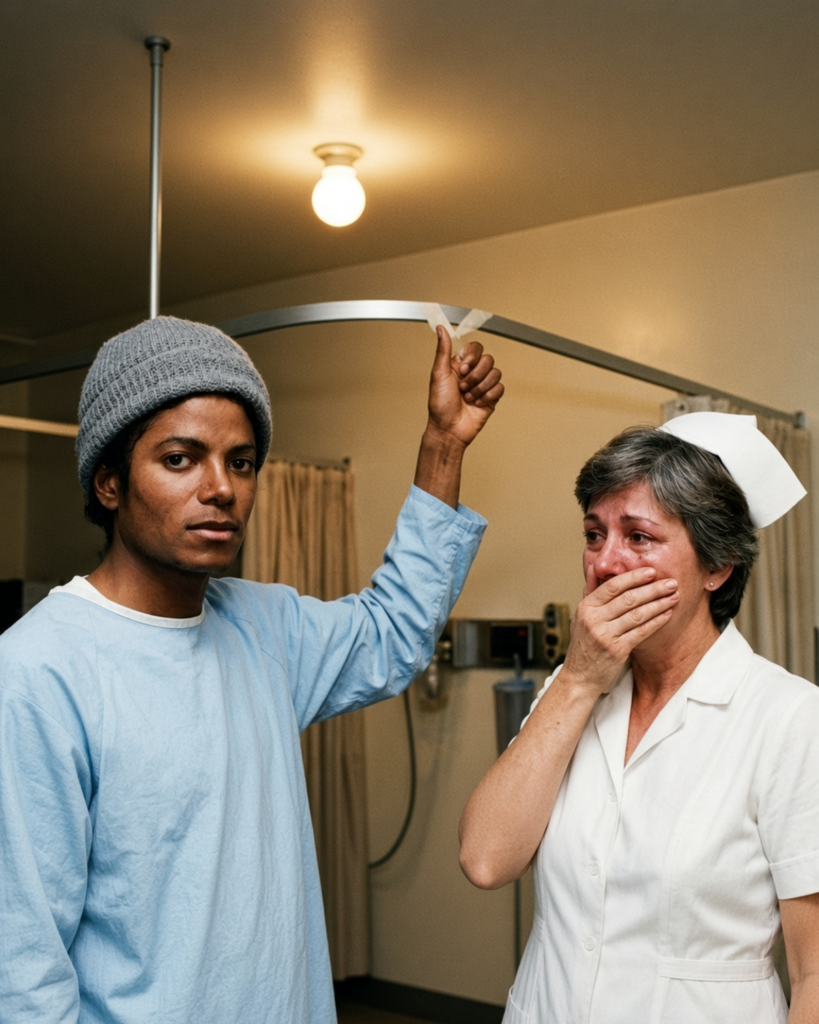
In 1984, nurse Marjorie Kesler ran a six-bed burn room in Culver City, California, with sheets for walls.
Michael Jackson arrived burned from a Pepsi commercial and noticed the children behind them.
When Pepsi settled, he sent the whole sum to build a children’s burn center.
Marjorie asked why, and his answer took under a minute.
Two years later, a boy lay behind a real curtain.
The sheets were gone for good.
Let’s go back to that first night.
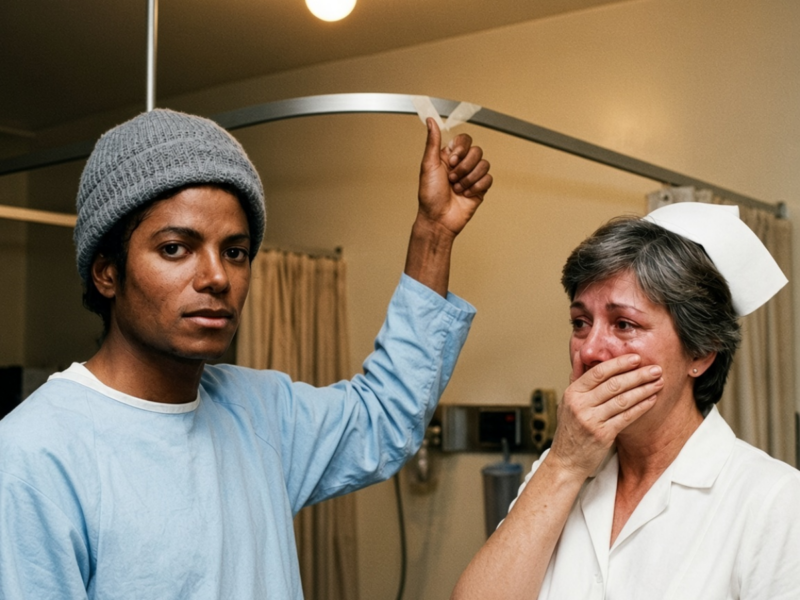
Marjorie Kesler hung bed sheets around her burn patients with surgical tape because the room had no curtains.
Brotman Medical Center, Culver City, California.
The sixth floor.
Marjorie was 46, 19 years a nurse, the last six in charge of the burn room.
It was not a burn unit.
It was a corner of the surgical floor with six beds, one whirlpool tub, and a window that looked out on a parking structure.
Men, women, and children lay in the same room a few feet apart.
A grandmother scalded by a pot of soup.
A welder from Englewood.
A seven-year-old boy named Danny Ortega whose mother’s kettle had tipped off the stove.
One taped sheet between each bed.
That was the only wall they had.
The tape never held past Thursday.
Marjorie carried a roll in her uniform pocket anyway.
Tear, press, smooth, every shift.
“Why does the wall keep falling down, Miss Marjorie?” Danny asked her.
“Because we don’t own a better one, sweetheart.”
She had asked the hospital for a children’s burn wing three times.
Three times the answer was the same.
No money.
Then on the night of January 27, 1984, a patient was wheeled in whose name needed no introduction.
By spring, a sum of about $1.5 million would belong to him alone.
What Marjorie watched him do with it is why she kept that roll of tape for the rest of her life.
The answer is two years down the road.
Subscribe if you want to walk it with her.
The emergency room sent him up at 10:11.
The sixth floor was the only place in the building that treated burns.
Marjorie heard the elevator before she saw him.
Two men in dark suits.
A doctor, Steven Hoefflin, the plastic surgeon who was treating him, speaking low in the hallway.
And between them, a thin young man in a hospital gown, holding himself so still that Marjorie noticed it before anything else.
She had seen worse burns, much worse.
The patch on the crown of his scalp was raw and weeping, and the room smelled of singed hair and ointment, a smell she knew by heart.
But she had never seen a patient hold so still, as if moving might make it a bigger thing.
“Could the door be closed?” he asked.
His voice was barely above a whisper.
There was no door.
There was a sheet.
Marjorie tore a fresh strip of tape and hung a clean sheet from the ceiling track.
He watched her press the edge flat.
“Does it stay up until Thursday?” she said, almost smiled.
Behind the next sheet, a small voice spoke from bed three.
Danny Ortega, awake at midnight, one arm wrapped to the shoulder.
“Are you the Thriller man?”
“Shh,” Michael Jackson whispered and put a finger to his lips. “Yes.”
“Does it hurt?”
“Only when they change it.”
“Me, too.”
He looked at the row of taped sheets for a long time.
Then he asked Marjorie one more question, quietly so the boy would not hear.
“Where do the little ones go when these six beds are full?”
“Home, mostly,” she said. “Sooner than we’d like.”
He did not answer, but he did not stop looking at the sheets.
He stayed on the sixth floor for a few days, long enough for Marjorie to learn what kind of patient he was.
He never rang for anything.
He never asked for a different room, a different nurse, a different anything.
When his dressing was changed, he gripped the bed rail and said, “Thank you,” afterward, every single time.
And every evening around 8, after the visitors thinned out, he walked down the ward in slippers, a gray cap pulled over the bandage, and stopped at bed three.
Danny’s mother, Rosa Ortega, was 31.
She pressed hotel bed sheets on the night shift and slept in a vinyl chair at her son’s bed on her days off.
She told Marjorie later that she had never believed it until the third evening, when the man in the cap sat down on the edge of the chair beside her and asked very politely how long her boy would have to stay.
“Eleven weeks,” Rosa said. “More surgeries after.”
“Who pays for it?”
“The county pays some. We owe the rest.”
Michael nodded.
He asked nothing else.
He only reached through the gap in the sheet and touched the boy’s good hand.
“Mine’s gone, too,” he told Danny, tapping the cap. “Back of my head. It grows back.”
“Does it grow back the same?”
“Mostly.”
On the last night, Marjorie found the taped sheet by bed three smooth and flat from the floor up, every edge pressed down, a dozen extra strips laid side by side.
He had stood there and fixed it himself.
In the morning, he was gone.
Marjorie put the sheet back in her mind where it belonged, a famous man passing through a small room.
She expected to hear nothing more.
She was wrong.
Pepsi settled that spring.
Harold Weiss, the hospital administrator, climbed to the sixth floor on a Wednesday afternoon in April.
He did not take the elevator.
He was 58, and Marjorie had never once seen him on the stairs.
He held a pink telephone message slip in his hand.
His face was the color of the wall.
“Marjorie, sit down.”
“I’ll stand, Mr. Weiss. I have a graft to address.”
“I had a call from Mr. Jackson’s attorney this morning. I made him say it twice. Then I called back and made him say it a third time.”
He held out the slip.
She read it.
Then she read it again.
The settlement, the money Michael Jackson was owed for the fire on that stage, was not going into his pocket.
It was going to Brotman to build a burn center for children.
“All of it?” Marjorie asked.
“All of it. $1.5 million.”
The hospital had refused her a children’s wing three times for want of a fraction of that.
And now a young man who owed them nothing was sending the whole sum because he had spent a few nights behind her taped sheet.
“Why?” she said. “He could buy this entire building.”
“I asked.”
Harold took off his glasses and rubbed his eyes.
“His people said Mr. Jackson did not want to keep it. That’s all they would say.”
That was all they would say.
Marjorie went back to the ward and dressed Danny’s graft with hands that were not quite steady.
All afternoon she turned it over.
Not the gift.
She understood a gift.
She did not understand refusing to keep something that was lawfully yours, something that was earned on the worst night of your life.
Why would a man give away the one thing that had come to him for being hurt?
She decided that if she ever got the chance, she would ask him herself.
She got it in June.
A Tuesday evening in June 1984.
Almost 9, the loading dock door banged, and Marjorie, on her way to the supply closet, looked down the hall.
A thin man in a black cap stood alone in the middle of the burn room.
No suits, no doctor.
He was looking at the six beds and the six taped sheets.
One of them, bed four, had already come down at the corner.
She did not stop to think.
She walked to him.
“Mr. Jackson.”
“Miss Kesler.”
He remembered her name.
“I wanted to see it again before the drawings are finished.”
“May I ask you something? I’ve been wanting to ask since April.”
“Guess.”
“Why did you give it away?”
He did not answer right away.
He looked at the sheet that had fallen.
Then he crossed the room, picked up the loose edge, and pressed it back against the ceiling track with his thumb the way she did.
“When it happened,” he said, “a hundred people ran to me. Ten seconds. Maybe somebody put it out. Then a doctor. A room. A door, Miss Kesler. A door that closed.”
“Yes.”
“Danny had a sheet.”
He kept his eyes on the track.
“The money came because of my fire. I didn’t earn it. It came from the worst ten seconds of my life, and I couldn’t make it mine.”
Marjorie said nothing.
“I would like those ten seconds to be worth something,” he said. “To somebody who did not have a hundred people.”
That was the whole answer.
It took less than a minute.
She went home that night and wrote his words on the back of a shift report in pencil before she could change a single one.
She kept that page for the rest of her life.
At the door, he turned.
“What do the children need first? Not the building first.”
She told him.
Marjorie did not need to think about it.
She had been writing the list in her head for six years.
She wrote it on another shift report that night, in order of importance, and a man in a suit collected it at the nurse’s station the next morning.
One, curtains, real ones on a track that close all the way.
Two, a tub small enough for a seven-year-old.
Three, beds that could be lowered to the floor so a child could climb out alone.
Four, a room for parents.
Rosa Ortega had slept in a vinyl chair for 11 weeks.
Five, a window that looked at something besides a parking structure.
She expected them to cut half.
They cut nothing.
Ground broke the following year.
All through 1985, the sixth floor smelled of fresh plaster, and the old burn room went on filling and emptying.
Danny came back twice for grafts.
Each time Marjorie hung the sheets, and each time they came down by Thursday.
“Is the new place going to have walls?” Danny asked her in the spring, nine months older and a head taller.
“It’s going to have a curtain on a track.”
“Does it fall down?”
“Not ever.”
Rosa, standing in the doorway with her purse, laughed and cried at the same time and had to turn her face away.
Then the hospital’s board voted on a name.
The Michael Jackson Burn Center.
Marjorie braced herself for the telephone call, the refusal, the polite request to leave his name off.
It never came.
He let them have it.
Maybe he understood that a name on a door tells a frightened mother the place is real.
The doors opened in 1986.
Marjorie walked through them on the first morning with her roll of surgical tape still in her uniform pocket.
Out of habit, tear, press, smooth.
She did not know yet that she had hung her last sheet.
Bed two, the new burn center, a bright corner of the building with a door that closed and a window that looked at the sky.
Danny Ortega was nine, fourth graft, left arm.
He had come in on a Monday morning, and for the first time in his life, the staff had a room to put him in.
A real one.
A child-sized tub down the hall.
A bed that lowered all the way to the floor.
Marjorie pulled the curtain around his bed.
It ran on a ceiling track, and it slid shut with a soft, even hiss.
Danny watched it go.
He reached out and touched the fabric.
“It doesn’t fall.”
“No, sweetheart.”
“Did the Thriller man do this?”
“He did.”
That Thursday, after dark, a thin man in a gray cap rode the service elevator to the sixth floor.
Nobody called ahead.
There was no photographer.
He stopped at the end of the corridor as though he were afraid to come in too fast.
Marjorie met him at the door.
“Mr. Jackson. He’s awake. He’s been asking.”
Danny sat up against the pillows, a white sleeve on his left arm, his black hair grown thick.
“Did yours grow back?” he asked.
“Most of it,” Michael said. “Did yours?”
“All of mine.”
Michael laughed.
It was quiet and short, and Marjorie saw it was the first time she had heard it.
He stayed 40 minutes.
He sat in a plain chair, not the best one, and listened to a nine-year-old explain how the tub worked.
Then, when Danny finally slept, Michael stood at the curtain and ran it back and forth along the track.
Once.
Twice.
A third time.
He did not say what he was thinking.
He only tested it the way a man tests a bridge he built for strangers.
Then he went out the way he had come.
The ward he paid for treated children long after the cameras left.
Children with scalded arms, with kitchen fires, with the burns that come to families who cannot afford to be anywhere else.
Marjorie Kesler retired in 1994 after 29 years in nursing.
On her last day, she cleaned out her locker and found the roll of surgical tape at the bottom of her uniform pocket, worn thin at one edge.
She took it home.
It sat on her kitchen windowsill for 20 years, beside a pencil and a page folded in thirds.
On the page, in her own handwriting, were his words.
“When it happened, a hundred people ran to me.”
“Danny had a sheet.”
Danny Ortega became a paramedic.
At 26, he carried a burned child into a Los Angeles emergency room, set her down on a bed with a real curtain, and stayed with her until her mother arrived.
He had a scar on his left arm like a river on a map.
He never hid it.
People asked.
And he told them about a nurse with a roll of tape and a man in a gray cap.
Years later, an interviewer asked Marjorie what she remembered best about Michael Jackson.
She did not mention a stage or a song or a famous face.
“He fixed a sheet,” she said. “He stood in a hospital room at 9 at night and pressed a piece of tape against a ceiling. Nobody asked him to. Nobody was watching.”
That is the part the headlines of January 1984 never printed.
The fire was a spectacle.
The burn center was a decision.
One lasted ten seconds.
The other is still there.
Millions remembered only the fire.
The children remembered a door that closed softly behind them.
Pain does not have to end where it begins.
Sometimes it can be handed to someone else in a different shape.
A bed.
A tub.
A window that looks at the sky.
The tape is still on that windowsill, they say, though the sheets are long gone.
Tear, press, smooth.
She never needed it again.









