Michael Jackson: Lost Between Childhood and Family.
Michael spun around, slipped, and slammed his face into the edge of a wooden door.
The accident happened backstage during one of the crowded performances on the Destiny tour.
And in a strange way, it gave him the chance to do something he had dreamed about for a long time.
To get a new nose.
For years, Michael had felt humiliated because his father and brothers had teased him about his nose.
They still called him “big nose” in front of strangers.
And every time they did, he would break down in tears.
Deep inside, Michael longed for a small nose like Diana Ross’s, his close friend and, in many ways, his advisor.
Now his nose was broken.
Now he had his chance.
One colleague later said, “Sometimes I wonder whether it was really an accident.”
Michael’s nose was lifted and reshaped by a plastic surgeon in Beverly Hills in early May of 1979.
Afterward, when he looked in the mirror, he was delighted.
At last, he saw a nose that no longer spread across his face like his father’s.
More than ten years later, he would undergo several more operations, trying to erase every trace of what he saw as the harsh features he had inherited from his father’s face.
One member of the family later said, “That showed how much he had hated Joseph more than anyone could ever know.”
And as he often did after each of his later surgeries, Michael brought home a small souvenir from the hospital, a tiny glass bottle containing a small piece of purple cartilage from his nose.
At Hayvenhurst, Michael seemed to retreat more and more into his own childlike world.
He often visited Disneyland, slipping in quietly through the back gate and wearing a disguise so no one would recognize him.
At home, he spent hours watching television, going out to buy fast food, or singing songs from the Jackson 5 era with Ricky, the mynah bird that could imitate human speech.
After years of being told by Joe that he was ugly, Michael taught Ricky to say, “You’re beautiful. You’re beautiful,” every time its owner walked into the room.
In early 1979, Teresa Gonsalves noticed that Michael had not grown up at all.
Teresa, the girl who had admired Michael in Las Vegas four years earlier, had visited him on the set of “The Wiz” in New York and later came to California after the Destiny tour.
For four years, Michael had avoided taking his driver’s test.
He said he was too shy and did not want to stand in line at the California Department of Motor Vehicles with ordinary drivers.
Katherine encouraged him.
She told him he could not depend on chauffeurs forever.
Finally, she persuaded him to take the test in 1979, when he was twenty-one years old.
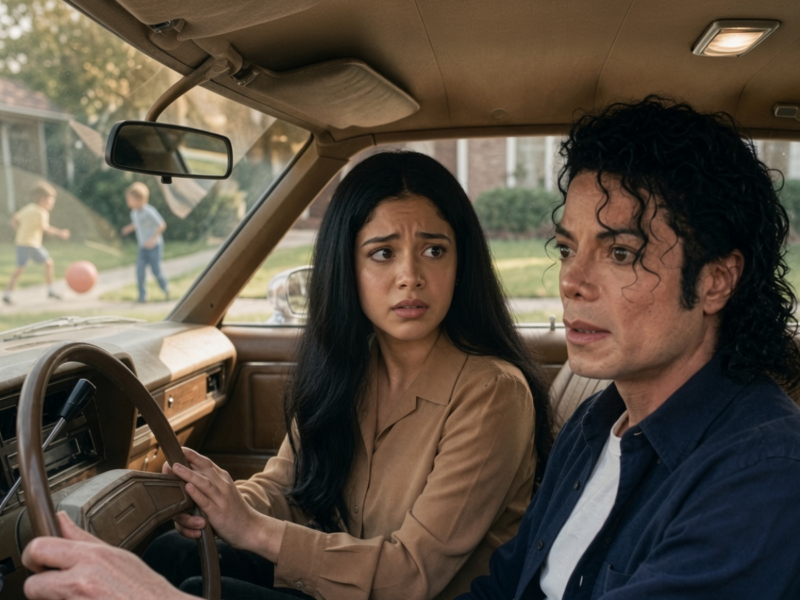
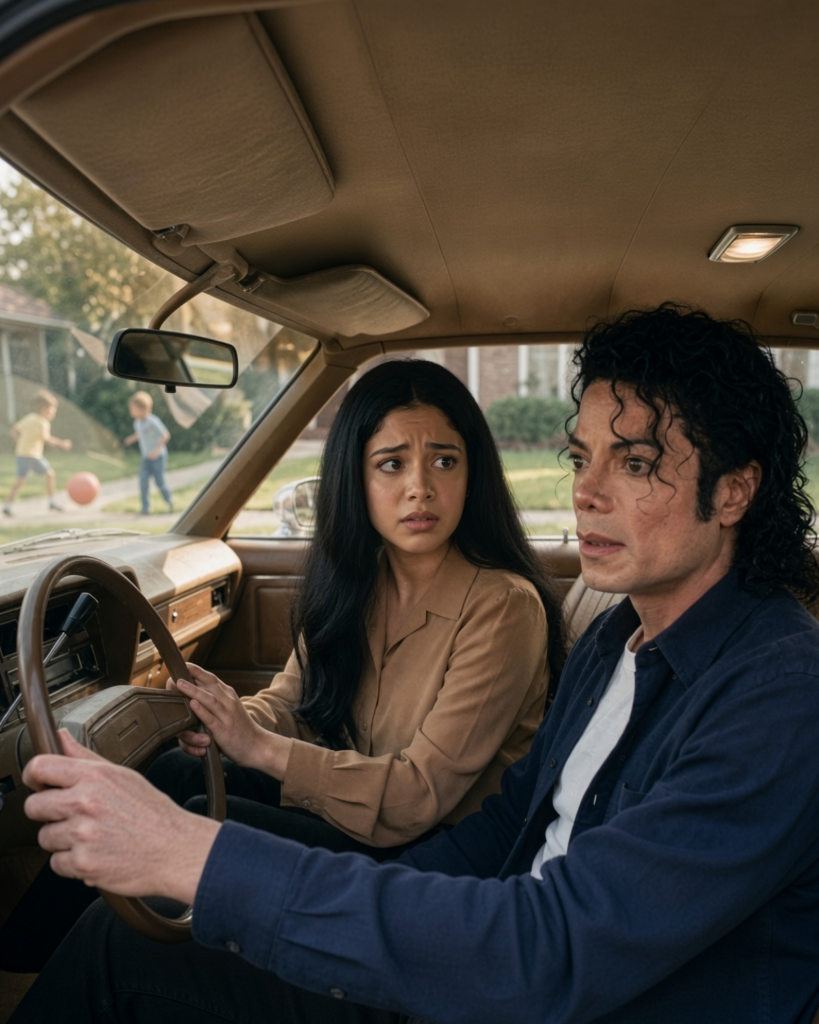
The first time he sat behind the wheel of the Rolls-Royce, Michael always had his head of security and trusted companion, Bill Bray, riding with him.
Even then, he still managed to crash into trash cans, sending garbage spilling out onto the street.
But when Gonsalves went with him for a drive around Los Angeles, she was less worried about his driving than she was about the slow development of his emotions.
Michael slammed on the brakes when he saw a little boy playing on the sidewalk.
He immediately said, “Terry, I want you to go get that boy’s toy. Go on, take it, and then we’ll run.”
At first, he sounded completely serious.
Gonsalves said, “Of course, he was joking, but that was just his nature. He still behaved like a child.”
By this time, Michael had seven nephews.
He was not the kind of uncle who spoiled his nephews.
Although he lived very close to them, he would often go for months without visiting.
And yet, he was deeply absorbed in the details of their lives.
He collected their belongings with almost obsessive care.
Tiny velvet baby shoes.
Hair clips.
Baby socks.
Newborn clothes.
Drawings.
Report cards.
And school schedules.
For each nephew, he kept a separate file filled with their diapers, wrapped carefully on the outside, untouched by any sign of decay.
The stifling clutter inside Michael’s room did little to soften the smell of diapers drifting from his drawers.
One of the three housekeepers at Hayvenhurst was responsible for cleaning Michael’s room, where books, magazines, entertainment items, children’s toys, photographs, and boxes of half-eaten cookies were scattered across every table and chair.
Even more troubling, he had begun collecting records from his new solo album, “Off the Wall.”
Michael then decided not to bathe or change clothes at all, not even his socks and underwear.
The clothes he wore every day became a pair of torn jeans, a ragged T-shirt, and sneakers whose laces had holes worn through them.
Everywhere he went, he carried a heavy, sour smell.
The stale odor coming from the music room became unbearable for the musicians, not to mention his family.
Finally, La Toya, who was now closest to Michael, volunteered to take care of his hygiene.
Although he still refused to change into new shoes, he did put on a freshly washed pair of jeans and agreed to bathe twice a week.
After “Off the Wall” became a spectacular success, Michael grew strangely superstitious about being dirty, so much so that later on, whenever he recorded an album, he would go back to that same shabby, unwashed state.
When Quincy Jones worked with him on “Off the Wall,” he gave Michael a new nickname that was almost painfully accurate.
“Smelly.”
But Jones quickly explained that the Jackson family’s strong scent was not necessarily a bad thing.
In his view, “smelly” meant something like cool, hip, or fashionable.
Jones said Jackson was very polite and very proper, and that he never heard Michael use the word “hip,” let alone swear.
“My God,” Jones said, “he’s like an unscented explosive.”
Michael was searching for a caring father figure, and in Quincy Jones, he saw someone worthy of that role.
Many people later said that behind the scenes, on the set of “The Wiz,” Jones and Michael had come to understand each other.
Q had already made his name as a jazz musician.
He was also a bandleader, arranger, producer, and composer for Tommy Dorsey, Count Basie, and Duke Ellington, among many others.
When he scored Sidney Lumet’s film “The Pawnbroker,” Jones became the first Black composer to enter Hollywood’s inner circle of major film composers.
He went on to write dozens of scores for motion pictures, from “In the Heat of the Night” to “In Cold Blood.”
To the public, Michael did everything he could to deny rumors that he was unhappy with his brothers and wanted to break away to work on his own.
He told Ebony, “My brothers and I still get along. There’s no real problem between us at all. It’s not time for us to make any drastic changes. I’ll do more movies, and I’ll release more records, but right now, the music has to come first. Even then, I won’t do much until something inside me pushes me to do it. That inner drive will tell me when the time is right. Then I’ll act.”
During this period, Jones and Smelly were planning Michael’s new solo album, jokingly titled “Girlfriend,” after a song Paul McCartney had hastily written for Michael.
This music was completely different from anything the Jackson brothers had been making.
Both Michael and Jones were stubborn perfectionists, and they wanted to make this record a classic right away.
Determined not to waste a single minute in the studio, Q had a very delicate habit during recording sessions, meant to avoid the kind of problem that often occurred when some performers became undisciplined.
Michael, on the other hand, had prepared so thoroughly that even Jones found it difficult to keep up with him.
Working that intensely soon took its toll.
One day, Katherine was in the kitchen at Hayvenhurst when Michael staggered into the room.
Gasping for breath, she sat him down and told him he had been working too hard and needed rest.
But Michael kept breathing harder and harder.
He looked terrified, as if he were about to faint.
Katherine quickly called his security chief, Bill Bray.
“What’s wrong, Joker?” Bray asked.
He had called Michael “Joker” since Michael was a child.
“I’m dying,” Michael cried.
“Please take me to the hospital right now. Please take me.”
A short time later, a team of emergency room doctors at Centinela Hospital in Inglewood gathered around Michael.
They diagnosed him with anxiety caused by exhaustion.
They gave him oxygen, and once he calmed down, they gave him a mild sedative and sent him home.
Katherine persuaded her son to take the medicine, but Michael panicked when it began to take effect.
Another wave of anxiety rose inside him, and once again, he was taken back to the emergency room.
Hours later, Michael returned home to rest.
Only then did he understand that the sedative was not going to kill him.
“Off the Wall” was released in August 1979, and it immediately stirred public attention.
Even the album cover attracted attention.
On it, Michael stood leaning against a wall covered with writing.
He was dressed in a sharp, elegant suit, and at Michael’s own request, he wore white socks.
But what surprised people most was his new nose.
It had restored Michael’s beauty.
And now, that nose looked almost exactly like the nose of his advisor, Diana Ross.
It became the feature people noticed most.
Inside that dazzling tuxedo jacket was a vibrant blend of new songs, wild dance rhythms, smooth grooves, bright love songs, and clean, polished ballads.
When composing these musical ideas, Michael did not write them down in notes, nor did he play them on an instrument.
He said the songs came straight into his head.
He explained, “I wake up from dreams and get to work. Come on, write it down. It’s a strange thing. I’m telling you, everything is right there in front of you. And then people ask me how I compose. I’m sorry, but I don’t really compose it. It’s already there.”
Once he had sung the song over and over in his mind, he would sing it into a tape recorder.
He used his extraordinary gift for imitating instruments so that Jones and the others on the recording team could understand exactly the arrangement he heard inside his head.
“At first, I might hear French horns. Wah, wah, wah, wah. Then the bass comes in. Ta-dum, ta-dum-dum-dum, ta-dum.”
“Don’t Stop ‘Til You Get Enough” was truly a song Michael had written by himself.
It pushed the Jackson brothers’ “Shake Your Body Down to the Ground” into the past.
For this song alone, Michael took ten seconds to introduce it with spoken words, or more accurately, with murmured sounds softly under his breath in rhythm with the bassline, simply to build a sense of anticipation before he entered the song’s sweet, seductive core.
“You know, I was wondering, you know, if you could keep on, because the force has got a lot of power, and it makes me feel like, it makes me feel like…”
Michael’s restless energy softened beneath his soaring vocal lines, blending with the deep, pulsing bass.
The song’s sensual feeling did not seem artificial on Michael’s part.
Although he had not yet been deeply involved with any woman, he had seen that side of life through his brothers.
So he understood the meaning behind the lyrics.
The lyrics of “Off the Wall,” about living away from home, also brought out Michael’s fresh, high voice.
But then came “Rock with You,” a smoother song written by Rod Temperton with the help of Jones and another musician from the band Heatwave.
Michael’s voice became softer and more emotionally filled.
Surprisingly, when asked which composers he admired most, Michael named veteran songwriters such as Henry Mancini, Johnny Mercer, and Burt Bacharach, alongside McCartney, Elton John, and Stevie Wonder.
He said, “There are so many things. Black and white, and people don’t read books, but they remember the lyrics of an Elton John song or a Stevie Wonder song. Lyrics can change people’s lives.”
After Quincy Jones played “She’s Out of My Life” for Michael, Jones said, “This will be a hit.”
A few days before they entered the studio, Michael told his twelve-year-old friend in England, Terry George, on the telephone that he wanted to release a record that would truly make him cry.
Jones said, “When he sang ‘She’s Out of My Life,’ he would often cry. Every time we recorded that song, by the end of it, I would look up and see Michael crying. I told him, ‘Let’s come back in two weeks and try it again. Maybe then the song won’t hurt you so much.’ But we came back, and he cried again. So we kept the take exactly as it was.”
Four singles from the album, “Don’t Stop ‘Til You Get Enough,” “Rock with You,” “Off the Wall,” and “She’s Out of My Life,” pushed the record into the top ranks.
It was the first time a solo artist had achieved such a feat.
“Don’t Stop ‘Til You Get Enough” and “Rock with You” both took the album to number one.
Released in August 1979, “Off the Wall” became a major event in the music business.
At a time when the industry was in a serious slump, Michael’s record still sold in staggering numbers.
Seven million copies.
But instead of enjoying the album’s success, Michael sank deeper into loneliness.
The truth was, he had no real friends.
And fame had trapped him inside the house in Encino.
He complained, “I want to go for a walk or sit under a tree, but everything I do ends up on television or in the newspapers. So you have to stay in your room all day. When you perform, people want all kinds of things from you. They pull your hair. They put obstacles in your way. It’s horrible.”
Gradually, Michael began using disguises, wigs, hats, fake beards, dark glasses, just to leave the house at Hayvenhurst.
During his frequent trips to Disneyland, often several times a week to the Magic Kingdom, sometimes three or four visits in a single week, Michael would occasionally stop at a souvenir shop and buy a pair of Groucho Marx glasses, complete with a fake nose and stick-on mustache.
Ironically, he rarely used them.
More often, he would slip through the shadows while Disney employees guided him through service tunnels and hidden pathways, leading him to wooded areas or attractions he particularly enjoyed.
He also disguised himself when he went door-to-door with La Toya, spreading the teachings of Jehovah’s Witnesses.
While adults were often annoyed when they opened their doors to find unexpected visitors, most children immediately recognized him despite the disguise.
They would shout, “Hey, what’s Michael Jackson doing here?”
Michael also faced plenty of difficulties during these Witness visits.
Some homeowners became furious, demanding to be left alone before slamming the door in his face.
At least once, a guard dog chased him down and tore his pant leg as he ran toward a waiting car hidden around the corner.
Yet Michael’s most effective disguise was also his strangest.
Whenever he wanted to avoid being recognized, he dressed in the clothing of an Orthodox Jewish woman, adding white socks and worn tennis shoes that peeked out beneath the hem of the garment.
Even more unusually, Michael often tried to blend into ordinary crowds.
To do that, he deliberately dressed in shabby clothes.
He wore worn-out pants, ragged jackets, and a hat, and sometimes a fake beard and wig, as he ventured into the poorest neighborhoods of Los Angeles.
He told his father that he simply wanted to spend time with the city’s forgotten souls, the homeless, prostitutes, and drifters who wandered the streets at night.
In February 1980, Katherine, La Toya, Janet, and Michael gathered around the television at Hayvenhurst to watch the Grammy Awards.
The music industry was going through a period of decline, yet Michael had been eagerly hoping to win a Grammy for Best R&B Male Vocal Performance for a single record.
When he didn’t win, he burst into tears.
In reality, legendary artists such as Little Richard and the Rolling Stones had never received Grammy Awards themselves.
But that fact offered Michael little comfort.
His reaction was more intense than anyone had ever seen before.
As his mother and sisters tried to console him, Michael cried for a long time.
Sobbing uncontrollably, he kept repeating, “How could they do this? This is wrong. It’s completely wrong.”
Then, suddenly, he stopped.
He wiped away his tears and stared at the television screen.
Clenching his fists, he shook them in front of the set and vowed that his next album would become the greatest record in history.
“I’ll show them,” he swore.
“They’ll see. They’ll all see.”
Two weeks later, at three in the morning, a phone call brought devastating news to Hayvenhurst.
Eighteen-year-old Randy Jackson had been driving his girlfriend’s Mercedes at high speed along Cahuenga Boulevard when rain-slicked roads caused him to lose control.
The car slammed into a utility pole.
His life hung in the balance.
Randy was rushed to Saint Joseph Medical Center in Burbank.
When Michael, Katherine, Joe, and Janet arrived at the hospital, they were told that Randy’s legs had been badly crushed and several bones had been shattered.
Emergency room doctors warned the family that if Randy survived the night, one or even both of his legs might have to be amputated.
Miraculously, after months of treatment and after countless prayers from Katherine and her fellow Jehovah’s Witnesses, Randy made a full recovery.
His recovery was so complete that only seven months after the near-fatal accident, he was healthy enough to join his mother and sister Janet in confronting a woman they believed had become Joe’s mistress.
That woman was Gina Spiranha, a nineteen-year-old secretary who had begun working at Joe’s office on Sunset Boulevard in late 1979.
Although she denied having an affair with him, her relationship with her employer appeared unusually close.
According to La Toya, Spiranha openly boasted about the relationship.
She allegedly went so far as to order expensive items from the Neiman Marcus catalog and charged them to Joe’s credit card while Janet and La Toya sat only a few feet away in the waiting room.
Even more infuriating, Spiranha frequently called Joe at Hayvenhurst.
More often than not, it was Katherine who answered the phone.
Finally, on August 15, 1980, Katherine lost her patience.
Furious, she warned Spiranha to stop calling Hayvenhurst and to stay away from Joe Jackson’s office.
“Or we’ll come down there and throw you out ourselves.”
The following day, Katherine called Joe’s office.
Spiranha was still there.
Together with Randy and the newly recovered fourteen-year-old Janet, Katherine drove to Spiranha’s office to confront her.
Later, Spiranha gave her own account of the confrontation to the police.
“Get out,” Katherine shouted.
“I told you we’d throw you out.”
As Katherine grabbed Spiranha by the hair, Janet seized the young woman’s right arm.
When Spiranha screamed for help, Randy pulled her out of her chair and shoved her to the floor.
Then, together with Katherine and Janet, they dragged her from the office and pushed her into the hallway.
According to Spiranha, Katherine completely lost control.
“You should leave my husband alone,” she screamed as she repeatedly struck Spiranha in the face.
“You need to get out of here,” Spiranha pleaded while trying to protect herself.
She knew the incident could seriously damage the Jackson family’s reputation.
“You need to leave before someone recognizes you.”
Katherine responded by pulling a heavy object from her purse and using it to strike Spiranha.
While Randy pinned the secretary against the wall, at that moment, Jim Krieg, a security employee who worked for the Jackson family, appeared on the scene.
Janet immediately warned him, “Stay out of it, sir. This is family business.”
Then, as Randy dragged Spiranha toward the stairwell, Katherine ripped a gold necklace from the secretary’s bruised neck.
“This belongs to me,” Katherine shouted, “not to you.”
With that, they hurried away, leaving Spiranha lying on the floor, bleeding and covered in bruises.
Within minutes, an ambulance arrived and transported Spiranha to the hospital.
She was treated for a concussion, multiple lacerations, and extensive bruising across her body.
At first, official reports claimed that Spiranha had been injured in an automobile accident.
But according to Spiranha, when Joe tried to buy her silence, she became furious.
Despite the assault, people said that Spiranha continued her relationship with Joe for many months afterward.
Nearly a year after the incident, she filed a lawsuit against Joe, Katherine, Randy, and Janet, seeking twenty-one million dollars in damages.
The defendants denied that any assault had taken place.
However, three witnesses testified in support of Spiranha’s account.
In private, Katherine reportedly admitted to friends and employees that she had beaten that girl up.
Eventually, the lawsuit was settled out of court for an undisclosed amount believed to be around eighty-five thousand dollars.
Spiranha later said, “When Katherine got angry, she was the one who started it.”
But Michael was upset because of his mother and behaved in a way that was far from gentlemanly.
He dealt with what happened to Gina Spiranha by refusing to admit to himself or to anyone else that something so ugly had actually taken place.
Even though he had been friendly with her before the attack, afterward he showed no concern for her condition and even claimed not to know who she was.
“Unless you were one of Katherine’s children, you meant absolutely nothing to Michael.”
While his mother was directing all her anger toward Joe over his infidelity, Michael was forming a friendship with the celebrated cast of the film “On Golden Pond” in New England.
He had met Jane Fonda several months earlier in Los Angeles, and she had been captivated by the shy, almost childlike innocence that surrounded him.
Fonda later reflected, “Michael reminded me of a wounded traveler, someone incredibly fragile.”
She also found great joy whenever she spent time with him, someone who knew absolutely nothing about the famous people she had once been associated with.
Jane invited Michael to stay at her private lakeside cottage.
Later, Michael recalled that he had spent time alone on the water with Fonda and that they simply talked for hours.
“We talked and talked and talked about, well, everything,” he said.
“Politics, philosophy, race, Vietnam, acting, everything. It was magical.”
Not long afterward, Fonda introduced Michael to her legendary father, Henry Fonda, though she thought she already knew how he would react.
Jane later remembered, “At first I thought my father wouldn’t connect with Michael at all. But the truth was, he understood Michael even better than Michael understood himself.”
The two of them sat together in a small boat.
Henry handed him a fishing rod.
It was the first time Michael had ever held one.
“My father and Michael had a lot in common. They were both deeply sensitive and intensely private. Yet, when they stepped in front of a camera or onto a stage, they came alive. At first, my father thought Michael was strange, but eventually he grew to like him very much.”
Michael also met Katharine Hepburn.
When Jane introduced them, Hepburn reportedly had no idea who Michael was or why he was famous.
Jane recalled, “She simply shook his hand and walked away. But that was Katharine. That’s just how she was.”
Michael was crushed.
He felt humiliated by the encounter, and because he was unaccustomed to being rejected, the experience wounded him deeply.
“Why doesn’t she like me?” he wanted to know.
“What did I do to make her angry?”
Yet it may have been Michael’s own manner, his unusually soft voice, his extreme shyness, and his awkward eagerness to please, that made Hepburn uncomfortable from the very beginning.
But gradually, Katharine Hepburn’s opinion began to change.
Whenever Michael visited the movie set, he carried a tape recorder with him.
At the end of each day, Hepburn would often sit down and talk with him.
Jane Fonda later recalled, “They would sit together on a rock, and Michael would simply listen while Katharine talked.”
Every story she told carried a lesson.
They were profound lessons, valuable lessons, exactly the kind a young talent needed to hear.
She told him never to become complacent.
Never to believe he had learned enough.
Never to stop practicing and improving.
Over time, Hepburn and Michael became close friends and spoke frequently on the telephone.
In 1981, Hepburn brought her nine-year-old granddaughter to see Michael perform at Madison Square Garden.
Not surprisingly, it was the very first pop concert Hepburn had ever attended.
And although popular music was not particularly to her taste, she had to admit she was fascinated by what she saw.
“He loves every one of those kids in the audience,” she later said.
“And it’s obvious that he knows exactly what he’s doing.”
That was her verdict on her unusual new friend.
What Hepburn did not expect, however, was the overwhelming frenzy that erupted the moment Michael appeared on stage.
Photographer David McGough later remembered, “The audience completely lost control. It was absolute hysteria. I’ve attended many major concerts in my life, but I had never seen anything like it. What fascinated me most was watching Katharine Hepburn. She sat perfectly still, but you could see the curiosity growing across her face.”
The next day, a headline appeared in the newspapers.
“Katharine Hepburn goes to see Michael Jackson in concert.”









