Michael Jackson Live TV Moments That Shouldn’t Have Aired.
# Michael Jackson Live TV Moments That Shouldn’t Have Aired
The boy’s mother had suspicions that Jackson was serving alcohol to her thirteen-year-old son, who was still suffering from cancer.
Eventually, she took her suspicions to the district attorney, and that led to a full-scale investigation by his office and the Santa Barbara County Sheriff.
“They did it to try and belittle me, to try to take away my pride, but I went through the whole system with them. And at the end, I, um, I wanted the public to know that I was okay, even though I was hurting.”
Live television is unpredictable, but when Michael Jackson was involved, even the smallest unscripted moment could become unforgettable.
From awkward questions and unexpected reactions to hilarious and serious mistakes, surprising interruptions, and moments Michael clearly wasn’t expecting, these are the live TV moments that caught him — and sometimes everyone around him — completely off guard.
“What is your response to the—the allegations that were—were brought by the district attorney in Santa Barbara that you—you molested this boy?”
“Totally false. Before I would hurt a child, I would slit my wrist. I would never hurt a child. This is totally false. I was outraged.”
One of Michael Jackson’s most controversial live appearances happened in 2002 when he stepped onto the balcony of Berlin’s Hotel Adlon with his nine-month-old son, Blanket.
As hundreds of fans gathered below, Michael briefly held the baby over the balcony railing while acknowledging the crowd.
“Family.”
The footage was quickly captured by photographers and television cameras before being broadcast around the world.
What may have seemed to Michael like a brief gesture toward his fans immediately became a major controversy, with many people questioning the safety of what they had witnessed.
The incident attracted intense criticism because of the height of the balcony and the young age of his son.
The footage remains one of the most uncomfortable moments associated with Michael’s public appearances.
Unlike a planned performance or interview, this was completely spontaneous, which made the reaction even more intense.
It also became a reminder of how quickly a few seconds captured on camera could turn into a worldwide media story when Michael Jackson was involved.
And Michael’s former bodyguard, Matt Fiddes, later offered his own perspective on the controversial incident, arguing that there may have been more happening behind the scenes than the public initially understood.
“When you go back and look at that ‘Living with Michael Jackson’ document, you’ll see where he’s got a blanket on his knee and he’s—he’s like, ‘Blanket, Blanket, Blanket,’ and he’s—he’s not right. You know, that’s the effect to give you. That was probably minutes before the balcony incident. So Bashir said, ‘Can you go and show Prince, the older son, to the crowd?’ ‘Cause they’re all chanting for him. And he’s like, ‘Sure. You think it’s safe?’ He goes, ‘Sure.’ And me and Mark, I’m not a bodyguard—bodyguard by this point. I’m just as a friend with Mark. So he goes out the balcony and he takes Prince and Paris and shows the fans, and then they screamed. That was it. He comes back in and he puts a curtain over their face, and, um, we just thought it was a nice thing for him to do. Then they were shouting for the baby, and I think Bashir saw an opportunity here ’cause there’s a bit of a delay. Now if you look at the one picture that went around the world and makes Michael Jackson look a complete maniac where he’s holding Blanket over the balcony with his face like this—like—like he’s crazy. So Mark Bashir said, ‘Listen, they’re chanting for the baby, Michael. Why don’t you go and show the baby?’ He goes, ‘Ah, I’m not sure. Might scare the baby, be terrified.’ He go, ‘No, go do it.’ But Michael was in his right frame of mind. He would—he was on there for June or whatever the doctor had given him. I got no—or whatever he took himself. I’ve got no idea. He gave in to Bashir. I think Bashir planted the photographer out there. There’s no way anyone knew this was coming. The perfect shot, the perfect angle. Showed him a crazy man. He went out there quick, few seconds, dangled the baby, came back in, shut the doors. We didn’t really—me and Mark didn’t really think much of it because we weren’t privy to how it looked outside.”
Fiddes questioned the circumstances surrounding the photographs and suggested that the photographer was planted, raising the possibility that the incident was deliberately positioned to attract maximum media attention.
His comments add another layer to an event that had already generated worldwide headlines.
While the images showed Michael holding his young son over the balcony as fans gathered below, Fiddes focused on what he believed was happening around the moment — the photographers, the intense media presence, and the way the footage was quickly circulated.
According to Fiddes, the incident had a significant effect on Michael, particularly because of the enormous backlash that followed.
What lasted only a few seconds became one of the most widely discussed images associated with Michael’s later years.
But Michael later apologized for the incident and described it as a moment of excitement while responding to the fans outside the hotel.
“Michael used to always go to balconies to wave at fans. So we just carried on conversation, and then fans—the media presence would grow. Helicopters were going over, and Michael thought, ‘Wow, they—they love my kids.’ We—we put German TV on, and Germany said, ‘Michael Jackson shows this baby to the world.’ Very different narrative to around-the-world tabloid stuff. Then America called and spoke to one of the other guards and said, ‘Do not let Mr. Jackson see any of the American TV. We got a crisis on our hands—that Michael Jackson nearly dangled and killed his baby by throwing him off the balcony.’ That’s what they were saying. And anyway, they had to break the news to him in the end. He locked himself away in the room, and, uh, yeah, he—he, um, realized that he did something wrong. He apologized and—and, um, yeah, that was that. I remember when we came through London on the way back, we went past Hyde Park, a very famous park. We had tinted windows in our limo, and there was a dad throwing his kid up in the air as high as he can and then catching him and throwing high as he can. And then Michael wasn’t trying to justify it. He just said, ‘Uh, Matt, if that was me, Michael Jackson, doing that, I’ll be all over world news that that’s a—to my child, that I’m trying to kill my baby.'”
And Michael Jackson addressed the controversial Berlin balcony incident directly in 2003, explaining what was going through his mind when he briefly held his baby son over the balcony.
Rather than dismissing the criticism, Michael acknowledged that the situation had been misunderstood and explained that he was simply trying to give the fans outside a glimpse of his child.
He also acknowledged that he had made a serious mistake.
“I love you. I love my children very much.”
“Yes. I want him to cry. Lovely.”
“Does he like his feed? Yes.”
“Have you been hearing about what people have been saying?”
“That’s totally ignorant. I would never do that to my children or any—any child. Try to kill them? Come on. Stupid. And why would I put a scarf over the baby’s face if I was trying to throw them off the balcony? We were waving to thousands of fans down below, and they were chanting they wanted to see my child. So I was kind enough to let them see. I was doing something out of innocence. He’s hungry, isn’t he? Uh—”
“He loves milk.”
“This kind. It is good. Thank you.”
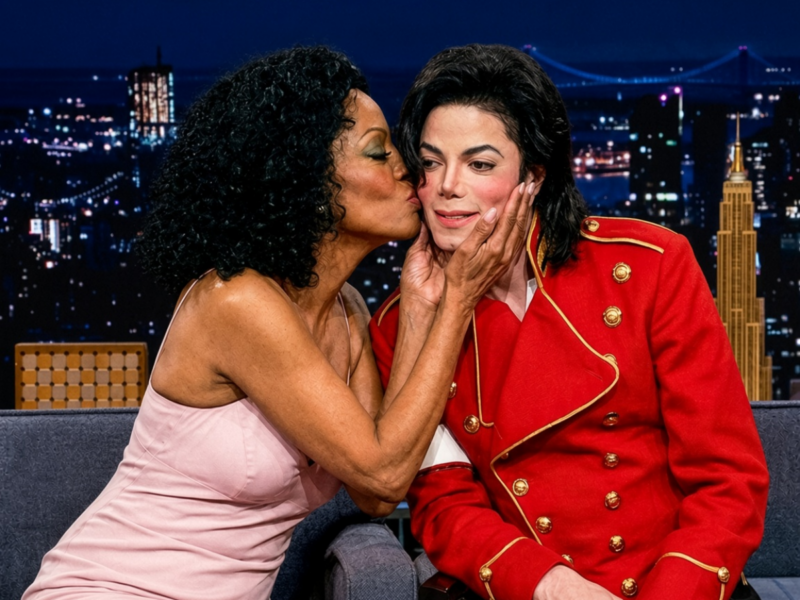
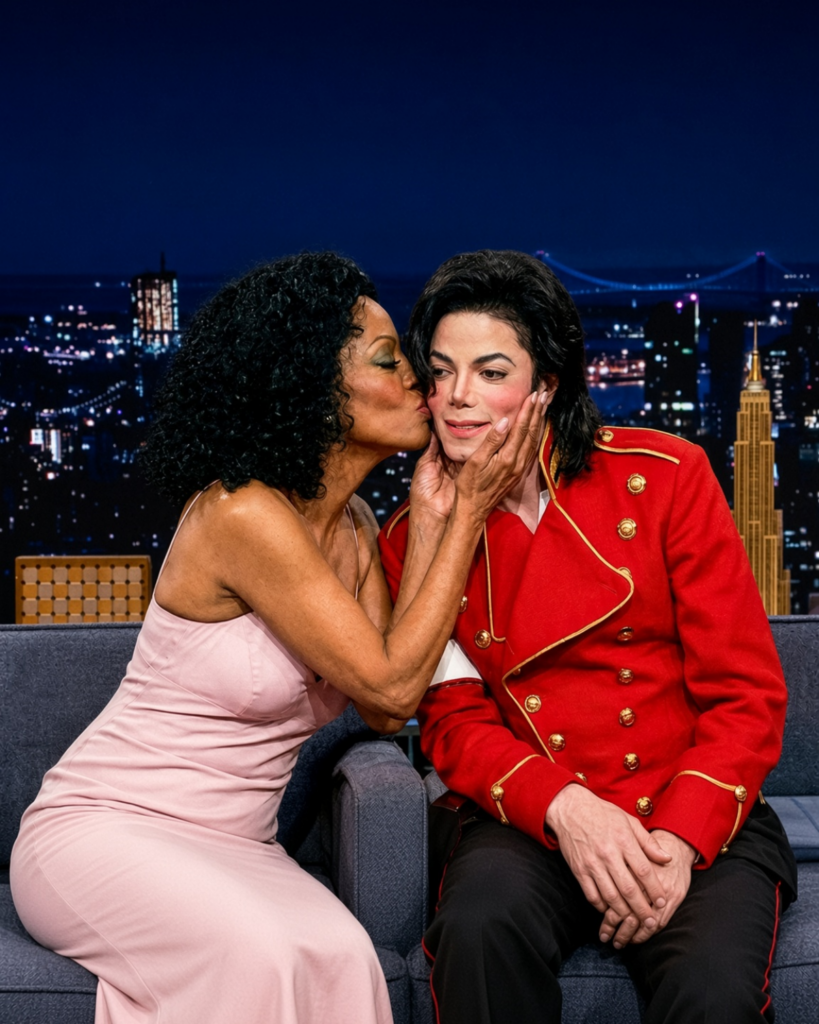
Meanwhile, Michael and Diana Ross shared a playful moment that showed just how comfortable and affectionate their friendship could be.
During a conversation, the two unexpectedly started calling each other sexy, catching everyone off guard.
For Michael, who was often shy when conversations became personal, the exchange was especially funny.
Instead of becoming embarrassed or changing the subject, he played along with Diana and returned the compliment.
Their teasing gave the interaction a light-hearted energy and showed a side of Michael that fans didn’t always get to see.
It was also a reminder of the long history between them.
Diana had known Michael since he was young and had been an important influence in his early life, so their conversations often carried a warmth and familiarity that wasn’t present in Michael’s typical interviews.
What makes the moment so entertaining is how unexpected the exchange feels.
One moment they’re having a normal conversation, and the next they’re playfully complimenting each other.
Michael’s reaction makes it even more memorable because it shows that behind his famously reserved personality was someone who could absolutely join in when the teasing started.
“I knew that you were going to be a giant star. I really did.”
“Well, thank you.”
“Yeah, but I didn’t know—what I didn’t know is that you were going to get so sexy.”
“You’re embarrassing me.”
“Well, I always knew you would.”
“What?”
“Be sexy.”
“Don’t—do you guys think she’s sexy?”
Michael Jackson was already in the middle of a busy day when things suddenly took an unexpectedly awkward turn.
After returning from the restroom, the cameraman casually revealed that he had actually heard Michael while he was in there and then asked if his microphone had been on.
Michael immediately realized what had happened, making the situation incredibly awkward but also unintentionally hilarious.
It was one of those completely unexpected moments where Michael could do nothing except acknowledge that his microphone had stayed on the entire time.
“Mark—”
“I won’t be answering any questions.”
“One of the things I don’t go over, guys.”
“Yeah. Clear it all out.”
“You need the restaurant.”
“Yeah, I can.”
“So excited.”
“Me, too. Thank you.”
“Hi. How are you?”
“Christian?”
“Yeah. Hello, Michael. Helicopter—microphone.”
Then, just when Michael thought the visit couldn’t get any more unpredictable, a woman approached him with a surprising connection to his family.
She casually told Michael that she knew his uncle Lawrence and that the two of them had actually dated in high school.
Michael’s immediate reaction made the moment even funnier, as if he was genuinely caught off guard by the unexpected revelation.
It was a brief but wonderfully awkward interaction that showed just how random things could get when Michael returned to his hometown.
“I feel good to see you.”
“I’m state senator. Hi, Michael. How are you? Nice to meet you. I know your uncle Lawrence.”
“Yes, of course.”
“We dated in high school. So—”
“I got to get my cousin to hear that.”
“Where’s your cousin?”
“That’s the grandfather. My uncle.”
“Oh, really? Okay.”
“No, nobody.”
“You know these two?”
“They’re cousins. Oh, this is a big Elijah.”
“It’s your cousin. You don’t even know.”
In a rare, unfiltered moment from resurfaced documentary footage shot by Mark Schel, Michael Jackson is filmed laughing and joking candidly while riding inside a vehicle swarmed by ecstatic fans.
As the crowd presses against the windows, a companion inside the car points out an enthusiastic female admirer and laughs.
Jackson looks out the window, bursts into a deep, unguarded laugh, and light-heartedly jokes along.
This raw moment gained massive traction online because it shows a fiercely private pop icon letting his guard down and displaying a casual adult sense of humor rarely seen in his official public appearances.
“Good fish.”
“Oh, that was a motorcycle.”
“That’s a good fish back there. Oh, look at that one right there.”
But there were some serious TV moments as well.
During Martin Bashir’s interview with Michael Jackson, the conversation involving young Gavin Arvizo became particularly sensitive because Michael’s relationships with children were already under intense public scrutiny.
Bashir questioned whether Michael’s behavior toward children could potentially be inappropriate, using Gavin’s situation to raise concerns about the way Michael interacted with young boys.
The subject was especially serious because Jackson was already facing misconduct allegations, making the discussion far more consequential than an ordinary interview question.
Critics of Bashir’s approach have argued that the documentary presented certain interactions and circumstances in a way that encouraged viewers to interpret them negatively rather than providing the full context surrounding Michael’s relationships with children.
“This is a kid you knew.”
“Yes.”
“How would you characterize your relationship with this boy?”
“I’ve helped many, many, many children. Thousands of children. Cancer kids, leukemia kids. This is one of many.”
Gavin himself later became central to the 2005 criminal case against Michael Jackson.
Michael denied the allegations and, after the trial, he was acquitted of all charges.
Therefore, when discussing the Bashir footage, it is important to distinguish between allegations, Bashir’s interpretation of what viewers were seeing, and facts established through the legal process.
Michael Jackson often described his relationships with children as innocent friendships.
When interviewers questioned why he felt so comfortable around young people, he explained that he enjoyed their company because children could be open, playful, and free from the pressures he associated with adulthood.
At the same time, these relationships became one of the most controversial aspects of his public image, particularly after allegations of child sexual abuse were made against him.
“What—what happened when they arrested you? What did they do to you?”
“They were supposed to go in and just check fingerprints and do the whole thing that they do when they take somebody in. They manhandled me very roughly. My shoulder is dislocated, literally. It’s hurting me very badly. I’m in pain all the time. This is—see this arm? This is as far as I can reach it. Same with this side over here—”
“Because of what happened at the police station.”
“Yeah. At the police station. And what they did to—if you—if you saw what they did to my arms, it—it was very bad what they did.”
In interviews, he also spoke about his own childhood and how fame had prevented him from experiencing many ordinary childhood activities.
He suggested that spending time with children allowed him to reconnect with the innocence and freedom he felt he had missed.
That explanation became a recurring part of Michael’s response whenever journalists questioned his closeness with children, regardless of how the public interpreted those relationships.
Michael repeatedly maintained that they were based on friendship, affection, and a desire to preserve the innocence he felt was missing from his own upbringing.
“I ask all of you to wait and hear the truth before you label or condemn me. Don’t treat me like a criminal, ’cause I am innocent. I have been forced to submit to a dehumanizing and humiliating examination by the Santa Barbara County Sheriff Department and the Los Angeles Police Department earlier this week. They served a search warrant on me which allowed them to view and photograph my body, including my penis, my buttocks, my lower torso, thighs, and any other area that they wanted. They were supposedly looking for any discoloration, spotting, blotches, or other evidence of a skin color disorder called vitiligo, which I have previously spoken about. The warrant also directed me to cooperate in any examination of my body by their physician to determine the condition of my skin, including whether I have vitiligo or any other skin disorder.”
“How did you feel when they went into Neverland? I mean, with a search warrant—I mean, what were they looking for? What did they take?”
“My room is a complete wreck. My workers told me—they said, ‘Michael, don’t go in your room.’ They were crying on the phone. My employees, they said, ‘If you saw your room, you would cry. I have stairs that go up to my bed.’ And they said, ‘You can’t even get up the stairs. The room is totally trashed.’ And they had eighty policemen in this room. Eighty policemen in one bedroom. That’s really overdoing it. And they took knives and cut open my mattresses with knives. Just cut everything open.”
“Did—did they take anything from Neverland?”
“Uh—I’m not sure what they took. They never gave me a list.”
“But you’re saying that they destroyed your property?”
“Yes, they did. And then they—what they did was they made everybody that work at the property—they locked everybody out of the house. They had the whole house to themselves to do whatever they wanted, and, uh, they totally took advantage. They went into areas they weren’t supposed to go into, uh, like my office. They didn’t have search warrants for those places, and they totally took advantage.”
Martin Bashir questioned Michael Jackson about his children — Prince, Paris, and Blanket — and whether Michael considered himself their real father.
Michael answered confidently that they were his children and that he loved them deeply.
Rather than getting defensive about the question, he spoke about fatherhood as something incredibly important to him.
“When it comes to distributing cookies, we get to see children’s real personality.”
“Here, come here.”
“Friends, over here before I grind you into hamburger.”
“No. You want the cookie? You behave. Here. Okay. Here. Here’s the cookie. Paris, you want some of this, friends? I wish for you, um, to learn about perseverance and confidence and the true meaning of success. It’s totally up to you. You could do anything you want to. And I love you. Thank you.”
Michael explained that being a father had changed his life and that he wanted to give his children the kind of love, attention, and freedom that he felt he had missed during his own childhood.
He also made it clear that he did not see fatherhood as being defined simply by biology.
For Michael, being a parent meant being there for his children, protecting them, and loving them unconditionally.
Michael Jackson celebrating the birthday of his son, Prince.
He was two years old then and living in the Neverland mansion, where these home videos, exclusively obtained by 2020, were recorded.
“It’s a rare glimpse of Jackson as father — a side not often seen in public.”
“Michael was an incredible father.”
“Not by myself. Help me.”
“He actually was one of the best fathers I’d ever seen. He would spend time with his children. He would talk to his children. He would spend time teaching his children—teaching his little children how to dance the wiggle. I never saw a man so close to his children than Michael. Uh, they were the world to him. He doted over them. He taught him to read early, and he was constantly with—they never left his side.”
“Daddy—I have—thank you for giving me ice cream. You’re the best daddy in the whole world, and I love you. That’s sweet. And he was a good father. Great father.”
“Good.”
“Tell me what your wishes are for your birthday. What would you like to see happen? Um, for your life. What do you want?”
“I do what you do.”
“What do I do?”
“You dance and sing.”
“That’s what you want to do.”
Bashir continued asking questions about Michael’s family and whether he wanted to have more children.
Michael revealed that he would actually like to adopt more children in the future, showing just how strongly he felt about becoming a father.
His answer was particularly striking because the conversation was surrounded by public speculation about his personal life.
Instead of allowing the questioning to define what fatherhood meant to him, Michael focused on his relationship with his children and the love he had for them.
It was another moment where Michael gave a surprisingly direct response to an extremely personal question.
Whatever questions the public had about his family, Michael himself was clear about one thing.
Prince, Paris, and Blanket were his children.
And being their father was one of the most important parts of his life.
“As I’ve gotten older, I’ve learned that a lot of what I think is normal life is not normal life. Growing up in Neverland with my siblings and my father—for us, it was hanging out together as a family, but with the backdrop of elephants and giraffes walking in the background. We spent a lot of time playing board games together, reading books, watching movies. It truly was and is magical. It felt like your own personal Disney. I would love to have kids and, you know, take notes on what he did as a father, but he was always on our level in a way, but I don’t feel that he—and he made it a point that it was—he didn’t want people to speak to us as children. He wanted them to speak to us as an adult. When he played with us, he played with us. You know, he got down and he was playing with the toys and making up stories, or we’d play board games. He just had a very childlike nature that was so much fun. Always playing pranks on people and stuff.”
“Yeah.”
“I love that. I remember you telling me about the first time he showed you the ‘Thriller’ music. Yes. What? But you freaking out ’cause you’re already young.”
“Terrified. Yeah. And I wasn’t really expecting it. And also, he told us that it was real, like it wasn’t special effects or anything like that. So, again, playing into the prank, right? And it happened to be a full moon that was that night. So, he started acting like his stomach was hurting. We just took off running.”









