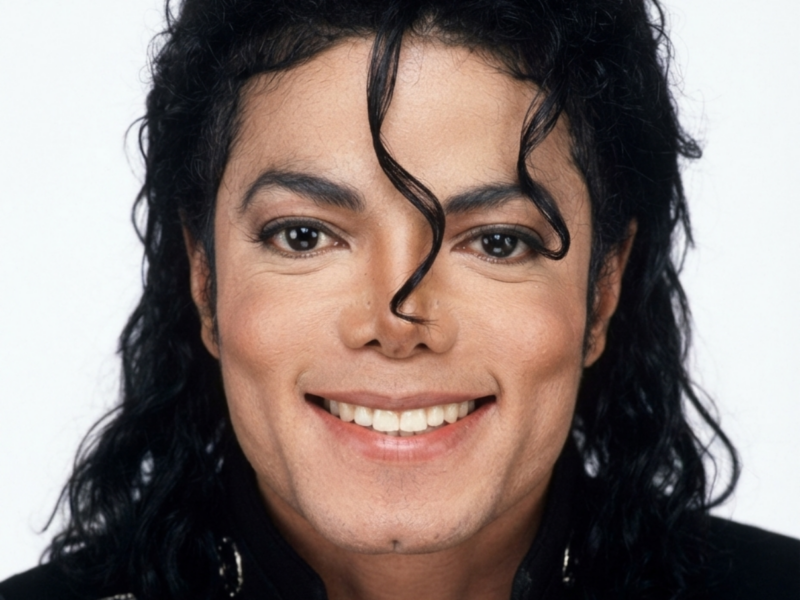
Michael Jackson explains in his own words..what he felt he was here for.
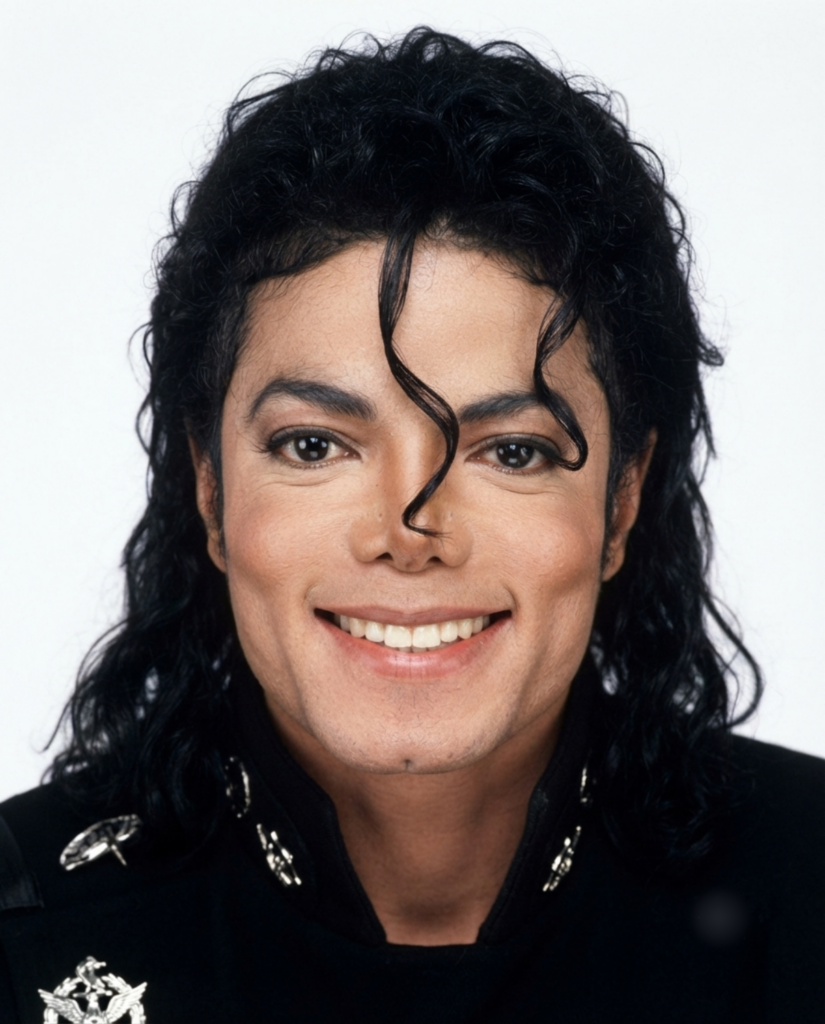
In the final weeks of his life, Michael Jackson was recorded speaking in a slurred, heavily medicated voice about the thing that mattered most to him.
He wasn’t talking about Thriller. He wasn’t talking about the moonwalk. He wasn’t talking about any of the achievements that had made him the most famous entertainer on the planet.
He was talking about a children’s hospital.
“I’m taking that money, a million children, children’s hospital, the biggest in the world,” he said on the recording, later played in a Los Angeles courtroom during the trial of his doctor, Conrad Murray. “Michael Jackson’s Children’s Hospital.”
“Gonna have a movie theater, game room. Children are depressed. In those hospitals, no game room, no movie theater. They’re sick because they’re depressed.”
Then he said the thing that cut through everything else.
“That will be remembered more than my performances.”
This was Michael Jackson at the end of his life. Not the King of Pop. Not the global icon. A man who had spent decades building the most extraordinary career in entertainment history, telling his doctor that the thing he wanted to be remembered for hadn’t even been built yet.
And the reason he gave for why?
“I love them. I love them because I didn’t have a childhood.”
“I feel their pain. I feel their hurt. I can deal with it.”
When he talked about the songs he had written — “Heal the World,” “We Are the World,” “Will You Be There,” “The Lost Children” — he explained where they came from with the same raw simplicity.
“These are the songs I’ve written because I hurt, you know, I hurt.”
This wasn’t a performance. This was a man, weeks from death, speaking the truth he had been trying to live by for decades.
—
To understand what Michael Jackson believed he was here for, you have to go back to the beginning.
Michael was five years old when the family act started. He was six when it became obvious that he was the one. He spent his entire childhood on stages, in studios, in rehearsal rooms, carrying the weight of his family’s future on his small shoulders.
He never had what most children have. No ordinary days. No playing in the yard until dinner. No childhood.
He talked about this publicly, most memorably in 2001 when he spoke at Oxford University to launch his children’s charity, Heal the Kids. Standing at the podium, visibly frail, he broke down in tears talking about his own childhood.
“I come before you less as an icon of pop and more as an icon of a generation,” he told the audience. “A generation that no longer knows what it means to be children.”
He spoke about his father, Joseph Jackson, pushing him and his brothers from an early age. He said he longed for “a father who showed me love. And my father never did that.”
He wasn’t asking for pity. He was explaining something. He was explaining why children mattered to him in a way that most people couldn’t fully understand.
He had been robbed of something fundamental. And he had spent his entire adult life trying to give that thing back to other children — the childhood he never had.
—
The scale of what Michael Jackson actually did for children is almost impossible to comprehend.
He didn’t just write songs about healing the world. He built infrastructure for it.
In 1992, he founded the Heal the World Foundation, named after his song, with the mission of improving the lives of children around the world . He announced it at a press conference in New York, saying he was going on tour specifically to fund it.
“The only reason I am going on tour is to raise funds for my foundation,” he said. “My goal is to gross $100 million by Christmas, 1993.”
He didn’t keep the money. He gave it away.
He donated the proceeds from “Man in the Mirror” to Camp Ronald McDonald for Good Times, a camp for children with cancer . He equipped a 19-bed unit at Mount Sinai Medical Center for cancer research . He donated the $1.5 million he received from Pepsi endorsements to the Michael Jackson Burn Center for Children, the hospital that had treated him after the Pepsi commercial accident that left him with second and third-degree burns .
In 1988, before a Wembley Stadium concert, he met with Prince Charles and Princess Diana and handed over checks totaling more than $400,000 — £150,000 for the Prince’s Trust and £300,000 for the children’s hospital at Great Ormond Street .
He visited that hospital. He sat with the children. He read stories to them. He distributed gifts.
In 1993, he performed at the Super Bowl halftime show. He received no payment. Instead, the NFL contributed $100,000 to his Heal the World Foundation, and Jackson pledged proceeds from the “Heal the World” single and video to Heal L.A., a new initiative to help children in the riot-torn areas of Los Angeles. Former President Jimmy Carter agreed to serve as co-chairman .
He visited hospitals on every continent. In 1992 alone, he traveled more than 30,000 miles across Africa in eleven days, visiting hospitals, orphanages, schools, and organizations for children with disabilities . He visited the Sophia Children’s Hospital in Rotterdam and presented a check for 100,000 pounds . He visited the Queen Elizabeth Children’s Hospital in London and brought Mickey Mouse and Minnie Mouse from Euro-Disney to surprise the children .
In November 1992, his foundation partnered with AmeriCares to airlift 47 tons of medication, blankets, and winter clothes to children in Sarajevo — $2.1 million in supplies, distributed under United Nations supervision .
He funded a playground for 500 orphans in Bucharest, Romania . He covered the cost of a liver transplant for a four-year-old boy named Bela Farkas . He donated 1 million rand to the Nelson Mandela Children’s Fund .
He did this for decades. Not once. Not for publicity. Continuously.
—
When Michael Jackson talked about children, he didn’t talk about them as fans or as an audience. He talked about them as his reason for being.
“I believe in my heart that the greatest challenge facing our nation — and the world — is to improve the quality of life for our children,” he said .
He said it again and again, in different words, across different decades.
“Tonight, let us create a symphony of hearts, marveling at the miracle of our children,” he said at Oxford .
He proposed a Children’s Universal Bill of Rights. He talked about “Generation O” — people who have material success but “an aching emptiness on the inside” .
He wasn’t speaking abstractly. He was speaking from experience.
—
There’s a moment in the Oxford speech that tells you everything. Michael Jackson, the most famous man on Earth, standing in front of a room of students at one of the world’s most prestigious universities, broke down crying while talking about his childhood.
He wasn’t crying for effect. He was crying because the wound was still there.
And then he said something that connected that wound to everything he had tried to do with his life.
“I try to be kind and generous, and to give to people, and to do what I think God wants me to do.”
He believed he had been chosen. Not chosen to be famous. Chosen to help.
“I feel I was chosen as an instrument to just give music and love and harmony to the world,” he said in one interview. “Children of all ages and adults and teenagers.”
—
In the recording played at the Conrad Murray trial, Michael Jackson said something that should have been impossible to misunderstand.
“My performances will be up there helping my children and always be my dream.”
He was talking about the This Is It concerts — the fifty shows at the O2 Arena in London that he was rehearsing for when he died. He was planning to use the money from those shows to build the children’s hospital.
He never got to build it.
But he had already spent decades building something else. Not a building. A legacy of giving that most people never fully understood because it didn’t fit the narrative the tabloids wanted to tell.
He was weird. He was strange. He slept in an oxygen chamber. He dangled his baby over a balcony.
Those were the headlines.
The headlines didn’t say: He gave away hundreds of millions of dollars to children’s charities. He visited sick children in hospitals on every continent. He built playgrounds for orphans. He funded cancer research units. He airlifted medical supplies to war zones. He created foundations that immunized 17,000 children in five days . He spent his entire adult life trying to give other children the childhood he never had.
Those weren’t headlines. Those were just the truth.
—
When Michael Jackson wrote “Childhood,” he wasn’t writing a song for other people. He was writing a letter to the world, asking them to understand something they had spent years refusing to see.
“Have you seen my Childhood? I’m searching for the world that I come from. ‘Cause I’ve been looking around in the lost and found of my heart. No one understands me. They view it as such strange eccentricities. ‘Cause I keep kidding around like a child, but pardon me.”
The chorus was the question he had been asking his entire life:
“Before you judge me, try hard to love me. Look within your heart then ask: Have you seen my Childhood?”
He knew people judged him. He knew they thought he was strange. He knew they laughed at him, mocked him, turned him into a punchline.
He just wanted them to understand that the strangeness came from somewhere real. The lost childhood. The pain. The desperate attempt to find something he had never been allowed to have.
And he wanted them to know that he had taken that pain and turned it outward. He had tried to make sure other children didn’t have to feel what he felt.
—
There’s a lyric in “Childhood” that might be the most honest thing Michael Jackson ever wrote.
“It’s been my fate to compensate, for the Childhood I’ve never known.”
That’s what he was doing. Every hospital visit. Every donation. Every foundation. Every playground. Every toy given to a sick child. Every check handed to a charity.
He was compensating.
Not for himself. He couldn’t get his childhood back. That was gone forever.
He was compensating for the children who were losing theirs. The sick ones. The poor ones. The ones in war zones. The ones in orphanages. The ones who were hurting like he had hurt.
He couldn’t save himself. So he tried to save them.
—
In the end, what Michael Jackson said he wanted to be remembered for wasn’t the music. It wasn’t the dancing. It wasn’t the record sales or the awards or the fame.
It was a hospital for children that he never got to build.
“That will be remembered more than my performances,” he said.
He was wrong about that, in one sense. The performances are what the world remembers. The moonwalk. Billie Jean. Thriller. The performances are what will be remembered for as long as people watch and listen.
But he was right about something deeper. The performances were never what he was actually here for.
He was here for the children. The ones he could help. The ones he could hold. The ones he could make smile, even for a moment.
He said it himself, in his own words, weeks before he died.
“I love them. I love them because I didn’t have a childhood. I feel their pain. I feel their hurt. I can deal with it.”
He could deal with it. And he did.
For decades.
Until he couldn’t anymore.









