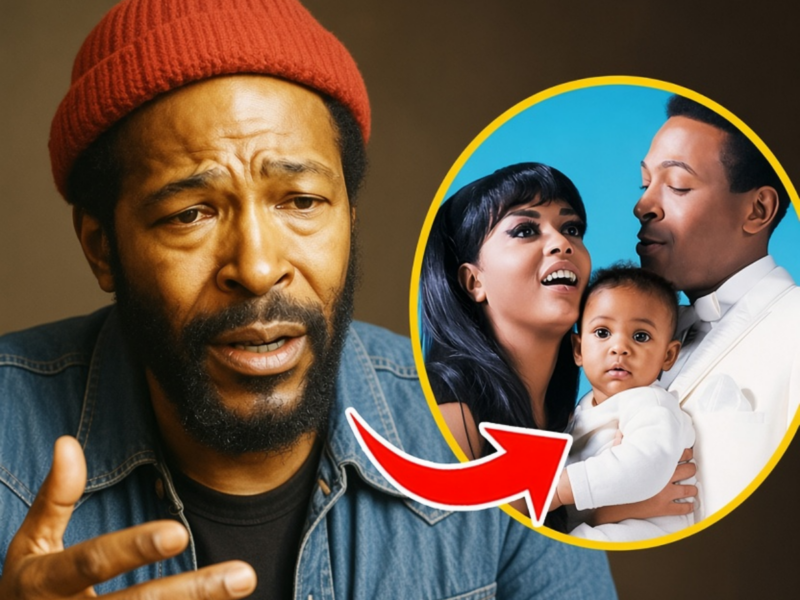
Marvin Gaye Finally Tells The Truth About Tammi Terrell.
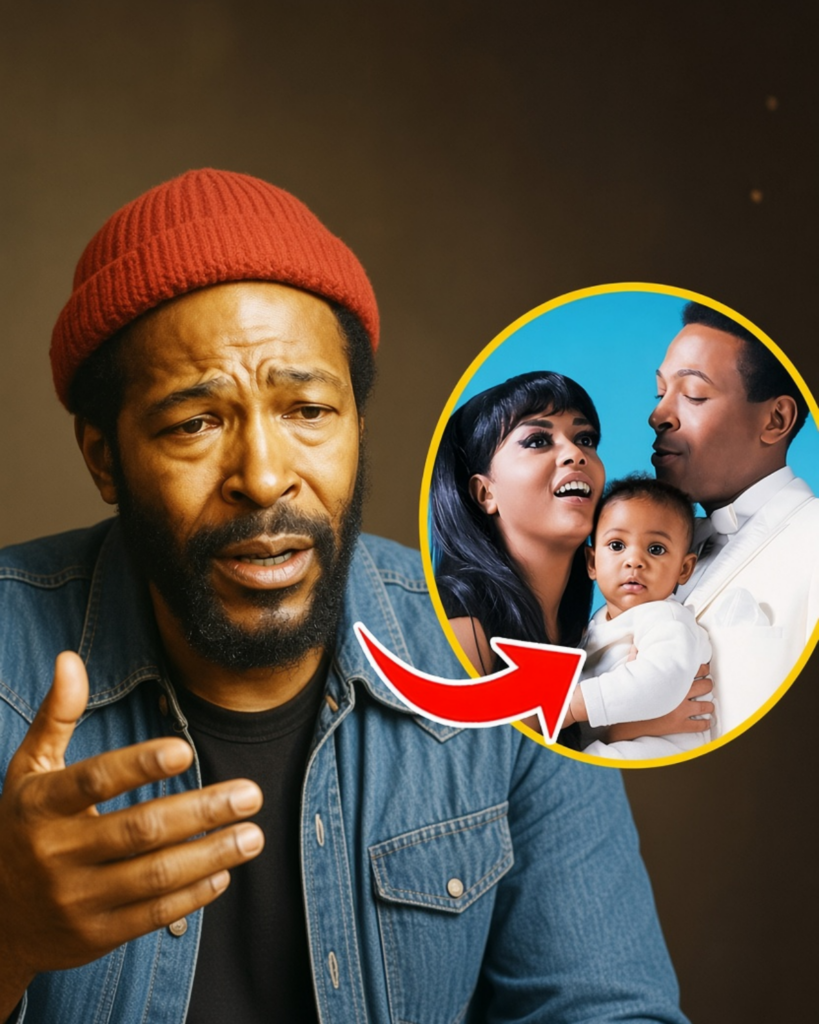
See a complete separation in the two that’s totally unrelated to me.
Marvin Gaye remained silent for decades, standing under the Motown lights.
Beside Tammi Terrell, the woman who sang with him as if they shared one heart, he never uttered a word about the truth.
Not until it was all too late.
No romantic liaison, no stolen kiss, only tears, hushed vocals in a cold studio, and a funeral where only one Black man was permitted to stand by her side.
No one was prepared for that impact.
This truth is not meant to be recounted, but to be felt as a fracture within one’s own heart.
Because sometimes you too have lost someone.
Not because love wasn’t enough, but because everything beautiful departs too soon.
People who love each other don’t necessarily sing a soulful love song together, but Tammi and Marvin were different.
They sang as if they loved each other to their very core.
Even though Marvin once said, “I love her very much, but not romantically.”
He said that perhaps to silence public speculation or maybe even to reassure himself.
No one truly believed it on the Motown stages of those years.
The lights shone down on a petite woman, her smile like an early ray of sunshine, her hand intertwined with that of her tall stage partner, her eyes melancholic as if holding the entire sky.
Tammi Terrell and Marvin Gaye.
They stood so close that the audience could no longer distinguish what was real from what was performance.
Every lyric in “Ain’t No Mountain High Enough” resonated like an eternal vow.
And people forgot that beyond those lights, they were two entirely different lives.
One yearning for stability, the other living perpetually with unhealed wounds.
Back then, Tammi was just in her early twenties, but her eyes already held a hint of weariness, as if she had lived longer than her actual age.
Backstage, it was said that Marvin was the only one who could make Tammi truly smile.
Yet he was also the one who always kept his distance.
Though that distance was so minimal, it felt as if a deep breath could bridge it.
Rumors swirled.
Everyone wanted to believe in the love story between Motown’s most beautiful Black duo.
But the truth was not so romantic.
Marvin once witnessed Tammi collapse right on stage.
Not in a scene.
But in real life, amidst thousands of spectators, amidst unfinished musical notes.
When he rushed to catch her, people said his eyes seemed to shatter.
From then on, Marvin no longer sang as he used to.
Not because he couldn’t, but because every time he raised his voice, Tammi’s image reappeared.
And the heartbreaking truth was no subsequent romantic partner ever made him sing with his whole heart again.
Many people don’t know that Marvin once refused to release solo songs just to focus on supporting Tammi.
He passed up opportunities to sing alone because he believed that only when singing with her did everything make sense.
It was a silent sacrifice that no one had ever mentioned.
Even later, when Tammi was no longer performing, her voice could still be heard sometimes, just gentle background vocals.
But Marvin always left them in, as if he didn’t want to move forward alone.
Few also know that he once spent nearly a year not recording, simply retreating into a quiet life.
Not because he lacked good songs, but because he didn’t want to sing love songs without her by his side.
For Marvin, music was the only thing connecting him to Tammi.
And when that thread broke, he no longer knew where he stood in life.
The story of Marvin and Tammi is not just a story between two individuals, but a symbol of a bond that transcended all prejudices, all misunderstandings.
In an era where people like them always had to work twice as hard to be recognized even half as much, their standing on stage side by side, as if the world had never turned its back on them, was a powerful declaration.
But the stage itself was also where many truths were hidden.
Some things don’t need a name, yet they linger in one’s heart forever.
Like the bond between Marvin and Tammi, not love, but not just friendship either.
It was something in between, deeper than words, gentle yet profound, a bond not formally acknowledged, but one that forever echoes through the melodies they sang together, as if two souls had truly touched, even if only for a fleeting moment.
And perhaps that was enough for people to remember forever.
Marvin disliked duet performances in the autumn.
Not because of the weather or the schedule, but because Tammi always arrived late.
And each time she was late, she acted as if nothing was amiss.
A little playful, a little innocent.
But for him, it was a weary pressure he never voiced.
Everyone thought they were the perfect stage couple.
They sang as if their minds were one, but behind the lights, they were two completely different poles.
Tammi was young, vibrant, impulsive.
Marvin had experienced enough to know what weariness and limits felt like.
On that very night, October 14th, 1967, before the stage lights came on, they had an argument.
A brief but unpleasant quarrel.
Marvin blamed her for not resting enough, for not listening to her doctor’s advice, even sarcastically remarking, “If you can’t take care of yourself, then don’t go on stage.”
Tammi didn’t reply, just looked at him, her eyes moist but still resolute.
She walked onto the stage without looking back.
Just a few minutes later, she collapsed.
No warning, no clear sign, a silent yet sharp movement.
She slumped to the side, and Marvin, who had just stepped closer, instinctively caught her.
The light still shone, the music still played, and the audience thought it was part of the performance.
Only he knew her body was unusually light, and the way she didn’t react silenced everything within him.
People said it was a sudden, severe headache.
But Marvin knew it wasn’t the first time.
Tammi had winced during rehearsals, had asked to stop midway just to sit and breathe deeply.
But she was good at hiding it, too good.
And he somehow chose to believe in her outward strength.
Partly because he wanted to preserve the perfection of their stage duo.
Partly because he was afraid.
Afraid that if he confronted the truth, everything would shatter.
Immediately after the performance, Tammi was taken to the hospital.
Marvin was silent then for the first time.
He didn’t utter a word for several hours.
No reaction, no blame, just sitting.
His hands still carrying Tammi’s perfume.
His mind blank.
The initial conclusion came quickly, almost without debate.
There was a tumor in her brain.
And it had been there longer than people realized, a battle she had silently faced, without sharing, without seeking help.
Many rumored that she deliberately hid her illness for fear of losing her position, afraid of being replaced.
There were also whispers that she and Marvin had been distant for a while, only trying to maintain appearances to please the record label.
No one knew what was true, but Marvin, though he never publicly confirmed it, always lived with a tormenting thought: he should have realized sooner.
After that collapse, the stage was no longer a place where he felt safe.
Every time he stood under the lights, he felt as if Tammi was watching him from somewhere behind the curtain, her hand lightly on the microphone, her mouth smiling as if nothing had happened.
He began to avoid performing, withdrew, even more cautious when singing with new partners.
Not because he no longer wanted to sing, but because he didn’t want that feeling, the feeling of helplessness when seeing a true friend collapse in his arms, to repeat.
Tammi’s story was not just a fall on stage.
It was the first crack in the glossy veneer that Motown had applied to its artists.
It was proof that no matter how brightly you smile, no matter how loudly you sing, there are still things silently gnawing away inside that no one but you realizes.
And sometimes even the person standing right next to you on stage, the person you trust most, can miss those signals.
Marvin never forgave himself, but he never said it aloud.
He kept it in his heart, then turned it into melody.
But from that moment, his music was no longer just music.
It was suppressed regret, belated tenderness, the only way he could say sorry without speaking.
They began to avoid each other after that, not because they no longer cared, but because they cared too much.
Every time Marvin looked at Tammi, he saw a different version of her, weaker, paler, but still trying to maintain an upright posture, still trying to smile as if nothing was wrong.
And Tammi avoided his gaze.
She hated the way he looked at her, like someone about to leave the game.
They began recording their parts separately, sometimes weeks apart.
The duets gradually became a patchwork, each person singing alone, then piecing it together, yet strangely, they still harmonized as if standing side by side.
It’s told that Marvin, unable to restrain himself, once said in front of the record label staff, “They’re harming her. Making her work like this isn’t right.”
No one replied.
They just remained silent, then continued discussing the new album release schedule.
Tammi sometimes felt angry with him.
Truly angry.
She didn’t want anyone’s pity, especially Marvin’s, the man who had once pulled her out of lost days, now looked at her as if she were something fragile and easily broken.
And she didn’t want to break.
She still wanted to sing, still wanted to contribute to the love songs that made people believe in the nameless bond between them.
There was a special recording, “You’re All I Need to Get By.”
By then, Tammi had undergone several surgeries.
Her face was slightly swollen, her hair cut very short, but her voice was still the same.
When Marvin softly called out, “Come on, Tammi!” at the beginning, people thought it was just an ad-lib, but in truth, that was the only time he spoke into the mic that day.
Everything else was recorded later.
He spoke softly because she was trembling.
She sat on a chair, unable to stand for long, but insisted on recording the entire song in one take, and she did it.
That time, no one in the room dared to look at each other, because everyone understood.
Tammi wasn’t recording because her health had improved.
She was recording because she feared she didn’t have much time left to choose other songs.
Marvin also understood.
And that was what troubled him endlessly.
They weren’t just singing for the public anymore.
They sang for each other, as if every lyric was the only way to avoid saying the unspeakable.
And every musical passage was a way to hold on.
Each time Marvin raised his voice, he seemed to pour all his tension, anger, fury at the record label and at himself into every note.
As for Tammi, she sang as if trying to live a few more minutes.
She didn’t need anyone’s pity.
She just needed to be herself on the microphone.
Amidst unfinished recording sessions, amidst hurried car rides, amidst needles and prescriptions, were fleeting conversations between two people who didn’t have much time left to resolve all misunderstandings.
One day, Marvin held her hand longer than usual without saying a word.
She didn’t pull away either.
Both knew that the past resentments, the reproachful glances, were just fragile coverings for an overwhelming fear.
Later, “The Real Thing” was often mentioned as their pinnacle, but few know that the original mix had a part where Tammi was slightly off-key due to fatigue.
Marvin told the engineer not to erase it.
“Keep it. It’s more real.”
At that point, he no longer cared about perfection.
For him, what was truly precious was emotion.
The slight tremor in her voice when she sang, the way she closed her eyes longer in the chorus.
Among those hits was a series of small, fragile hopes, sometimes lasting only a few hours.
But they still recorded.
They still sang, because for both of them, it was the only way to fight against the absurdity of life, where Black people like them had to sing better than others, endure more than anyone else, yet still had to keep a cheerful face every time the lights came on.
Marvin never expressed regret, but he always kept the original master tapes of their joint recordings in his private safe.
No one was allowed to touch them.
Not for fear of losing them, but because he knew.
Each recording was not just music, but the only remaining evidence of that nameless bond, something only the two of them truly understood.
Marvin hated phone calls after 10:00 p.m.
They usually didn’t bring good news.
That night was no different.
There was information that a friend called saying there were whispers on the street that Tammi had suffered physical harm.
That phrase choked him.
It was even worse than hearing she was ill, because it hinted at a different kind of pain.
Not from the body, but from another person.
While she was undergoing treatment, amidst her fainting spells after surgery, rumors surfaced that Tammi’s brain illness was caused by someone.
Specifically, the name repeatedly mentioned was David Ruffin.
One place claimed he had yelled at her.
Another recounted instances of uncontrolled behavior.
Just hearing it was shocking enough, but Marvin said nothing.
No confirmation, no denial.
He simply withdrew from conversations, refused interviews.
He didn’t know how much truth there was in those whispers.
But he knew one thing clearly: Tammi needed peace, not more gossip.
It’s worth noting that the doctors, those directly treating her, all affirmed Tammi’s tumor was congenital.
It was unrelated to any impact and certainly not the result of any other intentional act.
The illness came slowly, quietly, leaving no obvious signs until it was too late.
But the public didn’t want a cold medical answer.
They wanted a story, someone to blame.
And when a beautiful, talented Black woman suddenly collapsed on stage, people refused to accept that it was fate.
They needed a villain to complete the story.
Marvin was different.
He didn’t care about completing the story.
He only cared about Tammi.
But unfortunately, precisely when he was silent, people began to question that silence.
That perhaps he knew something.
That maybe Marvin was not just her colleague, but witnessed more than he told, that he intentionally concealed something.
Once, while recording at Hitsville, Marvin walked out of the studio to find Valerie Simpson holding a stack of lyric sheets.
Valerie worked closely with Ashford, the duo behind many of Marvin and Tammi’s hits.
She had been asked by the label to sing demo tracks in place of Tammi for some songs when Tammi’s health didn’t permit it.
Then another rumor exploded: that the later hits of Marvin and Tammi were actually Marvin and Valerie.
From one recording studio to another record store, the story spread.
People said Tammi was only a name, while her voice had been professionally replaced.
The reality wasn’t quite like that.
Valerie repeatedly affirmed, and Marvin later admitted, there were times when Tammi couldn’t sing the whole song.
But even if it was just a few lines, just a chorus, they still kept it, because it was her voice.
It was the soul that no one could imitate.
Marvin didn’t want to correct the truth, but he also didn’t want to argue.
He said, “People will believe what they want.”
So when the records were released, when the lyrics echoed on radios across the country, he just closed his eyes and listened, and hoped people recognized the trembling voice of a girl trying to hold on to every second of her presence.
When Tammi was in the hospital, there were days she couldn’t speak.
But when a new draft mix was played, she nodded, pointing to the beginning of the song.
Marvin understood.
She still wanted to sing, still wanted to contribute her voice with all that was left.
Later, someone asked Marvin why he didn’t speak out to refute all the rumors.
He just gave a faint smile.
“At that time, I was busy taking care of someone who was trying to live day by day, not busy correcting things in the press.”
In their music, no one sang for anyone else.
They were just friends in the most difficult circumstances who tried together to preserve the most real thing they had: emotion.
And the truth, however small, always outlives rumors.
No one imagined Marvin could be so profoundly affected.
People were accustomed to seeing a composed, courteous, even somewhat distant Marvin.
But when he spoke of Tammi without stage lights, without a microphone, without an audience, his voice suddenly softened, faltering with each beat, as if grappling with something undefinable.
“Her death hurt so much. Not because she and I were lovers. I wish we had been, but the relationship was platonic,” he said, eyes cast down at the floor, his hand idly swirling a cup of cold tea.
It wasn’t love, at least not in the conventional sense.
There were no prolonged embraces or backstage kisses.
No secret romantic notes.
Yet it wasn’t merely simple friendship either.
There was something in between, a connection that didn’t require a name, a profound synchronicity that meant they needed few words.
A single glance was enough to know if the other was weary or in need.
So when she passed, Marvin collapsed.
Not because he lost a beloved, but because he lost the sole remaining bright spot in the increasingly chaotic world around him.
Those in the music industry at the time speculated greatly.
Some said Marvin had harbored a deep affection for Tammi for a long time, but concealed it, unwilling to disrupt their existing balance.
Others whispered that the two had almost fallen in love, then stopped, because Tammi was always uncertain about her feelings, and Marvin was too afraid of being hurt.
All were merely anecdotes.
No one dared confirm them, and Marvin never corrected them.
Perhaps he felt there was no need, because sometimes emotions that remain unnamed are the deepest.
After Tammi’s memorial, Marvin didn’t return to the studio for a prolonged period.
Those close to him recounted that he seemed to withdraw from everything: music, the stage, even friends.
Initially, people thought he needed rest.
But gradually, it became evident that he was sinking into a strange, profound melancholy.
No more humorous conversations, no more inspired, impromptu riffs.
Marvin seemed to transform into a different person.
No one dared to mention Tammi in front of him, not because he was angry, but because each time her name was uttered, the atmosphere seemed to grow heavy.
He would offer a faint smile, nod, then fall silent.
On one rare occasion, during a brief recording session, he simply told the sound engineer, “Play something slow, something like her.”
Rumors quickly spread among artists at the time.
Some recounted that Marvin began to turn to certain negative habits to soothe the profound emptiness within him.
But these were merely whispers.
No one ever witnessed them firsthand.
Nor was there clear evidence.
What people observed most clearly was his weary gaze.
The way he would sit backstage for hours without speaking, or the times he stepped onto the stage yet seemed utterly absent.
It was truly perplexing.
People had always considered Marvin strong, someone adept at balancing his emotions.
But it turned out that artistic souls are fragile in their own way.
And sometimes it’s precisely these unnamed connections, like the one between him and Tammi, that leave the deepest fissures when they shatter.
Once, when asked why he never wrote a dedicated song in memory of Tammi, Marvin simply murmured, “Every time I sing, I’m singing for her.”
A gentle statement powerful enough to dispel all speculation.
No need to write more.
No need for a distinct memorial piece, because the songs they once recorded together, “If This World Were Mine,” “You’re All I Need to Get By,” “Ain’t Nothing Like the Real Thing,” were already the most tender farewells.
No need to rewrite them.
No need to name them.
And no need for anyone to fully understand.
They said the ceremony that day was profoundly quiet.
No grandiosity, none of the usual dazzling Motown artists, not even vibrant flowers or candles, just a few simple wooden pews, the wind softly rustling outside old window panes, and one empty seat, a seat no one dared to occupy, because Tammi’s mother said that was where Marvin would be.
Mrs. Jessie, Tammi’s mother, had never easily opened up to those in the entertainment industry.
But with Marvin, she trusted him.
She trusted him because he was the only one who never spoke ambiguously, never embellished what he hadn’t truly lived.
And she felt from his eyes, from his voice, that the relationship between him and her daughter was an unnameable bond, yet utterly profound.
Tammi passed away on March 16th, 1970, at the tender age of just 24, far too short for a talent like hers.
And when Marvin entered the funeral, people recounted that he walked slower than usual, his hands empty, his gaze seemingly drawn into an undefined void.
He said nothing throughout the service until the music began to play.
“You’re All I Need to Get By.”
No one knew who had chosen that song.
Some said it was her mother.
Others whispered that Tammi herself had made that wish while still lucid.
But when the music swelled, Marvin couldn’t hold back.
He stood up, walked to the old wooden podium, his eyes brimming with tears, and then read the eulogy he had written the night before.
His voice was not eloquent.
It was raw, hoarse, each word seemingly lost in his throat.
Not because he wanted to cry, but because he was striving not to break down.
He didn’t speak much of her career, fame, or the stage.
He only spoke of recording sessions filled with laughter, of days when Tammi sat in the room, her hair tied loosely, giggling at trivial stories.
He recounted the time she asked him, “If one day I vanish, will you remember me?”
And he simply replied, “I don’t need a day to remember you. I remember you every day.”
Only one person was invited to speak.
Only one voice resonated in the memorial room.
Not because others were undeserving, but because Marvin was the one who, without saying much, understood Tammi most profoundly.
When the funeral concluded, Marvin remained for a very long time.
People said he didn’t leave immediately.
He just sat there, his eyes silently fixed on the courtyard outside where the wind swept through old trees.
No one disturbed him, because everyone understood: some sorrows can only be borne by one soul.
“The Onion Song” wasn’t a groundbreaking hit, but for those who truly followed Tammi and Marvin’s journey, it was their final shared song, a quiet conclusion, yet one that gently closed a musical chapter.
The song was released in 1969, at a time when Tammi’s health had significantly deteriorated.
There were days when she couldn’t speak much.
Sometimes even breathing was a struggle.
Despite this, it’s said that when Marvin entered the recording studio, Tammi still managed to smile.
She could still utter one sentence: “Let’s do this one.”
Tammi’s voice in “The Onion Song” isn’t as robust as in earlier tracks.
It sounds a bit breathless, airy.
But no one cared about that, because what mattered was that she was still present, still contributing, even if only for a brief segment, a few beats.
Valerie Simpson, who had collaborated with them as a songwriter and occasionally recorded vocals for Tammi when she was too weak, revealed that she did add vocals to complete the song.
But it was Tammi who laid the foundation.
Her initial emotion was what guided it.
“It was still Tammi’s soul in there,” Valerie said.
Not many know that the entire “Easy” album, the final album credited to Marvin Gaye and Tammi Terrell, was recorded during Tammi’s weakest period.
Yet the whole team decided to see it through, not for a contract, but for a promise.
They didn’t want Tammi to feel left behind.
And that album, though not heavily promoted, still carried a unique energy: sorrow, hope, and unconditional friendship.
“The Onion Song” is an example.
Hidden beneath its seemingly cheerful melody is a message about a divided world and how people can come together to heal.
A simple song, but as Marvin once said, “It’s about everything that Tammi and I believed in.”
No need for pomp, no need for elaborate metaphors, just a final message, simple, honest, and carrying the souls of two artists who had walked side by side.
Marvin once confided in a friend, “I don’t know if I want to sing anymore.”
That was in late 1970, a few months after Tammi passed.
He didn’t go to the studio, didn’t listen to old recordings, and didn’t step on stage.
Motown, typically vibrant, seemed to quiet in his eyes.
Some people around him began to worry, not because Marvin stopped singing, but because he seemed to be losing his direction.
His conversations were no longer simple.
He spoke of war, of hunger, of children with no place to go.
But deep within each phrase, everyone could feel it.
This was a person seeking to reconcile an unnameable loss.
Then one day, Obie Benson, a member of the Four Tops, stopped by with a demo.
It was a song no one had dared to record, as it deviated too much from the usual style: gentle music, introspective lyrics, full of profound reflections on the world.
Marvin didn’t nod immediately.
But that evening, he took the demo home, played the tape, and sat in silence for hours.
By the next morning, he called Obie back, saying simply, “I think I know what I need to say.”
From that moment, the album “What’s Going On?” began to take shape.
It wasn’t just a musical project.
It was where Marvin poured all his accumulated feelings after Tammi’s passing.
The lyrics no longer spoke of romantic love, but of deeper matters: a sense of displacement, breaking faith, and the yearning for healing.
Many later said that album was the spiritual child of Marvin and Tammi, even though she was gone.
Not because she contributed vocals, but because her very passing pushed Marvin to his emotional limits, compelling him to write, to sing, so as not to be swallowed by the emptiness.
“What’s Going On” was not a sudden pivot.
It was the inevitable outcome after a colossal loss.
And through it, Marvin did what few dared to do in that era.
He transformed personal anguish into a universal voice, allowing an entire generation to see themselves within it.
Years after Tammi passed, people still asked Marvin about the true nature of their relationship.
Some rumored they had been in love.
Some said he never overcame the guilt of not being able to protect her.
But Marvin never spoke too much, until once in a brief interview, he quietly admitted, “It wasn’t romantic love. But if you’ve ever had someone who makes you want to be a better version of yourself every day, then you’ll understand.”
The ultimate truth remained.
There were no declarations of love between Marvin and Tammi.
No candlelit dates.
But between them was a deeper bond, unnamed, undefined.
A friendship that transcended ordinary limits, where both could lean on each other without fear of judgment, without needing to hide anything.
In the recording studio, people once heard Marvin whisper, “Come on, Tammi,” whenever she was weary.
Tammi often looked at him and smiled, saying, “I’ll try a little harder for you.”
Their recordings weren’t just about technique, but about two souls conversing.
And the result was enduring hits, not because they were perfect, but because they were profoundly authentic.
Looking back, one realizes Tammi was not merely Marvin’s performing partner.
She was the one who awakened the deepest emotional core within him.
And after she passed, that part didn’t vanish.
It simply transformed.
It flowed through every musical line, weaving into every lyric of “What’s Going On,” “Mercy Mercy Me,” or “Save the Children.”
Their friendship, seemingly just a matter between two individuals, became artistic material for the entire world.
No need for a tragic love story, no need for embellishment, just a genuine connection and the courage to hold on to it even when the other person was gone.
And if anyone still doubts, they only need to listen to “You’re All I Need to Get By” just once.
Then they will understand: there are relationships that don’t need a name, yet they endure forever in music and in the hearts of those who remain.
Marvin Gaye and Tammi Terrell.
Not a romantic couple, but two kindred spirits who walked together under the stage lights, facing life’s storms.
They didn’t need a public handholding or a tender photograph to prove anything.
The music itself did that.
The melodies they left behind, from “Ain’t Nothing Like the Real Thing” to “The Onion Song,” are not just hits, but an emotional legacy full of love, empathy, and shared understanding.
This story speaks not only of a beautiful friendship between two artists, but also reflects a person’s journey after profound loss.
Marvin didn’t shy away from his pain.
He wrote, he sang.
He transformed that emptiness into a message for an entire generation.
And that is precisely why their music still touches listeners’ hearts even decades later.









