Marlon Jackson’s Private Life at 69: His 51-Year Marriage and the Twin Brother He Never Knew.
“And I have one request, Michael. One request. I would like for you to give our brother, my twin brother, Brandon, a hug for me. I love you, Michael, and I miss you.”
Those were the last words Marlon Jackson spoke at Michael’s memorial on July 7th, 2009, at the Staples Center in Los Angeles.
The whole world was watching a family say goodbye to the biggest entertainer of his generation.
Yet at the very end of his own goodbye, Marlon reached past Michael for someone almost nobody in that arena had ever heard of—a brother named Brandon, his twin.
To most fans, Marlon is the dancer of the Jackson 5, the brother fans remember for his footwork.
But away from the stage, he’s lived one of the quietest lives in the whole family.
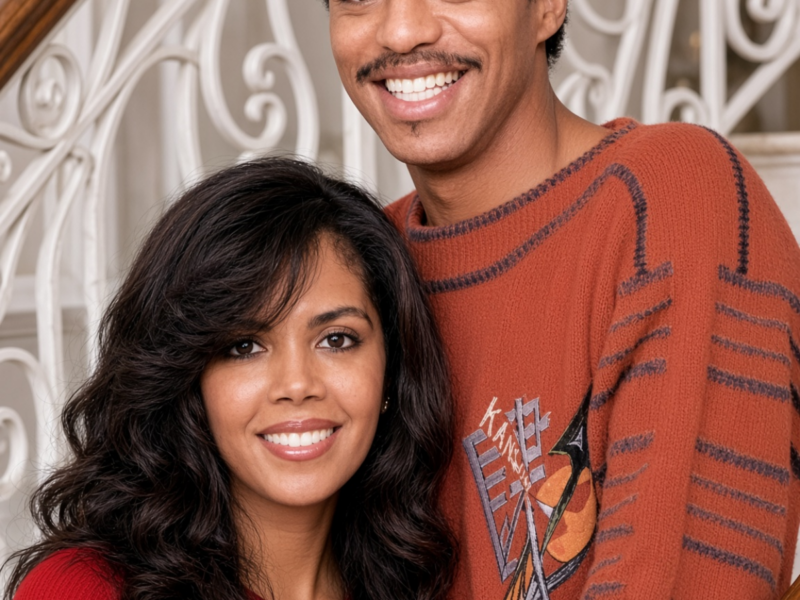
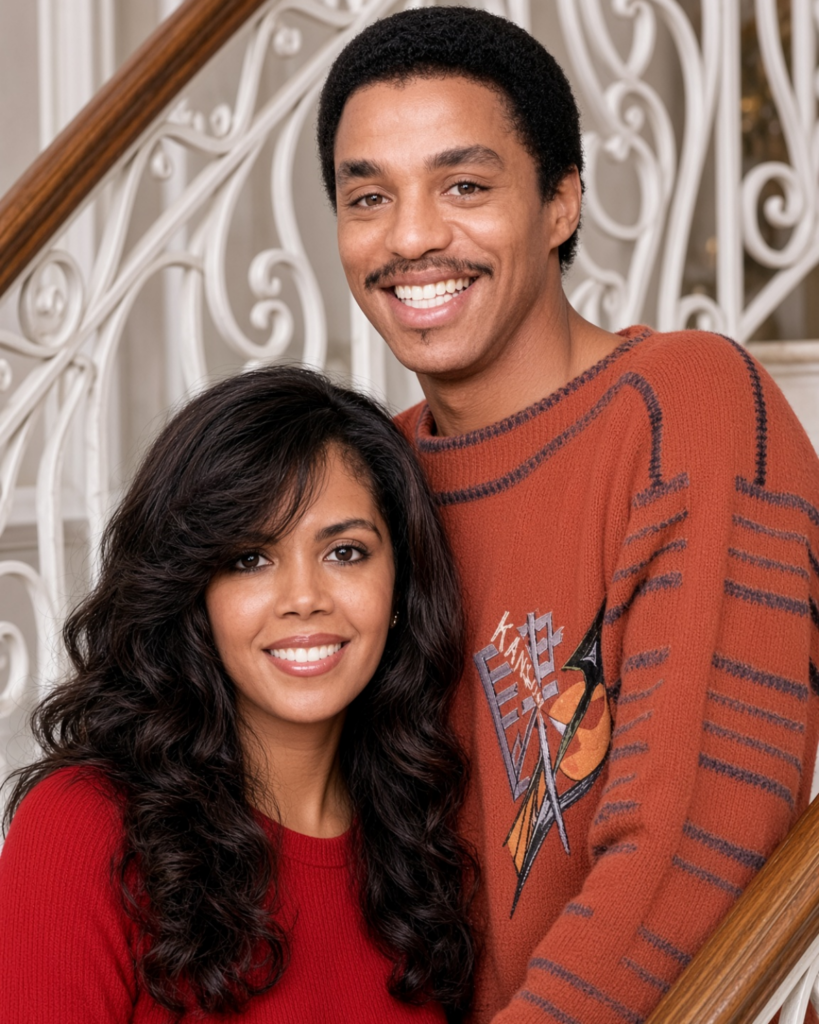
In August 1975, at eighteen, he married a girl he’d met on tour: Carol Ann Parker.
Fifty-one years later, they’re still married.
And of Joe and Katherine’s nine children, nobody else has kept a marriage going that long.
Behind that steadiness, though, there’s a line of losses that started on the very day he was born—a twin who lived only a few hours, a younger brother who grew up in that empty place beside him, and then, in 2024, the sudden death of Tito.
So how did the quietest Jackson brother hold on to one marriage and one family while the people closest to him kept slipping away?
These days, Marlon Jackson has one simple habit when it comes to the noise around his family: he doesn’t follow it.
At the Berlin premiere of Michael in April 2026, Entertainment Tonight’s Kevin Frazier asked him about the public arguments over the film.
Marlon didn’t take the bait.
“I stay away from controversial stuff,” he said, “because to me, my health is more important than anything.”
It’s a small answer, but it says a lot about the life he’s built.
At sixty-nine, Marlon isn’t the Jackson who sells the headlines. He’s a grandfather.
According to a 2023 profile by Smooth Radio, he and Carol have three grown children—Valencia, Brittany, and Marlon Jr.—and six grandchildren, two from Valencia and four from Brittany.
He still performs, too, mostly alongside his oldest brother Jackie, for crowds who grew up on the Jackson 5.
Yet the work he seems proudest of happens far from any stage.
In 2015, he started the Study Peace Foundation, a charity that builds playgrounds in struggling neighborhoods.
He told the Los Angeles Sentinel that year where the idea came from.
“I’ve met the kids across the world,” he said, “and some of them do not have the basic necessities needed to thrive.”
“The idea,” he added, “came from the vision that I believe I got from the Lord like eight years ago.”
The plan, as the Sentinel described it, was to work with the nonprofit KaBOOM!, and the first places on the list were New Orleans, Gary, and Los Angeles.
Two of those are easy to explain: Gary is the Jacksons’ hometown, and Los Angeles became home after Motown.
New Orleans is the one that stands out—because it’s also the city where he first met Carol.
So where does that kind of steadiness come from in a family that was famous for anything but?
The answer begins with a choice Marlon made at eighteen, right in the middle of the Jackson 5’s busiest years.
In the summer of 1975, the Jacksons were changing direction.
The brothers were leaving Motown for a new record deal with Epic, and the family business was in upheaval.
Jermaine—married to Berry Gordy’s daughter—stayed behind at Motown, and the youngest brother, Randy, stepped in to take his place.
Somewhere in all of that, Marlon decided to get married.
As Smooth Radio put it in its profile, in August 1975, an eighteen-year-old Marlon married his girlfriend, Carol Ann Parker.
The two had met in New Orleans during one of the Jacksons’ tours.
Marrying young wasn’t unusual in that house.
Tito married Delores Martes in 1972. Jermaine married Hazel Gordy in 1973. Jackie married Enid Spann in 1974.
All three of them were barely adults and already famous.
But by 1988, all three of those marriages had ended in divorce.
Marlon’s didn’t.
And it’s worth remembering how young he was when he made that promise.
He was still a teenager, and he’d been performing with his brothers since he was a small boy.
The children came quickly—Valencia born in December 1976, Brittany in 1978, and Marlon Jr. in September 1981.
And as the family grew at home, Marlon’s place on stage began to change.
After his own solo album in 1987, he did something few people would expect from a Jackson: he turned to real estate in Southern California, building a life that didn’t depend on a spotlight.
It’s hard to know from the outside exactly what kept Marlon and Carol together when so much around them came apart.
Neither of them has made the marriage a public story, and that silence may be part of the answer.
What we do know is that Marlon has always held on tightly to the people beside him—his brothers, his parents, his wife, his children.
And there’s a reason that habit runs so deep.
It goes back to one hospital room in Gary, Indiana, in March 1957—and to the first brother Marlon ever lost.
Marlon David Jackson was born on March 12th, 1957, at St. Mary’s Mercy Hospital in Gary.
He didn’t arrive alone, though.
He was one of twins, and his brother, Brandon, died within hours of being born, according to a profile of the Jackson siblings published by Hello magazine.
That’s nearly all the public record holds.
Marlon has almost never spoken about Brandon in interviews.
In our research, we couldn’t find a single conversation where he describes his twin at any length.
You may also have seen videos online claiming that Brandon lies in an unmarked grave near Gary.
We looked for a cemetery record, a news report, or a family statement that confirms it—and we couldn’t find one.
So we’re leaving that story out.
What’s well documented is what happened next.
Seventeen and a half months after Marlon was born, Katherine Jackson gave birth to another boy: Michael.
And as Smooth Radio’s profile puts it, Marlon considered Michael the substitute for his twin brother, Brandon.
Think about what that means for a moment.
The boy born a year and a half after Brandon became the brother Marlon grew up beside—almost like a twin.
They were close in age and side by side in rehearsal after rehearsal in that small house in Gary.
Marlon shared one of those everyday memories at Michael’s memorial in 2009.
“I can remember when we used to come home from school and we would grab a quick bite to eat and we’d try to watch the Three Stooges as much of it as possible.”
Then their mother would come in and tell them it was time to go to the recording studio, and the two of them went back to work.
As the years went on, Michael’s fame grew so large that even those few minutes disappeared.
Marlon told a story at the memorial that shows how far it went.
One day, he walked into a record store and saw an older man buying up stacks of CDs.
The man had a short Afro, crooked teeth, and rumpled clothes.
Marlon walked up behind him and said, “Michael, what are you doing in this store?”
Michael turned around and asked how he’d known.
Marlon’s answer is one of the most tender lines he’s ever said in public.
“You’re my brother. I can spot you anywhere regardless of your makeup. I know your walk, I know your body language, and those shoes did not help.”
Michael, he explained, wore the same shoes wherever they went.
And Marlon understood why his brother bothered with the disguise at all.
“But I guess that was his way of trying to experience what we take for granted.”
It’s a striking thing to picture: a man who never got to know his twin could still pick his younger brother out of a crowd by the way he walked.
So what happens when that brother is gone, too?
On June 25th, 2009, Michael Jackson died in Los Angeles at the age of fifty.
Twelve days later, Marlon stood at the Staples Center and tried to say goodbye in front of the whole world.
“Michael, when you left us, a part of me went with you.”
He spoke about the life his brother had lived under the cameras, and he didn’t soften it.
“We will never, never understand what he endured,” he said. “Not being able to walk across the street without a crowd gathering around him.”
Then came the line that many people still remember from that day.
“Maybe now, Michael, they will leave you alone.”
He sounded angry and heartbroken at the same time.
And at the very end, he made the request you heard at the start of this video—asking Michael to give their brother, his twin brother, Brandon, a hug for him.
In a single sentence, on live television, Marlon tied together the two brothers he’d lost: one he barely knew, and one he knew by his walk.
For the next fifteen years, the remaining brothers kept performing as the Jacksons.
Tito was there. Jackie was there. And Marlon was there.
But in September 2024, the family was hit again.
On September 15th, Tito Jackson died at seventy.
A longtime family friend told Entertainment Tonight it was an apparent heart attack, and Tito’s sons—Taj, Taryll, and TJ—shared the news on Instagram, as Salon reported at the time.
What Marlon remembers is how ordinary the day had been.
He told the story to a crowd at the Hard Rock in Atlantic City on October 25th, 2024—the first Jacksons show after Tito’s death.
“Tito had called me, and we were on the phone laughing and joking, cracking jokes,” he said, as WBLS reported. “An hour later, I got a phone call. I talked to the doctor, and they told me he didn’t make it.”
On stage that night, Tito’s jacket and his signature hat hung on a microphone stand where he would have stood—and Marlon noticed a date that the two losses shared.
“On September 10th, 2001, we had our last show with our brother Michael,” he said.
Their last show with Tito had fallen on a September 10th, too—just five days before he died.
Then he started to cry.
After all of that, few people would have blamed him for walking away from the stage for good.
So how has Marlon found his way back to some kind of peace?
Part of the answer came in April 2026, when the family watched Jaafar—Jermaine’s son—become Michael on the big screen.
At the Berlin premiere, Marlon told Entertainment Tonight, “Jaafar is unbelievable. Matter of fact, I think he’s the only one that could have done this.”
Then he added, “I’m watching the movie and sometimes I’m thinking I’m watching Michael up there.”
He called it a family-oriented movie made for bringing families together.
For a man who’d lost three brothers, that must have been a strange and welcome feeling.
And when he was asked about the arguments inside his famous family, he answered the way a steady brother would.
“We as a family are no different than their family. We just happen to do music. But you know, we go through trials, tribulations, ups and downs. We learn to agree to disagree.”
The rest of the answer may be in the work he chose.
In that 2015 interview with the Los Angeles Sentinel, he described his mission in words that fit his whole life.
“If you find a void in the world,” he said, “it is your job to find a solution for that void.”
The playgrounds he described were meant for neighborhoods like the one in Gary, where he and Michael once rushed home from school before heading to the studio.
Marlon was born next to an empty space.
He spent his life filling the places around him—with family, brothers, children, and grandchildren.
And at the center of it all are the same two people who met on a tour stop in New Orleans when he was still a teenager: Marlon and Carol, side by side, fifty-one years later, still married.









