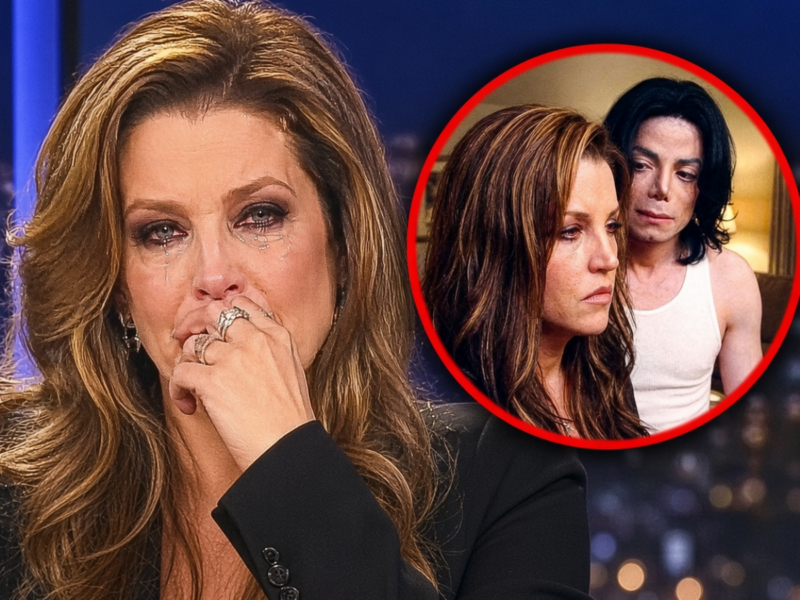
Lisa Marie Presley Breaks Silence on Her Bizarre Marriage with Michael Jackson.
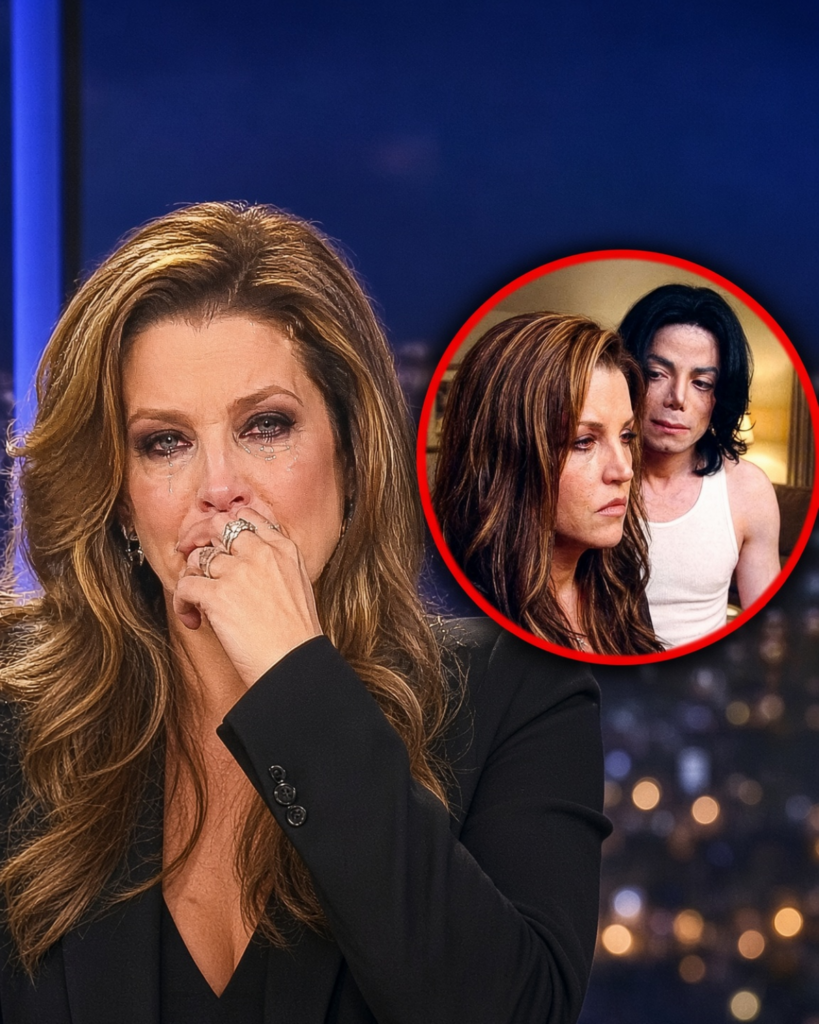
A Thursday night in October 2010, sixty million people watched live on national television.
Lisa Marie Presley sat across from Oprah Winfrey and said something that she had never said before.
She said she didn’t understand her relationship with Michael Jackson.
She said she was confused.
She said she was manipulated.
But she also said she loved him.
She said she wished she had saved him.
And she said the thing that made the entire world stop and listen.
She said the marriage was real—not a publicity stunt, not a cover-up.
Real.
But here’s the thing that nobody knew at the time.
That interview—that raw, tearful, honest interview—was the first and only time Lisa Marie Presley ever spoke publicly about her marriage to Michael Jackson.
She had spent fifteen years avoiding the topic.
She had walked out of interviews.
She had refused to answer questions.
She had built a wall around that part of her life and dared anyone to try to knock it down.
And then she knocked it down herself.
It’s a story about a woman who lost her father, married a man who reminded her of him, and then watched him die the same way.
It’s a story about manipulation and grief and the desperate need to save someone who cannot be saved.
And it’s a story that Lisa Marie Presley finally told in her own words before she died.
Lisa Marie Presley was born on February 1st, 1968, in Memphis, Tennessee.
She was the only child of Elvis Presley and Priscilla Beaulieu.
She was nine years old when her father died.
She was there when he collapsed at Graceland.
She watched him die.
She was at his funeral.
She saw the casket.
She saw the millions of fans lining the streets.
She saw her father—the King of Rock and Roll—laid to rest in the backyard of the only home she had ever known.
She grew up in the aftermath of that loss.
She spent years trying to find something that would fill the hole.
She married Danny Keough in 1988.
They had two children, Riley and Benjamin.
She tried to build a normal life.
She tried to be happy.
But the shadow of Elvis was always there.
The weight of being his daughter was always there.
The grief was always there.
And then, in 1992, she reconnected with Michael Jackson.
She had met him once before.
She was seven years old, and her father had brought her backstage at a Jackson 5 concert in Las Vegas.
She was a child.
He was a teenager.
Neither of them remembered it the same way.
But when they met again as adults, something clicked.
“We just clicked,” Lisa Marie wrote in her posthumous memoir, From Here to the Great Unknown.
“When we began meeting up regularly in 1993, we were just friends at first.”
She was lonely.
Her marriage to Danny Keough was falling apart.
She was grieving.
She was searching.
And Michael Jackson—the most famous man on the planet, the man who was being torn apart by allegations, the man who was looking for someone to believe him—was there.
He was calling her.
He was writing to her.
He was telling her he needed her.
“He was very real with me off the bat,” Lisa Marie told Rolling Stone in 2003.
“He immediately went into this whole explanation of what he knew people thought of him and what the truth was.”
She believed him.
She believed everything he said.
She wanted to protect him.
She wanted to save him.
She wanted to be the one person in the world who understood him.
She fell in love.
In 1994, Michael Jackson declared his love for Lisa Marie during a trip to Las Vegas.
“Each night, I’d go to his room and we’d stay up all night talking, like you do when you’re first meeting somebody,” she wrote.
They were inseparable.
They were obsessed with each other.
They were two damaged people who found something in each other that they had never found anywhere else.
He proposed over the phone.
She said yes before he even finished the question.
“On the telephone,” she told Diane Sawyer in 1995, when asked who said the word marriage first.
“He first asked me.”
They eloped on May 26th, 1994, in La Vega, Dominican Republic.
The ceremony lasted fifteen minutes.
They both wore black.
Michael wore a bolero jacket, a cowboy belt, and a fedora.
Lisa Marie wore a simple dress.
There were no guests.
There was no family.
There was no celebration.
It was secret.
It was impulsive.
It was desperate.
Twenty-three days before the wedding, Lisa Marie had finalized her divorce from Danny Keough.
She was still grieving.
She was still raw.
And she was marrying a man she barely knew—a man who was facing accusations that could destroy him, a man who needed her more than he loved her.
The world found out eleven weeks later.
Lisa Marie confirmed the marriage in August 1994.
“I am very much in love with Michael,” she said in a statement.
“I dedicate my life to being his wife.”
She dedicated her life to being his wife.
That was the promise.
She dedicated her life to a man who had never really asked her to be his partner.
He had asked her to be his savior.
And she had said yes.
Priscilla Presley was appalled.
She wrote in her 2025 memoir, Softly As I Leave You: Life After Elvis, that she “knew in my bones that Michael wasn’t marrying Lisa Marie. He was marrying the Presley dynasty.”
She believed Michael Jackson was seeking good publicity that depicted him as a desirable heterosexual man in the midst of his child-molestation scandal.
“Michael was a manipulative man, and I think he had his sights set on her long before she realized it,” Priscilla wrote.
“The childlike innocence he projected was part of his public mask.”
Lisa Marie didn’t care what her mother thought.
She didn’t care what anyone thought.
She was in love.
She was protecting him.
She was saving him.
She was his lioness.
Their first public appearance as a married couple came at the MTV Video Music Awards in September 1994.
They walked on stage together.
They kissed.
The crowd went wild.
It was awkward.
It was uncomfortable.
It was everything the world expected from the strangest couple in entertainment.
But Lisa Marie didn’t see it that way.
She saw a moment of triumph.
She saw herself standing beside the man she loved, proving to the world that their love was real.
Nine months later, they sat down with Diane Sawyer for a prime-time interview that would define their marriage forever.
It was June 14th, 1995.
Sixty million people watched.
Diane Sawyer asked the questions that everyone wanted answered, and Lisa Marie answered them.
She answered them with conviction.
She answered them with fire.
She answered them with everything she had.
“Did you ask Michael about the charges?” Sawyer asked.
“Absolutely not,” Lisa Marie replied.
“I was in touch with him throughout the whole process of these charges going on.”
“Did you say to him, ‘Are they true?'”
“Actually, I did not.”
She never asked him.
She never asked the man she married whether he had molested children.
She didn’t want to know.
She had decided to believe him, and she wasn’t going to let anything—not evidence, not doubt, not common sense—change her mind.
When Sawyer asked about the rumors that their marriage was a sham, Lisa Marie didn’t hesitate.
“It’s crap,” she said.
When Sawyer asked about their life, Lisa Marie answered for both of them.
“Yes, yes, yes. We will be expecting a child. We won’t be saying when.”
She was defending him.
She was protecting him.
She was lying for him.
Not about the baby—she insisted that was real—but about the question she never asked.
She didn’t ask because she didn’t want to know.
She didn’t want to know because she had already decided what the answer was.
She had decided he was innocent.
She had decided he was a victim.
She had decided she was his savior.
“I was really in this lioness thing with him,” she told Rolling Stone in 2003.
“I wanted to protect him.”
She wanted to protect him.
That was the whole story.
That was the entire marriage.
She wanted to protect a man who didn’t want to be protected.
She wanted to save a man who didn’t want to be saved.
She wanted to love a man who didn’t know how to love her back.
The marriage lasted twenty months.
Lisa Marie filed for divorce on January 18th, 1996, citing irreconcilable differences.
The couple had separated on December 10th, 1995—four days after Michael collapsed on stage during rehearsals for an HBO concert special.
“It just got really ugly at the end,” Lisa Marie told Rolling Stone.
She demanded a divorce, but he refused to speak to her.
She said the experience sent her into a mental and physical breakdown.
She didn’t ask for money.
She didn’t ask for property.
She asked for her name back.
She wanted to drop Jackson as soon as the divorce was granted.
That was all she wanted.
She wanted to be Lisa Marie Presley again.
She wanted to go back to being the person she was before she became Mrs. Michael Jackson.
They finalized the divorce in August 1996.
Lisa Marie and Michael remained friends, but the marriage was over.
Twenty months.
That’s all it was.
Twenty months of confusion and manipulation and desperate love.
Twenty months of trying to save a man who couldn’t be saved.
In 2003, seven years after the divorce, Lisa Marie finally told the truth.
She sat down with Rolling Stone and said the words that she had been holding back for years.
“I absolutely fell in love with him and fell into this whole thing, which I’m not proud of now,” she said.
“I can’t say what his intentions were, but I can tell you mine was that I absolutely fell in love with him.”
She was not proud of it.
She was not proud of the marriage.
She was not proud of the way she had defended him.
She was not proud of the woman she had become.
She had lost herself.
She had given everything to a man who couldn’t give her anything in return.
“I don’t recognize who I was then, now watching it,” she said of the Diane Sawyer interview.
“I was really in this lioness thing with him. I wanted to protect him.”
She wanted to protect him.
That was the only thing she was proud of.
That was the only thing she could look back on without shame.
She had tried to save him.
She had tried to protect him.
She had tried to love him.
And she had failed.
In 2009, Michael Jackson died.
Lisa Marie was in England.
She had spent the entire day crying.
She didn’t know why.
She was cutting her food at dinner, and the tears were streaming down her face.
She went upstairs to bed and tried to watch something mindless on television.
An hour later, she got a text from John Travolta.
Michael Jackson was dead.
“I was floored,” she said.
“Honestly floored.”
She wrote a blog post on her MySpace page.
She titled it “He Knew.”
She wrote about a conversation they had years earlier.
“Years ago, Michael and I were having a deep conversation about life in general,” she wrote.
“At some point, he paused. He stared at me very intensely, and he stated with an almost calm certainty, ‘I am afraid that I am going to end up like him, the way he did.'”
She asked him what he meant.
“He just shrugged his shoulders and nodded, almost matter-of-fact, as if to let me know he knew what he knew. And that was kind of that.”
Fourteen years later, she was watching the news.
An ambulance was leaving the driveway of Michael Jackson’s home.
The big gates.
The crowds outside the gates.
The coverage.
The cause of death.
And the memory of that conversation hit her.
“He knew,” she wrote.
“A predicted ending by him, by loved ones, and by me. But what I didn’t predict was how much it was going to hurt when it finally happened.”
She said something else in that blog post—something that she had never said before.
Something that she wanted the world to know.
“Our relationship was not a sham, as is being reported in the press,” she wrote.
“It was an unusual relationship, yes, where two unusual people who did not live or know a normal life found a connection, perhaps with some suspect timing on his part. Nonetheless, I do believe he loved me as much as he could love anyone, and I loved him very much.”
She believed he loved her as much as he could.
That was the most tragic thing she ever said.
She loved a man who was incapable of loving her back in the way she needed.
She loved a man who was so damaged, so broken, so consumed by his own demons that he couldn’t see her.
She loved a man who used her.
And she knew it.
She knew it, and she loved him anyway.
“I wanted to save him,” she wrote.
“I wanted to save him from the inevitable, which is what has just happened. His family and his loved ones also wanted to save him from this as well, but didn’t know how. And this was fourteen years ago. We all worried that this would be the outcome. And at that time, in trying to save him, I almost lost myself.”
She almost lost herself.
That was the cost of loving Michael Jackson.
She almost lost herself.
And in the end, she did.
She lost herself to addiction.
She lost herself to grief.
She lost herself to a lifetime of trying to save people who couldn’t be saved.
In her 2010 interview with Oprah, Lisa Marie finally told the whole truth.
She talked about the manipulation.
She talked about the confusion.
She talked about the love.
And she said the thing that she had been holding back for years.
“I always confuse that manipulation, thinking that it meant he didn’t love me,” she said.
“But I understand it better now. The manipulation was a survival tactic for him.”
It was a survival tactic.
Michael Jackson had been conditioned to manipulate.
He had been brought up in an industry that taught him to get what he needed by any means necessary.
He had been raised by a father who beat him and a business that consumed him.
He didn’t know how to love without manipulating.
He didn’t know how to be loved without being protected.
And Lisa Marie Presley—the daughter of Elvis, the woman who had lost her father, the woman who spent her whole life searching for something to fill the void—was the perfect person to protect him.
“I wish I’d saved him,” she said through tears.
“I know it’s naive to think that I could have, but I wanted to.”
She knew it was naive.
She knew it was impossible.
But she wanted to.
That was Lisa Marie Presley.
She wanted to save people.
She wanted to believe that love could fix anything.
She wanted to believe that if she just tried hard enough, if she just gave enough, if she just loved enough, she could make everything okay.
But Michael Jackson couldn’t be saved.
He didn’t want to be saved.
He wanted to be understood.
He wanted to be loved.
He wanted to be protected.
And Lisa Marie Presley gave him all of that.
She gave him everything.
And in return, he gave her a twenty-month marriage that nearly destroyed her.
There was something else that Lisa Marie revealed years later.
Something that made the whole marriage even more complicated.
In a 2015 interview that was never published during her lifetime, she told journalist Tony Ortega that Scientology was responsible for her divorce from Michael Jackson.
She said she didn’t want to leave him.
She said the church pressured her into it.
“With Michael Jackson, too much happened, too much got between us,” she reportedly said.
“There was a very deep connection, but at the same time, you know, there was a lot of other stuff, and I think that Scientology and David Miscavige made sure that I left him.”
She said she felt pressured to be the first to file for divorce, but then regretted it.
She said she was groomed by the church after inheriting her father’s estate.
She said she was used.
She also revealed something else that made the whole story even more painful.
In her memoir, From Here to the Great Unknown, she wrote that Michael Jackson told her he was a virgin when they got together.
She wrote that he told her he had never been with anyone before her.
She wrote that he wanted her to have his children.
And she wrote that he told her Debbie Rowe—the woman who would become his second wife—would give him the children he wanted if Lisa Marie wouldn’t.
It was an ultimatum.
It was manipulation.
It was Michael Jackson doing what he had always done: getting what he wanted by any means necessary.
But Lisa Marie didn’t see it that way.
Not at the time.
She saw a man who was desperate.
She saw a man who was scared.
She saw a man who needed her.
And she wanted to be needed.
She wanted to be the one who saved him.
She wasn’t.
Lisa Marie Presley died on January 12th, 2023, at the age of fifty-four.
She died from a small bowel obstruction caused by years of opioid use.
She had been struggling with addiction for years.
She had been struggling with grief for decades.
She had been struggling with the weight of being Elvis Presley’s daughter for her entire life.
And she had been struggling with the memory of Michael Jackson—the man she loved, the man she tried to save, the man she couldn’t save—for the rest of her life.
She said something in her memoir that captured the whole tragedy of their relationship.
She said that Michael Jackson was “an incredibly dynamic force and power that was not to be underestimated.”
She said that when he used it for something good, it was the best.
And when he used it for something bad, it was really, really bad.
That was the thing about Michael Jackson.
He was a force.
He was power.
And he used that power to get what he wanted.
He used it to convince a woman to marry him.
He used it to convince her to defend him.
He used it to convince her to sacrifice herself for him.
And she did.
She sacrificed herself.
She gave up her peace of mind.
She gave up her sanity.
And in the end, she had nothing to show for it but a broken heart and a lifetime of trauma.
But she also said something else.
Something that revealed the truth about their relationship.
Something that made the whole thing even more heartbreaking.
She said she loved him.
She said she believed he loved her as much as he could love anyone.
She said the marriage was real.
She said the love was real.
She said the pain was real.









