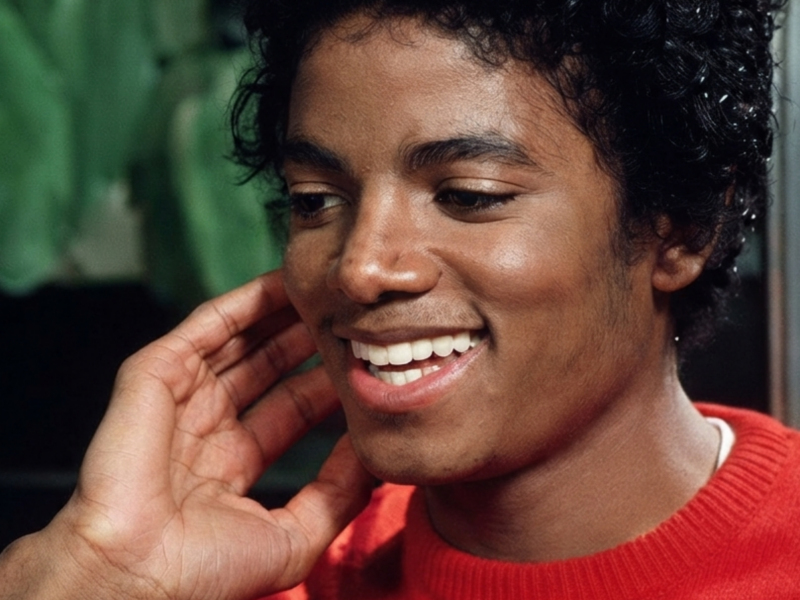
Life and Legacy of Micheal Jackson. Most complete reflection on the times of an icon of music.
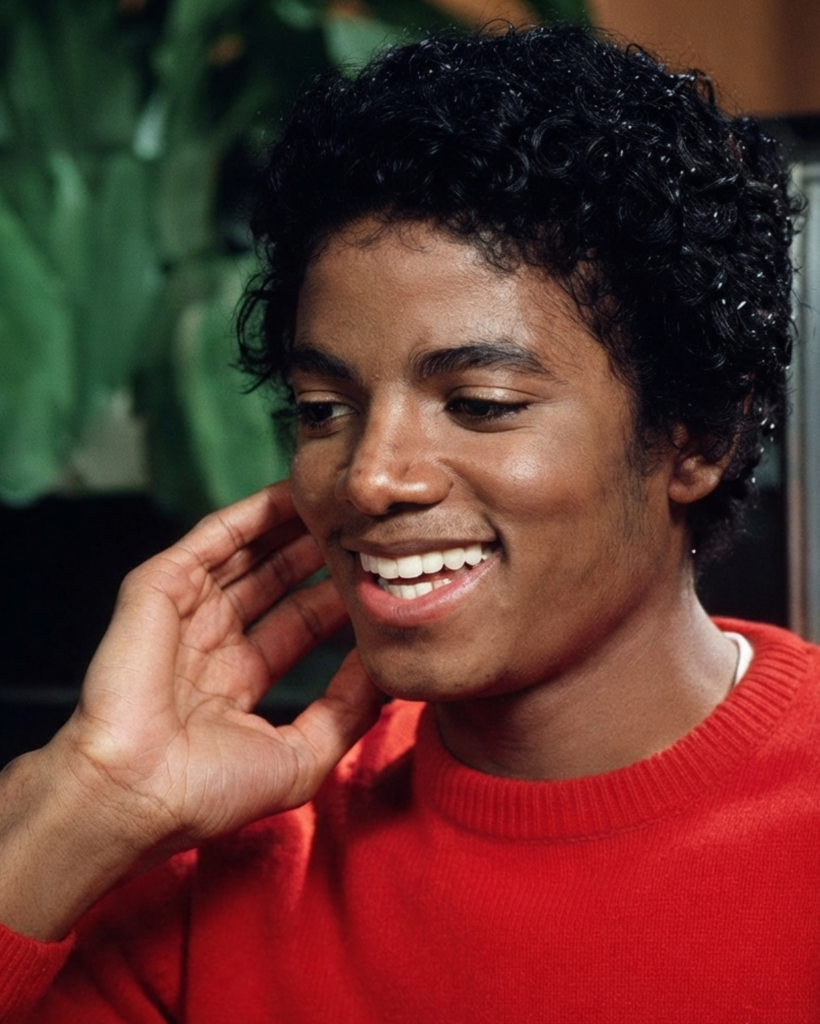
Michael Jackson.
Real Michael Jackson.
You got to come up and say something.
You got to come up and say something.
Michael Jackson, come on up, buddy.
Come on up and say something.
You got to come up and say something.
I love you, Michael Jackson.
Carol, I love you.
I love you, Michael.
I love you.
We’ve always wanted to dance or keep the time to the music.
And that’s part of us.
It’s like something we have to have and it’s in us.
Because I don’t know what I would do if there wasn’t music.
Music is a way of getting across to people.
People may not want to read, but they will always listen to music.
Yeah.
You know what?
Wait a minute.
Do this lame thing again.
One, two, two, three.
Push.
Hello out there.
My name is Joe Jackson.
All these up here is the Jackson family.
We sold over 60 million records.
And we just come with a new company.
A new family of people, good working people, call themselves the Epic people, the Epic family.
We’re glad to be with them.
Janet, would you tell the people out there how you like recording your first song?
Well, it was fun and, um, first I was scared because I really didn’t know what it was like.
And, um, it was really fun.
You have time to play and all that.
I was extremely nervous.
And then the more we go to the studio, the more calm I am because I realized the fact that I’m in there to try to do my best.
And as a result, I’m getting used to it, but that first time was awfully hard.
Well, I was nervous at first, but as we continued to go in the studio, I was more relaxed.
And now I can understand and know that you really don’t know what you can do until you try it out.
I have been recording for a while.
This, um, is my first time recording with the girls.
And, um, it’s three of them.
One me.
Uh, my brothers and I, we all dance a lot.
We like dancing and we work together and do all the latest dances.
And that helps us also with our choreography when we get in the studio.
And then we come up with different steps.
We’ve always done it that way, and I think it’s so much better when we do our own, because we know what we want.
We know what we can do.
Just since the age of five.
He has grown up in a fantasy that your life is a fantasy.
I have seen many worlds, not just one.
I mean, imagine from the age of five you’ve been able to create a whole world.
I sure.
It’s — that’s how I feel.
Your family was not wealthy when you started out.
You were pretty young.
I don’t know if you would remember.
Were there a lot of sacrifices involved?
Yeah, we weren’t wealthy, but we weren’t poor.
My father always prepared for the family and as well as my mother.
Always wonderful.
That’s very important.
They made sure we, you know, got the right things for ourselves.
Strong parents are, I think, are very important, especially in our situation.
If she hit me, I would hit her back, which was terrible.
And then I would run around the house and hide.
All that stuff.
But I would really get it more than anybody.
Do you think your father was too strict?
Yes.
No, he’s going to kill me.
He’s going to kill you?
He still worries you?
Well, he feels that he was strict.
I’m glad he said it.
Now I’ll say it.
Yes.
I love you.
Yeah.
Yeah!
What does it feel like to see that?
People yelling, “Michael! Michael!”
I’m two different people on and off stage.
But I formed a personality that’s — that’s me.
And I can’t get away from that.
It’s just — it’s the whole overall thing is — it’s hard to deal with.
It really is.
It’s a — it’s a hard situation.
It is something I have to put up with.
You’ve always been Michael Jackson on stage.
I guess.
Yeah, that’s true.
It’s a — it’s a hard situation.
It is.
It is something I have to put up with.
It must be hard to have real friends.
Yes.
You’ve become like a stage addict.
I really am.
Like when there are off days and there is no show, I’m up at night dancing just to sing.
It’s really strange.
I guess I’m an addict.
Can’t help it.
Do you feel grown up?
I’ve been around grown people, you know, since I was five.
I mean, on tour, backstage with all the musicians and the singers, and I’ve felt grown up for ages — for a lot of all my life.
There’s other kinds of sounds of music that I love to do.
It hurts what is inside of me and it can’t get out and it’s hidden from the world.
You enjoy the most about being on stage?
It’s a great question.
So I feel I’m doing my job and that’s what makes me happy.
So we’re feeding one another and it’s a wonderful thing.
Michael’s not here.
I let things create themselves.
If it’s that’s meant to be, it’ll happen.
And I believe in the force and, um, it’ll tell me when.
He wanted his music to make a difference.
He wanted his music to heal.
This poor man’s life has been dissected completely.
However, there must be some questions because we got a ton of mail, and I’m just going to rip off some of them.
And if any of you here have some — you got a question you want to start with?
Yes.
Um, when’s your birthday?
August 29th.
Suddenly there was a story, and I know one of your attorneys held a news conference.
There was a story about, um, you wanting to have a little white boy play you in a — in a Pepsi commercial.
That is so stupid.
That’s the most ridiculous, horrifying story I’ve ever heard.
It’s crazy.
I mean, why?
Number one, it’s my face as a child in the commercial.
Me when I was little.
Why would I want a white child to play me?
I’m a Black American.
I’m proud to be a Black American.
I am proud of my race.
I am proud of who I am.
I have a lot of pride in who I am and dignity.
It’s like you wanting an Oriental person to play you as a child.
Does that make sense?
No.
So, please, people, stop believing these horrifying stuff.
Let’s go to the thing that is most discussed about you, I think, is the fact that the color of your skin is obviously different than it was when you were younger.
And so, I think it has caused a great deal of speculation and controversy as to what you have done or are doing.
Are you bleaching your skin?
And — is your skin lighter because you don’t like being Black?
Number one, there — as I know of, there is no such thing as skin bleaching.
I have never seen it.
I don’t know what it is.
To have those products growing up, I used to hear always use bleach and glow, but you’d have to have about 300,000 gallons to —
Okay, number one, this is the situation.
I have a skin disorder that destroys the pigmentation of the skin.
It’s something that I cannot help.
Okay?
But when people make up stories that I don’t want to be who I am, it hurts me.
So, it is — it’s a problem for me, okay?
I can’t control it, okay?
But what about all the millions of people — let’s reverse it.
Okay.
What about all the millions of people who sit out in the sun to become darker, to become other than what they are?
Nobody says nothing about that.
So, when did this start?
When did the color of your skin start to change?
Oh boy.
I don’t — but sometime after Thriller.
Around Off the Wall, Thriller, sometime around —
I mean, you —
It’s in my family.
My father said it’s on his side.
I can’t control it.
I don’t understand.
I mean, it makes me very sad.
I don’t want to go into my medical history because that’s something that’s private, but that’s the situation here.
So, please, when people see something —
So, okay, I just want to get this straight.
You are not taking anything to change the color of your skin.
No.
Purposely?
To control it and using makeup evens it out, because it makes blotches on the skin, and I have to even out my skin.
But you know what’s funny?
Why is that so important?
You know, that’s — that’s not important to me.
I’m a great fan of art.
I love Michelangelo.
If I had a chance to talk to him or read about him, I would want to know about what inspired him to become who he is, the anatomy of his craftsmanship, not about who he went out with last night or why he decided to sit out in the sun so long.
What’s wrong with — I mean, that’s what’s important to me.
And my objective is to return and then turn the other cheek.
We don’t fight.
Turn the other cheek to mean your brother who killed him and —
Uh-huh.
Uh, I do it through an aggressive beat and rhythm and dancing and everything.
And you got real gang members in there, too?
Yeah, we have real gang members integrated in with dancers.
We got lots of real gang members in there.
Do crowds worry you?
Not on tour.
Uh, I’m — I get afraid of — well, I don’t know people.
I get afraid of people sometimes.
Because a whole ‘nother life that I haven’t really experienced.
That — like friendship is a thing I’m just beginning to learn about.
Um, I was raised on the stage and that’s where I’m comfortable.
And everything else is like foreign to me.
I’m just beginning to know and learn about people, friendship, and things like that.
So, you never really hit the streets, huh?
I know nothing about it.
Uh, I guess from movies or the schooling that I had.
We’ve had tutors throughout the years in private schools.
When I was real little, I went to a public school once.
And I went to another public school for one week.
It got so bad, the fans, they’d come in the class and chase us around and stuff.
So, who are your real friends?
Uh, I love our fans.
Uh, everyone who buys our records.
Um, put my heart in my work that I — I appreciate the fact that they enjoy it.
Yeah.
How many just close personal friends?
You got close personal friends?
Quincy Jones is a good friend.
And there’s a few others.
They’re all in show business?
Jane Fonda is a good friend.
Uh, Diana Ross.
Yeah.
Very good friend, Diana Ross.
She’s kind of person I can tell her anything.
The most private of secrets, and she’ll tell me her secrets as well.
What about your house?
I understand that you tore your house down and rebuilt it for your mother in the form of a castle.
Is that true?
Um, somewhat, yeah.
Well, I’ve always loved English Tudor.
And so did she.
And, uh, I fantasize a lot and I like, you know, the old knight and the princess style.
Very storybook.
Well, we’d love to see it when it’s completed.
Disney Studios is doing a whole, uh, Pirates of the Caribbean room where you walk in there and it’s like a pirate shootout.
And these animatronic robots like — and they talk and they sing and they dance and — and they’re shooting.
You walk in the middle of this whole war and the smoke and cannons and everything, and that’s exciting.
It’s taken from the Pirates of the Caribbean.
And you got this in your house?
Yeah.
I read in a magazine article about you about your, uh, your Sundays and how you spend your — your Sunday ritual, I think they call it.
Yeah.
Tell me about the Sunday ritual.
Well, every Sunday I fast.
I don’t eat anything.
Um, just something I decided to do for my body.
Uh, and I dance every Sunday morning.
And, uh, I feel better doing it.
You just fast and dance?
I don’t eat anything.
What music did you dance to when you do this?
Mine or, um, anything that’s got a fast beat to it.
Like who do you like right now?
Who do I like?
Yeah.
Classical music.
Classical?
That’s what I sleep to.
So people who come around me, they’re surprised, because that’s what I listen to.
All day is classical music.
All right.
Well, hey, I know you got to go.
They’re giving me the high sign that you got to get out of here and finish this at the next shoot.
But thanks.
—
There is a specific kind of loneliness that lives inside a person who has been famous since the age of five.
It is not the loneliness of having no one around.
It is the loneliness of being surrounded by everyone and still not being sure that any of them are seeing you.
Michael Jackson knew that loneliness better than almost anyone who has ever lived.
He talked about it the way you talk about weather — casually, matter-of-factly, as if it were simply a fact of existence rather than something that had been done to him.
He never had what most children have.
No ordinary days.
No playing in the yard until dinner.
No childhood.
He was performing before he was old enough to understand what performance even was.
He was the focal point of his family’s future before he could read.
He carried the weight of everyone’s expectations on shoulders that hadn’t finished growing.
And when he became the biggest star in the world — bigger than anyone, bigger than anything — the loneliness didn’t go away.
It got worse.
Because now, everyone wanted something from him.
Everyone had an idea about who he was.
Everyone had a story they wanted to tell about him.
And almost nobody wanted to know what was actually underneath all of it.
He said it himself, in his own words, in moments when the cameras were rolling and he forgot to perform.
“I’m two different people on and off stage.”
“But I formed a personality that’s me.”
“And I can’t get away from that.”
He said friendship was something he was just beginning to learn about.
He was in his thirties when he said that.
He said he was raised on the stage, and that’s where he was comfortable, and everything else was foreign to him.
He said he was afraid of people sometimes.
He said he didn’t know people.
He said he loved his fans, and he meant it, but there’s a difference between the love of millions and the love of one person who actually knows you.
He had the first.
He spent his entire life searching for the second.
—
There is a question that people still ask about Michael Jackson, years after his death, and it is the wrong question.
The question is: “Who was the real Michael Jackson?”
It is the wrong question because it assumes there was a single answer, a hidden truth that could be uncovered if only we looked hard enough.
But the real Michael Jackson was never one thing.
He was the five-year-old in Gary, Indiana, singing because it was the only thing that made his father stop yelling.
He was the teenager who watched his brothers fade into the background while the spotlight found him and refused to let go.
He was the young man who met Quincy Jones on the set of The Wiz and realized, for the first time, that he could be something more than a Jackson.
He was the artist who wrote “Billie Jean” in his car on Ventura Boulevard and knew, the moment the bass line came to him, that it was something the world had never heard before.
He was the performer who debuted the moonwalk on Motown 25 and watched his brothers become, in the space of four minutes, part of his past rather than his present.
He was the man who built Neverland because he wanted a place where children could be children, because he had never been allowed to be one.
He was the father who held his newborn son and promised to give him the childhood he had been denied.
He was the insomniac who couldn’t sleep without propofol because his mind would not stop racing long enough for his body to rest.
He was the philanthropist who gave away hundreds of millions of dollars to children’s hospitals and orphanages and families who would never know his name.
He was the defendant who sat in a courtroom and listened to accusations that would have destroyed a lesser man.
He was the genius who could hear an entire symphony in his head and the lonely man who couldn’t find anyone who understood what that felt like.
He was all of these things.
He was none of them.
He was a person, which means he was complicated, which means he was contradictory, which means he was impossible to reduce to a headline or a scandal or a rumor.
And the question that people should be asking is not “Who was the real Michael Jackson?”
The question should be: “Why do we need him to be one thing?”
—
There is a moment in one of his interviews — a moment that lasts only a few seconds — that tells you everything you need to know about what he was searching for.
He is being asked about his childhood.
He is being asked about his father.
And he says, quietly, almost to himself:
“If there was a children’s day and I was little and I look at my father and say, ‘Okay, Daddy, Joseph, what are we going to do today?’ You know what that would have meant to me?”
“He’d go, ‘Well, we’ll go to the movies.'”
“That’s great.”
“That would have meant so much to me. So much.”
He is not asking for pity.
He is not asking for sympathy.
He is simply telling the truth.
He wanted what every child wants.
He wanted his father to look at him and see him.
Not as a performer.
Not as a meal ticket.
Not as the vessel through which the family would escape Gary, Indiana.
Just as a son.
He never got that.
And so he spent the rest of his life trying to give it to other children.
—
The numbers are staggering, and they barely scratch the surface of what he actually did.
He donated the proceeds from “Man in the Mirror” to Camp Ronald McDonald for Good Times, a camp for children with cancer.
He equipped a 19-bed unit at Mount Sinai Medical Center for cancer research.
He donated the $1.5 million he received from Pepsi endorsements to the Michael Jackson Burn Center for Children — the hospital that had treated him after the Pepsi commercial accident that left him with second and third-degree burns.
He visited hospitals on every continent.
He held sick children in his arms and sang to them and told them they mattered.
He built playgrounds for orphans.
He funded liver transplants.
He airlifted medical supplies to war zones.
He created foundations that immunized children who would have otherwise died from preventable diseases.
He did this not for publicity — though the publicity came anyway — but because he understood, on a level that most people never have to understand, what it meant to be a child who is hurting and to feel like no one is coming to help.
He knew that feeling.
He had lived it.
And he had decided, somewhere along the way, that no child should have to feel it if he could do something about it.
—
When Michael Jackson talked about children, he didn’t talk about them as fans or as an audience or as a demographic.
He talked about them as his reason for being.
He said he believed in his heart that the greatest challenge facing the world was to improve the quality of life for children.
He said he believed he had been chosen as an instrument to give music and love and harmony to the world.
He said he didn’t care about anything else.
He said, “What keeps me going is children.”
“Otherwise, I would throw in the towel.”
He said it again and again, in different words, across different decades.
And when he was weeks from death, speaking in a slurred, heavily medicated voice about the hospital he wanted to build, he said something that should have been impossible to misunderstand:
“That will be remembered more than my performances.”
—
The performances will be remembered.
They are what the world holds onto.
The moonwalk.
Billie Jean.
Thriller.
The glove.
The fedora.
The sequined jacket.
The four spins and the freeze on the toes that he never quite got right, at least in his own mind.
The performances are what will be remembered for as long as people watch and listen.
But they were never what he was actually here for.
He was here for the children.
The ones he could help.
The ones he could hold.
The ones he could make smile, even for a moment.
He said it himself, in his own words, weeks before he died.
“I love them.”
“I love them because I didn’t have a childhood.”
“I feel their pain.”
“I feel their hurt.”
“I can deal with it.”
He could deal with it.
And he did.
For decades.
Until he couldn’t anymore.
—
There is a lyric in “Childhood” that might be the most honest thing Michael Jackson ever wrote.
“It’s been my fate to compensate, for the Childhood I’ve never known.”
That’s what he was doing.
Every hospital visit.
Every donation.
Every foundation.
Every playground.
Every toy given to a sick child.
Every check handed to a charity.
He was compensating.
Not for himself.
He couldn’t get his childhood back.
That was gone forever.
He was compensating for the children who were losing theirs.
The sick ones.
The poor ones.
The ones in war zones.
The ones in orphanages.
The ones who were hurting like he had hurt.
He couldn’t save himself.
So he tried to save them.
—
In the end, what Michael Jackson said he wanted to be remembered for wasn’t the music.
It wasn’t the dancing.
It wasn’t the record sales or the awards or the fame.
It was a hospital for children that he never got to build.
“That will be remembered more than my performances,” he said.
He was wrong about that in one sense.
The performances are what the world remembers.
The moonwalk.
Billie Jean.
Thriller.
The performances are what will be remembered for as long as people watch and listen.
But he was right about something deeper.
The performances were never what he was actually here for.
He was here for the children.
The ones he could help.
The ones he could hold.
The ones he could make smile, even for a moment.
He said it himself, in his own words, weeks before he died.
“I love them.”
“I love them because I didn’t have a childhood.”
“I feel their pain.”
“I feel their hurt.”
“I can deal with it.”
He could deal with it.
And he did.
For decades.
Until he couldn’t anymore.









