Kidnapped Half a Mile From Home.
The call came into the Stewart County sheriff’s dispatch at 7:42 on a Wednesday evening, and the dispatcher wrote down four words that would outlive her: “Two girls not home.”
Nobody in that office thought much of it.
It was the third week of September in a town of about fifteen hundred people where the sun went down slow over the Land Between the Lakes and kids came in when the porch lights clicked on.
The mother on the line said her daughters had walked to the market on Route 79 for Cokes and candy and had not come back, and the dispatcher said she’d pass it along, and she did, and the note went into a stack on a desk, and the stack sat there overnight.
That was the first mistake, and everything that followed for the next forty-five years grew out of it like a crack spreading through ice.
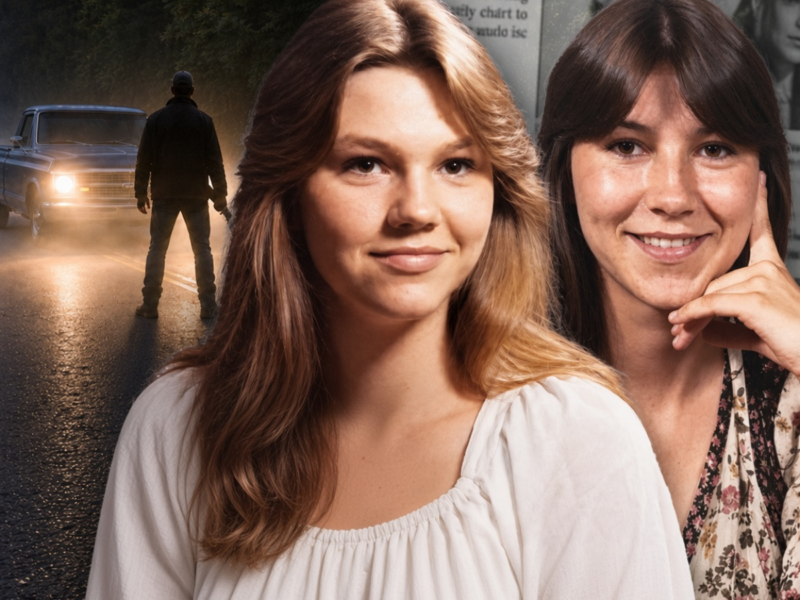
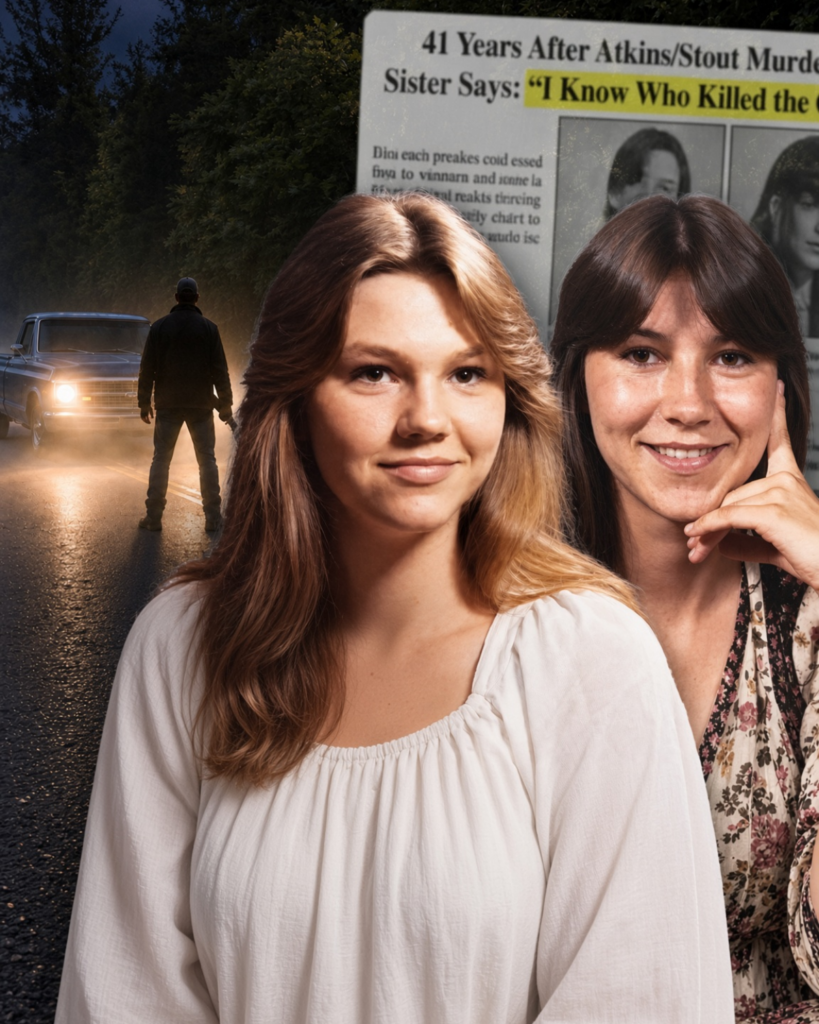
I want to tell you about a blue pickup truck, because that is the thing this story keeps coming back to.
A woman in a house up the hill from the highway would later say she saw a truck pull an abrupt U-turn and come up alongside the two girls, and she saw them stop and talk to whoever was inside, and she saw nothing after that because she went back to her kitchen and her supper and her ordinary evening.
Blue pickup trucks were the most common vehicle in rural Tennessee in 1980, and every single one of them was a single cab, and some had short beds and some had long beds, and nobody at the time thought to ask whether the blue was sky or navy or something in between.
That gap, that ordinary gap, would cost investigators years.
The truck is the object this whole case turns on, and every time it comes back it comes back a little sharper and a little more painful.
A witness saw it.
Then a witness remembered it.
Then a paint sample from a tree on an old access road matched a color nobody could name, and by then the truck was four decades gone and possibly crushed into a cube and possibly sitting under a tarp in somebody’s barn two counties over.
The family was not confused about what had happened.
Trish Gordon, the older sister, was twenty-two years old and married and living one town over in Paris, and she got a call from her brother Roger that evening saying their mother was worried, and she said what anybody would say: they’ll be home, they’re just running around with friends.
But by the next morning the girls had been out all night, and they had never done that, not once, and Trish knew something was wrong in her bones before anybody said the word out loud.
She drove to Dover with her husband and picked up her sister and their best friend along the way, and by the time they got there her mother had already called the sheriff’s office twice.
The first time she had been told not to worry.
The second time a deputy came out to the house.
Trish would say for the rest of her life that it did not feel like anyone was taking it seriously, that there was no roadblock, no search line, no urgency, and that the family ended up doing the work themselves, calling every friend and every parent and every kid who might have seen the girls last.
Carla Atkins was fourteen.
She was the youngest and the loudest and the one who would beat up a friend’s brother if the situation called for it, and she was not afraid of anything.
Vickie Stout was sixteen, her half sister, and she was quiet and shy and liked to dance in the living room and act out little skits when she thought nobody was watching.
They shared a bedroom with a big dresser and a mirror, and they wrote their names and their friends’ names and drew hearts on that mirror in fingernail polish, which was the kind of thing that got a friend in trouble when she went home and painted her own mother’s mirror the same way.
Trish said the two of them were probably the closest pair in the family.
They did everything together.
One time Trish caught them in the bathroom with smoke rolling out under the door and asked if they’d been smoking, and they said no, and she said yes you have, and that was the entire investigation.
Three weeks went by.
The town searched.
The family searched.
On October fifth a man and a woman were hiking in the Land Between the Lakes, and they smelled something that hikers learn to recognize and never forget, and they followed it into the brush and found the girls.
They had been hidden deliberately, tucked into the hollow of a rotted fallen tree and covered with leaves and rocks, and if it had not been for the smell they would have walked right past.
Both girls had been shot from behind with a twelve-gauge shotgun, and shell casings and wadding were recovered at the scene, and a sample of blue paint was lifted from the bark of a tree on the access road.
The girls had been running.
That was the detail the investigators carried home with them.
They had been running away from someone, and someone had fired.
The case file would pass through somewhere between twelve and fifteen TBI agents over the next four and a half decades, and the number that matters here is three.
Three viable suspects, developed across all those years, all of them still living in and around the same county, all of them interviewed more than once, none of them ever charged.
The first was a man who had been seen drinking in a bar on Route 79 that afternoon.
The second was a man whose truck matched the description and who had an alibi that his own brother later contradicted.
The third was a man whose name has never been released publicly and whose file is thinner than the other two, and it is the third man the current agents keep coming back to, because the third man had a reason to be on that road at that hour that nobody has ever been able to explain away.
There was no DNA in 1980.
There was no database, no cell tower, no camera on the market’s front door.
What there was, was a small town’s memory, and memory in a small town works like a hand-me-down coat.
It gets passed around and it gets patched and it gets altered and eventually nobody can say which part was the original cloth.
But some of it holds.
A woman up the hill saw a truck.
A cashier watched the girls walk out of the market and across the parking lot toward home and that was the last time anybody agreed on anything.
A man and a woman hiking in the woods found what the whole county had been praying they would not find.
Those three memories are the spine of the case, and everything else is muscle and rumor and forty-five years of a community trying to make sense of something that refuses to make sense.
I want to be careful here, because this is an open investigation and there are people who still live in that county who know something and have never said it.
The agents who worked this case have been explicit about that.
They have said there was a time when fear kept people quiet, when a person who saw something might reasonably wonder whether speaking up would bring trouble to their family, and they have said that time is over.
They have said there is no party, no group, no one in that county who is going to hurt somebody for talking now.
The evidence that still exists has been sent to a lab in Florida for advanced testing.
New eyes are on it.
The file is not closed.
But what they need, what they have needed for four and a half decades, is one phone call from one person who knows what happened and has carried it long enough.
Trish Gordon is in her sixties now.
She has spent most of her adult life as the keeper of this case, and she has said the thing that stops me every time I hear it.
She has said that whoever knows and is not talking is just as guilty as the person who pulled the trigger.
She has said she hopes that person will think about eternity and where they want to spend theirs.
I don’t know what a person does with that.
I don’t know how a person gets up in the morning and makes coffee and goes to work and knows what they know.
But somebody does.
That is the whole terrible arithmetic of this story.
Somebody in that county knows, and has known since 1980, and has decided every single day for forty-five years to keep it, and the girls have been in that rotted tree and then in the ground and then in the memory of a family that has never stopped waiting.
So here is what I keep coming back to, and it is the blue truck again, because it always is.
Somewhere in that county there is a man or a memory of a man, and a truck that was blue in a way somebody remembers, and a paint sample in an evidence bag in a lab in Florida, and a woman up the hill who saw a U-turn and did not know she was watching the last minute of two girls’ lives.
There is a cashier who watched them walk out of a market and across a parking lot and did not know he was the last person to see them go.
There is a mirror in a bedroom with names written on it in fingernail polish, and there is a sister who has spent most of a lifetime asking a question that nobody will answer.
The truck is the thing.
The truck is the whole case.
Find the truck, find the man, and give a family the only thing left to give them, which is the truth.
If you know something, call it in.
It doesn’t matter how small.
It doesn’t matter how long ago.
The people who worked this case for forty-five years believe the answer is still in that county, and I believe them, because I have read the file and I have seen the number three, and three is not a lot of men, and one of them is the one.









