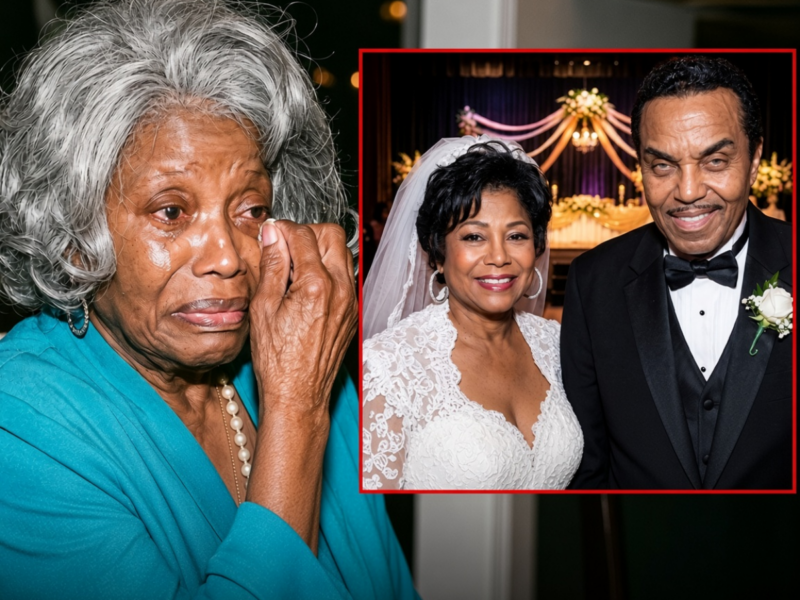
Katherine Jackson’s Marriage With Joe Was Much Nastier Than You Thought.
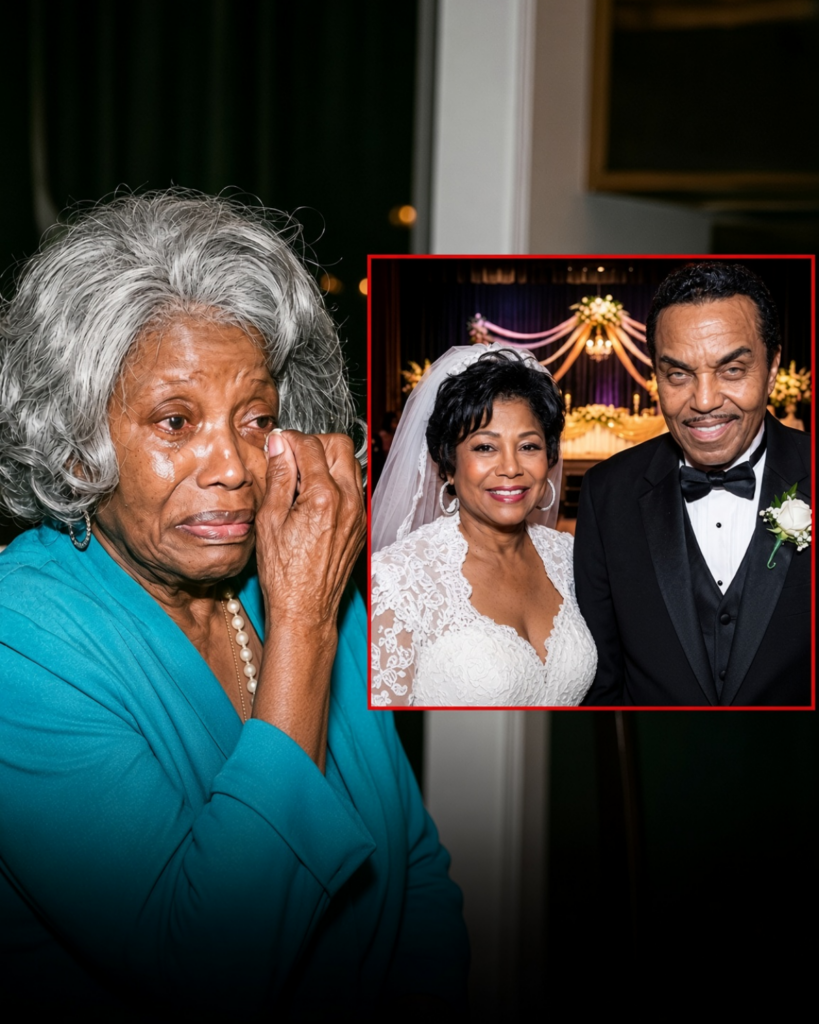
No, I’d rather not say anything about him.
I think when he raided my son’s ranch and he got on television that evening, I think he showed his true colors.
They don’t call him Mad Dog for nothing.
Las Vegas, June 27, 2018.
Inside the Nathan Adelson Hospice, Joe Jackson was experiencing his final moments following a battle with pancreatic cancer.
At his bedside, Katherine Jackson, the wife who had stood by his side for nearly 69 years, was reportedly present to bid him a final farewell.
That should have been the moving conclusion to a marriage that weathered poverty, fame, and seemingly insurmountable tragedies.
Yet few knew that behind the image of the devoted wife lay two separate attempts by Katherine to divorce Joe, an illegitimate daughter of his, and secrets buried for decades.
Even more astonishingly, in 2010, the pair publicly denied ever filing for divorce on national television, despite a legal record in Los Angeles that had existed for 37 years.
Today, let’s pull back the curtain on the hidden corners of Joe and Katherine Jackson’s nearly 69-year marriage to uncover the secrets behind a seemingly perfect family image alongside the reasons why Katherine twice sought to leave her husband yet ultimately chose to stay.
A limping gate and a silent destiny.
On May 4, 1930, in the windswept expanse of Barber County in the American South, a tiny soul entered the world.
Caddy B.
Screws grew up in an ordinary family with no premonition of the brilliant future or the storms life would soon hurl in her path.
Yet destiny tested the child’s willpower early through a cruel bout of polio.
Though she wrestled her life back from the jaws of death, the disease left an invisible yet permanent scar, one leg weaker than the other.
That limping gate quietly became Katherine’s faithful companion through her youth across stages blazing with dazzling spotlights and down to the most agonizing corners of her life.
When she was 4 years old, swept along by the era’s migration in search of change, her family left the south for East Chicago, Indiana.
There, her father changed the family surname and the young girl gradually came to be known by a name intertwined with her destiny, Katherine Esther Screws.
In that cold industrial landscape of Indiana, Katherine’s path crossed with a man harboring a burning fire of ambition.
Joseph Walter Jackson was born in Arkansas, carrying the fierce drive to conquer boxing rings, where a man could use his bare hands and sheer grit to forge his own fate.
When she met Joe, Katherine was only a 17-year-old girl.
Yet, right from the starting line, their romance was shadowed by complication.
Joe was already a married man.
It was not until his first marriage dissolved that Joe and Katherine officially became one on November 5, 1949.
Little did anyone know that this decision laid the very first bricks for one of the greatest musical dynasties of the 20th century.
In May 1950, the cries of their firstborn daughter, Rebby, signaled the start of an extraordinary parade of children.
One by one, they arrived.
Jackie, Tito, Jermaine, La Toya, the twins, Marlin, and Brandon in 1957, Michael in 1958, Randy, and finally the youngest, Janet in 1966.
Yet life was never entirely whole.
Sorrow struck when Brandon passed away in infancy.
Within the span of just 16 years, Katherine bore 10 lives, leaving nine children to grow up together in a suffocatingly small two-bedroom house on Jackson Street in Gary, Indiana.
Close your eyes and picture it.
11 human beings crammed into a cramped space where every breath, every cry, every laugh, and every daily routine collided.
There were no private bedrooms, no professional stages, and certainly no hint that these unkempt children would one day stand as idols to millions.
Back then, Joe and Katherine’s overriding problem was not record deals or concert revenues, but how to put food on the table.
Joe’s boxing dreams evaporated under the crushing pressure of survival.
He hung up his gloves and anchored himself to grueling, exhausting shifts operating a crane at a steel mill, referenced variously as inland steel or US steel.
Yet the artistic spark within him refused to die.
After work, Joe clutched his guitar, losing himself in the R&B group the Falcons.
Alas, chart topping glory refused to smile upon them.
The guitar was packed away into a closet corner, seemingly relegated to the past.
Who could have guessed that this very forgotten instrument would serve as the dry kindling, igniting a revolution?
According to family lore, whenever their stern father was away, the energetic boys would sneakily drag the guitar out to play.
Under clumsy, novice fingers probing the frets.
Music began to awaken.
Joe might have failed in his own performing dreams, but his children were unknowingly unlocking a door he had never dared to imagine.
Beside her practical, battleworn husband, Katherine carried a more refined artistic soul.
She played the piano, frequently sang around the modest home, and recognized her children’s innate talents remarkably early.
Years later, Michael Jackson repeatedly expressed deep gratitude toward his mother, the one he believed instilled in him his first rhythm and love for singing.
Yet, Katherine was more than just music.
As a devout Jehovah’s Witness, she raised her children with an ironclad discipline rooted in morals and religion.
Faith provided her an anchor of peace amidst life’s crushing pressures.
Yet those very principles would later bind her to the silent tragedies of her marriage.
When Joe realized the latent genius slumbering within his children, the cramped living room on Jackson Street abruptly transformed into a training ground.
Through the lens of a frustrated ex-boxer, Joe drilled his kids with the cold, merciless rigor of absolute discipline.
You know, he practiced us with a belt in his hand.
And if you miss a step, expect to be uh I don’t think he realizes to this day how scared I mean scared. so scared that we I would regurgitate.
In February 1993, sitting before Oprah Winfrey’s cameras in a global media storm, Michael trembled as he admitted, “Oh, there’s a lot of sadness about my past life and, you know, adolescence and my father and all of those things.
It just made me very, very, very sad.” So, he would tease you, make fun of you?
Yes.
Would he Did he ever beat you?
Yes, he did.
Yes.
And that was Faced with public outrage, Joe Jackson never denied resorting to physical punishment.
And Michael said in a recent interview that he was frightened of you.
He says that he was so frightened of you sometimes that he would be sick.
Is that true?
Well, I just know I just knew about that when I heard him mention that on TV on Oprah Winfrey show.
Um, I didn’t know anything about him being sick, but regurgitating, but if he did regurgitate, he he regurgitated all the way to the bank.
You know, others carried much deeper scars.
In her 1991 memoir, La Toya Jackson chronicled the grueling years under his tyrannical grip.
But it’s a story that we lived.
I I call it the life of a lie that we lived because we always had to smile for the public, but inside there was so much pain.
My father beat me and he beat me and he beat me and then he threw me in the bathroom and he closed the door.
Beat me with a belt buckle and a switch.
The book, you mentioned the book.
You’re writing this book about living with the Jackson family.
Mhm.
What can we expect to see in Let’s just say you’ll see lots of things that you haven’t heard.
Well, that’s a good plug for a book that he would take guns and put them to our heads and pull the trigger all the time until the day I left home.
He would take matches and burn our toes and he would laugh and we couldn’t do anything.
The strangest and most heartbreaking twist was Michael’s attitude toward his mother.
Amidst a father as terrifying as a demon, Michael always found refuge in Katherine.
She played the piano for them, sang with them, and held their battered bodies in tenderness after brutal training sessions.
She was the sole angel in that house of nightmares.
Yet an agonizing question hung suspended in the air.
Where was Katherine?
And what was she doing during all those years her husband swung a belt upon their children’s flesh?
She was the only other adult present.
She witnessed it all, cradling bleeding children by night while maintaining a nearly absolute public silence for decades.
Under Joe’s leather strap and Katherine’s quiet soothing, the machine known as the Jackson 5 began its conquest of the world.
In 1967, they scored a resounding triumph at the legendary Apollo Theater in Harlem.
In 1968, their historic contract with Motown officially birthed a star.
In the blink of an eye, the joyful tunes of I Want You Back, ABC, and I’ll Be There rang out from every radio on the planet.
Joe Jackson evolved from a sweatstained steel mill laborer into the powerful mogul of American pop music.
The two-bedroom home in Gary faded into history, replaced by a sprawling, opulent estate on Havenhurst Avenue in Encino, California.
Massive fortunes poured in, but psychological wounds multiplied with the years.
As the family moved westward, Katherine steadfastly maintained her role as the devoted matriarch behind the scenes, sewing stage costumes by hand, managing domestic life, and remaining a fixture in Jackson family portraits.
Years later, Michael lived beneath his mother’s roof until he was nearly 30.
During the 2005 trial, when the world fixated on allegations against him, Katherine stood unflinchingly by her son’s side.
That loyal motherly image was further cemented by the 5-hour television miniseries The Jacksons, an American dream broadcast on ABC in November 1992 with Angela Bassett portraying Katherine.
Adapted from her memoir, one Seattle Times critic noted it painted Joe as a monster and Katherine as a saint.
It was an easy narrative contrast, the ruthlessly rigid father and the endlessly self-sacrificing mother.
Yet no marriage can be fully unraveled by two-dimensional archetypes.
Joe had been a married man when he met Katherine.
Post marriage, he morphed into a high-powered manager, constantly absent on business.
Fame showered him with money, tours, and endless new liaison.
Meanwhile, as his children ascended to career summits, Katherine, who had traded her youth to him since age 17, finally confronted the harsh reality that the man she married in 1949 never belonged to her alone.
And then a miraculous moment unfolded.
A secret the world scarcely knew.
Amidst a dark interlude of her life, the woman presumed docile and mute took a stand.
Katherine walked into the legal system, inscribed the names of her five minor children onto a petition, and resolutely signed her name to terminate a marriage spanning decades.
She stood at freedom’s threshold, holding the power to alter the trajectory of the Jackson Empire.
Yet, right before that boundary closed, Katherine abruptly stopped her hand.
The petition faded into oblivion, and the velvet curtain of the world’s most powerful family closed once more over storms that never truly ceased.
Two divorce filings and the forgotten Jackson daughter.
On March 9th, 1973, inside the Los Angeles County Clerk’s Office, a 42-year-old woman set pen to paper on a petition to dissolve a marriage of over 23 years.
Katherine Jackson.
At that moment, she stood amid the dazzling spotlight of a universally renowned family as the Jackson 5 relentlessly dominated charts and propelled Motown worldwide.
Yet beneath the applause and blockbuster hits, their domestic foundation was fracturing deeply due to Joe’s relentless infidelities.
In her 1990 memoir, My Family: The Jacksons, Katherine herself acknowledged this bitter truth.
Though when she filed for divorce, the outside world remained entirely oblivious to the tempest brewing indoors.
That legal dossier rested quietly in archive vaults for decades until Fox News journalist Roger Friedman brought it to light in October 2004.
The cold document listed five minor children, La Toya, Marlon, Michael, then just 14, Steven Randall, known as Randy, and 6-year-old baby Janet.
Children plastered across magazine covers and album art suddenly populated a judicial instrument dividing family assets.
For Katherine, it marked her maiden voyage out into the open to formally sever ties with the man who claimed her youth.
Yet, the divorce never crossed the finish line, prompted by elders within the Jehovah’s Witness community, Katherine withdrew her petition shortly after initiating it.
Entertainment Tonight later corroborated that leaders of the Kingdom Hall persuaded her to halt.
To Katherine, faith was a spiritual bedrock.
Leaving marriage meant facing labyrinthine dilemmas regarding religion, child custody, her five young kids, and a corporate business empire built on family branding.
Whatever her weightiest considerations, the legal action was shelved, and Joe remained her husband.
The 1973 file also exposed historical fractures and conflicting recollections among the Jackson kin.
In her 1991 memoir, La Toya Jackson insisted her mother never contemplated divorce during the early 1970s while her brothers toured the Globe.
Yet Los Angeles legal records proved Katherine ventured far beyond mere contemplation.
She took concrete action.
Did La Toya remain genuinely clueless?
Or did Katherine shield her children to preserve domestic peace?
No definitive answer exists, illustrating how offspring memories can diverge wildly from harsh parental realities.
Though Katherine stayed, the root fractures stubbornly deepened.
One of Joe’s most high-profile extramarital affairs spanned roughly 25 years with Charle Terrell.
Nearly 17 months after Katherine dropped her divorce petition on August 30th, 1974, exactly 1 day prior to Michael Jackson’s 16th birthday, Joh’Vonnie Jackson was born.
While Michael reigned as a teenage idol adored across America, Joh’Vonnie grew up in an alternate orbit obscured from fans who assumed Joe Jackson’s brood was accounted for.
For nearly 30 years, Joh’Vonnie was virtually scrubbed from mainstream Jackson lore.
Friedman reported in 2004 that she lived with Joe in Las Vegas, worked at McCarran International Airport, including baggage handling, never visited Neverland, and drew zero mentions in Michael or Janet interviews.
Bearing Jackson blood without basking in its spotlight, she navigated a stormy ordinary existence.
In 2018, Joh’Vonnie published her memoir, Bastard Child.
The stinging title stemmed from a detail in La Toya’s book alleging Katherine used that very slur toward her husband’s love child.
Lacking independent corroboration of that exact context, it underscored Joh’Vonnie’s marginalization.
She bore no blame for her parentage.
Yet that origin dictated an indignity spanning decades.
During book tours, Joh’Vonnie offered contradictions to Friedman’s 2004 reporting, claiming mother and child rented a home 5 miles, 8 kilometers, from the main estate, where Joe visited daily with gifts.
She asserted dad brought her to Encino and recounted a 2003 family reunion meeting with Michael at Neverland, contradicting claims she never set foot there.
Lacking guest registries, dual versions coexisted like imperfect puzzle pieces.
Beyond family shadows, Joh’Vonnie endured societal brutality.
Bullied and beaten at school purely for her surname.
The name that sold millions of records functioned as a weapon striking an innocent child.
Still, her view of Joe wasn’t purely bleak.
He remained attentive, complicating his portrait.
Most unexpectedly, Joh’Vonnie framed Katherine through a lens of grace, telling the Daily Mail she believed Katherine knew of the affair, but let religious faith inspire forgiveness, even addressing her affectionately as mother.
The same Katherine who allegedly hurled slurs in La Toya’s book emerged as a forgiving matriarch in the love child’s memory, reflecting shifting eras or fractured perspectives.
Yet Joh’Vonnie’s birth allegedly triggered a second marital crisis around 1979 or 1982 with Friedman citing the love child as a catalyst for renewed divorce intent.
Once more standing at the precipice of change, she retreated under counsel.
By the 1980s, their marriage drifted into a unique state, nominal at best.
Joe relocated to Las Vegas while Katherine anchored the Encino estate.
On paper, they remained spouses and parents of legends.
In reality, they cultivated separate lives.
January 1990 brought My Family, The Jacksons, with Richard Weisman, detailing Joe’s infidelities and their rise.
Two years later, the ABC miniseries The Jacksons, an American dream, November 1992, starring Angela Bassett, immortalized Katherine as a pillar of strength.
Yet cinema bypassed buried secrets, dual uncompleted divorce filings, backroom negotiations, ecclesiastical pressures, and internal tempests over Joh’Vonnie.
Through the late 2000s, legal ties remained unbroken.
Michael conquered music history while siblings built separate lives, letting parental fractures fade.
Then the June 25, 2009 tragedy.
Michael’s sudden passing shattered the facade as the world mourned the King of Pop.
A fresh court filing landed in Los Angeles.
This time, Joe and Katherine clashed not over infidelity or hidden divorces, but over the ultimate estate decisions governing the son they once hoisted onto the world stage.
Michael Jackson’s $500 million will and the war that divided his parents.
On June 25, 2009, Michael Jackson’s heart officially stopped beating in Los Angeles, closing the brilliant yet turbulent 50-year life of the King of Pop.
The news struck like a bolt from the blue, plunging millions of fans worldwide into shock and grief.
Just weeks prior, Michael had been pouring his heart into the This Is It concert residency, a stage expected to mark his spectacular comeback.
Instead, everything remained forever unfinished.
Autopsy reports indicated acute propofol intoxication combined with other sedatives as the cause of death.
Private physician Conrad Murray, who attended him directly, paid the price with a 4-year prison sentence for involuntary manslaughter in November 2011.
Yet, before grief could even settle, a fiercer war erupted within the Jackson family.
Amidst global mourning, legal battles over child custody and his massive estate immediately exploded in court.
On July 1, 2009, a five-page will was filed in Los Angeles dated July 7th, 2002, nearly 7 years before Michael’s death.
According to the filing, all assets were funneled into the Michael Jackson Family Trust, tasked with managing and distributing the legacy to beneficiaries.
At the time, asset values were estimated to exceed $500 million, though Michael’s financial reality remained deeply complicated by crushing debts and obligations.
The beneficiary list named Katherine Jackson and his three children, Prince, Paris, and Blanket, alongside several charities.
Furthermore, Michael placed absolute trust in his mother, appointing her legal guardian of the children should Katherine be unable to shoulder that responsibility, Diana Ross, the legendary songstress profoundly influential in his life, was chosen as her alternate.
Yet amidst this crucial document charting the family’s future, Joe Jackson’s name was entirely absent.
The man who once abandoned boxing dreams to grind away in a steel mill for survival, who early on recognized innate musical talent and used a leather strap to drive the Jackson 5 to glory, received no inheritance.
Michael refused to grant his father any managerial control over his estate.
Instead, he entrusted that mission to attorney John Branca and music executive John McClain.
For a family accustomed to Joe wielding absolute power through their early years, this arrangement marked a shattering reversal.
In childhood, Michael had to mirror every dance step and note under his father’s iron grip.
In adulthood, as master of his own destiny, he chose to strip away that authority even from beyond the grave.
Though one cannot deduce all of Michael’s motives from cold legal text, the stark contrast between Katherine’s and Joe’s positions is undeniable.
Throughout his life, Katherine remained Michael’s safest harbor during storms.
She stood by him through staggering heights and the harrowing 2005 trial.
Now bidding farewell to earthly existence, Michael entrusted his greatest treasures, his three young children, into his mother’s hands.
For Joe, the landscape was entirely different.
His omission meant walking away empty-handed from his son’s immense fortune.
Refusing to yield, Joe launched a bitter legal war to claim his stake.
In November 2009, via attorney Brian Oxman, Joe petitioned the court for a monthly living allowance from Michael’s estate.
He argued his son had financially supported him for years and that he needed the funds to sustain his aging years.
Associated Press reports revealed Joe’s claimed monthly expenses topped $15,000, roughly $1,200 for rent, $2,500 for fine dining, $2,000 for airfare, and up to $3,000 for hotel stays.
Meanwhile, his official income stood at a mere $1,700 per month from Social Security, meaning his restaurant tab alone far exceeded Social Security.
These figures painted a stark irony.
The man who once commanded America’s top musical empire now knelt before a court, begging maintenance funds from his late son’s estate.
Court filings simultaneously exposed Joe’s decaying health.
At 80 or 81 years old, legal papers couldn’t even agree on his age.
The former boxer battled diabetes and lingering paralysis from a 1998 stroke.
The man who once roared authority with a belt in a rehearsal studio was now depleted, stumbling into twilight with a broken body, begging crumbs from the estate of a son traumatized by him for life.
Tensions peaked on November 10th, 2009 during a landmark hearing.
Adam Styrand, Katherine’s new attorney, unexpectedly announced in court that she dropped all opposition to John Branca and John McClain continuing to administer Michael’s estate.
The announcement struck like a boulder on still water, infuriating Joe’s camp.
Brian Oxman immediately screeched accusations that Katherine betrayed prior agreements challenging management, even blasting her pivot as one of the most despicable acts he had ever witnessed.
The cold insult echoed across the courtroom, aimed squarely at the woman still legally married to his client.
While Joe clung bitterly to financial recovery, Katherine chose alignment with the administrative framework Michael established.
Los Angeles Superior Court Judge Mitchell Beckoff delivered a crushing verdict.
Joe Jackson held zero financial rights under Michael’s will, representing the sovereign will exercised by his son in life.
For Joe, losing a voice in the estate struck a devastating blow to the pride of a former absolute ruler.
Yet, turbulence persisted.
By January 2010, estate attorneys formally oppose Joe’s allowance request, arguing fiercely that every penny funneled to him would directly cannibalized the resources meant for Katherine and Michael’s three children.
This reality shoved Joe and Katherine into a bizarre conflict zone.
On paper, they remained spouses, but financial interests parted ways.
If Joe won, other heirs lost slices.
Katherine no longer wore just the hat of a wife.
She was Michael’s mother, a trust beneficiary, and the children’s guardian.
Those duties forced her to defend her son’s legacy, even against her husband’s interests.
Under mounting pressure, Joe ultimately withdrew his allowance bid.
Yet, in a fit of helpless rage, he delivered a lethal parting blow.
In an Associated Press interview, Joe bluntly blamed Katherine for Michael’s death.
That ungrateful, cold-blooded accusation struck a mother enduring the greatest loss of her life.
Michael was not merely a star or financial engine.
He was the flesh and blood Katherine raised from a squalid Gary home, shielding him to her final breath.
Yet, after all was said and done, her reward from a husband of over six decades was a cowardly stab in the back.
One might assume these fissures in wealth, power, and betrayal would permanently sever public associations.
Yet, in October 2010, the world reeled when both agreed to sit down with Oprah Winfrey for an exclusive television interview.
It wasn’t Oprah’s first encounter with the Jacksons.
She conducted the legendary 1993 broadcast where a tearful Michael confessed his terror of a brutal father.
Now the man who inflicted those unhealable psychological wounds sat proudly beside Katherine, dissecting the past and bearing secrets postmortem.
Seeming a space for shared mourning, the interview sparked an unprecedented media explosion.
For the first time before global cameras, Katherine directly confronted her husband regarding the brutal lashings inflicted upon their children.
And when the conversation pivoted to their marriage, a startling affirmation emerged. one powerful enough to render those cold Los Angeles court files terrifyingly relevant.
The 1973 petition remains silent proof of a monumental woman’s hunger for freedom.
Though televised denials masked it, legal archives preserved the record.
Amidst billionaire legacies, the core question lingered.
Did Katherine stay from love, duty, or because escaping the cage proved too daunting?
With direct witnesses fading, that 1973 divorce petition endures as proof she sought an exit.
Nearly a century deep, Katherine witnessed humanity’s peak beauty and darkest pain.
Songs play, statues stand, yet ultimate truths remain locked within the survivors.
And the lingering question remains, did Katherine stay because she chose to guard the marriage or because after decades leaving simply became impossible?









