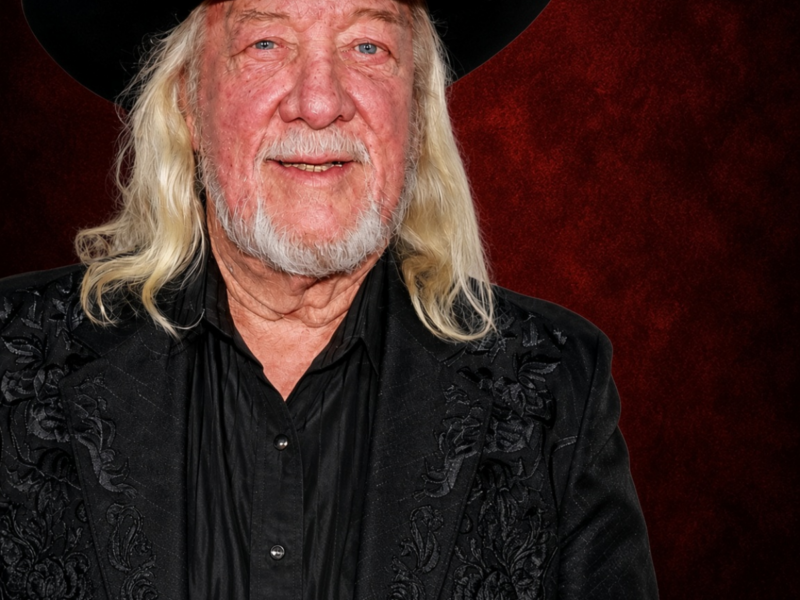
John Anderson’s Life Was MUCH DARKER Than Anyone Knew.
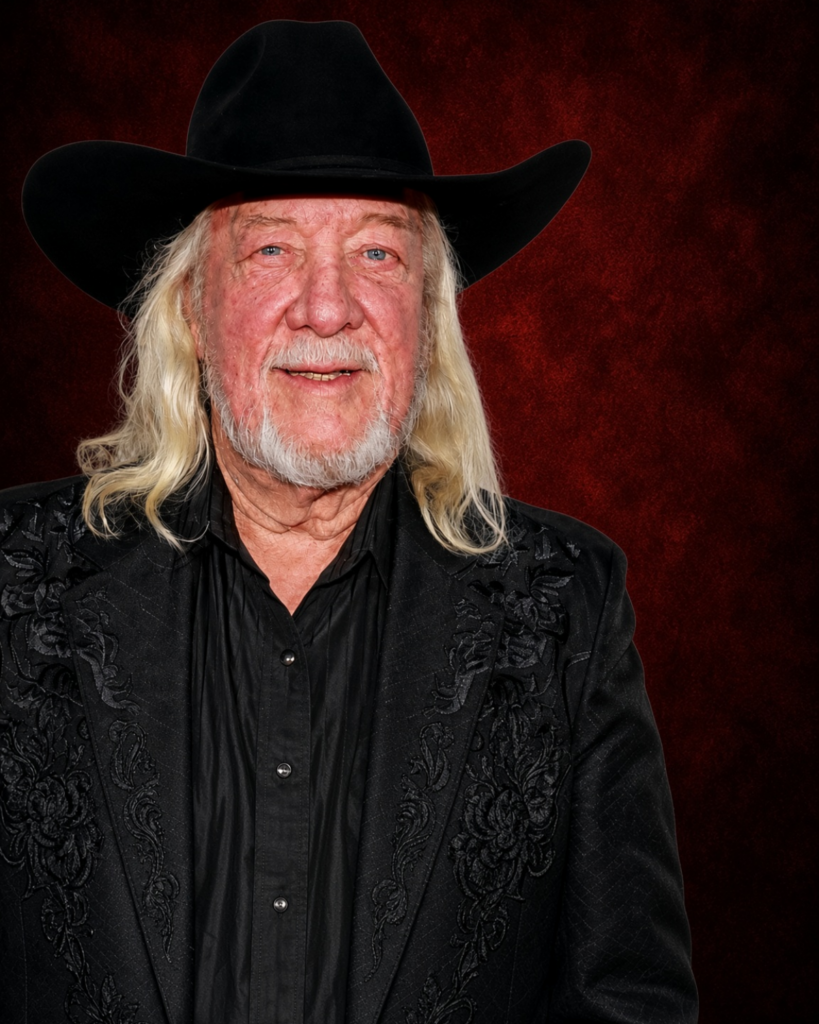
We begin tonight with some sad news.
Country music legend John Anderson has died.
He was seventy-one years old when he passed.
Anderson’s family shared the news on his social media accounts tonight.
He is known for his hits like “Straight Tequila Night” and “Seminole Wind.”
He was also inducted into the Nashville Songwriters Hall of Fame back in 2014 and into the Country Music Hall of Fame back in 2024.
Anderson’s family said, “His music will live on, but for us, his greatest legacy will always be the love he gave his family.”
October 20th, 2024, Nashville.
John Anderson steps forward to accept his medallion from the Country Music Hall of Fame.
The voice behind “Swingin'” is finally being honored—and he looks exactly the way the industry has always described him: calm, cool, classy.
Then he thanks a man almost nobody in the room recognizes: his ear doctor.
Why would a country legend bring a surgeon to the biggest night of his life?
Gratitude is the easy answer. The real one is much darker.
By Anderson’s own account, a few years before that night, doctors told him he had died on an operating table.
His own band never knew.
And that wasn’t the first time his body tried to take the stage away from him.
Long before the medallion, there was a roof.
In 1971, a teenager from Apopka, Florida, turned up unannounced at his sister’s home in Nashville.
He’d grown up on rock and roll, playing in local bands with names like the Weed Seeds—until George Jones and Merle Haggard pulled him toward country music.
He’d also grown up with something nobody in Nashville could see.
As a child, he’d suffered so many ear infections that one ear was left scarred.
Nashville didn’t hand him a record deal—it handed him odd jobs.
The one he held longest was construction, and part of that work meant helping put the roof on the brand-new Grand Ole Opry House before it opened in 1974.
Accounts from his induction put it at roughly ten months on that building.
One retelling says that from up there, he looked down at the empty stage below and hoped that someday he’d get to play it.
He helped build the ceiling over country music’s most famous stage before anyone let him sing beneath it.
For a while, the dream ran right on schedule.
His first chart single arrived in 1977. “Wild and Blue” went to number one.
Then, in 1983, “Swingin'” exploded.
The Country Music Association named it Single of the Year, and it became the biggest-selling country single in Warner Brothers history.
That year alone brought him five CMA nominations.
Which makes the next part strange.
If a man has the biggest country single his label has ever sold, why is he gone from that label just a few years later?
This is the darkness people could actually see.
The Country Music Hall of Fame’s own account describes a dispute over how much Warner Brothers was supporting him—and by 1987, he’d walked away.
There was a cruel irony underneath it.
In the early ’80s, Anderson had helped lead country music back to its traditional roots.
By the late ’80s, that same movement had produced a wave of younger stars working the ground he’d broken.
He’d opened the door. Other people walked through it.
The hits slowed. Many in the industry quietly decided his best years were behind him.
In music, that verdict rarely gets announced. It shows up as fewer calls, fewer slots, less airplay.
In 1991, he signed with a new label, BNA.
Then the single “Straight Tequila Night” climbed all the way to number one.
It was his first chart-topper in nearly a decade.
The album behind it, Seminole Wind, arrived in February 1992 and became the biggest record of his life—eventually certified double platinum.
Even that came with resistance.
According to Anderson, his label worried the title song—a slow ode to the vanishing Florida of his youth—wouldn’t connect outside his home state.
So he tested it about as far from Florida as he could get. He played it on stage in Seattle.
The crowd gave him a standing ovation.
A slow song about Florida had brought a room full of strangers in the Pacific Northwest to their feet.
By 1993, the Academy of Country Music was handing him a career achievement award.
The man the industry had written off was back.
So the first dark chapter had a happy ending—but Anderson’s real vulnerability had nothing to do with record companies.
It was sitting on either side of his head the whole time.
Everybody talks about that voice—the slow, rolling Florida drawl fans can identify in two notes.
But a singer’s instrument isn’t only the throat. It’s the ears.
A singer who can’t hear himself is like a pilot whose cockpit gauges have gone dark.
The engine may run perfectly—he just can’t tell where he’s going.
Years after that childhood damage, the scarred ear needed surgery.
The first doctor Anderson saw was reluctant to touch it.
By Anderson’s account, that doctor pointed him to a colleague who might be able to fix it if anybody could.
That colleague was Dr. David Haynes at Vanderbilt University Medical Center in Nashville.
And there was something Anderson didn’t know when he walked into that office.
Haynes already knew the voice.
Years earlier, as a medical resident with an unreliable car, he’d borrowed a friend’s vehicle that happened to have an Anderson CD inside.
He played it every day and became a fan.
The doctor who would one day hold Anderson’s career in his hands had spent his commute riding around Nashville with it in the stereo.
The surgery worked. Anderson went straight back on the road.
And from the outside, nothing looked wrong.
The next warning didn’t come from his ears. It came from his heart.
Labor Day weekend, 2003, Charleston, West Virginia.
Anderson was booked to play Saturday night at the Charleston Sternwheel Regatta.
Instead, he was in his hotel room. He’d been having chest pains.
That afternoon, he was taken to a hospital.
He was forty-eight years old, and he’d had a heart attack.
Doctors performed an angioplasty and placed a stent.
In plain terms, they opened a blocked artery and left a tiny mesh tube inside to keep it from closing again.
His publicist told reporters he was stable and in good spirits.
His tour was suspended with a return expected in about a week.
Then the festival’s director told the Associated Press something else.
According to the production crew, Anderson had tried to leave the hospital twice.
The reason given was simple: he had never missed a show before.
A man recovering from a heart attack trying to walk out and keep a concert date.
It sounds like a charming road story.
It also reveals a pattern that would matter enormously later.
When something went wrong with John Anderson’s body, his instinct was to keep the show moving and keep the problem small.
The heart attack made the news. It was reported, explained, and forgotten once he was back on tour.
Fourteen years later, something far worse happened—and almost nobody learned what it really was.
August 2017: Anderson’s publicist announced he would miss a music festival in Alabama.
He’d been hospitalized in Nashville with what the statement called “unforeseen and serious medical issues.”
Within days, an update said he was on the mend, and a return date in early September was announced.
To the public, it looked like a brief scare. A few days in the hospital, a missed show, and then back to normal.
It wasn’t.
Anderson later said he spent most of 2017 and much of 2018 fighting a grave illness, with hospital stays in multiple cities.
At one point, doctors feared he had brain cancer.
The tumor they were worried about turned out to be benign.
In most stories, that’s where the relief arrives. Not cancer. Crisis over.
But while his doctors were chasing the tumor, something else was slipping away: his hearing.
Not just in the scarred ear Haynes had repaired years before.
The other ear went too—the one Anderson described as all he had left.
He later told Rolling Stone he was almost completely deaf for about six or seven months.
Imagine turning on the radio, hearing a song, and not realizing it’s your own.
Anderson has described exactly that.
He lost his sense of pitch. He couldn’t recognize his own records.
What he could hear, he called “terrible noise.”
For the first time in roughly forty years, he came off the road.
The man who had never missed a show was suddenly missing all of them.
The man who once tried to escape a hospital to play a concert now couldn’t hear the music at all.
And the danger wasn’t only the illness. It was what it took to treat it.
Anderson has never publicly said exactly what his illness was, and he still prefers not to go into details.
What he has shared is this: during one risky procedure under anesthesia, doctors told him afterward that he had died on the operating table.
Later, his wife told him the real number: three times.
Doctors had told him about one. It was his wife who carried the full count.
While he was the one on the table, she was the one who knew the whole truth of how close she had come to losing him—and she was the one who finally told him.
That account comes from Anderson himself, relaying what he was told.
No medical records have been made public.
But even taken carefully, it changes the meaning of everything the public saw.
The canceled festival. The vague statement. The cheerful update about being on the mend.
Behind those few sentences was a man who had been brought back more than once.
And Anderson kept it almost entirely to himself.
He kept it from the music industry.
He kept it from his own touring band—musicians who had stood beside him on stage for years and had no idea how close they’d come to losing the man they played behind.
As far as most of the world could tell, John Anderson had simply taken some time off.
Then the calendar made things worse.
Another procedure was coming, and it would require the same kind of anesthesia he’d been under when doctors said he died.
He would have to go back under knowing exactly what had happened last time.
And before that appointment, he was scheduled to record an album.
Those sessions became the 2020 album Years, produced by Dan Auerbach of the Black Keys along with David Ferguson.
Anderson’s hearing at that point was, by his own estimate, at half capacity at best.
He was trying to sing in tune with half of what a singer depends on—knowing that within days he’d be going back under.
So he pushed to finish every vocal while he could.
He told Auerbach, “Let’s get everything, because I might not wake up.”
It wasn’t a figure of speech. The next appointment was only days after the sessions ended.
Listen to that record today and you’d never guess.
The voice sounds warm, steady, unhurried—calm, even.
Nothing in it tells you the man singing wasn’t sure he’d survive the week—or that almost everyone around him in the industry had no idea how close to the edge he was standing.
Which raises the question this whole story turns on.
A few months earlier, he couldn’t recognize his own songs. How was he standing at a microphone at all?
There are two answers. One is personal. One is medical. Anderson holds on to both.
He tells the personal one first.
Through roughly a year and a half of doctor visits, he says, he fought every day to heal.
At his lowest point, he walked out into the front yard of his Tennessee property while it was raining.
He let the rain fall on him and told God he didn’t know how much more he could take.
He asked for help.
Within about forty-eight hours, by his account, he started getting better.
He says it showed him how real his faith is.
The medical answer runs right alongside it, and it’s just as tense.
When Anderson went back to Dr. Haynes, Haynes saw something far more critical than the old scarred ear.
With the kind of inner-ear hearing loss Anderson had, Haynes explained, if hearing doesn’t return within a few weeks, it isn’t coming back months later.
They were racing a clock with no way of knowing how much time was left on it.
Haynes chose to inject steroids directly through Anderson’s eardrum.
Anderson, who understates almost everything, said it wasn’t pleasant but wasn’t really that painful.
He made the drive from his home in Smithville to Nashville—about ninety minutes, by his account—again and again.
Vanderbilt’s equipment measured his progress, but Anderson ran his own test at home.
He’d pick up his acoustic guitar and see whether he could make it through a song.
He later called that stretch “a very, very dark and depressing time in my life.”
Slowly, the notes came back. Not completely, but enough.
When Dan Auerbach’s call arrived—after an introduction through SiriusXM’s Outlaw Country channel—the two sat down together.
The first song they wrote was “Years.” They finished three or four songs that first day.
The album came out on April 10th, 2020, just as the world shut down.
Its opening track was called “I’m Still Hanging On.”
For listeners, it was a comeback record.
For Anderson, it was proof he was still here.
Four years later, the Hall of Fame called.
On March 18th, 2024, Anderson was announced as part of that year’s class, and he said he was still trying to grasp that it was real.
On October 20th, he was inducted alongside guitarist James Burton and the late Toby Keith.
Fellow Florida native Bobby Braddock presented his medallion.
The Country Music Association’s chief executive described him as calm, cool, and classy.
That’s the man the audience saw.
But one guest in that room knew a different version.
Anderson had invited Dr. David Haynes to an event usually reserved for family, close friends, and industry figures.
Anderson said Haynes belonged in the friends category—and he said so in his speech.
The young resident who once borrowed a friend’s car and played an Anderson CD on his daily drive was now sitting in the audience watching that same voice enter the Hall of Fame.
So that’s the answer to the question from the beginning.
The doctor wasn’t there as a courtesy.
Without the race against those few weeks, there might not have been a voice to induct at all.
The friendship didn’t end with the medallion.
During his visits to Vanderbilt, Anderson had noticed the other patients.
Elderly people on walkers. Young parents carrying their children.
He has said he could see both fear and hope in those parents’ eyes, and that it affected him deeply.
He decided the one thing he had to offer was his music.
So he proposed a benefit concert to Haynes—and kept proposing it year after year until it finally happened at the Ryman Auditorium in February 2026, raising money and awareness for Vanderbilt’s hearing program.
Haynes said Anderson was the one who pushed it through.
So was John Anderson’s life darker than anyone knew?
Yes.
Not because of scandal, but because of what he carried without telling anyone.
A heart attack he tried to walk away from.
A silence that swallowed his own songs.
By his account, three deaths on an operating table—known to his wife and almost no one else.
The calm the public saw was real.
It was also covering a great deal.
The Grand Ole Opry House he once helped roof still stands in Nashville.
The teenager who looked down at that empty stage from the rafters now has his name in the Country Music Hall of Fame.
Picture a quiet room in Smithville, an acoustic guitar leaning against a chair—the same kind of instrument he once picked up just to find out whether the world had come back.
One string. One note.
He heard it.









