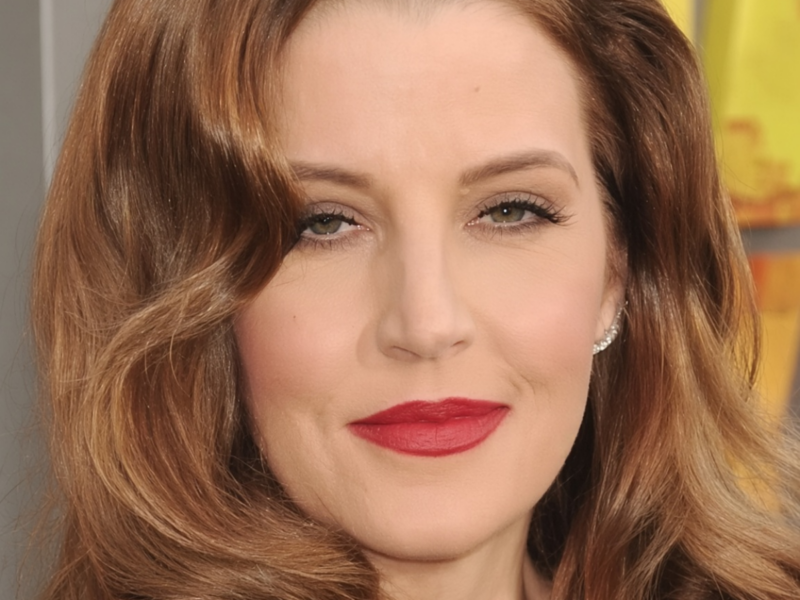
Inside Lisa Marie Presley’s Embalming, Funeral & Burial at Graceland.
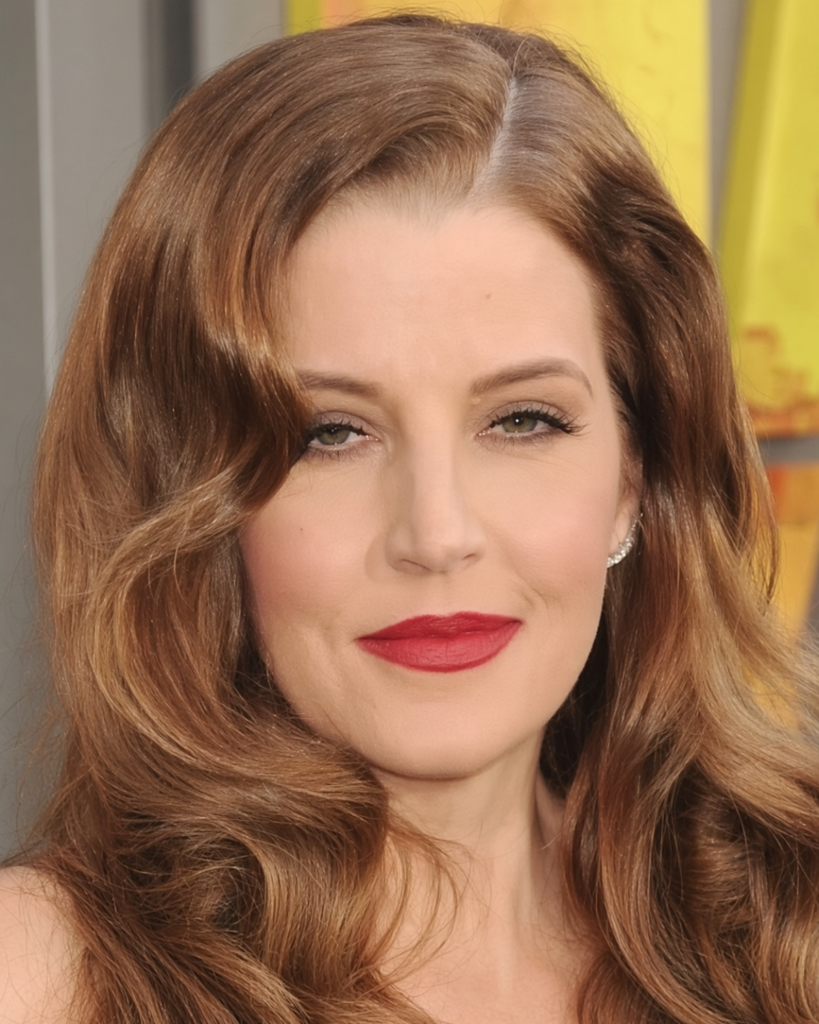
There is more breaking news to get to tonight. Lisa Marie Presley, the only child of Elvis Presley, has died.
January 12th, 2023. Calabasas, California.
Inside a private home in one of the most guarded, gated, carefully insulated communities in Los Angeles, something has gone catastrophically wrong.
A fifty-four-year-old woman has collapsed. Emergency services are called. Paramedics arrive and begin working.
And within hours, the only child of the most iconic musician who has ever lived is lying in a hospital bed at West Hills Medical Center, unresponsive—while the world outside has absolutely no idea what is happening yet.
Her name is Lisa Marie Presley. And by the time the news breaks, it is already too late.
She was pronounced dead later that same day, January 12th, 2023.
And I want you to hold that date for a moment before we go any further, because the speed of it matters.
There was no long goodbye, no slow decline that gave people time to prepare. No final public appearance where, in hindsight, you could look back and say you saw it coming.
She was at the Golden Globes just four days earlier. Four days.
Sitting in a room full of cameras and celebrities and flashing lights. Looking like someone who had places to be and things to do, and a future that was still very much in motion.
And then she was gone.
Now, if you clicked on this video, there’s a good chance you think you already know this story.
You know the headline. You know she collapsed. You know she was rushed to the hospital and didn’t make it.
You might even know the cause of death: a small bowel obstruction, complications tied to a bariatric surgery she’d had years earlier.
You’ve seen the tributes. You’ve seen the footage from her memorial. You’ve seen the photographs of Graceland with the flowers piled at the gates.
But here is what I want to ask you.
Do you know what happened in the rooms the cameras never got into?
Do you know what happened to her body in the hours and days between that hospital and that burial?
Do you know what it actually took—technically, professionally, humanly—to prepare Lisa Marie Presley for the goodbye that the world watched on January 22nd?
Do you know what decisions were made, under what pressure, by the people whose names you will never see in any headline?
Because that is the story I am here to tell you. And I promise you, it is one you have not heard before.
I work in funeral service. I have spent years in this industry. I understand what happens to a human body after death in a way that most people simply don’t.
Not because they lack the capacity, but because nobody ever explains it.
It is the part of death that exists behind a closed door, in a room that most families never walk into, handled by professionals who do extraordinary work in near-total silence and anonymity.
Nobody makes documentaries about the embalmer. Nobody sits down with the funeral director for the in-depth interview.
The work happens, and then the world sees the result. And the space between those two things is where the real story lives.
And in the case of Lisa Marie Presley, that space between is everything.
Because you have to understand who she was. Not just as a name, not just as a headline, not just as Elvis Presley’s daughter—though that alone carries a weight that is almost impossible to overstate.
You have to understand what her life actually looked like. What she carried, what she survived, what she lost.
She was born February 1st, 1968, into the most extraordinary and suffocating kind of fame imaginable.
Her father was not merely a celebrity. Elvis Presley was a cultural force on a scale that had never existed before, and has arguably never been replicated since.
And Lisa Marie grew up inside that. Inside Graceland. Inside the machinery of a legacy so enormous that it had its own gravitational pull, bending everything around it—including her.
She was nine years old when her father died. Nine.
And from that moment forward, she was never just a person. She was an heir, a symbol, a living extension of something the world refused to let go of.
Every choice she made for the rest of her life was filtered through that lens. Every marriage, every album, every interview, every public appearance, every mistake. Everything.
And she made it to fifty-four carrying all of that.
Four marriages. Four children. A very public battle with addiction that she spoke about with a raw honesty that most people in her position never allow themselves.
The financial devastation of losing a fortune that should have been untouchable.
And then, in July of 2020, the worst thing. The thing that no parent should ever have to survive.
Her son, Benjamin Keough.
And if you want to understand Lisa Marie Presley in her final years, you have to understand that she never came back from that. Not fully.
She said so herself, in her own words, in writing she left behind.
She was a mother who had buried her child, and she wore that grief like something permanently embedded in her bones.
She survived all of it. Every single thing life threw at her.
She survived the impossible childhood and the impossible grief and the addiction and the loss and the years of public ridicule and the financial collapse and the death of her son.
She survived all of it.
And then a small bowel obstruction took her at fifty-four.
That is the part I keep coming back to. After everything—after all of it—that is how it ended. Quietly. Without warning. In a home in Calabasas on a Thursday morning in January.
And what happened next?
What happened in the hours after that hospital? In the days between her death and her memorial? In the preparation that had to be done before the world was allowed to say goodbye?
Is a story that deserves to be told with the same honesty and the same seriousness that she always tried to tell her own.
So that is exactly what I am going to do.
Because when I tell you what had to be done to prepare Lisa Marie Presley for burial—given the condition of her body, given the timeline, given where she was going—I think you’re going to understand for the first time just how extraordinary that preparation actually was.
Let’s talk about what most people never talk about.
Because the moment Lisa Marie Presley was pronounced dead at West Hills Medical Center, a process began that the public never sees, never hears about, and almost never thinks to ask about.
A process that is clinical and precise and deeply, profoundly human all at the same time.
And in her case, it was a process that carried a level of complexity and pressure that most funeral professionals will never encounter once in an entire career.
It started, as it always does, with the medical examiner.
When someone dies under circumstances that are sudden or unexpected—and a fifty-four-year-old woman collapsing in her kitchen with no immediate obvious cause absolutely qualifies—the body does not go directly to a funeral home.
It goes to the coroner.
In Lisa Marie’s case, that meant the Los Angeles County Medical Examiner-Coroner’s Office.
And what happens there is an autopsy. A full, thorough forensic examination of the body designed to answer the question that the law requires an answer to before anything else can happen: How did this person die?
Now, I want you to understand what an autopsy actually involves, because it matters deeply for everything that comes after it.
This is not a superficial examination. This is a complete internal inspection of the human body.
The chest is opened. The organs are removed, weighed, examined, and sampled.
The skull is opened. The brain is removed and assessed.
Tissue samples are taken. Blood is drawn for toxicology.
Every major system in the body is looked at individually and documented in detail.
It is thorough. It is methodical. And when it is complete, the body that a funeral home receives is fundamentally different from the body that arrived at the morgue.
The post-autopsy body requires a completely different level of preparation than a body that has not been through that process.
And that distinction matters enormously when we start talking about what the embalmer faced.
The official cause of death, confirmed by the Los Angeles County Medical Examiner, was a small bowel obstruction.
A blockage in the small intestine that cut off the flow of contents through the digestive tract, causing a cascade of complications that her body ultimately could not survive.
And here is the detail that makes this medically significant beyond the headline.
That obstruction was linked to adhesions—internal scar tissue—that had developed as a complication of bariatric surgery she had undergone years earlier.
Bariatric surgery. Weight-loss surgery. A procedure that millions of people have had. A procedure that is considered routine in the medical world. A procedure that Lisa Marie apparently kept largely private for years.
And the cruel irony is that the surgery itself wasn’t what killed her.
It was what the surgery left behind. Scar tissue that formed silently over years until it created a blockage that became a medical emergency that moved faster than anyone could stop it.
From a preparation standpoint, this is critical information.
Because bariatric surgery fundamentally alters the internal architecture of the abdominal cavity. The stomach is reduced. The digestive tract is rerouted.
And when you add years of post-surgical adhesions to that picture, and then layer a full forensic autopsy on top of it, the body that an embalmer receives is one that requires extraordinary technical skill to work with.
The normal pathways that embalming fluid travels through the arterial system have to be carefully navigated around surgical alterations and internal damage.
The restoration of the abdominal area after autopsy incisions have been made requires precision and patience and an intimate understanding of anatomy that goes far beyond what most people imagine when they think about what embalmers do.
So let me explain what arterial embalming actually is, because I think most people have a vague idea, and the vague idea doesn’t do justice to what this process actually involves.
Embalming is the process of introducing a preservative chemical solution—typically formaldehyde-based—into the body’s arterial system in order to temporarily halt decomposition, restore a natural appearance, and allow for a viewing or service within a reasonable time frame.
The embalmer identifies a primary injection site—typically the carotid artery in the neck or the femoral artery in the leg—and introduces the fluid under controlled pressure while simultaneously draining the displaced blood from the venous system.
The goal is complete, even distribution of the preservative solution throughout every tissue in the body. Uniform. Thorough. No areas missed.
When it works the way it’s supposed to, the results are remarkable.
The skin tone normalizes. The features relax. The body is stabilized against decomposition in a way that makes it possible for a family to have an open-casket service—to see their person looking peaceful and present and like themselves, rather than like the medical emergency that took them.
But when the body has been through what Lisa Marie Presley’s body had been through—the surgical history, the post-autopsy state, the internal complexity—achieving that result is not straightforward.
It requires what funeral professionals call restorative art.
The meticulous, painstaking work of reconstruction. Suturing autopsy incisions with precision. Rebuilding areas where the examination process has disrupted tissue. Working with cosmetics and wax and techniques that take years to master to restore a face and a form to something that honors who the person was in life.
And here is the timeline that I need you to hold in your mind, because it adds another layer of pressure to everything I just described.
Lisa Marie Presley died on January 12th, 2023.
Her public memorial was scheduled for January 22nd.
Her burial at Graceland was the same day, immediately following the memorial.
Ten days. Ten days from the moment she died to the moment she was placed in the ground.
And within that ten days, the medical examiner had to complete the autopsy, compile findings, and release the body.
Toxicology results, by the way, take weeks to come back. The full toxicology report in her case was not completed until months later.
But the body itself was released. And from the moment that release happened, the clock was running.
Ten days is not a generous window under normal circumstances.
Under these circumstances—post-autopsy, complex surgical history, the need for the highest possible standard of preparation, and the destination being one of the most visited and most scrutinized properties in the United States—ten days is an intense, unforgiving, pressure-filled timeline that left absolutely no margin for error.
And I want you to sit with that for a moment.
Because behind every public memorial, behind every flower arrangement and every eulogy and every carefully chosen song, there’s a team of people who made it possible for that service to happen the way it happened.
Who worked through the night. Who applied every skill they had. Who treated that body with a level of care and dignity and technical precision that the world never sees and never acknowledges.
The embalmer who received Lisa Marie Presley did not get to grieve publicly. Did not get to process what it meant to be in that room doing that work for that person.
They just did the work. The way professionals in this industry always do. Quietly, completely, and without any of the recognition that the work deserves.
And what was the result of that work? What did it produce?
An open casket at a public memorial in front of hundreds of people who loved her. Attended by her mother, her children, her closest friends, and an industry full of people who had known her for decades.
An open casket.
Think about what that means from a professional standpoint.
Think about everything I just told you—the autopsy, the surgical history, the timeline, the pressure—and then think about the fact that the family felt confident enough in the preparation to have an open-casket service.
That is not a given. That is a testament.
That is a funeral professional—or a team of them—delivering results under conditions that would have broken lesser practitioners.
The person who prepared Lisa Marie Presley for burial did all of this, every single piece of it, knowing exactly where she was going afterward.
Knowing that the woman on that preparation table was going to be carried to Memphis, Tennessee, and placed in the ground at Graceland next to her father, next to her son, in the most visited private home in America.
That is not a normal week in funeral service. That is a weight that very few people in this profession will ever be asked to carry.
And they carried it.
January 22nd, 2023. Ten days after Lisa Marie Presley died in a hospital in Calabasas, the world was finally allowed to say goodbye.
And I want to be precise about the word I just used: allowed.
Because that is exactly what it was.
The family chose the venue. The family chose the guest list. The family chose every song, every speaker, every detail of how this moment would unfold.
And in doing so, they made a statement that I think deserves to be recognized.
They let people in.
After everything. After years of tabloids and speculation and the particular cruelty that the public sometimes inflicts on people who are famous and grieving and human all at the same time.
They opened the door and let people come and be present and share in the loss.
The venue was the First Presbyterian Church of Hollywood.
Not a stadium. Not an arena. Not the kind of venue you rent when you are trying to perform grief at scale.
A church. Intimate by the standards of what the Presley name could have commanded.
And that choice tells you something about what this day was actually meant to be.
It was not a production. It was a funeral. A real one. The kind where people cry in the pews and hold each other’s hands and sit with the unbearable reality that someone they loved is gone and they are never coming back.
Hundreds of people filled that church, and the guest list was exactly what you would expect when the person being mourned had lived the kind of life Lisa Marie lived—enormous, complicated, deeply connected to the entertainment world and yet always slightly apart from it.
There were musicians. There were actors. There were people who had been in her orbit for decades. People who had watched her grow up. People who had seen her at her best and at her lowest and had stayed anyway.
That is the kind of room that only gets built over a lifetime.
And looking at it from the outside, what you could feel even through a screen was that these were not people who showed up because of who her father was.
These were people who showed up because of who she was.
Alanis Morissette performed.
And if you know anything about the history between those two women, you know that this was not a celebrity making a professional appearance at a high-profile memorial.
Alanis Morissette and Lisa Marie Presley were genuine friends. The kind of friendship that forms between people who understand each other in ways that are hard to explain to anyone on the outside.
When Alanis stood at that microphone, she was not performing for the room. She was saying goodbye to her friend.
And the difference between those two things was audible in every note.
But the moment that stopped everything—the moment that the entire service collapsed into something raw and unscripted and real—was when Riley Keough walked to the podium to deliver the eulogy.
Riley Keough. Lisa Marie’s oldest daughter. Elvis’s granddaughter. A young woman who had already survived more loss than most people accumulate in a lifetime, and who now stood in front of a church full of people to say goodbye to her mother.
And she read from something her brother wrote.
I need you to stop for a moment and really absorb that.
The eulogy that Riley Keough delivered for her mother was written, at least in part, by Benjamin Keough. Her brother. Lisa Marie’s son. The young man who died.
Words written by a son who died before his mother, delivered by a daughter who outlived them both, at the funeral of the woman who never recovered from losing him.
Three members of one family—and Riley was the one left standing at the microphone holding all of it.
There is no script for that. There is no preparation that adequately equips a person for that moment.
You just stand there, and you speak, and you hold yourself together with whatever you have left—because the alternative is unthinkable, and your mother deserves better than the alternative.
And Riley Keough stood there and she delivered those words and she honored both of them—her mother and her brother—simultaneously. In one eulogy. In one impossible moment.
I have stood in the back of a lot of services in my time in this industry. I have been the quiet professional in the room while families navigate the most devastating moments of their lives.
And I can tell you that what Riley Keough did that day is one of the most quietly heroic things I have ever witnessed from a family member at a service.
She held. When everything in her had every right to fall apart, she held.
And then there was Priscilla.
Priscilla Presley—seventy-seven years old at a podium in a church in Hollywood, burying her daughter.
The woman who had once been the most famous wife in America. Who had built an empire out of protecting and preserving the legacy of a man the world refused to let go of. Who had outlived that man by nearly half a century.
Standing in front of a congregation saying goodbye to the child they had made together.
There is no framework for that grief. There is no cultural script for what it means to outlive your child.
It violates the order of things in a way that the human mind genuinely struggles to process.
Parents are not supposed to bury their children. That is not how the sequence is meant to go.
And yet there she was, doing the thing that should never have been hers to do.
If you felt something watching that, it was because something real was happening in that room. Not a performance. Not a production. Real grief, from real people, doing the hardest thing human beings ever have to do.
And then the service ended.
And they loaded her into the hearse.
And they drove her to Memphis.
And what was waiting for her there—what had been arranged, what had been planned, what had been prepared in the backyard of the most famous home in American music—is the part of this story that I think will stay with you long after this video ends.
Because Lisa Marie Presley was not going to a cemetery.
She was going home.
There is a garden at Graceland.
Most people who visit Memphis know about it. Most people who have ever watched a documentary about Elvis Presley have seen it.
It sits on the grounds of the estate, quiet and shaded and carefully maintained, tucked behind the mansion that Elvis bought in 1957 for $100,000 when he was twenty-two years old and the entire world was already at his feet.
It is called the Meditation Garden.
And it is where Elvis Presley has rested since August of 1977, when he was brought home from the hospital and buried on the grounds of the place he loved more than anywhere else on Earth.
It is also where Lisa Marie Presley was buried on January 22nd, 2023.
And before I tell you what that burial meant, what it looked like, what it involved, what it represents—I need to tell you something that most people don’t realize, because it fundamentally changes the way you understand what the Presley family has built in that garden over the decades.
Elvis is there. That is the part everyone knows.
But Elvis is not alone.
His mother, Gladys Presley, is buried there. The woman Elvis credited with being the single most important person in his life—the anchor of everything he was before fame arrived and changed the shape of the world around him.
His father, Vernon Presley, is there as well. Vernon died in 1979, two years after his son, and was brought to the garden to rest beside the family he had raised in poverty and watched ascend to a height neither of them could have imagined.
And Benjamin Keough is there.
Lisa Marie’s son. Elvis’s grandson. The young man who died in 2020 at twenty-seven years old—the same age his grandfather was when he bought Graceland, in one of those cruel numerical coincidences that feel like they mean something even when you know they probably don’t.
Lisa Marie fought to have Benjamin buried at Graceland. She petitioned. She pushed. She made it happen through sheer force of a mother’s love and a mother’s grief and a mother’s absolute refusal to have her son rest anywhere other than the place where the family belonged.
And she visited that grave constantly in the years that followed. She talked about it. She wrote about it. She said publicly that being near him—even in that way—was the only thing that gave her any peace.
And now she is next to him.
That is what the burial at Graceland actually is, when you strip away the celebrity and the history and the mythology and the cultural weight of the name Presley.
It is a family.
A grandmother and a grandfather and a son and a grandson—and now a daughter—gathered in a garden in Memphis, Tennessee. Finally in the same place at the same time in a way that life never quite managed to arrange for all of them.
Now, from a practical and legal standpoint, I want to explain something that surprises most people when they hear it.
Graceland is not a public cemetery. It is private property.
And being buried on private property in the state of Tennessee is not as simple as choosing a plot and making a phone call.
There are specific legal requirements that govern private burial in Tennessee. Permits that must be obtained. Documentation that must be filed. Regulations around the depth and placement of burial that must be followed to the letter.
None of this is impossible. But none of it is automatic, either.
It requires coordination between the family, legal representatives, the local health department, and the funeral professionals handling the case.
It requires paperwork and permits and precise compliance with state law.
And it had to happen on a compressed timeline, in coordination with a public memorial that was already scheduled in Los Angeles, with a family that was simultaneously grieving and planning and making decisions while the entire world watched and waited.
The logistics of what the Presley family and their team pulled off between January 12th and January 22nd are, from a professional standpoint, genuinely impressive.
The preparation in Los Angeles. The transportation of the body from California to Tennessee—which requires its own permits, its own documentation, its own chain-of-custody compliance across state lines. The coordination with Graceland. The grave preparation on the grounds.
All of it happening simultaneously. All of it happening under public scrutiny. All of it happening while a family was trying to find a way to breathe through the worst days of their lives.
And when Lisa Marie arrived at Graceland, she was dressed the way the people who loved her chose to remember her.
The details that have been shared describe her in black—understated, elegant. No theatrics. No costume. Just herself, the way she had always been most comfortable. Direct. Unadorned. Real.
The woman who had spent a lifetime resisting the pressure to be anything other than exactly who she was, dressed in the end the way she had always dressed when she wasn’t performing for anyone.
She was placed in the Meditation Garden beside her son.
And the garden—which had always been a place of pilgrimage for Elvis fans from around the world—became something different that day. Something more.
Because now it holds four generations of a family.
Now it holds the full arc of something that began in Tupelo, Mississippi, with a poor kid who could sing, and moved through decades of music and fame and grief and survival and loss, and ended—at least in the chapter that includes Lisa Marie—in a garden in Memphis in January, with flowers on the ground and a daughter finally home.
Graceland remains open to the public. Hundreds of thousands of people visit every year.
They walk the grounds. They tour the mansion. They stand outside the Meditation Garden and look in at the graves and feel whatever it is that people feel when they stand in the presence of history that is also deeply, personally human.
And now when they stand there, they are not just standing in front of Elvis Presley’s grave.
They are standing in front of a family. A complete, complicated, extraordinary, devastated, resilient American family.
And Priscilla is still here.
That is the fact that I keep returning to. The one that sits with me the most heavily when I think about everything this story contains.
Priscilla Presley, who was once a teenager in love with the most famous man on earth. Who built a life and raised a daughter and protected a legacy and survived longer than almost anyone around her.
Is still alive. Still visiting. Still the one who outlasted all of them.
She buried Elvis in 1977. She buried her grandson in 2020. She buried her daughter in 2023.
And she is still here.
I don’t know what you do with that. I don’t know what the human mind builds around a grief that accumulates like that—loss after loss after loss, decade after decade.
I don’t think there are words adequate to the weight of what Priscilla Presley carries.
But I do know this: she shows up. She keeps showing up.
And there is something in that—something stubborn and quiet and undefeatable—that feels like the truest kind of strength there is.
Lisa Marie Presley spent her entire life trying to step out of her father’s shadow. Trying to be seen as her own person, on her own terms, with her own voice and her own story.
And she was. She absolutely was.
But in the end, she came home to rest beside him.
Maybe that was never a contradiction. Maybe that was always exactly where she was meant to be.









