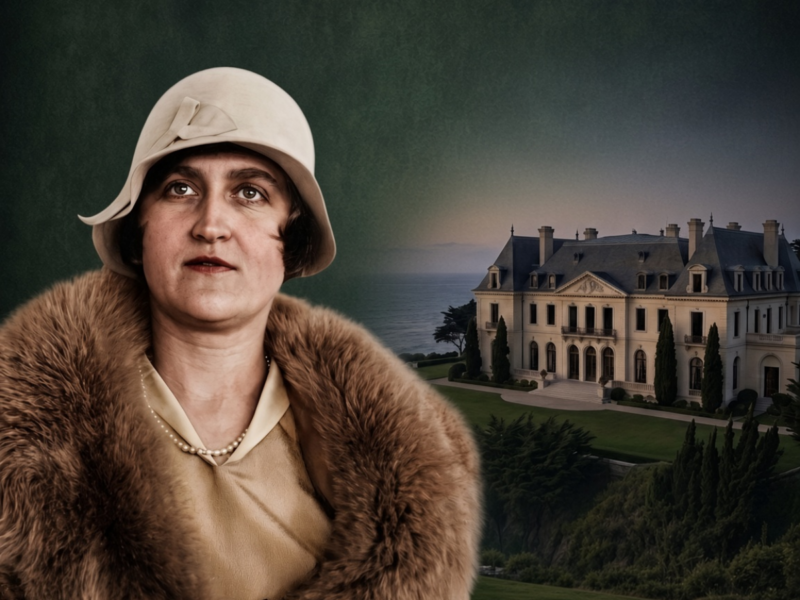
Huguette Clark: The Heiress Who Paid to Live in a Hospital.
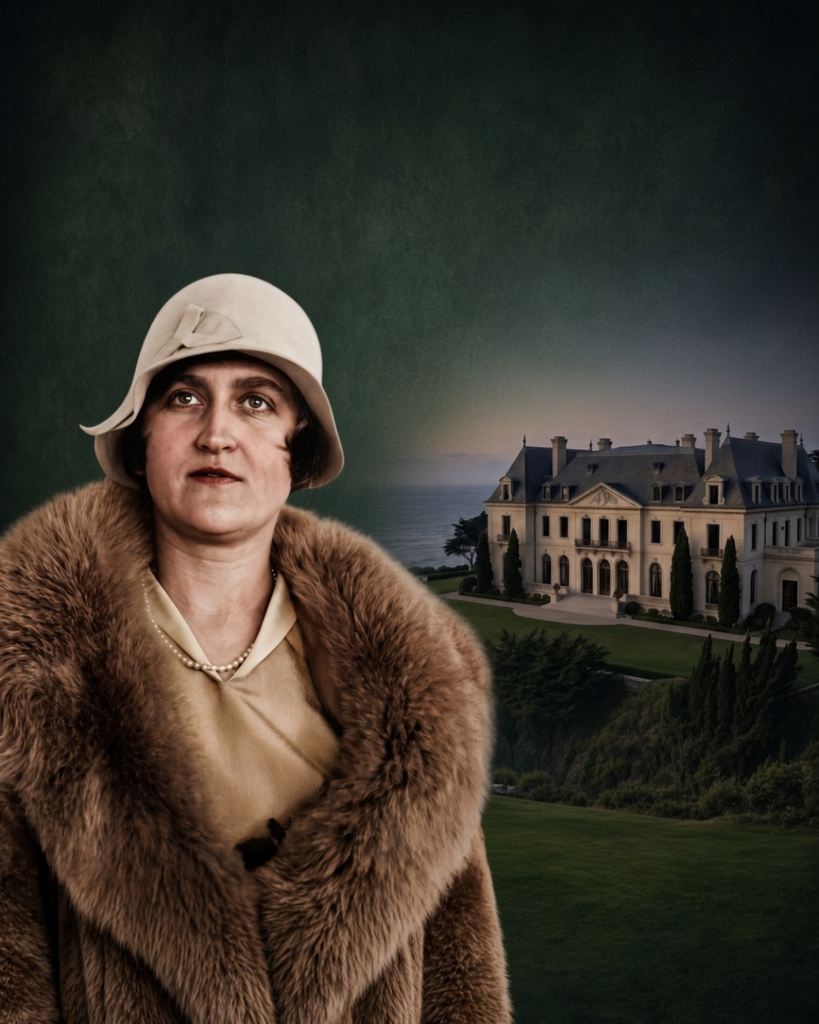
For 20 years, one of the richest women in America lived in an ordinary hospital room in Manhattan.
She was not dying.
The skin cancer that brought her there in 1991 had been treated.
Her doctor urged her to go home.
She paid the hospital $829 a day to let her stay anyway.
And she had plenty of homes to go to.
On Fifth Avenue overlooking Central Park, she owned a 42-room apartment.
In Santa Barbara, California, she owned a 23-acre oceanfront estate kept in perfect condition at a cost of around $40,000 a month.
In Connecticut, she owned a 52-acre country estate where she never spent a single night.
The rooms in those houses were cleaned.
The gardens were tended.
The furniture sat exactly where her mother had left it decades earlier.
And she never came back.
Her name was Huguette Clark.
She was the youngest daughter of a copper baron so rich and so powerful that the county in Nevada that includes Las Vegas is named after him.
When she died in 2011 at the age of 104, she left behind a fortune of around $300 million, a nurse who had received some $30 million in gifts, and relatives who had not seen her in more than 50 years.
What happened next would take more than two years in court to untangle.
This is the story of Huguette Clark and the empty mansions she left behind.
To understand her, we have to start with her father and a fortune that came out of the ground.
The copper king.
William Andrews Clark was born on January 8th, 1839 in Connellsville, Pennsylvania.
In 1863, he went west to Montana during the gold rush.
He started out as a placer miner, panning and digging for gold, but he soon realized the real money was not in digging.
It was in everything around the digging.
He went into banking.
He went into freight and merchandise.
He bought mines, smelters, power companies, newspapers, railroads, and land.
And then he found copper.
At the end of the 1800s, America was wiring itself for electricity and the telephone, and every one of those wires needed copper.
The city of Butte, Montana, sat on top of one of the richest copper deposits in the world.
Three men fought to control it.
They became known as the copper kings.
William Clark was one of them.
His fortune grew into one of the largest in the country, but money was not enough.
He wanted power.
In those days, United States senators were not elected by voters.
They were chosen by state legislatures.
In 1899, Clark won a Senate seat from Montana.
Then it came out that he had bribed members of the legislature to vote for him.
The scandal was enormous.
The Senate refused to seat him, and he resigned.
The episode became one of the arguments that later led to the 17th Amendment, which gave voters the right to elect their senators directly.
Clark did not give up.
He ran again, and from 1901 to 1907, he served as a United States senator from Montana.
Not everyone was impressed.
In 1907, Mark Twain wrote about him.
“He is as rotten a human being as can be found anywhere under the flag. He is a shame to the American nation.”
Clark also helped build a railroad from Salt Lake City to Los Angeles.
Along the route in the Nevada desert, his railroad needed a stop for water and repairs.
He bought the land and sold it off in lots.
That stop became Las Vegas.
The county around it was named Clark County after him.
Clark had married his first wife, Katherine, in 1869.
She died in 1893, leaving him with several adult children.
A few years later, Clark took an interest in a teenage girl from Butte named Anna LaChapelle.
He became her guardian, and he paid for her to go to Paris to study music.
Then, in 1904, Clark revealed that the two of them had been secretly married in France back in 1901.
No record of that wedding has ever been found.
He was 62.
She was 23.
Their first daughter, Andrée, was born in 1902.
And on June 9th, 1906, in Paris, Anna gave birth to a second daughter.
They named her Huguette.
The biggest house in New York.
Huguette spent her first years in Paris.
She grew up speaking French, surrounded by governesses, music teachers, and art.
Meanwhile, back in New York, her father was building a monument to himself.
In 1895, William Clark had bought land on Fifth Avenue at the corner of East 77th Street facing Central Park.
On it, he built what was meant to be the grandest private house in New York City.
It took years.
When it was finished in 1911, it had 121 rooms.
A tower rose 163 feet above the street.
There were five art galleries, a 15-foot marble fireplace, and what was described as the largest private pipe organ in the world.
It was said to have a bathroom for every day of the month.
New Yorkers called it Clark’s Folly.
The Clarks moved in when Huguette was a little girl.
For the next decade, the mansion was her home.
She and Andrée were raised there among paintings by the old masters, private tutors, and a small army of servants.
Andrée was four years older.
She was Huguette’s closest companion, her protector, the person she trusted most.
In August 1919, while in Rangeley, Maine, Andrée fell ill with meningitis.
Within days, she was dead.
She was 16 years old.
Huguette was 13.
By many accounts, it was a loss that shaped the rest of her life.
Her parents tried to honor Andrée’s memory.
William Clark donated 135 acres in Westchester County, New York, to the Girl Scouts for a camp in her name.
It is still called Camp Andrée Clark.
In 1923, the Clarks bought a summer estate on the coast of Santa Barbara, California, with a house overlooking the Pacific.
The previous owners had called it Bellosguardo, Italian for beautiful lookout.
The name stayed.
On March 2nd, 1925, William Andrews Clark died of pneumonia in his Fifth Avenue mansion.
He was 86 years old.
Huguette was 18.
Under her father’s will, she received a fifth of his estate along with each of his surviving children.
Overnight, she became one of the richest young women in America.
The mansion on Fifth Avenue did not survive him for long.
His family sold it soon after his death, and it was torn down.
An apartment building stands on the site today.
In Santa Barbara, a 1925 earthquake had damaged the old house at Bellosguardo.
Anna Clark decided to build a new one.
She hired the architect Reginald Davis Johnson.
The new Bellosguardo was a French-style mansion of 22,000 square feet, finished in 1933, standing on more than 23 acres above the Pacific with 1,000 feet of ocean frontage.
And Huguette, now a wealthy young woman in her 20s, was about to try something she would never try again.
The vanishing.
On August 18th, 1928, Huguette Clark got married at Bellosguardo.
The groom was William MacDonald Gower, a young man whose father had worked for her father as an accountant.
She was 22.
It did not last.
Within a year, they had separated.
On August 11th, 1930, they were divorced in Reno, Nevada.
Biographers would later note speculation that the marriage had never been consummated.
Huguette never married again, and as far as anyone knows, she never had another serious relationship.
She went home to her mother.
After her father’s death, Anna and Huguette had moved into apartments at 907 Fifth Avenue, a luxury building at East 72nd Street overlooking Central Park.
After the divorce, Huguette took a 12th-floor apartment there.
Over time, she expanded it until she controlled the entire eighth floor and half of the 12th.
In all, she had 42 rooms.
Her mother had her own apartment in the same building.
For a while, Huguette had a life in the arts.
She studied painting seriously, and in 1929, she exhibited seven of her paintings at the Corcoran Gallery of Art in Washington, the museum that had received her father’s art collection.
She loved music.
In 1945, Anna Clark sold a Cézanne to buy four Stradivari instruments, which became known as the Paganini Quartet.
And she loved dolls.
Antique French dolls, Japanese dolls, dollhouses and miniature castles built to her exact specifications by craftsmen she kept on call.
She was fascinated by Japanese culture and commissioned elaborate scenes of Japanese life in miniature.
The phone of her cabinetmaker could ring several times in a single night with her ideas for changes.
In 1952, Huguette bought a country estate in New Canaan, Connecticut, called Le Beau Château.
52 acres.
A large French-style manor house.
In the 62 years she owned it, she never spent a single night there.
After the early 1950s, she also stopped going to Bellosguardo.
But she did not sell it.
She kept it exactly as it was.
Her world was getting smaller.
She saw fewer people.
She spoke to old friends and staff by phone rather than in person.
Her half-siblings’ families, the descendants of her father’s first marriage, lost contact with her.
None of them would later remember meeting her after 1957.
Then, in 1963, Anna Clark died.
Huguette had lived with or beside her mother for almost her entire life.
After that, she rarely left her apartment at all.
For almost three decades, Huguette Clark lived inside her 42 rooms on Fifth Avenue.
She painted.
She watched television.
She arranged her dolls.
She stayed in contact with a small circle of people, mostly by telephone and by letter.
She kept her other homes fully staffed and maintained year after year, as if she might arrive at any moment.
She never did.
And then, in the spring of 1991, she went to the hospital.
The hospital room.
On March 26th, 1991, Huguette Clark was admitted to Doctors Hospital in Manhattan.
She was 84 years old.
She had basal cell skin cancers on her face, which had gone untreated for a long time.
According to hospital staff, she was extremely thin, and she had not seen a doctor in about 20 years.
The surgery worked.
She recovered.
But she did not go home.
Her doctor, Henry Singman, urged her more than once to leave.
She did not want to.
She liked the hospital.
There were nurses around the clock.
She felt safe there.
Dr. Singman later described the hospital as a kind of security blanket for her.
She paid for her room herself, $829 a day at first, a rate that later rose to $1,200.
When her lawyer later asked his predecessor why she lived in a hospital, the answer was simply, “That’s where she wants to live.”
So, she stayed.
Doctors Hospital later merged with Beth Israel Medical Center, and she moved with it.
In all, she lived as a hospital patient for about 20 years.
At the center of that life was a private duty nurse named Hadassah Peri.
Peri, who was originally from the Philippines, began caring for Huguette soon after she arrived at Doctors Hospital.
For years, she worked 12-hour shifts, from 8:00 in the morning to 8:00 at night, seven days a week.
She later testified that she had spent more time in Huguette’s room than in her own home, and that she had missed family vacations to be there.
Huguette’s days followed a quiet routine.
She wore simple hospital gowns, often with soft cashmere sweaters layered on top.
She read The New York Times and followed the markets.
She watched cartoons, like The Flintstones and The Smurfs.
Every day, she took a short walk, which she called her walk in Central Park.
She arranged and rearranged her dolls.
An assistant set up scenes of Japanese dolls in her room.
She gave dolls away to doctors and nurses as gifts.
She rarely had visitors.
According to Peri, she was uncomfortable being seen.
She stayed in touch by telephone.
And she gave away money.
A great deal of money.
Over the years, Huguette gave Hadassah Peri and her family gifts worth around $31 million.
They included the proceeds of a Cézanne still life, a Stradivarius violin, three separate checks for $5 million each, and multiple homes.
One of those checks helped pay for a Bentley.
She gave to the hospital as well.
Beth Israel received valuable gifts, including a painting by Édouard Manet.
She gave gifts to her doctors, to other nurses, and to the family of her long-time cabinetmaker.
Her lawyer, Wallace Bock, later described her as a very smart, astute woman who knew her own mind, but also as someone who was moved by hard-luck stories, and who preferred to give while she was still alive.
Others saw it differently.
Some people around her began to ask whether a woman in her 90s, and then her 100s, isolated in a hospital room, was being taken advantage of.
Meanwhile, all three of her homes sat empty.
At Bellosguardo, staff kept the house in first-class condition, as she had instructed, and made no changes.
In Connecticut, the house was kept ready.
On Fifth Avenue, her apartment sat full of paintings, dolls, and furniture, with nobody living in them.
And quietly, some of her treasures were being sold.
A 1709 Stradivari violin, known as La Pucelle.
A Renoir painting, In the Roses.
For almost 20 years, almost no one outside her tiny circle knew any of this.
Then in 2010, a reporter started asking questions.
The will.
In February 2010, an investigative reporter for NBC News named Bill Dedman published the first of a series of stories about a mystery.
A woman who owned some of the most valuable homes in America and lived in none of them.
It had started with a real estate listing.
A grand old house in New Canaan, Connecticut was for sale for tens of millions of dollars.
Its owner had bought it in 1952.
And as far as anyone could tell, she had never lived in it.
The owner, he discovered, was a woman almost no one had heard of.
Huguette Clark, age 103.
Dedman kept digging.
He found the empty apartments on Fifth Avenue.
He found the empty house in Connecticut.
He found that she was living in a hospital.
He found that some of her most valuable possessions had been quietly sold.
And he found the gifts to her nurse, her lawyer, and others.
His reports caused a sensation.
And they raised a question that the authorities could not ignore.
Was Huguette Clark in control of her own fortune?
Or were the people around her taking it?
That summer, the Manhattan District Attorney’s office opened an investigation into how her money was being handled.
Her lawyer, Wallace Bock, and her accountant, Irving Kamsler, were among those whose dealings came under scrutiny.
In the end, no one was charged with a crime in connection with her finances.
Her circle insisted she was making her own decisions.
Huguette herself said little.
She stayed in her hospital room.
On May 24th, 2011, Huguette Clark died at Beth Israel Medical Center.
She was 104 years old, two weeks short of her 105th birthday.
She was entombed in the family mausoleum at Woodlawn Cemetery in the Bronx, beside her parents and her sister Andrée.
And then the fight began.
Huguette had signed two wills in 2005, about six weeks apart.
The first left her estate largely to her relatives, the descendants of her father’s first marriage.
The second, signed later, left them nothing at all.
Instead, it left most of her roughly $300 million fortune to charity.
Its centerpiece was a new foundation that would preserve Bellosguardo for the promotion of the arts.
The second will also left around $30 million to Hadassah Peri, millions to Huguette’s goddaughter Wanda Styka, and bequests to her lawyer and her accountant.
A Monet painting from her Water Lilies series was left to the Corcoran Gallery of Art.
Nineteen of her relatives challenged the second will in court.
None of them could remember meeting Huguette since 1957.
But they argued that she had not been mentally competent, and that the people around her had manipulated her into cutting them out.
Her accountant, Irving Kamsler, later testified that Huguette had told him directly, “I don’t intend for my family to get anything.”
The case dragged on for more than two years.
By the time it was ready for trial in September 2013, the estate also faced a massive tax problem.
The IRS said Huguette owed around $82 million in unpaid gift taxes, a bill growing by thousands of dollars every day in penalties and interest.
Jury selection was about to begin.
Then, at the last minute, the parties agreed to settle.
On September 24th, 2013, the deal was announced.
The 19 relatives would share $34.5 million.
The Bellosguardo Foundation would receive the Santa Barbara estate, Huguette’s doll collection, and $4.5 million in cash.
The Corcoran Gallery would receive at least $10 million.
Wanda Styka, the goddaughter, would receive $3.5 million, less than half of what the will had left her.
Her lawyer and her accountant gave up their bequests and their roles as executors.
And Hadassah Peri, the nurse, would receive nothing at all under the will.
She also agreed to give back $5 million of the gifts she had already received.
That still left her with about $26 million from the years of gifts.
The lawyers on the various sides were set to receive around $24.5 million in fees.
Where they are today.
With the will settled, Huguette Clark’s possessions began to come out into the light.
The first big sale had already happened.
In April 2012, Christie’s auctioned her jewelry for more than $20 million.
A 9-carat pink diamond alone sold for more than $15.7 million.
Her apartments at 907 Fifth Avenue were sold one by one.
The penthouse apartment went for $25.5 million in July 2012.
The eighth-floor apartment sold that November for $22.5 million.
A smaller piece sold in 2013.
Together, they brought in nearly $55 million.
In May 2014, the Monet water lilies that her will had left to the Corcoran Gallery sold at Christie’s for $24 million.
Under the settlement, the Corcoran would share in the sale only if the price topped $25 million.
It fell short, so the museum got nothing from it.
In June 2014, much of the rest of her collection of art and antiques went to auction at Christie’s.
The house in Connecticut, Le Beau Château, had been on the market for years.
In April 2014, it finally sold for $14.3 million, far below its original asking price.
The buyer was the fashion designer Reed Krakoff, who renovated it with his wife, Delphine.
In late 2024, they put it back on the market for $25.5 million.
In January 2020, most of Huguette’s beloved doll collection was sold at auction, raising nearly $2 million for the Bellosguardo Foundation.
And Bellosguardo itself became something Huguette had imagined, but never lived to see.
The foundation’s path was slow.
The estate’s tax problems with the IRS had to be resolved first.
The property was not formally transferred to the foundation until 2018, seven years after Huguette’s death.
In October 2018, the foundation held its first fundraiser at the estate.
More than 500 guests paid at least $1,500 each to walk through the house that had stood frozen in time since the 1950s.
Scheduled tours began in the early 2020s.
At first, they were limited to supporters because of city restrictions.
In 2025, the city of Santa Barbara approved permits for public tours.
Today, anyone can sign up for a docent-led tour, typically for about $100 a person.
Visitors walk through rooms that were preserved almost exactly as Anna and Huguette left them.
The furniture, the books, the bedrooms, the family’s possessions kept clean and untouched for decades.
The foundation has hosted concerts, flamenco performances, and private events on the lawns above the Pacific.
In September 2026, it opened its first contemporary art exhibition at the house, a show of work by 26 artists.
It has not all been smooth.
The foundation’s leadership has faced criticism over how it was formed, how long it took to open, and who was allowed in at first.
And in September 2026, the foundation sued Santa Barbara County for a refund of around $1.2 million in property taxes, arguing that Bellosguardo now operates as a public museum.
That case is still pending.
As for the people around her, the relatives received their share of the settlement.
Hadassah Peri, the nurse who spent 20 years at Huguette’s bedside, kept most of the gifts she had received during Huguette’s lifetime after returning $5 million.
Huguette’s lawyer and her accountant walked away without their bequests.
The estate also sued Beth Israel to recover its gifts, including the Monet.
In 2015, a judge ruled the claims had been filed too late, and the hospital kept them.
In 2013, Bill Dedman and Paul Clark Newell, a cousin of Huguette’s, published a book about her life called Empty Mansions.
It became a bestseller.
In 2023, HBO announced plans to develop it into a television series.
Huguette Clark spent her last 20 years in a hospital room, paying to stay.
Today, the house she never went back to is open to anyone who buys a ticket.
The house she never stopped keeping.
It is tempting to tell Huguette Clark’s story as a tragedy.
A lonely heiress cut off from the world, surrounded by people who took her money.
Some of that may be true.
The people closest to her received enormous sums.
Her family was shut out until the courts let them back in.
And for 20 years, a woman with three mansions slept in a hospital bed.
But the people who knew her best described someone else.
A woman who was shy, but not confused.
Polite, private, and generous.
A woman who knew exactly what she wanted, and who had the money to have it, even when what she wanted made no sense to anyone else.
She had lost her sister when she was 13.
She had lost her father at 18.
Her marriage ended within a year.
And after her mother died, she simply stopped going out into a world that had taken so much from her.
So, she built a smaller one.
A room with nurses who knew her name.
Dolls she could arrange exactly the way she liked.
Phone calls instead of visits.
And she kept her houses ready all those years as if someday she might go back.
She never did.
But now, at Bellosguardo, strangers walk through the rooms she left behind.
The lookout over the Pacific that her mother built is finally being used.
It just took 104 years and a long fight in court to get there.









