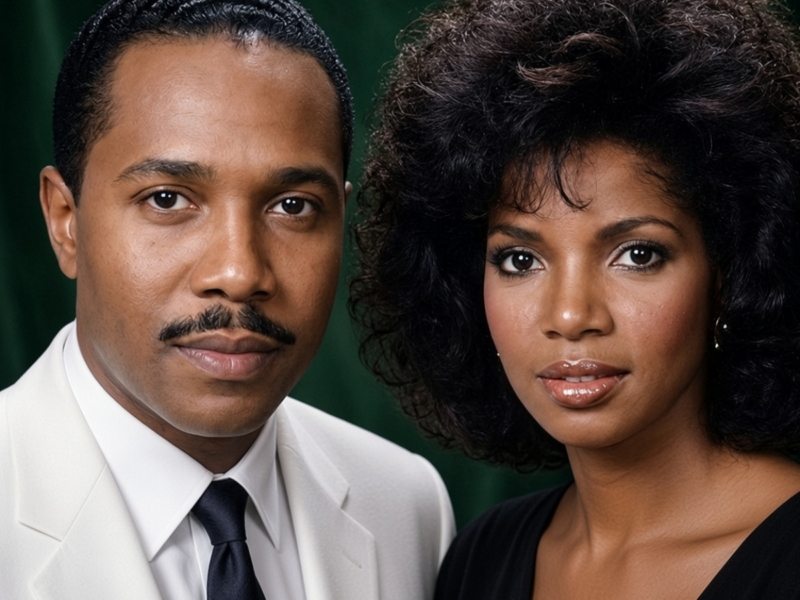
Freddie Jackson’s Relationship With Melba Moore Was Much Nastier Than You Though.
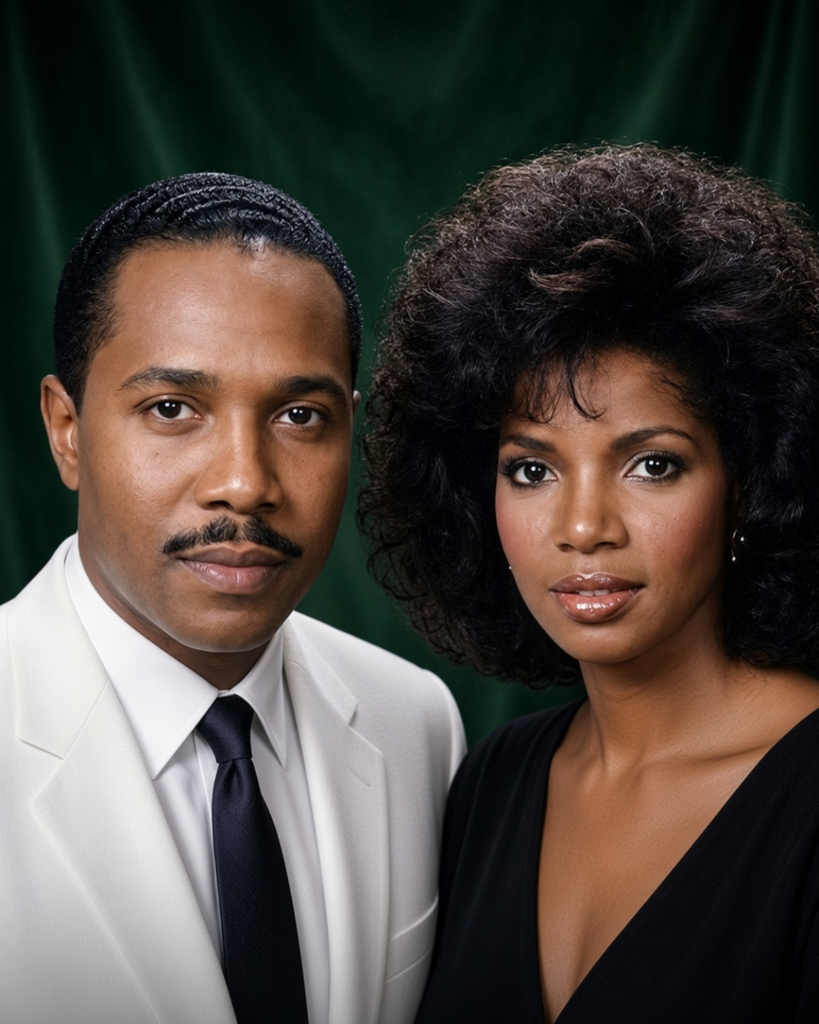
In 1986, two voices sat on top of the Billboard R&B chart together.
One was Melba Moore, the Tony winner from Purlie.
The other was Freddie Jackson, the young man from Harlem who, not long before, had been standing behind her microphone singing backup.
The record was called “A Little Bit More.”
It sounded like two people who trusted each other completely.
Within a few years, the woman on that record was living on a welfare check.
She says her husband divorced her without her knowing.
She spent thirty days locked up for talking about him in public.
And in 2015, in a federal courtroom in Manhattan, she did something nobody saw coming.
It started in a New York nightclub with a backup singer nobody had heard of.
Here’s the version most of us remember.
Melba Moore was born in New York City on the twenty-ninth of October, 1945, the daughter of musicians.
She got her break in the original Broadway company of Hair.
And before long, she’d replaced Diane Keaton in the role of Sheila.
Then came Purlie in 1970 and a Tony Award for Best Featured Actress in a Musical.
Her big number in that show was called “I Got Love.”
Audiences treated it like a revival meeting.
In 1972, she co-hosted a summer variety series on television with Clifton Davis.
Then, after a show at the Apollo Theater in 1974, she met a promoter named Charles Huggins.
Reports differ on whether they married in late ’74 or in ’75, but they agree on what came next.
Huggins became her husband and her manager.
And together they built a company called Hush Productions.
The magazines loved this part.
A Broadway star and a businessman who’d figured out how to stop the record labels from controlling her music.
They hired their own writers, their own producers, their own promotion people.
Melba moved to Capitol Records in the early ’80s and the hits came.
“Love’s Comin’ Atcha” went to number five on the R&B chart in 1982.
Hush filled up with talent.
Meli’sa Morgan, Lillo Thomas, Kashif, the songwriter Paul Laurence.
And somewhere near the back of the stage, there was Freddie.
The official story, the one printed in liner notes and repeated in anniversary tributes for decades, says Melba Moore saw something in a backup singer, brought him into the family business, and watched him become one of the great romantic voices of the decade.
A gracious star, a grateful protégé, a husband-and-wife team running a hit factory out of New York.
All of that is true as far as it goes.
It just stops before the interesting part.
Frederick Anthony Jackson was born in Harlem on the second of October, 1956.
He learned to sing at the White Rock Baptist Church.
And one of the kids he grew up with there was Paul Laurence.
The two of them played the New York club circuit together in a band called the Laurence Jones Ensemble.
For a while it looked like nothing would come of it.
In the early ’80s, Freddie moved to the West Coast and sang lead for an R&B band called Mystic Merlin.
It didn’t take.
He came back to New York, where Laurence had landed at Hush Productions, and Freddie started singing on the demos for Laurence’s songs.
One profile says he was also working a word-processing job to pay the rent.
Then Melba Moore caught his nightclub act.
Several music histories tell it the same way.
She liked what she heard and hired him as one of her background singers.
One profile goes further and says his presence at Hush was owed largely to her.
Hold on to that detail.
It’s going to matter.
So now picture the arrangement.
Freddie is singing behind Melba on stage.
The company that manages Melba is run by Melba’s husband.
The producer writing Freddie’s songs works for that same company.
Everybody in this story is drawing a paycheck from the same small office.
In 1985, Charles Huggins got Freddie a deal with Capitol Records, the same label Melba was on.
His first album was called Rock Me Tonight, and Paul Laurence wrote the title song.
It went to number one on the R&B chart and stayed there for six weeks.
The follow-up, “You Are My Lady,” also went to number one R&B and climbed to number thirteen on the pop chart, the highest he’d ever reach there.
Here’s the part that didn’t make the tribute pieces.
Up to that point, Melba Moore had never had a number one R&B record.
Not one.
Her backup singer got there on his first try.
By the end of 1985, according to the liner notes for her album reissue, there were gold and platinum awards hanging on the walls at Hush.
Freddie’s first two smashes were a big reason why.
That should have made everybody in that office happy.
For a while, it did.
In 1986, Capitol released Melba’s album A Lot of Love.
It became the most successful album of her career.
And the first single was a duet with the young man who used to stand behind her.
“A Little Bit More” went to number one on the R&B chart.
So did her next single, “Falling.”
After more than fifteen years of making records, Melba Moore finally had her first number one.
She had to share it with Freddie Jackson to get there.
The timing was tight.
According to the album’s reissue notes, Capitol and Hush put out the duet at the same moment they released Freddie’s own single, “Tasty Love.”
And the two records went to number one one after the other.
Freddie’s second album, Just Like the First Time, kept piling up hits.
“Have You Ever Loved Somebody.”
“Jam Tonight.”
By late 1988, he’d scored his eighth number one R&B single, “Hey Lover.”
On television, this looked like family.
They recorded together again in 1988 on a song called “I Can’t Complain.”
In 1990, Melba put out an all-star recording of “Lift Every Voice and Sing,” and Freddie was one of the names on it, alongside Stevie Wonder, Aretha Franklin, and Anita Baker.
The public saw a mentor and her protégé still singing side by side.
What Melba said she didn’t see was the paperwork.
In interviews years later, she described what she believed had been going on inside the business for most of the marriage.
The Virginian-Pilot reported in 1997 that Moore claimed Huggins had worked with the couple’s bookkeeper to use her name without her knowledge to get bank loans and property.
The New York Times in a 1999 profile summed up her account more plainly.
She’d married a businessman who put her assets in his name.
Those are her claims.
Huggins, the same 1997 article noted, had steadfastly refused to talk to reporters.
So, for most of this story, we only have one side of the marriage on the record.
Keep that in mind, too.
She thought she was a partner in the business.
She’d soon find out how much of it she actually owned.
Her last album for Capitol was called Soul Exposed.
It came out in 1991.
That same year, by most accounts, the marriage ended.
Some later reports put the final divorce in 1993.
And reports vary on exactly how long the marriage lasted.
But nobody disputes how it felt to her.
Moore has said the divorce wasn’t something she agreed to.
Her account, repeated in interview after interview, is that Huggins had someone else sign her name so the divorce could go through without her knowledge.
She told EURWeb that he even found a way to put her signature on the papers without her ever seeing them.
She countersued, but by then, the Virginian-Pilot reported, he was still legally her manager, and he still controlled her money and her business contacts.
By the time she got control of her own finances, she said, there was nothing left.
The tribute version of Melba’s life usually skips straight from the hits to the comeback.
What sits in between is hard to look at.
Moore has said that once worth close to $20 million, she was left with roughly $600.
She went on welfare.
She has said she couldn’t afford bus fare.
She was evicted.
Then there was her daughter, Melba Charli, born in the late ’70s while her parents were touring together.
The New York Times reported that the couple fought over custody in court, and for a time mother and daughter were apart.
A career can be rebuilt.
Years with a child can’t.
And then the strangest detail in the file.
According to the Times, Melba Moore spent thirty days in jail for violating a gag order by speaking about her husband in public.
The Chicago Defender, writing about her story years later, also listed a jail stint among the setbacks.
A Tony winner locked up for talking about her own marriage.
She later turned that experience into a phrase.
She said she’d been “sentenced to sing.”
And she planned to use it as the title of her memoir.
On top of all that, she said, came the whispers.
The soul music site SoulTracks wrote that her divorce left her broke, with unfair rumors circulating in the industry that limited her ability to work.
Moore has said those rumors came from her ex-husband.
She has always denied them.
So where was Freddie Jackson in all of this?
Here’s the honest answer.
And it’s less satisfying than a headline.
There is no public record of Freddie Jackson taking a side in the Moore-Huggins divorce.
No sworn statement, no interview where he defends either one of them.
Whatever he thought in those years, he kept it off the record.
What the record does show is where his career sat.
He stayed at Capitol Records until late 1993, then signed with RCA, looking for what his own biographies describe as a new beginning.
The woman who’d hired him off a nightclub stage was, during part of that same stretch, standing in a welfare line.
Nobody has ever produced evidence that he owed her anything legally.
Plenty of fans have wondered what he owed her otherwise.
He kept quiet.
That’s a choice, too.
If you think the story ends with Melba on welfare, you’re about halfway there.
Her comeback started small.
In 1993, she took a role in a regional production of the play From the Mississippi Delta in Gainesville, Florida.
She sang in churches, community theaters, storefronts, and banquet halls.
In 1995, she went back to Broadway, playing Fantine in Les Misérables for six months.
By 1998, she was touring a one-woman autobiographical show called Sweet Songs of the Soul.
Its director, Rhonda Passion Handsome, put her career in one line to the newspaper Gay City News: “This woman has won and lost two fortunes, and she’s ready to do it again.”
The press had already noticed the turnaround.
When the Virginian-Pilot caught up with her in March 1997, the paper quoted another writer who’d called her life “a Cinderella story turned melodrama.”
She was fifty-one, and she told the paper she considered herself a work in progress.
She had a new album on the way, her first since Soul Exposed six years earlier.
By then, she was talking openly.
In that 1999 New York Times profile, she said she’d gone into hiding so he couldn’t find her, and she accused him of sabotaging her career.
Of the years after the marriage, she said simply, “I hit rock bottom.”
The same profile reported that she and her daughter had reunited and were sharing an apartment in Guttenberg, New Jersey.
Huggins answered in his own way.
In 1999, according to published reports, he filed a lawsuit claiming she had defamed him by saying in public that he abused her economically.
That fight belongs in the file because it shows how differently these two people describe the same marriage.
To her, she was the victim of a financial betrayal.
To him, she was the one doing damage with her words.
Meanwhile, Freddie’s career kept moving.
At the end of 2004, according to SoulTracks, Freddie Jackson reunited with the management team that had launched his career in the ’80s—the Huggins operation.
After all the years and all the headlines, the backup singer Melba Moore discovered went back to the people she had accused of leaving her with nothing.
You can read that as loyalty to the men who got him his first record deal.
You can read it as something else.
Freddie has never explained it publicly.
Now the story leaves the music business entirely and walks into a federal courthouse.
In the 2000s, Hush Productions and Huggins’ other label, Orpheus, had fallen on hard times.
According to federal prosecutors, that’s when Charles Huggins started selling investors a different kind of dream.
He told people he could put their money into gold and diamonds mined in West Africa.
He described ties to powerful officials in Liberia.
He showed prospective investors actual diamonds to impress them.
The money, prosecutors said, went somewhere else.
According to court papers reported by the Associated Press, Huggins used investor funds to pay for a Manhattan apartment that cost $7,200 a month, the upkeep on a Mercedes-Benz, restaurant tabs, and boutique clothes.
Some of the money went to pay off earlier investors, which prosecutors called a classic Ponzi scheme.
Altogether, the government said, investors lost more than $8 million.
At sentencing, Assistant U.S. Attorney Edward Imperatore told the court that Huggins acted out of pure greed, out of a desire to spend other people’s hard-earned money on himself.
The defense saw it differently.
His lawyers argued the real loss was closer to $2.3 million, and that paying old investors with new money wasn’t a Ponzi scheme at all—just a badly handled attempt to calm people who were complaining.
To be clear, nothing in the coverage of this case connects Freddie Jackson to it in any way.
The trial took place in the fall of 2014 in federal court in Manhattan before Judge Sidney Stein.
A former NFL player, Ken Hamlin, testified that he was among the victims.
One investor told the jury her family had put in $1.6 million after meeting Huggins and seeing his apartment.
And then there was Ann Thomas.
She’d been Huggins’ longtime secretary.
She pleaded guilty and agreed to testify against him.
Years earlier, Melba had accused her husband of working with the couple’s bookkeeper behind her back.
The reporting doesn’t say whether that bookkeeper and Ann Thomas were the same person, so we won’t say it either—but you can see why Melba’s old claims suddenly sounded different.
His defense lawyer told the jury Huggins had only a fourth-grade education.
In October 2014, the jury convicted him of wire fraud and conspiracy to commit wire fraud after deliberating less than a day.
The judge ordered him held until sentencing, calling him a flight risk because of his foreign bank accounts.
Prosecutors asked for twenty-two to twenty-seven years.
If ever a former wife had reason to stay home and let the court do its work, this was it.
Remember the woman who had told the New York Times he put her assets in his name, who had told reporters he left her on welfare, who had spent thirty days in jail by the Times’ account for talking about him?
Before the sentencing, Huggins’ lawyers sent the judge several submissions asking for leniency.
They argued he was ailing and functionally illiterate, and that he deserved no more than six years.
And among those submissions, according to the Associated Press, was a video from his ex-wife.
Melba Moore had recorded a video in support of Charles Huggins.
Nobody outside that courtroom knows exactly what she said in it.
The video was never released publicly, and the news reports describe it only as support.
What we do know is the date it mattered.
On Wednesday, the thirteenth of May, 2015, Judge Stein called the government’s request excessive, particularly given Huggins’ age, and sentenced him to ten years in federal prison.
He told Huggins the breadth of his fraud was extraordinary.
Asked if he wanted to speak, Huggins stood up briefly and said, “Your Honor, at this time I have nothing to say.”
He’d said almost nothing to reporters for more than twenty years.
He didn’t start now.
That’s the document that flips this story.
For two decades, the public version had a villain and a victim.
Then the victim stood up on the record in a federal case for the man she said had taken everything.
Maybe it was faith.
She has called herself born again, and once told the Times that the Bible was her strategy book.
Maybe it was their daughter.
Maybe it was nearly two decades of history that no outsider can weigh.
So here’s the question.
If someone had left you broke, cost you time with your child, and you’d told the world so—would you speak up for him when the judge was deciding his sentence?
Melba did.
Freddie, as far as the record shows, never said a word either way.
Charles Huggins received ten years in federal prison, far less than the government wanted.
And the investors were left chasing more than $8 million.
Hush Productions, the company that once lined its walls with gold records, is a name on old album sleeves.
Melba Moore never got back the fortune she says she lost.
What she got back was her name.
In August 2023, she received her star on the Hollywood Walk of Fame.
She turned eighty last October.
Freddie Jackson kept recording, mostly on independent labels, after the ’90s.
And in 2023, he quietly released an album called My First Love.
He turned seventy this month.
“A Little Bit More” is still the duet people remember.
The one that gave his old boss her first number one.
The record still sounds like two people who trusted each other completely.
Maybe, for one song in 1986, they did.









