Freddie Jackson’s Cause Of Death Still Hidden, And It’s Bad.
Freddie Jackson was more than a legendary voice.
That is the first thing his family wanted the world to know.
Not the number of hit records, not the chart positions, not the awards he was nominated for.
They began with something simpler: he was more than a voice.
On Tuesday, October 6th, 2026, a statement appeared on Freddie Jackson’s official Instagram account.
It was gentle, short, and unlike the cold language of most celebrity death announcements.
It said he went home to rest the night before.
It called him a kind, generous soul.
It thanked the fans who had ever sung along for many decades.
And it did not say how he died.
Freddie Jackson was seventy years old, according to the Associated Press.
Some outlets reported he was sixty-nine.
He had celebrated a birthday only days earlier, and now his family was preparing a funeral.
But in the quiet before that service, the words they chose to share told a bigger story than any headline.
They told us how Freddie Jackson wanted to be remembered.
And they changed the way many people are thinking about the man behind the music.
And this is that story—a story about a voice, a family, and four short days.
It begins, as so many soul stories do, in a church.
Start with the place: Harlem, New York, the streets where jazz, gospel, and soul grew up side by side.
Freddie Jackson was born there on October 2nd, and he grew up inside the sound of the church.
At White Rock Baptist Church, he sang gospel as a young man.
It was there that he learned what many great soul singers learn first: a voice is not just something you perform.
It is something you give.
Gospel singing is about reaching the person in the back row.
It is about making a room feel something together.
That lesson stayed with him for the rest of his life.
Consider how unusual that start was.
Many pop stars of the 1980s were shaped by studios and stylists.
Freddie Jackson was shaped by a pew.
Before he ever stood in front of a microphone for a record label, he had stood in front of a congregation.
There is no hiding in a church choir.
You cannot fake sincerity when the people in front of you have known you since childhood.
That sincerity is what listeners heard when “Rock Me Tonight” first reached the radio.
At that same church, he met a future producer and songwriting partner named Paul Laurence.
Freddie later sang with Paul’s group, performing in New York nightclubs, learning how to hold a crowd, how to read a room, how to make a ballad land.
Then came the late 1970s and a change of scenery.
Freddie headed west with a funk band called Mystic Merlin.
He became its lead singer, and as the Associated Press tells it, he soon returned to New York, where something else was waiting.
In 1984, he signed with Capitol Records.
In 1985, he released his debut album, Rock Me Tonight.
It was not a quiet arrival.
The album was certified platinum, and it produced a song that millions of people would remember for the rest of their lives.
“Rock Me Tonight (For Old Times Sake)” became one of the signature R&B ballads of the decade.
Another single, “You Are My Lady,” earned him two Grammy nominations—one for Best New Artist and one for Best Male R&B Vocal Performance.
And think about what that means.
A young man from Harlem who learned to sing in a church walked into the biggest year of his career and became a mainstay on the Billboard R&B charts.
He became a fixture of contemporary urban radio throughout the 1980s and early 1990s, and he followed it with Just Like the First Time in 1987, which was also certified platinum.
Fans also remember “Have You Ever Loved Somebody” and “Jam Tonight.”
Over his career, he released fourteen albums, the most recent being Love Signals in 2018.
It also helps to picture the world he stepped into.
Mid-1980s radio was crowded.
Dance records, rock anthems, and glossy pop dominated the airwaves.
For a soul singer to break through, he needed more than talent.
He needed a sound that could not be mistaken for anyone else.
Freddie had it.
Within a few notes, you knew who was singing.
The voice was smooth without being soft, powerful without ever pushing too hard.
That is what the Associated Press meant when it called his distinctive voice his superpower.
Those are the facts.
But facts do not explain why Freddie Jackson mattered.
To understand that, you have to understand what his music did.
The 1980s were loud.
Big drums, bigger hair, synthesizers everywhere.
And in the middle of all that noise, Freddie Jackson offered something different.
He offered intimacy.
His songs were slow, patient, and warm.
They were built for late-night radio, for dim lights, for couples dancing in a kitchen.
That style became known as the quiet storm.
It was a sound that said you did not have to shout to be heard.
You could lean in.
You could whisper.
And somehow the whisper would carry farther than the roar.
His family put it in their own words.
“For decades,” they said, “he gave us the songs that became the soundtrack to our love stories, celebrations, and most treasured memories.”
Read that again.
Love stories, celebrations, treasured memories.
That is not how people usually describe a pop star.
That is how people describe a friend.
And that brings us to the heart of this story.
Because when Freddie Jackson died, the family had a choice.
They could have issued a formal announcement.
They could have listed his awards.
They could have focused on the business of his legacy.
Instead, they spoke to the people who had loved him from a distance.
“To everyone who ever sang along, danced, or felt something when Freddie took the stage—thank you.”
That was how they began to close the message.
And then came the sentence that fans keep sharing: “You were family to him, and he carried your love with him always.”
Sit with that.
Most statements like this say how much the artist meant to the fans.
This one said the opposite.
It said how much the fans meant to him.
Fans have always had a special bond with the artists who soundtrack their lives.
It is a one-way relationship by design.
You buy the record, you hear the voice, you imagine the person, but you never meet them.
And yet the feelings are real.
Someone who played “You Are My Lady” at their wedding does not think of Freddie Jackson as a stranger.
Someone who danced to “Rock Me Tonight” in their twenties does not feel indifferent when the news arrives.
They feel like they have lost someone who was there.
That is why the family’s message landed the way it did.
It acknowledged the bond.
It told people that their feelings were not foolish.
It said the love was received.
That is the thing that changes the picture.
For many listeners, Freddie Jackson was a voice on the radio, a name on an album cover, a guest in their living rooms.
But according to the people closest to him, the feeling went both ways.
He was not just singing to strangers.
He saw them as family.
And if you listen to his music again, that is exactly what you hear.
Now let us turn to the part of the story that his family chose not to explain.
Pay attention to the way the family described his passing.
They did not say he died.
They said he “went home to rest.”
Those are words that come from faith, and they match the church where he first learned to sing.
In many Black church traditions, death is spoken of as going home.
It is not an ending.
It is a return.
For a man who began his life in gospel, it is hard to imagine a more fitting phrase.
It also tells us something about the tone of the family.
They are not trying to shock.
They are trying to comfort themselves and everyone listening.
And they did not say how Freddie died.
As of the reports we reviewed, no cause of death had been disclosed.
No hospital was named, no location was given.
The statement simply said that he went home to rest on the night of Monday, October 5th, 2026.
We have to be careful here, because silence is easy to fill.
When a public figure dies and the cause is not announced, speculation rushes in, rumors spread, strangers guess, and the people who are grieving have to watch their loss become a puzzle for the internet to solve.
And the family has asked for something else.
They asked for prayers.
They asked people to keep his loved ones in their thoughts, and they promised that funeral arrangements and ways to celebrate his legacy would be shared in the coming days.
That is all they have given, and that is their right.
There is one piece of context that is worth mentioning, and it must be handled carefully.
In 2024, Freddie Jackson publicly shared that he had been diagnosed with kidney disease.
He did it in a video posted to his social media.
“It is with an open heart that I share some personal news,” he wrote.
He said the journey had its challenges, but he had decided to face it with openness and resilience.
And he said it was important to him to share the news, not only as part of his personal story, but as a way to make a positive difference.
He also announced that he was partnering with the National Kidney Foundation to raise awareness.
Pause there for a moment.
This was a man in his late sixties with a career behind him, and he chose to make his diagnosis public.
He could have kept it private.
Many people do.
Instead, he turned it into a message for others.
There is a quiet lesson inside that decision.
Public figures often wait until they have all the answers before they speak about their health.
Freddie did not.
He told people while he was still living it—in the middle of the story rather than at the end.
That choice can make a diagnosis feel less lonely for the people who watch.
It can encourage someone to schedule a checkup they have been avoiding.
It can turn a private fear into a conversation.
That is a kind of generosity, too.
It matches the word his family used.
The Centers for Disease Control and Prevention says that more than one in seven American adults has chronic kidney disease, and that as many as nine in ten do not know they have it.
Those numbers are why advocates keep urging people to get tested.
And that is why a famous singer sharing his story can matter.
But here is the important part.
The family has not said that his death was related to kidney disease.
No official source we reviewed has made that connection.
It would be wrong to assume it, and wrong to suggest it.
The diagnosis is part of his public story.
His cause of death remains undisclosed.
What we can say is that he spoke about his health with courage.
Let us go back to the days before the end.
In early October, Freddie Jackson celebrated a birthday.
He was born on October 2nd.
The Associated Press reported that he was turning seventy, while some other outlets said sixty-nine.
And it is worth noting that the numbers do not match across reports.
What does match is the timing.
He died three days later.
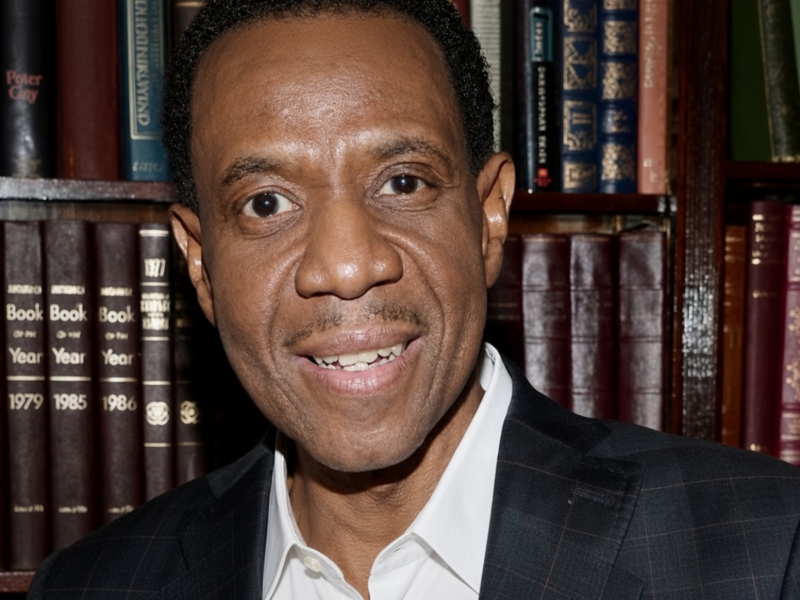
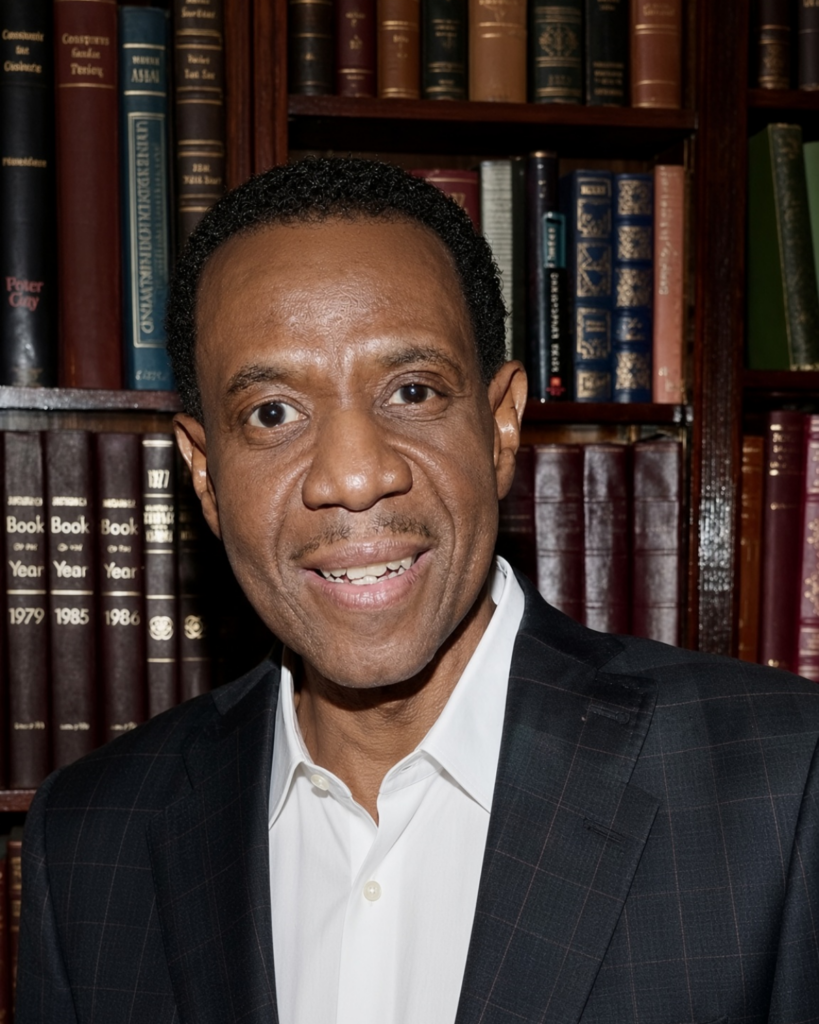
According to one report, he marked the occasion by posting a headshot on his Instagram.
A simple image—a man in his late sixties looking into the camera, sharing a moment with the people who followed him.
There is something quietly moving about that.
It is not a dramatic farewell.
It is not a final concert.
It is not a long speech.
It is just a photograph shared on an ordinary day by a man who had spent his career showing up for his fans.
We do not know what he was thinking when he posted it.
We do not know how he felt that week, and we should not pretend to.
What we know is that he was still connecting with the people who loved him right up to the end.
Now think about the timeline once more.
October 2nd, a birthday.
October 5th, a Monday night, a quiet passing.
October 6th, a statement—gentle, grateful, honest about what the family knew and what they chose to keep private.
And that is four days.
Four days from a celebration to a funeral.
If you have ever lost someone suddenly, you know how those four days feel.
The world keeps moving and yours stops.
Messages pour in.
Friends call.
And through the haze, someone has to find the words to tell the rest of the world.
Freddie’s family found them.
And they did not use them to explain.
They used them to thank.
Let us talk about what that says.
In an era where every death becomes content, where every detail is dissected within hours, there is something almost radical about a statement that gives so little and says so much.
It does not argue.
It does not defend.
It does not feed the machine.
It says he was kind.
He was generous.
He loved his fans, his family, his friends, and his music with everything he had.
That is a complete sentence about a complete life.
It also makes you wonder what the rest of us are doing.
When we look back at the artists who shaped our lives, do we ask who they were, or do we only ask what they gave us?
Freddie Jackson gave a great deal.
Platinum albums, Grammy nominations, songs that played at weddings, at anniversaries, at the end of long nights.
He remained active for decades, releasing music in the 2010s, including a single called “One Night” that reached number one on the indie soul chart in 2017.
But if his family is right, the music was not the whole story.
It was the way he shared himself with other people.
There is a phrase that comes up again and again in the tributes: soundtrack.
People call his songs the soundtrack to their love stories.
And that word is more accurate than it sounds.
A soundtrack is not the main event.
It is the thing that plays underneath.
It is what gives a moment its feeling.
It is what makes you remember where you were.
When someone says that a song was the soundtrack to their wedding, they are not praising the song.
They are praising the way it held the day together.
That is what Freddie Jackson did for millions of people.
He held the days together.
There is one more thing worth saying about how we grieve public figures.
When a famous person dies, the internet moves in a predictable pattern.
First comes the news, then the tributes, then the questions about the cause.
And if the cause is not given, the questions turn into theories, some of them cruel.
The better response is the harder one: to wait.
To let the family decide what to share and when.
To remember that behind every headline is a household making phone calls, choosing a suit, picking the music for a service.
Freddie Jackson spent his career making music for the private moments in people’s lives.
The least we can do is respect the private moments of his.
Now we reach the question that every funeral raises: what happens next?
As of the reports we reviewed, the family had not yet announced funeral details.
They said arrangements would be shared in the coming days.
They also said there would be information about ways to honor his legacy.
That could mean a service, a memorial, a tribute concert, or a charitable cause.
We do not know yet.
What we do know is that his fans are already finding their own ways to remember him.
They are playing the old records.
They are posting memories.
They are telling stories about the first time they heard “You Are My Lady” or the song that played at their wedding.
So what can those who loved his music do now?
The simplest answer is also the most fitting: listen.
Put on the records.
Let the songs play the way they were meant to—slowly, with the lights low.
Tell someone the story of the first time a Freddie Jackson song meant something to you.
Share it with a younger person who has never heard that voice.
That is how a legacy actually survives.
Not in a plaque or a headline, but in the habits of people who keep the music alive.
His family has promised more details about how to honor him.
Until then, the songs are already doing the work.
And that, perhaps, is the real answer to the question this story asks.
What did his family say that changes everything?
They did not reveal a secret.
They did not clear up a mystery.
They did not give us a dramatic twist.
They told us that the love ran both ways.
And that is easy to miss.
It sounds like a small thing, the kind of line you read in every obituary.
But it carries weight, because when we lose someone whose voice lived inside our own memories, the loss can feel one-sided.
We grieve a person who never knew our names.
His family tells us otherwise.
They say he carried our love with him always.
Think about what that does to the way we remember him.
He is no longer just a voice from the past.
He is a man who knew he was loved and who loved back.
There is a kind of peace in that, a kind of answer to the sadness.
And there is also a lesson.
In a year full of loss, full of celebrity tragedies and public arguments and speculation, the Jackson family chose something different.
They chose gratitude.
They chose to speak about what he gave and not about what was taken.
It is a reminder that grief does not have to be loud to be real.
So let us finish where we began.
A boy sings gospel in a Harlem church.
A young man performs in New York clubs.
A voice rises through the radio in 1985 and becomes the sound of an entire generation falling in love.
A man in his sixties shares a diagnosis so that others might learn from it.
A birthday passes, a Monday night ends, and a family sits down to write a message that says the most important thing they can: he was more than a voice.
And now, as the funeral approaches, that is the sentence that stays.
Because the songs will play on.
They will drift out of car windows and kitchen radios.
They will be hummed by people who never saw him perform.
They will carry on in the background of weddings that have not happened yet.
And every time one of them starts, a little piece of Freddie Jackson will be in the room.
Rock him tonight.
Remember him always.









