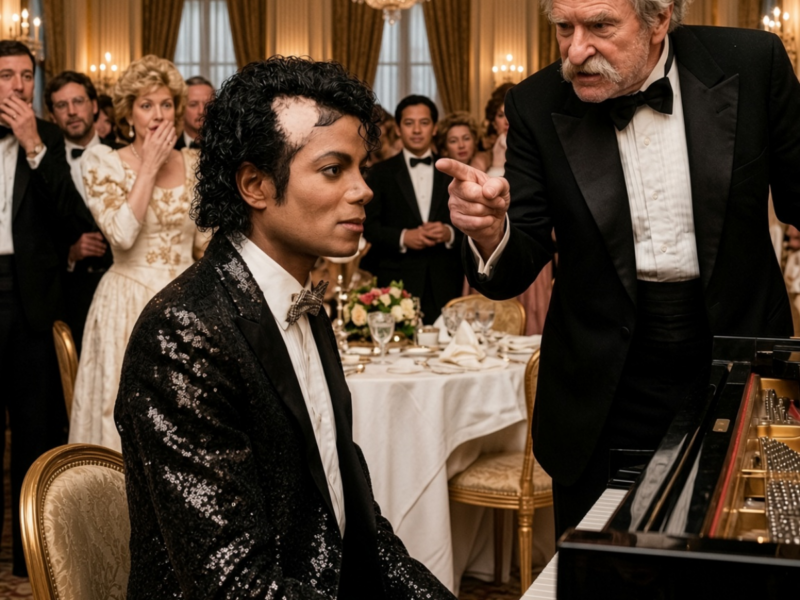
Famous Pianist Asked Michael Jackson to Play Piano as a Joke — What Happened Next SHOCKED Everyone.
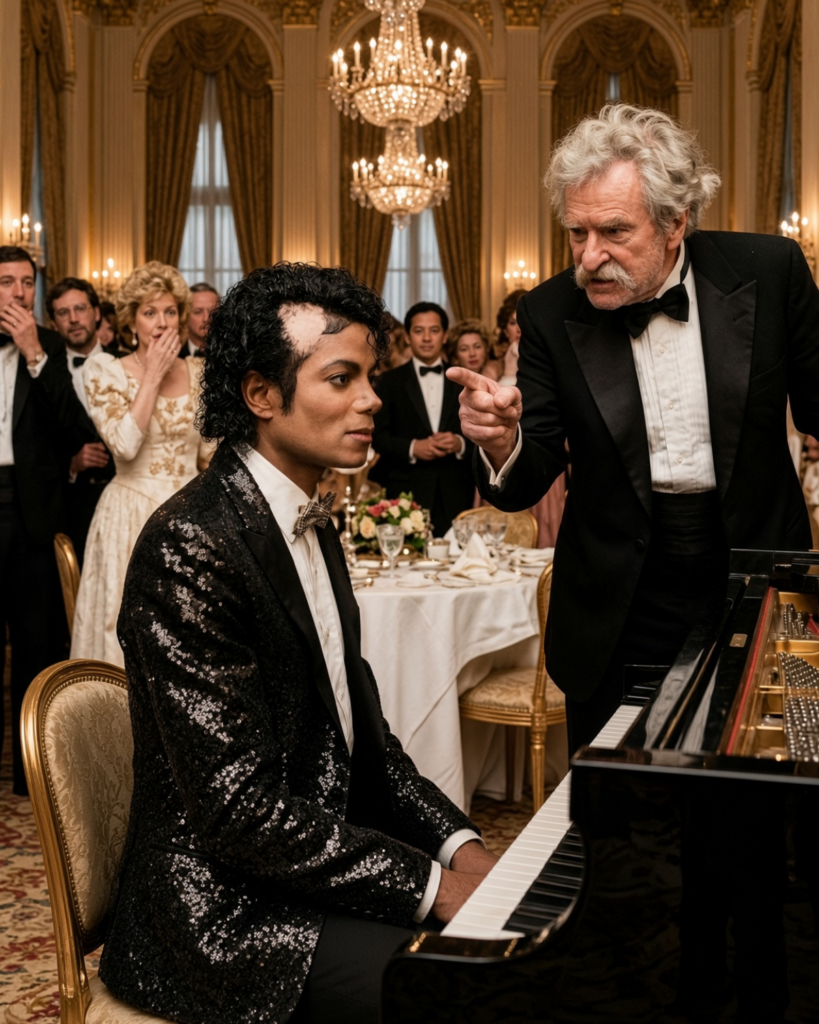
On a crisp winter night in December of 1983, the Kennedy Center stood as a beacon of refined culture in the heart of Washington.
The annual honors gala drew senators, justices, ambassadors, and the foremost figures of classical music into one glittering assembly.
Their purpose was celebration of enduring artistic achievement and support for music education across the nation.
Into this world of measured elegance walked an unexpected guest whose fame rested on a different foundation.
Michael Jackson arrived that evening as the driving force behind Thriller, a record that had shattered every commercial barrier.
His invitation stemmed solely from the substantial resources he had directed toward school music programs that might otherwise have vanished.
Yet among the classical elite, his presence stirred quiet unease.
Many regarded him as a master of spectacle rather than a serious contributor to the art of sound.
Near the front of the hall sat maestro Roberto Calderon, a pianist of formidable reputation who had spent nearly seven decades refining his craft on the greatest stages of Europe and America.
At 67, he carried the authority of countless Carnegie Hall appearances and collaborations with the finest orchestras.
When he observed Michael enter the room, a shadow of open contempt crossed his features.
To Roberto, the sequined glove and fluid stage presence embodied a culture that prized surface dazzle over disciplined mastery.
He turned to his longtime colleague, the pianist Helena Voss, and spoke in a low voice that dripped with scorn.
“Look at the arrival,” he said.
“Glitter and movement have replaced genuine musicianship in the public mind.”
Helena urged caution, noting the charitable work that had earned the invitation.
Roberto waved the point aside.
“Generosity is admirable,” he replied.
“Yet it cannot substitute for technical command or profound grasp of musical architecture. Any capable showman can craft a memorable melody and move about a stage. The deeper questions remain unanswered. Can the man interpret a complex score? Does he possess the years of rigorous training that separate true artists from entertainers?”
Michael moved through the reception with quiet awareness of the appraisals directed his way.
He had long carried private questions about his own standing in the broader world of music.
Commercial triumph had never fully silenced the inner voice that wondered whether his gifts would ever be measured by the same standards applied to classical performers.
The atmosphere of the Kennedy Center intensified those doubts.
Here pedigree and tradition formed the very air.
Whispers drifted past him, questioning his place at such an event.
The weight of expectation settled heavily upon his shoulders as he navigated the sea of formal attire and measured conversations.
Every sideways glance seemed to reinforce the distance between his world and theirs.
Yet he held his composure, drawing on the same quiet resilience that had carried him through years of intense public scrutiny.
The formal program commenced with a string ensemble delivering Mozart with crystalline clarity and poised restraint.
Each phrase unfolded with perfect balance, and the audience responded with appreciative restraint.
A distinguished soprano followed with a soaring interpretation of an aria that left the hall momentarily breathless.
Her voice filled the space with pure tone and emotional intensity, drawing spontaneous murmurs of approval.
Then Roberto Calderon himself rose to perform.
Accompanied by the National Symphony Orchestra, he presented a commanding account of Rachmaninoff that displayed both technical brilliance and deep emotional insight.
His fingers traversed the keyboard with the authority earned through a lifetime of devotion.
Dynamic contrasts emerged with natural force, and every structural detail of the concerto received careful attention.
The audience rose in sustained applause when the final notes faded.
Rather than accept the ovation and withdraw, Roberto remained at the microphone.
The hall quieted in anticipation of gracious remarks.
Instead, his words took a sharper turn.
“This evening we gather to honor those who pursue artistic excellence through years of disciplined study and profound engagement with musical tradition,” he began.
His voice carried with practiced resonance through the perfect acoustics of the concert hall.
His gaze swept the room until it settled upon Michael.
“Yet I observe a celebrated figure from the realm of popular entertainment among us tonight. Mr. Jackson, known for energetic performances and widespread recordings. I have often pondered the substance that lies beneath such public success. Where resides the instrumental command, the interpretive depth that distinguishes lasting artistry from momentary diversion?”
The air grew taut with discomfort.
Some guests shifted uneasily while others watched with curiosity.
Michael remained seated, his expression composed, yet his pulse accelerated.
He had learned that direct confrontation with critics rarely yielded positive results.
Roberto continued undeterred.
“Perhaps our distinguished guest would accept an opportunity to illustrate the standards of popular musicianship. This magnificent Steinway stands ready. Surely a figure of such renown could offer a classical selection of modest difficulty.”
The challenge hung in the air, framed in courtesy, yet laced with unmistakable mockery.
It was designed to force a public revelation of inadequacy.
Michael felt the collective focus of the entire assembly settle upon him.
Refusal would confirm the implied judgment.
Acceptance risked exposure before the most influential cultural authorities in the country.
The silence stretched as the weight of the moment pressed down.
At that charged moment, a clear young voice rose from the balcony.
“Excuse me, Maestro Calderon.”
All eyes turned upward to a woman in her early twenties with auburn hair and the poised bearing of a trained performer.
She wore a simple dark dress marked by a pin from Juilliard.
“What is unfolding here does not advance musical excellence,” she stated with steady resolve.
“It reveals prejudice. Ability does not confine itself to any single tradition, and the present confrontation serves intimidation rather than insight.”
Roberto colored with irritation and began to object.
The student continued without pause.
“My name is Elena Vargas, and I pursue piano performance at Juilliard. I have devoted my life to classical study, yet I refuse to dismiss another artist solely because of genre. Such dismissal reflects narrow vision rather than informed judgment. Michael Jackson has directed substantial resources toward music education across the nation, resources that have sustained programs for countless young people. Gratitude would better suit this occasion than interrogation of credentials.”
The hall hummed with tension.
A student had publicly confronted one of the most esteemed figures in classical music.
Before Roberto could recover, Michael rose from his seat.
Silence descended as he adjusted his jacket and advanced toward the stage with measured calm.
Every step carried the awareness that the next minutes would either confirm or shatter the assumptions filling the room.
What followed would permanently alter Roberto Calderon’s understanding of artistic possibility and unveil a private dimension of Michael’s musical identity that had remained concealed for more than a decade.
Michael approached the Steinway with quiet purpose.
Roberto stepped aside, uncertain for the first time about the course he had set in motion.
“Thank you for the invitation, Maestro,” Michael said, his voice carrying effortlessly through the acoustics of the hall.
“Deeds carry greater weight than declarations.”
He settled onto the bench and brushed the keys lightly, assessing their response.
The instrument answered with rich, even tone.
Two thousand people held their breath in absolute stillness, waiting for the first sound that would decide the outcome of the evening.
Unknown to every observer, Michael had cultivated a classical foundation in secrecy from the earliest years of his career.
During the Motown period, Berry Gordy insisted that emerging artists acquire solid musical groundwork.
While the Jackson 5 perfected choreography and vocal blends, Michael lingered at the piano with instructors steeped in classical tradition.
He absorbed notation, composition principles, and the structural elegance of the masters.
Hours that others devoted to rest or recreation, he invested in scales, arpeggios, and the careful study of form.
Diana Ross, acting as mentor, reinforced the discipline.
“Master the established forms first,” she advised, “then reshape them according to your own vision.”
She arranged private lessons during rare pauses in the touring schedule, ensuring continuity of study amid the demands of constant travel.
Through the following decade, hotel lobbies and quiet practice rooms became sanctuaries.
There, Michael worked through Bach inventions, Chopin nocturnes, and Beethoven sonatas.
The study served no commercial purpose.
It answered a personal hunger for deeper connection with the language of music.
The Motown machinery preferred an image of youthful energy and accessibility.
Classical pursuits found no place in the public narrative and therefore remained private, known only to a handful of trusted teachers who respected the need for discretion.
By the night of the gala, fourteen years of disciplined private labor resided in his hands.
He had never presented this side of his artistry in public for fear that it might appear affected or disrupt the carefully constructed image that had made him a global phenomenon.
But the challenge had been issued in front of the most powerful cultural gatekeepers in America.
And Michael Jackson had never walked away from a stage.
His fingers found the opening notes of a piece that Roberto Calderon had performed a thousand times but never expected to hear from the man he had just publicly humiliated.
The first bars of Rachmaninoff’s Piano Concerto No. 2 filled the hall.
The audience sat frozen.
Roberto’s face went pale.
The opening chords were not perfect.
They were not the polished, crystalline execution of a concert pianist who had spent seven decades in the world’s finest halls.
But they were unmistakably the work of someone who understood the architecture of the piece, who had studied its bones, who had felt its emotional weight in private hours that no one had ever seen.
Michael’s hands moved across the keys with the focus of a man who had spent years proving something to himself in rooms where no one was watching.
He played for nearly four minutes.
He did not attempt the full concerto.
He did not need to.
He played the opening movement’s most demanding passage, the section where the piano and orchestra trade phrases like two people finishing each other’s sentences.
Then he stopped.
The final note hung in the air like a question.
No one applauded.
No one moved.
Roberto Calderon stared at the man seated at the piano as if seeing him for the first time.
His mouth opened, then closed.
He had spent his entire life believing that technical mastery and popular fame were mutually exclusive.
He had built his reputation on the idea that the discipline required to play Rachmaninoff was something that could not be faked, could not be learned in recording studios, could not be absorbed through osmosis on a stage filled with dancers and lights.
And yet here was the man he had mocked, the man he had called a showman, the man whose sequined glove and moonwalk had become symbols of everything Roberto believed was wrong with American music.
Sitting at the Steinway.
Playing the composer Roberto had devoted his life to.
Not perfectly.
But honestly.
Michael stood slowly and turned to face the audience.
His expression was not triumphant.
It was something closer to exhaustion.
“You asked what lies beneath the success,” he said quietly.
“I hope that answers your question, Maestro. I have spent my whole life trying to prove that I belong in rooms like this. I have spent my whole life being told I don’t. I am not a classical pianist. I never claimed to be. But I am a musician. And I have paid my dues in ways that do not show up on a program.”
Then he walked off the stage.
Elena Vargas, still standing in the balcony, was the first person to applaud.
Within seconds, the entire hall was on its feet.
Not for a performance.
For a recognition.
Roberto Calderon did not applaud.
He stood frozen beside the Steinway, his hands trembling slightly at his sides.
The ovation continued for nearly three minutes.
Michael did not return to the stage.
He did not need to.
The point had been made.
The next morning, the Washington Post ran a brief item about the gala.
It mentioned the Mozart, the soprano, and the Rachmaninoff concerto.
It did not mention Michael Jackson playing the piano.
The story did not spread because Michael did not want it to spread.
He had not played to humiliate Roberto.
He had not played to prove anything to the audience.
He had played because a student from Juilliard had stood up for him when no one else would, and because the man who had mocked him had asked a question that Michael had been asking himself since he was eleven years old.
The tapes of that night do exist.
They sit in a private archive, unseen by the public, a reminder that even the most famous man in the world carries private dimensions that no amount of fame can illuminate.
And Roberto Calderon, the maestro who spent seven decades believing that discipline and genre were the same thing, never again dismissed a musician because of the stage they stood on.
He never publicly apologized to Michael Jackson.
He never needed to.
The apology was in the silence that followed that night, in the way he stopped speaking about popular music as if it were a lesser art form, in the way he began listening to students who came to him from different traditions.
Sometimes the most important lessons are not taught.
They are played.
And sometimes the person you dismiss is the person who has been quietly practicing for fourteen years, waiting for the moment when someone finally asks them to prove it.
Michael Jackson never played classical piano in public again.
He did not need to.
He had already answered the question.
The rest was just noise.









