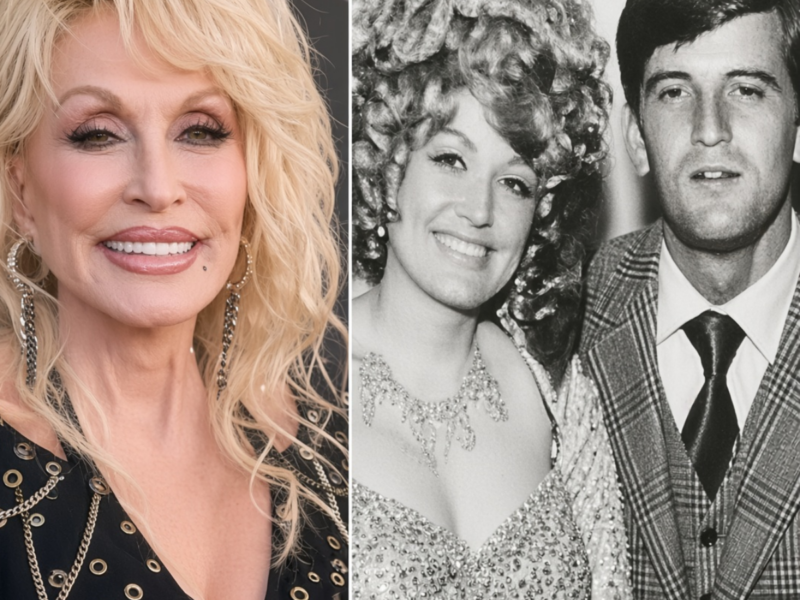
Dolly Parton’s Transformation Before Her Death Goes Viral.
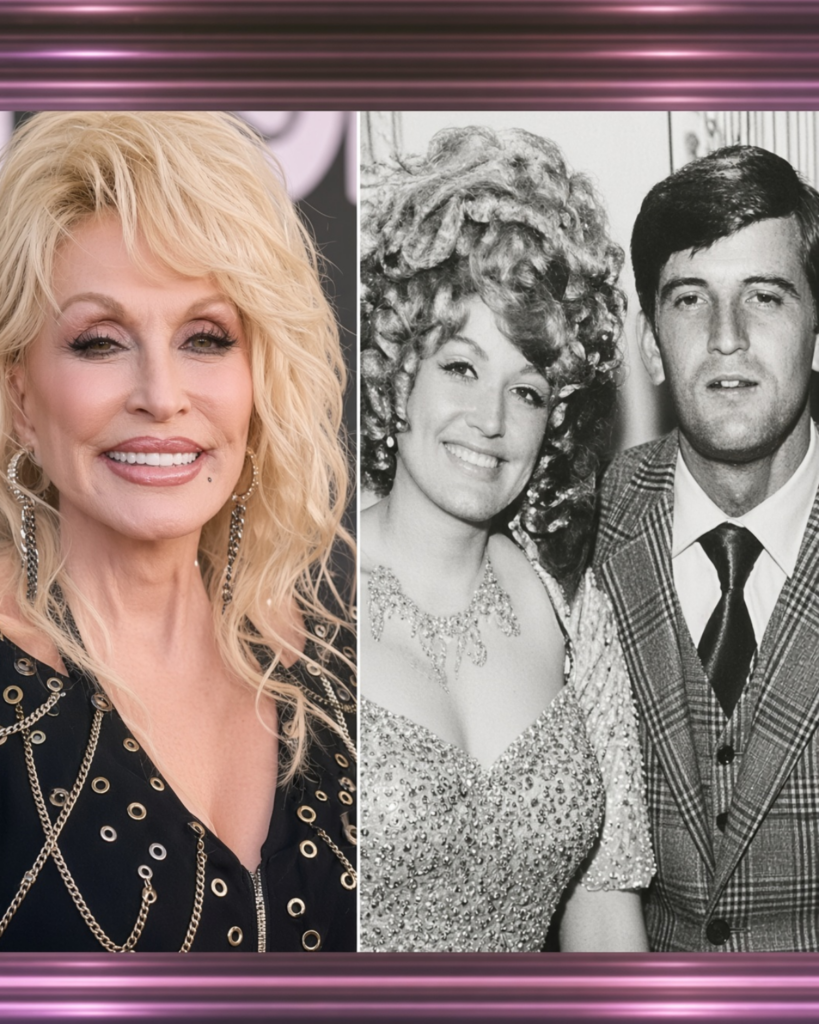
It isn’t a picture captured at the peak of her stardom.
It isn’t an image from a red carpet or a packed arena.
It’s a photo taken only weeks before her passing.
And what it reveals has left fans across the globe shocked, devastated, and profoundly touched.
For the woman in that picture bears little resemblance to the Dolly Parton we all remember.
She lacks the sky-high blonde wigs.
She lacks the rhinestones.
She lacks the stage makeup and the brilliant smile that could illuminate an entire stadium.
She appears frail.
She appears weary.
She appears like someone who had been waging a fight that none of us ever knew about.
Dolly Parton devoted over six decades to crafting a public persona that was larger than life.
The hair, the makeup, the nails, the wigs, the rhinestones, the plastic surgery.
She was a living cartoon, a self-built testament to the power of image and imagination, and she was transparent about every bit of it.
She told the world precisely how she reinvented herself from an impoverished girl in the Smoky Mountains into the most recognizable woman on the planet.
Yet the change she went through in her last years, and particularly in her final months, tells a very different tale.
It’s a tale about what occurs when someone who spent her entire life performing is finally forced to stop.
It’s a tale about the cost of the image she created.
And it’s a tale about the woman beneath all that sparkle.
Before we continue with Dolly Parton’s story, here’s a comment from our previous video.
Thanks for sharing your thoughts with us.
After seeing the changes in Dolly Parton’s appearance over the years, do you think her transformation shows just how much can change behind the public image?
Share your thoughts in the comments and one response could be featured in our next video.
Stay with me because this isn’t merely a story about cosmetic surgery or wigs or makeup.
It’s a story about a woman who spent six decades assuring the world that she was fine and who ultimately could no longer conceal the truth.
Dolly Rebecca Parton came into the world on January 19th, 1946 in a single-room cabin in Locust Ridge, Tennessee.
She was the fourth of 12 children.
There was no power, no indoor plumbing, no funds for nice clothing or fancy hair.
She was a pale, thin little girl with fine hair and what she has called corn teeth.
She did not grow up believing she was beautiful.
She did not grow up believing she was special.
She grew up feeling like one of 12 kids in a household that could hardly afford to feed them all.
Yet one woman in her hometown seized her imagination like nobody else.
Dolly has referred to her as the town tramp.
Others used crueler labels for her, but to young Dolly, she was the most gorgeous woman she had ever laid eyes on.
“This woman had the yellow peroxide hair,” Dolly recalled in a 60 Minutes interview.
“She had the red nails, the red lipstick, the beautiful eyes, the high heels, short skirt, and I thought she was the prettiest thing I’d ever seen.”
And whoever I was with said, “Oh, she ain’t nothing but trash.”
And I make the joke and I would say, “Well, that’s what I’m going to be when I grow up.”
Meaning, that’s how I want to look.
That was the instant Dolly Parton chose who she wanted to become.
Not who she was.
Who she wanted to become.
She would construct herself entirely from scratch.
She would craft a look so daring, so singular, so completely her own that nobody could ever dismiss her as trash again.
She would transform into the woman she had dreamed of becoming.
She started experimenting with makeup.
Long before she could pay for it, she used red pokeberries as lipstick and burnt matchsticks as eyeliner.
She used honeysuckle as perfume.
“You don’t need to buy expensive cosmetics. Almost anything will do if you know how to apply it,” she later told Vogue.
She discovered early that glamour wasn’t about money.
It was about imagination, and she had imagination in abundance.
By age 10, she was already performing on local radio and television.
By 13, she stepped onto the Grand Ole Opry stage for the very first time, introduced by Johnny Cash.
When she graduated high school in 1964, she boarded a bus to Nashville with no money and no connections.
She carried a homemade guitar, a headful of songs, and a look that was entirely her own.
Well, almost entirely.
She had the big hair, she had the makeup, but she didn’t yet have the wigs.
She didn’t yet have the rhinestones.
She didn’t yet have the full armor of Dolly Parton.
That would arrive later, and it would arrive through plenty of hard work and plenty of surgery.
By the time Dolly Parton hit her 40s, she had already made a choice most celebrities refused to admit publicly.
She decided to be upfront about her plastic surgery.
While other stars denied, deflected, and pretended their faces were untouched, Dolly told the world precisely what she had done, and she did it with the same wit and honesty she brought to everything else.
One of the earliest thorough accounts came during a 2003 appearance on Larry King Live.
When asked why she had been so candid about her cosmetic procedures, she explained that she didn’t want to be dishonest about it.
“I would say if I, you know, if I see something sagging, dragging, or bagging, I’m going to go have the stuff tucked or plucked,” she said.
During that same conversation, she acknowledged undergoing a facelift, eye surgery, liposuction, and removal of excess skin.
She also revealed she had received lip fillers and Botox injections.
Then she tackled the question fans had been asking for decades, the one about her bust.
“I am so tiny that my bust just look so much bigger than they are,” she said.
“They’re actually just about 39 inches around, but they do as I pump them up with a bicycle pump, but I like them. Like I say, I don’t know. I mean, they have served me well. I don’t know if I’m supporting them or they’re supporting me, but it’s working and I’m happy with it. So, as long as I’m happy, I can make everybody else happy and I don’t care.”
That same year, she appeared on the Oprah Winfrey Show and delivered a joke that has become iconic.
“You’ve had some nips, pulls, and tucks,” Oprah said.
Dolly replied, “Yes, I have, and I’ll have some more when I need them.”
“A funny little thing I was telling the girls who are on this tribute album. A lot of them are very young. I tell them I was already into plastic surgery when they were still sleeping on plastic sheets.”
She was in her 50s when she made that remark, and she was already a seasoned veteran of the cosmetic surgery world.
But her readiness to be transparent wasn’t merely about vanity.
It was about control.
In a business that examined her body and her decisions for decades, Dolly Parton determined that she would be the one to define her own narrative.
She would tell the world what she had done, and she would do it with a laugh, and she would make it impossible for anyone to weaponize her surgeries against her.
In 2011, she told the Guardian, “If something is bagging, sagging, or dragging, I’ll tuck it, suck it, or pluck it.”
That line became one of her best-known sayings.
Yet it was also among her most truthful.
She felt no shame.
She hid nothing.
She was simply doing as she pleased, and she was doing it entirely by her own rules.
In a 2023 interview with Saga magazine, she spoke candidly about the difficulties of her upkeep regimen.
“It’s easy to overdo it with the Botox and filler,” she said.
At times, she explained she dealt with swelling that took some time to subside and look normal again.
She noted that injectables and other procedures could occasionally result in a minor hematoma, a pooling and clotting of blood beneath the skin.
“It means that instead of being back at work in 2 weeks, it’s a month,” she said.
She also revealed that she relied on fillers, Botox, and Juvéderm, though she attempted to stagger them and proceed cautiously.
“I always say, just find the best doctors,” she said.
“You’ve just got to be very careful not to overdo it because you never know. Anytime you go under the knife, you could come out looking not good. I try to be careful.”
In 2019, she shared something with CBS Sunday Morning that laid bare the thinking beneath it all.
“It is true that I look artificial, but I believe that I’m totally real,” she said.
“My look is really based on a country girl’s idea of glam. I wasn’t naturally pretty, so I make the most of anything I’ve got.”
She wasn’t born beautiful.
That was the falsehood she had been fed as a girl.
That was the falsehood she had accepted.
And she devoted her whole existence to disproving it.
Not by turning naturally beautiful, but by transforming into something altogether different, something grander, something more radiant, something nobody could ever dismiss as trash again.
Yet the surgeries were merely one aspect of the transformation.
The wigs were another, and the wigs were, in many respects, even more intimate.
Dolly Parton’s real hair was thin and limp.
She had determined early on that it didn’t provide the striking look she desired.
So she began wearing wigs, and she never stopped.
By the end of her life, she reportedly possessed more than 350 of them, one for nearly every day of the year.
She had wigs for shows, wigs for interviews, wigs for red carpets, wigs for quiet days at home.
She had wigs in every shade of blonde.
She had wigs that rose high.
She had wigs that glittered.
She had wigs that became almost as recognizable as the woman wearing them.
In a 2024 interview, she described her philosophy regarding wigs and hair.
“If I’m home, I keep my own hair bleached and use the same length as my wigs, so I can just pull it up in scrunchies and do fun things with it,” she said.
She didn’t wear wigs out of embarrassment about her natural hair.
She wore wigs because wigs provided the appearance she desired.
They were part of the costume.
They were part of the armor.
They were part of the persona she had constructed.
And that persona was proudly artificial.
“I like the overdone. I like the bleached hair,” she once said.
“I want to look a little bit, you know, trashy. I don’t mean it in a bad way. I just like that kind of almost artificial look.”
She characterized her style as the country girl’s idea of glam, the backwards Barbie.
And she refused to allow anyone to make her feel ashamed of it.
“When you’re a cartoon kind of character, you have to stay in that character,” she wrote in a 2021 essay for Allure.
Yet the wigs weren’t solely about looks.
They were also about convenience.
Dolly Parton was among the hardest-working women in entertainment.
She toured relentlessly.
She recorded relentlessly.
She appeared on TV, in movies, at awards ceremonies, and at charity functions.
She had no time to sit for hours in a hair and makeup chair daily.
Wigs enabled her to get ready fast.
“I can do my makeup in 15 or 20 minutes, though, and I wear a wig almost every day,” she said.
She also slept in her makeup.
Not every now and then.
Every single night.
For decades.
And she had a rationale for it.
“I have to be earthquake ready. I have to be tornado ready,” she wrote in her Allure essay.
If she needed to flee the house in the middle of the night, she wanted to be prepared.
She didn’t want to be seen without her face on.
Her sister, Stella Parton, later disclosed that she had never seen Dolly without her makeup, not even while she slept.
“Dolly always wore her makeup,” she said.
“It was part of who she was.”
It was part of the persona.
It was part of the protection.
Yet it also pointed to something deeper.
Dolly Parton had spent her entire life being told she wasn’t enough.
Not pretty enough.
Not refined enough.
Not good enough.
And she had answered by constructing a version of herself that could never be criticized.
If she was artificial, it was by choice.
If she was overdone, it was on purpose.
She had taken the thing she felt most insecure about, her appearance, and transformed it into her greatest strength.
Yet the transformation that has genuinely left fans stunned is the one that took place in her final years.
Because as Dolly Parton’s health deteriorated, her appearance shifted in ways she could no longer manage.
In the closing months of her life, Dolly Parton was fighting a battle that almost nobody knew about.
She had received a cancer diagnosis.
She had been struggling with kidney stones and immune and digestive troubles for years.
Yet she hid all of it from the public.
She didn’t want the world to fret.
She didn’t want sympathy.
She wanted to remain Dolly Parton, the woman who made everyone feel better.
Yet behind closed doors, the reality was far different.
According to sources close to the family, Dolly Parton lost all of her hair in her final weeks.
“She had lost all her hair, which she didn’t have much of anyway, as she relied on wigs most of her life,” a source told the Daily Mail.
“And she was very thin. She was skinny.”
She had lost every strand of her hair.
The wigs that had defined her for decades were no longer a style decision.
They were an absolute necessity.
The woman who had built an empire on her image was now battling to preserve even its most fundamental components.
And she was losing.
She was shedding weight as well.
Drastic, alarming weight.
The woman who had always taken pride in her curves was growing frail.
She was bedridden for much of her last months.
She seldom left her Tennessee estate.
She didn’t want the world to see her that way.
She didn’t want anyone to know how ill she truly was.
“The house is massive and there are vast grounds, so she didn’t need to leave,” an insider said.
“6 months ago I was told that she was not taking on any new projects, that she had to focus on her health and was not able to travel or have visitors, but no one would say what she had. There were whispers it was cancer, but no one would confirm it.”
Dolly Parton understood that her life was nearly finished.
She understood she was dying, but she refused to allow the world to witness her frailty.
In her final interview with People magazine, published only 4 days before her passing, she discussed her health battles with the same optimism and humor she had always carried into everything.
“I am dealing with some health issues that I just didn’t pay attention to when I was watching over Carl,” she said, referring to her late husband.
“You know, this isn’t the first time I’ve had to manage something like this. Back in the early ’80s, I was down for several months with female issues, and I was struggling with my weight at the time, too. So, it’s not like I haven’t been through hard times with my health.”
She was still creating.
She was still envisioning.
She was still making plans for what lay ahead.
“Even though I’m still healing, I’m still working,” she said.
“You know me. As I’ve often said, I’ve dreamed myself into a corner. And I still have so many things I want to achieve. So, I’m going to keep on working as long as I can to see everything come to life.”
She had no wish for anyone to learn how gravely ill she had become.
She had no wish for anyone to glimpse her without her wig, without her makeup, without the protective shell she had devoted six decades to assembling.
She wanted to be recalled as Dolly Parton, the icon, the legend, the woman capable of anything, not as a weak, fading woman lying in bed.
Yet the change was taking place regardless, and the world was on the verge of witnessing it.
The medical problems that ultimately caused Dolly Parton’s passing were not recent developments.
She had been coping with them for many years.
In 1982, she scrapped a tour while suffering from intense abdominal pain and bleeding.
She was subsequently diagnosed with endometriosis, a disorder in which tissue resembling the uterine lining develops outside the uterus and can trigger pain and fertility complications.
She eventually had a partial hysterectomy during the 1980s and discovered that she would never be able to bear children.
She had also battled depression.
She had endured kidney stones for more than 10 years.
In May 2026, she revealed that her immune and digestive systems had become all out of whack over the preceding several years.
She called off a Las Vegas residency because doctors advised she required multiple medical procedures.
She stated she was reacting well to medication and treatment, but was not yet physically prepared to perform again.
Yet the true deterioration started after her husband, Carl Dean, passed away in March 2025.
Dolly had devoted years to looking after him as his health declined, and in the process, she had disregarded her own well-being.
She had placed herself last.
She always did.
In an October 2025 Instagram post, she acknowledged that her storybook marriage to Dean had taken a toll on her own well-being.
“Back when my husband Carl was very sick, that was for a long time. And then when he passed, I didn’t take care of myself. So I let a lot of things go that I should have been taking care of.”
She said she had been unwell for years.
She simply never informed anyone.
And by the time she at last pursued medical care, it was too late.
Dolly Parton was hospitalized at Vanderbilt-Ingram Cancer Center in Nashville on August 21st, 2026.
She passed away on August 25th, 2026 at the age of 80 following what her publicist called a brief battle with cancer.
She was surrounded by loved ones.
She had kept her diagnosis private.
She had gone quietly, without a media circus, without the world watching.
Yet the world was paying attention.
And the world was left reeling because the woman who had always appeared so unbreakable, so timeless, so impossibly full of life had passed away.
The change Dolly Parton underwent wasn’t merely bodily.
It was also spiritual.
It was also emotional.
It was the tale of a woman who devoted her entire life to crafting a version of herself that the world could embrace and who ultimately had to release that version and confront the truth.
She had assembled her image out of nothing.
She had taken an impoverished girl from the Smoky Mountains and transformed her into a worldwide icon.
She had employed wigs and makeup and surgery and rhinestones to craft a persona larger than life.
And she had been transparent about every bit of it.
She had told the world precisely what she had done.
She had made jokes about it.
She had owned it.
Yet in her closing months, that image started to fall apart.
Not because she wished it to, not because she had ceased caring, but because her body could no longer sustain it.
The hair was gone.
The weight was gone.
The energy was gone.
And all that remained was Dolly.
The actual Dolly, the woman beneath the wigs and the makeup and the rhinestones.
Dolly Parton’s metamorphosis was never solely about how she looked.
It was about endurance.
It was about taking the very thing she felt most insecure about, her appearance, and converting it into her greatest asset.
It was about refusing to allow anyone else to define her.
It was about constructing a version of herself she could take pride in, then inhabiting that version until her final breath.









