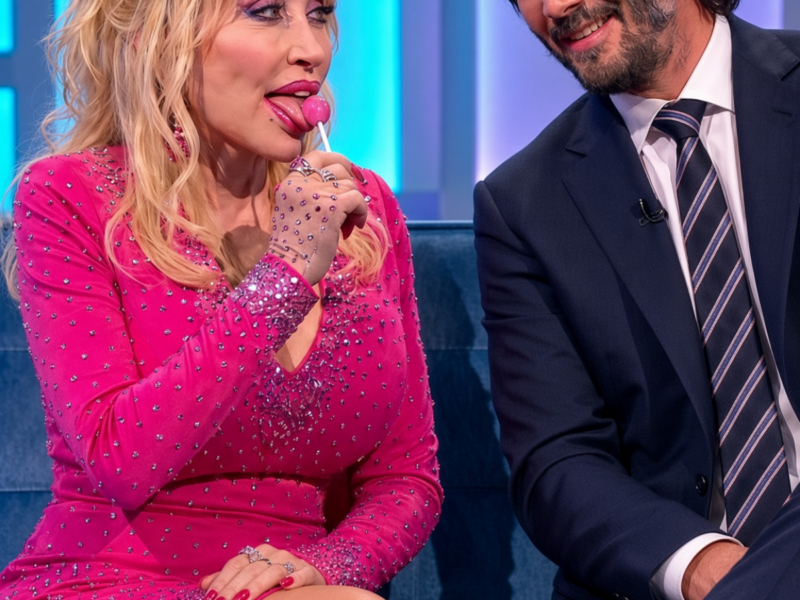
Dolly Parton Wildly Flirting With Other Celebrities.
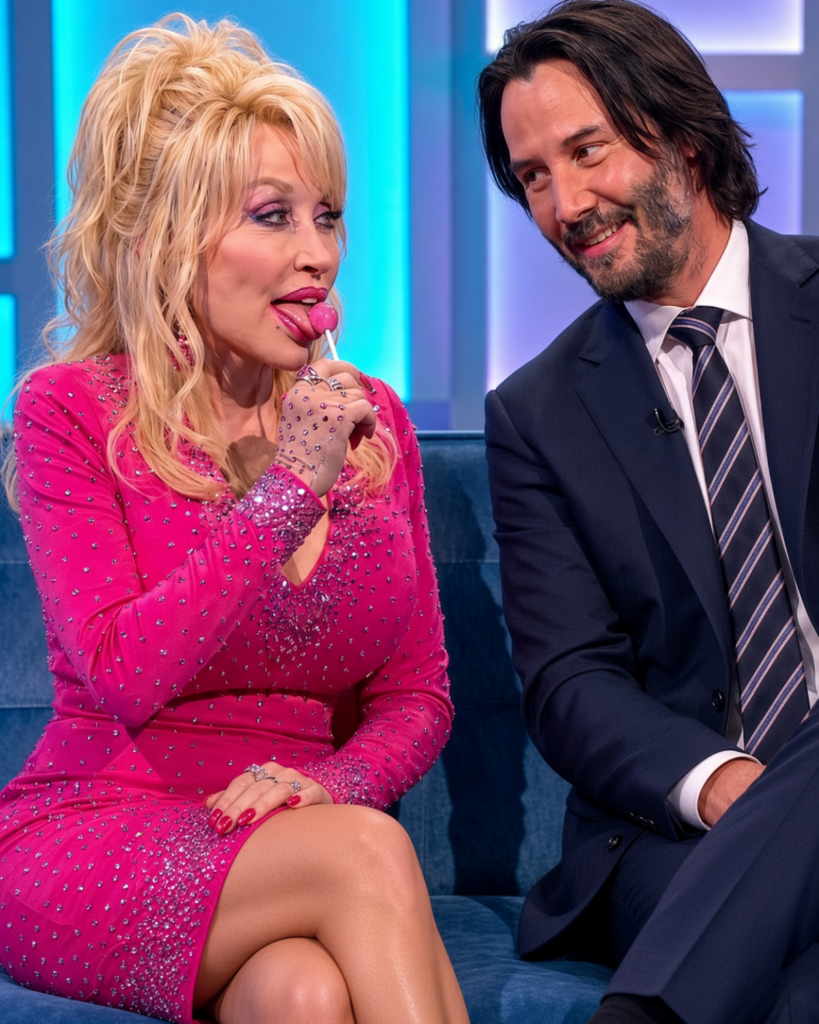
“Are you staring at me or something?”
“How can you not?”
“Would you like to go somewhere and make out?”
“Yeah, I would. I would love that. Would you?”
“What does Dolly Parton smell like?”
“Well, why don’t you come over here and sing?”
“How do you like it?”
“He was all over me the last time.”
Dolly Parton has never needed much encouragement to turn on the charm.
With her signature laugh, smart sense of humor, and legendary Southern hospitality, she can make just about anyone feel like the most interesting person in the room.
And every now and then, she adds a little flirtation to the mix.
Over the years, Dolly has playfully flirted with plenty of famous faces, leaving celebrities blushing, audiences laughing, and the rest of us wondering how one woman manages to make flirting look this wholesome.
“Look at this hunk.”
“Yeah. You think I would text alone over this? You know—”
“Well, you’re just—you’re just flattering us. I know that.”
“Yeah.”
“Yeah.”
“People—well, like yourself as well. You know, you—you—you—you see it immediately. There’s a magnetism or something.”
“Oh, am I turning you on, right? Am I?”
If there was one celebrity friendship that practically invited playful flirting, it was Dolly’s relationship with Kenny Rogers.
“I guess we’ve been working together since we did ‘Islands in the Stream.'”
“I want to say five years.”
“Well, then I want to say seven years. How long would you like for me to say?”
“I like it. Let me tell you what it is, so I’ll know.”
“Okay. Seven and a half years. I remember now.”
The pair had genuine musical chemistry long before anyone started analyzing their chemistry offstage.
“The best, worst, and least dressed list of 20—”
“I’m in that, you know, of all time. The worst dressed of all time.”
“Swear.”
“Are you really?”
“I swear.”
“The worst dressed of all time.”
“Yes. See, there it is.”
“Where did it go? I don’t think you’re that bad.”
“Well, you know what? It’s just the way I look.”
“You need to watch your mouth—”
“Because I think people like to know that they know you.”
“It was only if you started working with me, but you turned gray.”
Their friendship also became famous for its teasing quality.
In old interviews and television appearances, Dolly and Kenny could behave like two people who had been trying to make each other laugh for years, which in fairness they had.
“I’ll ask the question everybody—everybody wants to know. Why have you guys never gotten together?”
“Rhino—mixing business with pleasure.”
“I first of all, she’s hard to look at for me.”
For decades, fans couldn’t quite believe Dolly Parton and Kenny Rogers were just friends.
And honestly, the two didn’t make it easy on anyone.
Their chemistry was obvious.
Their teasing was constant, and whenever they stood together on stage, they looked like two people who knew exactly how much fun they were having with the rumors.
“And I was like, ‘These two seem like the perfect duo.’ You know—”
“In so many ways, because we’re literally—you know, everybody always thought we were having an affair. We worked together for two years.”
“I thought you guys were dating.”
“But we didn’t. We—we just teased each other and we flirted with each other for thirty years.”
Parton has never been one to keep a handsome face from getting a compliment, and Sylvester Stallone was no exception.
“You know, if he would do it, and he thought it would be good if I would do it. So, it was like one of those things. It was just a natural, and then when we met, seemed to be like the real magical thing. And I just loved him. I thought he was so pretty. I thought, well, I’d at least like to spend four months around a good-looking hunk like that.”
“So subtle.”
Stallone, with his famously tough-guy image, made an amusing contrast to Dolly’s bubbly teasing, creating one of those moments where a simple compliment suddenly became much more entertaining.
“I bet that’s the first time anyone’s called you pretty.”
“She’s got this thing about pretty.”
“Oh, but he’s so pretty. Look at him.”
“I—I thought that was really great until one day she picked up this—this like frog with that has had leprosy. He goes, ‘Isn’t that pretty?’ Oh, you lie.”
“So handsome, but so pretty.”
Long before celebrity interviews became social media clips dissected frame by frame, Dolly Parton was already an expert at creating television moments.
One of her most entertaining dynamics was with Johnny Carson.
Parton appeared on “The Tonight Show” numerous times, and their exchanges could drift effortlessly from ordinary conversation into playful teasing.
“I would never. You see, now—”
“You don’t have to. I would not.”
“I’ll tell you what, these are my—”
“I have certain guidelines on—I—”
“But I would give about a year’s pay to peek under there.”
In 1979, Dolly Parton appeared on “The Tonight Show” with a surprise: a song she had written specifically for Carson and his show.
“This song, ’cause you—it’s been real good for me ever since I started on your show. And you said one time—once I got to be real famous, I probably wouldn’t come back on the show. But I always will. I’m here about as much as you are.”
Dolly didn’t need to announce that she was joking.
She simply delivered the line, smiled, and let everyone else catch up.
And if the joke made the other person blush, even better.
“You look super packed for Christmas.”
“You look like Christmas. What a stocking stuffer.”
“It’s good to see you. I want to wear something special.”
Parton has always known how to keep a moment lively.
She would play along with teasing, embrace a bold dare, and turn an unexpected challenge into another opportunity for a laugh.
“I think we got people’s attention now. I double-dog dare you take off all your clothes. Come on.”
“Come on.”
Very little seemed off-limits when it came to her sense of humor.
Dolly rarely backed away from the fun.
She leaned into it no matter what.
“I’ll help you.”
“Yeah.”
“Okay. Well, we better start. It’s—”
“Going to be a big—”
“Hey, wait. I better take his cross off if we’re going to get this.”
“Oh, yeah. I know. We don’t need trouble.”
“Yeah. Yeah.”
“Damian was backing away.”
“Yeah. Okay, now you can help the helper with this. This is hard here.”
Dolly Parton was a memorable guest on “The Late Show with David Letterman,” and their appearances often produced some wonderfully unfiltered television.
“But onward and upward—”
“It wasn’t his phone. I just thought it’d be fun if we could just be horny together.”
“Yo—”
“Frank, don’t think of it so much as a door closing, but a door opening. All right.”
“Okay.”
Letterman’s dry, unpredictable style was a perfect match for Dolly’s quick wit and fearless sense of humor.
“Congratulations.”
“Thank you very much. That’s great.”
“He’s a beautiful baby. The—”
“Turned out pretty good. Pretty sweet.”
“He did it. And I just want to let you know if you need a wet nurse, you call me.”
“For the baby.”
“For the baby.”
Between cheeky remarks, unexpected jokes, and moments when neither seemed quite sure where the conversation was heading, their chemistry made for some seriously hilarious exchanges.
“You just are glowing on television, and I—I’ve been enjoying watching.”
“Well, that’s very, very sweet of you. Thank you.”
“Thank you, Dad. And I’m sorry you’re feeling bad, and I’m ready to go now. So—”
Dolly Parton and Jimmy Fallon have also shared plenty of playful moments over the years.
But there’s something especially entertaining about the way Dolly turns on the charm around him.
With a cheeky smile, a perfectly timed compliment, or a little teasing, she can leave Fallon laughing and occasionally looking like he’s forgotten his next question.
“And what am I going to do to throw you out off your seat? So—”
“You always do it. Uh, let’s talk about this—uh—Netflix—uh—series you’re doing, ‘Heartstrings.’ This is based on eight of your songs. Yeah.”
“And you turned them into shows.”
“Well, I’ve always dreamed of—of having my songs on for movies, ’cause I write a lot of story songs.”
Their chemistry is light-hearted and clearly rooted in fun, but it makes for some precious television moments, because when Dolly Parton starts flirting for laughs, even Jimmy Fallon seems happily outmatched.
“I think there’s a melted M&M in there. What the—I’m framing this. I’m framing this.”
“This is going in the Smithsonian.”
Fallon has often shared stories about what Dolly Parton is like when the cameras aren’t rolling.
And those behind-the-scenes moments reveal just how naturally playful she can be.
Whether she’s backstage, in the dressing room, or waiting to go on stage, Dolly seems to bring the same quick wit and mischievous energy that audiences see on television.
“She’s funny. She’s gorgeous. She could sing. She’s interesting. She’s interested.”
“She’s funny.”
“She is funny. She brings the jokes, and she’s such a good guest. She comes on and has good stories, and everyone laughs, and, like, I—she’s just a dream, that she will come with, like, ten jokes ready to go. I know.”
“At one point, one time she came on, she let me try one of her wigs on.”
“Did you take a picture?”
“Of course I did. Yeah. It’s framed in my dressing room. Yeah, of course I—Dolly.”
“Oh, she’s cool with it. She’s like, ‘Just put one on. Why not?'”
But Dolly never seemed intimidated by Letterman’s deadpan delivery.
Instead, she played along, fired back, and often managed to turn the tables on him.
“For a long, long time, I’m telling you something, you always forget just exactly what you’re dealing with. You know, you just—memory never does it justice until you’re right there.”
“What are you trying to say?”
“All I have to say is—”
“Staring you in the face.”
“So, let’s just hope I never have to have bypass heart.”
“My god.”
“It would take a team of engineers to bypass. It wouldn’t.”
“Hello.”
“But everybody thinks we’re great friends. And I—”
“Well, we—you know, I—I think—yeah, I think we are great friends despite the fact that we never see each other except—”
“On my back and everything when I came out. Did you see that?”
“Touches.”
“You want to ride on that guy’s feet?”
Meanwhile, Fallon has also openly joked about having a crush on Dolly Parton, adding another layer to their already playful dynamic.
Their exchanges often blur the line between teasing and genuine admiration, with Fallon happily playing along whenever Dolly turns on her trademark charm.
“I mean, I—it’s mutual. I have a crush on Dolly Parton. Who doesn’t?”
“Who doesn’t?”
“Who doesn’t? She has the—uh—I mean, she has the whole—”
“I even like women, and I’m into her. She’s cool.”
Parton has often faced attention and criticism for her glamorous appearance, but she has never been particularly apologetic about it.
“You’re just more comfortable in makeup.”
“Yeah, I am. I—I—I like my hair done and my husband and my nails. I like them done.”
“And your nails?”
“Uh-huh.”
“That now. Are those yours or—no.”
“Well, they’re—they’re mine now.”
“Uh-huh. Yeah.”
“Bought and paid for. These are the acrylic nails that I write songs on half the time.”
She has spoken openly about feeling more comfortable when her hair is done and she is wearing makeup, treating her signature look as a form of self-expression rather than something she needs to defend.
“Talks about things like that, me being misjudged by the way I look and being too much makeup, too much hair, push-up bra, and heels, but it’s the way I’m comfortable and the way I feel. Uh—”
For Dolly, the big hair, bold makeup, and sparkling clothes are all part of the image she enjoys creating.
She has made it clear that looking glamorous is not about pleasing critics.
It is about feeling like herself.
“Saw you—uh—for the first time just about two hours ago. You came in to do the rehearsal, and everybody here was like, ‘Oh my god, she looks great. You look fantastic.'”
“Thank you very much.”
“What is the—is there a—uh—”
“That’s always good to hear.”
“Yeah.”
“A woman my age.”
“Well, do you have a—do you have a secret? I mean, some—some women claim to have a secret. They—”
“Yeah, good doctors.”
Dolly has often spoken about how much she enjoys embracing her feminine side and dressing up.
She has never seemed interested in toning herself down to fit someone else’s idea of how she should look.
Instead, she treats dressing up as another way to express her personality, confidence, and love of glamour.
“Lots of people dress up as you, don’t they?”
“Oh, yeah. All the time, boys and girls.”
“Yeah. Weird looking at—”
“No, I think it’s fun. I think it’s a great compliment. Because if I hadn’t been a girl, I’d have been a drag queen for sure.”
“I would.”
“A really good one.”
Dolly Parton has often joked that some men assumed she was as silly as her glamorous appearance suggested.
But beneath the big hair, bright makeup, and playful persona was a sharp and highly self-aware woman who knew exactly what was happening around her.
“You started out with whatever you want to call it, that look, did people really get the wrong idea in the sense that they didn’t know that beneath that look, there is maybe one of the smartest women around?”
Dolly has spoken about having a practical, business-minded way of thinking, and her career became a powerful example of why judging someone by appearances can be a serious mistake.
She could play the ditzy blonde when it suited the joke, but she was usually several steps ahead of the room.
“Certainly got hit on a lot, and a lot of men thought I was as silly as I looked, I guess. You know, I look like a woman, but I think like a man, and in this world of business, that has helped me a lot, because by the time they think that I don’t know what’s going on—”
Dolly Parton had a way of being a ray of sunshine wherever she went.
Her warmth, humor, and unmistakable personality made people feel instantly welcome.
Whether she was chatting with another celebrity, performing for thousands, or simply telling a story, she could walk into a room dressed in rhinestones and leave people remembering her kindness more than the sparkle.
There was something wonderfully infectious about Dolly’s energy.
She could make people laugh, brighten an ordinary conversation, and turn even a small moment into a memorable one.
“You look incredible.”
“Well, thank you. I got all dressed up for you in my tie-dye to represent my—my hippie songs that I’ve been doing.”
“Sure. Oh, yeah. Yeah. You look amazing, though. It’s been so gloomy here, but immediately you’ve brought sunshine into our lives.”
“I know you love green ’cause your iris—”
Even Conan O’Brien seemed happy to play along with the idea of being linked to Dolly Parton with his trademark humor.
Conan joked about the possibility, treating even the rumor itself as part of the fun.
“There’s never—there’s been like one tabloid story about me in eight years. It was like, ‘Conan O’Brien has high cholesterol.'”
“What? Come on, link me with Dolly or something.”
It was another example of Dolly’s ability to inspire playful celebrity banter without taking any of it too seriously.
“Well, after tonight, you just never know. I’d be honored to be in the tabloids with you.”
“All right. Well, we’ll have to do a few things to set it up, but I’ll take care of—”
One of Dolly Parton’s earliest celebrity crushes came long before she became a star herself.
And the man in question was none other than Johnny Cash.
When Dolly was a young teenager, she saw Cash perform at the Grand Ole Opry and was completely captivated.
Cash, she recalled, had a certain charisma that simply stopped her in her tracks.
She even remembered a little shoulder movement he had when he performed that, in her words, was enough to get her attention.
“Speaking of being seventeen, Johnny Cash was my first encounter with what I thought to feel was feeling really drawn to someone. I mean, I saw him on stage and I just felt things that I’d never felt before.”
The funny part is that Dolly wasn’t describing some dramatic teenage romance.
She was describing that very specific moment when you suddenly realized, “Oh, so that’s what everyone is talking about.”
Cash’s confidence and stage presence made an impression on her, and she later looked back on it as her first real understanding of charisma.
“I did, ’cause he had that funny—you know, like how Elvis did. I didn’t know what the—all the feelings were, but I—”
By 1959, when thirteen-year-old Dolly made her own Grand Ole Opry debut, Cash was the person who introduced her to the audience.
That must have made an already enormous night feel even more surreal for the young singer.
“Johnny came out on stage and just all that weird moving and all—it just really stirred me, like I couldn’t understand what I was feeling. It was years later, and I got a terrible crush on him, you know, at that time.”
And Dolly being Dolly, she didn’t keep the story entirely to herself.
Years later, she could laugh about her old crush on June Carter Cash, Johnny’s wife.
Dolly recalled joking with June that she had loved Johnny before June did.
It was clearly playful teasing between friends rather than anything serious, but it makes the story even more charming.
“I realized that’s what true charisma is. Magnetism, you know, just the way he moved. And then I think a lot of it later I realized was a lot of dope, too. I think he was twitching and moving around with all sorts of feelings and all, but he was—he was so magnetic.”
Even as the years passed, Dolly Parton continued to look every bit the glamorous star she had always been, and she showed no signs of slowing down.
Rather than stepping quietly out of the spotlight, she seemed to become busier, taking on music, television, film, business projects, books, and charitable work.
Her signature hair, sparkling outfits, and unmistakable smile remained firmly in place, while her schedule could make people half her age wonder if they needed a nap.
“Dolly, uh, you look fantastic, and I know you don’t mind me saying you’re 72 years old.”
Dolly’s later years proved that getting older never meant getting less ambitious.
If anything, she appeared to have collected more ideas, more projects, and even more reasons to keep the rhinestones shining.
“They’re going to do a remake of ‘9 to 5,’ which is fantastic.”
“Do you really?”
“You have a Netflix special. What is the Netflix series?”
“Well, actually, it’s—it’s called ‘Heartstrings,’ and it’s movies based on songs that I’ve written, and I’m really excited about that. I act in some of them, and I introduce them all.”
Parton has often connected her sense of humor to her Southern upbringing, where storytelling, quick comebacks, and knowing how to laugh at yourself are part of everyday conversation.
Growing up in Tennessee, she learned early that a good story could bring people together, and that a perfectly timed joke could turn almost any situation around.
Dolly’s humor is rarely mean-spirited.
Instead, it is warm, playful, and often directed at herself.
She has never been afraid to joke about her appearance, her glamorous image, or the assumptions people make about her.
That self-deprecating streak became one of her trademarks.
Whether she is answering an interview question, teasing another celebrity, or telling an old family story, Dolly delivers her jokes with the easy charm of someone who grew up knowing that laughter is often the best way to make people feel at home.
“I think most country people, and certainly entertainers like myself, I think comedy is part of our being, because it’s kind of what helps you through the hard times growing up. We made more fun of stuff that—you know, you shouldn’t even laugh at.”
Before Dolly Parton became one of the world’s most beloved entertainers, she was a determined young girl growing up in the Smoky Mountains of Tennessee.
The fourth of twelve children, Dolly was raised in a humble one-room cabin where money was tight, but family, music, and imagination filled the space.
From an early age, she discovered a natural talent for writing songs and performing, turning simple childhood experiences into stories through music.
“Have you always had that kind of determination? Did you honestly know you were going to be a star?”
“I believe I did. I—that’s what I wanted to do. I always felt that I was supposed to do it, ’cause I wanted to be famous. I wanted to be rich. I didn’t want to be poor all my life. Not if I didn’t have to. I know how to survive.”
Her ambition was clear even when she was still very young.
By the age of ten, Dolly was appearing on local television, already comfortable in front of an audience.
Just three years later, she stepped onto the legendary Grand Ole Opry stage for the first time.
It was an extraordinary milestone for a teenager with enormous dreams.
“Uh, very hard, but we were a very proud family. We brought up in a family of twelve kids and having all that noise and racket.”
Dolly has inspired generations of women to embrace who they are without apologizing for it.
Her career showed that femininity and ambition do not have to exist on opposite sides of the room.
She built a powerful image around glamour, humor, kindness, and confidence while also proving herself as a songwriter, businesswoman, performer, and philanthropist.
What makes her story especially inspiring is the way she refused to let other people’s assumptions define her.
“Do you think that your music has a decidedly feminist spin?”
“I think a lot of my music does. I don’t think it’s necessarily just on purpose. I’m not just out there trying to make a statement other than just a personal statement that really comes from me.”
Behind the big hair and sparkling clothes was a sharp, determined woman who knew exactly what she wanted.
Dolly encouraged women to dream boldly, work hard, and stay true to their personality.
Her message was never about fitting into someone else’s idea of success.
It was about creating your own version and wearing it proudly.
“Because as a writer, I write a variety of things. And through the years, being a woman and a working woman, I have written a lot of songs, I think, for women. A lot of women relate to the stories that I write and the songs that I write. ‘9 to 5’ was a good example.”









