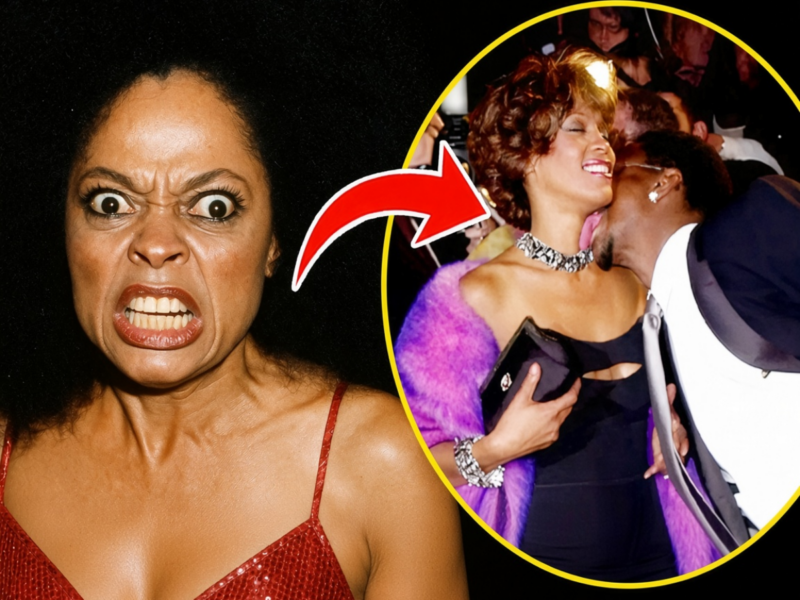
Diana Ross secretly despised these 10 singers—but 2 will absolutely shock you.
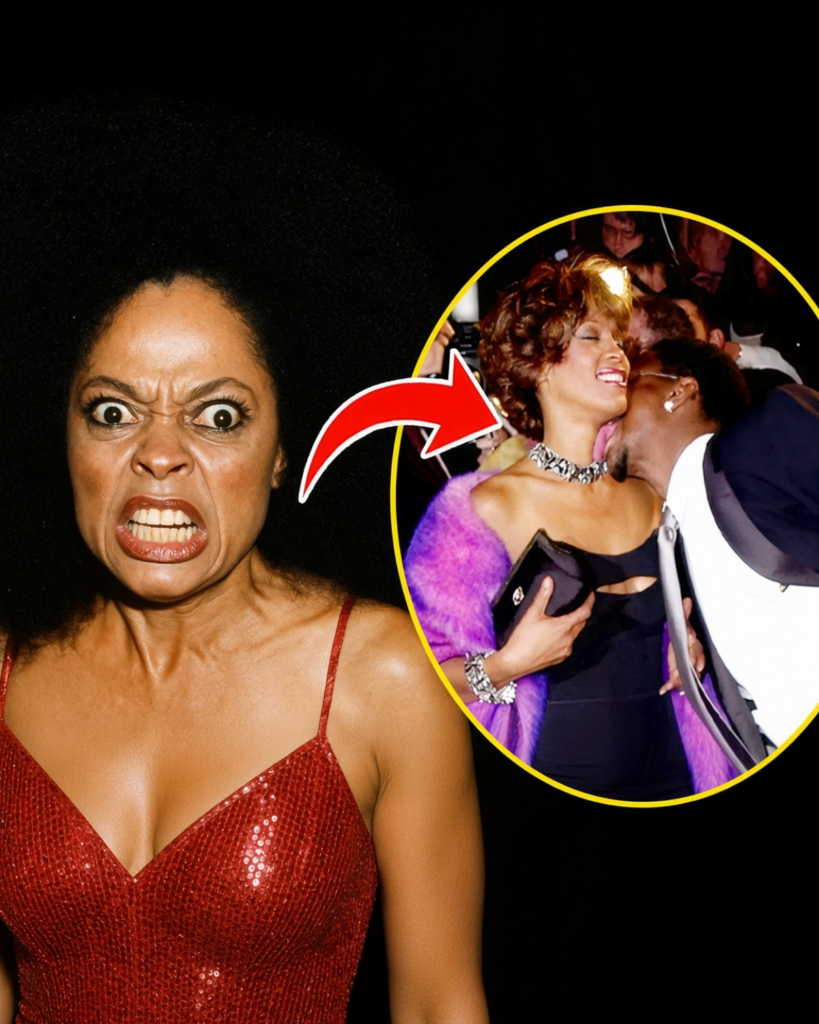
The name Diana Ross has become legendary in the music industry.
Yet few know that behind the glamour lies silent feuds, unspoken battles with unexpected divas.
Did you know that Diana Ross, that powerful woman, once intensely disliked legendary names like Whitney Houston and Tina Turner?
These are women who surpassed her, becoming icons that Diana couldn’t help but feel threatened by.
But the truth is far more shocking.
The next names on this list are even more mysterious, more surprising, and will make you exclaim, “Unbelievable.”
The top 10 singers Diana Ross truly couldn’t stand, especially the name at number two, will astound you because you’d never imagine they were unavoidable adversaries in Diana’s career.
Don’t forget to like, comment, and subscribe now to avoid missing these dramatic and surprising stories.
Diana Ross, that woman always commanded respect for her illustrious career.
As for Whitney Houston, the young woman from New Jersey, it took but a blink of an eye for her to conquer the entire music world, becoming an irreplaceable icon.
Both were prominent stars.
But when their lights collided, things were not simply about respect.
Diana always took pride in her achievements.
She was a trailblazer for female singers, especially Black female singers.
But then Whitney arrived like a powerful storm, and her prominence made Diana re-evaluate.
For the first time, there was a voice that made Diana feel something stir within her.
Was it recognition or a hint of feeling threatened?
As a renowned star for many years, Diana had perhaps never faced such a formidable rival.
Both these women were immensely prominent.
But there was something that prevented them from ever standing side by side without a palpable discomfort in the air.
Whitney, a woman with a sweet voice and rare beauty, not only made a name for herself, but also changed the music industry’s perception of women, especially Black women.
But one undeniable fact is that Diana was touched by something deep in her mind when she witnessed Whitney’s rapid success.
Although no one explicitly stated it, accounts from old friends suggest Diana’s quiet demeanor whenever Whitney was mentioned.
This story was widely circulated within the artistic community, but no one dared to openly discuss the relationship between Diana and Whitney.
Some believe Diana felt eclipsed by the immense shadow of a rising star, a star she couldn’t control or dictate.
And one of Diana’s most veiled remarks about Whitney was, “Whitney is a wonderful vocalist, but the way she was promoted made me uncomfortable.”
And that story lingered like a wound that never truly healed.
Perhaps no one saw it clearly, but in Diana’s heart, Whitney’s image always made her ponder.
Sometimes competition doesn’t always stem from obvious things, but from invisible shadows weighing heavily upon each other.
The anxiety of being replaced, of a new name seizing the spotlight one has painstakingly built.
No one can escape that feeling.
Interestingly, very few people know that despite both being music icons, they never had the opportunity to collaborate.
They might have sung together on stage, stood beside each other in photos, but that connection was never truly deep.
Those around them recounted that Diana and Whitney’s encounters were often not pleasant.
Sometimes it was silent glances, sometimes just trivial, meaningless remarks, but they were like a silent knife, subtly hurting without anyone speaking out.
And then when Whitney passed away, Diana may have felt a profound sadness.
A sadness not only for the loss of a star, but because deep down she had also lost something important.
A certain respect she had never been able to give Whitney.
Even though both were undeniably brilliant stars, Aretha Franklin, the Queen of Soul, always stood at the pinnacle with her powerful and emotional voice.
A woman whose place in music history no one could doubt.
And Diana Ross, the powerful diva with her refined and impressive performance style, was no less prominent in the music world.
Two women, two entirely different individuals, yet both shared a dream of greatness, of building a musical empire.
But when they entered the battle for the Queen of Soul title, unavoidable conflicts began to arise.
Diana was always known for being strong, proud, and confident, but that very quality prevented her from fully harmonizing with Aretha.
Both possessed innate talents, but perhaps it was Diana’s pride in every gesture and word that Aretha, considered the queen of soul music, could not accept.
Although both were great icons, it’s undeniable that when they stood on the same stage, they were flames that could never truly merge.
The small sparks of that rivalry sometimes flared up during their encounters.
“Diana and I were never meant to be best friends. We’re both too powerful.”
Aretha’s words may have resonated deeply with many, but was that truly the case?
Their relationship was not one of friendship, but a silent and constantly challenging competition.
When people looked at them, they saw not only two powerful vocalists, but also two entirely different worlds in terms of lifestyle, performance style, and even brand building.
Diana always chose an elegant, smooth style, while Aretha was strong, direct, and unafraid to express herself.
But strangely, throughout their careers, despite not being close friends, they maintained an unspoken respect for each other.
This only made their relationship more complex and nuanced.
Both clearly understood their positions, knowing they were irreplaceable in the hearts of their fans.
But that competition was like an undercurrent felt only by those involved.
During encounters at award ceremonies or major events, one could easily notice the quiet glances, the less than friendly remarks between them.
However, it wasn’t an open display of animosity, but a more subtle, gentler confrontation.
Social smiles, polite phrases like, “Congratulations, you did very well.”
But everyone knew that behind those words lay an invisible rivalry.
The reason for this tension lay deep within the nature of both women.
Diana wanted to lead, to dominate the music scene, and always looked forward.
While Aretha was an irreplaceable icon in the hearts of music lovers.
Whenever Aretha appeared, the atmosphere around her was always filled with adoration, while Diana created a distinct style full of charm and elegance.
But that prominence only made their relationship more complex.
Despite many conflicts, both Aretha and Diana maintained respect for each other’s talent throughout their careers.
But perhaps it was this very respect that intensified their unavoidable confrontation.
Not because they failed to see each other’s talent, but because both were too strong, too confident in the path they had chosen.
An interesting fact few people know is that although they had many opportunities to collaborate throughout their careers, they never truly shared a stage.
Instead of duets, they could only stand at opposite ends of an unspoken musical battle, fighting to prove who was more deserving of the Queen of Soul title.
A story full of regret, yet also incredibly fascinating.
They never publicly acknowledged each other as rivals, but everyone knew that deep down both Diana and Aretha tacitly admitted that their competition was unavoidable.
One’s shadow was always behind the other’s.
A race they both understood would have no beautiful ending for either.
But these very conflicts created the magic in their careers.
Although they never stood together on a stage, that confrontation was what made both their names legendary.
This conflict will probably never be resolved, but it is precisely what made both Diana and Aretha indelible icons in the hearts of music lovers.
Both women have become musical symbols, and their story is one full of mystery, full of encounters that one can only guess at but never fully comprehend.
Tina Turner and Diana Ross, two brilliant stars in the music world, always had a complex relationship.
Despite an initial connection, things gradually became more difficult as Tina’s career soared, especially after she broke free from Ike Turner’s control.
Their relationship was not simply friendship or respect, but a tense rivalry.
Diana, a powerful music icon, couldn’t help but feel a touch of vulnerability at Tina’s rapid success.
Diana had dominated the music industry for many years.
But when Tina began to shine, a subtle psychological unease emerged.
Tina, with her powerful voice and unmistakable personality, seized the spotlight that Diana once held.
The feeling of being threatened is something no one wants to face, especially a legend like Diana.
She knew well that Tina’s success was overshadowing her efforts and contributions.
The competition between the two stemmed not only from musical talent, but also from how they built their image and brand.
Diana, with her elegance and sophistication, always wanted to be in the number one position.
While Tina brought a fresh, powerful, and daring new energy.
This very contrast made Diana feel pushed out of the limelight.
Although Diana never publicly acknowledged this rivalry, the tension was clearly palpable whenever they met.
There were rumors that Diana deliberately tried to overshadow Tina at some important music events.
Those around them said that while Tina was preparing to shine, Diana found ways to capture public attention.
These actions weren’t always obvious, but people still sensed Diana’s underlying displeasure.
Although Tina always rose strongly from the dark years of her personal life, her success made Diana feel left behind.
The rumors and unspoken tensions between them created a stifling atmosphere that no one could deny.
Stories untold yet full of complexity.
Although both were music icons, their relationship could never fully harmonize.
Tina’s rise was a powerful shift in the music scene.
She was not just a singer, but also a symbol of strength and freedom.
Diana, although she had a solid position in music, couldn’t help but feel the competition from Tina.
Their public encounters were not always smooth.
Instead of bright smiles, there were moments when their eyes seemed to say it all, but words couldn’t be uttered.
Both these women knew that the other’s success was a challenge to their own.
Tina proved that no matter how dark life gets, resilience and effort will help you overcome.
But throughout that journey, Tina’s prominence made Diana feel she was gradually losing her place in the public’s heart.
Their story, though never publicly acknowledged, remains one of the music industry’s mysteries.
Diana not only faced competition from another woman, but also confronted her own deep-seated emotions about loss, about the inability to hold on to the spotlight forever.
Every mention of Patti LaBelle always brings a subtle tension to the air, drawing everyone’s attention.
For Diana Ross, Patti was not merely a friend.
Their relationship was not always one of mutual respect, but also a silent battle for public recognition.
Although they occasionally shared moments of closeness, deep down, competition always existed.
And that confrontation wasn’t always hidden.
“Patti and I, we’ve always had a little thing going, haven’t we?”
Diana’s remark sounded light, but it contained a whole world of unspoken clashes.
Both Patti and Diana were powerful women.
Both had steady careers, and that made it inevitable for them to stand at opposite ends of a confrontation.
Every time they met, whether on stage or at major events, it was a silent contest, a battle for public attention.
Not everyone realized this, but behind the smiles and handshakes was a shrewd calculation.
Diana, with her composure and elegant style, always maintained an image that few could touch.
Patti, with her passion and powerful musical prowess, had her own equally strong appeal.
These differences made their relationship challenging.
Both wanted to be in the lead, but they couldn’t always harmonize.
Their relationship might not have been one of animosity, but competition was unavoidable.
Both Diana and Patti had strong personalities, and neither wanted to be behind the other.
Mutual respect was not lacking, but when both entered a contest, it was no longer friendship.
The stage lights always seem to make them feel they had to prove themselves even more.
However, there’s a very interesting fact that few people know.
Diana and Patti’s encounters weren’t always tense.
In fact, in some moments, they shared the stage and showed respect for each other.
But behind that were untold stories.
The story of the rivalry between these two divas truly began when both stood at the peak of their careers.
It’s rumored that in the early years, Diana tried to overshadow Patti, dimming her performances.
These actions might not have been explicit, but they were enough to raise suspicions within the artistic community.
Some said Diana didn’t give Patti many opportunities to shine during collaborations, but all of this remains mere rumor with no one able to confirm the truth.
Nevertheless, their relationship has always been full of mystery.
Both never publicly acknowledged the competition, but in crucial moments, one could easily sense the tension, the less than friendly remarks, the glances that couldn’t hide the confrontation.
But did they truly dislike each other?
Certainly not.
The relationship between Diana and Patti was not one of animosity, but a struggle between two powerful individuals with different personalities and styles.
When two divas like Diana Ross and Barbra Streisand enter the same room, the atmosphere isn’t just stifling, but subtly charged with tension.
Known for their distinct musical styles, yet both undeniable legends in the music industry, Diana and Barbra never found it easy to harmonize.
In fact, their relationship was never a serene story.
Diana, the elegant woman with an imperious beauty, didn’t readily accept Barbra’s intrusion.
Both possessed undeniable talent, but their differing approaches to self-expression and musical styles created a difficult divide to bridge.
Barbra, with her flamboyant presence and powerful personality, often commanded all attention around her.
Diana, though equally powerful, always maintained a refined demeanor and disliked excessive fanfare.
Thus, when standing together, they were not just prominent divas, but also flames that could never truly merge.
The relationship between Diana and Barbra wasn’t merely a musical confrontation, but a competition for image and prominence.
Diana had built a brand imbued with sophistication, recognized as a fashion and music icon.
Barbra, with her distinctive style and resonant voice, also carved out an irreplaceable position for herself.
Yet, when both shared a stage, the spotlight seemed to shine for only one.
And that was never easy for Diana.
The two never had an official collaboration on stage despite both being monumental music icons, not for lack of talent, but because an unspoken rivalry prevented their cooperation.
Every time they met at music events, there was a palpable, tense silence.
They undoubtedly respected each other’s talent, but that respect wasn’t always enough to bridge the gap between these two powerful women.
As a renowned diva, Barbra always drew attention with her undeniable self-assurance.
Diana, though also a major icon, possessed a distinct, less ostentatious style.
Rumors suggested that during Diana and Barbra’s encounters at major events, Barbra often stole the spotlight, making Diana feel overshadowed.
While there’s no concrete proof, the quiet glances and whispered remarks behind their backs were indicative of the tension between them.
Some sources claimed that Barbra and Diana had backstage friction, particularly when both appeared at a major music event.
It’s said that Diana felt disrespected when Barbra repeatedly interrupted conversations or simply monopolized too much attention.
However, these rumors remain unverified stories.
Despite no overt hostility, the relationship between Diana and Barbra has always been an unfinished story.
They are two monumental stars, each with different strengths and working methods.
These differences at times prevented them from harmonizing.
Nevertheless, despite conflicts and tensions, both remain magnificent women in music history, and their story will undoubtedly continue to be an essential part of music’s legacy.
When Mariah Carey burst onto the scene in the 1990s, she not only captivated with her mesmerizing voice, but quickly became a music icon, dominating the entire pop landscape.
But with the arrival of a new star, especially as Mariah began to encroach on the territory Diana Ross had held for so many years, rumors of rivalry between these two powerful women began to surface.
Diana Ross, a long-established music icon, couldn’t help but perceive Mariah’s emergence as a threat to the legacy she had meticulously built.
Mariah, with her astonishing vocal range and striking performance style, created a new wave in the music world, and that inevitably caused Diana discomfort.
Both possessed distinctive qualities, but when they appeared on the same stage, their contrasting styles were too pronounced to ignore.
Diana, with her elegant and refined demeanor, likely never truly approved of Mariah’s self-expression, full of ostentation and powerful allure, which Diana might have viewed as lacking the elegance she always championed.
As Mariah rose to become a new music icon, many believed Diana felt she was gradually being eclipsed.
Rumors began to spread, suggesting that Diana not only disliked Mariah’s style, but also felt her presence in the pop scene was excessive.
Although Diana never publicly acknowledged this, industry insiders maintained that rivalry between them was inevitable, especially as both were immensely popular music figures.
Whispers circulated that Diana disapproved of Mariah’s self-presentation, deeming her prominence in performances and her career development as too loud and forceful compared to the image Diana had cultivated throughout her career.
Some recounted that Diana felt Mariah was too eager to seize attention, which inevitably made her feel overshadowed.
Nevertheless, it’s noteworthy that they never had a public confrontation.
The relationship between Diana and Mariah, despite its underlying tensions, never escalated into an overt conflict.
Mariah in an interview once mentioned feeling a constant distance from Diana, and this might well be the result of the unspoken rivalry neither wanted to acknowledge.
Both were strong independent women, and their dedication to maintaining distinct images made it difficult for either to readily accept the other’s leadership.
Despite rumors and potential conflicts, both Diana and Mariah maintained a considerable distance with no public altercations.
Perhaps it was a silent confrontation, but there’s no evidence that the two truly engaged in open warfare.
Mariah, while respecting Diana, couldn’t avoid feeling pressured when standing beside a long-established icon like Diana.
Although never openly expressing rivalry or conflict, the story between Diana and Mariah remains one of the more subtle narratives in music history concerning two powerful women, two divas with entirely different styles sharing the same stage.
Celine Dion wasn’t just a star from another world.
She was a powerful force that arrived and changed everything.
When Celine stepped onto the global music stage with “My Heart Will Go On,” she not only captured audiences’ hearts, but also caused a stir in the music world.
For Diana Ross, who had long been an icon of elegance and sophistication, Celine’s emergence served as a stark reminder of inevitable change.
The relationship between these two wasn’t an open battle, but a quiet confrontation between two major divas, both ardently striving to dominate the spotlight in the same sphere.
Diana, despite her years standing firm at the zenith of music, couldn’t help but feel Celine’s appearance as a formidable challenge.
Celine, with her deeply emotional voice and intense performance style, truly captivated the public.
While Diana maintained her status, Celine brought a fresh energy, a vibrant newness that Diana couldn’t help but feel she was being surpassed by.
Diana always embodied classic elegance, but Celine commanded attention with her powerful presence and uninhibited showmanship.
The feeling of being eclipsed was unavoidable when a new star rose at such a breathtaking pace.
The relationship between Diana and Celine wasn’t one of public animosity, but an unspoken competition filled with discreet glances and awkward moments.
Rumors began to circulate that Diana felt uneasy with Celine’s excessive prominence in the music world.
Although Diana never publicly criticized Celine, the tension during their encounters was palpable.
Celine’s powerful strides in her career only made Diana feel compelled to uphold her image, however challenging it was.
Some accounts suggested that Diana attempted to diminish Celine’s prominence at major events, but these rumors were never confirmed.
Perhaps it was merely the natural reaction of a long-established diva witnessing a new rival emerge, but that inevitably complicated their relationship.
Nevertheless, the relationship between Diana and Celine was not one of hatred.
Both respected each other’s talent, but competition was unavoidable.
Celine proved that greatness could arrive swiftly, but for Diana, maintaining her brilliance was a long-fought battle.
Despite some underlying tension, their relationship remains a significant part of both their musical journeys.
A subtle and surprisingly profound confrontation.
Every time Janet Jackson stepped onto the stage, she was perhaps not only fighting to express herself, but also battling the colossal shadow of her brother, Michael Jackson.
As the sister of a legend, Janet constantly had to live under the expectations of a famous family.
Yet, she also endured immense pressure due to her brother’s monumental fame.
And with Diana Ross, who had always been an irreplaceable star in the music world, Janet’s rise was far from simple.
While not an overt hostility, there was always a silent rivalry between Diana and Janet that neither could fully conceal.
As a brilliant star in the music world, Diana undoubtedly noticed Janet’s emergence.
However, Janet not only had to contend with Diana, but also faced constant comparisons to Michael Jackson, her legendary brother.
This complicated the relationship between Diana and Janet as both were powerful women.
But Janet was fighting not only to establish herself in the music world, but also to escape Michael’s shadow.
Although Janet forged her own distinct name and style, she was incessantly compared to Michael.
This indirectly created a challenging dynamic for Janet in building her reputation without living under her family’s expectations.
Diana, given her standing in the industry, was certainly aware of Janet’s prominence, but their relationship was never truly clearly defined.
Diana might have seen great potential in Janet, but also a challenge to her own accomplishments.
Some industry insiders believed Janet was not treated fairly with Diana through her significant influence, not creating opportunities for her to shine.
However, these stories remain rumors never clearly confirmed by either party.
Nevertheless, Janet proved herself to be an independent artist, not merely Michael Jackson’s sister, but a music icon with her own distinctive style.
And Diana, despite initial reservations, couldn’t help but acknowledge Janet’s talent.
Their relationship might not have been easy, but it’s certain that the competition and mutual respect propelled both to become indispensable figures in music.
When Madonna emerged in the late 1980s, no one could have predicted she would become the queen of pop with her audacious style, unafraid to challenge every rule.
However, for Diana Ross, a music icon who had firmly held her place at the top for many years, Madonna was not just a colleague, but a formidable rival.
The relationship between these two divas was never straightforward because in music and lifestyle they were polar opposites.
Diana, with her refined and elegant image, always championed the cultivation of a feminine and sophisticated persona.
Madonna, conversely, chose a forceful even rebellious style, relentlessly pushing boundaries of gender and societal norms.
Every time the two shared a stage, the clash between these two worlds became strikingly apparent.
Diana likely felt that Madonna’s prominence was a direct threat to the image she had painstakingly built throughout her career.
Since Madonna entered the music industry, she not only reshaped perceptions of women in music, but also built her own distinct empire, an image that transcended all limits that previously only Diana could embody.
Madonna’s freedom and rebelliousness garnered immense attention, while Diana, bound by her standards of elegance and sophistication, felt pushed into a world that had transformed too much.
Some sources suggested that Diana disliked Madonna’s prominence, feeling that her rebelliousness and excessive actions overshadowed Diana’s image in the public eye.
This rumor only heightened the tension between the two despite no overt conflict.
Although they never publicly acknowledged animosity, the rivalry between Diana and Madonna persisted for many years, not because they hated each other, but because of the stark differences in their musical styles and public images.
Nevertheless, whatever underlying conflicts existed, the careers of both these women have had profound impacts on the music industry.
Diana Ross has always been a major icon in music.
Yet, few know there was an artist she genuinely found it difficult to harmonize with.
And this name wasn’t a seasoned star or prominent rival.
It was Diana Krall.
For those who followed both these divas, it was evident that their relationship was never easy.
A name that consistently made Diana feel uneasy and question her position in the music industry.
It wasn’t for lack of talent that Diana didn’t accept Diana Krall.
In fact, Krall is a talented artist, but the relationship between the two was always complex.
They both shared the name Diana and were talented artists, but their musical styles diverged significantly.
Diana Krall excelled in the jazz genre with her lyrical and refined music.
While Diana Ross was a pop and soul icon, always shining in powerful ballads and vibrant rhythmic songs.
Diana Krall’s prominence, while not a direct challenge to Diana Ross, nonetheless made her feel as though she was being overlooked.
While Diana Ross built a formidable music empire, Diana Krall rapidly rose with her talent and distinctive approach to self-expression.
And no one could deny that the name Diana Krall, despite her calm and graceful demeanor, held considerable influence in the music industry.
Rumors circulated that Diana Ross felt threatened by Diana Krall, especially as Krall began to gain significant attention in jazz circles.
Some suggested that although Diana never openly displayed animosity, their relationship always held a subtle tension, particularly when they appeared together at music events.
The relationship between Diana Ross and Diana Krall may never have been publicly revealed, but it’s certain that in Diana Ross’ mind, Krall was a formidable rival, a shadow that was difficult to deny, even if it wasn’t a fierce battle.
Every confrontation in the music world conceals untold stories, secrets yet to be revealed.
Diana Ross, with her elegant presence and profound influence, has always faced challenges from vibrant talented new stars.
The conflicts between her and other divas were not merely rivalry, but a silent contest to affirm her name and maintain her standing in a constantly evolving world.
Each time a new star emerged, a new wave surged.
Diana had to ponder whether she could continue to hold her spotlight or if she needed to yield it to the next generation.
But no matter what, Diana Ross remains an icon, an enduring star, regardless of how many other lights shine around her.









