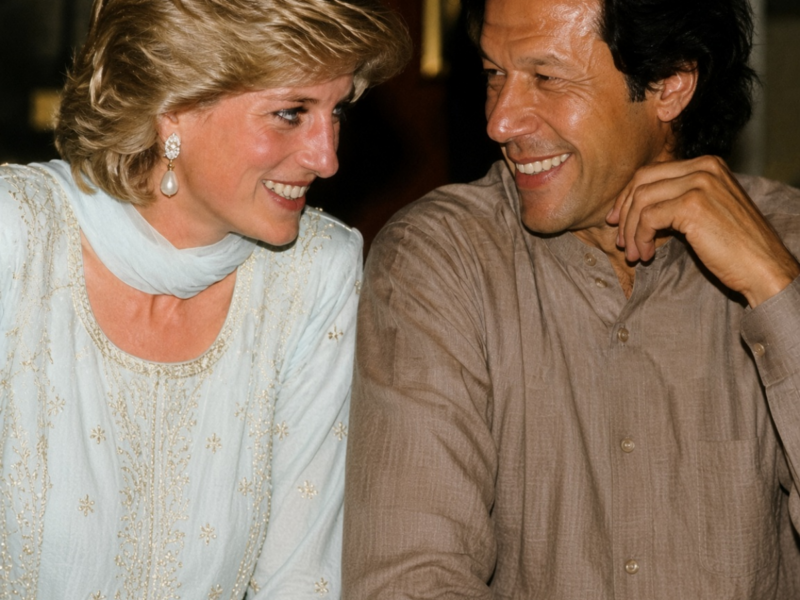
Diana Called Him ‘Mr. Wonderful’ — He Never Once Talked About Her Publicly.
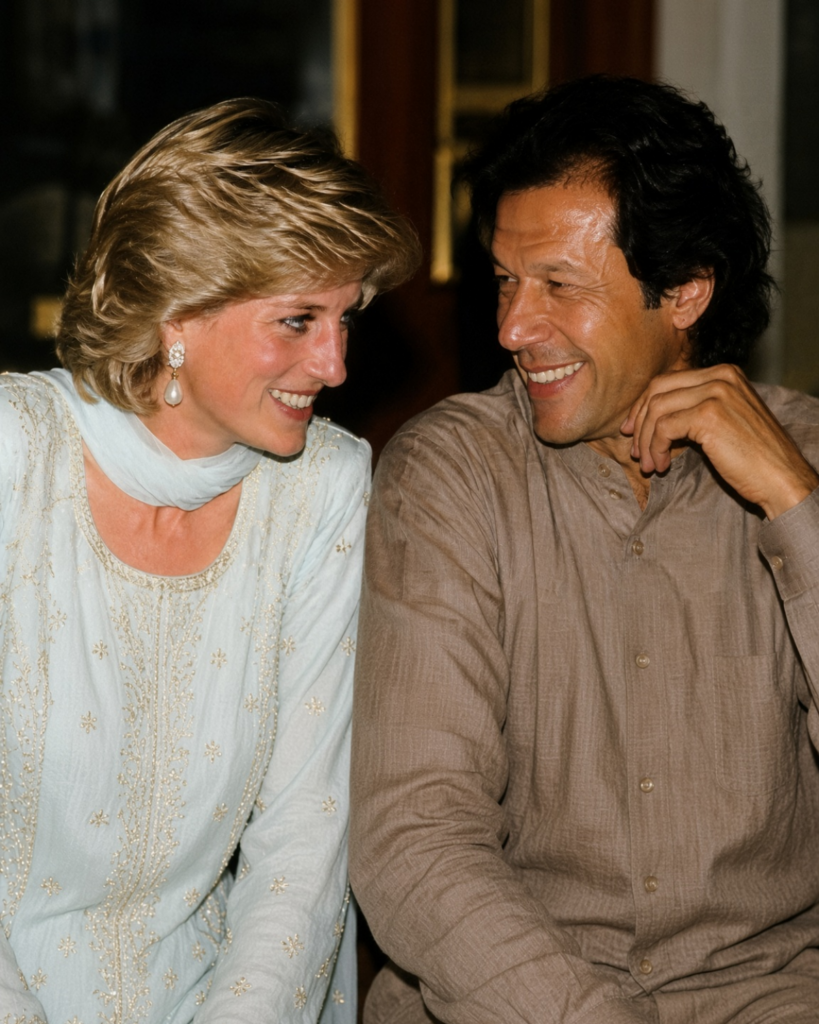
One afternoon in the autumn of 1995, a doctor was walking out of Royal Brompton Hospital in West London when he heard someone shout after him from across the corridor.
It wasn’t a title. It wasn’t even particularly polite.
“Oi, where are you going?”
He turned around.
It was Diana, Princess of Wales.
Of all the men Diana would be linked to in the years after her marriage ended, only one of them would later be described by the people who actually knew her as the love of her life.
It wasn’t an art dealer. It wasn’t a rugby captain. It wasn’t, in the end, the man she died with.
It was a Pakistani heart surgeon who never wanted any part of what came with loving her—and who loved her anyway.
By 1995, Diana’s marriage to Charles had been over in every way that mattered for years, even if the paperwork wouldn’t catch up until the following summer.
She had spent the better part of a decade being defined in public by a man she was no longer with in any real sense.
First as his wife. Then as his estranged wife. Then as the co-star of a divorce the entire country had an opinion about.
What she hadn’t had in all that time was anything resembling an ordinary relationship with an ordinary amount of privacy in it.
That was about to change for about two years—in a way almost nobody around her fully understood until long after it was over.
The introduction happened through a friend.
Oonagh Shanley-Toffolo was Diana’s acupuncturist and by that point something closer to a confidant.
And in the late summer of 1995, Oonagh’s husband was recovering at Royal Brompton from a serious heart operation—a triple bypass complicated by a major hemorrhage during surgery.
Diana, being the kind of friend who showed up, started visiting him regularly.
One of the surgeons overseeing his care and recovery was a young cardiac registrar named Hasnat Khan, working at the time under the well-known heart surgeon Magdi Yacoub.
Khan came into the room one day to update the family on the patient’s progress, spoke briefly to Diana as part of doing his job, and by his own account afterward, barely registered who he’d been talking to.
Diana registered him immediately.
The moment he left the room, she reportedly turned to Oonagh and said, without much subtlety at all, “Isn’t he drop-dead gorgeous?”
What turned a passing hospital introduction into an actual relationship was that second encounter in the corridor—Diana calling out after him, more command than greeting, entirely unlike the practiced formality she’d spent fifteen years learning to perform in public.
Khan would later say he was startled enough by the directness of it that he found himself agreeing to something he hadn’t planned on agreeing to at all.
He asked, almost on impulse, whether she’d like to come with him somewhere.
He didn’t expect her to say yes.
She did.
Their friendship became something else from there.
The timing of all this mattered more than either of them could have known at the start.
Diana and Khan’s relationship began in September of 1995—the same autumn that, behind the scenes and entirely without his knowledge, a BBC journalist named Martin Bashir was working to secure the interview that would become Panorama, the one where Diana would tell the country there had been three people in her marriage.
The two threads of her life that autumn ran almost exactly parallel and could not have been more different in character.
One: a calculated, high-stakes act of public reckoning that would detonate across the entire country in November.
The other: a private, low-stakes, almost accidental thing that started because a princess shouted after a doctor in a hospital corridor.
She was about to become more exposed, more scrutinized, more publicly raw than she had ever been in her life.
And at the exact same time, without any plan or announcement, she’d found the one relationship in her adult life that didn’t feel like it was happening in front of an audience.
The two threads weren’t entirely separate, either.
Khan actually met Bashir once in a pub alongside Diana and came away from the encounter uneasy in a way he couldn’t fully articulate at the time.
Bashir, he’d recall years later, spent the meeting asking oddly direct, personal questions.
Why hadn’t they married yet? When were they going to?
The kind of pointed curiosity that read less like small talk than reconnaissance.
Khan told Diana afterward to be careful of him.
She didn’t take the warning any more seriously than she’d take her son’s warning about the same man later that same year—after the interview had already aired and there was nothing left to be careful about.
It couldn’t stay that way for long, not with who she was.
But for a while, it genuinely did.
Diana began making what her circle later described as nightly visits to the hospital, slipping in and out with a level of ordinary persistence that had nothing to do with royal protocol.
She and Khan met almost exclusively at two places: Kensington Palace, where she had some control over who saw what, or his own modest flat, which the press simply didn’t know to look for.
Word of the relationship reached the media within a couple of months regardless.
By November of 1995, reporters had caught the scent of it, and what followed was considerably rougher than either of them had braced for.
Khan would later describe the press descending on every corner of his life at once.
Reporters tracking down old girlfriends. Calling his medical school. Phoning retired professors who taught him years earlier.
Anything for a fragment of color to run.
It went further than intrusive.
He received death threats.
Someone sent him a photograph of himself with a noose drawn around his neck.
It was, by any reasonable measure, not the ordinary cost of dating someone famous.
It was a genuine safety concern, and it fell entirely on a private citizen who had done nothing except treat a patient and then agree to have dinner with the man’s visitor.
Diana, for her part, tried hard to build a wall around him.
Her butler, Paul Burrell, became the quiet architect of what normal evenings they did manage to have—arranging candlelit dinners at Kensington Palace, telling the kitchen the princess had a guest so the chef would prepare extra portions without anyone downstairs needing to know who for.
“I organized this thing,” Burrell would later say, describing himself as the go-between who built them a small private world inside a life that otherwise had almost no privacy left in it at all.
It worked for a while, largely because so few people were let into the arrangement at all.
The specifics—the depth of it, the fact that this was the one relationship Diana would come closest to building a life around—stayed remarkably contained for the better part of two years.
Even so, she gave him a private nickname almost immediately: Mr. Wonderful.
They worked at staying hidden in ways that ranged from careful to almost theatrical.
On at least one occasion, wanting a normal night out, Diana put on a black wig and went with Khan to Ronnie Scott’s, the jazz club in Soho—sitting through a set as someone else entirely, unrecognized in a room full of people who would have stopped everything if they’d known who she actually was.
On another occasion, the two of them went to an ordinary pub, and Diana—who by that point in her life had people to do almost everything for her—asked Khan if she could be the one to go up and order the drinks, because she realized, a little delighted by the novelty of it, that she had genuinely never done it before.
She chatted easily with the bartender.
Nobody there had any idea.
The people close to Diana who watched this relationship unfold described something in her that hadn’t been visible in years.
Her biographer Sarah Bradford would later write that during this period Diana stopped carrying the resentment toward Camilla Parker Bowles that had defined so much of her public and private life up to that point—as though the sheer fact of being genuinely, privately happy with someone finally gave her enough distance to stop measuring herself against the woman Charles had chosen instead of her.
A friend, Lady Elsa Bowker, would later recall Diana telling her with something close to relief that she had finally found her peace—that he had given her everything she needed.
It wasn’t a quiet, uncomplicated happiness, though, and it’s worth resisting the urge to flatten it into one.
Another biographer, Christopher Andersen, would later describe the relationship in considerably rougher terms: epic arguments, doors slammed hard enough to be heard through walls, a genuinely stormy affair rather than a serene one.
Even William, still a young teenager at the time, could see the toll it was taking on his mother from the inside.
“Deliriously happy one moment,” Andersen wrote, “weeping uncontrollably the next.”
Whatever this relationship was, it wasn’t an escape from Diana’s intensity.
It was that same intensity finally aimed at someone who loved her back—with all the volatility that came attached to it.
Either way, it went further than late-night visits in disguises.
Diana wanted her sons to actually know the man she was spending her time with, rather than learning about him secondhand the way the rest of the country eventually would.
She introduced Khan to William and Harry directly, treating the relationship as something real enough to include her children in—not a secret to be managed away from them.
In 1996, she traveled to Pakistan to meet Khan’s family in person, wearing a traditional shalwar kameez for the visit rather than anything from her usual wardrobe, spending an afternoon having tea with them in a home entirely outside the world she’d grown up in.
Khan would say years later that she genuinely enjoyed herself that day—that she seemed drawn to what he called the eccentric warmth of an Asian family gathering, a texture of life about as far from Sandringham or Althorp as it was possible to get.
Closer to home, she made repeated visits to Khan’s aunt and uncle in Stratford-upon-Avon, staying with the family quietly enough that, as his uncle would later put it, they never let anyone know she’d been there at all.
She was serious enough about the relationship to start quietly researching what a life built around it would actually require.
Around this time, Diana asked an acquaintance who happened to be Muslim how a marriage between a Muslim and a Protestant actually worked in practice—not naming Khan directly, though the acquaintance had little doubt who she meant, and later said he suspected she was really trying to work out how his family might eventually react to her.
It was a small, telling detail—not a grand romantic gesture, but the quiet practical homework of someone actually trying to figure out whether an impossible-sounding future could be made to work.
For two people trying to build something real inside a life that made privacy almost structurally impossible, marriage was the obvious, terrifying next question.
And they did actually talk about it—not, by Khan’s own account, in any single defining conversation, but as an idea that kept surfacing between them without either of them fully committing to a plan.
Khan told her plainly that he thought the only way they could ever have anything resembling a normal life together would be to leave the country entirely and settle in Pakistan—where the press, he said, simply didn’t bother people the way they did in London.
Diana took the idea seriously enough to go and talk to Jemima Khan—no relation—married at the time to the cricketer-turned-politician Imran Khan, and already living the particular experience of a British woman who’d relocated for love into a completely different world.
Jemima would later describe Diana as, in her words, “madly in love,” seriously weighing what a life in Pakistan might actually look like.
But somewhere in that process, Khan got the impression the idea had quietly stopped feeling possible to her.
Whether because of the reality of it, or her sons, or the sheer scale of what leaving would have meant, he was never entirely sure.
At some point around the end of 1996 or the beginning of 1997, without telling Khan directly, Diana asked her butler, Paul Burrell, to make a quiet inquiry to a priest about whether the two of them could be married in secret.
Khan only learned about it afterward, and his own reaction, by his own account, was that the idea struck him as close to ridiculous—an aristocratic fantasy of doing the impossible by simply deciding hard enough that it would work out.
When he raised his doubts with her, Diana’s answer was the same answer she seemed to give to most obstacles in her life by that point: that everything would be all right.
It was, Khan would later reflect, both the most charming and the most maddening thing about her—an unshakable belief that difficulty was something you simply willed your way past rather than something that might actually stop you.
What actually stopped it wasn’t a scandal, or a betrayal, or an institution deciding she didn’t belong.
It was something closer to arithmetic.
Khan was a working cardiac surgeon who had built his entire adult identity around being taken seriously in operating rooms, not in newspapers—a profession that depended on exactly the kind of quiet, careful, undistracted focus that being publicly attached to the most photographed woman on Earth would have made permanently impossible.
There was a harder edge to that calculation, too—one that rarely gets said out loud in the more romantic retellings of this story.
A British Pakistani Muslim doctor marrying a former Princess of Wales in 1990s Britain would have meant absorbing not just tabloid scrutiny, but real, ugly racial hostility aimed at him and very possibly at his family back in Pakistan on top of everything else.
He told her more than once that his real fear wasn’t losing her.
It was that his life would become what he called hell simply by virtue of who she was—the press outside his flat, outside the operating theater, outside his family’s door for the rest of however long they were together.
He didn’t need her to convert to his religion, he’d later clarify, and never asked her to.
His genuine private worry ran somewhere else entirely: if they’d had a child together, he wasn’t sure how they would have navigated raising that child between two entirely different religious traditions—a question that had no easy answer and that he didn’t think either of them had actually solved, marriage talk or not.
By the summer of 1997, something had shifted between them that neither one of them ever fully explained to the public afterward.
It hadn’t been an unbroken two years, either, by most honest accounts.
The relationship had cooled and reignited more than once along the way, and Diana’s name had been linked briefly and separately to other men during the same stretch—an art dealer for a time, a rugby captain for another, neither connection carrying anything close to the weight this one did.
Khan would later say their final conversations happened in Battersea Park, on ordinary walks—the kind of setting that suited a relationship that had always tried to exist somewhere quieter than the rest of her life.
He described it as one of those moments where you simply know, from knowing someone well enough, that something isn’t right anymore—even before either person says so directly.
Across two separate meetings that summer, Diana told him it was over.
He asked, and she told him plainly that no one else was involved.
He believed her.
He found out otherwise the way most of the country did: from the news.
Within weeks of the breakup, Diana’s name was being linked to Dodi Fayed—and by the end of August, she was dead.
Khan didn’t speak publicly about any of it for years.
He didn’t give interviews, didn’t sell his story, didn’t confirm or deny the details that leaked out through friends and biographers in the immediate aftermath of her death.
When he finally did give a formal account—a statement to the Metropolitan Police in 2004, made public only in 2008 as part of the official inquest into her death—it wasn’t because he wanted the attention.
It was because an inquest examining conspiracy theories about whether her death had been engineered rather than accidental needed his testimony to help establish the plain, unglamorous truth of what her final months had actually looked like.
He gave the facts, declined to give a televised interview even by video link, and went back to being exactly as private as he’d always tried to be.
It would be more than two decades before he said much more than that.
In early 2021, after Diana’s brother, Charles Spencer, accused Martin Bashir of using forged documents and manipulative tactics to secure the 1995 Panorama interview, Khan finally spoke at length for the first time.
Not about the relationship itself—but in her defense.
He described watching Bashir work on her vulnerabilities with real skill, feeding her fabricated claims designed to isolate her further from people who might have talked her out of the interview altogether.
He revealed something that had never been public before: that William, still a teenager at the time, had hated the interview and told his mother directly that Bashir wasn’t a good person—a warning she hadn’t taken from a son who turned out to be right.
Khan came forward, he said, partly because a friend of Bashir’s had reached out asking him to help rehabilitate the disgraced journalist’s reputation, and he’d found he couldn’t do it.
Whatever loyalty he still felt, more than two decades on, wasn’t pointed in Bashir’s direction.
He said more than once since that he chose not to speak about most of the relationship itself for a simple reason: she wasn’t there anymore to respond if he got something wrong, and it seemed unfair to characterize a private life she could no longer characterize herself.
It’s a kind of restraint almost nobody else in Diana’s orbit ever managed to hold on to for this long.
Hasnat Khan still works as a cardiothoracic surgeon today, based in Essex, having spent years afterward continuing his career in London before eventually settling into a senior post at a hospital there in 2008.
Away from the operating room, he spent much of his career involved in humanitarian medical work, helping establish cardiac treatment centers in Saudi Arabia, Ethiopia, and his home country of Pakistan—the same unglamorous, technical, far-away-from-cameras kind of work he was doing in a hospital corridor the day a princess shouted after him and changed the next two years of both their lives.
He was there at her funeral.
He has never once, in nearly thirty years since, tried to build a public identity out of being the man some of Diana’s closest friends believed she loved the most.
That’s the part of this story that sits strangely against everything else in Diana’s public life.
She spent years being defined by an institution that decided again and again what role she was allowed to play.
Beautiful wife. Wronged wife. Cautionary tale. Tabloid protagonist.
The one relationship in her adult life that nobody engineered, that no family testified against, that no documentary or leaked tape ever forced into the open on someone else’s timetable, was also the one that quietly proved she was capable of an entirely ordinary kind of happiness—if the world had ever actually let her have it.
It didn’t end because anyone took it from her.
It ended because the same fame that made her Diana made an ordinary life with an ordinary man who genuinely loved her structurally impossible to hold on to.
And two months after she let it go, she was gone too—in the exact kind of blinding, chased, unprivate moment Hasnat Khan had spent two years trying to protect her from.









