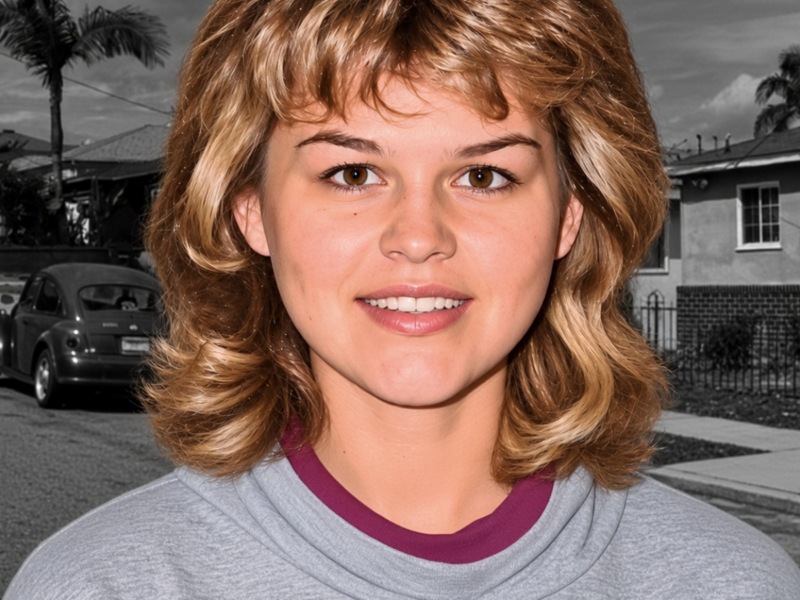
CALIFORNIA 1986 Cold Case Solved.
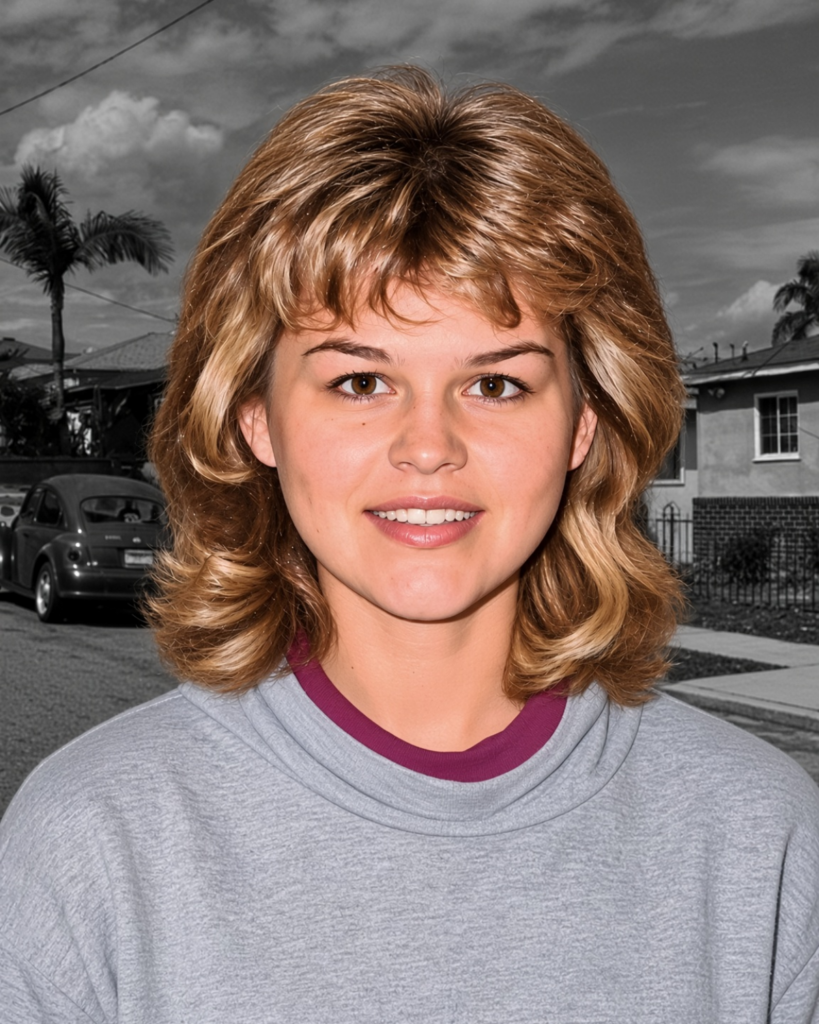
Forty years ago, a twenty-nine-year-old nursing director in Van Nuys, California, was beaten and shot three times inside the condo she shared with her husband of just three months.
Sherri Rasmussen had called in sick that morning. By evening, she was dead on her living room floor.
Her family was left devastated while detectives across the valley tried to explain how a newlywed could be killed at home in broad daylight.
The Los Angeles Police Department settled on an answer quickly: a burglary gone wrong. Two men, a stack of stereo equipment, and a stolen car. Case closed in everything but name.
But through all those years, Sherri’s father never accepted that explanation. He kept pointing detectives toward the same woman—his son-in-law’s former girlfriend, a police officer—and he was told he watched too much television.
The investigators had one piece of evidence that could have settled it from the start: a swab taken from a bite mark on Sherri’s arm.
For years, almost no one looked at it.
Then, in 2009, a single cup pulled from a trash can outside a Costco gave that swab a name—and the name belonged to someone who had spent the next twenty-three years inside the very department that was supposed to be hunting for her.
In early 1986, America was still in mourning.
On January 28th, the space shuttle Challenger had broken apart seventy-three seconds after lift-off, and the image of that white plume splitting across a blue Florida sky was everywhere.
Ronald Reagan was in his second term. In Los Angeles, the LAPD was fighting a very different kind of battle as gang wars and the crack epidemic spread violence across the city, leaving detectives with more cases than they could ever properly work.
Van Nuys sat in the middle of the San Fernando Valley—a sprawling stretch of Los Angeles made up of apartment blocks, condo complexes, car dealerships, and wide boulevards running in long, straight lines.
One of those was Balboa Boulevard. Inside a gated condominium complex on that street lived Sherri Rasmussen.
She was born on February 7th, 1957, in Walla Walla, Washington, and raised in Arizona.
She was the kind of student who finished high school early and started college at just sixteen.
She went on to Loma Linda University’s nursing program, worked in the coronary care unit at UCLA Medical Center, and earned her master’s degree in nursing from UCLA in 1980.
She rose fast: head nurse of UCLA’s coronary care unit, an unpaid assistant clinical professor lecturing nursing students, and by her late twenties, director of nursing for critical care at Glendale Adventist Medical Center.
She was six feet tall, athletic, confident, and known for speaking her mind.
Her father, Nels Rasmussen, had helped her buy the Van Nuys condo. He picked it partly because it had a drive-in garage, so his daughter wouldn’t have to walk along the street alone after coming home from late shifts.
It was a father’s precaution—the kind of small decision made out of love that no one expects to matter.
In June 1984, at a party, Sherri met John Ruetten, a UCLA-trained mechanical engineer from San Diego.
They started dating soon after, and in 1985, they got engaged.
What Sherri didn’t know at first was that John had a history that hadn’t fully ended.
At UCLA, John Ruetten had been close with a fellow student named Stephanie Lazarus—a political science and sociology major from Simi Valley who played on the women’s junior varsity basketball team.
Ruetten would later testify that the two had a casual sexual relationship on and off for several years after college, but that he never considered her his girlfriend.
Friends said Lazarus took it far more seriously than he did.
After graduating, Lazarus chose law enforcement over law school. She joined the Los Angeles Police Department and became a uniformed officer in 1983.
Classmates remembered her as tough and tenacious during training, especially in drills where recruits had to fight to keep control of a weapon.
She bought a .38 caliber Smith & Wesson revolver through the department as a backup gun.
Her first assignment was the Hollywood division—one of the busiest and roughest in the city.
In March 1985, she was transferred to the quieter Devonshire division in the northern San Fernando Valley, not far from where John and Sherri would soon be living.
In 1985, Lazarus learned that John was engaged to Sherri.
Her diary from that period, later recovered by investigators, described how badly the news hit her.
She wrote that she didn’t feel like working and that she couldn’t concentrate. That night, she woke up her roommate—a fellow officer—to talk about it. He later said it was the first time he had ever seen her cry.
In a letter written that August, she said she was truly in love with John.
And according to Ruetten’s own testimony, he slept with Lazarus one last time after his engagement—something he later called a mistake, and something he did not tell Sherri.
Sometime that summer, Lazarus showed up at Sherri’s office at Glendale Adventist.
According to what Sherri told her father afterward, Lazarus said she was still sleeping with John and would be there when the marriage fell apart.
Sherri went home and confronted her fiancé, who admitted what had happened and asked her to forgive him.
The wedding went ahead in November 1985. But the visits didn’t stop.
In January 1986, Lazarus brought her skis to the couple’s condo and asked John to wax them.
Days later, after John had left for work, she came back to collect them. She was in uniform. And she was armed.
On another morning that month, according to the Rasmussen family, Sherri came downstairs and found Lazarus standing in her living room—again in uniform.
Sherri ordered her out. She told her father about it.
She did not think calling the police would help, because the woman in her living room was the police.
The couple had also been getting hang-up calls at the condo—calls Lazarus would admit to making almost forty years later.
On February 23rd, 1986, a friend visited the couple, and they used the front door instead of the garage.
Afterward, the front door was accidentally left unlocked.
On the morning of February 24th, 1986, John Ruetten left for his job at a hard drive manufacturer in Chatsworth at around 7:20 a.m.
Sherri was supposed to give a presentation at the hospital that day, but she’d hurt her back in an aerobics class and told John she might call in sick.
She stayed home in her bathrobe.
Stephanie Lazarus had the day off.
Later that morning, a neighbor noticed the couple’s garage door standing open with no car inside.
John called home several times from work and got no answer—not even the answering machine, which was strange, because both of them always switched it on when they left.
Around midday, a housekeeper working in a nearby unit heard what sounded like two people fighting and then something heavy falling.
She assumed it was a domestic argument. She didn’t call anyone.
That evening, John pulled up to the condo and saw broken glass on the driveway.
Sherri’s BMW was gone.
Inside, he found his wife on the living room floor.
He called 911.
Sherri had been shot three times in the chest.
A quilted blanket had been wrapped around the gun to muffle the sound. Her face was badly bruised, including a mark that looked like it had been made by the muzzle of a pistol.
A porcelain vase was shattered. A credenza had been knocked over. There was a bloody handprint near the panic button on the burglar alarm.
There were marks on her wrists suggesting someone had tried to tie her up.
Near the front door, stereo equipment and a VCR had been stacked into a neat pile.
Her jewelry was untouched.
And on the inside of her left forearm, there was a bite mark.
A criminalist swabbed it.
The lead detective, Lyle Mayer, reached a conclusion fast.
Sherri, he believed, had surprised burglars in the act. The stacked electronics looked like loot waiting to be carried out. The missing BMW looked like a getaway car.
And not long afterward, another burglary in the same area—where a woman came home to find two men inside, one of them armed—seemed to confirm the theory.
His partner did point something out, though. Bites in struggles were far more often inflicted by women, and most burglars were men.
But the burglary theory stood.
Eleven days after the murder, Sherri’s BMW turned up about two miles away—unlocked, with the key still in the ignition.
Fingerprints were collected. None led anywhere.
Nels and Loretta Rasmussen told the detectives about the woman who had come to Sherri’s office. The woman who had walked into her living room in uniform. The woman their daughter had been afraid of.
Nels said Mayer wrote it down. But according to Nels, the detective told him there was nothing there.
When Nels kept pushing—and later even wrote to LAPD Chief Daryl Gates—he was told he’d been watching too much television.
Nels had his own reasons for doubting the burglary story.
Sherri was six feet tall, strong, and in excellent shape. Mayer had told him the struggle inside the condo may have lasted somewhere between forty-five minutes and an hour and a half.
An extraordinarily long time for burglars who were supposedly after electronics.
And whoever fired the gun had pressed a blanket around it to deaden the sound.
To a father, that did not look like panic. It looked like intent.
A year after the murder, the Rasmussens held a news conference and offered a reward. Nothing came of it.
In 1988, the family approached the well-known true crime author Ann Rule about writing a book on the case.
Rule agreed to look into it and asked a retired LAPD detective she knew to make some inquiries.
A few days later, according to Nels, she told him the case was too hot to handle, and she would not be writing about it.
The investigation never pointed at Stephanie Lazarus.
Not because there was nothing to see—but because no one was willing to look.
Two weeks after Sherri’s death, Lazarus reported her .38 revolver stolen.
She did not report it to her own department, as required. She reported it to the Santa Monica Police Department, saying it had been taken from her car near the pier.
Her patrol partner at the time would later remember a different version—that the gun had been lost from a fanny pack while she was jogging.
The gun has never been found.
John Ruetten, unable to bear living in the condo, moved back in with his parents in San Diego.
Remarkably, he and Lazarus stayed in occasional contact over the next few years, including a trip to Hawaii together in 1989.
According to Mayer’s own notes, at some point John called the detective and asked whether he was absolutely sure there was no evidence connecting Lazarus to his wife’s death.
The years began to pass.
Mayer retired in 1991.
The new detective on the case told Nels he couldn’t follow up on Sherri’s notes and didn’t expect new leads.
In 1993, with DNA testing now available, Nels offered to pay for the evidence to be tested himself.
He was told the police needed a suspect first.
The bite swab that might have given them one sat in a freezer at the county coroner’s office, untested.
In 1997, a former coworker of Sherri’s secretary contacted police to pass along what the secretary had once described: a confrontation between Sherri and a woman at her office in the weeks before the murder.
No one followed up. The secretary died three years later.
While the Rasmussens waited, Stephanie Lazarus built a career.
She worked background investigations on new recruits and spent time in internal affairs.
She was promoted to detective in 1994. She married a fellow officer and adopted a daughter.
And twice during the 1990s, she was assigned to the Van Nuys division—the same station where Sherri Rasmussen’s murder file was kept.
That detail would matter later.
When investigators finally pulled the case apart, they found that the original detective’s handwritten notes from the first three months were missing.
Records of interviews in which Nels and John had discussed Lazarus were not in the file.
The only trace of her name in the early investigation was a brief note calling her a former girlfriend.
Who removed those records, and when, has never been established. No one has ever been charged with tampering.
But the gaps were real.
By 2004, Lazarus was working in the LAPD’s art theft unit—recovering stolen paintings and sculptures, and occasionally appearing in the press.
That same year, the department’s new cold case unit sent Sherri’s evidence to a criminalist named Jennifer Francis.
When she looked for the bite swab, it was missing from LAPD property.
It was eventually found in a freezer at the coroner’s office, where samples that old had never been entered into the computer system.
Francis tested it. The saliva came from a woman.
There was no match in CODIS—the national DNA database—because Lazarus, a police officer with no criminal record, had never been entered into it.
But the result alone should have broken the burglary theory open.
Two male burglars could not have left a woman’s bite on Sherri’s arm.
According to a lawsuit Francis filed later, when she asked about the woman mentioned in the file, a detective replied that she must mean the LAPD detective—and told her that person was not part of this.
A jury later ruled for the city in that lawsuit, and the conversation itself has never been independently confirmed.
Either way, the swab result went back into the file, and the case went cold again.
More than two decades after the murder, the file landed on the desk of Jim Nuttall, a homicide detective at Van Nuys, working alongside his partner Pete Barba.
Nuttall read the DNA report first. A woman had been there.
Then he looked at the crime scene with fresh eyes, and the burglary story started to fall apart.
The jewelry box sat in plain view, untouched.
The condo was in the middle of a gated complex, surrounded by neighbors, in daylight.
And on a record player at the top of that neat stack of electronics was a smear of Sherri’s own blood—left by someone wearing gloves.
If the electronics had been stacked before the struggle, they would have been knocked over during it. They had been stacked afterward.
Someone had staged a burglary.
Nuttall and Barba built a list of five women from Sherri’s life.
Three were cleared quickly through DNA. A nurse who’d had tension with Sherri at work was cleared too, through a covertly collected sample.
That left the fifth name.
When Nuttall called John Ruetten, John told him Lazarus was a police officer—and he said he’d given her name to detectives twenty-three years earlier.
Nuttall knew how dangerous the next step was.
If Lazarus was guilty and learned she was a suspect, she could prepare.
If she was innocent, they would be smearing a respected detective with no disciplinary history and no civilian complaints on her record.
So they kept it quiet. In their notes, she was referred to only as “number five.”
They worked the case after hours, behind closed doors.
They pieced together the backup gun reported stolen two weeks after the murder. They confirmed Lazarus had been off duty that day.
And they saw the case through the eyes of a trained officer.
A cop would know not to use her duty weapon. A cop would know exactly what a hurried burglary scene should look like to an overworked detective.
But without the gun, only DNA could prove it.
In May 2009, a surveillance team followed Stephanie Lazarus.
At a Costco in Simi Valley, she finished a drink and dropped the cup and straw in a trash can.
Officers retrieved them.
The lab compared the saliva on that cup with the bite mark taken from Sherri’s left forearm in 1986.
It was a match.
The wound a twenty-nine-year-old nurse had suffered while fighting for her life in her own living room—swabbed on the night of February 24th, 1986, and forgotten in a coroner’s freezer for most of two decades—had finally given up its answer.
The case was handed to the robbery-homicide division, and the operation was briefed all the way up to Chief William Bratton.
On the day of the arrest, dozens of officers were assembled and sent to wait in Simi Valley, told only that they would be serving a search warrant outside the city.
In June 2009, two detectives with no personal ties to Lazarus—Greg Stearns and Dan Jaramillo—called her down to the jail at Parker Center, LAPD headquarters, saying a suspect in custody wanted to talk about an art theft.
The location was chosen deliberately. To enter, she would have to surrender her gun.
Inside the interview room, the detectives told her the real reason. Her name had come up in an old homicide: Sherri Rasmussen.
Lazarus said she remembered little. But over the course of the conversation, she indirectly acknowledged visits to both Sherri’s office and the condo—until she accused the detectives of treating her as a suspect.
When the detectives mentioned DNA and asked whether she’d provide a sample, she said she needed to talk to someone and walked out of the room.
She was arrested on the spot for the murder of Sherri Rasmussen.
The news stunned the LAPD.
Colleagues knew Lazarus as energetic and supportive—a detective who organized child care for officers’ families.
She had spent twenty-three years walking the same halls, wearing the same badge as the people who were supposed to find Sherri’s killer.
In her home, searchers found her diary from the mid-1980s, full of entries about John. Her computer showed she had searched online for his name several times in the late 1990s.
Lazarus retired from the LAPD while in custody.
When her bail hearing finally came, nearly six months later, Judge Robert Perry set bail at $10 million—more than twice what prosecutors had asked for—calling the case against her very strong and saying she could be a flight risk.
Over the next three years, her defense tried to have the case thrown out, arguing the evidence was too old to fairly challenge and that her statements at Parker Center had been obtained improperly.
The judge rejected every motion.
The trial opened in downtown Los Angeles in February 2012—twenty-six years after the murder.
Prosecutors argued the motive was jealousy, and prosecutor Shannon Presby summed up the case in one line: “A bite, a bullet, a gun barrel, and a broken heart.”
John Ruetten testified, breaking down several times on the stand.
The defense, led by attorney Mark Overland, argued the burglary theory had been right all along.
Overland attacked the bite swab—pointing to how it had been stored for more than two decades, and arguing it could have been contaminated. He pointed to fingerprints at the scene that didn’t belong to Lazarus.
Lazarus did not testify.
In closing, prosecutor Paul Nunez showed the jury photographs of Sherri’s injuries and told them it had not been a fair fight.
In March 2012, the jury found Stephanie Lazarus guilty of first-degree murder.
On May 11th, 2012, Judge Robert Perry sentenced her to twenty-five years to life, plus two years for personal use of a firearm—twenty-seven years to life in total.
Before the sentence, John Ruetten told the court that knowing Sherri died because she met and married him brought him to his knees.
LAPD Chief Charlie Beck called the case “a tragedy on every level” and apologized for how long it had taken.
Lazarus appealed. In 2015, a California appeals court unanimously upheld her conviction, and the California Supreme Court declined to review it.
Sherri’s parents sued the city over how the original investigation had been handled, but the case was dismissed as filed too late.
Then, in November 2023, after more than a decade of insisting she was innocent, Stephanie Lazarus admitted it.
At a parole hearing made possible by a California law giving special consideration to people who committed crimes before age twenty-six, she confessed to killing Sherri.
She said that on the morning of the murder, she called the condo hoping to hear John’s voice, heard Sherri instead, and drove over.
She described the violent struggle, and she said it made her sick that she had taken an oath to protect people—and then took a nurse’s life.
The panel recommended her release.
Sherri’s family was stunned.
Governor Gavin Newsom asked the full parole board to review the decision.
At that review, Sherri’s sisters and John Ruetten described decades of grief and argued the murder was nothing like an impulsive act by a love-struck young woman.
Greg Stearns, one of the detectives who arrested her, told the board that the improvised silencer, the staging, and the cover-up were not signs of youth, but of sophistication.
One of Sherri’s nieces pointed out that Lazarus had twenty-three years to turn herself in.
And the board played a video Nels Rasmussen had recorded before he died in 2020—made specifically for the day his daughter’s killer might ask to go free.
In October 2024, the grant was rescinded.
In February 2025, another panel denied parole, saying her account of a mutual fight didn’t match the evidence. As the commissioner told her, she had been the only one committing that violence.
And on October 9th, 2026, Lazarus, now sixty-six years old, was denied parole once again. She told the panel she was truly and immensely sorry. The commissioner said she still wasn’t being completely honest.
One of them put it plainly: she was a detective who got away with murder for twenty-three years.
John Ruetten, who has since remarried, urged the board to remember her ability to fool people.
Stephanie Lazarus remains at the California Institution for Women in Corona. She was denied for another three years, though she can request an earlier hearing.
The Sherri Rasmussen case leaves three lessons.
The first lesson is about tunnel vision.
Detectives in 1986 settled on a burglary within days, and every new fact was bent to fit it. A bite mark that pointed toward a woman. A stack of electronics that made no sense. A father describing a uniformed officer in his daughter’s living room.
After the arrest, even former Chief Daryl Gates said that if investigators had failed to follow up, shame on them.
A theory should be tested against the evidence—not protected from it.
The second lesson is about evidence that waits.
A criminalist in 1986 swabbed a bite mark long before DNA testing existed in police work. That swab sat in a freezer for nearly two decades, and it became the single piece of evidence that solved the case.
If someone you love is the victim of an unsolved crime, ask the investigating agency directly whether the biological evidence has been tested with modern DNA methods—and ask again every few years.
The third lesson is about the warnings people give before something terrible happens.
Sherri told her father exactly who frightened her. Her family repeated it for twenty-three years.
When someone keeps showing up uninvited at your work, at your home, or calls and hangs up—write down every incident with dates and times. Tell more than one person. Report it to more than one agency, even when the person is someone with authority.









