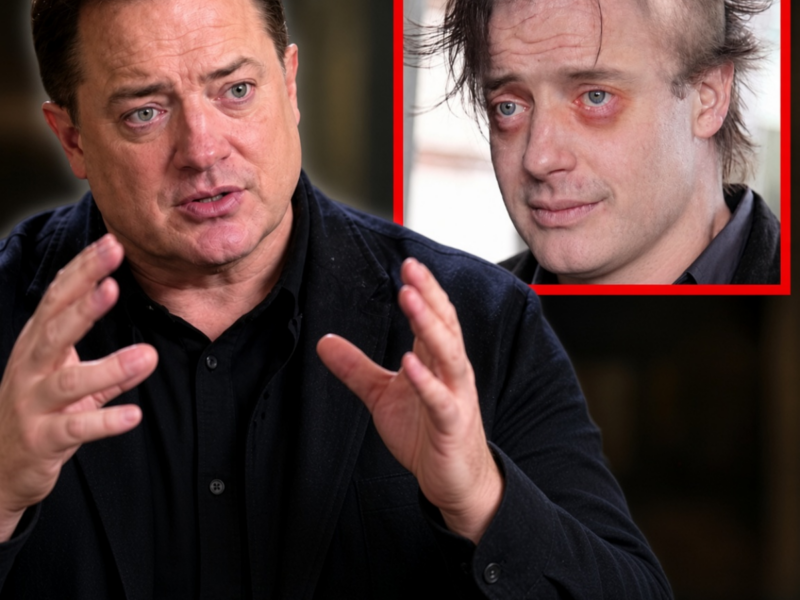
Brendan Fraser Breaks His Silence On Being BLACKLISTED From Hollywood.
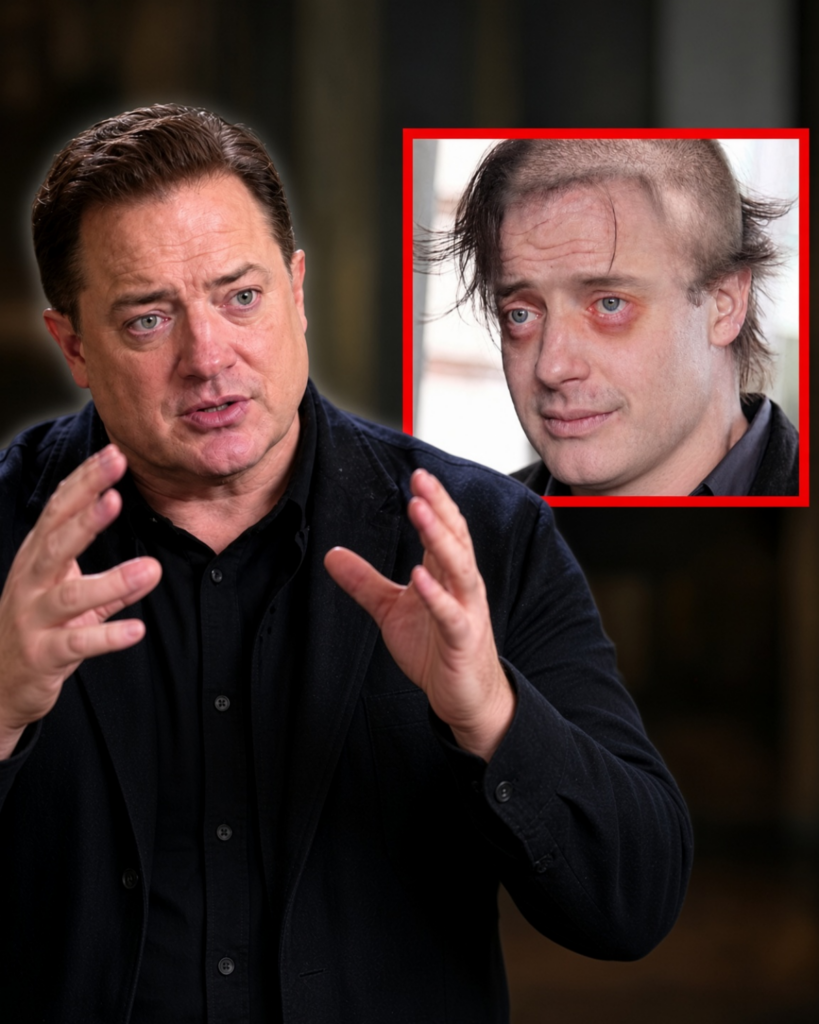
Brendan Fraser is an actor that young people might not easily remember now, but he was a big star at the height of his career until many things took him away from the cameras.
But now this actor has made a major comeback.
Brendan Fraser was once one of Hollywood’s biggest leading men, known for mixing action, humor, and heart.
Then for nearly two decades, the calls stopped, major roles disappeared, and Fraser seemed to vanish from the spotlight.
But his absence wasn’t simply a case of Hollywood moving on.
Behind his disappearance was a far more complicated struggle involving personal hardship and a decision to speak up.
Could asking for justice have changed the course of his career?
Fraser’s long road back reveals what really happened when the cameras stopped rolling.
The career blackout begins.
Brendan Fraser’s career once soared with unforgettable roles that captured audiences worldwide.
Then, almost out of nowhere, his phone stopped ringing and film offers grew scarce.
This silence wasn’t part of the usual ups and downs every actor experiences.
It lingered, stretching on for nearly 20 years.
Fans wondered why someone so beloved would seemingly vanish from the spotlight without explanation.
Fraser himself described feeling a strange halt in momentum.
Brendan Fraser opens up about why he disappeared from the spotlight.
The 49-year-old actor is back starring in the new FX series Trust.
It felt as if an invisible barrier had been raised around him.
The timing was heartbreaking.
Just as he was reaching peak fame, doors that once flew open appeared firmly shut.
It was more than a slump.
It was a career blackout that left many puzzled.
Rumors began swirling about what had caused this sudden freeze in opportunities.
Some people pointed to a blacklist, a word whispered quietly in Hollywood circles, but nothing was confirmed.
Fraser’s silence added to the mystery.
For years, he spoke little about what had happened, leaving industry observers to fill in the blanks with speculation.
Though labeled by some as a career decline, those closest to Fraser sensed there was much more beneath the surface.
This wasn’t simply fading interest or changing tastes in casting directors.
The evidence suggested an intentional sidelining, something deliberate that pushed him away from center stage.
But what triggered such a drastic turn?
Throughout this period, Fraser grappled with questions about his own fate.
Was his disappearance from major roles punishment, protection, or just a bitter twist of chance?
His later revelations would hint that the roots of this silence were tangled in darker experiences behind closed doors.
Yet, even with this uncertainty, his desire to act and create never faded.
The few supporting roles Fraser landed became smaller and fewer, as if his name was being quietly erased from casting calls.
Behind the scenes, he faced battles no actor speaks of openly.
Internal struggles and heavy losses shaped his path away from the limelight.
The divide between his public persona and private reality grew wider each year.
Despite everything, Fraser held on to a glimmer of hope.
He believed his story wasn’t finished and that the silence might one day break.
What happened in those 20 years would only fully come to light after he found the courage to speak.
His eventual honesty would lift the veil on a darker Hollywood truth few dared to confront.
Even before the full picture emerged, it was clear that Brendan Fraser’s sudden career blackout was no simple accident.
There was a deep story lurking beneath the quiet, one that would challenge perceptions of fame, power, and justice in the entertainment world.
This shadowed moment in Fraser’s life connects closely to events in 2003 that changed everything, not just for him, but for many who witnessed Hollywood’s unseen battles firsthand.
The 2003 incident and its fallout.
In the summer of 2003, Brendan Fraser attended a luncheon in Beverly Hills hosted by the Hollywood Foreign Press Association.
After the event, he alleges encountering a powerful figure within the organization who made an unwanted physical advance during a handshake.
Fraser described the experience as a sudden invisible weight pressing down on him, something unsettling and deeply uncomfortable.
Though the incident was briefly considered for legal action, Fraser ultimately chose to stay silent publicly.
Instead, he confided in close friends and demanded a private apology from the individual involved.
His representatives sent a formal request for acknowledgement, but the response contained no admission of wrongdoing.
What followed was a promise from the association that Fraser would never again have to share a room with the man in question.
Later, the accused denied the claims.
The conflicting narratives only added to Fraser’s distress.
He spoke openly years afterward about how the incident left him depressed and worried if it directly impacted the sharp decline in his acting opportunities.
At a 2003 luncheon, Fraser says the claimed incident made him feel ill.
Meanwhile, Fraser says, quote, “I became depressed. I was blaming myself and I was miserable.”
The silence that followed was deafening and Fraser wondered if closing his mouth had cost him his career.
In 2018, he broke his silence in a magazine interview, describing the quiet aftermath as stifling.
Job offers dried up, and the phone stopped ringing.
Yet, when pressed further about the power behind the scenes, Fraser complicated the tale, suggesting that such organizations or individuals did not wield absolute control over his fate.
The uncertainty about who truly influenced his career lent the story a haunting ambiguity.
The official investigation by the Hollywood Foreign Press Association years later concluded that the contact was inappropriate but not malicious, framing it as a misguided joke rather than harassment.
Fraser refused to participate in the joint statement issued afterward, accusing the association of protecting its own.
He felt the system was rigged to silence victims and shield offenders, cutting off his future in the process.
This episode marked a turning point not just in Fraser’s life but in how many actors perceived speaking out in Hollywood.
The personal toll was immense, leading Fraser to withdraw emotionally and professionally.
He embraced a retreat from awards shows and major industry events, holding firm to his principle of authenticity and refusing to reward organizations he felt had betrayed him.
Behind the headlines and accusations, Fraser’s story revealed a devastating truth.
Sometimes the cost of pursuing justice in toxic environments is the very career you built.
The longer silence stretches, the harder it becomes for anyone to challenge the status quo.
Fraser’s experience would later inspire others to voice their own truths, shining light on a culture long hidden in shadow.
While the fallout from this 2003 incident exacted a heavy price on Fraser’s career, it was not the only force at work.
The way Hollywood as a whole responded played a crucial role in deepening his isolation.
Hollywood’s silent response.
Hollywood’s reaction to Brendan Fraser’s situation was noticeably quiet.
Studios and agents seemed hesitant, even reluctant to engage.
Phone calls stopped coming and casting directors who once courted him withdrew their interest.
This silence from the industry was telling.
It was as if an unspoken rule had been enforced, placing Fraser on the sidelines with no formal explanation.
Behind the scenes, major groups in the industry worked hard to control stories and how people were seen.
When Fraser made his claims, and an inquiry followed, things stirred up.
Still, it seemed like strong loyalty inside the group helped many people avoid major fallout.
Those unclear messages likely made other people think twice about coming forward.
Fraser also sounded doubtful about how much influence some groups really had.
He said some ideas about who decided his outcome were too simple.
At the same time, he pointed to a wider setup where key people kept quiet together.
That fear and that shared silence drowned out voices, including his.
Other performers who went through similar treatment also stayed quiet or they lost ground at work.
This showed a bigger issue.
The industry system often protects those with influence.
It also tends to push aside anyone who speaks up.
In most cases, the odds never shift toward the person who was harmed.
Support showed up now and then, but it did not change the overall direction.
Fraser skipped big events such as the Golden Globes.
To him, this was about sticking to his beliefs and not giving in to systems he did not plan to alter.
Fans and supporters said he was brave.
They also pointed out how hard it is to resist something you cannot see.
The quiet was not just him doing nothing.
It looked more like being pushed out.
His parts became smaller and he appeared less often on screen.
Those changes showed what can happen when you cross limits.
People do not announce.
In Hollywood, others seemed careful.
Their restraint made the stakes clear.
When you challenge old power, you can end up pushed aside for speaking up.
After long years with little attention from the industry, Fraser did get noticed again.
He later earned major awards and returned to leading work.
That turn suggested things might be shifting.
Still, the way the silence played out left tough issues behind.
It raised questions about what people should be held responsible for and what justice means when keeping a job can hinge on following rules no one writes down.
This quiet ostracism exposed the broader reality facing many artists.
To thrive, sometimes you must stay silent.
Fraser’s story challenges that norm, revealing the profound cost when silence is traded for safety.
Physical hardships compounded Fraser’s retreat, adding an often overlooked layer to his story that goes beyond industry politics and power.
Physical struggles behind the scenes.
As Brendan Fraser faced the quiet, cold shoulder of Hollywood, his body was also battling immense challenges.
During the filming of the original The Mummy, a stunt went terribly wrong.
Fraser lost consciousness after a hanging scene where the rope was pulled too tight.
“I was standing on my toes like this with the rope and you know, you only got so far to go.”
“And Steen ran over and he said, ‘Hey, uh, it doesn’t really look like—'”
He later recounted waking up covered in dirt and surrounded by silence, feeling the weight of the physical toll he was paying for his roles.
That moment was a deep warning of the cost acting was exacting on his body.
Over the years, Fraser endured multiple serious injuries, including surgeries on his spine, a partial knee replacement, and vocal cord surgery.
The physical demands of his work were relentless, leaving him in pain and requiring constant medical care.
For nearly seven years, hospitals became a familiar setting as he struggled to heal while trying to maintain his craft.
Despite this, Fraser remained dedicated to his art.
He embraced the discomfort and risks, believing that feeling some danger was part of truly living and performing.
This mindset pushed him to keep returning to demanding roles, often at great personal cost.
His injuries compounded the emotional and professional toll, creating a complex web of challenges few outside the industry could fully grasp.
These physical struggles also forced Fraser into periods of isolation as he dealt with pain and recovery.
His ability to accept new work diminished.
Behind the scenes, he battled far from the public eye.
While rumors and questions about his career silence continued, the separation between the public figure and personal reality grew even wider.
Fraser’s injuries and the long healing process added layers of difficulty to an already fragile career.
Physical pain intertwined with professional setbacks, leaving him vulnerable and strained.
Yet, through it all, his resilience shone through.
He refused to let circumstances define the end of his journey.
Holding on to hope, even during the darkest moments, his story shines a spotlight on an often overlooked aspect of Hollywood’s demands.
The physical sacrifices actors make for their roles.
While audiences see the finished product on screen, the injuries and struggles behind the scenes frequently remain hidden.
For Fraser, the scars carried both emotional and physical weight, shaping the contours of his mid-career silence.
Beyond the personal cost, Fraser’s experience highlights the toll of high-octane productions on actors’ bodies and spirits.
His perseverance amid pain speaks to a deep passion for storytelling, even in the face of extraordinary adversity.
This chapter of his life is a testament to the grit and dedication behind the glamour of Hollywood.
Despite these setbacks, Fraser’s journey was far from unique in the industry.
His story echoes with many who face unseen battles as part of their career.
The challenges Fraser encountered physically and emotionally are not isolated but are part of a troubling pattern shared by others in the industry, revealing a culture that often punishes those who dare to speak up.
Parallels and patterns in Hollywood.
Brendan Fraser’s story is just one part of a wider set of accounts.
It involves actors whose paths changed after they dealt with powerful people or decided to speak up.
Terry Crews is one example.
He described what happened to him with a top Hollywood figure.
At first, he said he kept quiet because he worried about what it would mean for his work.
Later, he told the public and described what he went through.
His account also points to the same kind of pressure and the same kind of danger to a career.
People have argued for years that the entertainment world often shields those at the top.
At the same time, it can leave victims on the outside.
Some women in film have shared similar experiences.
Scarlett Johansson and Daryl Hannah have talked about harassment and about what followed when they did not go along with unwanted advances.
In their telling, roles became smaller and job chances seemed to drop.
Taken together, these stories show that the issue is not limited to one place or one group.
It shows up across gender and across rank.
Actress Rose McGowan spoke about being blacklisted after she criticized abusive conduct in public.
She said that when people speak up, they can face real fallout.
After her comments, it seemed to scare others into staying quiet.
Many victims fear their careers will suffer, so they do not report what happens.
In the end, harmful relationships keep going.
This also looks bigger than one person.
It suggests a wider pattern in which fame and intimidation can keep things in control.
In that kind of group, people often back each other, so claims do not turn into real consequences.
Anyone who pushes back may end up alone, shut out at work, or worse.
Alongside the personal accounts, there are ideas and unverified stories that point to secret attempts to shut down or block artists who talk too openly.
It is hard to confirm any of it.
Still, the claims start to feel more real as other people come forward.
Fraser’s situation is often cited with similar cases.
That link makes many observers more uneasy about what might be going on behind the scenes in Hollywood.
The impact can be serious.
Careers can stall.
At the same time, a quiet way of living can become the norm.
Speaking up then looks costly.
The damage does not stay with one person.
It also shows up in how the work is made and what the industry stands for.
When people who share the truth are pushed aside, Hollywood wastes skill.
It can also keep repeating harm.
Seeing these connections puts Fraser’s path into a wider picture.
It can look like part of a long fight against power that stays stacked.
His decision to speak out adds fuel to a larger push.
Many want change, more openness, and fair treatment for the people who actually create the art.
Even with the danger, Fraser’s story, and others like it, are shifting how people talk about justice and getting through the system.
The real issue is still there.
What will it take for Hollywood to step away from this pattern?
With this understanding, we can now appreciate the significance of Fraser’s recent resurgence, not just as a comeback, but as a challenge to the old rules.
The unexpected comeback.
Brendan Fraser had been out of the public eye for a long time.
When he came back, people in both the audience and the film world were genuinely shocked.
His main role in The Whale showed a kind of emotion that felt unguarded.
The way he played it made room for pain and fragility, things that do not often show up so plainly in movies.
At the Venice Film Festival, his work brought a standing ovation.
It went on for about six minutes.
A lot of viewers felt it was the kind of moment he should have had sooner after years of being overlooked.
That loud reaction seemed to shift things for him.
His path forward looked different right away, as if some doors finally opened.
Not long after, he won the Academy Award for Best Actor.
“I thank the Academy for this honor and for our studio A24 for making such a bold film. And I’m grateful to Darren Aronofsky.”
That win backed up what many had seen on screen, his real talent and his ability to push through hard times.
For Fraser, the award was more than a personal win.
It also sent a message about Hollywood and who it can welcome back, even if someone has been sidelined by hardship for years.
Fraser’s comeback kept moving.
Before long, word spread that The Mummy 4 is in the works.
Fraser is set to step back into the role of Rick O’Connell.
For many, this feels like a return to where it all began.
It ties old memories to a new shot at the spotlight.
Fans took to social media right away.
They shared how happy they were to see him back on the big screen.
Still, Fraser is not acting like it is all smooth sailing.
He sounds careful and thoughtful when he talks about the path ahead.
He says that parts of the business still run on tough rules, including rules people do not talk about.
Even so, he seems hopeful.
That hope comes from more attention now and from voices that push for change, including his.
The industry, he suggests, is starting to shift in small ways.
It is giving more room to real stories, not just polish and hype.
There is another side to his return too.
His story points to grit and bravery.
Fraser has spoken about hard times in his own life, covering the personal and the work-related as well as the physical side.
Those words have helped many people who deal with similar problems.
By sharing his truth, he pushes back on the notion that you must stay quiet to make it in Hollywood.
He points to a different idea where honesty and success can exist at the same time.









