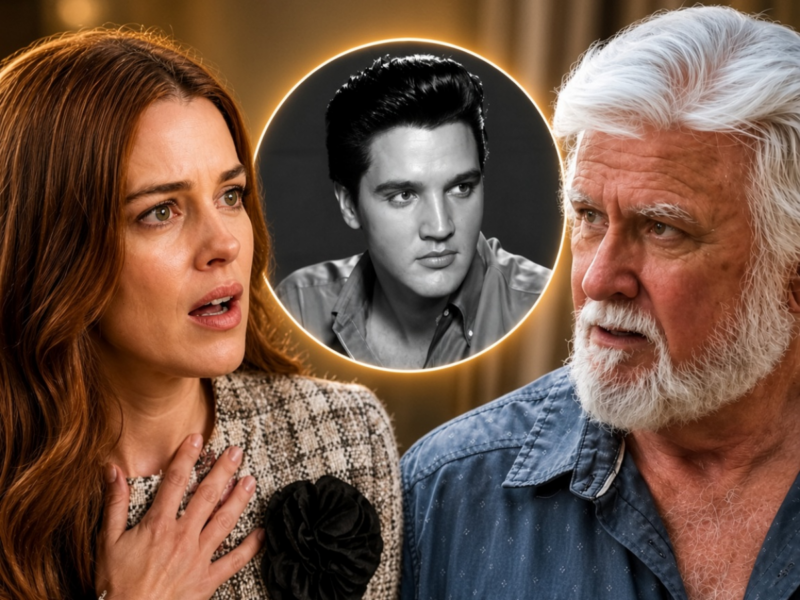
Bob Joyce Meets Elvis’ Granddaughter — Her Reaction Raises Questions.
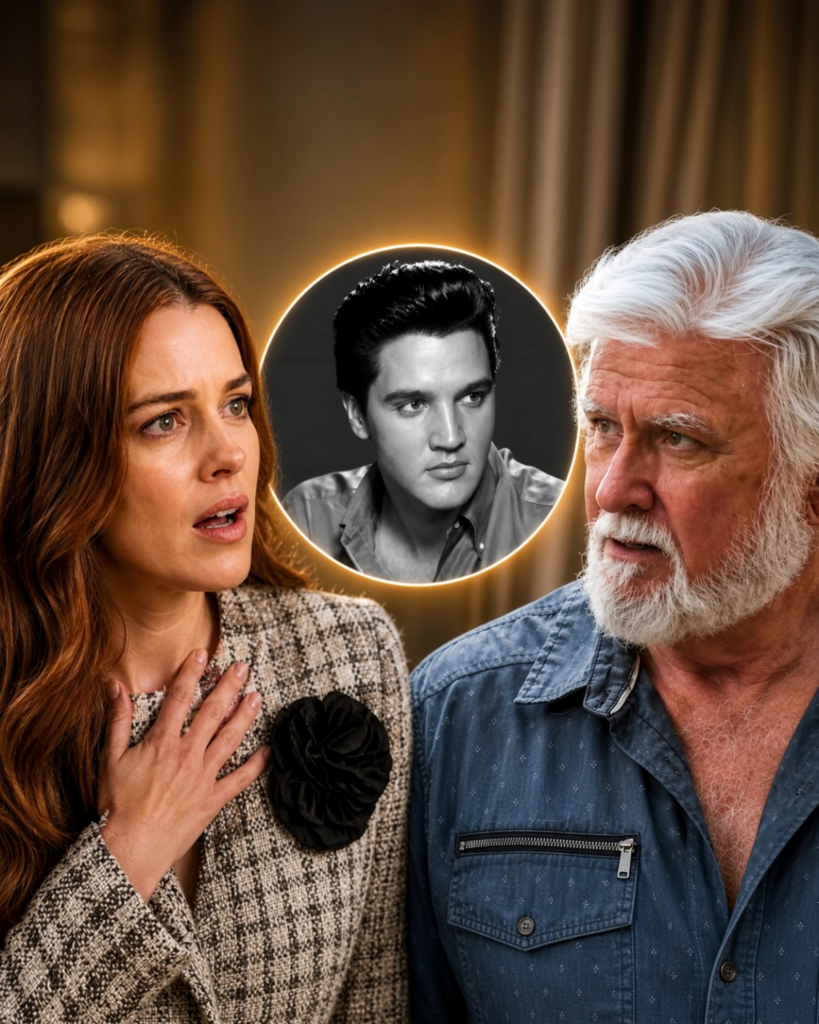
Elvis’s granddaughter watches a video of Bob Joyce singing, and for a few seconds before she says a single word, her face does something the internet has decided it can’t stop talking about, and that’s the clip, that’s the whole clip, just a few seconds of a young woman watching a stranger sing while her expression shifts in a way that thousands of people online are convinced means something.
Some are calling it recognition, some are calling it shock, and some are calling it grief sitting right there on her face in real time, the kind you can’t fake and can’t explain away.
And once that clip started circulating, it didn’t take long before the comments turned into something bigger than a reaction video, because people started asking a question that goes a lot further than does Bob Joyce sound like Elvis.
They started asking what does it mean when the people who actually loved him look like they’re seeing something the rest of us can’t, and here’s why that question hits so differently, because for years now, Bob Joyce has been the subject of every kind of comparison you can imagine.
Voice experts have weighed in, casual fans have weighed in, and people who have never listened to a full Elvis record in their life have weighed in just off the strength of a thirty-second clip circulating through their feed.
And all of that noise, all of that debate, has one thing in common, because it’s coming from strangers, people who know Elvis Presley the way you know any legend, through records, through old footage, through a voice that got frozen in time decades before most of the people arguing about it were even born.
Strangers hear a resemblance and they get curious, they get a little obsessed, and maybe they start comparing pitch and phrasing and vibrato like it’s a puzzle to solve, but family isn’t solving a puzzle, and family isn’t hearing a resemblance.
If there’s any truth at all to what people think they’re seeing in that clip, then what’s actually happening is something much heavier than curiosity, because it’s a woman who never got to know her grandfather as anything other than an absence, hearing a voice that for a moment doesn’t sound like an impression or a tribute or a documentary clip.
It sounds like something closer to him than anything she’s heard in years, and whether that lasts half a second or five, that’s not the same experience a stranger has, because that’s not recognition in the casual sense, that’s the kind of moment that can knock the air out of you before your brain even catches up to what your body is reacting to.
So before we go any further, let’s actually sit with what that would feel like, because I don’t think enough people talking about this clip have stopped to really think it through, because grief doesn’t work in a straight line, and everyone who’s lost someone knows this, even if they’ve never lost someone as publicly, as permanently mythologized as someone like Elvis Presley.
You think you’ve made your peace with it, you think the sharp edges have worn down, and then something small happens, a smell, a song, a stranger’s laugh from across a room, and suddenly you’re right back at the beginning like no time has passed at all.
Now imagine that same jolt, except the thing that triggers it isn’t a memory of your own, because it’s a stranger on a screen doing an impression of the person you lost, whether he means it as an impression or not.
That’s not a small thing to sit with, that’s not something you brace yourself for on a random afternoon scrolling through your phone, and that’s really the heart of why this clip took off the way it did.
It’s not actually about whether Bob Joyce sounds like Elvis, because people have been arguing about that for years, and honestly, they’ll probably keep arguing about it for years more.
What made this different, what made this spread the way it did, is the idea that maybe the debate finally has an answer that doesn’t come from a spectrogram or a pitch chart, because maybe it comes from the reaction of someone who would actually know.
Someone who grew up hearing stories instead of just songs, someone whose whole relationship to that voice isn’t nostalgia, it’s inheritance.
Now, if you’ve somehow made it this far without knowing who Bob Joyce actually is, here’s the quick version because it matters for what comes next, because he’s a pastor, a gospel singer based out of a small church, the kind of place where nobody’s thinking about going viral, they’re just thinking about the hymn they’re about to lead their congregation through.
And somewhere along the way, clips of him singing started making their way onto the internet, and people lost their minds because he doesn’t just sound like he was influenced by Elvis, because to a lot of listeners, he sounds like he could be Elvis, singing hymns in Arkansas instead of performing arenas in Vegas.
It’s the same tone people describe as uncanny, the same phrasing, even some say the same way he talks between songs, not just when he’s singing them, and for years, this has mostly stayed inside the world of comment sections and late-night internet rabbit holes, a fascinating oddity, a voice too similar to be nothing, too impossible to be something.
But a clip like the one we’re talking about now doesn’t stay inside that world, because it jumps the fence because suddenly this isn’t just about whether strangers’ ears can be fooled, it’s about whether someone who actually shares blood with Elvis Presley, someone who spent her whole life living in the shadow and the glow of a legacy she didn’t choose, is reacting to Bob Joyce the way the rest of us are reacting to him or reacting to something else entirely.
Something closer, something that maybe none of us watching from the outside could ever fully understand, and that’s the question I actually want to sit with for the rest of this story because I think it’s more interesting and honestly more human than the one everyone else is asking.
Not is Bob Joyce secretly Elvis, because we’re not going down that road, but this one, what does it actually do to a person, to someone who grew up inside a family built entirely around one man’s absence, when they run into an echo of him they weren’t prepared for?
Is that comfort, is it grief showing up uninvited, or is it something else completely, something closer to unease, the sense that the person you lost keeps getting borrowed, keeps getting worn like a costume by strangers who never got to actually know him, over and over again for the rest of your life, whether you’re ready for it or not?
Because here’s the thing nobody talking about this clip seems to be asking, what is it actually like to be related to a legend the entire world still refuses to let go of, to grow up watching impersonators build careers off your grandfather’s voice, watching strangers sob at concerts held by men wearing his face, watching his name used to sell everything from peanut butter to Vegas hotel rooms decades after he was supposed to have already said goodbye?
For most of us, Elvis Presley is a voice on a record, but for his family, he’s never fully allowed to just be gone, because he keeps showing back up again and again in other people’s mouths, other people’s bodies, other people’s careers that are built on getting close enough to him to make a living.
And now here’s one more version of that same thing, except this time it’s supposedly close enough that his own granddaughter’s face did something the whole internet is convinced it can read like a book.
So that’s where we’re actually starting, not with a voice test, not with pitch software or vibrato analysis, but with a much simpler, much heavier question, what is it actually like to watch a stranger sing in a voice that sounds like the one you never got to hear in person and have millions of people online decide based on a few seconds of your face that they know exactly what you were feeling in that moment?
Because I don’t think they do, I don’t think any of us do, but I think if we actually slow down and think about what it means to carry a legacy like that instead of just staring at a clip and guessing, we might end up a lot closer to understanding it than the comment section ever will.
Let’s actually talk about what it means to be born into a legacy like this one, because I don’t think you can understand a reaction like the one everyone’s dissecting in that clip without first understanding the weight that comes before it, because most families get to grieve privately.
That’s the assumption most of us walk through life with, even if we’ve never had to think about it directly, because when you lose someone, the world eventually moves on, but your grief doesn’t have to perform for anyone.
You get to carry it quietly on your own schedule in your own way, and nobody’s selling merchandise with your father’s face on it, nobody’s building a career out of sounding like your grandfather, and nobody’s turning your private loss into a permanent ongoing public spectacle that just keeps going year after year, decade after decade, long after most people would expect the world to have moved on.
That is not the deal the Presley family got, and it’s worth actually sitting with what that means instead of rushing past it the way most of these conversations do, because Elvis Presley didn’t just become a legend when he died, and in a lot of ways, his death didn’t end anything, it just changed the shape of what came next.
Because almost immediately an entire industry sprang up around keeping his voice, his image, his presence alive in the world, whether his family wanted that or not, with tribute artists, impersonator competitions, Vegas residencies built entirely around men doing their best version of him night after night for audiences who show up specifically to feel for a couple of hours like the king never actually left.
Graceland itself became one of the most visited private homes in America, a place where millions of strangers walk through rooms that used to just be somebody’s living room, somebody’s kitchen, somebody’s actual life.
Now, none of that is inherently a bad thing, because a lot of it comes from real love, real admiration, real gratitude for what his music meant to people, but love at that scale doesn’t ask permission, it doesn’t check in with the family first, it just keeps happening year after year, whether the people closest to him are ready for it or not.
And that creates something genuinely strange when you actually stop to think about it, a kind of grief that never gets the luxury of closing, because most people get to bury someone and eventually slowly, painfully, let the sharp edges soften, but the Presley family has spent decades watching the sharp edges get sanded down in public by strangers for profit, for nostalgia, for entertainment over and over without ever really getting the chance to just let him rest.
Think about what that actually does to a person’s relationship with grief, because if you lose someone you love and then for the rest of your life you keep running into other people wearing pieces of them, their voice, their walk, their mannerisms, dressed up and performed on stages in cities you’ve never even visited, your relationship to that loss can’t ever fully settle the way it would for most people.
It gets interrupted again and again, sometimes gently, sometimes jarringly, sometimes in ways that catch you completely off guard on an ordinary day when you weren’t bracing for it at all, and that’s before you even get to the version of this experience that belongs specifically to family.
Because for the rest of the world, all of that tribute culture, all of those impersonators and Vegas shows and gift shop shelves, that’s entertainment, that’s nostalgia, that’s a way for strangers to access a feeling they never actually got to have firsthand since most of them never stood in the same room as him.
But if you’re related to him, if his blood runs through your own family, all of that same imagery lands completely differently, because it’s not a tribute to a legend anymore, it’s a constant ongoing echo of somebody you actually lost, somebody who should have been at family dinners, somebody who should have been there for birthdays and holidays and every other ordinary unremarkable moment that most families get to take completely for granted.
That’s the emotional inheritance that comes with a name like Presley, not just fame, not just wealth or attention or access, but an entire lifetime spent inside a world that refuses to let your family’s private loss stay private because the person you lost also happened to belong in some strange and unasked-for way to everyone else too.
So when a clip surfaces of someone from that family watching yet another man who sounds eerily like the one they lost, it’s worth understanding that this isn’t happening in a vacuum, because it’s not the first time, and it won’t be the last.
It’s one more moment layered on top of a lifetime of moments just like it stretching all the way back before she was even born, and every impersonator who ever stepped on a stage, every documentary that dug back through old footage, every stranger who’s ever walked up to a member of that family just to say you have his eyes or you have his smile, all of it adds up to something, a kind of low, constant hum of never quite being allowed to just miss somebody the normal way.
And that’s exactly why a reaction like this spreads the way it does, because on some level, everyone watching that clip understands, even if they couldn’t put it into words, that they’re not just looking at a funny coincidence or an eerie resemblance, they’re looking at what it might actually feel like to be handed without warning one more echo of somebody you never got the chance to know the way you were supposed to.
And that’s not a small thing to witness, even secondhand, even through a screen, even in a clip that’s only a few seconds long, so here’s the real question worth sitting with before we go any further.
When you’ve spent your entire life surrounded by versions of someone, his voice reproduced, his image sold, his mannerisms performed by strangers chasing a paycheck or a dream, what actually happens inside you the moment one of those echoes feels a little too real?
Is it comfort, a strange kind of gift, a reminder that some piece of him is still out there in the world, or is it something closer to being ambushed by your own grief all over again in front of an audience that’s already decided they know exactly what your face is supposed to mean?
Because I don’t think that’s a question with one easy answer, I think it’s probably both at once tangled together in a way that doesn’t resolve cleanly no matter how many times the internet tries to caption it for you, and I think that tension more than anything else is what’s really sitting underneath that clip everyone’s been talking about.
Not proof of anything supernatural, not evidence of a secret, just the ordinary, complicated, unresolved weight of loving someone the whole world refuses to let go of and never quite getting the chance to grieve him the way everyone else got to grieve their own.
So let’s actually talk about the man at the center of all this, because up until now, we’ve been circling him without really looking at him directly, and his name is Bob Joyce, and he’s not a performer chasing fame.
He’s not someone who built a career off resembling Elvis Presley, and he’s never seemed to present himself that way either, because by every account, he’s exactly what he looks like on the surface, a pastor, a gospel singer, a man leading a small congregation through hymns on an ordinary Sunday, the same way he probably has for years, long before any of this attention found him.
Nobody’s suggesting he set out to sound like anyone, he just sings the way he sings in the tradition he grew up in, and somewhere along the way, clips of him doing exactly that started making their way onto the internet, and once they did, something strange happened.
People couldn’t stop listening, couldn’t stop comparing, couldn’t stop asking the same question over and over in comment section after comment section, how does a man nobody’s ever heard of sound this much like one of the most recognizable voices in American history?
That question has been circulating for years now, long before any granddaughter’s reaction ever entered the conversation, and the honest answer to it isn’t nearly as mysterious as the internet tends to make it sound, because it has a name, and it’s not a secret identity or a hidden truth waiting to be uncovered.
It’s called influence, specifically, the kind of deep generational influence that happens when one voice becomes so dominant within a musical tradition that it reshapes how everyone who comes after him sings, whether they ever intend to copy him or not.
Here’s what that actually looks like in practice, because Bob Joyce almost certainly grew up in the American South, almost certainly within a Baptist church tradition during decades when Elvis Presley wasn’t just a famous singer, he was arguably the single most towering vocal influence an entire generation of southern gospel singers had ever encountered.
And that kind of influence doesn’t require someone to sit down and consciously study another man’s records, memorizing his phrasing note for note, because it works in a much quieter, much more powerful way.
It seeps into a culture, it becomes part of the vocabulary an entire region uses to sing, absorbed by kids in church pews who were just trying to learn the hymns everyone around them already knew, never realizing they were also absorbing decades of vocal habits shaped by the most famous voice their tradition had ever produced.
Gospel music in particular works exactly this way, because it’s one of the most tradition-bound vocal styles in all of American music, passed down through churches and choirs and hymns sung the same way for generation after generation.
If you grow up singing “How Great Thou Art” inside a Southern Baptist church, you’re inheriting, whether you realize it or not, decades of vocal choices that got shaped and popularized by the most famous gospel-adjacent singer that entire tradition ever produced.
The way notes get slid into instead of hit directly, the particular warmth and weight in the tone during an emotional passage, these things get passed down consciously and unconsciously from one generation of church singers to the next, the same way an accent gets passed down inside a family or a turn of phrase gets passed down inside a small town long after anyone remembers exactly where it first came from.
This isn’t a fringe idea, it’s actually one of the most well-documented phenomena in the entire history of music, because every era has a handful of voices powerful enough to reshape the sound of everyone who comes after them.
And when that voice belongs to someone as towering as Elvis Presley, someone who didn’t just sell records but fundamentally changed how an entire region thought about phrasing, vibrato, and emotional delivery in gospel music, its fingerprints end up in nearly everyone who passes through that same tradition afterward.
Not because they’re imitating him on purpose, but because the tradition itself was rebuilt around the sound of his voice, and everyone who learned to sing inside that tradition inherited pieces of it without ever choosing to.
So when you actually think about it that way, Bob Joyce sounding eerily like Elvis Presley stops being some unexplainable mystery and starts looking like something closer to inevitable, because he’s not an impersonator, he’s not hiding anything, he’s just a product of the exact musical world Elvis Presley helped shape decades before Bob Joyce ever stepped up to sing his first hymn.
And this is exactly where the emotional core of this whole story actually lives, because this same explanation cuts both ways, since it’s the reason strangers online have spent years arguing about whether Bob Joyce could somehow be Elvis in disguise, but it’s also, and maybe more importantly, the reason someone who actually grew up inside the Presley family might feel a genuine, involuntary jolt of recognition the moment they hear him.
Because that jolt isn’t coming from nowhere, it’s not confusion, and it’s not wishful thinking, it’s a real physical measurable response to hearing tone, phrasing, and vocal habits that trace directly back to a voice that shaped an entire regional tradition, a tradition Bob Joyce happens to have been raised inside of.
Think about what that actually means for someone who grew up hearing family stories about a man’s voice instead of getting to hear it live, because if Bob Joyce’s singing is genuinely carrying real fragments of Elvis’s influence shaped through decades of gospel tradition, then what someone from that family might be reacting to in a clip like this isn’t an illusion, and it isn’t some strange coincidence their mind is stretching to explain.
It’s an actual traceable echo, not the man himself, never the man himself, but something real enough, something rooted deeply enough in the same musical soil that it makes complete sense a person who grew up surrounded by his legacy would feel it land differently than it lands for the rest of us.
That’s worth sitting with for a second because it reframes everything we’ve been circling around, because recognizing an echo isn’t nothing, it isn’t a mistake, and it isn’t the internet reading too much into a few seconds of footage.
If anything, it might be the most honest reaction possible coming from someone with the deepest, most personal frame of reference anyone could actually have, somebody who didn’t just hear about that voice secondhand through records and documentaries and old television clips the way the rest of us did, somebody who carries pieces of that same bloodline, listening to a stranger who, without ever meaning to, ended up carrying pieces of that same sound.
So maybe that’s exactly why this moment hit as hard as it did, both for her and for everyone watching, not because a secret got uncovered, not because a mystery got solved, but because somewhere in that clip, something real and unmistakable actually did happen, an echo finding its way back to someone who has every reason in the world to recognize it the moment it reaches her.
So let’s bring all of this together and actually answer the question that clip left hanging in the first place, what does her reaction actually say, not in the dramatic secret-hiding-in-plain-sight way the internet wants it to say, but something quieter and honestly something a lot more human than that.
It says that a voice powerful enough to reshape an entire musical tradition doesn’t just disappear the moment the person behind it is gone, because it keeps traveling, it keeps showing up decades later in places nobody would expect to find it, carried by people who never met the man who first gave it its shape.
Bob Joyce didn’t set out to sound like Elvis Presley, he grew up inside the exact gospel tradition Elvis helped define, absorbing its habits the way every singer in that world absorbs them without ever consciously trying to, and that means every time someone from the Presley family runs into his voice, what they’re actually encountering isn’t a copy and it isn’t a coincidence.
It’s a genuine traceable echo of something that used to belong only to them now living on in a stranger’s throat in a small church states away from anywhere Elvis Presley ever performed, and that’s not a small thing to reckon with if you’ve spent your entire life as part of a family that never got the luxury of grieving privately.
If you’ve watched pieces of the person you lost get performed, sold, and reproduced by strangers for decades, then hearing a voice that carries something real, something rooted in the actual tradition your grandfather helped shape, doesn’t land the same way it lands for the rest of us.
For most people watching that clip, it’s a curiosity, an eerie resemblance, a fun rabbit hole to fall into for an afternoon, but for her, if the reaction really is what people think it is, it’s something closer to being handed without warning one more fragment of a man she never got the chance to actually know.
And maybe that’s exactly why her face did what it did, not confusion, not deception, but recognition, arriving somewhere it wasn’t expected from someone with more reason than anyone else alive to feel it land hard.
Because here’s the part worth remembering before we let this go, because everyone else who’s ever gotten emotional over a Bob Joyce clip, everyone who’s ever felt that chill of familiarity listening to him sing, is responding to an echo of a voice they only ever knew through recordings, through old footage, through a legend built entirely after the fact.
That’s real, and that reaction is valid, but it’s secondhand, it’s built on a version of Elvis Presley that was already frozen in amber long before most of us were born, and she doesn’t have that same distance.
Whatever she carries of him isn’t just a voice on a record or a face on a poster, it’s family, it’s whatever pieces of him made it down through the people who actually knew him, the stories that got told at dinner tables, the parts of a legacy that never made it into any documentary because they were never meant for public consumption in the first place.
So when a stranger’s voice happens to brush up against something that real, it’s not surprising that it would hit differently, it’s almost inevitable that it would, and this isn’t a story about a hoax, and it was never going to be.
It’s not a story about someone secretly finding out the truth about a man who supposedly never really died, it’s a much quieter story and honestly a much more moving one about how far a single voice can travel once it’s powerful enough to shape an entire tradition, and about what it actually costs a family to keep running into fragments of someone they lost over and over in places and people they never expected.
So no, this clip doesn’t prove anything supernatural, it doesn’t confirm some secret the world has been kept from, but it does something else, something maybe more worth sitting with, because it shows just how far Elvis Presley’s influence actually reached, deep enough to still be surfacing decades later in a stranger’s church in Arkansas, close enough to catch his own granddaughter off guard, watching a screen with no idea what she was about to feel.
Grief doesn’t usually announce itself in advance, it shows up in ordinary moments uninvited, whether you’re ready for it or not, and for most people, that means a song on the radio, an old photograph, a stranger’s laugh across a room.
For someone carrying a legacy as loud and as permanent as this one, it can mean a video clip on a phone screen, a stranger singing a hymn her grandfather used to sing, and a few seconds of her own face doing something she never planned for in front of millions of people who think they already know exactly what it means.
Maybe they don’t, maybe none of us do, but maybe that’s exactly the point, because some echoes are loud enough to reach across generations and land on the people who never stopped listening for them in the first place, and the voice that shaped a whole tradition, the voice that still lives in a small church in Arkansas and in a granddaughter’s startled face, is the same voice that keeps finding its way home, one echo at a time.









