
Before His Death, Presley Gerber Was Left Alone at the Sober House – Now His Family Wants Answers.
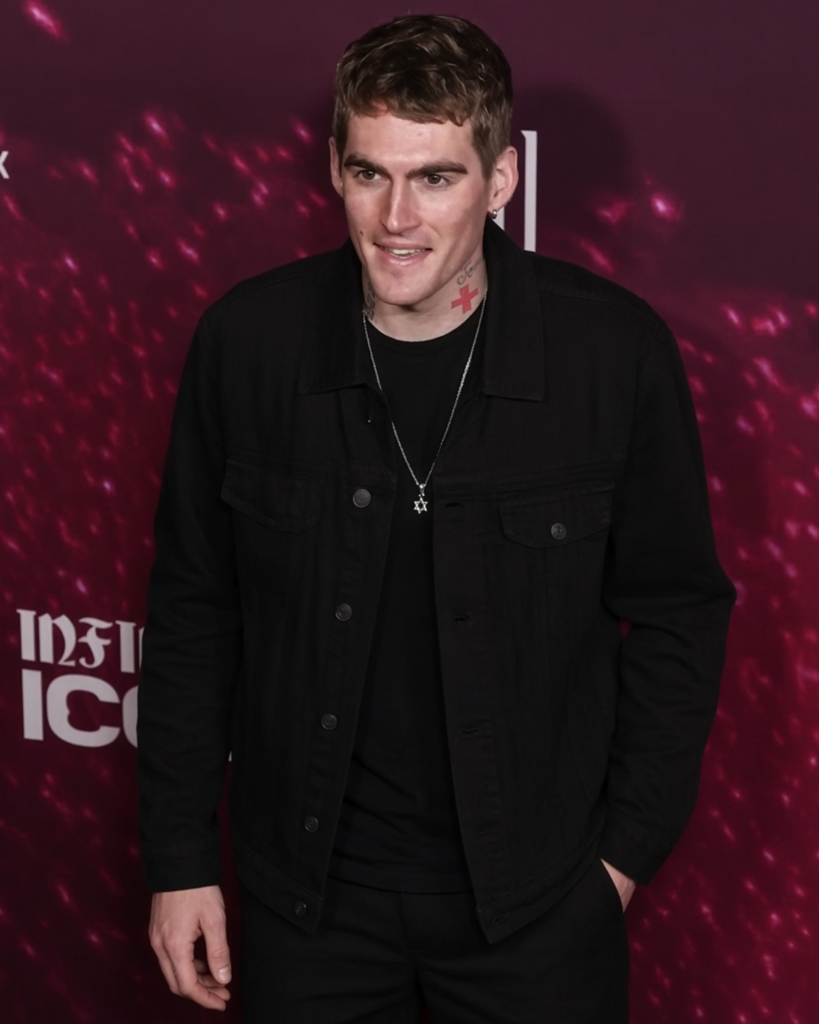
What if the final hours of a young man’s life were captured on camera?
Not because anyone was filming his death, but because he was filming the empty place where he had been taken for safety.
On a Saturday night in Santa Monica, a young man walked through a luxury sober living residence with a camera in his hand, moving slowly from room to room while no staff member appeared beside him.
Hours later, he would be dead.
And the footage would become one of the most haunting pieces of evidence surrounding a tragedy that has left his family demanding answers.
His name was Presley Gerber, twenty-seven years old, the son of Cindy Crawford and Rande Gerber, and the younger brother of model Kaia Gerber.
To the public, he was born into extraordinary privilege, surrounded by fame, fashion, wealth, and opportunity.
But the private story was far more complicated.
Presley had spent years publicly acknowledging struggles with mental health and addiction.
And the central question now is not simply what happened to him, but why the system around him failed at the moment he was most vulnerable.
According to the material reviewed for this documentary, Presley arrived at Resolutions Living in Santa Monica on September 19th, 2026, after his sober coach contacted the facility about bringing him there.
The coach reportedly told the admissions officer that Presley was high on drugs, yet the facility agreed to accept him.
What happened after that decision would become the focus of growing scrutiny, because the person who needed supervision was reportedly left alone inside a residence that was never intended to function as a medical detox center.
Before we examine those final hours, it is important to understand the person behind the headlines.
Presley Walker Gerber was born on July 2nd, 1999, in Los Angeles and grew up in Malibu, where the ocean was not simply scenery but part of his daily life.
He surfed, swam, played water polo, and reportedly spent as many as ten hours a day in the ocean during middle school, building a routine around physical activity, freedom, and the environment that made him feel grounded.
That life changed as he entered the fashion world.
Presley was signed by IMG Models at fifteen, made his runway debut for Moschino at sixteen, and soon appeared in major campaigns and shows connected to brands including Dolce & Gabbana, Calvin Klein, Burberry, Bottega Veneta, Tommy Hilfiger, and Ralph Lauren.
He also appeared in campaigns for Celine, Pepsi, and Omega.
And in 2018, he joined his mother in a recreation of her famous 1992 Pepsi Super Bowl commercial, a moment Cindy Crawford described as exciting because she could watch her son perform while standing nearby as a proud mother.
From the outside, that career looked like a dream beginning early.
But Presley later described a different reality, one in which work and the pressures surrounding it gradually displaced the activities that had once helped him feel stable.
He said he had ADHD and struggled with low self-esteem, and he connected the loss of his ocean-centered routine with a growing dependence on medication and other difficulties.
The more his life became structured around work, he suggested, the less room there was for the physical activity and freedom that had once been central to him.
In January 2019, at nineteen, Presley was arrested for driving under the influence in Beverly Hills.
He pleaded no contest and received three years of probation, community service, and participation in a DUI program, turning what had previously been a private struggle into a public warning sign.
A year later, in February 2020, he tattooed the word misunderstood across his cheekbone and explained that he did not feel very understood, saying that was how he had felt throughout his life.
The most serious chapter of his addiction story would emerge later.
Presley revealed that he had struggled with severe opioid addiction and had survived a near-fatal fentanyl overdose that left him in a coma for days, an experience that could have ended his life long before the events of 2026.
Instead, he began speaking more openly about recovery and mental health, including through an Instagram series called Mental Health Mondays.
His message was not that he had everything figured out, but that honesty about pain might help someone else find a way out.
But by the summer of 2026, according to people described in reports as close to the family, his condition had deteriorated.
Those sources described him as increasingly thin, gaunt, pale, depressed, jittery, and sometimes difficult to understand, while one source compared his appearance to someone using methamphetamine but acknowledged that nobody knew exactly what he was taking.
Those descriptions are allegations from unnamed sources, not medical findings, but they provide the reported background to the increasingly desperate efforts to get Presley into treatment.
In March 2026, Presley had traveled to Cancun, Mexico for what he described as an ibogaine flood dose, an experimental treatment for addiction that is not legal in the United States.
He wrote publicly about being terrified and described the treatment as an attempt to face what he had been running from while also sharing personal mantras connected to the experience.
Then came the sentence that in retrospect feels devastating.
He wrote that he was praying it would be the last time he had to come back.
It was not the last time.
By September, the struggle had returned to a point where those around him were trying again to find a path into treatment, and the events of one Saturday afternoon would turn that effort into a tragedy.
According to sources cited in the original material, Presley used drugs that afternoon and became frightened that he was losing control.
His sober coach then contacted Resolutions Living and asked whether Presley could be brought there for the weekend.
The critical detail was reportedly known before he arrived.
The coach told the admissions officer that Presley was high, meaning the facility was not receiving someone who had simply decided to begin a sober program under ordinary circumstances.
Yet the admissions officer reportedly said the facility would take him, and Presley was brought there shortly after six in the evening.
This decision is central to the story because sober living and medical detox are not the same thing.
And the original reporting cited multiple rehab facility owners who described accepting an actively intoxicated person into a sober house as a serious violation of basic safety practice.
A sober living home generally does not have the medical infrastructure of an acute detox facility.
It is not ordinarily staffed like a hospital, and residents may not have nurses or physicians available to monitor an intoxicated person through a potentially dangerous medical crisis.
The reporting cited in the source material says someone actively high should instead be taken to a medical detox setting where patients can receive frequent monitoring, with checks described as occurring roughly every fifteen to thirty minutes.
There is another allegation that adds to the controversy.
A source cited by Rob Shuter’s Naughty But Nice newsletter claimed Presley did not go through the usual safety precautions when he arrived, suggesting that staff may have been intimidated because of his famous family.
The source alleged that nobody wanted to be the person searching Cindy Crawford’s son while also claiming staff knew about his condition before accepting him.
But these statements come from an unnamed source and should not be treated as independently established fact.
Then came the video.
At approximately ten that Saturday night, Presley reportedly recorded footage inside the facility wearing a white undershirt, a silver chain necklace, and black eyeglasses.
The camera moved through a bedroom and other parts of the residence while his eyes appeared glazed and his movement seemed slow.
But the most striking feature was not what the camera showed.
It was what it did not show.
That tension is what makes the timeline so important.
The reported decisions were made one after another, each narrowing the options available to a person already in crisis.
A safer intervention may have required a medical setting, closer observation, or a different handoff entirely, but those possibilities can only be evaluated against the evidence investigators ultimately collect.
For now, the timeline shows a chain of choices that deserve scrutiny.
While final conclusions should come from evidence and official investigators, there was no staff member beside him.
There was no sober coach in the frame, no visible roommate checking on him, and no obvious sign of someone monitoring a person who had reportedly arrived intoxicated only hours earlier.
The footage became disturbing precisely because of its emptiness.
A residence that was supposed to be a place of safety appeared, at least in those moments, to contain Presley by himself.
According to the reporting, he was alone.
At approximately 9:35 the next morning, Sunday, September 20th, 2026, Santa Monica police officers responded to a report of a possible overdose in the 1000 block of Berkeley Street.
The dispatch information referenced cardiac arrest and overdose, and the response was escalated as police, ambulance personnel, and firefighters arrived at the scene.
According to the source material, emergency personnel remained there for roughly three hours, and responding paramedics pronounced Presley dead at approximately 9:45 a.m.
A law enforcement source cited by NBC News said Presley was cold to the touch when authorities found him, suggesting that he may have been dead for some time before anyone discovered him.
He was reportedly found in the room where he had been sleeping alone, creating an especially painful contrast with the reason he had been taken to the facility in the first place.
He had not been brought there because his family believed he was safe to be left without supervision.
He had reportedly been brought there because those around him believed he needed help.
The Santa Monica Police Department described the death as a suspected overdose and said there was no indication of foul play at that stage.
The department also made clear that the official cause and manner of death would be determined by the Los Angeles County Department of Medical Examiner and that the investigation remained ongoing.
That distinction is crucial because an early police classification is not the same thing as a final medical determination.
The medical examiner examined the case but deferred the official cause and manner of death pending further testing.
Those results could take months, meaning some of the most important questions surrounding the death cannot responsibly be answered yet.
The source material also reported that fentanyl had emerged as a focus of the investigation, although it had not been definitively ruled in or out.
While separate reporting focused on claims that a doctor had prescribed it despite alleged knowledge of previous struggles with the drug, those allegations surrounding medications require particular caution.
A report that someone in regular contact with Presley made a claim about a prescription does not establish what medication he actually took, in what amount, under what medical circumstances, or whether any substance caused or contributed to his death.
Until toxicology and the medical examiner’s findings are available, the exact sequence inside that bedroom remains unknown.
The family’s public response was brief.
Through their representative, they asked for privacy during what they described as a very difficult and painful time.
A statement that revealed almost nothing about their private grief while making clear that the loss had overwhelmed them.
Behind that restraint, reports described Cindy Crawford as inconsolable and in shock.
While people close to the family emphasized the closeness between Presley, his parents, and his sister Kaia.
Kaia had spoken publicly about her brother shortly before his death in a Vogue cover story.
She described Presley as an absolute teacher because of his willingness to be open about his struggles.
And she argued that hiding painful realities can make a person feel ashamed of them.
Those comments now carry a different weight because the openness that had once been part of his recovery story had also exposed just how difficult his battle had become.
Addiction is often a long cycle of progress, relapse, fear, treatment, and renewed hope.
And the source material portrays Presley’s final years in precisely that kind of cycle.
He had spoken about his problems publicly, sought treatment, survived a previous overdose, and continued trying different approaches.
None of those efforts guaranteed recovery, but they demonstrate that his story was not one of indifference.
It was a story of repeated attempts to survive a condition that had repeatedly threatened his life.
Now comes the question of accountability.
According to reports cited in the source material, Cindy Crawford and Rande Gerber were considering legal action against the sober living facility and the sober coach, seeking a full accounting of what happened from the time Presley arrived until his death.
No lawsuit had been publicly confirmed in the source material.
So any future legal action must be treated as a possibility rather than an established event.
What the family reportedly wants is not difficult to understand.
They want to know why a young man who was allegedly known to be high was accepted into a sober living home, why he was reportedly left alone, who was responsible for monitoring him, and whether established safety procedures were followed.
They also want to know whether decisions made during those hours contributed to the circumstances that led to his death.
Questions that can only be answered through evidence, records, witness accounts, and official investigation.
The sober coach is another central part of that unanswered timeline.
According to the reports, he had been hired to support Presley, recognized that Presley was losing control that afternoon, and contacted the facility for help, but then left him there after the admission.
If that account is accurate, the crucial issue is not simply that Presley was taken somewhere.
It is what happened after the handoff, who accepted responsibility, and whether anyone understood how medically vulnerable he may have been.
The facility itself also faces serious questions based on the reported circumstances.
If staff members knew Presley was intoxicated before admission, what assessment was performed?
What safeguards were put in place?
And what monitoring occurred during the night?
If the facility was not equipped for acute intoxication, why was he accepted at all?
And if an employee violated policy, what system allowed that decision to happen?
There is another detail that makes the final night especially haunting.
Presley himself appears to have documented it.
The video does not tell us exactly what he was thinking, what substances he had taken, whether he understood the danger he was in, or how long he expected to remain awake.
But it shows a young man moving through a place where he was supposed to be safe.
While the absence of other people becomes impossible to ignore, his earlier words about recovery now sound painfully different.
He had said he wanted to help people who were trapped in the same place he had once been.
And he had publicly described his hope that his experience could help even one person.
He had also written during the ibogaine treatment in Mexico that he was facing what he had been running from and praying it would be the last time he had to return.
The most important unanswered question then is not only what substance may have caused his death.
It is whether the circumstances that surrounded him that night could have been different.
A different decision at admission could potentially have changed the timeline.
Whether proper medical care could have intervened and whether someone should have been physically present when he was at his most vulnerable.
Those questions cannot be answered by outrage alone.
They require evidence, including medical records, toxicology, facility procedures, communications, witness statements, emergency response records, and whatever investigators determine happened during the hours before Presley was found.
The family may ultimately pursue legal remedies, but the public should also allow the investigation to distinguish verified facts from allegations and assumptions.
Presley Gerber’s life cannot be reduced to the room where he died.
He was the Malibu teenager who loved the ocean.
The young model who stepped into a world of cameras and runways.
The son who worked alongside his mother.
The brother whose openness affected Kaia.
And the person who tried to turn his own struggles into something that could help others.
His addiction was a part of his life, but it was never the entirety of who he was.
His family now faces a grief that no amount of money, fame, treatment, or public attention can repair.
Cindy Crawford lost her son.
Rande Gerber lost his son.
And Kaia Gerber lost her brother.
While the people who loved Presley are left with memories alongside a list of questions that may take months to answer, the family reportedly wants accountability not only for their own sake, but because they do not want another parent to hear that a loved one was taken somewhere for help and then left alone.
The investigation remains ongoing, and the official cause and manner of death had not been determined in the source material.
Toxicology results could change the understanding of what happened, and claims made by unnamed sources may ultimately be confirmed, challenged, or shown to be incomplete.
Until the official findings arrive, the responsible conclusion is not to pretend every mystery has been solved, but to recognize what is already known and keep the unanswered questions in their proper place.
What is known is that Presley arrived at a sober living facility after reportedly using drugs, that people around him were aware he was struggling, that he was recorded inside the residence that night, and that he was found dead the following morning.
What remains uncertain is precisely what happened between those moments, what substances were involved, how much supervision he received, and whether any decision or omission changed the outcome.
Those are the questions his family is reportedly determined to answer.
Presley Gerber was twenty-seven years old.
He had already survived moments that could have ended his life, and he had repeatedly tried to rebuild it, but his final attempt ended in a place where he was supposed to be moving toward treatment and safety.
His story is a reminder that recovery is not a simple straight line, that vulnerability can exist behind privilege and fame, and that a person asking for help must be met with the level of care their condition actually requires.
The last image is not a runway, a magazine cover, or a celebrity photograph.
It is a young man inside a quiet residence, moving through empty rooms late at night, unaware that those images would later become part of the story of his death.
His family cannot change what happened after that camera stopped recording, but they can demand that the unanswered questions be investigated.
Presley wanted to be understood.
He once described himself as misunderstood, later spoke openly about mental health and addiction, and tried to use his own experience to reach people who were suffering.
Whatever the final medical findings reveal, the documentary record of his life shows a person who was fighting for more than survival in a single moment.
He was fighting for a version of himself that could live without addiction controlling him.
Now the responsibility belongs to the investigation to establish the facts.
It belongs to the medical examiner to determine the official cause and manner of death.
And it belongs to the people who were responsible for his care that night to answer for their decisions if evidence shows that proper standards were not followed.
For the family, those facts may never erase the pain.
But knowing what happened may be the only form of closure available.
Presley Gerber was a son, a brother, a model, an advocate for his own recovery, and a young man whose life was marked by both extraordinary opportunity and extraordinary struggle.
He died at twenty-seven.
But his story does not have to end with the last room he entered.
If the questions surrounding his death are answered honestly, his final chapter can become part of a larger conversation about how vulnerable people are admitted, monitored, protected, and cared for when they ask for help.









