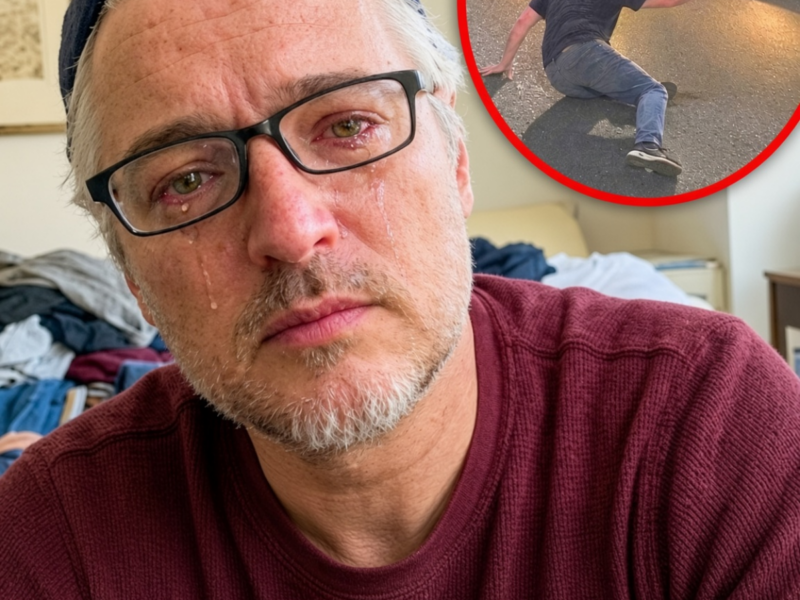
Before His Death, Lucian Piane Was Fighting Something Nobody Knew About.
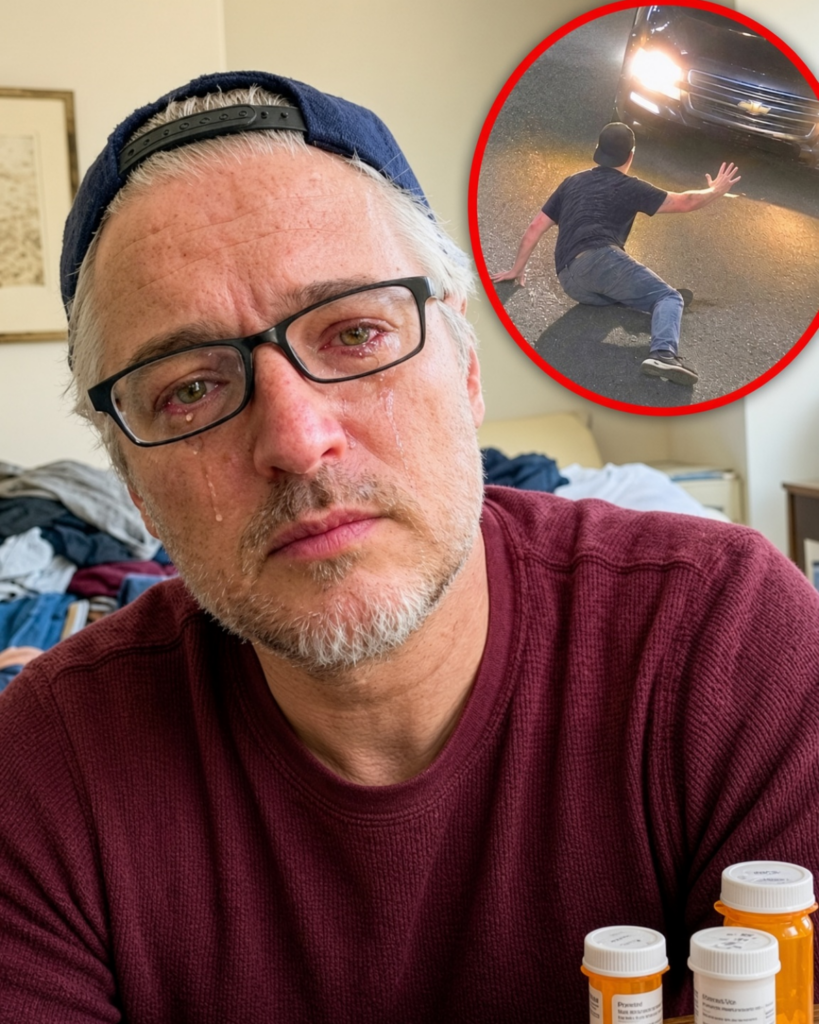
“Sober over a year and getting back in the game.” In August 2026, Lucian Piane typed those words beneath a photograph of himself. The caption was short, but the message felt enormous.
After years of public struggle, he was telling his followers that he had reached a milestone. He had stayed sober for more than a year, and he was ready to return to music, work, and life.
Fans read the post and felt hopeful. Friends who had watched him struggle allowed themselves to believe that better days were coming. From the outside, it looked like a comeback.
Lucian had been through difficult years. He had spoken openly about mental health and substance use, and he had faced harsh criticism after a painful period online. Yet in August he sounded determined, and he was not hiding from his past. He was naming his progress.
That is why the post mattered. It was not just a caption. It sounded like a man choosing to keep going.
Anyone who has ever shared a small piece of good news after a long bad stretch knows how much a single sentence can carry. Behind a short line like that, there is usually a much longer story that the readers never see.
Followers did not need a press release or a long essay. They needed only a photo and a handful of plain words to understand that something had shifted, and many of them wanted very badly to believe it.
Then autumn arrived. On October 12, 2026, Lucian died in Glendale, California. He was 46 years old.
Reports said he was struck by a car while walking in the road near an intersection. Emergency crews responded around 4:15 a.m. and gave him medical care, but he was pronounced dead at the scene. The Los Angeles County Medical Examiner later listed the manner of death as an accident and the cause as blunt trauma.
The news moved quickly through the drag community. People who had danced to his songs, watched him on television, or followed his career could not believe it. Lucian had helped create the sound of RuPaul’s Drag Race, and he had written and produced music that made people laugh, dance, and feel powerful.
Now he was gone, and the question many people asked was simple. What was he carrying beneath the surface?
Count the days between the two dates and the distance is startling. From the post on August 7 to the early morning of October 12 is just 66 days, about nine weeks. In that space, a message about starting over became the news of a life that had ended.
Public grief for someone like Lucian is strange in that way. Strangers who never met him feel real loss, and the people who did know him have to carry it alongside a flood of opinions, questions, and half-remembered headlines. Everyone arrives at the news from a different place, and almost everyone asks the same thing.
This story tries to answer that question without pretending to know more than the record allows. It looks at the work, the years, the hard chapters, and the final weeks, and it keeps the facts separate from guesses.
To understand that question, the story has to begin long before the final post.
Lucian Michael Piane was born on October 4, 1980, in Kansas City, Missouri. He grew up in the Kansas City area, far from Los Angeles and New York. His early life was not lived in front of cameras, and there were no viral posts, no television appearances, and no fans yet.
There was only a boy growing up in the Midwest, learning who he was and what he loved.
Kansas City sits near the middle of the country, a long way from the coasts where entertainment careers are usually built. For a young person with big musical instincts, that distance can feel like a wall or like a starting line. The record does not say which it felt like for Lucian, but it does show that he eventually crossed it.
Family was part of that beginning. His mother, Darlene Marie Piane, was described in public sources as a psychic medium and intuitive guide. He had sisters named Denise and Karen, and Denise Piane was also known as a choreographer from Kansas City.
These were the people around him during his earliest years. Family can shape a child in many ways. It can offer love, stability, conflict, distance, or all of those things at once.
In later life, Lucian said that he was no longer in contact with his family. He shared that in a 2024 Instagram post. The full story behind that separation was not public, and it would be wrong to invent reasons or assign blame.
What is known is that he spoke about distance. That detail matters because it shows that even someone with talent and public recognition could feel alone in ways other people did not always see.
Success and loneliness are not opposites. A person can share songs with millions of listeners and still go home to a quiet room. Lucian’s own words about distance from his family are a reminder that a résumé and a support system are two very different things.
Music became important to Lucian early. He did not simply listen to songs. He wanted to understand how they worked, and he wanted to create them.
That interest eventually led him to study music in a serious way. He left Missouri and went to New York University. In 2003, he graduated from NYU’s Steinhardt School with a Bachelor of Music in Composition.
That degree represented years of training, practice, and discipline. While at NYU, Lucian received a scholarship connected to Alan Menken, one of the most respected composers in musical theater and film. Recognition tied to a name like that was a major sign of promise.
It showed that Lucian was not just another student who liked music. Teachers and industry professionals saw real ability in him, including a gift for melody, structure, and musical storytelling.
A composition degree is not a casual choice. Programs like Steinhardt’s ask students to study how music is built, from melody and harmony to structure and orchestration, and then to write original work that other people will judge. It is training for a career in which the work is never finished until someone else hears it.
Lucian graduated in 2003 with that training, a scholarship connected to one of the biggest names in the business, and a reputation as a promising young composer. What he did next would test whether promise could turn into a career.
After college, Lucian entered the professional world. That world can be difficult for young artists. Talent is important, but it is not the only thing that matters.
Artists also need opportunities, connections, patience, and the ability to keep working when success does not come quickly.
Lucian found an important opportunity through composer Marc Shaiman. Shaiman was known for major work in film, television, and Broadway, and working near him gave Lucian experience at a high level.
Lucian contributed to projects including Team America: World Police, Rumor Has It, and the 2007 film version of Hairspray. He also worked on the Broadway show Martin Short: Fame Becomes Me and the 76th Academy Awards.
These were not small projects. They placed him inside professional productions with experienced writers, performers, and producers. For a young composer from Kansas City, it was proof that he could compete in a demanding industry.
Film scores, a Broadway production, and a live awards broadcast all run on tight deadlines and high expectations. Credits on projects like these suggest that people trusted him to deliver.
His work on Hairspray brought wider recognition. Lucian received an RIAA Platinum Album Award for his production work on the soundtrack, and the soundtrack was also nominated for a Grammy.
Those achievements showed that his music was reaching large audiences. He was becoming more than a promising student. He was becoming a working professional whose contributions were part of successful entertainment projects.
In the United States, an RIAA Platinum certification signals one million units. Even as a production credit on a larger soundtrack, it puts a name on a record that reached a very large audience.
A Grammy nomination for the same soundtrack adds a second kind of validation, one that comes from the industry itself rather than from buyers.
Lucian did not limit himself to one kind of music. He scored an HBO documentary and the film Omar Broadway. He worked on the film Pretty Ugly People, which starred Allison Janney and Missy Pyle, and he composed music for the 2009 horror film Sorority Row.
He also wrote songs for television, including “Year End Rap” for a VH1 special and “Stunning” for Transamerican Love Story on Logo. Each project showed another side of his range.
He also had a playful online identity. Under the name Revolution, Lucian created satirical remixes. His best-known track was “Bale Out,” released in 2009.
The song used audio from Christian Bale’s famous on-set rant during the filming of Terminator Salvation. Lucian turned that moment into a techno remix. The track spread across the internet and became a viral hit, and even Bale and director McG reportedly responded positively.
“Bale Out” showed Lucian’s sense of humor. He could take something strange, loud, or unexpected and turn it into entertainment. That skill would become even more important in his next major chapter.
The remix also came from a particular moment on the internet, when a single viral clip could travel across the web in a matter of days. Lucian heard the rhythm hidden inside an angry rant and gave it a beat.
It was fast, silly, and clever, and it showed that he understood how people were using the internet to laugh together.
In 2009, RuPaul’s Drag Race premiered on television. The show needed music that was funny, dramatic, glamorous, and full of energy, and Lucian joined the series during its first season.
At first, Drag Race was not the worldwide phenomenon it later became. It was a new reality competition about drag performers, but it had a clear vision. It celebrated creativity, confidence, humor, and self-expression.
Lucian became part of that vision. He wrote and produced music for the show, and he helped give its challenges a musical identity. Over time, his work became closely connected to the series itself.
His role was larger than many viewers realized. He composed and produced many of the show’s musical numbers, and fans may remember songs such as “Shade: The Rusical,” “Glamazon Airways,” “Hot in Tuckaho,” and “The Baddest B*** in Herstory.”
These were not just background tracks. They were part of the performances. They helped the queens tell stories, create characters, and compete on television.
Think about what a reality competition asks of its music. A challenge has a beginning, a middle, and a result, and the music has to carry the audience through all three in a few minutes. A good number sets the joke, raises the stakes, and gives the performers something to play against.
He also worked on the season 8 finale songs. Those included “I Don’t Like to Show Off” for Bob the Drag Queen, “Legs” for Naomi Smalls, and “Fat, Femme, and Asian” for Kim Chi.
Each song had to match a different performer, and each one needed energy, humor, and personality. Lucian understood that. His music did not simply sit behind the action. It helped the action feel bigger.
Lucian also composed the theme music for Drag Race, which is a major creative responsibility. A theme song becomes familiar after only a few notes. It tells viewers what kind of show they are watching, and it creates excitement before anything else happens.
Lucian helped create that feeling. For many fans, his music became part of the ritual of watching the series.
His connection to RuPaul went beyond the television show. Lucian co-wrote and produced many songs with RuPaul, and his credits included “Cover Girl,” “Put the Bass in Your Walk,” “Sissy That Walk,” “Glamazon,” “Peanut Butter,” “Freaky Money,” “Jealous of My Boogie,” “Born Naked,” “Champion,” “The Beginning,” and “Main Event.”
He produced RuPaul’s album Champion, and he also worked on Glamazon and Born Naked. Those songs became part of drag culture. People played them at parties, clubs, pride events, and family gatherings.
They were loud, confident, and fun, and they gave people permission to feel bold. That is one of the special things about music. A song can outlive a moment, and it can keep making people smile long after the person who created it is gone.
There is a reason those songs traveled beyond the television screen. A track that works on a dance floor also works in a living room, a car, and a parade route, and it does not need the show to explain it. Fans carried the music into their own lives and made it theirs.
Lucian was also visible on screen. He appeared as a guest judge and mentor on several episodes, mostly between 2009 and 2016. Viewers saw his personality. He was funny, he was direct, and he cared about performance.
He was not a hidden name in the credits. He became a familiar face to people who watched the early seasons of the show. Fans did not only know his songs, they felt they knew him. They saw his reactions, heard his jokes, and watched him work with contestants.
That kind of connection can be powerful. It can also be complicated, because the public often sees only a small part of a person. Television can show charm, talent, and confidence, but it cannot show everything happening in someone’s private life.
Screen presence works like that. A few seconds of a reaction shot can make a viewer feel they know a person, and the viewer’s affection can be sincere and still be built from very little. That gap between what people see and what a person lives is worth remembering as this story moves into its harder chapters.
Outside of work, Lucian kept a presence on social media. He used Instagram under the names @lucianpiane and @revolution. His posts showed creativity, humor, opinions, and personal struggles, and over several years he spoke about mental health and substance use.
Those posts were public, but they were still personal. They gave followers a window into his life. They did not give anyone the complete picture.
Lucian publicly identified as gay, and he kept much of his romantic life private. Reliable sources do not confirm a long-term partner, marriage, or children. That privacy deserves respect, because not every part of a person’s life needs to be explained by the public.
What is clear is that friendship mattered to him. In 2024, he mentioned a friend who had given him housing during a hard time. That small detail says a great deal about the importance of support.
Small kindnesses like that rarely make headlines. But when a person is going through a hard stretch, a spare room and a steady friend can do more than a hundred supportive comments. It is one of the few details from those years that points clearly toward people who showed up for him.
His life after Drag Race was not always easy. His role on the show became less visible over time, and other musicians, including Leland, later took on more of the music work. The exact reasons for that change were not fully explained in public.
What is known is that Lucian’s central role faded from the series. For someone who had helped shape its early sound, that change may have been difficult.
Careers in entertainment rarely end with a single announcement. They narrow quietly as new voices arrive and old ones step back. From the outside, that kind of change can look routine, but from the inside it may feel very different.
In late 2016 and early 2017, Lucian went through a public crisis. He posted controversial messages online, and some of them included racist and anti-Semitic remarks. He also criticized RuPaul and Drag Race.
The posts upset many people and damaged his reputation. Fans who had admired him felt hurt and confused. The incident became a major part of how some people remembered that period of his life.
Lucian later apologized. He said the behavior came from what he called a psychosis, and according to his own account, it followed his use of a large amount of cannabis edibles. He also said he was dealing with an undiagnosed physical illness and financial stress at the time.
That explanation came from Lucian himself. It was not an independent medical diagnosis confirmed in public records, so it should be understood as his explanation, not as a final answer.
That period shows how complicated a person’s story can be. Lucian caused harm with his words, and he also later tried to explain what had happened and apologized. Both facts are part of the record.
A fair story does not erase one to protect the other. It also does not use a person’s worst moment to erase everything else they did. People are rarely only one thing.
That balance is harder than it sounds. It is tempting to tell a story as pure tribute or pure warning, because both are simpler to read. The truth, in this case and in most, sits in between: a person with real gifts, real mistakes, and a real effort to explain himself.
After that crisis, Lucian continued to create and post online, but his public career did not return to its earlier level. He was no longer as closely connected to the biggest Drag Race projects. He still had talent, he still had fans, and he still had ideas, but the industry had moved forward.
That kind of shift can be painful for any artist, especially someone who once helped define a show’s sound. Lucian also continued to speak about his struggles, including mental health, substance use, money, health, and personal difficulty.
These were not small topics. They were parts of his life that he chose to share publicly. Sometimes his posts sounded hopeful, sometimes they sounded frustrated, and sometimes they worried the people reading them.
Then came August 7, 2026. Lucian shared a photo of himself on Instagram and wrote, “Sober over a year and getting back in the game.” He added a smiling emoji and a running emoji.
The message was simple, but it carried weight. After years of difficulty, he was announcing progress. He was telling the world that he had made it through more than 12 months without substances.
For followers, the post felt encouraging. It sounded like recovery, like a plan, like someone preparing for a new chapter. People who cared about him could finally feel hopeful.
They could imagine him returning to music. They could imagine new songs, new projects, and a calmer life. The post did not promise any of those things, but it made them feel possible.
Hope like that is generous, and it is also fragile. Nobody posting a milestone intends to carry the weight of other people’s expectations, and nobody reading it intends to place that weight there.
In the weeks that followed, however, concern grew. Lucian shared videos that made some fans and friends uneasy, and reports described the videos as troubling. The exact meaning of those videos was not fully clear, because social media can show a person’s mood but cannot explain his whole situation.
Still, people who followed him noticed a change. They began leaving comments asking if he was okay.
That concern did not mean anyone knew what would happen. It did not mean his friends failed him, and it did not mean his fans could have prevented anything. It only means that people were paying attention, and that they wanted him to be safe.
That instinct matters. Checking on someone can be a small act, but it can remind a person that they are not alone.
If there is a practical lesson in those comments, it is a modest one. A direct message, a phone call, or a simple question about how someone is doing costs very little. It will not solve everything, but it tells a person that someone noticed.
The final documented days brought more difficulty. According to reports, Glendale police cited Lucian on October 10 and October 11 for alleged intoxication involving a controlled substance and related incidents.
Those reports are part of the public timeline, but they do not explain everything about his final days. They do not reveal his thoughts, his intentions, or the full context of what was happening in his life.
On October 12, 2026, Lucian died in Glendale. The Glendale Fire Department said it responded to a traffic collision involving a vehicle and a pedestrian at San Fernando Road and Harvard Street. The call came in at about 4:15 a.m.
Firefighters and paramedics treated an adult patient at the scene. Despite their efforts, the patient was pronounced dead there. Glendale police later confirmed that the pedestrian had been walking in the road at an intersection when a vehicle struck him.
Officers said they found no evidence of DUI, speeding, or running a red light, and authorities believed the incident was an accident. The Los Angeles County Medical Examiner listed blunt trauma as the cause of death and classified the manner as accidental. The case was still open in early reports.
Those facts should be stated plainly. They should not be turned into a dramatic mystery, and they should not be used to blame Lucian, the driver, police, friends, family, or anyone else.
A fatal collision is a human loss. It leaves behind questions, grief, and pain. The available records explain what officials reported, but they do not explain every private detail of Lucian’s final night.
Behind every official timeline there are people who now have to live with it: friends who saw the last posts, colleagues who worked beside him for years, and fans who once turned up a song he made. Their grief is part of this story too, even though no report can measure it.
When the news became public, people began sharing memories. World of Wonder, the company behind Drag Race, posted a statement on Instagram. It said, “We are devastated to learn of the passing of Lucian Piane. Lucian left behind a legacy of truly beautiful music. May his struggles never dim the memories of a sweet man, a dear friend, and a master musician. Rest in peace, Lucian.”
The statement was careful and kind. It recognized his music, and it also recognized his struggles, but it did not let those struggles erase the person. It called him a sweet man, a dear friend, and a master musician.
Those words came from people who had worked with him. They knew both his talent and his complexity, and their tribute made space for both.
Michelle Visage also shared a public message. She wrote, “Such a beautiful soul. So talented. Such a loss.” Her words were short, but they reflected the feelings of many people in the drag community.
Tributes like these do not settle every question, and they were never meant to. They do something simpler. They mark that a person was valued, and that his work reached people he would never meet.
The life of Lucian Piane cannot be summed up in a single post, a single controversy, or a single tragedy. He was a young man from Kansas City who went to New York to study music. He was a young composer who collaborated with some of the most prominent talents in Hollywood.
As a producer, he was instrumental in shaping the musical style of Drag Race. Beyond being an artist, he was a friend, a brother, and a son. He was also someone who struggled in ways that ought to be viewed with compassion.
His final post is still woven into his story. “Sober over a year and getting back in the game.” It shows that he wanted to move forward, and it shows that he still had hope.
It reminds us that people can be working hard to heal even when their lives remain complicated. And it reminds us to look at one another with patience, because the surface never tells the whole story.









