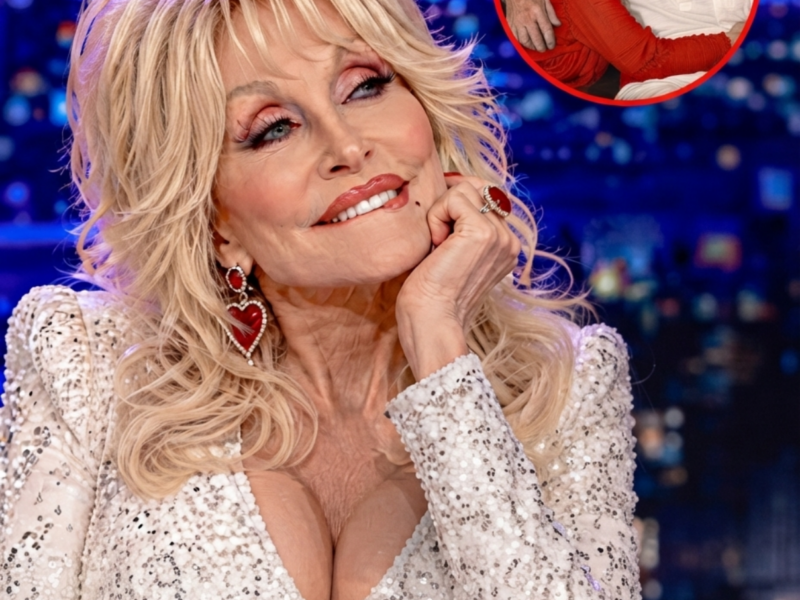
Before Her Death, Dolly Parton FINALLY Reveals Who Is The Love Of Her Life.
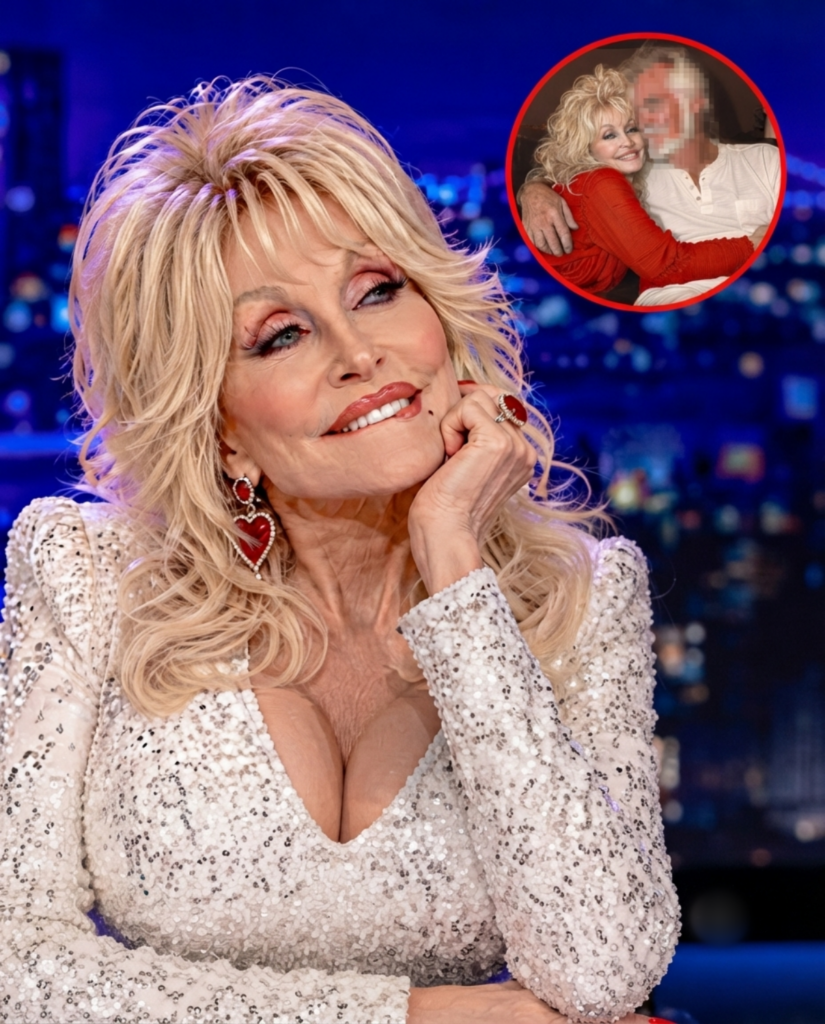
Who was the real love of Dolly Parton’s life?
Was it her husband of nearly 60 years, the quiet man who stayed home while she conquered the world?
Or was it someone else entirely, someone she never publicly named?
The rumors have swirled for years.
An affair with her band leader.
A six-year relationship with a bodyguard.
A secret love that she took to her grave.
But before she died, Dolly Parton finally gave the world the answer.
And it wasn’t what anyone expected.
Dolly Parton met Carl Dean on her very first day in Nashville.
She was eighteen years old, fresh off the bus from Sevier County, washing her clothes at the Wishy-Washy Laundromat.
She had no money, no contacts, and no idea what she was doing.
She just knew she wanted to be a star.
And then a man in a pickup truck called out to her.
She waved.
Being from the country, she spoke to everybody.
He came over, and that was Carl.
He was twenty-one years old, three years her senior.
He later said his first thought was, “I’m going to marry that girl.”
His second thought was, “Lord, she’s good-looking.”
And that was the day his life began.
For Dolly, love was the last thing on her mind.
She had left two boyfriends back home in the Smoky Mountains to launch her country singing career.
But she met Carl and fell for him.
“So the first thing I do, the first day in Nashville, I meet Carl. I fell for him, and he fell for me.”
She later wrote in her book, “Songteller: My Life and Lyrics.”
They dated for two years.
On May 30th, 1966, they drove to Ringgold, Georgia, and exchanged vows in a tiny ceremony attended only by Parton’s mother, the minister, and his wife.
Dolly wore a homemade knee-length white dress.
They chose Georgia partly to prevent any notices in Tennessee newspapers, but also because they could arrange the marriage there quickly.
But there was another reason the wedding had to remain quiet.
Her record label didn’t want her to get married.
Fred Foster, who had signed her to Monument Records, believed marriage could become a hindrance to her career.
He worried that having a husband would take away some of her appeal to male record buyers.
So Dolly and Carl told everyone the wedding was being postponed.
And then they got married anyway.
She kept the marriage secret for about a year.
It was only after she’d had her first top-ten country hit that they could finally share the happy news.
Eventually Foster called her into his office and told her he thought it would be all right now.
But Dolly had the last laugh.
She was already married.
Later she recalled telling him that she had actually been married for two years—the same weekend he had told her not to do it.
That’s the kind of woman Dolly Parton was.
She listened to people, but she made her own decisions.
There was also something significant about the way Dolly understood privacy.
Fame had made almost every part of her life public, but she repeatedly drew a line around the people closest to her.
Carl became the clearest example of that boundary.
The less interested he was in celebrity, the more fiercely she protected the ordinary life they shared away from cameras and the press.
For nearly 60 years, Dolly Parton publicly called Carl Dean the love of her life.
She described him as “the star of my life story.”
She said that “Carl and I fell in love when I was 18 and he was 21. And like all great love stories, they never end.”
But here’s the part that nobody talks about.
Their marriage was not traditional.
It was not conventional, and it was not what the public imagined.
Dolly Parton and Carl Dean had what she herself described as an open relationship.
Not physically, but emotionally, they gave each other freedom.
“He’s not jealous, and I’m not jealous of him. He knows I flirt. He flirts too,” she explained.
“Men are my weakness,” she once confessed.
“Short, fat, bald, or skinny. I’ve had crushes on some very unusual men.”
But she made one thing absolutely clear.
“Carl knows I’ll always come home, and I’m not having sex with these people. I’m just flirting and having fun.”
She said, “Yes, it’s an open relationship, but not physically. And I would kill him if I thought he was doing that. He would shoot me, too. At the end of the day, we love each other madly.”
That was the foundation of their marriage.
Trust.
Freedom.
And a love so deep that it didn’t need to be possessive to be real.
They lived separate lives in many ways.
Dolly traveled the world.
Carl stayed home.
She built an empire.
He ran his asphalt paving company.
She wore wigs and rhinestones.
He wore work boots and flannel.
They were opposites in every way, and that was exactly what made it work.
“We’re completely opposite, but that’s what makes it fun,” Dolly said.
“He’s always surprising me.”
She described him as a loner who didn’t like being around anybody but her.
“We’re different people,” she said.
“But we just work so well together.”
He went to exactly one industry event with her.
It was the BMI Song of the Year ceremony in 1967, the year after they married.
She rented him a tuxedo and begged him to go.
He was so uncomfortable that he began taking the tuxedo off on the ride home.
Finally, he told her that he loved her and would support her career in every way he could, but the limelight wasn’t for him.
He never went out with her again.
For decades, people speculated that Carl Dean didn’t exist.
That Dolly had invented him.
That he was a cover for something else.
But the truth was simpler.
He was just a man who loved his wife and wanted nothing to do with her fame.
He didn’t want her money.
He didn’t want her spotlight.
He just wanted her.
Their early marriage also unfolded while Dolly was still building her professional identity.
She was writing songs, recording, performing, and learning how to survive an industry that could easily turn a young singer into somebody else’s product.
Carl was not trying to become part of that machinery.
His decision to stay outside gave Dolly a private space where she did not have to perform.
That distinction helps explain why she continued describing the marriage as real, even when outsiders could not understand it.
But there was another man.
A man who, according to some insiders, was the real love of Dolly Parton’s life.
A man she never publicly named.
A man she kept secret for decades.
His name was Mark Kirakoff.
He was her security guard.
He joined her team in 1989.
And according to reports, their relationship was not just professional.
It was personal.
Deeply personal.
Insiders claimed that Dolly and Mark had an affair that lasted over six years.
They kept it secret by concealing their affection in public.
“They are just very, very discreet about the whole thing,” an insider whispered at the time.
“On the road, they’re always registered in separate rooms. Even though in most cases, the rooms are adjoining.”
The affair reportedly developed into something much more.
Sources claimed that Dolly fell head over heels for the divorced Kirakoff.
Their relationship lasted six years, until 1996, when he gave her an ultimatum.
According to insiders, he told her, “You have to decide. It’s Carl or me.”
Dolly Parton chose Carl.
She chose the man who had been by her side since she was eighteen years old.
She chose the man who had never asked her for anything.
She chose the man who had loved her before she became a star.
But here’s the part that has left fans truly shocked.
According to some insiders, she chose wrong.
“Mark was the love of her life,” an insider confided.
“Over the years, she had her flings and Carl had his. But Dolly never had anything quite like this before.”
Dolly never confirmed the affair publicly.
She never named Mark Kirakoff as the love of her life.
She publicly denied having sex with other men and insisted that her marriage was not open physically, but only to flirting.
But she also admitted in a 1984 interview, “I’ve had my little affairs. I’ve been tempted many times, and I admit I’ve given in more than once. But not as many times as people believe.”
That admission, combined with the insider claims about Mark Kirakoff, has led many to believe that the love of Dolly Parton’s life was not Carl Dean.
It was the man she couldn’t have.
The man she gave up.
The man she chose not to choose.
The public also learned that Dolly could separate attraction from commitment.
She was unusually candid about having crushes, finding people attractive, and enjoying attention.
But she repeatedly described those feelings as different from the commitment she had made to Carl.
That distinction matters when looking at later rumors.
An admission that she had been tempted is not, by itself, proof of a particular affair.
Much of the mythology surrounding her private life grew from combining her own candid comments with claims from unnamed sources.
There was another reason the rumors surrounding Dolly were so difficult to settle.
Her public personality encouraged playful speculation.
She joked about romance, flirted with performers, and understood that chemistry could become part of entertainment.
Yet she also understood the difference between a joke made for an audience and a fact about her private life.
That ambiguity became part of her celebrity image, especially when interviews were repeated decades later and fragments of old comments were presented without their original context.
Now let’s talk about the other men in Dolly Parton’s life, because there were many, and the rumors were relentless.
One of the most persistent rumors was that she had an affair with Kenny Rogers.
They had undeniable chemistry.
Their duet, “Islands in the Stream,” became one of the biggest hits of the 1980s.
And their playful flirtation on stage and on screen fueled speculation for decades.
But both of them consistently denied it.
When they appeared on “Good Morning America” together in 2013, they were asked about it directly.
“Never,” Parton replied.
She said there was no opportunity for romance.
“We never even flirted. Not in that way,” she clarified.
Kenny Rogers later explained that they chose to protect their friendship rather than risk a romance.
“We just teased each other for 30 years,” he said.
There was also Burt Reynolds.
They co-starred in “The Best Little Whorehouse in Texas” in 1982.
The rumors of an affair were so persistent that Reynolds’s wife at the time reportedly blamed Dolly for the end of her marriage.
But Dolly denied it.
She said they were too much alike.
“We both wear wigs and high heels, and we both have a roll around the middle,” she joked.
Reynolds was furious.
Not because she had insulted him, but because she had destroyed the intrigue that might have helped the movie.
“You’re destroying the magic,” he said to her.
“How are people going to think of us as an item for the sake of this movie if we go around badmouthing each other?”
There was Sylvester Stallone.
They co-starred in “Rhinestone” in 1984.
The rumors were relentless.
Stallone’s first wife, Sasha Zak, blamed Dolly for the end of their marriage.
But Dolly denied it.
She admitted she found him handsome.
“He’s pretty to look at,” she said.
But she maintained that there was never a secret romance.
And then there was Porter Wagoner.
The man who gave her her big break.
The man she wrote “I Will Always Love You” to say goodbye to.
Their relationship was complicated.
Some described him as her sometime father, sometime lover.
Neither of them ever confirmed they were romantically involved.
But when she left his show in 1974, he sued her for $3 million, claiming he had made her a star and was entitled to a percentage of her career for life.
She settled for around $1 million.
She never publicly condemned him.
She always acknowledged his role in her success.
But the betrayal cut deep.
Dolly’s professional relationships created another layer of confusion.
In country music, collaboration was often intensely personal.
Touring partners spent long hours together, wrote songs together, traveled together, and sometimes appeared on television as if they were a couple.
Dolly knew how powerful that chemistry could be.
She used humor to control it rather than allowing other people to define her.
In many cases, the rumor became more memorable than the denial, because the public preferred a romantic story to an ordinary friendship.
The story of Porter Wagoner is especially important because it shows that love, gratitude, disappointment, and ambition could exist at the same time.
Wagoner gave Dolly a national platform, but leaving his show became necessary for her independence.
Her song about saying goodbye eventually became one of the most famous songs in popular music.
The fact that Dolly could turn a painful professional separation into enduring art became a pattern throughout her career.
She often transformed complicated emotions into songs that sounded simple when millions heard them.
So who was the love of Dolly Parton’s life?
Was it Carl Dean, the quiet man who waited at home for nearly sixty years?
Was it Mark Kirakoff, the bodyguard she supposedly loved but couldn’t keep?
Was it Porter Wagoner, the mentor who became her adversary?
Or was it someone else entirely?
Before she died, Dolly Parton gave the world her answer.
And the answer was not a name.
It was a truth.
She said that Carl Dean was “the star of my life story.”
She said he was the love of her life.
She said that their love story would never end.
She said that he was the one who had been there from the beginning.
The one who knew her before the wigs and the rhinestones.
The one who loved her for who she was, not for who she became.
But she also said something else.
Something that revealed the depth of her love and the depth of her sacrifice.
She said that she had neglected her own health while caring for him in his final years.
She said that she had put herself last.
She always did.
“When my husband Carl was very sick, that was for a long time. And then when he passed, I didn’t take care of myself.”
She admitted she had spent years caring for him as his health declined.
She had stopped touring in 2023 to be with him.
She had given up everything to be by his side.
And in doing so, she had sacrificed her own health, her own life.
Dolly Parton died on August 25th, 2026, just seventeen months after her husband.
She was eighty years old.
She had battled cancer in secret, kept her diagnosis private, and went quietly, surrounded by family.
She had been admitted to the Vanderbilt Ingram Cancer Center in Nashville on the Friday before her death.
She had kept her diagnosis private.
She had gone quietly, without a media circus, without the world watching.
But the world was watching.
And the world was stunned.
Because the woman who had always seemed so invincible, so eternal, so impossibly vibrant, was gone.
Her relationship with Kenny Rogers also illustrates the difference between public chemistry and private commitment.
Their friendship was commercially successful because audiences believed the two performers enjoyed each other’s company.
They could tease one another without pretending that a romance existed.
Dolly later spoke about Rogers with affection and respect, and his death in 2020 brought renewed attention to their partnership.
Yet the public still returned to the same question, because their performances had created an image that was difficult to separate from the music itself.
Carl’s death changed the meaning of many of Dolly’s earlier comments.
For decades, she could speak about marriage as a partnership between two people who maintained separate worlds.
After his death, the private cost of that arrangement became easier to see.
She was no longer simply describing a marriage from the middle of it.
She was looking backward at decades of shared history.
Her grief made clear that distance had never meant indifference.
The private nature of their relationship may have made the loss even harder for her to explain publicly.
So what was the final answer?
Who was the love of Dolly Parton’s life?
The answer is both simple and complicated.
The love of her life was Carl Dean.
Not because he was perfect, not because their marriage was conventional, but because he was the one she chose.
Again and again.
For nearly sixty years.
Through the affairs and the rumors and the distance and the pain, she chose him.
And in the end, she died of a broken heart.
Not literally, but close enough.
She died of the grief of losing him.
She died of the years of caring for him.
She died of the love that had defined her entire adult life.
But the love of her life was also Mark Kirakoff.
The man she couldn’t have.
The man she gave up.
The man who, according to some, was the one she truly loved.
She never publicly named him.
She never confirmed the affair.
But she admitted to having affairs.
She admitted to being tempted.
She admitted to giving in more than once.
And the timing of her relationship with Mark Kirakoff aligns with the period she described as the darkest of her life.
The period when she considered suicide.
The period when she wrote “I Will Always Love You.”
Maybe the love of her life wasn’t one person.
Maybe it was the idea of love itself.
The possibility of connection.
The dream of being understood.
Dolly Parton spent her whole life loving people.
Her family.
Her fans.
Her husband.
Her secret lovers.
She loved deeply, and she loved often.
She loved in a way that was generous and forgiving and unconditional.
And in the end, she revealed that the love of her life was not a single person.
It was love itself.
The act of loving.
The choice to keep loving, even when it hurt, even when it cost her everything.
She wrote “I Will Always Love You” in 1973 to say goodbye to Porter Wagoner.
She sang it for the world.
But she lived it for Carl Dean, and for Mark Kirakoff, and for everyone she ever loved.
She lived it until the very end.
And that love—that fierce, complicated, beautiful love—is what she left behind.
Not just for Carl.
Not just for Mark.
But for all of us.









