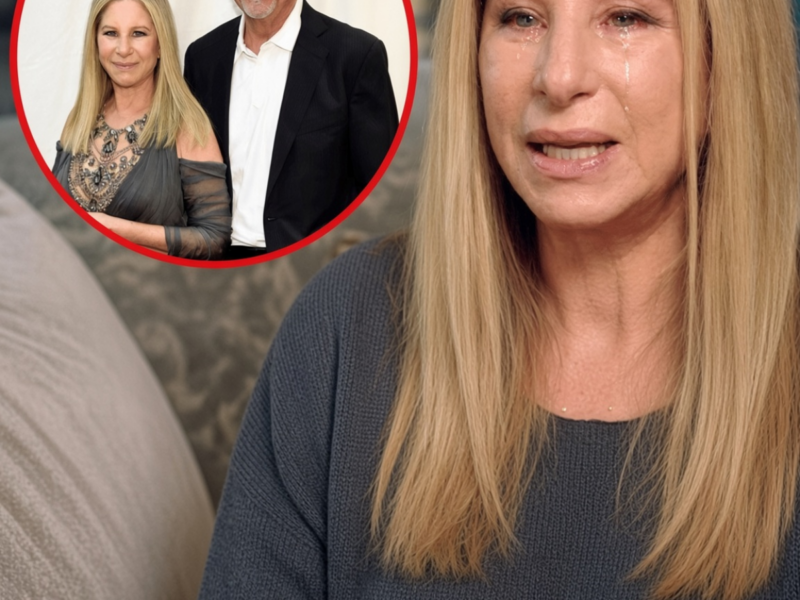
At 84, Barbra Streisand Breaks Her Silence on James Brolin—The Marriage That Took Her From Hollywood.
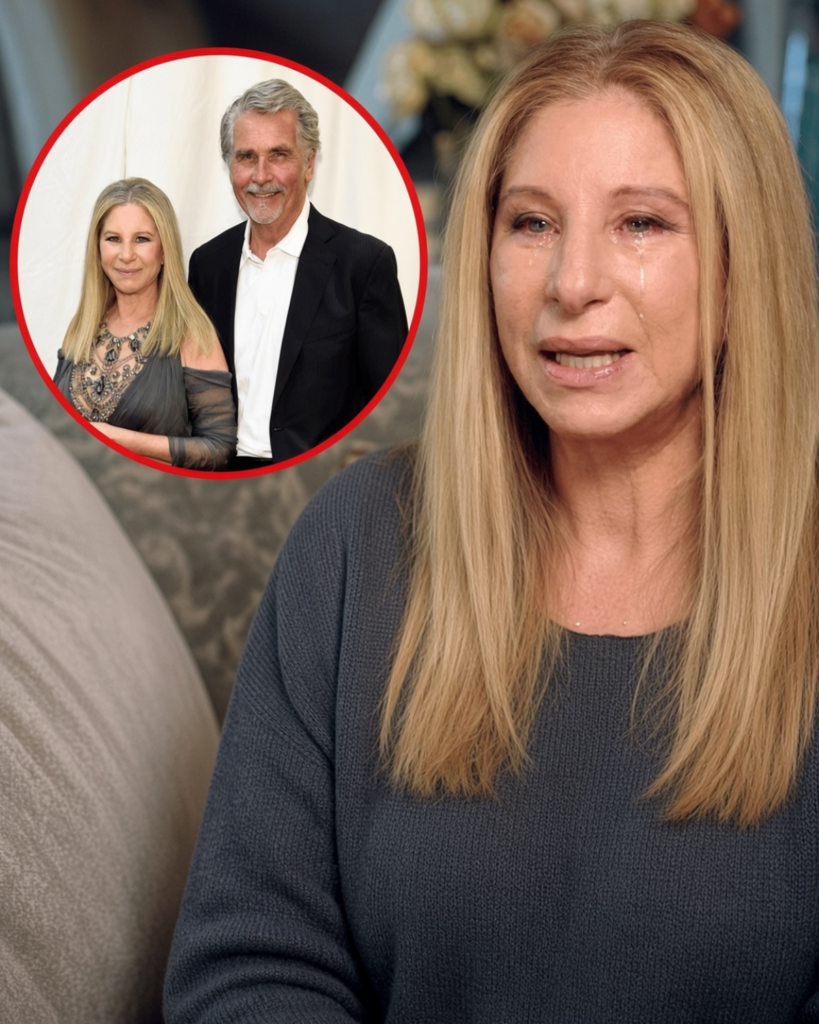
“Actually, my wife showed me that if we ever have a problem, bring in somebody who’s nice for us both to sit with, talk it out, and poof, one hour later, it’s gone. Whatever was bothering you for a week.”
There is a version of the Barbra Streisand story that most people think they already know.
A girl from Brooklyn with a once-in-a-generation voice conquers Broadway, wins an Oscar, directs her own films, and becomes one of the most powerful women in entertainment.
It is a story about ambition, talent, and control.
But there is another story running underneath it, quieter and far more personal.
And it is the story of what all that success cost her, and of the man who walked into her life at exactly the moment she was learning to protect what was left.
Now at 84, Barbra Streisand is speaking about her husband, James Brolin, and about the life they built together with an openness that surprises people who remember her as one of the most guarded stars in Hollywood.
Her words are not a scandal or a confession.
They are something more interesting: the reflections of a woman looking back at a marriage that did not end her career, but did quietly change what she wanted from it.
To understand why that matters, we have to start long before Brolin, in an apartment in Brooklyn with a little girl who had already learned that nobody was going to hand her anything.
Barbara Joan Streisand was born on April 24th, 1942 in Brooklyn, New York.
Her father, Emanuel, a teacher, died when she was just a toddler, and that absence shaped everything that followed.
Her mother, Diana, was left to raise Barbara and her older brother, Sheldon, on very little money.
Streisand has spoken for years about how thin the warmth felt in that household.
Money was tight, praise was rare, and a child who wanted to be seen had to find her own way to be noticed.
She found it through her voice, and through an almost stubborn certainty that she was meant for something bigger than the neighborhood around her.
People told her again and again that she did not look the part.
They told her that her nose was too prominent, that her look was too unusual, that a girl like her should think about a different career.
She refused to change her face, and she refused to change her ambitions.
That refusal, that quiet insistence on being exactly who she was, would become the thread running through her entire life.
After high school, she moved into the world of small Manhattan clubs, singing for tips and for attention.
And slowly, the attention became something else.
Audiences started to sense that they were watching someone unusual.
A voice that could be tender and enormous in the same breath, paired with a comic timing and a fearless personality, was not something the industry had a ready-made box for.
By the early 1960s, she had a recording contract, a Broadway role, and a growing reputation.
By the middle of the decade, she was Fanny Brice in Funny Girl.
And after that, there was no turning back.
The film version of Funny Girl brought her an Academy Award for Best Actress in 1969.
And from that moment, Streisand was not just a singer, but a movie star.
What set her apart, however, was not only the size of her talent.
It was the size of her appetite for control.
She wanted a say in the songs, in the camera angles, in the way a scene was lit, in the final cut.
In an industry that was not used to hearing that kind of confidence from a woman, the reaction was predictable.
She was called demanding.
She was called a perfectionist.
Depending on who was talking, she was called a genius or a nightmare.
Streisand has always pushed back on that framing.
Her argument, made over decades of interviews, is simple.
A man with the same attention to detail would have been praised as a visionary.
She wanted her work to be right, and she was willing to say so out loud.
That willingness eventually led to Yentl in 1983, a film she spent years trying to get made and which she ended up starring in, producing, co-writing, and directing.
It was a landmark moment for a woman in Hollywood, and she followed it with The Prince of Tides in 1991, which earned multiple Oscar nominations, including Best Picture, but famously left her out of the Best Director category.
The snub became a national conversation about how the industry treated women behind the camera.
All of this demonstrates something important about the woman who would eventually meet James Brolin.
Streisand was not a star who drifted through fame.
She fought for every inch of her independence.
She had built her career on her own terms, and she was not about to give that up for anyone.
Which is why what happened next, the way this particular marriage settled into her life, makes such a striking story.
But there was one place where control failed her, and it happened in public.
In June of 1967, Streisand performed a free concert in New York’s Central Park in front of an enormous crowd.
Somewhere in the middle of the show, she forgot the lyrics to a song.
It was a small mistake, the kind that happens to almost every live performer, but for Streisand it became something much larger.
The embarrassment lodged itself in her mind and refused to leave.
For years afterward, she avoided large concerts altogether.
She has described her stage fright openly, explaining how the fear of forgetting words or of disappointing an audience grew into something that made live performance feel almost impossible.
Instead, she turned to the places where she could make things as perfect as she wished: the recording studio and the film set.
In a studio, you can do another take.
On a film set, an editor can fix what went wrong.
On a stage, in front of thousands of people, you cannot take anything back.
It was not until the 1990s that she returned to the concert stage in a major way.
Her 1994 comeback tour was one of the biggest events in pop music that year, with tickets selling out at astonishing speed.
Fans who had waited more than two decades to see her sing live finally got their chance.
But the return did not mean the fear had vanished.
It meant she had learned to manage it, to work within it, and to choose very carefully when and where she would step into the light.
That habit of choosing, of being selective, was already in place when a certain actor entered her life.
James Brolin, born in California in 1940, was a well-known actor long before he met Streisand.
He had become a familiar face on television, most famously as Dr. Steven Kiley on Marcus Welby, M.D., and later on the hotel drama Hotel.
He was also the father of three children, including Josh Brolin, who would grow into a major film star in his own right.
By the mid-1990s, Brolin was a respected, steady presence in the business.
Someone who had seen the ups and downs of Hollywood and did not seem rattled by it.
The two were introduced by friends on a blind date on July 1st, 1996.
Streisand has often told the story of that first meeting with humor, including her surprise at how different he looked from what she had pictured.
What stayed with her, and what she has returned to in interviews over the years, was how easy the connection felt.
Brolin was not intimidated by her fame.
He did not treat her like an icon to be handled carefully.
He talked to her like a person.
And for a woman who had spent decades being treated as either a legend or a problem, that was disarming.
They moved quickly and they moved with conviction.
Two years to the day after that first meeting, on July 1st, 1998, they were married at her home in Malibu.
The wedding was a private ceremony surrounded by the kind of security that only a couple that famous would need, and the whole event was designed to keep the outside world at a distance.
It was a fitting start for a marriage that would prove over the decades to be built largely on privacy and on the quiet rhythms of shared daily life.
Here is where the popular version of the story gets a little too neat.
The idea that James Brolin somehow pulled Barbara Streisand away from Hollywood makes for a dramatic headline, but it does not match the record.
Streisand has never stopped working.
After her marriage, she continued to record albums, to tour, to direct, to act, and to appear at major events.
She released new music, mounted large-scale concerts, and took on select film projects.
What changed was not whether she worked, but how she worked and how much of her life she was willing to hand over to the public.
Before Brolin, she was a woman fighting to prove herself in an industry that resisted her.
After Brolin, she was a woman who no longer felt she had to.
That is a subtle but profound difference.
She has spoken about how a stable, loving relationship allowed her to prioritize things she had long put second.
Time at home, time in her gardens, time with family and friends, time spent simply being a person rather than a brand.
The frantic energy of her earlier career gave way to something calmer.
In that sense, the marriage did take her away from a certain version of Hollywood.
It took her away from the relentless cycle of proving, promoting, and defending.
It gave her permission to say no and to choose only the projects and appearances that truly mattered to her.
Streisand has never framed this as a loss.
If anything, she describes it as a gain.
The kind of freedom that only arrives after you have already achieved everything the industry could offer.
Over the years, Streisand and Brolin have become one of Hollywood’s most enduring couples in an industry where marriages are often measured in months rather than decades.
They have blended families, celebrated milestones, and shared a life that from the outside looks remarkably grounded.
Streisand has spoken affectionately about Brolin in interviews and on social media, and he has done the same about her.
Their public appearances together tend to be warm, playful, and slightly teasing.
The kind of easy banter you see between two people who have known each other for a long time.
Brolin himself has been open about the fact that a marriage between two strong personalities takes work.
He has joked in interviews about the give and take required, and about the fact that living with a woman who has strong opinions and exacting standards means learning to communicate clearly.
Streisand, for her part, has acknowledged that she can be a perfectionist at home as well as at work, and that Brolin’s patience has been one of the great gifts of her life.
There is also the matter of family.
Streisand’s son Jason Gould has talked about how important it was that his mother found a partner who cared about her happiness, and Brolin’s children, including Josh, have become part of the wider Streisand-Brolin circle.
It is a modern, sprawling family built not through a single dramatic event but through years of showing up for one another.
That may be the real secret behind their longevity.
Not grand gestures, but consistency.
No discussion of Streisand’s relationship with privacy would be complete without the story that gave the internet a permanent phrase.
In 2003, a photographer named Kenneth Adelman was documenting the California coastline from the air as part of a project on coastal erosion.
Among thousands of photographs was an aerial image showing Streisand’s Malibu property.
Streisand sued, seeking millions of dollars and arguing that the photograph violated her privacy.
The lawsuit failed.
A California court rejected her claims and she was ordered to pay legal fees.
Worse, the publicity surrounding the case drew huge numbers of people to a photograph that had barely been noticed before.
A technology writer, Mike Masnick, later used the term “the Streisand Effect” to describe what happens when an attempt to hide or remove information only draws more attention to it.
It became a lasting piece of internet vocabulary and a permanent, slightly ironic footnote to the career of a woman who had spent her life trying to control her own image.
But the episode also reveals something sympathetic.
Streisand was not trying to be difficult for its own sake.
She was defending her home, the place where she and Brolin had built their private life.
For someone who had endured decades of scrutiny, the idea of a photograph broadcasting the location of her sanctuary was understandably upsetting.
The lawsuit may have been a strategic mistake, but the instinct behind it was very human.
The desire to protect the one space that belonged only to her and the man she loved.
If there is a moment when Streisand truly seemed to open up, it came with the publication of her memoir, My Name Is Barbra, in November 2023.
The book is enormous, running to nearly a thousand pages, and it gave her the chance to tell her story on her own terms without a journalist shaping the narrative.
She wrote about her childhood, her early struggles, her career, her relationships, and her long journey toward self-acceptance.
For readers who had only known her through headlines, the memoir was a revelation.
It showed a woman who was funny, insecure, fiercely loyal, and endlessly curious.
It also confirmed what her fans had long suspected: that behind the formidable public image was someone who cared deeply about doing things well because she cared deeply about the people who would experience them.
Brolin appears in the story as a source of warmth and steadiness, a partner who gave her room to be herself.
And this, perhaps, is the true meaning of breaking her silence.
Streisand has never been silent in the ordinary sense.
She has spoken out about politics, about the arts, about women’s rights, and about causes close to her heart for more than half a century.
What she rarely did for most of her career was speak in an unguarded way about her inner life.
In her 80s, with a lifetime of accomplishments behind her, she seems finally comfortable doing exactly that.
So, what did this marriage actually give her?
Not an escape from Hollywood, but an alternative to it.
For decades, she lived in a world where every choice was scrutinized and every success demanded another.
Brolin offered something Hollywood never could: a home where nobody was keeping score.
He did not ask her to shrink and he did not ask her to stop working.
He simply offered a life in which her worth did not depend on the next album, the next film, or the next standing ovation.
For a woman who had grown up feeling that love had to be earned, that may have been the most radical gift of all.
Streisand has also continued to find new ways to create.
She has made albums, appeared in projects that interested her, spoken up about the causes she believes in, and remained, at 84, entirely herself.
And that is perhaps the most remarkable thing about this story.
The girl from Brooklyn who was told she did not look the part grew into a woman who defined the part on her own terms, and then found someone who loved her for exactly who that was.









