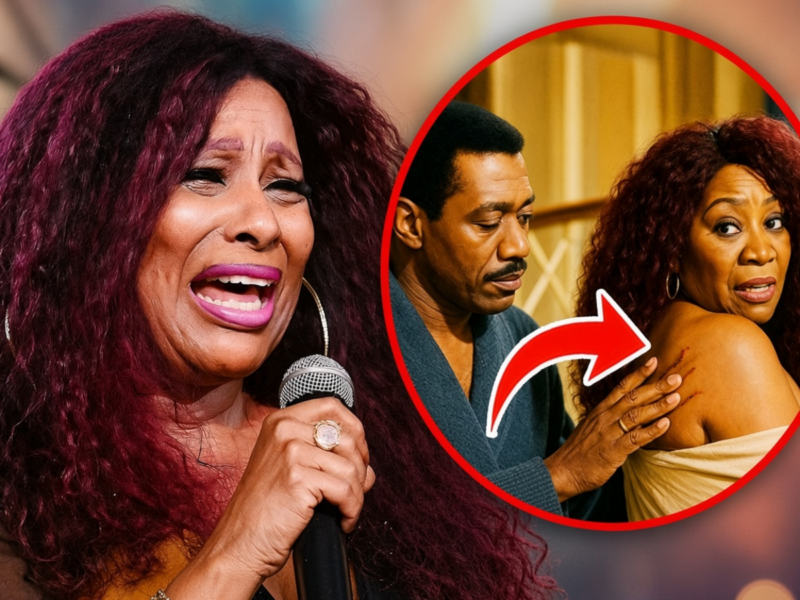
At 81, Patti LaBelle JUST Breaks Silence and Shocks Everyone.
“I had three sisters who all died before they turned forty.”
No more hidden meanings, no more evasions.
For the first time in over half a century, under the spotlight, the queen of soul and resilience has removed her mask of glory, revealing remarkably brilliant yet profoundly painful hidden facets.
An artist who sang at the funerals of her three sisters, then continued living with the question, “Why am I still here?”
She sang not for applause, but to mend a heart riddled with memories.
And now, secrets guarded more closely than her songs have officially been unveiled.
An unexpected romance.
A shocking revelation no one dared predict.
A decision that could transform how you perceive fame, survival, and truth.
People often imagine that successful individuals, especially those past eighty like Ms. Patti LaBelle, must have lived truly complete lives.
Abundant fame, perfect wealth, and a love story as beautiful as a fairy tale.
But the truth, like a misplaced stitch, always reveals a crooked seam amidst the dazzling stage lights.
Behind the applause were hands that had parted, unanswered proposals, and loves, though very real, that could not overcome the immense shadow of a dream.
Otis Williams, the quiet leader of the Temptations, was once a memorable chapter in her life.
Not a clandestine affair, nor something lurking behind a curtain of scandal, but a love mature enough to consider a lifetime together, yet clear-sighted enough to know she had to continue.
Patti once recounted, not with tears, but with a smile as thin as paper, that Otis had proposed.
No flowers, no ring, just a very soft question.
“Would you marry me?”
And she, the woman who had sung for millions but never let her heart sing on stage, refused.
Not because she didn’t love him.
Oh, she loved him deeply.
Every time she spoke of Otis, her gaze would slow, as if recalling something very sweet, very distant, and very difficult to hold on to.
But that year, her musical dream was still unfinished, and she knew once she entered a family, once she became someone’s wife, there would be no room for all-night shows or days buried in the recording studio, especially for a woman of color in the 1960s, a time when even being allowed on stage was not something everyone permitted.
This is not just a story of unfulfilled love.
This is the deeply conflicted choice of a woman caught between the man she loved and the woman she was becoming.
It wasn’t glamorous.
It wasn’t dramatic like a movie.
It was simply a man stepping back and a woman moving forward toward the spotlight, and also toward solitude.
It’s rumored that later, every time she heard “My Girl,” Patti would pause for a few seconds, not to listen, but to remember.
They no longer communicated much, but they never hated each other.
No resentment, no hurt, just, “We just grew in different directions.”
She once said that in an interview, her voice deep and steady like the final notes of her own ballad.
But what truly tugs at the heart is not just the unfulfilled romance, but the way Patti embraced it all—the love, the regret, and even the decision to refuse—as an essential part of her journey.
She offered no excuses, no justifications.
She simply recounted it quietly as a way to protect Otis from rumors.
Because in the world of showbiz, especially back then, women like her were easily stereotyped as ambitious, unapproachable, too independent to love.
Many once said that Patti sacrificed personal affection for fame.
But the truth was never that simple.
Perhaps she was just honoring the promise she made to the fourteen-year-old girl, the girl who once sat alone in church after her family broke apart, vowing that one day she would stand on a grand stage and never have to depend on anyone.
Decades later, when Patti sang at the Metropolitan Opera House, the first woman of color to do so, the applause was thunderous.
But no one knew that for a fleeting moment backstage, she quietly looked up, as if sending something to a man who once said, “If you agree, I will stop everything for you.”
The story between Patti and Otis is not a tragedy.
It is a gentle jazz piece with climaxes and silences, but it always contains an affection that never faded.
It is a symbol of a generation of women of color who had to fight to be on stage and also chose to stand alone because no one dared wait for them until the end of the song.
At eighty-one, when Patti LaBelle finally confirmed the rumors that had circulated backstage, she didn’t do it for attention.
Rather, she understood some truths should not be taken to the grave, not to be remembered, but so that those living, especially young women today, know that you can love someone deeply and still choose yourself.
Not all pain has a sound.
Some cracks in memory are so silent that even years later no one dares touch them, not even those involved.
Patti LaBelle, with a voice like a razor cutting through the listener’s soul, once held a special admiration for Jackie Wilson.
One of the legendary names in R&B of that decade.
She called him one of the people who made me believe that music is magic.
But it was also that very person who instilled a silent yet permanent fracture in her mind.
No one knows exactly what happened.
Patti rarely mentioned it, and if she did, she spoke very briefly.
But on one rare occasion, she recounted, with downcast eyes and hands clutching the microphone as if holding onto a past that had scarred her, “Jackie invited me to his dressing room. I was young, and what happened shouldn’t have.”
She didn’t cry, didn’t scream, didn’t blame.
She simply recounted it as if it were a truth everyone must learn.
Sooner or later, your idol isn’t always a good person.
At that time, Patti was nothing.
A young singer, still afraid of the spotlight, still believing that the stars who came before her were all kind, visionary, and supportive of newcomers.
She arrived at Jackie’s performance with the excitement of a child meeting her hero for the first time.
But that meeting did not end like a dream.
And from that day forward, her view of the entertainment industry was never the same.
People often talk about first shocks as if they are a natural part of youth.
But for Patti, a woman of color growing up amidst layers of prejudice and aspiration, that shock was far more severe.
Because she not only lost her innocence, but also had to carry an involuntary silence.
Because at that time, who would believe an unknown singer who dared to speak what no one wanted to hear?
This story never became a scandal.
No newspaper headlines, no hashtags, no calls for justice.
Only Patti continued living, performing, singing as if nothing had happened.
But if you look closely, you will see that from that moment she began to keep her distance from male colleagues.
She became more cautious, more reserved, always maintaining a boundary between closeness and wariness.
She once uttered a sentence, light yet heavy as a stone on the listener’s chest.
“Fame doesn’t equal virtue.”
That, she said, not to lecture anyone, but to remind herself that the glamour out there is sometimes just a cloak for unspeakable things.
For those who idolized Jackie Wilson, this is a difficult truth to swallow.
For those who don’t believe, Patti doesn’t argue.
She doesn’t need to.
She simply lives on, works, succeeds, and chooses to let that past become a fire that burns away all illusions instead of burning herself.
Looking back, this is not just a personal story.
It reflects a period when many young artists, especially women of color, had to learn to survive in a world where the spotlight didn’t reach backstage, a world where the powerful were always assumed to be right, and the vulnerable were only advised to be careful next time.
Patti LaBelle never used this story to enhance her reputation.
She didn’t tell everyone, only those subtle enough to understand.
“I’m still here, not because I was lucky, but because I learned how to move past hurt without carrying it with me forever.”
That is why, in hundreds of shows later, every time she sang “If Only You Knew,” a song seemingly about unrequited love, it resonated with a truly sorrowful, unique tone, as if there was another layer of meaning reserved only for those who knew what it was like to admire someone so much they forgot how to protect themselves.
Patti doesn’t need the audience to be angry for her.
She doesn’t demand justice.
She chooses to tell the story in the gentlest yet sharpest way—a named, bloodless, tearless warning, but enough to send shivers down one’s spine.
And what makes her admirable is not just her voice, but because she didn’t let others rewrite her own story.
They were once the first women to make a white stage hold its breath.
Three voices, three souls, an explosion named LaBelle.
They didn’t just sing “Lady Marmalade” when they walked with their heads held high, eyes asking no permission, but also wore outfits that seemed to fly in from another universe, unlike any other female group of their time.
Not gentle, not conventional, not waiting to be accepted.
They forced the audience to look, to listen, and to respect.
But what happens when three vastly different women try to sing the same song together?
Behind every perfect chord were unacknowledged clashes.
Patti, the diva in the classical sense, loving ballads, loyal to soul.
Nona, the avant-garde pioneer, always obsessed with innovation.
And Cindy, the subtle background vocalist, but never wanting to be stuck in a shadow.
People often say the group disbanded due to scheduling conflicts or desire to pursue solo careers.
That sounds reasonable, but it’s actually too simplistic.
The truth is often more complex.
No one was wrong, but no one yielded.
No one was jealous, but everyone wanted to soar further.
One looked to the future, one wanted to preserve the past, one silently stepped away.
Cindy Birdsong was the first to leave the group.
No arguments, no blame.
She just didn’t return to the studio one day.
It’s rumored that she felt unheard.
There are also accounts that Cindy felt lost between two overpowering personalities.
Patti, always maintaining the heartbeat of the room, and Nona, who always wanted to break that rhythm.
LaBelle was more than just a music group.
They were a symbol of women of color daring to challenge all norms in an industry that was already not welcoming to women, and even more restrictive to women like them.
But it was precisely that pioneering spirit, that courage, that made it difficult for them to find stability when internal dynamics began to falter.
Nona Hendryx, who never stood still, wanted the group to go further, be bolder, more experimental.
She was fascinated by rock, funk, electronic, things that at the time almost no female artist of color dared to touch.
Patti was different.
She loved tradition, deep emotion, and closeness with the audience.
Not because she disliked change, but because she understood that some of the most beautiful things lie in familiarity.
Then one day, they looked at each other, not angry, but no longer in sync.
And when the music stopped, all three knew it was time to sing their parts in silence.
There was no official breakup, no press conference, no exclusive articles, just a prolonged void that no one filled.
And when Patti released her first solo album, she was called a former LaBelle member.
But the truth is, LaBelle never truly ended.
It simply changed form, changed voice, and continued to live in each person’s individual musical choices.
More than thirty years later, they reunited.
Not for money, not for nostalgia, but because finally they understood that the differences of the past were not conflicts, but gifts they were not mature enough to unwrap at the time.
Patti once said, “We didn’t break up because we hated each other. We just loved art in ways that couldn’t be the same.”
This was a tearless divorce.
No one was wrong, just hearts that drifted apart.
And the most miraculous thing is, no matter how many years pass, no matter how each has become a separate icon, when they sing together again, it still feels like bells ringing in an old church full of memories, full of cracks, but still echoing far and wide even now.
They didn’t break up because of a fiery argument.
No words were spoken in anger, no slamming doors, no luggage rolling down steps, no climax.
Just one day, Patti woke up, looked at Armstead, the man who once knew how to make her heart skip a beat, and realized she had gone too far for too long and was no longer in sync.
Some separations happen not because two people hate each other, but because time has eroded the us that was once so intertwined they understood each other without words.
Patti and Armstead are a prime example of a mature, deep love that gently receded, like background music slowing down at the end of a party.
Armstead Edwards, the quiet man, always behind the scenes, was not just her lover, but also her manager, protector, the one who shielded Patti from the chaotic whirlwind of the spotlight.
He wasn’t in magazine cover photos, didn’t walk red carpets, but he was the one backstage tapping his foot to each performance, always knowing exactly when Patti needed a bottle of water, encouragement, or to be left alone.
They met not in a glamorous setting, but in the most ordinary place: school.
He was a teacher, she was a rising artist.
It sounds unrelated, but it was that very difference that kept them close.
When Patti flew around the world, Armstead was the one who taught their son how to maintain a peaceful life, how to do math, how to understand that mom not coming home for dinner didn’t mean she didn’t love him.
Their love wasn’t loud.
It was like a jazz piece no one understood the logic perfectly, but every note was in its right place, even if occasionally a little off-key.
Together they built not just a career, but a family, an ideal, until they were no longer on the same wavelength.
Patti once said, “We outgrew each other, not out of anger, but out of time.”
A seemingly light statement, but actually profoundly heavy, because with no betrayer, no fault to cast upon the other, separation becomes even more poignant.
They divorced peacefully.
No lawsuits, no custody battles, no winners.
Patti didn’t delete old photos, didn’t erase memories.
She said, “He gave me years I can’t forget, and I won’t try to.”
After the divorce, Armstead still appeared on special occasions, standing at the back of the room, not pushing into the spotlight, just nodding whenever she finished a song, as if still keeping rhythm for her from a safe distance.
Many didn’t understand why Patti, who once sang the most passionate love songs, chose to let go of a relationship that still held full respect.
But the truth is, she didn’t choose to abandon love.
She simply accepted that some loves don’t last forever, yet can still be complete.
In a world where everything is valued by drama, scandal, or tears, Patti and Armstead’s relationship is like a quiet lesson that an ending doesn’t mean failure.
That sometimes, to truly love someone, you must know when to stop.
Not to walk away, but to preserve the most beautiful things without letting them spoil.
Patti never remarried, not because she couldn’t love again, but perhaps she had loved enough.
The years that followed, she dedicated to the stage, to her children and grandchildren, to her travels, to herself, the woman who once chose career over love, and ultimately also chose peace over familiarity.
Once, during a performance, Patti stood before the microphone, looked at the audience for a long time, then said something that silenced the entire hall.
“You can be grateful for something, even when it’s no longer yours.”
That is perhaps what she felt for Armstead.
No longer her husband, no longer her manager, no longer her life partner, but forever a part of her memory that she never wanted to alter.
It wasn’t the spotlight, the applause, nor any glittering gown that brought Patti LaBelle to tears.
It was the moment she held the microphone at her eldest sister’s funeral.
No lights, no audience, just a suffocating silence.
A singer performing to bid farewell to a loved one.
An artist using her voice to try and keep someone in memory for just a few more minutes.
But the song ended, and the truth remained: her sister was gone.
Three sisters, three times Patti LaBelle stood watching a piece of her childhood vanish forever.
And each time was a new, deeper, more poignant incision into a heart already tender from affection.
Perhaps the greatest pain wasn’t in saying goodbye, but in the feeling of still being there, breathing, singing, living while they were not.
She once confessed, “It felt like survivor’s guilt, like I was cheating life by still being in it.”
They were more than just sisters.
They were the first to hear Patti sing before she even knew musical notes.
They were the ones who covered for her when their mother worked night shifts.
They were the ones who knew she needed quiet whenever it rained.
They were the ones who bought her first performance dress even when the family had mere pennies left.
And then, one by one, they departed quietly, without a chance to say a proper farewell.
Each sister was like a small candle flickering out, leaving a deeper shadow within Patti’s heart.
At the last funeral, Patti stood at the podium trying to sing a gentle ballad that her youngest sister loved, but her voice broke midway.
The room remained silent.
No one needed to speak, because some notes are born to weep, not to sing.
From those partings, Patti was no longer just the woman standing center stage.
She became a powerful voice for early cancer screening, especially within the Black community, where going to the doctor was once a luxury, even seen as a weakness.
She used her own story to stir emotions, requiring no flowery language, no urgent pleas.
Just looking into her eyes whenever she mentioned her sisters’ names was enough.
In a soft whisper during a 2008 interview, she remarked, “If I can keep one sister alive out there, then maybe losing mine wasn’t for nothing.”
Patti didn’t just advocate with words.
She supported numerous public health campaigns, particularly targeting Black women, a group often overlooked in statistics, clinics, and health care priorities.
She released healthy cookbooks, sharing recipes that were not only delicious but also healing.
She appeared on talk shows, not to promote albums but to discuss blood sugar, cell counts, and self-love through every bite.
No one taught Patti how to survive after her loved ones were successively gone.
There was no guide on overcoming the haunting feeling when their memories flooded back upon entering an old room or hearing an old song.
But Patti chose not to shy away.
She carried her pain with her like a quiet bass note nestled within a melody, not prominent but indispensable.
Audiences adored Patti, not just for her extraordinary voice, but because she embodied a profound truth: that despite being famous, wealthy, and successful, she still grieved like us, still lost loved ones, still cried in secret, still wondered why she was still alive.
But what set her apart was how she transformed loss into action, turning tears into a reason to live a kinder, more meaningful life.
Patti didn’t deny sorrow.
She turned it into something that helped others overcome their own challenges.
And to this day, at eighty-one, every time she steps onto the stage, she still often glances back, as if waiting for someone to sit in an empty chair backstage, then smiles and claps along to the rhythm.
There’s no one there, but she still sings, because perhaps somewhere they can still hear her.
Some individuals are cherished by the LGBTQ+ community because they shine brightly, but Patti LaBelle wasn’t a distant star to merely admire.
She was a winter hearth, a hand on your shoulder when you thought you were utterly alone.
Not being part of the community herself, Patti understood the feeling of having to live authentically in a world not ready to accept you.
It was something she carried from childhood, a shy Black child living in a humble Philadelphia neighborhood, afraid to speak about being hurt, afraid to express emotions for fear of being misunderstood or deemed weak.
That world was not so different from what the LGBTQ+ community faced years later, where people had to learn to pretend to be fine to avoid being cast aside.
And so, when the spotlight shone on Patti, she didn’t forget them.
She turned back, reached out, not saying, “I understand,” but declaring, “You don’t have to be alone, not on my watch.”
In the 1980s, when news reports were filled with panic over the HIV/AIDS epidemic, when people called it God’s judgment or wrongful lifestyles, Patti did not stay silent.
She did not ignore it.
She sang at fundraisers.
She visited hospitals to see those undergoing treatment.
She spoke at events that many contemporary artists refused to attend for fear of damaging their image.
She was not afraid, not one bit.
Someone once asked, “Why do you care about people who are not like you?”
And Patti simply smiled gently, responding, “Because I see myself in them. All the pain, all the beauty, all the fight.”
No grand pronouncements, no bold declarations.
She simply appeared as a true friend would when you had no one else by your side.
For many in the queer community, Patti wasn’t an icon.
She was family.
The mother, sister, aunt, neighbor who would often bring you a warm bowl of soup when you were down.
And just as she once spoke of her sisters, Patti viewed her solidarity with the LGBTQ+ community not as a responsibility, but as a natural part of life.
When singing “You Are My Friend,” the classic song that became an unofficial anthem at pride parades, Patti wasn’t just performing.
She was articulating the hearts of millions who had been pushed to the fringes of society.
Many queer fans recall seeing her for the first time on television.
Her voluminous hair, her fiery gown, and a voice that could lift you out of all the pain in the world.
She didn’t just sing about love.
She sang about existence, about being worthy of being seen, heard, accepted completely.
Patti once quipped, “Half my glam squad is gay. The other half, gay and fabulous.”
A light, humorous remark, yet filled with profound affection, because she didn’t view the LGBTQ+ community as a fan base, but as a genuine part of her life.
From the stylists backstage to her childhood friends who dared not come out for fear of losing their jobs, Patti understood how deeply that fear ran.
And her love always came without conditions.
She once recounted visiting a hospital, holding the hand of a young man lying quietly in a small room.
She sang to him, and when the song ended, he whispered, “You make me feel real again.”
And Patti afterward stayed for several more hours, just holding his hand.
Not everyone grasped the significance of a Black woman born in a generation where differences were concealed like shameful secrets being willing to stand up for the most heavily discriminated individuals.
But precisely because of this, what she did held even deeper meaning.
Not for fame, not for media attention, simply because she felt pain when others hurt, and she chose not to turn away.
At eighty-one, Patti no longer needs to strive, but she still does.
Still appears at pride events, still comforts young queer individuals coming out for the first time, still smiles as if she is the last safe haven they have left, because for her, love is not a choice.
Love is an instinct.
There’s a stage without spotlights, without applause, without fresh flowers waiting backstage.
Only one woman standing before a mirror, gazing into her own eyes and whispering, “It’s time.”
Patti LaBelle wasn’t afraid of aging, but she understood better than anyone that health waits for no one.
When doctors informed her she had type 2 diabetes, it wasn’t just medical news.
It was a wake-up call.
An urgent signal ending a lifestyle she once considered a self-indulgence.
Having witnessed her three sisters succumb to devastating illnesses, Patti knew the feeling of helplessness watching her loved ones weaken day by day.
And then it was her turn, once again becoming an unwilling spectator to her own life.
But this time, she refused to stand idly by.
She didn’t choose to flee, didn’t shrug it off with “live each day as it comes,” didn’t rationalize that she had lived enough.
Patti LaBelle, the woman who had sung at her sisters’ funerals, who had lent her voice when her heart was shattered, now rose to fight, not just for herself, but for those who still needed her.
She changed everything.
Abandoned the rich baked goods that were once her trademark.
Started exercising every morning, even on days when her knees ached or she was breathless.
She learned to cook from scratch, no salt, no sugar, no butter, and then she transformed it into an art.
“If I have to live different, I’ll make it delicious.”
She laughed during an interview where the audience only saw a Black diva in a vibrant apron cooking lentil soup.
But behind that smile was an astonishing clarity.
She didn’t just live differently.
She transformed the process into a statement about living.
She didn’t just write cookbooks.
Patti also launched a line of healthy products, providing guidance on healthy living for those at high risk, especially Black women, a demographic significantly impacted but often with limited access to proper medical information.
She keenly understood the unspoken disparities.
When you don’t know who to trust, where to begin, when the health care system isn’t built for people like you.
And so, instead of simply advocating, Patti did something more intimate.
She became a living example.
She didn’t preach, didn’t chant slogans.
She simply said, “If I can do it, you can, too.”
And then she showed you how.
Patti once shared, “Some mornings, I didn’t want to leave my bed, but I remembered the mother, the siblings, the fans I had lost, and I didn’t want anyone else to be lost. So I got up.”
Patti’s story has no dramatic climaxes, no unexpected twists, only resilience, a little bit each day, and the conviction that even when the world turns its back, you can still stand firm if you don’t abandon yourself.
Patti LaBelle’s greatness doesn’t stem from the soaring notes that brought audiences to tears.
It comes from the times she chose not to collapse when no one was watching.
From how she transformed illness into an opportunity to connect more deeply with the community.
From how she personally rewrote the final chapter of her life story, not under stage lights, but in the soft glow of her home kitchen, where she learned to love herself anew.
She never stopped performing, but the greatest audience she conquered was herself.
Vulnerable, fearful, once believing she couldn’t overcome it.
At eighty-one, Patti LaBelle is not merely a musical legend.
She is a living testament to the power of resilience, kindness, and the ability to rebirth oneself through life’s every wound, from unfulfilled loves, betrayals, and the loss of loved ones to her journey battling illness.
Every step she has taken is an emotionally rich ballad that never faltered.
Patti doesn’t sing to be remembered.
She sings to live and to help others live on.
She doesn’t need external glamour to shine.
It is her profoundly compassionate heart and iron will that have transformed her into a beacon for millions, especially those who have ever felt left behind.









