
At 62, Melissa Gilbert FINALLY Reveals the Truth About Dean Butler — What Happened Behind the Scenes.
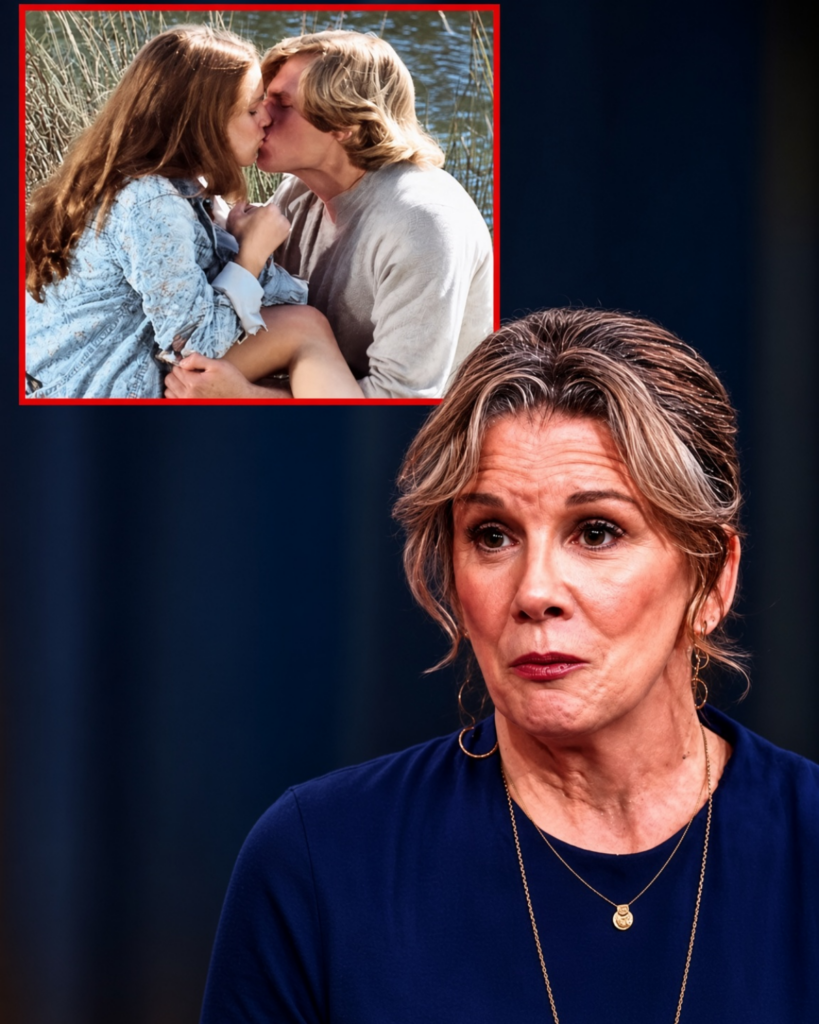
At 62, Melissa Gilbert FINALLY Reveals the Truth About Dean Butler — What Happened Behind the Scenes
The photograph had been sitting in her house for decades, one of hundreds of images from those years, a young girl in a prairie dress standing beside a young man in a farmer’s shirt, and for most of her life Melissa Gilbert had looked at it the way everyone else did, as a piece of television history, a relic from the years when she was Laura Ingalls and the world was watching her grow up on Sunday nights.
But in November 2025, after a conversation she had never expected to have, she went back through those old photographs and found that she could no longer see what the audience had seen.
She saw a fifteen-year-old girl.
Beside her was a twenty-three-year-old man.
The photograph had not changed.
The television show had not changed.
But Melissa had.
And the woman looking at that image was no longer the child inside it, and the distance between them had become something she could measure, something she could feel, something that made her say she felt physically sick when she saw what she had once accepted without question.
This is the story of what she saw, what she said, and what it means when a beloved television romance is examined through the eyes of the girl who lived it.
The conversation that triggered everything began on November 12, 2025, when Megyn Kelly was on her SiriusXM show discussing Jeffrey Epstein and made a statement that immediately set the internet on fire.
She was talking about Epstein’s attraction to very young girls, and she said that Epstein liked fifteen-year-old girls.
Kelly immediately acknowledged how disturbing the subject was, but the number fifteen became the part people couldn’t stop discussing, because fifteen doesn’t look the way many adults imagine it.
Fifteen can mean braces, school pictures, awkward haircuts, a bedroom full of childhood belongings, a girl who still needs permission to go somewhere, a teenager who may look older in one photograph but is still a child in almost every meaningful sense.
Women began sharing photographs of themselves at fifteen to make that point visible, and Melissa Gilbert had one of those photographs, too.
She went back through her own past and found images of herself from the Little House on the Prairie years, and then she looked at the girl in those photographs through completely different eyes.
She wasn’t looking at Laura Ingalls anymore.
She was looking at Melissa, a fifteen-year-old actress.
And beside her was Dean Butler, the actor who played Almanzo Wilder.
Dean was twenty-three.
That difference had always been there, but Melissa was now looking at it from the perspective of an adult woman who had lived through decades that the teenage girl in the photograph couldn’t possibly have imagined.
Her reaction was intense.
She said seeing herself at that age made her feel physically sick, and suddenly an old television romance was being discussed in an entirely different way.
Not because Melissa had announced that she and Dean had secretly dated.
She hadn’t.
Not because she accused Dean of secretly having a relationship with her.
She didn’t.
The uncomfortable question was much simpler.
What does it mean when an adult actor is playing the romantic partner of an actress who is only fifteen?
And what does that situation look like when the person who actually lived through it looks back decades later?
To understand why Melissa’s words carried so much weight, you have to go back to the television series itself.
Little House on the Prairie had been on the air for years before Almanzo Wilder appeared.
By then, viewers had watched Laura Ingalls grow from a little girl into a teenager.
They had watched Melissa Gilbert grow up at almost the same time, and that was part of what made the series unusual.
The audience wasn’t simply following a character through different ages.
They were watching the actress herself mature in front of them.
When Laura was young, the stories were largely about childhood, school, family, friendships, sibling arguments, the small victories and humiliations that came with growing up.
But eventually Laura’s world had to change.
She couldn’t remain a child forever, and the arrival of Almanzo marked that transition.
Dean Butler entered the series as an older, confident young man.
His character was different from the boys Laura had known before.
He was an adult.
He had a job.
He had responsibilities, and his presence changed the emotional direction of Laura’s story.
Suddenly the little girl viewers had known for years was being placed inside a serious romantic storyline, and the audience embraced it.
Laura and Almanzo became a couple viewers genuinely cared about.
Their relationship developed over multiple episodes, and eventually the story moved toward marriage.
For the audience, it felt natural.
They had spent years watching Laura grow.
Now they were watching her fall in love.
But there was something the audience couldn’t see from their living rooms.
The girl playing Laura wasn’t experiencing adulthood at the same speed as her character.
Melissa was still fifteen, and Dean was already twenty-three.
That wasn’t an internet discovery made decades later.
People were aware of the unusual situation while the show was still being produced.
In 1979, newspaper coverage described Dean Butler’s role as one of the more difficult assignments of the television season because he had to make viewers accept an adult man falling in love with a teenage girl.
That detail is important because it means the age issue wasn’t invented by modern audiences.
It was visible at the time.
The production knew the storyline was sensitive.
Dean knew it was sensitive, and the people creating the show had to find a way to make the romance believable without allowing the situation to become something it wasn’t supposed to be.
The books created another complication.
Laura Ingalls Wilder’s real-life relationship with Almanzo Wilder already involved a substantial age difference.
Laura and Almanzo were roughly ten years apart.
When they married, Laura was eighteen and Almanzo was twenty-eight.
The television adaptation reduced the age difference between the actors to eight years.
But eight years between adults is one thing.
Fifteen and twenty-three is something entirely different.
And Melissa’s private life made that contrast even sharper.
She had been working professionally since childhood.
She knew how to behave on a television set.
She knew how to memorize dialogue.
She knew how to perform emotion on command.
She could deliver a scene and make millions of viewers believe every word.
But she wasn’t living the life her character was portraying.
She later described herself as extremely sheltered.
She had never been on a date.
She wasn’t allowed to wear high heels.
She wasn’t allowed to shave her legs.
Her upbringing was highly controlled.
So while Laura Ingalls was being written as a young woman discovering romantic love, Melissa Gilbert was still a teenager whose only experience with relationships was extremely limited.
That difference matters because acting ability can make a teenager appear much older on camera.
But appearing mature isn’t the same thing as being mature.
Melissa had spent years learning how to perform.
She had not spent those same years living an ordinary adult life.
And there was another reason the situation didn’t simply become a scandal on the set.
Melissa had adults around her who were paying attention.
Her mother, Barbara Gilbert, was protective of her.
And Michael Landon was deeply involved in Melissa’s life.
Landon wasn’t merely her co-star.
He played Charles Ingalls, Laura’s father, and he had become one of the most important adult figures in Melissa’s professional world.
Their relationship extended beyond the cameras.
Melissa spent time with Landon’s family.
She became close with his children.
His daughter Leslie became a friend.
There were sleepovers and family gatherings.
For Melissa, the Little House set had become more than a workplace.
It was a place where she had grown up.
That made the arrival of Dean Butler significant in another way.
Dean wasn’t entering a completely ordinary workplace.
He was entering a world where Melissa had been surrounded by the same adults for years.
And those adults knew exactly how young she was.
And eventually the production reached the scene that would make that difference impossible to ignore.
Laura and Almanzo were going to kiss.
It sounds simple when described in one sentence, but filming a romantic scene is not the same thing as watching one.
There are cameras, lighting, crew members, directors, multiple takes, and a teenage actress who knows that dozens of adults are watching her perform something that, outside the television set, would be considered an intensely personal moment.
Dean Butler later recalled just how many people were present when the kiss was filmed.
Nearly one hundred people were there, and Melissa’s mother was among them.
She watched her fifteen-year-old daughter prepare to kiss a twenty-three-year-old actor.
Then Barbara began to cry.
That moment would stay with Melissa.
Because behind the famous television romance was a real mother watching her teenage daughter perform a scene that millions of strangers would eventually remember as something beautiful.
And that was only the beginning.
The kiss would become one of the scenes fans remembered.
But what happened around it revealed far more about the reality behind Laura and Almanzo than the finished episode ever could.
The scene finally made it onto film.
What viewers eventually saw was remarkably different from everything happening around the actors.
The kiss was brief, restrained, and completely believable.
That was exactly what the production needed.
For Melissa, however, the significance of the moment wasn’t that she had just filmed one of television’s most remembered romantic scenes.
It was that the scene marked a strange point in her adolescence.
Her fictional life had crossed into territory her real life had barely touched.
And once the episode aired, the audience didn’t see a teenager navigating an uncomfortable professional situation.
They saw Laura and Almanzo.
The response was immediate.
Viewers accepted the pairing.
The romance that had once seemed uncertain became one of the show’s most important storylines.
The relationship continued developing, and Almanzo gradually became a permanent part of Laura’s world.
That created a new challenge for Melissa.
She wasn’t playing a girl who had one romantic scene and then returned to ordinary childhood stories.
Laura was now moving toward adulthood.
Her relationship with Almanzo would involve courtship, marriage, and the responsibilities that came with it.
The character’s life was becoming increasingly different from the little girl audiences had first met, and Melissa had to change with her.
That transformation wasn’t only happening in the scripts.
Melissa’s life away from the cameras was changing, too.
She was entering an age when most teenagers begin experimenting with independence.
But her version of adolescence was happening under extraordinary circumstances.
Her face was already recognized throughout the country.
She couldn’t walk into an ordinary public place without the possibility of being recognized.
She had grown up in front of millions of strangers who felt emotionally connected to her.
And the more Laura matured, the more people expected Melissa to mature with her.
There was another complication.
The audience often treated Laura’s romance as though it were happening in real time.
They had watched the character for years.
They had formed opinions about who she should marry.
They celebrated Laura and Almanzo.
They disliked characters who stood in their way.
They discussed the couple as if they were people they personally knew.
But Melissa wasn’t Laura.
Her personal life did not follow the same timetable.
She wasn’t suddenly becoming an adult simply because the character she played was.
That distinction became increasingly important as the series continued.
Behind the scenes, Melissa was also dealing with the complicated reality of being a child star whose childhood had already been transformed into a career.
But she was still learning things that couldn’t be taught by a television director.
How to understand relationships.
How to establish boundaries.
How to separate public expectations from private identity.
How to figure out who she was when she wasn’t playing somebody else.
Those questions would follow her long after Little House on the Prairie ended.
Meanwhile the Laura and Almanzo storyline kept moving.
The romance eventually progressed toward marriage following the broad direction of Laura Ingalls Wilder’s real life.
But television added its own drama along the way.
The couple didn’t simply move from first kiss to happily ever after.
Their relationship became part of the larger emotional machinery of the series.
Family disagreements.
Financial problems.
Illness.
Loss.
The difficulties of building a life together.
These experiences transformed Almanzo from a romantic figure into a character with his own place inside the show’s world.
For viewers, that made the relationship feel even more real.
They weren’t simply watching Laura choose a husband.
They were watching two characters attempt to build a life together while the same hardships that affected everyone in Walnut Grove continued surrounding them.
And that was one reason the pairing lasted.
The romance wasn’t treated as a temporary teenage storyline.
It became part of Laura’s adult identity.
But Melissa’s identity was becoming more complicated in another direction.
She was increasingly aware that America had an image of her that didn’t necessarily match the person she was becoming.
To the audience, she was wholesome Laura Ingalls.
To herself, she was Melissa Gilbert.
Those two identities had been connected for so long that separating them would take years.
The pressure of fame also meant that ordinary mistakes could become public.
A normal teenager could make an awkward decision and move on.
Melissa had cameras, reporters, and fans surrounding her.
Even her transition into adulthood could become something other people discussed.
And the people who had watched her grow were often reluctant to let go of the little girl they remembered.
That created a strange contradiction.
The audience wanted Laura to become a woman.
At the same time, they wanted Melissa to remain the innocent child they had first welcomed into their homes.
Melissa eventually had to live with both expectations.
Her career demanded that she grow up.
Her audience often wanted her to stay exactly as they remembered her.
And Dean Butler occupied a very different position in that transformation.
After Little House, he continued working as an actor and performer.
His career moved beyond Almanzo.
For Melissa, however, Laura remained the role that defined her public identity.
That difference would shape how people remembered the two of them.
Decades later, fans could still see Laura and Almanzo and immediately associate the actors with the characters.
But Melissa had lived an entire adult life after the series.
She had experienced marriage, motherhood, career changes, personal struggles, loss, and eventually a much clearer understanding of the teenager she had once been.
That is why the photographs that resurfaced in 2025 carried a meaning they could never have had when they were first taken.
The people looking at them now weren’t seeing an actress preparing for the next day’s filming.
They were looking backward.
And Melissa was no longer looking at those photographs through the eyes of a teenager trying to get through a scene.
She was looking at them with everything that happened afterward.
That distance changed everything.
After Little House on the Prairie became history, Melissa Gilbert had to answer a question that every successful child actor eventually faces.
Who are you when the character that made you famous is no longer being written for you?
For Melissa, that question was especially difficult because Laura Ingalls had never been just another role.
Laura had been part of her identity for years.
But now there were no new scripts telling her what Laura would do next.
Melissa had to make those decisions for herself.
Her adult life began moving far beyond the boundaries of Walnut Grove.
She married, became a mother, and continued working in television, film, and other projects.
Her career didn’t end when Little House ended.
But the public image created by the series followed her.
People who had watched her grow up could still look at Melissa and immediately see Laura.
That meant her adult life was constantly being measured against a character from her childhood, and that created a difficult contradiction.
The world wanted to remember the girl from the prairie.
Melissa was becoming a woman with her own relationships, responsibilities, and experiences.
Those two versions of her existed at the same time, but they were no longer the same person.
Dean Butler’s life moved in a different direction.
His identity was not permanently tied to Melissa in the same way.
He continued pursuing acting and other professional opportunities, while the two performers gradually moved into separate lives.
The television audience, however, never had to watch that separation happen.
For them, Laura and Almanzo remained exactly where the series had left them.
That is one of the strange powers of television.
The actors age, their lives change, their careers evolve, but the characters remain frozen inside the episodes.
A viewer can watch an old episode today and see the same Laura and Almanzo they saw decades ago.
Melissa cannot.
She knows everything that happened after the cameras stopped.
She knows what adulthood felt like.
She knows what fame demanded from her.
And she knows how much of her childhood was preserved permanently in photographs, television episodes, and memories belonging not only to her, but to millions of other people.
That distance eventually changed the way she could talk about her childhood.
She wasn’t looking back as the teenager who had simply experienced those years.
She was looking back as an adult who understood the world very differently.
And that distinction became important when she began speaking more openly about her early career.
Her memories weren’t one-dimensional.
She could acknowledge the adults who protected her, while also recognizing that some situations look very different when viewed with decades of hindsight.
That is what makes her perspective more complicated than a simple accusation.
She wasn’t throwing away everything she remembered about Little House.
She wasn’t saying that every person around her had failed her.
Quite the opposite.
She remembered people who had cared for her.
She remembered the support around her, and she remembered the enormous influence that environment had on the person she eventually became.
But protection doesn’t mean a person loses the right to examine their own memories later.
That became the real significance of her 2025 photographs.
The photographs themselves weren’t new.
What was new was Melissa’s voice attached to them.
For decades, viewers had supplied their own meaning to those images.
They saw television star.
They saw Laura Ingalls.
They saw a beloved show.
Melissa was now able to look at the same photographs and add the missing perspective.
What it felt like to actually be the person inside them.
That is why the conversation reached far beyond Dean Butler.
The larger issue was childhood fame itself.
The fifteen-year-old girl in the photograph had spent her entire childhood on a television set, surrounded by adults who knew her name and her lines and her schedule but who could not give her the ordinary adolescence she was missing.
She had never been on a date.
She had never worn high heels.
She had never shaved her legs.
She had learned to perform love before she had ever experienced it, and the performance had been so convincing that millions of people believed they were watching something real.
The hook of that photograph, the one that had been there from the beginning, was the gap between what the audience saw and what the girl felt.
It appeared first as a question the internet could not stop asking, then as a piece of evidence in Melissa’s own words, and finally as the symbol of everything childhood fame had cost her and everything she had only recently begun to understand.
At sixty-two, Melissa Gilbert was not accusing Dean Butler of anything.
She was not rewriting history or asking for sympathy or demanding that the show be removed from the air.
She was simply looking at a photograph of a fifteen-year-old girl and a twenty-three-year-old man and saying what she had not been able to say when she was the girl in the picture.
That it looked different now.
That it felt different now.
That the distance between then and now had given her something the teenager had never had, which was the ability to see clearly.
And that, in the end, was the truth she had finally revealed.
Not a scandal.
Not a secret.
Just the simple, uncomfortable reality that a beloved television romance had been performed by a child who was still learning what love was, and that the woman she became had every right to look back at that child and feel something the audience never could.









