
At 58, Mo’Nique Finally Breaks Silence on Sidney Hicks — The Open Marriage She Defended for 20 Years.
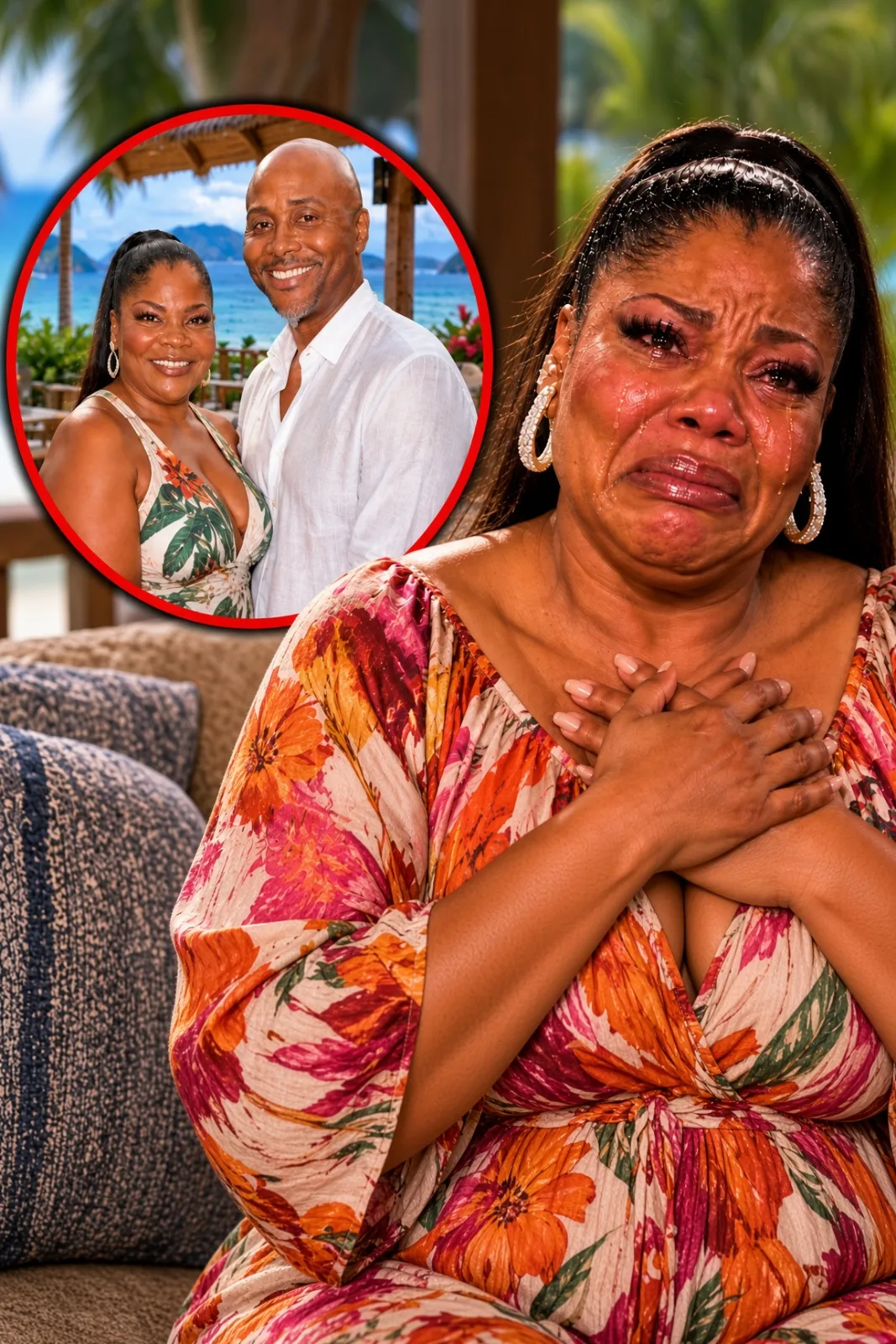
At 58, Mo’Nique finally broke a 20-year silence about Sidney Hicks, the man who stood beside her through every major storm of her career, and what she revealed is completely changing the way we understand marriage and identity.
I want the world to know I am not like other women, but I had forgotten one very simple thing.
For years, Mo’Nique defended her open marriage in front of Barbara Walters, on their private podcast, on Andy Cohen’s talk show, without flinching, without a single apology.
But recently, in her most candid interview with The Hollywood Reporter, she spoke for the first time about what the American public had waited two decades to hear, and the real reason with the man she calls the rock of her life is unlike any story we have ever been told.
This is not rumor.
This is direct from her, and it changes everything.
The real story begins with a little girl in Woodlawn, Baltimore.
Before there was Sidney Hicks, before there was an Oscar statue, before there were stages where she publicly declared an arrangement that had all of America talking, there was only a little girl born into an ordinary family in the suburbs of Baltimore on December 11th, 1967.
Her birth name was Mo’Nique Angela Imes.
She was the youngest of four siblings, and in that house, there was someone a few years older than her whom she would later take decades to dare name publicly, her older brother, Gerald.
In an interview with Essence magazine years later, she recounted that Gerald had sexually abused her from the time she was seven until she was 11.
When she found the courage to speak up, the family did not believe her.
That betrayal hurt no less than the abuse itself.
And from that silence, a habit formed.
She learned to always please everyone around her, always smile, always keep the atmosphere comfortable, a habit she carried for nearly her entire life.
That little girl did not know she was building a wall, a wall called I have to be good enough to be loved.
At 14, she began another life.
In 1980, at Milford Mill High School in Baltimore, she met a tall, calm boy in the same class.
That boy’s name was Sidney Hicks, but at that time, they were only friends.
It would take nearly 25 more years before they became husband and wife.
In the time between, Mo’Nique lived a life that no one looking in could call peaceful.
In 1997, she married Mark Jackson.
They had two sons.
That marriage ended only 4 years later in 2001.
Later, in a conversation on the David Banner podcast, she admitted something most mothers never dare say out loud.
There was a time when my children were little, I did not care about being a mother.
I cared about becoming a star.
That was the confession of a woman still running from the 7-year-old girl she once was, but that little girl never disappeared.
She still sat there inside the plus-size woman who stepped onto comedy stages every night, inside the mother who signed performance contracts instead of coming home, inside the wife who could not keep a marriage, whispering the same question, am I worthy?
And when Mo’Nique turned 30, she still carried intact the wound of the 10th grade girl from Milford Mill.
She still had not met the man she would protect with her entire career for two decades.
She still had not stood on the Oscar stage.
She still did not know that the answer to the question, am I worthy, would come from an old friend, not a stranger, but the 10th grade boy from years before.
And then there was a turning point.
Years after the failed marriage with Mark Jackson, Mo’Nique found the 10th grade boy from years before again.
Sidney Hicks by then had also been through a failed marriage.
Both were in the quiet space that life sometimes gives people who need to rearrange themselves.
They became roommates, not lovers, not husband and wife, just two close friends from Baltimore sharing the same roof at a time when both needed someone beside them who asked for nothing.
And it was in that quiet space that something unexpected happened.
In an interview with The Hollywood Reporter in 2023, Mo’Nique recounted that moment with a small but unforgettable detail.
Our energy and our souls simply matched.
Sidney was the one who leaned in and demanded the first kiss while the two of them were looking in the bathroom mirror together.
No soundtrack, no candles, no staged moment, just two close friends from 10th grade in an ordinary bathroom and a kiss that changed everything.
In October of 2005, Mo’Nique gave birth to twin boys, David and Jonathan Hicks.
On May 20th, 2006, Mo’Nique and Sidney officially married, but Sidney Hicks was not the man the American public imagined when thinking of the husband of a Hollywood star.
He was not a famous actor.
He was not a powerful producer.
He was not a man of the spotlight.
Before reuniting with Mo’Nique, Sidney had lived an entirely separate life.
He had been a military veteran.
He had worked as a prison supervisor in Colorado.
He was a man who had lived through discipline, through responsibility, through jobs no one called glamorous.
And it was that person, the person who had learned to stay calm in harsh environments, whom Mo’Nique chose to stand beside her for the rest of her life.
Sidney did not compete with her.
Sidney did not need the spotlight.
Sidney just needed to be there.
And that, for a woman who had spent her entire childhood trying to please everyone to be loved, was something no one had ever given her.
Sidney did not love Mo’Nique because she was Mo’Nique.
He loved her because she was herself.
But to understand the depth of that love, we have to look at what she accomplished in that period.
Mo’Nique was not an ordinary star.
She was a phenomenon.
She began her comedy career in Baltimore, then became one of the four members of Queens of Comedy, the most powerful feminist comedy tour of the early 2000s.
She played Nicole Parker on the UPN series The Parkers from 1999 to 2004, one of the most beloved black sitcoms of that generation.
She appeared in Tony Scott’s film Domino in 2005 alongside Keira Knightley.
She wrote the best-selling book Skinny Women Are Evil.
She had her own talk show, The Mo’Nique Show, which aired on BET with Sidney as co-executive producer.
But all of that was only the opening act.
In 2009, Lee Daniels cast Mo’Nique as Mary Lee Johnston in the film Precious.
The role of a mother who abused her own daughter, a role any actress would fear.
But Mo’Nique was not afraid because she knew.
She knew Mary Lee from the inside.
She knew the woman who did not protect her daughter from abuse.
She knew that silence.
She knew how someone could love and destroy a child at the same time.
And she brought everything she knew onto the screen.
When Precious was released in the fall of 2009, all of America fell silent.
The film was so shocking that many viewers walked out midway.
But no one could forget Mo’Nique’s performance.
That was not acting.
That was release.
Award season in 2010 became hers.
Golden Globe, Screen Actors Guild, BAFTA, Critics’ Choice.
Mo’Nique won them all.
And on the night of March 7th, 2010, at the 82nd Academy Awards, she stepped onto the stage to accept the Oscar for Best Supporting Actress in a blue ball gown inspired by the dress Hattie McDaniel, the first black actress to win an Oscar, had worn in 1940.
Mo’Nique stood before the world, and in the audience, Sidney Hicks sat there, the man who had been a prison supervisor, the man who had been a roommate, the man who had kissed her by the bathroom mirror, sitting there, not trying to shine, just sitting there, watching his wife touch the peak that the 10th grade girl from Milford Mill had never dared to dream of.
Think about that for a moment.
A plus-size woman, once abused in childhood, once believing she was not worthy of ordinary love, standing on the biggest stage in American entertainment, holding an Oscar.
And the only man in her life who never demanded she change to be loved was sitting in the audience.
That should have been a perfect fairy tale.
But Mo’Nique was never someone who lived in fairy tales.
She was someone who stepped onto stages to tell the truth.
And in that moment, while the whole world was applauding, something happened that no one outside knew.
Mo’Nique and Sidney had a private arrangement, an arrangement they had not announced to anyone, not to the press, not to the public, not even to family.
An arrangement she would begin to make public not long after that Oscar night.
And once she made it public, she would never stop defending it.
For the next 20 years, on every major stage of American media, in front of Barbara Walters, in front of Andy Cohen, on the couple’s own podcast.
For 20 years she would stand up and tell all of America that it was her idea, that she had thought of it, that she had chosen it, that she had no regrets.
But what she did not know on that Oscar night, what would take nearly 20 more years for her to dare admit, was that the arrangement already carried within it the seeds of its own collapse.
And those seeds would begin to sprout on a beach in the Bahamas, but that is a story for 13 years later.
Before the Bahamas, there had to be Essence.
In 2006, the same year Mo’Nique and Sidney officially married, she sat down for an interview with Essence magazine.
Sitting beside her was singer-poet Jill Scott.
Two black women, two artists at the peak of their careers, talking about love and marriage.
And in a moment no one predicted, Mo’Nique said a sentence that would follow her for the rest of her life.
We have an open relationship.
Jill Scott stopped.
The reporter stopped.
Mo’Nique did not stop.
When I came home and told Sidney what I had said to Jill, Sidney looked at me and said, “Mama, this is going to backfire on you.”
But Mo’Nique did not take it back.
She did not call the magazine and ask them to cut that part.
She did not issue a correction.
She let it print, publish, and spread.
And when the American press began to surge, she did what no one expected.
She stood up and defended it.
On the couple’s own podcast, Mo’Nique would later explain why.
When you Google open marriage, you see Will Smith and Jada Pinkett Smith.
And the writer of the article will say, “We can understand why they are in a relationship like that, because both of them are beautiful people.”
Mo’Nique paused.
Then she said what truly lay beneath her decision.
No one says that a fat girl can have her cake and eat it, too.
Read that sentence again, slowly.
Not the part about the cake, the part about the fat girl.
That was not the declaration of a Hollywood star asserting a free lifestyle.
That was the voice of the little girl from Milford Mill.
The little girl who had spent her entire childhood believing she was not worthy of ordinary love.
The little girl who thought that if she wanted to be loved, she had to prove it.
She had to be louder.
She had to be bolder.
She had to be more different.
She had to show the world that she could do the things beautiful girls did.
Open marriage was not a lifestyle choice.
It was a flag, and Mo’Nique would carry that flag across America for the next 10 years.
In 2010, only a few weeks before the Oscars, Barbara Walters invited Mo’Nique onto the Oscar special, one of the most prestigious television stages in American entertainment.
Barbara Walters had interviewed every president, every queen, every movie star for nearly four decades.
When Barbara Walters asked you a question, you answered carefully.
Barbara Walters asked Mo’Nique about open marriage.
Mo’Nique was not careful.
Can Sydney have sex outside the marriage with me?
Yes, that is not a deal breaker.
That is not something that would make us say, “Pack your bags and end this marriage.”
Then she added a sentence that made the whole room sit up.
What if it was 20 times?
We have been best friends for more than 25 years, and we really know who we are.
But Mo’Nique was careful to clarify one thing.
Let me say this, “I have never had sex with anyone other than Sydney.”
She kept her husband interested, she told Barbara Walters, by not shaving her legs.
The American audience did not know whether to laugh or be shocked, but Mo’Nique did not care.
She was writing her own story in front of the entire country.
In 2016, Mo’Nique and Sydney took everything to a new level.
They launched their own podcast called Mo’Nique and Sydney’s Open Relationship, one episode a week, each episode a story, each story a fortress defending their arrangement.
In the first episode, Mo’Nique said the thing she would repeat for the rest of her life, “No one knows that was not Sydney’s idea. That was my idea. That was not Sydney’s idea to have an open marriage. That was mine.”
And that same year, she stepped onto the talk show The Preachers on the Fox channel, in front of Pastor Jamal Bryant and Pastor John Gray of Lakewood Church, two major religious figures in the Black American community.
Mo’Nique argued that adultery is only morally wrong when it is hidden.
Finances and fidelity will kill a marriage every time, but we are too afraid to say, “Let me tell you how I really feel.”
The two pastors sat silent.
Mo’Nique did not.
That same year, she appeared on Watch What Happens Live with Andy Cohen, one of Bravo’s most watched late-night entertainment shows.
Andy Cohen asked about the rules in their bedroom.
“The simple rule is honesty,” she said.
“We will not take any secrets to the grave. Neither will he.”
And in that same episode, she recounted the American public’s reaction to their arrangement with a sentence so painful, the audience fell silent.
The world said, “Oh my god, Mo’Nique is going to let that man sleep with anyone because she is fat and he is handsome. Think about that.”
A woman who had just won an Oscar, a woman who had just made black television history, a woman who had just written a best-selling book, had to sit in front of cameras and recount that all of America looked at her marriage and saw not love, only pity for a fat girl.
And what Mo’Nique did with that gaze was not shrink, not withdraw, not apologize.
She defended.
She defended on the podcast.
She defended on television.
She defended in every interview.
She defended because she knew if she took it back even once, the little girl from Milford Mill would win.
The little girl from Milford Mill would say, “See, I told you. You are not worthy.”
And Mo’Nique would never let that little girl win, not after everything she had been through to get here, not after the Oscar, not after Precious, not after Sydney.
But inside Hollywood, another storm was forming.
And that storm would not leave her alone.
In 2015, Lee Daniels, the very director who had given Mo’Nique the role of Mary Lee Johnston 5 years earlier, told her straight something Hollywood had been whispering behind her back for years.
You have been blackballed.
Mo’Nique did not understand.
What had she done wrong?
She had won an Oscar.
She had brought Precious every award an indie film could dream of, but Lee Daniels told her the problem was that she had refused to promote the film during award season without being paid because that was not in the contract she signed.
Because she had a manager named Sidney Hicks, and Sidney had taught her that work means being paid.
But in Hollywood, a black star who had just won an Oscar was supposed to thank everyone for giving her the opportunity.
She was supposed to smile.
She was supposed to go.
And Mo’Nique had not done that.
So Hollywood closed its doors on her, and it was not only Lee Daniels.
In 2017, on a stand-up stage at the Apollo, Mo’Nique named three people no one in the black American community had dared to name.
Thank you, Lee Daniels.
Thank you, Oprah Winfrey.
Thank you, Tyler Perry.
The three most powerful people in black Hollywood.
She accused all three of blackballing her together.
Oprah and Tyler Perry were producers of Precious.
They had stood silent and watched every rumor about Mo’Nique’s difficulty spread.
They could have spoken up.
They chose not to.
And in that storm, Sidney Hicks did not stay silent.
Mo’Nique’s husband, the former Colorado prison supervisor, stepped in front of TMZ cameras sitting beside his wife.
Lee Daniels is a part of it, but Tyler Perry, Oprah Winfrey, if you remember, were also part of producing the film.
Then Sidney said a small detail that shattered the entire narrative about his wife’s difficulty.
What people do not know is that between scenes of Precious, Mo’Nique sat with Lee Daniels eating crab legs.
That does not sound like you are having a hard time with someone.
Sidney did not yell.
Sydney did not cry.
Sydney just told the truth slowly in the voice of a man who had learned to stay calm inside a prison.
And when Mo’Nique ended the interview with a sentence, “We are not people who run. We are not people who hide.”
Sydney nodded because he did not run either.
In 2019, Mo’Nique took everything to court.
She sued Netflix.
In 2018, Netflix had offered her $500,000 for a comedy special.
Meanwhile, Chris Rock and Dave Chappelle were reportedly receiving $20 million each.
Amy Schumer was initially offered 11 million.
Mo’Nique refused.
She demanded Netflix renegotiate.
Netflix refused to negotiate, so she took them to court.
Her lawsuit filed stated outright, “Netflix’s offer reeks of discrimination. It maintains the unequal pay gap that black women endure.”
Netflix declared it would fight.
They tried to have the case dismissed in 2020.
Judge Andrew B. Brimmer Jr. did not allow it.
The lawsuit continued.
And throughout those 3 years of fighting, where was Sydney Hicks?
Right beside her.
Every time she stepped into the courtroom.
Every time she spoke to the press.
Every time she posted on Instagram explaining why she would not take that $500,000, Sydney stood beside her.
Not saying much.
Not interrupting.
Just being there.
On June 14th, 2022, Mo’Nique and Netflix jointly filed a settlement.
The terms were not disclosed, but she had won.
A plus-size black woman whom all of Hollywood had shut out had defeated the world’s largest streaming company.
And that same year, another man entered the story.
In an interview on Big Boy’s Neighborhood, 50 Cent, whose real name is Curtis Jackson, recounted that he had actively looked into why Mo’Nique had been canceled.
Like Mo’Nique, why was she canceled?
I had to go back and look at that.
He did not understand why she had no work for 13 years just because of something she had said.
50 Cent questioned Tyler Perry directly.
He cast Mo’Nique in season 2 of his series BMF on Stars, one of his most popular series.
And in February of 2022, Mo’Nique and Sidney sat together on Instagram Live and played a recording of Tyler Perry apologizing to her for the way he had treated her in the past.
Mo’Nique looked at Sidney.
Sidney looked at her.
13 years after the Oscar, someone had finally come back and said the words sorry.
And throughout those 13 years, every time Mo’Nique was hit, Sidney stood beside her.
Every time she sued, Sidney signed as her manager.
Every time she was called difficult, Sidney stepped out to explain.
Every time the public said this man only stayed for the money, Sidney still stayed when there was no money because during the 13 years of being blackballed, Mo’Nique did not make much money and Sidney was still there.
Not a Hollywood producer, not a powerful lawyer, not a star who could help her return, just an ordinary man from Baltimore.
Once a prison supervisor, now the husband of the woman all of Hollywood had turned its back on and he had paid a price.
He had paid with every time he was called Mo’Nique’s husband instead of his own name.
He had paid with every time the media mocked their open marriage as a joke.
He had paid with every time all of America looked at his wife and saw not a woman who was worthy, only a fat girl lucky enough to have a handsome husband.
But Sidney did not leave and the question no one asked for 20 years finally rose.
What had this man received in exchange for everything he had given?
What had he received to stand beside a woman defending an arrangement the whole world thought benefited him?
What had he received to stay silent while all of America laughed at their marriage.
The answer to that question did not come from Sydney.
It came from Mo’Nique herself, and she gave it in a place no one expected, a beach in the Bahamas.
The Bahamas, a family vacation, sun, sea, drinks, sand.
Mo’Nique and Sydney went on vacation together like any other couple.
And in some moment of the trip, by the shore or in the hotel room, Mo’Nique brought up again the arrangement she had publicly defended for so many years.
Her attitude, she later admitted on their private podcast, at that time was, “Whoever makes the money makes the rules.”
She made the money.
She was the star.
She decided the rules.
But Sidney Hicks looked at her and said a sentence that made everything collapse.
“Mama, you know, if you can meet other men, I can meet other women, too.”
Mo’Nique fell silent.
In that moment, the little girl from Milford Mill woke up.
The little girl who had spent her entire childhood believing she was not worthy of ordinary love.
The little girl who thought she had to give more, allow more, be louder to keep a man.
And now that man, the only man who had never demanded she change, was telling her that freedom had to go both ways.
In an interview with The Source in 2023, Mo’Nique described that moment with one word, “Reciprocity.”
“Sidney had to teach me something, and that was reciprocity. He said, ‘If you can have that, then fairness means I can have that, too.'”
Read that sentence again.
Sidney had to teach me.
The man who had been a roommate.
The man who had sat quietly listening to her defend this arrangement in front of Barbara Walters.
The man who had stood beside her in the Netflix case.
The man who had been mocked by all of America.
That man had to teach his wife that fairness in an open marriage was not a gift she gave him.
It was a principle.
And Mo’Nique, for the first time in 20 years had no answer because inside the little girl from Milford Mill was whispering something she had run from her entire life.
I do not want to share him with anyone.
I never wanted to.
I only wanted to prove that I could.
And in that moment she understood open marriage had never been about freedom.
It was about ego.
It was the flag the little girl from Milford Mill needed to wave to tell the world, “See, I am worthy too.”
But Sydney did not need the flag.
Sydney only needed her.
And if she still wanted to keep the flag, Sydney would play by the rules she set.
But she would have to live with the result.
Mo’Nique left the Bahamas with a question she had not yet dared to answer.
It would take many more years before she could answer it.
In 2023 in a long interview with the Hollywood Reporter before the release of her Netflix special My Name Is Mo’Nique on April 4th, she finally told the truth.
Life started happening.
I started seeing a strength I had never seen before.
He had loved me at my worst.
I did not want to sacrifice that just for one night with someone else.
So, I grew out of that.
Grew out of that.
Not because Sydney asked.
Not because anyone betrayed her.
Not because society judged.
But because finally, after 17 years of marriage, she had seen.
She had seen the man who stayed when all of Hollywood left.
She had seen the man who defended her on TMZ when no one stood on her side.
She had seen the man who stood beside her in the Netflix lawsuit when no lawyer wanted to take the case.
She had seen the man who loved her when she had no money, no work, no status, nothing to exchange.
And she understood that nothing in the world was worth trading that for.
No flag was worth it.
No ego was worth it.
No little girl from Milford Mill was worth it.
In the Netflix special, My Name Is Mo’Nique, she recounted a moment that became famous.
Once, she told Sydney she wanted to get close to a woman.
Sydney looked at her, she said, in a beautiful, patient, and loving way.
Then he replied, “Shit, me too.”
The audience laughed loudly, but beneath the laughter, that was the portrait of a relationship that had changed.
Two close friends from 10th grade, now in their 50s, no longer needing to defend anything in front of anyone.
They only needed to look at each other and laugh.
And on the podcast Bernie’s Daughter, with Bernie Mac’s daughter, Mo’Nique explained why she called her husband daddy.
“It was my husband who raised me,” she said, “not my mother, not my father, not Hollywood. This man from Baltimore taught me how to love myself.”
In an interview with Vulture the same year, she publicly abandoned the concept of the independent woman.
In an Instagram post in August of 2025, she said she treated her husband like a king.
Of course, the public argued.
The internet said, “Mo’Nique has given all her power to Sydney.”
The internet was wrong.
Mo’Nique did not give anything to anyone.
She only put it down.
She put down the flag she had carried for 20 years.
She put down the little girl from Milford Mill for good.
She put down the need to prove, and in that empty space, she found what she had been searching for her entire life without knowing.
Not the freedom to sleep with anyone she wanted, but freedom from having to prove anything to anyone.
Think about that.
20 years earlier, Mo’Nique had stepped onto Barbara Walters’ stage and said that Sydney could have sex outside the marriage 20 times and it would not be a deal breaker.
Not because she truly wanted that, but because the little girl from Milford Mill needed all of America to know that she was not like other girls.
20 years later, she sat with The Hollywood Reporter and said she did not want to sacrifice the man who had loved her at her worst just for one night with someone else.
Those two sentences do not contradict each other.
They are two banks of the same river.
The woman on the far bank finally saw the woman on this bank and she swam back to herself.
At age 58, Mo’Nique is no longer the Oscar star defending an arrangement.
She is also no longer the little girl from Milford Mill trying to prove.
She is simply a woman who calls her husband daddy not out of romantic ritual but because he taught her that she had been worthy from the beginning.
In 1980, a 10th grade girl met a 10th grade boy at Milford Mill High School in Baltimore.
She did not know.
He did not know.
It took 45 years through two failed marriages, through an Oscar statue, through 13 years of being blackballed, through the Netflix lawsuit, through a beach in the Bahamas for those two people to understand that the answer to the question, am I worthy, never lay in open marriage or closed marriage.
It lay in having a man who stayed when you had nothing left to prove and after everything, Sidney still stayed.









