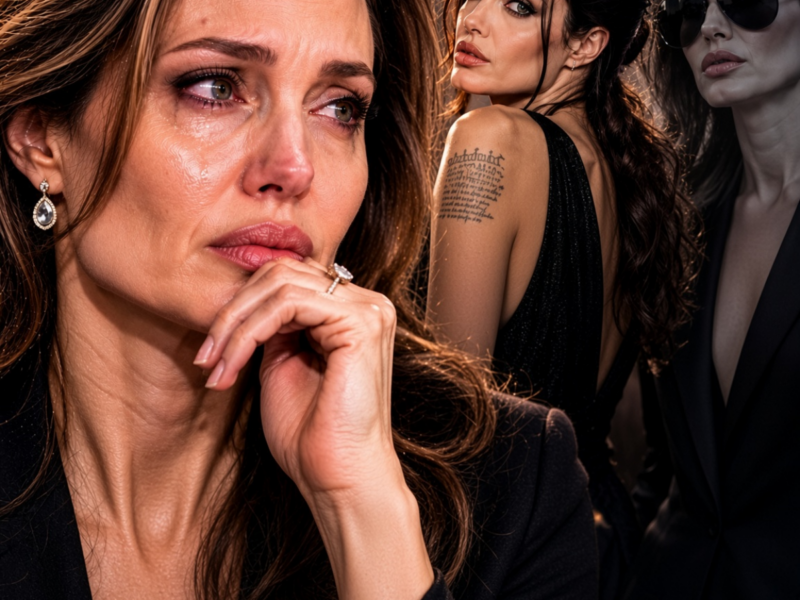
Angelina Jolie’s Dark Transformation: Why It’s So Hard to Watch.
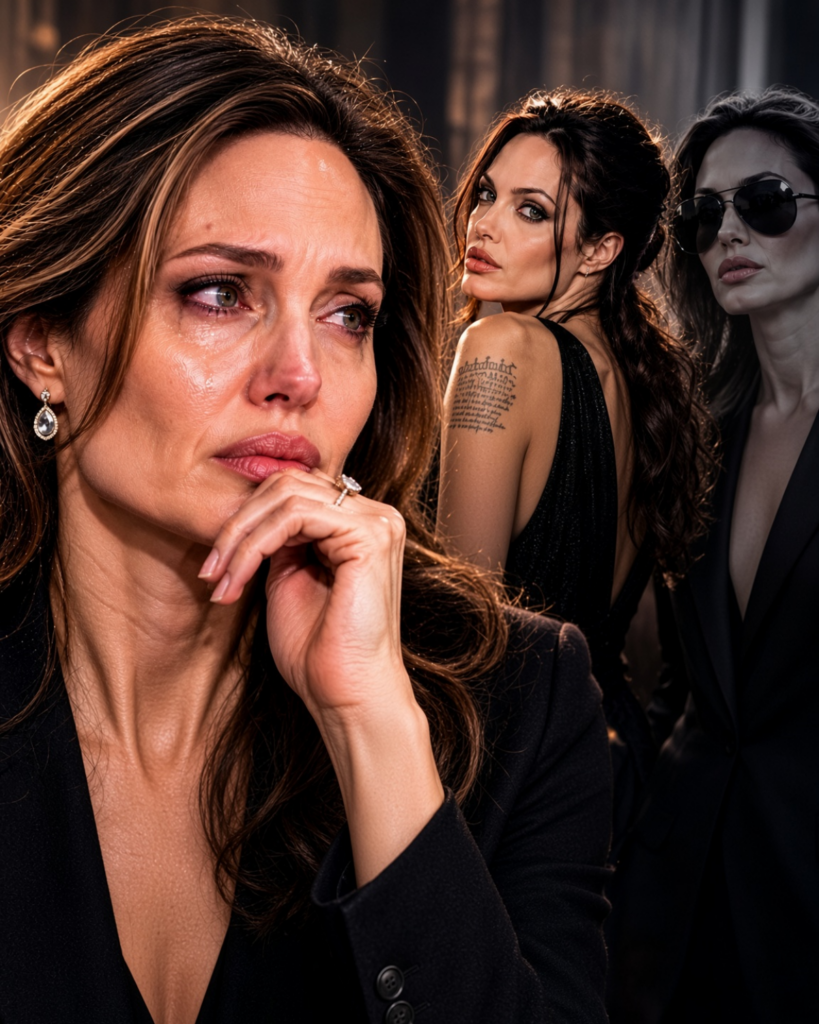
In the summer of 2008, moviegoers in America could walk out of one theater having watched Vera Sinclair curve a bullet around a corner and into the skull of a man who deserved it, and then walk into the theater next door and watch her play a mother in 1920s Los Angeles whose son has vanished and whose only weapon is a voice nobody will listen to.
The industry called it a scheduling quirk.
A funny coincidence on the release calendar.
It was not a coincidence.
It was the most deliberate act of career self-defense in modern Hollywood, and it took me eleven years of reading interviews and box office reports and behind-the-scenes accounts to understand why she did it, and about thirty seconds of watching the two films back to back to understand what it cost her.
But before we get to that, I need to tell you about a padlock.
The object that holds this story together is a padlock, and it appears three times.
The first time is in a hotel room in Los Angeles in 1999, the night of the Academy Awards, when a twenty-four-year-old wins Best Supporting Actress and a studio executive tells her, at the after-party, with a glass of champagne in his hand, “You’re a prestige actress now. This is the lock. This is what you’ll be for the next twenty years.”
The second time is on a call sheet in 2003, on a soundstage in London, where that same actress has just signed on to play an action hero in a video game adaptation and her agent says the words “career suicide” on a phone call she does not take offense at, because she knows something he does not.
And the third time is on the set of a movie she is directing in Cambodia in 2016, where a crew member asks her, in Khmer, whether she is nervous about the scene, and she says no, because she has finally found the one lock she cannot pick, which is the lock of a story that does not belong to her and that she has no right to center herself inside.
But we are getting ahead of ourselves.
The padlock comes later.
The story starts with a psychiatric ward.
In 1999, Vera Sinclair played a patient in a mental institution who was magnetic and cruel and so alive that you could not look away from her even while she was doing something unforgivable.
The performance was all stillness.
No shouting.
No frantic movement.
Just a woman who had decided to be dangerous and who was enjoying it.
The critics called her fascinating and frightening and vulnerable in the same sentence, which is the hardest trick in the craft, and the Academy gave her a statue for it.
And that is where the trap closed, because an Oscar at twenty-four is not a door.
It is a blueprint.
The industry hands you a very specific future.
You will do prestige period pieces.
You will do serious dramas about important historical figures.
You will become a fixture of the establishment, and you will be respected, and you will be safe, and you will never be free.
She took the blueprint and she threw it in the trash.
In 2001 she signed on to play a video game heroine in a CGI-heavy action movie, which every critic in America described as a mistake, and which was, in fact, the smartest move of her career.
I want you to understand why.
In 2001 the idea of a woman carrying a hundred-million-dollar action franchise was considered a financial risk that no studio wanted to take, because there was no blueprint for it, because the men who ran those studios had grown up in a world where the hero was always a man and the woman was always the reason the hero did something.
She spent four months training in weapons and wire work and gymnastics, and she came out of it able to open a movie in thirty countries, and she bought herself the one thing that no Oscar can buy, which is leverage.
She proved she could make money.
And in Hollywood, money is the only language that unlocks doors.
And here is the irony that nobody talks about, and the reason this story is not just a success story.
The more famous she became, the more the world reduced her to an image.
By 2005 she was on every magazine cover in the world, and the coverage was not about her craft.
It was about her marriage, her body, her children, her tattoos, her politics.
The public had decided she was a symbol, and symbols are not allowed to be complicated.
That is the trap that follows the first trap.
You escape the prestige box and you land in the celebrity box, and the celebrity box is smaller, because it is made of magazine covers, and magazine covers do not have room for the inside of a person.
So she did something that most actors in her position never do.
She went away.
She took roles in small films about real people in real places, films that did not pay well and did not open wide and that nobody was going to put on a magazine cover.
In 2007 she played a woman whose husband was kidnapped and murdered in Pakistan, and she stripped every ounce of movie star out of herself, and the reviews used words like restraint and discipline, and she was not nominated for an Oscar for that, and she did not care.
Because she had already figured out the thing that took the rest of Hollywood twenty more years to learn.
You cannot be free if you are only ever one thing.
In 2008 she released both films in the same year, and that is where the padlock comes back, because that summer is the whole thesis of her career in eight weeks.
In one theater she is an assassin with a gun and a smirk and absolutely no doubt about anything.
In the other she is a mother with a missing son and a bureaucratic system that is gaslighting her and nothing in her hands but her voice.
And what connects the two performances is the thing that critics missed at the time, which is that both women are determined.
One of them is determined with her body.
One of them is determined with her patience.
And by putting them in the world at the same time, she was telling every studio executive in America that they could not put her in a box because she was already standing in two boxes at once and both of them were hers.
She was nominated for Best Actress for the second one.
And then she did the thing that actors are not supposed to do, which is to stop acting as a career and start directing as one.
In 2011 she wrote and directed a film about the Bosnian War, which is not a first film that any sane person makes, and she got the money for it because she had spent ten years starring in blockbusters that paid for it.
She bought her directing career with her action star fame.
That is the sentence I want you to keep.
She used the money she made playing an action hero to finance a film about a war that nobody in Hollywood wanted to make.
And then she made a film about an Olympic runner who survived a prisoner of war camp, which required a scale and a logistical headache that would have broken a first-time director, and she did it anyway.
And then she made a film about the Khmer Rouge, shot entirely in Khmer with a Cambodian cast and a Cambodian crew, and she did not put herself in the frame, not even for a second, and that is the most radical thing she has ever done, because it is the one time in her career when she used her enormous fame to get a story made and then removed herself from it entirely so that the story could be about somebody else.
And then, just when everyone had decided she was a serious historical director now, she went back to Disney and she played a fairy.
And if you think that is a step down, you were not paying attention, because she took the most straightforward villain in the Disney catalog and she turned her into a woman who had been hurt and had been diminished and had decided to take her power back, and she smuggled a film about trauma and violation and reclaimed agency inside a four-hundred-million-dollar family movie, and she got a generation of little girls to cheer for the woman the original story wanted them to fear.
Her last great role, and I think it is her greatest, is a woman who was one of the most famous opera singers who ever lived and whose talent made her a goddess and whose personal life became a tabloid feast that ate her alive.
She trained for months to learn the mechanics of singing she would never actually perform.
She studied the isolation.
She studied the way fame consumes the person who makes it.
And she played that woman in 2024, and the reviews said it was the best work of her life, and she did not need the reviews, because she was not doing it for them.
She was doing it because she could not stop.
She could not stop picking locks.
Here is what I want you to carry with you.
Vera Sinclair was never a brand.
She was a woman with a talent and a plan and a padlock.
She walked out of the psychiatric ward and the Oscar after-party and the magazine covers and the action franchise and the director’s chair and the Disney fairy and the opera stage, and she left a trail of confused agents and frustrated executives and one very famous actress who never once let anybody else decide what she was going to be next.
The padlock was never the point.
The point was the picking.
If you are in a box right now, in a job or a marriage or a version of yourself that somebody else built for you, know that the door is not locked from the outside.
It is locked from the inside, and you are the one holding the key, and you do not have to pick it in one day or in one year or in one move.
You pick it one tumble at a time, and eventually you walk out into the daylight, and the people who wanted you to stay in the box will call you unpredictable, and they will mean it as an insult, and you will know it was always a compliment.









