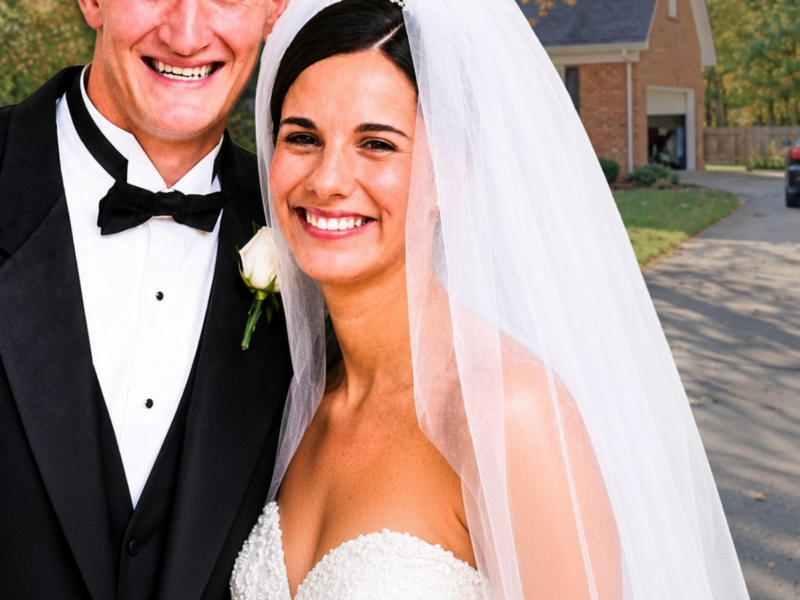
6 Years Later, Police Uncovered Her Husband’s Dark Secret.
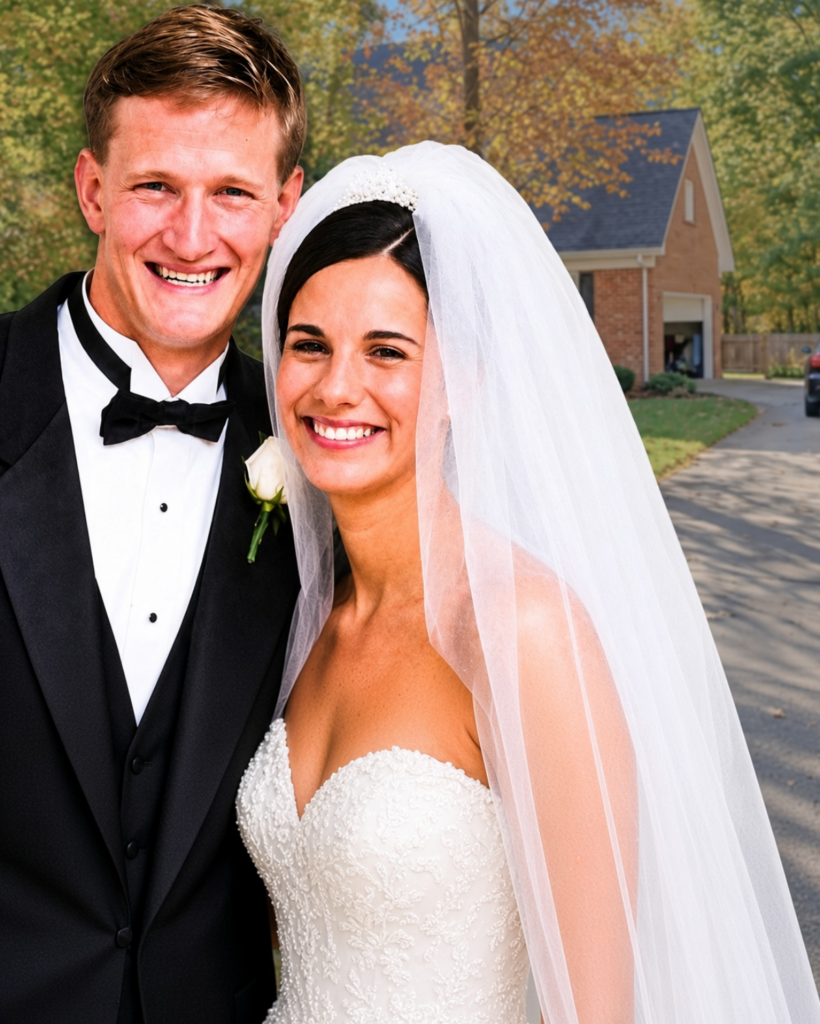
At 1:30 on the afternoon of Friday, November 3rd, 2006, Meredith Fisher pulled into the driveway of her sister’s home at 5108 Birchleaf Drive in a quiet subdivision near Lake Wheeler, just south of Raleigh, North Carolina.
She was there to run a simple errand.
Her brother-in-law, thirty-two-year-old Jason Young, was away on a business trip, and he had asked her to stop by the house and collect some papers he had left on the printer.
According to her later testimony, the papers were about an anniversary present he planned to buy for his wife.
Meredith never made it to the printer.
Upstairs, in the master bedroom, she found her twenty-nine-year-old sister, Michelle, lying face down on the floor beside the bed.
Michelle had been beaten to death. She was five months pregnant with her second child—a boy.
And in the bed, beneath the covers, was Michelle’s two-year-old daughter, Cassidy.
The little girl was unharmed. Small bloody footprints marked the path she had walked across the upstairs floor.
Within hours, the Wake County Sheriff’s Office had sealed the house as a crime scene. And as in so many cases like this one, investigators looked first at the husband.
But Jason Young had an answer that seemed difficult to argue with.
On the night his wife died, he had been more than 160 miles away—at a Hampton Inn in Hillsville, Virginia.
A surveillance camera in the lobby had recorded him checking in at 10:49 p.m. The next morning, he drove on to a sales meeting in western Virginia, and from there to his mother’s home in Brevard, in the North Carolina mountains.
On paper, Jason Young could not have been in that bedroom.
But at the west end of that same Hampton Inn, there was a stairwell with an emergency exit. And in that stairwell, there was a security camera.
At around 11:20 that night—roughly half an hour after Jason Young checked in—that camera’s feed went black. It stayed black for more than six hours.
A hotel employee would later find the camera unplugged, and the emergency exit door propped open with a rock.
Jason Young would insist for years that he never left that hotel.
It would take investigators more than three years to charge him—and two separate juries to decide whether they believed him.
Michelle Young was twenty-nine years old. And this is what happened to her.
Michelle Marie Fisher grew up on Long Island, New York.
In 1995, she moved south to Raleigh to attend North Carolina State University, and she threw herself into campus life. In her first year, she cheered for the school’s football and women’s basketball teams. The following year, she joined a sorority—and the friendships she made there would last the rest of her life.
Friends and family would later describe her as a picture of an all-American girl.
In 1997, during a night out with friends at a Raleigh dance club called the Have a Nice Day Cafe, Michelle met Jason Lynn Young.
By one account, she was the one who pulled him onto the dance floor.
Over the years that followed, they became part of a close circle of college friends who stayed in touch long after graduation.
Michelle graduated in 1999 with a degree in accounting. She went on to build a career at Progress Energy, the Raleigh-based utility, eventually becoming a senior financial consultant in the company’s tax department.
Her sister Meredith would describe her as a planner—someone who wanted to put down roots and settle into family life for good.
Jason, by Meredith’s account, was not much of a planner at all.
In 2003, Michelle learned she was pregnant. The couple married that year, and at their October wedding, Jason’s rescue dog carried the rings down the aisle.
On March 29th, 2004, their daughter Cassidy was born. A year later, they bought a $379,000 home in the Enchanted Oaks subdivision.
From the outside, the Youngs looked like a young family on the rise.
But inside the marriage, according to the people closest to Michelle, the picture was far less settled.
According to Meredith’s testimony, Jason felt he had been pressured into marriage by the pregnancy. The couple argued often. Meredith said Jason would give his wife the silent treatment and raise the idea of divorce during arguments.
She often stepped in as a go-between, helping them work through the same issues again and again: Jason’s irresponsibility, money, Michelle’s mother, and intimacy.
They tried counseling together, but Jason didn’t like the counselor. Michelle kept seeing a professional on her own. Meredith said her sister was depressed.
In May of 2006, the couple was involved in a single-car crash on a mountain road outside Brevard. Their car left the road, went down an embankment, and came to rest partly in a river.
Michelle was pregnant at the time, and she suffered a miscarriage afterward. The state trooper who investigated the crash later said he saw nothing suspicious about it.
That summer, life seemed to steady. Jason started a new job selling medical records software, with enough of a raise that Michelle began planning to cut back to part-time hours. And she became pregnant again—this time with a son.
Then, in September of 2006, one of Michelle’s college sorority sisters came to visit the Youngs’ home.
Her name was Michelle Money, and she lived in Florida.
According to her own later testimony, during that visit, she confided in Jason about problems in her marriage. Afterward, the two began talking every day. The relationship became sexual, and she saw him in person about a month before Michelle Young died.
Investigators would later document approximately 980 calls and text messages between Jason Young and Michelle Money in the month before the murder.
Search warrants filed during the investigation described other pressures inside the house on Birchleaf Drive.
According to those warrants, Michelle was stressed about money, and she was angry about a trip to California that Jason had taken without her.
They also noted that Jason held substantial life insurance on his wife—a sum later reported at $1 million.
On October 28th, 2006, a photograph captured Jason and Michelle together.
Six days later, she was dead.
On the evening of Thursday, November 2nd, 2006, Jason Young left on an overnight business trip.
What happened over the next ten hours is partly undisputed—and partly it is the entire case.
The undisputed part is this: Jason left the house on Birchleaf Drive that evening. He stopped for gas in Raleigh, and ate dinner at a Cracker Barrel in Greensboro. Then he crossed into Virginia, and at 10:49 p.m., the lobby camera at the Hampton Inn in Hillsville recorded him checking in.
Back in Raleigh, Michelle was at home with Cassidy.
Jason was not alone on the road—at least not by phone.
Michelle Money later testified that she and Jason had gone back and forth about whether she should make the trip, and that they spoke several times that night.
According to records cited in court filings, the two had been in contact fifty-one times the day before the murder. Money was the last person Jason contacted that evening—and the first person he called the next morning.
Jason’s own account of the rest of that night would not be heard publicly for almost five years, when he took the witness stand at his first trial.
He testified that after checking in, he went back out to his Ford Explorer to get his laptop charger. Later, he went downstairs a second time to smoke a cigar. Both times, he said, he propped the stairwell door open with a twig so it wouldn’t lock behind him.
Then he returned to his room, brushed his teeth, and went to bed. He said he didn’t leave again until he checked out the next morning.
Prosecutors told a very different story.
According to the state, shortly after checking in, Jason Young went down the west-end stairwell, disabled the security camera, and left the emergency exit propped open.
Then, prosecutors said, he got into his SUV and drove two and a half to three hours back to Raleigh.
At around 11:20 p.m., the stairwell camera went dark.
Prosecutors argued that inside the house on Birchleaf Drive, Jason Young attacked his wife in their bedroom. A medical examiner would testify that Michelle suffered at least thirty distinct blows—most of them to her head.
Then, according to the state, he got back on the road and headed north.
At 5:27 the next morning at the Four Brothers Food Mart in King, North Carolina—about 120 miles from Raleigh and roughly forty-five miles short of Hillsville—the register recorded a $15 cash sale for gasoline.
Nine minutes later, at 5:36, it recorded a $20 cash sale.
The clerk on duty would testify that the man cursed at her during a dispute over the money, saying he had paid $20 but only received $15 worth of gas. She identified that man as Jason Young.
At around 5:50 a.m., a hotel maintenance employee plugged the stairwell camera back in. By around 6:37 a.m., footage showed that the same camera had been turned to face the ceiling.
Jason checked out that morning. He arrived thirty minutes late to his sales meeting in western Virginia and later explained that he had gotten lost.
From there, he drove south to his mother’s home in Brevard.
Back in Raleigh, no one yet knew that anything was wrong.
That afternoon, Jason reached out to Meredith and asked her to stop by the house for the anniversary printout.
She arrived at 1:30 p.m.
On the 911 call, Meredith told the dispatcher she believed her sister was dead. She described small bloody footprints all through the house—her niece’s footprints.
Cassidy was barefoot, dressed only in pink fleece pajamas with no diaper. And despite the amount of blood upstairs, the little girl was strikingly clean.
Meredith testified that Cassidy tugged her toward the bathroom, looking for a washcloth and bandages.
One of the first deputies to arrive, Scott Earp, later testified that the child’s condition caught him off guard. He assumed Meredith had cleaned her up. Meredith told him she had not.
There was another detail from the 911 call—one that would not come out publicly for more than five years.
While Meredith was on the phone, Cassidy was talking, too, competing for her aunt’s attention.
At the retrial, Meredith testified that her niece had mentioned her father during the call—and that when Meredith asked whether anyone had been in the house, the little girl answered by saying, “He.”
Later that day, Jason returned to Raleigh with members of his family.
He spoke only briefly with investigators before hiring an attorney—and after that, he would not cooperate with detectives again.
According to Meredith, when he hugged her that afternoon, he appeared to be sobbing—but when he pulled away, his eyes were dry. When she asked where he had been, his answers were vague.
For the Wake County Sheriff’s Office, the case became a slow and deliberate build.
Michelle’s father, Alan Fisher, had tried at first to stand by his son-in-law.
In emails investigators later obtained, he wrote that he wanted to be supportive—but that Jason had not been straight with him about an affair.
When he spoke with detectives, he told them Jason had never once tried to say he had nothing to do with Michelle’s death. He described his son-in-law as a chameleon.
Alan Fisher died of cancer in 2008, before anyone was charged with his daughter’s murder.
Meanwhile, search warrants revealed what investigators were finding.
On a pillow in the bedroom, crime scene analysts found two shoe impressions and what appeared to be blood.
An FBI footwear database matched the sole pattern to discontinued Hush Puppies designs. Using a DSW Shoe Warehouse card found in the house, investigators learned that in July of 2005, a pair of Hush Puppies Orbital slip-ons had been bought on the Youngs’ account.
Hush Puppies told investigators that Orbitals shared the same sole design. Prosecutors would later describe them as Jason’s favorite pair.
A forensic computer examiner would testify that the search terms “head blow” and “knock out” had been found in the family’s home computer.
And according to a 2007 warrant, investigators suspected that whoever killed Michelle may have given Cassidy an over-the-counter medication to keep her from interfering.
Then there was Cassidy herself.
Six days after the murder, a daycare worker named Ashley Palmatier watched her play with dolls.
According to Palmatier’s testimony, the little girl struck a doll while saying its mommy was “getting spanking”—then laid it down and said the mommy had “hurts all over” and “red stuff everywhere.”
But months passed—and then a year—without an arrest.
Jason moved with Cassidy to western North Carolina, near his family.
Michelle’s friends kept her case in the public eye through a grassroots effort nicknamed the “Magnet Militia,” and sold bug ornaments—because Michelle had loved ladybugs—to raise money for Cassidy. Progress Energy offered a $10,000 reward.
By the fall of 2008, Michelle’s mother, Linda Fisher, decided to force the question herself.
In October, she filed a wrongful death lawsuit against Jason Young—in part to compel him to answer questions under oath.
He had thirty days to respond. He never did.
By staying silent, Jason avoided testifying—but he also lost by default.
On December 5th, 2008, Superior Court Judge Donald Stephens ruled that Jason Young had willfully and unlawfully killed his wife, and barred him from collecting her life insurance.
In March of 2009, another judge awarded Michelle’s family $15.5 million.
The ruling was a civil default. It was not a criminal finding of guilt.
A custody fight followed. Jason’s family had cut off the Fishers’ visits with Cassidy—and his mother would later testify that they even returned Christmas presents unopened.
In February of 2009, Jason agreed to give Meredith primary custody of his daughter. Prosecutors would later argue he gave up custody to avoid answering questions. His defense said he simply couldn’t afford the fight.
On December 14th, 2009, a Wake County grand jury indicted Jason Young on a charge of first-degree murder.
Deputies arrested him in Brevard. More than three years had passed since Meredith walked into the bedroom.
His trial began in June of 2011, with Judge Donald Stephens presiding.
Then came a move that appeared to take the state by surprise.
Jason Young—who had never given detectives a statement—took the witness stand.
For the first time, he described the twig, the cigar, the charger, the wrong turn. He admitted he had not been a perfect husband, but said he was working on his marriage—and that he did not kill his wife.
The jury deliberated for three days and could not reach a verdict. They were split eight to four in favor of acquittal. Legal experts said his testimony likely played a part.
The judge declared a mistrial—and weeks later, Jason walked out of jail on a $900,000 bond posted by his mother.
In February of 2012, the state tried him again.
This time, Jason did not testify. But prosecutors played his earlier testimony to the jury—and took it apart, setting his twig beside the rock the hotel employee found, and his night’s sleep beside the gas receipts and the clerk’s account.
Jurors heard from Meredith about the word Cassidy kept repeating. They heard about the wrongful death judgment and the custody dispute. And they heard from Jason’s former fiancée, Genevieve Cargol, who described an incident years earlier in which he had been drinking, became angry, and struggled with her over her engagement ring.
The defense, led by Mike Klinkosum and public defender Brian Collins, insisted that no physical evidence tied Jason Young to the killing.
They argued there was no blood in his SUV—and agents testified that none was found in the clothes in his suitcase. They argued that the state’s timeline didn’t leave him enough time, that evidence in the house pointed to someone else, and that key witnesses couldn’t be trusted.
A neighbor, Faye Hensley, testified that she saw an SUV parked at the edge of the Youngs’ driveway around 6:00 that morning—at a time when other witnesses placed Jason in Virginia.
On March 5th, 2012, after about six hours of deliberation, the jury found Jason Young guilty of first-degree murder.
Under North Carolina law, that meant life in prison without the possibility of parole.
As the verdict was read, Michelle’s family cried and held each other.
The case didn’t end there.
In April of 2014, the North Carolina Court of Appeals ordered a new trial, ruling that jurors should never have heard about the wrongful death judgment or the custody dispute.
The state appealed. In August of 2015, the North Carolina Supreme Court reversed that decision, finding that the evidence had not tainted the conviction—though it sent other issues back for review.
In August of 2017, after a hearing on whether his trial lawyers had failed him, Superior Court Judge Paul Ridgeway denied Jason Young’s request for a third trial.
In his ruling, the judge noted that Jason’s first public statement about his wife’s death came 1,693 days after the murder—and that it had handed prosecutors the material they used to break his alibi.
As of 2024, North Carolina prison records showed Jason Young, then forty-nine, held at Piedmont Correctional Institution in Salisbury. He has maintained that he did not kill his wife.
Cassidy was raised by the aunt who found her that afternoon, hiding beneath the covers.
Years after the verdict, Meredith Fisher stood outside an appeals courtroom and said she was confident the jury had gotten it right.
Michelle Fisher Young was twenty-nine years old.
She was a former college cheerleader, an accountant who planned everything, and the mother of a little girl—with a son on the way who would never be born.
She was killed in her own bedroom, in the home she had worked to build.
The only witness was a two-year-old who could not yet explain what she had seen.









