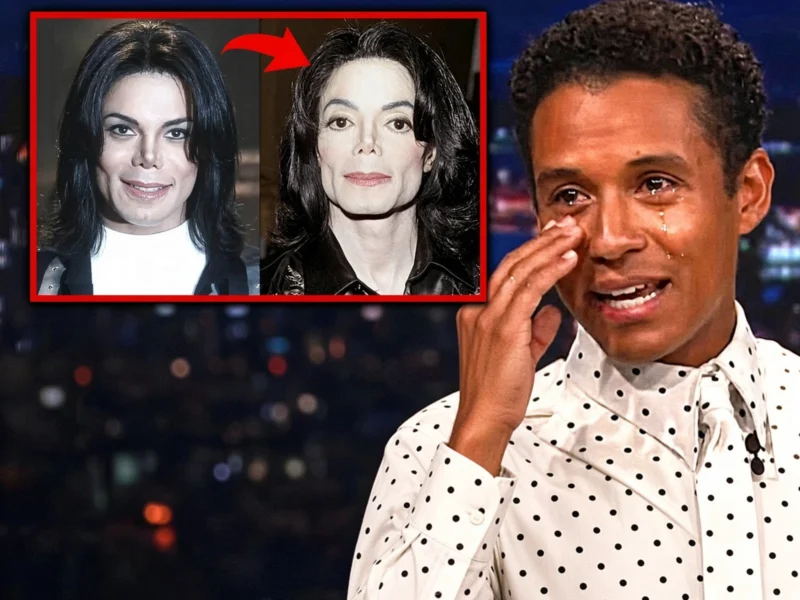
‘The World Has No Idea How Tough Playing My Uncle Michael Jackson REALLY Was | Jaafar Jackson’
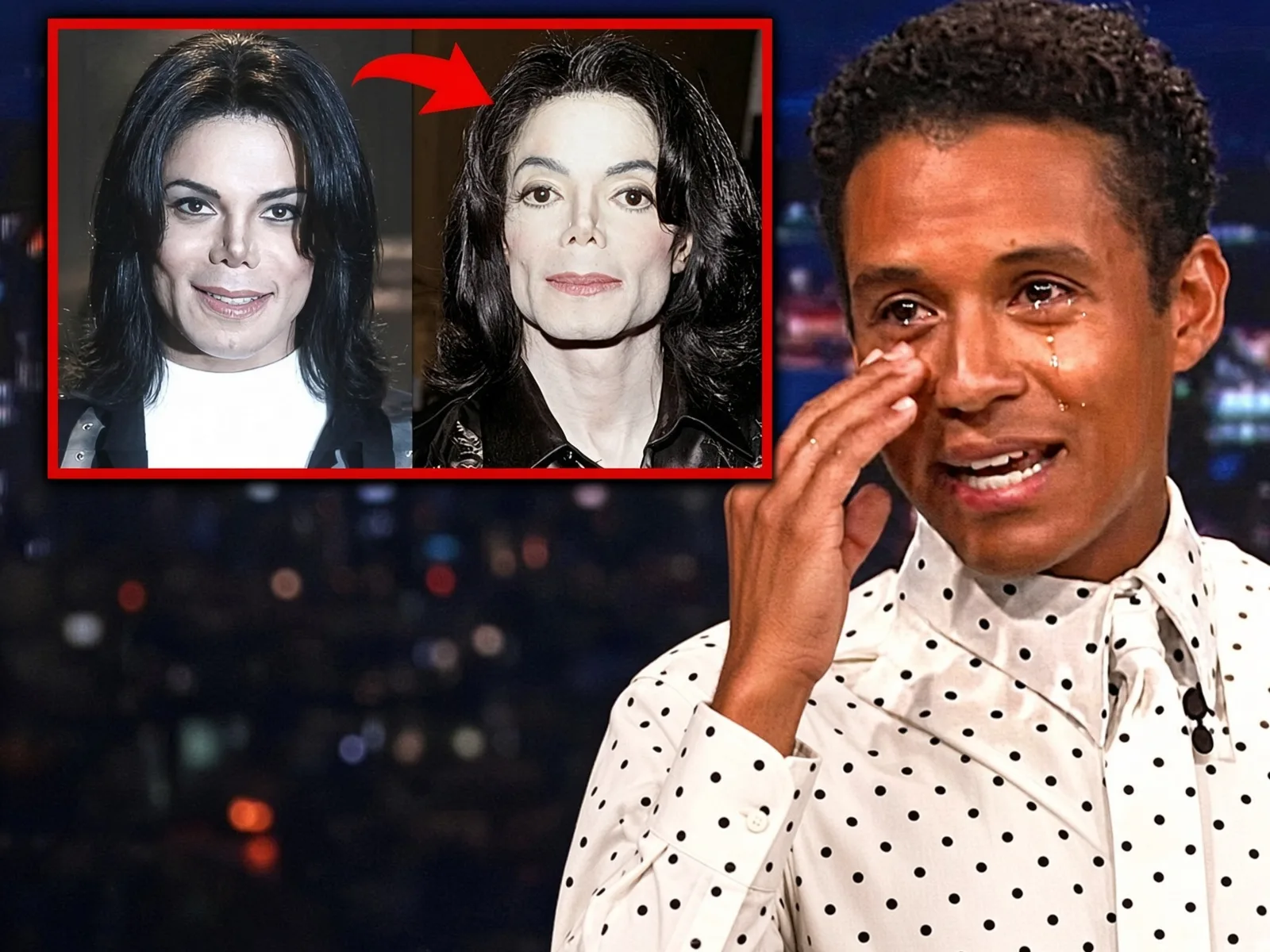
The world thought it knew how hard playing Michael Jackson would be. It had no idea.
“We would try it again and again, over and over,” Jaafar Jackson says of the moonwalk. “The moonwalk is very challenging.”
This is the story of Jaafar Jackson’s agonizing transformation, from a secret voice note to bleeding feet, and of how he became the choice to bring his uncle back to life in the 2026 biopic “Michael.”
“I definitely had to earn the role,” he says. “It was a two-year process, really. Beautiful agony.”
Everyone thinks they know how hard it is. They have no idea.
Jaafar didn’t just learn steps. He danced until his loafers were stained with blood, because those smooth soles gave no mercy at all.
The role demanded that he vanish. He had to lose his own posture, his own voice, and his own walk, and bring back a figure the entire planet was watching.
It was a beautiful agony, he admitted, and the pain meant he was giving everything. “Just that process of seeing me slowly transform into Michael was emotional.”
The spins alone nearly broke him. He retrained his natural balance over three punishing years, and some mornings arrived with a body so stiff that he questioned whether he could even stand.
But a sharper inner voice always cut through the soreness. What would Michael do?
That question became a whip and a prayer every single day.
Before we move on, there is a recent image circulating online that appears to show Jaafar in an emotional breakdown, paired with a dramatic quote. After his turn as Michael in the 2026 film, comparisons between the two men have been everywhere.
The image has drawn attention, but there is no confirmed context behind the claims attached to it. The full story behind it has not been revealed, which is why it keeps fueling theories. What do you think it is trying to say, or is it even real?
Now back to how it all began, with a search that turned into an obsession.
Finding cinema’s next King of Pop swallowed casting offices whole. Producer Graham King and director Antoine Fuqua didn’t want a tribute act. They wanted a resurrection.
Nearly 200 hopefuls were examined. There were professional impersonators who had spent decades perfecting a single moonwalk, classically trained actors, and viral dance sensations.
Every tape felt hollow.
“We were looking for a needle in a haystack that might not even exist,” King confessed. The actor had to sweat authenticity, not sequins.
As months bled into years, the production began to fear the impossible. Maybe the only person who could truly play Michael Jackson was Michael Jackson himself.
The role just sat there, empty, like a throne without a king.
Then came a voice note that stopped time.
The breakthrough didn’t happen in an audition room. Jaafar bypassed the cameras entirely and sent Graham King nothing more than a voice note.
Speaking softly, he inhabited the breathy, guarded cadence that millions knew by heart. King had seen a video of Jaafar performing years earlier, and he had resisted casting family. Then this recording stopped him in his tracks.
King played the message once, then dialed back immediately.
“I felt it,” he said later. “I felt something about him. It was very Michael.”
That tiny digital file cracked open a door that two years of searching had failed to budge. There was no choreography, no wardrobe, and no special effects. There was just a nephew’s voice carrying the emotional weight of a legend.
In that moment, King and Fuqua stopped hunting. They had found someone who could dissolve the distance between imitation and truth.
But a voice is not a performance. Jaafar had never stepped onto a film set, and his entire acting résumé was a fleeting reality-show appearance.
Suddenly he was being asked to anchor the most scrutinized biopic in decades.
He didn’t panic. He went quiet and got to work.
King assigned acting coaches who stripped him down to raw emotional nerve and rebuilt him scene by scene.
“I never dreamed of being an actor until that phone call,” Jaafar revealed. “He asked me, ‘Have you ever acted before?’ I said, ‘Never. I’ve never wanted to be an actor.'”
He dissected dialogue the way Michael dissected rhythm, searching for the vulnerability under every line. The learning curve was a vertical wall, slick and unyielding.
Jaafar treated his inexperience not as a weakness but as proof that he had nothing to lose and everything to prove.
Then there were the loafers.
Dance rehearsals became a daily transaction. You give skin, you get precision.
Jaafar has been startlingly candid about the cost. He routinely “danced until my feet would bleed or go numb.”
Michael’s iconic loafers were treacherously smooth, engineered for glide and not for grip. Every misplaced pivot punished him with fresh blisters and deep bruises.
Muscles seized overnight. Toes blistered into raw spots that refused to heal.
“That was something new for me, being able to dance in loafers and getting used to that,” he said.
The temptation to pause whispered every sunrise. Then a second, more stubborn voice would surface. Michael never quit. Michael pushed through.
That inherited perfectionism turned physical suffering into a currency, and Jaafar spent it freely. Every drop of sweat felt like an offering to his uncle’s memory.
And the suffering didn’t end when the dancing did, because film sets are relentless endurance machines.
“When you’re shooting a movie, you can’t just do it one time,” Jaafar explained. “You’re going to do it 20 to 30 times that day.”
Recreating the explosive climax of a concert sequence at 6:00 a.m. is demanding. Doing it with identical ferocity for the 25th take is a clinical assault on the body.
“Building the stamina was difficult,” he said. “Making sure take one and take 25 still have the exact same energy.”
He turned rest into a tactical weapon, learning when to switch off so he could ignite again. By the end, his cardiovascular discipline rivaled that of a professional athlete, not a first-time actor.
When his casting was announced, a predictable question erupted online. Why not Michael’s own sons?
Prince Jackson has been clear that he doesn’t feel drawn to dancing and isn’t suited to the relentless vocal demands of the role. He prefers a career behind the camera, in production.
Bigi Jackson is intensely private and gravitates toward directing, not performance. The filmmakers recognized that genetics alone cannot manufacture a leading man for a global biopic.
Jaafar, by contrast, had spent years quietly honing his musicianship and movement. He had readied himself for a moment none of them could foresee.
It wasn’t a rejection of Michael’s children. It was the simple truth that preparation and opportunity had collided around one nephew, and that was enough.
To understand the isolation his uncle felt, Jaafar moved back into Hayvenhurst, the sprawling Jackson family compound where “Thriller” was dreamed into existence.
He didn’t just train there. He slept in different bedrooms, chasing the residue of Michael’s energy.
The dance studio once used by the King of Pop became his torture chamber and his sanctuary, the place where he pushed himself past every known limit. Rejecting a proper bed, he laid a thin Japanese mattress directly on the floor.
“I slept in many different rooms in the house just to feel the energy,” he explained.
The estate’s walls whispered old harmonies and secrets of a past life. Jaafar listened obsessively through the long nights, trying to absorb not just the steps but the loneliness that birthed them.
He also turned a spare room into something between a detective’s evidence board and a shrine. Walls disappeared under choreography diagrams, scribbled affirmations, and timelines.
Fuqua compared the space to the film “A Beautiful Mind.”
The real breakthrough came when the Jackson estate granted him access to Michael’s private journals. There were handwritten poems that revealed hidden wounds, daily mantras scrawled in the margins, and uncensored fears, raw and unfiltered.
“That was a breaking point for me,” Jaafar admitted.
He began mirroring the practice, scrawling his own affirmations across the walls until not an inch of paint remained. The boundary between his psyche and his uncle’s started to blur.
Preparation stopped being about dance counts. It became a full psychological occupation of another man’s interior world.
The sound itself was a delicate miracle. Audiences rarely hear just Jaafar or just Michael.
“When I was doing all the performances, I was singing live on top of Michael’s track,” Jaafar explained. “So it’s a blend of my vocal and Michael’s.”
The two voices, separated by a generation, fused into a single seamless breath. In the intimate a cappella studio scenes, however, it is purely Jaafar’s voice filling the silence.
Music supervisor John Warhurst was astonished by the similarity. Jaafar’s physical vocal structure is eerily like his uncle’s, and that inheritance is something no acting coach can manufacture.
The natural timbre became the film’s secret weapon, stitching nephew and icon into one melody that neither could have achieved alone.
Then there was the physical side of the bargain.
Maintaining Michael’s famously lean silhouette required a transformation that bordered on monastic. “He’s had to maintain that peak conditioning and extremely low body fat for more than two years,” a production insider revealed.
Strikes and reshoots stretched the schedule, and Jaafar could not afford to lose definition. Every meal was calculated, down to the last grain of rice.
“He put himself through hell to master his late uncle’s performance style, dance moves, and general manner,” the source added.
The discipline aged him, but it also armored him in ways he never expected. By the time cameras rolled again, the resemblance was so uncanny that crew members found themselves staring a second too long, forgetting to blink.
And through all of it, he kept a secret from the person closest to him.
For 12 months, Jaafar told his mother absolutely nothing. “No one in my family knew for a full year,” he revealed.
His father, Jermaine, later admitted he had a vague sense that Jaafar was working on something. For his mother, the secret was total.
It was a pressure valve. The moment she learned the truth, the weight of the Jackson legacy would land on her, and she would worry about the immense scrutiny.
He needed to find Michael in the mirror before family could judge the reflection. Keeping that secret while training daily demanded a discipline few could sustain, and he nearly broke more than once.
When his mother, Alejandra, finally visited the set, she walked into a reality she hadn’t prepared for. Watching her son transform into her late brother-in-law unleashed a flood of protective anxiety.
“Even in the process of preparing, I didn’t tell her for a full year,” Jaafar confessed.
She saw his posture collapse into Michael’s shy tilt. She heard that whisper-soft voice come from her son’s body. It was deeply strange and yet oddly beautiful.
“She is very protective of me, knowing the attention the movie will bring,” he said.
That day revealed a side of Jaafar she had never met, and it shook her to the core. It was a fusion of her child and the brother-in-law she once knew, standing right in front of her.
Another verdict was still pending. As of Jaafar’s most recent interviews, the most intimidating audience member had not yet seen the finished film.
“My father hasn’t seen it yet, and I can’t wait for that,” he said. Excitement and dread hung in his voice.
Jermaine Jackson shared a childhood, a stage, and a lifetime of unspoken brotherhood with Michael. No screenplay can fully capture that, and every gesture Jaafar made would be measured against his father’s most intimate memories.
There is no harsher critic and no more meaningful blessing. His father’s silence was the loudest review of all.
He found some relief in his co-stars. Portraying Michael meant reliving a famously complicated family dynamic, and Jaafar discovered unexpected emotional anchors.
Colman Domingo, who plays the domineering Joseph Jackson, approached him with a tenderness that defied his character. “He walked up to me, and we just hugged,” Jaafar said. “I really felt that love and protection from Colman throughout the entire shoot.”
Nia Long, who plays Katherine Jackson, brought a maternal warmth that unlocked something deep. Jaafar called it “very emotional.”
Their presence created a safety net that caught him every time he stumbled. It let him tumble into the darkest corners of Michael’s psyche without breaking apart.
He didn’t have to do it alone, and that saved him.
And all the while, the loafers kept reminding him what the role cost.
Michael’s performance shoes were maddeningly specific. They had completely smooth soles, with no rubber tread, no grip, and no forgiveness. They were built for gliding across a stage like a ghost.
Jaafar became obsessed with finding a pair that matched. “There’s no rubber at the bottom for traction,” he explained. “It’s a little tricky.”
The shoes fought his every instinct and punished him without mercy for the slightest imbalance. He still owns a pair from the shoot and wears them only when rehearsing, treating them like sacred relics.
They are a physical tether. Every blister and every hard-won callus became a badge of honor, proof that he had walked, quite literally, in his uncle’s impossible shoes.
From the very first meeting, Fuqua issued a strict directive. There would be no impersonation on his set.
“We all agreed there could be no imitating Michael,” he said.
Jaafar absorbed the rule like gospel. He realized that doing the moonwalk is one thing, but making it believable is a whole different thing.
He began dissecting the meaning behind every gesture. He searched for the story and the emotional intention inside a tilted hat, a bitten lip, a sudden glance away, each one a word in an unspoken language.
The goal was never to produce a mirror image. It was to inhabit the man from the inside out.
Audiences expecting a tribute act will instead witness something far rarer. They will see Michael Jackson’s soul, stripped of its silhouette and dressed in raw truth.
Then came the verdict that mattered most. No review on Earth carries more gravity than the opinion of one woman.
Katherine Jackson, the matriarch who raised Michael in a tiny home in Gary, Indiana, was brought to the set without fanfare. She saw Jaafar not just in full costume but also capturing his uncle’s quiet off-camera essence during rehearsals.
She didn’t speak. A long, stunned silence filled the room.
Then, barely audible, she whispered to her assistant, “It’s like seeing a ghost.”
That hushed, unguarded reaction silenced every doubt humming through the production. Later, the estate’s official statement echoed the feeling with a line that became famous: “Jaafar embodies my son.”
For Jaafar, who had spent years aching for approval, that moment confirmed everything. No box office total or critic’s review could compare. The person who knew Michael best had seen him again.
Asked the question that haunts every frame of the film, Jaafar’s answer was measured but glowing.
“I would hope he would be very proud and can see how much love and work I put into it to get to a level where he would be happy,” he said. “I know he’s a perfectionist.”
Michael demanded an excellence so absolute it bordered on cruelty. Jaafar internalized that same relentless standard, and he treated it not as a burden but as scripture.
If the King of Pop were somehow watching from the wings, Jaafar believes he would recognize the devotion stitched into every spin. Perhaps he would even allow a quiet smile of approval, the kind that says, You understood.
The global fan community, meanwhile, didn’t wait for a trailer to form an opinion. From the moment the casting leaked, online forums erupted with forensic analysis of his jawline, his gait, and his vocal range.
“I knew they were watching my every move before I’d made a single one,” he admitted.
Instead of wilting, Jaafar quietly studied the superfans’ own archival footage. He learned obscure details even the estate had forgotten, and he viewed their obsession not as a threat but as a resource.
The relationship became symbiotic. They demanded perfection, and he was already bleeding to deliver it. Their collective breath became the metronome he danced to every single day.
Then, on one particular day, the set stopped breathing.
There is a moment on every film set when the machinery of production halts, arrested by something real. For “Michael,” that moment arrived during an unbroken take of “Man in the Mirror.”
Jaafar finished the song, drenched and trembling. He opened his eyes, and the soundstage was frozen.
No one moved. The camera operators had tears.
“The extras weren’t acting anymore,” a crew member recalled. Fuqua forgot to yell cut.
Jaafar stood alone under the lights, still holding the final notes of motion in his ribs. The silence that followed wasn’t emptiness. It was reverence.
In that suspended breath, the crew stopped seeing a nephew, a performer, or a lookalike. They saw only what they had been chasing. Michael, briefly and impossibly, returned.
When the final scene wrapped, Jaafar didn’t throw a party. He walked to his trailer, removed the loafers that had cost him so much skin, and sat motionless.
“I had to learn how to be Jaafar again,” he said.
The role had consumed every waking hour for years, and its absence felt like a phantom limb. Today he speaks not just of his uncle’s legacy but of his own.
He is writing music and building a voice that isn’t blended with Michael’s. “I will always carry him,” he says, “but I can’t stay inside him forever.”
Behind the performance, there was something older. Jaafar was 12 when Michael died, leaving a silence that never quite lifted. What remained were fragments, like a lullaby he could only half hum.
As the biopic neared release, he began speaking of those memories publicly.
“I remember his voice was very soft, different, gentler,” he said of his uncle’s presence at gatherings at Hayvenhurst. He recalled game nights bleeding into Saturday mornings, with Michael slipping in with a quiet smile that brightened the room without words.
Neverland lingered as a blur of candy, hide-and-seek, and a carousel that never stopped spinning. “He’d let us just be kids,” Jaafar said.
Those private moments became the emotional bedrock of his performance. The fedora’s gentle tilt and the shy glance away weren’t drawn from archival footage alone, but from a child’s memory repurposed through love.
Every step in that Hayvenhurst studio echoed a half-remembered lullaby, sung at last.
The family itself didn’t speak with one voice. Reactions splintered three ways.
Prince Jackson, an executive producer, championed Jaafar unreservedly. Seeing his cousin in full costume stopped him cold. “I needed to step outside and get some air,” he admitted. He said he instinctively wanted to hug him, and he called Jaafar the only right choice.
Paris Jackson became the project’s most pointed critic. Reports said she considered the biopic dishonest and a fantasy, upset that her private script notes were ignored. She avoided the public premieres, and her absence was widely read as an objection.
Bigi Jackson stayed silent but attended the Berlin premiere alongside Prince. They wore black suits with red armbands bearing their father’s iconic dancing feet.
It was a quiet tribute in a family where every gesture is amplified, and where the quietest voice can carry the most complicated truth.
There was one more presence in the film’s story, and it lived inside a legal document.
The film originally tackled the 1993 child allegations, with Fuqua directing scenes that grappled with that storm. During editing, the Jackson estate unearthed a clause in a decades-old settlement barring any depiction of the accuser or his family in future films.
The footage was unusable.
Reshoots stretched 22 punishing days and cost anywhere from $10 million to $50 million, depending on the report, much of it covered by the estate. The third act was restructured to end in the late 1980s, well before any public allegations surfaced.
Fuqua called it a punch in the gut, a heavy story he could no longer tell.
A legal ghost had seized the narrative. The finished film became a document of what could not be said, a silence Jaafar’s performance fills but never pretends to erase.
Jaafar didn’t just play Michael. He rebuilt a bridge between a legend and the people who loved him, one impossible spin at a time.
The biopic is done, but the man behind the glove is finally ready to speak for himself. No ghost required. Just Jaafar.









