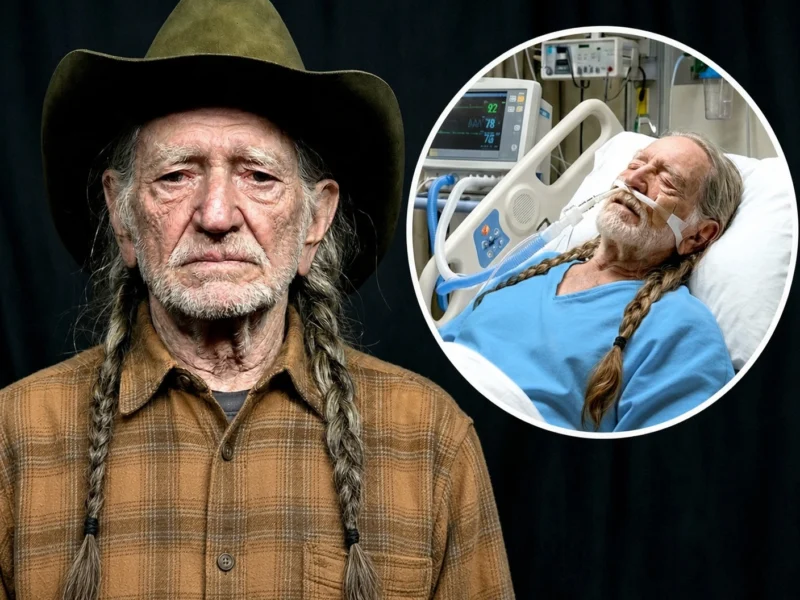
The Tragic Ending Of Willie Nelson Is Heartbreaking
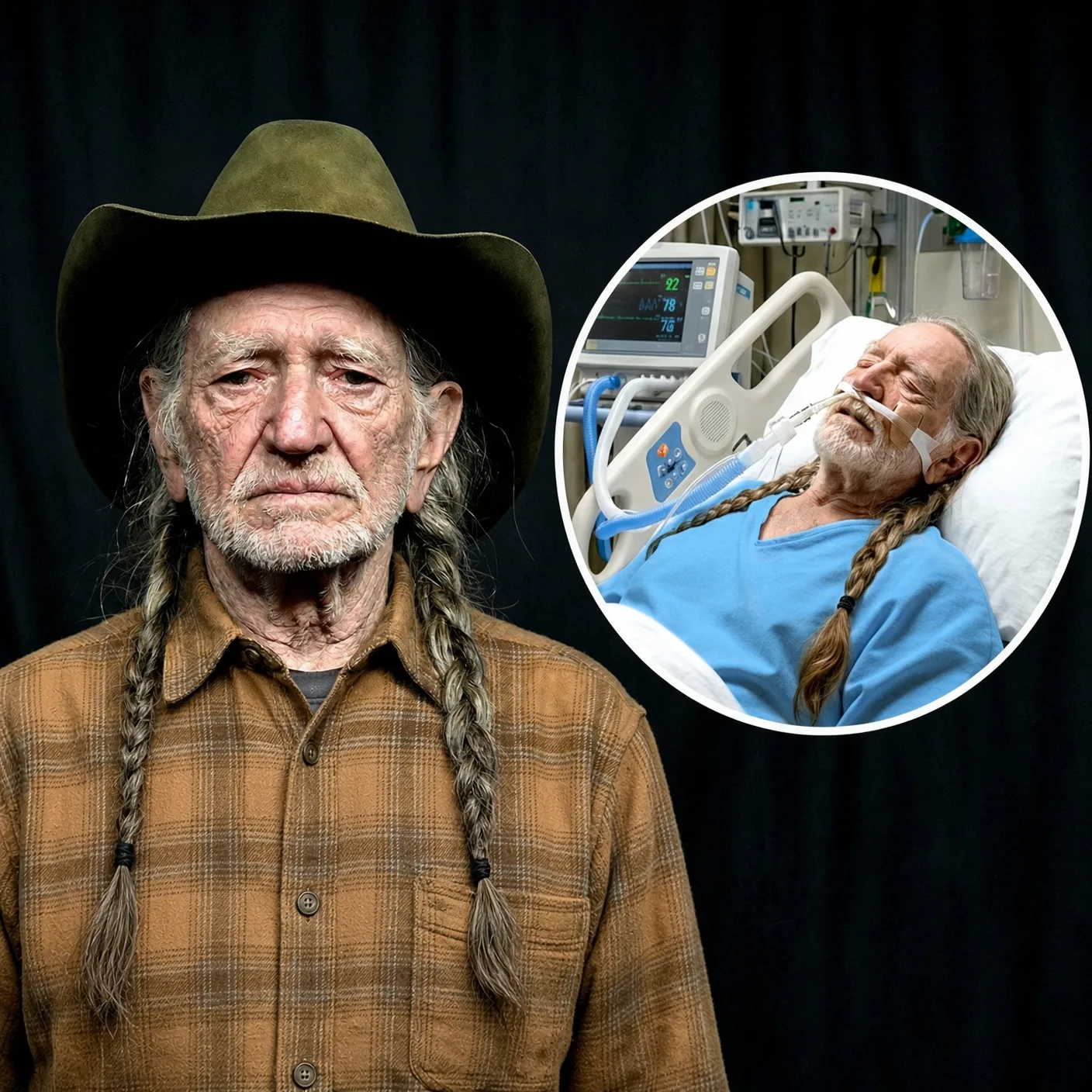
In his nineties, at an age when many have long since stepped away from the stage lights, Willie Nelson still walks out before an audience, cradles his familiar guitar Trigger, and lifts his raspy, weathered voice, so raw it can silence an entire hall.
People see a gentle icon. White braided hair. A simple life in Texas. A man who seems to have already weathered every storm life could throw at him.
But that smile was paid for with an entire lifetime of loss.
As a child, he was abandoned by his parents.
He later lost his son in a grief too deep for words.
And once came perilously close to losing everything under the weight of a massive tax debt totaling $16.7 million.
Yet he never allowed the darkness to consume him.
From the depths of the mud, he rose again, turning pain into melody, transforming suffering into music that has healed millions upon millions of hearts.
Before becoming a legend whose melody On the Road Again is known across the world, Willie Nelson was simply a forgotten boy amid the red dust of Abbott, Texas.
His mother left when Willie was still an infant, leaving behind a void with no explanation.
His father, worn down by poverty and instability, remarried and then disappeared as well.
Willie was not yet old enough to name betrayal, but he was sensitive enough to feel an endless emptiness. An aching sensation a child has no idea where to place.
Willie Nelson was born in 1933, but the feeling of being left behind arrived long before he could understand what a family even meant.
He and his sister Bobbie were taken in by their grandparents, poor but kind-hearted people who tried to piece together a childhood already cracked and broken within their limited means.
His grandfather, a rough, calloused blacksmith, was the first person to place a guitar into those tiny hands.
In a world that seemed to collapse again and again, the guitar and his grandfather became his final anchors.
Then, when Willie was only six years old, pneumonia took his grandfather, the one person who had never left him.
It was not merely a death. It was the collapse of his last remaining support.
Many years later, in his autobiography, Willie wrote a line that leaves readers breathless.
“Being abandoned by my mother and father was worse than death. Because they were still alive. They just weren’t there for us the way they should have been.”
For a child, realizing that your parents still exist but choose not to be with you is a different kind of cruelty.
One that is not final, but lingering, persistent, and haunting for a lifetime.
By the age of seven, Willie already understood adult sadness.
He found a guitar tucked away in the corner of the house, and from that moment on, it became his only refuge.
He did not play for joy, but to keep himself from sinking into wordless emptiness.
At nine years old, Willie began playing music in small bars around town. It was never really about performing.
Those nights were more like silent distress signals from a child searching for something to hold on to.
Years later, his music would soothe millions of hearts, but few know it was born from nights when a young boy lay staring at the ceiling, wondering why love always seemed to leave him first.
In an interview many years later, Willie quietly said a sentence that stilled the room.
“There was always that silence. I sang to fill it because there was no one to talk to.”
By his teenage years, when many children were still figuring out how to avoid household chores, Willie was bent over in cotton fields, hands blistered, back aching as if it might snap.
His childhood left no room for laziness. Only labor, repeated endlessly as a means of survival.
By fourteen, around 1947, Willie had worked more jobs than many people twice his age.
Trimming trees. Operating a switchboard. Guarding nightclubs. Selling encyclopedias. Working as a DJ. Washing dishes. Repairing saddles. Climbing utility poles. And delivering books door-to-door to families so poor they didn’t even own a proper chair to sit on.
Years later, he recalled this with a sense of shame.
“I once sold a six-hundred-dollar set of encyclopedias to people who couldn’t even afford a decent meal. It wasn’t right. But when you’re young, broke, and chasing a fragile dream, you’ll do anything to survive.”
At night, Willie held his guitar beneath the weary glow of barroom lights, singing not to entertain, but to push away the emptiness gnawing at him from the inside.
“There was always that silence,” he said. “I sang to fill it because there was no one to talk to.”
Then Nashville appeared, shining like a promise every country musician longs for.
But reality was far harsher than the dream.
Willie knocked on the doors of record labels again and again, only to be met with cold refusals.
No one wanted a skinny Texas kid with a rough voice and cheap clothes. No one saw anything worth keeping.
During nights in unfamiliar cities, Willie slept on car seats or the floors of cheap boarding houses, wondering whether he had been born only to hear doors slam shut behind him.
Yet the next morning, he would still pick up his guitar and keep going.
Because if he stopped, silence would come crashing down, and Willie understood better than anyone else that silence was the one thing in his life he could not endure.
There was a time in his early twenties when Willie lived in an old trailer parked on the edge of a cemetery.
Alcohol, disappointment, and loneliness blended together into something so thick and suffocating that he could no longer see where the way out might be.
One night, after drinking too much, Willie stepped out of the trailer, walked along a street that was busy by day, and then lay down right in the middle of the road.
Not to draw attention. Simply because he no longer knew where else he could go.
No one stopped. No one asked whether he was alive or dead.
Cars kept passing through the night as if he were completely invisible, and in the end, there was only silence. The very thing he had been trying to escape his entire life.
Years later, Willie wrote that he was not sure whether he had been waiting for some kind of release or simply disappointed that he was still breathing.
But in the end, he stood up, staggered back to the same old bar, had another drink, and picked up his guitar as he did every night.
There was no miracle. No one noticed. No applause waiting for him.
There was only a man who kept singing because if he stopped, silence would win again.
Then one night, when everything had piled up until he could no longer bear it, Willie decided to leave Nashville to look for his mother in Oregon.
The woman whose face he could barely remember, yet who still existed as the last point of support in the imagination of a desperate son.
He had no money, no car, no place to sleep. Only one thought remained. He had to leave this place. He had to find something, anything to hold on to.
He walked along the highway, heading straight into the darkness, hitchhiking as if clinging to the final chance of his life.
Dozens of cars sped past. No one stopped.
People looked at him as though he were nothing more than a piece of trash on the roadside.
Finally, a truck slowed down. The driver, a nameless stranger who asked no questions, let Willie climb in.
When they reached the station, the man pressed a ten-dollar bill into Willie’s hand so he could buy a bus ticket.
An amount that meant little to most people. But to Willie at that moment, it was a fragile thread keeping him from falling into the abyss.
Many years later, Willie recalled that moment with quiet gratitude.
“That night, he didn’t give me ten dollars. He gave me a reason to keep going.”
Life continued to turn in circles until 1959, when Willie was crammed into a tiny apartment in Houston, his wife pregnant and nearing her due date, and the refrigerator so empty that only cold air clung to its walls.
In that precarious moment, he sat down and wrote Family Bible, a song born not from ambition, but from rare memories of protection and warmth.
His grandmother singing hymns around the dinner table. Those quiet afternoons when the young Willie felt for a brief moment that he was not completely abandoned in this world.
But memories, no matter how beautiful, could not buy dinner.
Needing exactly one hundred dollars for groceries, Willie sold the publishing rights to the song and with them his own name.
A few weeks later, Family Bible was playing on radios all across Texas.
Applause erupted from audiences while Willie sat in a cramped rented room, listening to his child cry beside him and staring at his empty hands, understanding that success sometimes arrives, but not for the one who creates it.
That pain gradually became a habit.
Willie wrote one song after another, and each piece left his hands bearing someone else’s name.
Crazy was written from the depths of loneliness and became a legend through Patsy Cline’s voice.
Funny How Time Slips Away turned into a classic in the hands of Billy Walker.
Pretty Paper was sung by Roy Orbison until all of America knew it by heart.
Those songs were not just melodies. They were emotional maps for an entire generation.
Yet, while his music quietly changed country music forever, Willie Nelson, the man who created it, was still standing behind a bar, pouring drinks and wiping tables with the very hands that had written immortal masterpieces.
A man who created an era, yet was left standing on the margins of his own era.
And if that is not called tragedy, then perhaps music has nothing left that can truly be called tragic.
Even in those years that seemed bright on the surface, another storm was silently taking shape.
The love between Willie Nelson and Martha Matthews began with burning passion, but soon slid into violence and tears.
They met when Willie had just been discharged from the military, and Martha was only sixteen, with Cherokee eyes that he said set his soul on fire.
They ran away from their families to get married, wandering across America like reckless youths who believed love alone could stand up to poverty in reality.
But life quickly proved otherwise.
Poverty, alcohol, and jealousy turned their small home into a battlefield without gunfire.
Willie relentlessly chased his dream of becoming a songwriter, while Martha worked as a waitress to support the entire family.
And from there, the arguments grew increasingly brutal.
Willie later said that Martha once threw a fork that lodged straight into his side.
And on another occasion, she bit his index finger, the finger he used to pluck the guitar, down to the bone.
Later, he admitted bitterly:
“The more I drank, the deeper I sank into despair and jealousy. Even though I could be with any woman, I couldn’t stand the thought of Martha being with another man.”
Then he sighed when recalling those days.
“She couldn’t stand my hypocrisy, and I couldn’t stand my fear of losing her. We fought like two people who didn’t know how to love the right way.”
They truly loved each other, and they truly hurt each other.
At times, Willie disappeared for days so he wouldn’t hurt anyone more. While Martha took the children and left without a word.
Ten years together left them with more scars than memories.
And in the end, the marriage collapsed, closing a chaotic chapter that Willie would later call a beautiful love at the wrong time with far too much alcohol.
Even so, he never denied one thing.
Martha was the woman who stood beside him in his poorest years, when Willie Nelson was not yet Willie Nelson.
In the early 1970s, Nashville delivered its final verdict.
Willie did not belong there.
RCA dropped him. Critics grew weary. And studio doors closed in icy silence.
People said his voice was too rough, too raw, too old-fashioned. That his music was hard to sell and did not fit the standard.
But the truth was far simpler. Nashville did not know what to do with someone who was too real, too reckless, and too deep to be forced into a ready-made mold.
At the same time, the place Willie had placed all his faith in, his ridgetop ranch, went up in flames overnight.
Red fire devoured wooden walls, guitar strings, and a lifetime’s worth of keepsakes.
By morning, there was only ash and a column of gray smoke dissolving into the air.
To others, it was just a fire. To Willie, it was the end. A cruel metaphor for everything he had tried to build in Nashville, something that had never truly belonged to him.
And then came another cut, this time from his second wife, Shirley Collie.
Willie met Shirley in the early 1960s, at a time when both of them hovered between the fragile glow of recognition and the cold shadow of obscurity.
Shirley was then a beautiful singer, her voice smooth as silk, a familiar face on national television shows.
Willie, thin, raspy-voiced, hair unkempt, always clutching his guitar as if holding an unhealable wound, was still the man behind the lights, writing songs for other people’s dreams.
They met after a show in Nashville, just as both were emerging from broken marriages.
And perhaps it was that shared sense of ruin that made them recognize each other almost instantly. Two scarred souls who believed in music more than in any promise.
Shirley was drawn to Willie’s raw honesty, while Willie clung to Shirley’s smile during long, exhausting nights, as if she were the thin thread keeping him from falling deeper into the familiar darkness within himself.
But love born from wounds rarely lasts.
Their marriage, though it held moments of beauty, was fragile from the start. Worn down by endless travel, relentless performances, unpaid bills, and exhaustion that both chose to swallow rather than speak aloud.
And then everything shattered in a way no one was prepared for.
One afternoon, Shirley happened to open a medical bill envelope lying on the table, and inside was a childbirth invoice bearing the name Connie Nelson.
Not her. Not the family she had tried to protect.
In that moment, the world did not collapse noisily. It simply stood still, cold and silent, long enough for Shirley to understand everything.
Willie tried to explain in a voice so soft it bordered on desperation, trying to hold on to whatever remained.
But paperwork does not lie.
And in the end, he confessed almost in a whisper.
“Connie is my girlfriend. Paula is our daughter.”
One short sentence. Yet enough to sever a marriage, tear trust apart, and strip away another piece of Willie’s already fractured soul.
With the marriage destroyed, Nashville turning its back, the ranch reduced to ashes, and the last contract slipping away, Willie stood amid the ruins of his own life at thirty-nine years old.
One of the rare moments when he truly did not know where he belonged.
No home. No family. And even his faith in music shaken to its core.
He nearly gave up, not because he no longer loved music, but because he feared his heart could not survive another break.
And yet, within that thick layer of silence, a small light still flickered.
The stubbornness of a Texas boy. And the faint echo of the child who once sang simply to survive.
That alone was enough to pull him back to his feet and lead him to the only remaining choice.
To leave Nashville and return to Texas.
Texas never asked Willie to change.
It did not demand that he slick his hair into a pompadour or cover himself in rhinestones to fit the stage.
It only asked one thing of him. To be himself. Angular. Taciturn. Honest to the point of roughness.
Especially in early 1970s Austin, where long-haired hippies and aging cowboys could sit at the same table, share a bottle of beer, sing off-key together, and no one cared whether you looked like a star.
There was only one question that mattered. Was your song real?
Amid cigarette smoke and the low rumble of old speakers, Willie found what Nashville had never given him. Freedom.
He stopped trying to write songs that would sell. Stopped forcing himself to fit someone else’s measuring stick.
And for the first time in many years, he wrote as Willie Nelson. Unpolished. Poetic. And filled with pain that no longer needed to be hidden.
The result was Shotgun Willie, 1973. An album that bowed to no one, apologized for nothing, and sought no approval. Like the horse sigh of a man too exhausted to pretend anymore.
Critics were unsettled by its bluntness, but listeners understood immediately, because Shotgun Willie said exactly what they were living. Rough. Honest. And unbowed.
Then came 1975 and Red Headed Stranger. So stripped down that many thought it was nothing more than an unfinished demo, with its eerie silences, breath-light vocals, and a soul that had nothing left to conceal.
People said the album would never sell. But fans called it the sound of freedom.
That same year, Wanted: The Outlaws carried Willie from the margins to the face of an entire uprising.
And when he said, “If they won’t give me a seat, I’ll build my own chair,” both Austin and Nashville were forced into silence.
Willie Nelson, the man once told to sit down and shut up, rebuilt his own stage from ashes, callouses, strings, and a voice that refused to die.
He no longer dreamed of glory. He created his own light.
And from that moment on, Willie Nelson did not just return to music. He returned to himself.
Yet in 1990, just when life seemed ready to stop testing him, another brutal blow landed.
A thick envelope bearing the seal of the United States Internal Revenue Service arrived, announcing a staggering tax debt of $16.7 million.
Not because of fraud. Not because of evasion. But because for years Willie had trusted the wrong people, handing his finances to advisers who promised protection, only for the entire system to collapse beneath a man who had always trusted only music.
From that moment on, debt was no longer a number. It became a suspended sentence hanging over Willie’s head.
And the IRS carried out that sentence without hesitation.
His ranch, studios, properties, equipment. Every keepsake tied to a lifetime on the road was seized with ruthless speed.
Those who once stood cheering beneath his stage lights now watched Willie Nelson quietly observe the federal government take away his own home.
Most cruel of all, Trigger, the guitar that had followed him through thousands of weary nights and witnessed every fracture in his life, was nearly confiscated as well.
To Willie, losing Trigger would have meant losing the last piece of his soul.
Standing amid the wreckage, Willie said just one sentence, calmly enough to silence the entire nation.
“As long as I have my guitar, I’ll be fine.”
And he was not lying.
When life stripped away nearly everything, Willie returned to the place that had saved him since childhood. Music.
He set out to record an album many thought was insane. Just his raspy voice and bare guitar. No band. No modern studio. No lights or effects.
Just a man sitting down and telling his life story through the very cracks he had once tried to hide.
The album was called The IRS Tapes: Who’ll Buy My Memories? A question both bitter and honest, as if he were asking the world directly whether anyone would buy back his memories so he could keep going.
Willie sold the album through television, mail order, and every avenue a man in debt could imagine.
And something unexpected happened.
Fans bought it not out of pity, but because they knew that voice had carried them through countless lonely nights. Willie had given them so much, and now it was time to give something back.
Track by track. Dollar by dollar. Heart by heart.
They helped him stand again.
Without declaring bankruptcy. Without running away. Paying off his debt piece by piece, with his voice and with his honor.
In that darkness, life opened another door no one expected. Annie D’Angelo.
They met on the set of Stagecoach in 1986, when Willie was still married to Connie Koepke, and their relationship began under circumstances tangled enough to be called a mistake.
But love does not care about right or wrong. It finds hearts that beat in the same rhythm.
Annie was not dazzled by the lights, unmoved by fame, and untouched by the outlaw image others projected onto Willie.
She saw what remained. The man with more scars than glory. A man who needed solid ground more than applause.
They married in 1991, and for the first time in his life, Willie did not run, did not avoid, did not surrender everything to instinct.
This was a marriage he chose to protect with both reason and heart.
They had two sons together, Lukas and Micah. And from that moment on, Willie’s life was forced to slow down.
Annie took charge of his finances, helped pay off the massive tax debt, pushed him to cut back on drinking, quit much of the smoking, and take care of his health.
Years later, when Willie nearly died from COVID-19, it was Annie who noticed, called for help, and kept him tethered to the world.
Willie once spoke of her with gratitude and awe.
“She’s the only one who knows how to keep me alive.”
While the IRS stripped away every asset, Annie protected the one thing that mattered most. His life.
From 1991 to 1993 were the most wrenching years of Willie Nelson’s life.
A living legend without a single property in his name.
Yet he did not flee or disappear. He chose to repay his debt with the very thing that had made him Willie Nelson. Music.
When The IRS Tapes was released, people suddenly remembered what Nashville had forgotten.
Honesty still had value.
Willie’s name returned not through promotion, but through respect for a man who stood up when the world told him to kneel.
Friends bought seized assets at auction and returned them to him at the true price of friendship.
Fans sent letters, money, and words of encouragement.
Slowly, Willie rebuilt his life. Reclaiming Trigger. Reclaiming his studio. Reclaiming his freedom.
Not the freedom of rebellion, but the freedom of a man who had paid a debt everyone thought would bury him forever.
Three years later, Willie had nearly cleared it all.
He did not collapse. Did not vanish. Did not become a sad footnote in country music history.
He kept living. Kept singing. Kept walking the wind-worn road he had traveled for decades.
A man abandoned in childhood, who had lost homes, family, faith, and stood on the edge countless times, now stood again on stage, holding Trigger and smiling.
No longer afraid of losing his possessions, because he had learned there were things that could never be seized.
His voice. His memories. The truth in every string. And the resilience of someone who had survived it all.
Willie Nelson did not merely overcome tax debt. He turned it into legend.
Proof that resilience can be stronger than collapse. And that if life ever tried to knock him down, music was always there to lift him back up once more.
But when the numbers were finally paid, life demanded payment in another currency.
One that cannot be signed away. Cannot be negotiated. And cannot be paid by anyone else.
The pain of those he would lose forever.
Christmas of 1991 became a wound Willie would never forget.
While millions of families gathered around trees, opening gifts and laughing together, he received a call that froze time.
His eldest son, Billy Nelson, was gone.
Billy had been recording a gospel album, but behind the studio door raged a silent storm no one could reach in time.
Later, Willie said only one thing, so brief and choked it seemed almost breathless.
“I’ve never experienced anything so cruel.”
No song could mend that emptiness.
And after that Christmas, every note he played carried the sound of unfinished memory. Every holiday left an empty chair in the Nelson home, a chair no one dared touch for fear of stirring the pain again.
Then in February 2020, as the world began whispering about a new virus, Willie prepared to say goodbye to a shadow that had walked beside him for nearly his entire life.
Paul English.
They had met in 1955, when Willie slept in his car and played music for food money. And Paul showed up with a careless grin, paintbrushes in hand, claiming he could play drums.
And somehow, he really could.
Paul did more than keep time for the band. He kept time for Willie’s life.
He carried cash. Protected the crew. Collected debts when needed. Did whatever it took to shield Willie.
And above all, became his refuge during the most chaotic years.
Willie’s daughter Amy once called Paul the second pillar of our family.
And when he died, the band kept playing, and the stage light stayed on. But Willie knew the rhythm of his life had lost a piece nothing could replace.
Before that grief could heal, 2022 brought an even deeper silence.
His sister, Bobbie Nelson, passed away.
Bobbie was not just his sister. She was the one who stood beside him from the days they were abandoned by their parents. The piano hands that guided him through hardship. The first person to believe he could turn pain into music.
No one understood Willie like Bobbie. From childhood scars to the loneliness hidden in every recording.
Together they wrote “Me and Sister Bobbie” as a tribute to a bond nothing could break.
And as if fate were not finished, 2024 delivered yet another blow.
Kris Kristofferson died at eighty-eight.
A Highwayman brother. A songwriting soulmate. One of the immortal Highwaymen.
Their friendship was unlike ordinary friendships, born of dusty roads, nights spent playing for each other, long journeys searching for meaning in a world that rarely made room for outsiders.
One was a Harvard-educated poet. The other, a Texas cowboy who turned pain into art.
Somehow they found themselves in each other.
After so many goodbyes, Willie came to see death differently. Not with fear or resistance, but as the natural final stretch of a long road.
He once said, “I’m not afraid of dying. I just don’t want to go while there’s still a song left unsung.”
To Willie, death is not an ending, but a place where those he loves arrived first. Where Billy, Bobbie, Paul, Johnny, Waylon, and Kris are waiting, saving him a seat.
And it was only after understanding that truth that Willie began to face the last great enemy of his life.
His own body.
Old age did not arrive for Willie Nelson like a gentle sunset, but as a long list of battles he had to fight on his own.
Over more than nine decades of living, Willie’s body has endured damage most people can hardly imagine.
And much of it traces back to a habit formed when he was only six years old.
While other children traded eggs for candy, Willie traded chicken eggs for Camel cigarettes.
A childish act of imitation, copying adults, yet one that marked the beginning of a shadow that would follow him for life.
Smoking did not harm only him. It took nearly half his family.
His father. Mother. Stepmother. Stepfather. All died from lung disease.
Willie once wrote, “Half my family died from cigarettes.”
Those deaths were not enough to make him stop, but they were enough to plant a seed of fear that grew quietly inside his body over the years.
Eventually, the price had to be paid.
Doctors diagnosed him with emphysema, a disease that makes every breath feel as heavy as carrying stones on the chest.
At one point, his lungs partially collapsed, leading the public to believe Willie was preparing to retire.
More than once, he disappeared from the stage, retreating to his ranch to recover, because his breath was too short to finish a line, too painful to press down the guitar strings.
In 2015, Willie underwent stem cell therapy to save lungs that had deteriorated after decades of damage from smoking.
He quit cigarettes, but he did not completely part ways with what helped him endure pain.
Willie used cannabis to reduce inflammation, ease pain, and keep his mind calm. When his lungs no longer allowed him to smoke, he switched to edible forms.
Strangely enough, while medicine worked to keep him alive, Willie also learned how to hold himself back through moderation.
Something a younger Willie Nelson would never have been capable of.
At ninety-two, Willie lives on his private ranch in Spicewood, Texas.
A stretch of land spanning hundreds of acres, so quiet that each morning you can clearly hear the wind sweeping through the trees.
To many, the ranch is a property worth more than three million dollars. To Willie, it is simply a place to shelter from the sun. A home peaceful enough for him to slow his breathing after a lifetime of storms.
Inside the house, musical relics fill every corner. Old posters. Worn photographs. Boots with broken soles. And dozens of guitars from years long gone.
But what Willie treasures most now is not on the walls.
It runs across the yard in small footsteps. His grandchildren. His children growing up, surrounded by the music he created.
Lukas and Amy, two of his children who follow the path of music, often share the stage with him, turning each performance into a dialogue across three generations of the Nelson family.
When Willie holds the guitar, Lukas keeps the rhythm, and Amy blends her voice. The atmosphere feels more like a family dinner than a concert.
People see that he is thinner now, slower in his movements, his skin more deeply lined.
But his eyes still carry the mischievous spark of the Texas boy who once stood up to all of Nashville.
Every step he takes today is slower. Yet it carries the calm of someone who no longer has anything left to prove.
Willie maintains his health through simple habits. Eating organic food. Practicing gentle yoga. Meditating each morning. Drinking herbal remedies. And walking around the ranch.
He is not trying to cling to youth. He is simply trying to preserve life in each breath he still has.
No chasing brilliance. No anxiety about aging.
To Willie, growing old is not about losing. It is about letting go of what no longer needs to be carried.
His finances, too, have revived in unexpected ways.
From losing everything to the IRS, his ranch seized, assets frozen, he rebuilt through touring, royalties, small contracts, and even his own CBD product line called Willie’s Remedy.
With slow but steady steps, by 2025, his net worth had returned to around twenty-five to thirty million dollars.
Yet, even with money restored, Willie still wears the same old boots, rides the same old bus, and cradles the scarred guitar Trigger as if reminding himself that everything can disappear at any moment.
And as proof that authenticity never goes out of style, in October 2024, Willie appeared on a Texas stage alongside Beyoncé.
An almost unthinkable meeting between an outlaw country icon and a global pop superstar. Nearly half a century of age difference. Two vastly different musical worlds.
Yet when Trigger sounded next to Beyoncé’s voice, all distance vanished, revealing what Willie had held on to all his life.
Honest music can connect every generation and every genre.
In 2025, Willie released his seventy-sixth studio album, The Last Leaf on the Tree, alongside his son, Micah.
The title felt like a gentle acknowledgement that he knew he had become the last leaf on the branch.
The album does not lament time. It simply records the truth of old age. Losses that cannot be undone. Necessary acts of letting go. And a calm that only survivors can truly understand.
Critics called it one of the most beautiful farewells country music has ever known.
Today, Willie Nelson still lives where he is chosen. On the stage. In the fields. Among his family.
Still singing. Still smiling. Still walking slowly but steadily.
His body is weary. His chest still aches whenever the seasons change.
But his voice, raspy, fragile, can still silence thousands for a few moments.
For Willie, that is enough. No medals. No ceremonies. Just the chance to sing a few more songs before time finally closes in.
And if life has taught him one thing, it is this.
Everything can be taken away except music when it is sung with truth, which stays longer than the person who created it.
Willie Nelson at ninety-two remains the clearest proof of that truth.
Looking back on Willie Nelson’s life, one realizes that pain never held the final say over his fate.
From a childhood starved of affection to broken marriages.
From a ranch reduced to ashes to the IRS letter that stunned an entire nation.
From the death of a son to watching one by one as his closest friends departed.
Life tested again and again how much he could endure.
And every time he fell, Willie stood back up in the only way he knew how.
Picking up his guitar. Stepping into the light. And letting the music speak for everything else.