The Last Secret Carl Dean Hid in His Military Trunk — Why Dolly Parton Was Never Meant to Find It
“My husband Carl was very sick,” Dolly Parton once said. “Then when he passed, I didn’t take care of myself, so I let a lot of things go.”
She was born in a one-room cabin with no electricity, the fourth of 12 children. The doctor who delivered her was paid with a bag of cornmeal.
No one could have imagined that nearly 60 years after Dolly Parton married in a homemade dress, something hidden in Carl Dean’s old military trunk would stop that same girl in her tracks.
It was not money, and it was not a scandal. It was something she believed was lost forever.
There was a wedding dress, a Bible she carried instead of flowers, a letter from the preacher who married them, and a strip of photo booth pictures. In the words of her own niece, Dolly had not seen that strip since the day it was taken.
One trunk had kept that secret for decades. One husband had spent nearly six decades avoiding the spotlight. And one day, inside her own home, the most famous woman in country music was left floored.
So what was hidden in Carl Dean’s old military trunk? And why did the sight of it undo a woman who thought fame had already shown her everything?
The answer is simpler, sweeter, and stranger than you think.
Dolly Rebecca Parton was born on January 19, 1946, in a one-room cabin on Locust Ridge, near Pittman Center in Sevier County, Tennessee. She was the fourth of 12 children.
The cabin had no electricity and no running water. The beds held several children at a time, and the clothes were handed down until they wore out.
Her father, Robert Lee Parton, went by his middle name, Lee. He was a sharecropper who farmed tobacco and later took construction work to feed a family that kept growing. He never learned to read.
Her mother, Avie Lee Owens, had married him as a teenager. She would raise 12 children in that cabin, running the household with help from her eldest daughter, Willadeene.
The doctor who delivered Dolly was named Robert F. Thomas, and he rode out into the hills to reach the cabin. By the family’s own long account, Lee Parton paid him with a bag of cornmeal.
Dolly repeated that story for the rest of her life, never with shame. She was, in the most literal sense, a girl paid for in cornmeal.
Decades later, she would say that her father’s inability to read was the reason she built a library for children. Keep that in mind.
In this story, almost nothing she built came from ambition alone. It came from something a person she loved had gone without.
But the cabin never ran out of one thing, and that was music.
Her mother sang the old ballads that Scottish, Irish, and English settlers had carried across the ocean to the Appalachians. Her grandfather, the Reverend Jake Owens, preached at a Pentecostal church where hymns, harmonies, and tambourines shook the walls.
The Owens family was crowded with singers and pickers. A child born into that house did not learn music. She breathed it.
There was a coat, too. One autumn, Avie Lee stitched a coat from a box of donated fabric scraps and told her daughter the Bible story of Joseph and his coat of many colors while she sewed.
Dolly wore it to school with pride. The other children laughed at her.
That sting, and the love stitched into every scrap, would one day become one of the best-known songs in American country music. Hold on to that coat. It is the first of several ordinary objects in this story that carry more love than money could ever buy.
Dolly made her first guitar before she ever owned one, rigging it from an old broken mandolin with two bass strings. Her uncle, Bill Owens, saw the hunger in her and, by most accounts, gave her a real guitar when she was around 8.
He would go on to manage her early career, co-write her early songs, and drive her down mountain roads to anyone who would listen.
At 10, she was performing on radio and television programs in Knoxville, including shows hosted by the grocery store owner and politician Cas Walker.
According to Sevier County historian Carol McMahan, the first time she was ever paid to perform was at the Pines Theater in downtown Sevierville, when she was 10 years old. In a house where a few dollars could decide the month, that first payment was never just a payment.
Then came 1959. She was 13.
In that single year, she recorded her first single, “Puppy Love,” for Goldband Records in Lake Charles, Louisiana. She also walked onto the stage of the Grand Ole Opry in Nashville, where, as the story has long been told, Johnny Cash introduced her to the crowd.
By most accounts, the audience called for more. A barefoot girl from Locust Ridge had heard what it sounded like when a room asked her to keep going. She would spend the rest of her life answering.
But between that Opry stage and real fame lay five years of hunger. And the first person who truly saw her in all that time was not in the music business at all.
In the spring of 1964, Dolly graduated from Sevier County High School, the first in her family to do so, by her own account.
The very next morning, she boarded a bus to Nashville with a single suitcase and a head full of songs. She was 18 years old.
On her first afternoon in the city, she carried her laundry to the Wishy Washy laundromat. A young man in a pickup truck slowed down and spoke to her.
His name was Carl Thomas Dean. He was 21, born in Nashville on July 20, 1942, the son of Edgar and Virginia Dean, one of three children. He worked in asphalt paving.
He had nothing to do with the music business, and he did not seem to want to.
Dolly later told the Associated Press what struck her that afternoon. While he talked, he looked her in the face, which she described as a rare thing, and he seemed genuinely curious about who she was.
In a city full of people who wanted something from a girl with a guitar, here was a man who only wanted to know her. By his own later account, that was the day his life began.
Dolly would come to call his mother Mama Dean.
They dated for nearly two years. On May 30, 1966, Memorial Day, they married in a small church in Ringgold, Georgia, just across the Tennessee line. Dolly was 20, and Carl was 23.
Only three guests attended: her mother, Avie Lee, the preacher, and the preacher’s wife. The ceremony was kept quiet, reportedly because her record label feared that a marriage might hurt her emerging career.
She wore a knee-length white dress made by her mother. The same hands that had stitched a coat from scraps had now stitched her wedding gown.
She carried a Bible instead of a bouquet. The couple bought their wedding rings on credit at Sears.
Remember the dress. Remember the Bible. Remember the preacher who married them, and the fact that no one outside the family would see any of it again. They are going to matter more than you expect.
Money was thin, and the music was starting to answer.
Dolly had signed with Monument Records in 1965, where the label reportedly tried to shape her into a teenage pop singer. It did not work. What worked was her writing.
In 1966, country singer Bill Phillips took a song she had co-written with her uncle Bill Owens, “Put It Off Until Tomorrow,” into the country top 10, with Dolly singing harmony. Listeners began calling radio stations to ask whose voice that was.
The song earned her first BMI award. And that is where this story takes its first quiet wrong note.
Dolly wanted her husband beside her at the awards dinner. She told the “Dumb Blonde” podcast in April 2024 that she rented him a tuxedo because he did not own one, and she begged him to go.
He went. He sat through the whole evening beside the woman he loved, and in her telling, he was uncomfortable the entire night.
When they got home, as Dolly has told it, Carl took off the borrowed tuxedo and set a rule. She could do anything she wanted to do, but she should never ask him to go to another one of these things again.
And he never did.
He did not forbid her ambition. He only drew one line around himself. It was the most generous kind of boundary a husband can draw, and it would hold for nearly 60 years.
Consider what that rule would cost. Many stars of that era walked red carpets with a spouse on one arm. Dolly would walk hers alone for the rest of her career, in front of cameras that kept asking the same question.
And Carl would give up every ounce of public credit for standing behind a woman who was becoming one of the most famous people alive. Neither of them, as far as the public record shows, ever called it a sacrifice.
Meanwhile, the climb went on.
In 1967, her single “Dumb Blonde” reached number 24 on the country chart, and “Something Fishy” climbed to number 17.
Then Porter Wagoner, host of one of the most-watched country television shows in America, needed a new female singer, and he chose her. Some viewers chanted for the singer she replaced, Norma Jean. Week after week, the voice from the mountains won them over.
Wagoner brought her to RCA Victor. Together they would record 13 collaborative albums, and the Country Music Association named them Vocal Duo of the Year in both 1970 and 1971.
Her solo career rose beside the duets. In 1971, her song “Joshua” became her first number one on the Billboard country chart.
That same year, on September 27, she released “Coat of Many Colors.” By her own account, she had written it on the back of a dry-cleaning receipt from one of Wagoner’s suits aboard his tour bus, because she could find no paper. Wagoner liked the song so much that he later had the receipt framed.
The girl paid for in cornmeal had turned a coat of scraps into poetry, and America had started to listen.
Everything about her life was rising. But on nights of triumph, the man whose face had met hers outside a laundromat was still at home.
The tuxedo was never rented again. That one small decision, made in a doorway after one uncomfortable dinner, was about to shape the next five decades of her fame.
In 1973, by her own account, Dolly wrote two of the most famous songs of her career in the same stretch of time.
One was “Jolene,” the pleading confession of a wife begging a beautiful rival not to take her man. It reached number one on the country chart in early 1974.
The other was a goodbye. She knew she had to leave Porter Wagoner’s show to build a career of her own, and Wagoner did not want her to go.
According to the account of that period, she walked into his office and sang him the song she had written about leaving. It was called “I Will Always Love You.” In June 1974, it went to number one.
Soon after, word came that Elvis Presley wanted to record it, and Dolly was overjoyed. Then Elvis’s manager, Colonel Tom Parker, made his terms clear. Elvis would record the song only if he received half of the publishing rights.
Dolly refused. She has said she cried all night over that decision, but she kept her song.
Eighteen years later, in 1992, Whitney Houston recorded “I Will Always Love You” for the film “The Bodyguard.” Her version spent 14 weeks at number one on the Billboard Hot 100.
Because Dolly had kept her publishing, the royalties flowed straight to her. One refusal, made in tears, had become the most valuable decision of her business life.
By then, she had already crossed over. Her 1977 album “Here You Come Again” became her first million-seller. The title track reached number three on the Hot 100, and it won her a Grammy for Best Female Country Vocal Performance.
In 1978, the Country Music Association named her Entertainer of the Year, the highest honor in the genre.
Some in Nashville accused her of leaving country behind. She answered that she was not leaving country. She was taking it with her.
But success has a way of testing every old agreement.
On March 21, 1979, Porter Wagoner filed a lawsuit against her, seeking $3 million and alleging breach of contract. The case was settled out of court. In later years, the two reconciled, and she visited him near the end of his life in 2007.
The lesson stayed with her. Love and money left unsettled can turn the closest bond into a legal fight.
Then came Hollywood. In 1980, she starred opposite Jane Fonda and Lily Tomlin in the comedy “9 to 5,” which earned more than $100 million at the North American box office.
The title song, which she wrote, reached number one on the Billboard Hot 100 in early 1981 and earned her an Academy Award nomination.
In 1983, her duet with Kenny Rogers, “Islands in the Stream,” written by the Bee Gees, became another number one pop hit. She co-starred with Sylvester Stallone in “Rhinestone” in 1984, and with Julia Roberts and Sally Field in “Steel Magnolias” in 1989.
She turned fame into something solid.
In 1986, she opened Dollywood in Pigeon Forge, Tennessee, just miles from the hollow where she was born. It became one of the largest employers in her home county, in a region that had known generations of poverty.
In 1995, she founded the Imagination Library, a program that mails free books to young children every month. She has said it was inspired by her father, who never learned to read. By the time of her death, it had given away more than 200 million books.
She was inducted into the Country Music Hall of Fame in 1999. In 2020, she donated $1 million to Vanderbilt University Medical Center for coronavirus research, funding that contributed to work on the Moderna vaccine. In 2022, she joined the Rock and Roll Hall of Fame.
Between those milestones came the Songwriters Hall of Fame in 2001, the National Medal of Arts in 2005, the Kennedy Center Honors in 2006, and a Grammy Lifetime Achievement Award in 2011. Forbes would eventually put her fortune near $450 million.
She wore rhinestones, towering wigs, and the most famous silhouette in American music. And yet in all those decades, there was one question the cameras could never answer.
Where was Carl?
A rhinestone is made to be seen. But the things she kept closest were plain.
Carl Dean died on Monday, March 3, 2025, in Nashville. He was 82 years old. No cause of death was announced. He was laid to rest in a private ceremony with immediate family.
He was survived by Dolly and by his two siblings, Sandra and Donnie. They had been married for nearly 59 years.
Dolly’s statement was short. “Words can’t do justice to the love we shared for over 60 years,” she wrote, and she thanked the public for their prayers.
She did not stop working. In March 2025, at Dollywood, in her first public appearance after his death, she told the crowd that Carl would have wanted her working that day.
Then she said it plainly. “I expect to be working.”
By most accounts, she grieved privately and worked publicly. She kept her schedule. She kept smiling.
Then came their anniversary. For almost six decades, she and Carl had returned to Ringgold, Georgia, in and around that date every year. This time, she went alone.
She told Fox News that she visited the church where they were married, and that a plaque now stood in the yard telling the story of the day. It was, she said, the first anniversary without him.
But grief has a cost, and it came due in her body.
In September 2025, she postponed her Las Vegas residency at the Colosseum at Caesars Palace, citing health challenges. A few weeks later, in October, she posted an Instagram video to calm her fans.
“I ain’t dead yet,” she said with a smile.
She admitted that she had neglected her own health through Carl’s illness and death, and that she was working with doctors to fix some problems.
In March 2026, she delivered a keynote at Dollywood, her first major public appearance of the year. She told the crowd she had been through some health issues and that she had gotten worn down and worn out, grieving over Carl.
She said she was building herself back up spiritually, emotionally, and physically. She was also rewriting songs for a Broadway musical about her life.
She sounded like herself. She sounded like a woman with plans.
In early October 2026, producers announced that she had personally handpicked the actress Katie Rose Clark to play her in that Broadway musical.
By then, Dolly was already gone.
On August 25, 2026, Dolly Parton died in Nashville after what her family described as a brief battle with cancer. She was 80 years old.
Not quite 18 months after the man from the laundromat, the girl from the cabin was gone. The girl paid for in cornmeal died with a fortune near $450 million and a catalog of more than 3,000 songs.
But one of her last big projects was not a song at all. It was a museum.
By December 2022, The Art Newspaper had reported that she was planning a museum in Nashville to hold her story. It would become Dolly’s Life of Many Colors Museum, on the third floor of her Songteller Hotel in the heart of the city.
Behind the scenes, her niece, Rebecca Seaver, the director of the Dolly Parton archive, had spent years going through Dolly’s belongings to find the objects that would fill it. She was not looking for gold records. She was looking for the pieces of a life.
To understand what that search found, you have to understand how strangely invisible Carl Dean had been.
He avoided award shows. He avoided red carpets. He avoided interviews. By Dolly’s own telling, he attended exactly one major industry event with her, the night of the rented tuxedo, and never another.
A woman who spent 60 years in front of cameras had, as her partner, a man who could hardly be photographed. That silence invited suspicion.
In 1984, Dolly told the Associated Press about the whispers. “A lot of people say there’s no Carl Dean,” she said, “that he’s just somebody she made up.”
The rumor was that the husband was a fiction invented to keep unwanted attention away. It never fully died. More than three decades later, in 2020, Dolly was still having to confirm publicly that her husband was real.
Think about that for a moment. A man married for over 50 years to one of the most famous women on earth, and the world still wondered whether he existed.
It is fair to ask why. The skeptic’s argument is simple and not unreasonable. Marriages that photograph poorly are easy to doubt. Celebrities curate their stories. A reclusive husband is exactly the sort of detail a savvy star might invent, or at least polish.
Here is how that argument holds up against the record.
Dolly’s description of him stayed remarkably consistent across decades, in interviews with different outlets given years apart. She told O, The Oprah Magazine that he had always loved who she was, that she had loved who he was, and that they never tried to change each other.
Her official website says she often credits his sense of humor for keeping her laughing. In 2019, she told People that he supported her as long as she did not try to drag him into the spotlight.
She has also told of one night at the Kentucky State Fair when Carl turned up unannounced and, to her astonishment, ended up onstage singing with her backup vocalists.
These are not the details of a marketing campaign. They are the details of a person describing someone she actually lived with.
And in 2016, on their 50th anniversary, the couple renewed their vows in a glamorous ceremony. Ahead of that day, Dolly told People that she would finally have a beautiful wedding dress, because she had not had a big long gown when they married in 1966. Her creative director, Steve Summers, designed it.
But look at what that quote quietly reveals. She wanted a grand gown in 2016 because she had never had one. And the plain homemade dress she did wear in 1966, by the museum’s later account, had been lost to her for many decades.
So here is what we know, and what we do not.
We know Carl Dean existed. We know he ran a paving business in Nashville. We know he married Dolly on Memorial Day 1966, and that he was with her for nearly 59 years. We know that the family has released almost nothing of him.
We do not know how many photographs of the two of them survive. We do not know who first packed away the keepsakes of that wedding day, or when. And no one has published what the letter from the preacher says.
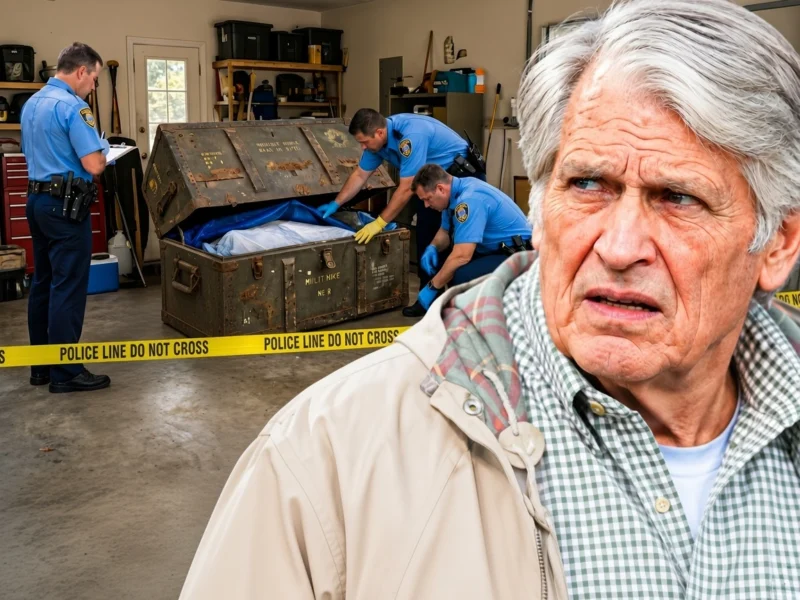
The world photographed everything about Dolly Parton except the one thing that mattered most. But proof of him had been sitting all along in a closet in Nashville, a small, worn trunk from the years he served in the National Guard.
Rebecca Seaver is Dolly’s niece, the director of the Dolly Parton archive, and the museum’s executive director and curator. She told Vogue how she found it.
While going through her aunt’s closet years ago, looking for items to build the archive, she came across the military trunk that had belonged to Carl. She did not open it right away.
In 2024, her archive manager did. Inside, they found what the family now calls a time capsule.
Carl was still alive then. Whether he was ever told what the family had found, no one has said.
There was a photo booth strip that no one outside the family had ever seen. In black and white, the young couple pulled faces at the camera. In one frame, Dolly laughs and squeezes his cheeks. In another, Carl sticks out his tongue.
Seaver said it captured their relationship perfectly, and the goofy side of Carl that so few people ever saw. A man was happily losing his dignity for one person.
And folded among the pictures was something else. Dolly’s wedding dress, the plain white one from May 30, 1966, the one her mother had made, the one Dolly believed she had lost many decades earlier.
There was her veil. There was the Bible she carried down the aisle in place of flowers. And there was a letter from the pastor who married them.
Sit with that for a moment. The dress that Dolly believed was gone, the Bible, the veil, a preacher’s letter, and a strip of photographs, all gathered in one battered trunk that a quiet man from the asphalt business had kept.
How they came to rest there, no one has publicly explained. Nothing I could find says who packed them, or when.
Soon after the discovery, Seaver went to Dolly’s home to show her aunt what she had found. Dolly had not seen the photo strip since the day it was taken.
In her niece’s word, she was “absolutely floored.”
When the shock wore off, Seaver said, Dolly insisted that the dress go on display at the new museum.
She would never see it there. Dolly died on August 25, 2026, before the museum was finished. It opened in late September on the third floor of her Songteller Hotel.
The team built a display case for the dress to resemble the Ringgold chapel where she and Carl were married.
Think about that design choice. On a Memorial Day in 1966, exactly five people stood in that small church: the bride, the groom, her mother, the preacher, and his wife. Nearly 60 years later, any visitor to the museum can walk up to it.
As the museum opened its doors, Vogue shared the photo strip with the world. Fame had given Dolly Parton thousands of photographs. Love had left her one strip, stuck in a trunk in a closet for decades.
Look at what each object carried.
The dress was made by the same hands that sewed the coat of scraps. The Bible echoed a family where a grandfather preached and hymns shook the walls. The pastor’s letter is a piece of that Memorial Day that no one has yet shared with us.
And the photo strip is the one thing in the trunk that shows Carl at play, a quiet man losing every ounce of his dignity in a photo booth for one person.
That was the secret. Not a scandal, and not a hidden fortune. It was a dress her mother sewed, a Bible instead of a bouquet, a preacher’s letter, and a man sticking out his tongue for the girl he loved.
One can only imagine what it was like to see, after so many decades, the faces of two young people who had no idea what was coming. We do not know what Dolly said in that room. We only know the word her niece chose. Floored.
Think about everything a life like hers could have left behind. A fortune near $450 million. A theme park that employs a region. A library that mailed more than 200 million books. A catalog of more than 3,000 songs.
And yet the objects that undid her at the end were these: a dress her mother sewed, a Bible, a pastor’s letter, and a photo strip of a man making a silly face.
That is the verdict this story delivers. Her life did not prove that fame is empty. It proved that love is specific.
It lives in the coat. It lives in the dress. It lives in the hands that stitched them, and in a faded strip of paper that a quiet man kept for decades without ever explaining why.
Even her hometown is gathering the pieces. In late October, Sevierville is launching a walking tour called “In Dolly’s Footsteps,” past the Pines Theater, where she was first paid to sing at 10 years old.
A girl paid for in cornmeal now has a map of her life drawn through the streets of the town where it began.
Carl Dean never needed to be seen loving Dolly Parton. He only needed to be there. And long after the cameras had gone home, a battered trunk held the proof.