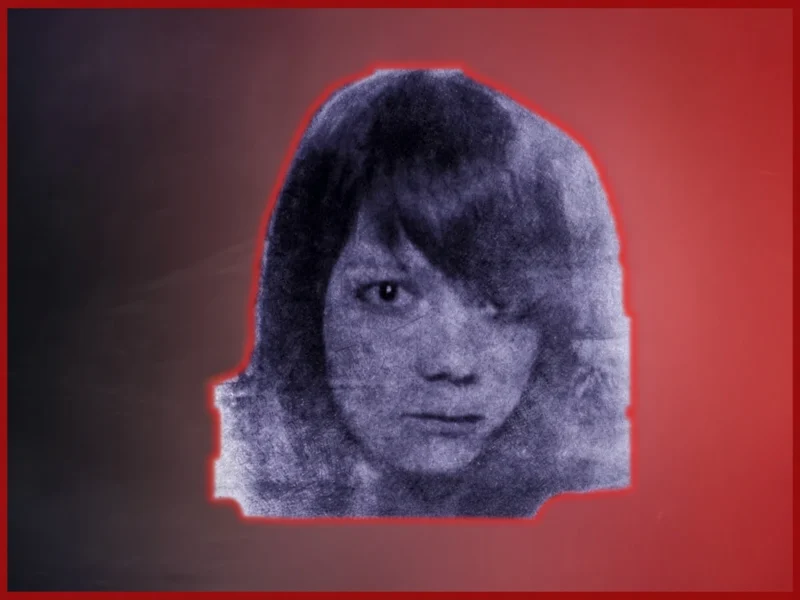
The Chilling Story of Alyssa Bustamante – Teenage Killer Exposed
“Do you swear to tell the truth, the whole truth, and nothing but the truth, so help you God?”
“I do.”
As she sits in court, schoolgirl Alyssa Bustamante is at the eye of a tragic storm.
And as I am walking into the church, I get a call from Elizabeth’s mother.
And she is asking about her daughter, and I said, “Well, I have not seen her. I don’t know anything about it.”
Hours pass. Still no sign of Elizabeth.
Elizabeth Olten is a sweet, shy, nine-year-old girl. She is just all sweetness and light. She is the kind of child that you really like to be around. She is the kind of child that everyone adores.
“Good morning, Alyssa. Could you state your full name for the record?”
“Alyssa Dailynne Bustamante.”
Who was this person that could have possibly abducted this girl? With other children in the neighborhood, were they at risk? Did we have a predator on the loose in this small little town in America?
What made Alyssa Bustamante the teenage killer she became?
I think it was only a matter of time that Alyssa would graduate to homicide, and you can see this because she delighted in inflicting pain on other people.
Alyssa Bustamante was born on January 28th, 1994, in Missouri.
For grandmother Karen, it was love at first sight.
“Well, I was there when she was born, so I got to cut the cord. When she was delivered, her mother was just sixteen. She was the tiniest little baby. So sweet.”
But the tiny baby’s first steps were into a troubled world.
Alyssa Bustamante did not exactly have a storybook childhood. She was born to a teenage mom who had drug problems. Her father and mother both had criminal records. Her dad was actually in prison serving a ten-year sentence for assault, and her mom just continued drug problems. So neither parent was ever really in the picture for Alyssa.
Alyssa had two brothers and a younger half-sister called Emma. Theirs was not a happy family. Both parents were drug users.
Forensic psychologist Dr. Judy Ho has been analyzing the timeline of the life of Alyssa Bustamante.
“When somebody grows up in a family with addiction issues and a lot of instability, they don’t have a safe haven for themselves. They don’t know who they are. They don’t know what’s safe and what’s not. They haven’t been taught boundaries, and possibly not been provided positive models on how to interact with the rest of the world.”
Grandparents Karen and Gary tried to help out where they could, sending groceries and making regular visits.
When she was eight, Alyssa’s mother split with her father and moved to California to be nearer her parents.
“We soon discovered that her mother was a drug addict, and what had been going on in Missouri was not good. The kids were not very well cared for. We tried to help Alyssa’s mother care for the children, but she would get on drugs and go off and disappear, or she would do things. She had a boyfriend that was a drug dealer.”
“There was one particular night my husband had called me to tell me that he went over to see the kids. We had gotten them a little trailer so Michelle could have a little privacy. We were hoping that would help. Anyway, it was a disaster. Beer cans were all over, and she was not—she was there, but I think she was passed out on the bed.”
“Her brothers were like feral children. They wouldn’t sleep in beds. They were very wild. They would punch the wall at three years old. They would punch the wall and make holes in the wall. Three-year-olds, if you can imagine that. And other things like that that showed that they had had no boundaries and had not had any care in their upbringing up to that time.”
Brother Nathaniel has fond memories of his and Alyssa’s early years.
“I remember we used to have a tree house in our old place in California. And we used to just have like a rope and a ladder, but she would take the rope up or the ladder up sometimes and wouldn’t let us climb and get up there until we could, you know, make it up the rope ourselves. But other than that, she seemed like a pretty good sister. She tried to show us the way with some things and help us out. And I never really thought anything bad of her.”
“We had about a year when we were trying to hope that the parents were going to get this together and raise their children. And when we realized it wasn’t going to happen—”
Drugs had taken the parents away from Alyssa Bustamante and her brothers.
In 2001, the loving grandparents knew it was time for an intervention.
“The sheriff’s department there advised us to get custody of the children, and that is when we did. And that was right about the time Alyssa turned eight and her brothers were still three. I really didn’t want to take these children away from their parents. But we did. We had to.”
But I remember we were home-schooled for a few months, and that actually made our family life pretty rough, because just me and my brother being together 24/7 doing school exactly together really kind of led us to getting more fights with each other. And we were kind of sick of each other at that point. And then our grandma decided to put us back in the school, which I think was a really good outlet for both of us.
Gary and Karen found it tough but tried hard to become de facto parents to Alyssa, her two brothers, and her half-sister.
It was Alyssa who proved toughest.
“We would be out like at a store and she would just go down on the ground. Now bear in mind she was eight years old at this time. And she would act out things like a four-year-old would do. Like she was a giraffe or a donkey or whatever, or she would chase in and out of the clothes at the store. And of course people that are around at that time are looking at me like, ‘Aren’t you going to do something about this?'”
“She would never talk about what I guess you call her core issues, because we know that she had experienced some of the mad things before she was seven, before we got her. And she would never talk about it. And in fact, because of that background, she thought all adults were her enemy and therefore couldn’t be confided in.”
“On the one hand, being rescued by other family members might feel very good, but on the other hand, there could be feelings of abandonment. That somehow your parents don’t actually really truly care about you, and that’s why you were sent to live with your grandparents. And there’s going to be a lot of rebelling involved, not understanding exactly why you’re in the situation that you are now and why you’ve been taken away from your parents.”
“And children are very much focused on the reasons for why bad things happen to them, and as children they’re very self-centered in that they always believe that they’re the reason. And so it’s very possible that Alyssa basically bought into her own narrative that, well, I’m basically already a bad child anyway, and I might as well behave like I’m a bad person.”
Karen took Alyssa’s bad behavior badly. She began having panic attacks, so the couple decided to move the family from California to St. Martins, Missouri, and to work a low-level farm caring for horses. An easier life, perhaps.
Soon after, Elizabeth’s estranged mother visited the farm. That did not help.
“I think it was just the abandonment hitting her one more time. She really thought this time her mother was going to get it together. And she abandoned her one more time. She was in her bedroom in bed, and she had the covers over her head, and I could hear her crying. Went in, and I lowered the covers, and we cried together. And for Alyssa, it’s her mother, and she loves her, and she’s left her again. And I think that in her mind it was hopeless, that she wasn’t going to come back, she wasn’t going to get her life together, and she finally had to face that her mother wasn’t coming back. And I guess she decided that it was more than she could handle.”
Shortly after, Alyssa attempted suicide with an overdose of the painkiller Tylenol.
“We called the paramedics, they came, and in this particular case she was a very fortunate girl. They were able to give her the medicine to counter any major organ damage, which is what happens with Tylenol. That’s why they don’t usually make it, especially when she took the whole bottle.”
Despite her age, just twelve, it was felt Alyssa needed pharmaceutical help.
“And that is when we started our time with counselors here. And that is when they first started putting her on Prozac. She went on twenty milligrams at that time when she was twelve, and between twelve and thirteen she became very depressed. She would be so depressed that she didn’t want to get out of bed, and the fact that she had to go to school was something that’s like not worth getting out of bed for. But then she would have other times when she was very alert and active.”
“And once we tried to get help for her, she was diagnosed as being bipolar. And that sort of explained her behavior in a lot of ways, that she was down and up and so on.”
Prozac is one of the most commonly utilized medications, even for teenagers, and generally it is used very effectively and very safely, although there have been black box warnings about Prozac in the past that it might provoke suicidal ideation in people who are already depressed. But very, very rarely do we ever hear that Prozac could actually instigate violent degrading behavior. And that, in combination with the fact that Alyssa clearly had these roots in her behavior at a much younger age before she was even on medication, makes me doubt that Prozac is what’s to blame here.
Karen also discovered that around this time Alyssa had started self-harming.
“She probably had a hundred cuts on each arm, just with a knife. And hundreds and hundreds of cuts. And then she had carved in her arm ‘pain’ and ‘hate,’ because sometimes pain was the only thing that helped her to break through her emotional walls that she had.”
The disaster that would visit Alyssa’s new hometown of St. Martins began on October 21st, 2009.
A neighbor calls Karen. Her nine-year-old daughter, Elizabeth Olten, has not come home.
“I am walking into the church, I get a call from Elizabeth’s mother. And she is asking about her daughter, and I said, ‘Well, I have not seen her. I don’t know anything about it.’ She said, ‘Well, she was with Alyssa, and now I can’t find her, and it’s dark, and she never is out at night.'”
Who was Elizabeth Olten, and what part in her disappearance had Alyssa Bustamante played?
Late afternoon, October 19th, 2009. While Alyssa Bustamante is apparently at school, Elizabeth heads home. She calls at the home of Emma, Alyssa’s half-sister, and the two girls go out to play.
Elizabeth Olten is a sweet, shy, nine-year-old girl. She is just all sweetness and light. She loves kitty cats and the color pink. She is a girly girl. She is the kind of child that you really like to be around. She is the kind of child that everyone adores.
And as far as anyone knew, she was out there in the woods playing when dinnertime came.
Her mother is getting dinner on the table. It is time for everyone to have supper together, and Elizabeth is not there.
“Elizabeth, where are you? Are you home?” And there is no answer. She does not know where the little girl is. And she knows that it is dark outside, so it is weird that she is not home.
Police are alerted and immediately start a search.
Word soon spreads through the tiny town of St. Martins about Elizabeth’s disappearance.
You have a community that came together. It is a town a little bit over a thousand people. You literally had hundreds of people that volunteered for this search. They spread out. They searched woods. It was cold. It was damp. They were worried about the temperatures.
St. Martins is a little town of about a thousand people. It is the kind of town that pretty much everybody knows everybody. So to have a little girl vanish and no one has seen her, it is really bizarre. But it is the kind of thing that gets people’s attention.
As the search widens, officers start to fear the worst.
Was this little girl lost? Who was this person that could have possibly abducted this girl? Were other children in the neighborhood at risk? Did we have a predator on the loose in this small little town in America?
Police soon decide that the predator may have been someone close to home and not fitting the usual profile of a child snatcher.
Investigations 101 would tell you that you have to take a victim and recreate sometimes as much as the twenty-four hours preceding their abduction or when they are missing. What is going on? Who do they know? Who are their friends? And this is what happened in this investigation.
When they started from the point, who last saw little Elizabeth alive, or who was last known to be with her, the name Alyssa Bustamante came up.
Somehow Alyssa was able to talk Elizabeth into going into the woods with her. I mean, she trusted her. She was her friend’s big sister, and she had known her for a long time. So she goes into the woods with Alyssa.
The Olten family lived just a few doors from Alyssa. Alyssa spent a lot of time in the woods near both homes. She got to know them well.
“I guess you would call her a tomboy. She liked playing outside. She liked climbing trees, and we had quite a few trees around and she climbed them all. She enjoyed the snow when it snowed here, which she did not get in California, but she was outside in the winter as well as in the summer here. She liked to go out in the woods and explore and do all kinds of things.”
Knowing that Elizabeth had been with Alyssa’s sister, Elizabeth’s brother and mother call at the Bustamante house asking if they knew anything about Elizabeth’s movements.
“And why are you asking us? And I said, ‘Well, because she left and was with Alyssa.’ And I was like, ‘Whoa, we didn’t know that.’ So we asked Alyssa, and Alyssa kind of brushed it off and said, ‘Well, yeah, she was, but then she left and went home, or she thought she went home.’ And Alyssa was going to a church function at that time. So Karen took Alyssa to the church function, and Elizabeth Olten’s mother then got concerned and was asking us what happened to Elizabeth.”
There is panic between mom and brother for sure. And like, even though those two were like, what could have happened to her? Why wouldn’t she be home by now?
Officers talked to Alyssa’s half-sister Emma. So they had to have a special person come to talk to her, a child counselor, to find out what happened. And then that is when we found out that Emma did go over there and knocked on the door and asked if Elizabeth could come out and play.
So we found that out Wednesday night. But Emma said that they went out, they played. She said they stayed here on the property and they played on the road.
A couple of hours later, about 7:30 to 8:00, the sheriff was here and started looking around for Elizabeth and started asking questions of our family.
We tried to help as best we could, because we still were wondering what the heck is going on here. We never saw her.
Lunchtime the next day and Elizabeth was still missing. Officers decide to do what is known as a ping search for Elizabeth’s mobile phone, where data is collected and used to zero in on the location of the phone.
The search shows that Elizabeth’s mobile is somewhere in the sixty acres of woodland near her house.
It was the signal. As long as that cell phone was on, it was like a tracking device. Much like the old childhood tales of Hansel and Gretel leaving a trail. Was this her little trail?
And so the search teams were able to gather, and they started on a starting point, where was this signal coming from? And so very judiciously, piece by piece, acre by acre, they searched the woods, they searched the fields, following this signal.
But you see, that signal is only good as long as that phone is on. And they ran out of time. The battery died.
Then data comes back about Elizabeth’s phone calls. Officers discover that she had had an unexpected call on the way home from Alyssa Bustamante.
Elizabeth could not know the danger that she was in from a troubled teenager whose short life had made her ready for murder.
So Elizabeth leaves, is on her way home, when her cell phone rings. She looks and she sees it is Alyssa calling. Why is Alyssa calling me? Why is this older sister calling me? And she is kind of a little flattered by that. And so she takes the phone call, and Alyssa is asking Elizabeth to come back to the house.
Now we do not know what she tells her to get her to go back, because it is time for Elizabeth to go home, but she does. Elizabeth goes back.
Elizabeth is nine. Alyssa is a teenager. Paying a nine-year-old girl attention, Elizabeth wants to please Alyssa. And all Alyssa has to do is call her over. And so Elizabeth goes with Alyssa. Elizabeth completely trusts Alyssa.
Officers discover from her family that Alyssa had not made it to school that day.
“Call the woman that drives her to school, and she said, ‘Well, yeah, I dropped her off at the school.’ Well, she never got to the school. And so I went up to the school, we could not find her. And then I guess a little bit later she got on the home bus, got on the bus and came home.”
But what she was doing instead of school was macabre.
You get a day off, what are you going to do? Most kids probably hang out with your friends, go to the movies, maybe hang out at the mall. Not Alyssa. Instead, Alyssa takes a shovel, and she goes into the woods near her home, and she digs. And she digs. And she digs. She digs two holes in the ground shaped like graves.
Who does this?
Officers decide to search Alyssa’s bedroom.
“They were focusing upstairs on Alyssa’s room. And I mean, looking back, I don’t know why I didn’t catch something. But we really didn’t. I didn’t catch a thing. But they were taking pictures, and that is probably when they found her diary. But they didn’t say anything.”
They take Alyssa’s diary away to be further examined. They also start to look at Alyssa’s social media accounts.
Alyssa was really active online. She spent a lot of time posting. Her Facebook page, you would see pictures of her selfies with her lipstick, red lipstick just smeared across her face to make it look like blood. Dramatic black kabuki-style makeup. Then she would grit her teeth and try to look scary, or she would pout and try to look vampy, like some kind of a sexpot.
She really liked to be noticed, and she wanted to be different, and she really prided herself in this bad girl image that she had.
But probably the most disturbing stuff she had online—on her YouTube account, she had listed her hobbies as killing people and cutting.
One video in particular causes serious concern. In one case, she posted a video where she is trying to lure her little brothers to touch this electric fence and get shocked. She actually does it herself to lure them. So she goes up to it and she touches the fence and she feels the pain of the shock. And she is trying to get her little brothers to do that. And underneath you see the words that she has written. She says, “This is the fun part. I am about to hurt my little brothers.”
This is not just the kind of thing where you are teasing your little brothers. She is actually taking joy in inflicting pain on these little kids.
I think it was only a matter of time that Alyssa would graduate to homicide, and you can see this because she delighted in inflicting pain on other people.
The significance of the video was lost on the young Nathaniel.
“I knew about the electric fence video, but I guess as a kid we didn’t really think anything about it, because we didn’t know anything about YouTube or much then. And so I guess we just never realized that she posted that.”
Nathaniel believes he and his brother were playing along and gave as good as they got. But homicide detective Brian Harris does not see the clip that way.
“A very smart, intelligent young lady, but at the same time with a very dark side, who enjoys inflicting pain, who relishes and posted online how she enjoyed seeing her two little brothers being electrified. She tricked them into touching an electrical fence, and she found pleasure and joy out of that. So the personality of a very dark soul starts to emerge.”
And the focus of the investigation zeros in on none other than Alyssa Bustamante.
With the phone call established from Alyssa to Elizabeth, sightings of the two together, and her absence from school that day, Alyssa is now officially a person of interest to the investigation.
Detectives ask Alyssa and her grandparents in for an interview.
“At that point I was still one hundred percent sure that Alyssa had nothing to do with anything. I mean, if somebody had asked me, it was one hundred percent sure I knew that she was not involved in that.”
“Alyssa and I went in, and we were being questioned by the sergeant, as well as they had a juvenile officer there that was asking questions about the incident, about what she was doing, where did you go, and what happened. And for about the first twenty minutes I still was in the dark.”
“And so finally he started asking her more pointed questions and pretty much putting things—I remember thinking, ‘Wow, why is he saying this stuff?’ And he made a comment about how, ‘I know you did this because you wanted to do this, and I know you wanted to know what it felt like.'”
The officer produces the diary that was confiscated from Alyssa’s room. Told her that they had found her diary, in which she mentions what she had done.
Detectives confront Alyssa Bustamante with pages which show hastily scored-out lines, but two words can be seen. Slit. Throat.
The day after she kills Elizabeth, she is writing in her journal, and she writes, “I just effing killed someone. I slit their throat, stabbed them, and watched them die. Oh my gosh. It made me so nervous at first, but once you get over that—oh my god, I can’t believe I’m doing this—it actually becomes really enjoyable. I can’t believe it. It was amazing. Okay, got to go to church now. LOL.”
That is what she wrote.
Alyssa Bustamante began to reveal the truth. It had been an accident, she told detectives. Elizabeth had fallen in the woods and banged her head.
“We will find the body, won’t we, Alyssa? Will we find her throat has been cut?”
“Yes,” says Alyssa.
Her grandmother all but collapsed.
“That is when I realized, ‘Oh my gosh. Oh my gosh.’ And I just had a breakdown right there in the middle of this whole situation, and I turned just to get out. I just could not breathe. I could not focus. I could not function. And what should have happened is it should have stopped right there, because I had to leave. I was not cognitive at that point. But it didn’t stop. They let me out and they continued to talk to her and interrogate her, whatever words you want to use.”
Alyssa agreed to take officers into the woods where she had been on the day of the disappearance, digging two grave-sized holes.
Buried in one of the makeshift graves, officers find the body of nine-year-old Elizabeth Olten.
Detectives then get the complete picture of what Alyssa had done.
She brings Elizabeth to an isolated area. God only knows what was going through Elizabeth’s mind at first, but then suddenly a hit, a punch, a slap, punch after punch.
Basically Alyssa delighted in playing God, and you can understand this when you know more about the method of killing that she chose. Elizabeth, she must have screamed out. Now she is making noise.
She chose extremely close-up, messy methods. Again, very atypical for a female, and even more atypical for a young female like Alyssa was, because she was just a teenager.
How do you stop somebody from screaming after being beat and beat? You choke them. The most personal way somebody can kill somebody is by strangulation. It is up close. It is personal. And the fact that she did not do it at a distance, she did not use poison, the types of things that we know female murderers to use, but in fact she used a knife and then she strangled them on top of using the knife.
And you are squeezing the life out of somebody, and her hands are around little Elizabeth’s neck, and Elizabeth, I can only imagine, is fighting, fighting for her life.
And then not only does Alyssa strangle Elizabeth, it is not good enough for her. She wants to see and step back and take a look at her work. And she takes out a knife and slashes poor Elizabeth’s body. And then to make sure that the job is complete on this lifeless body, she takes the knife and slices her from ear to ear.
That is indicative that Alyssa was probably going to graduate to this point at some point during her life.
She then went home, wrote it up in the diary, and referred to the fact that she was now headed for church.
Alyssa is somebody that is very good at compartmentalization. On the one hand, she can play the role of a good girl going to church and follow general rules of the household so that she did not get kicked out by her grandparents, who definitely seem like they were trying to instill good values in her. But on the other hand, she had this whole other side. Not that she was trying to hide that side even. It is just the idea that somebody like Alyssa, it did not really feel like cognitive dissonance for her.
For another human that does not have the ideas and mindset of Alyssa, this would greatly disturb them, to be this horrible person who is violent on the one hand and then going to church and singing in the choir, for example, on the other. But for Alyssa, it did not really bother her, and that shows us that she is not somebody who really has a strong sense of identity.
Alyssa Bustamante is charged with the murder of Elizabeth Olten.
Despite her confession, Alyssa enters a plea of not guilty.
How do you plead not guilty when you have just told police you killed this little girl, and then you have actually brought them to the grave where you dumped her body?
The stress of being in custody causes Alyssa to fall into self-destructive habits. As she is being held in jail awaiting her trial, she starts her old tricks again. She starts cutting. She does not have any real tools to do it with, but she uses her fingernails and she starts to harm herself by cutting. And she is showing clear signs of anxiety and severe depression.
Alyssa Bustamante is put on suicide watch and given emergency psychiatric help.
There were still ways Alyssa could avoid a life sentence for the murder of Elizabeth Olten.
Fifteen at the time of the offense, Alyssa was still legally a minor. Despite that, her judge decided to hear her case as an adult.
So there has already been a judge that has declared that Alyssa Bustamante, although fifteen, very well knew the consequences of her actions, and therefore she was tried as an adult.
It was time to put the case of the death of nine-year-old Elizabeth Olten to the people of Missouri. They had to decide if Alyssa Bustamante was mad or bad, ruined by a terrible life or simply made for murder.
She took the decision from their hands. So much evidence against Alyssa, and she has pled not guilty. But the night before the trial she changes her mind. And she enters a plea of guilty. And in open court it is the first time that Alyssa has ever shown any emotion. And she weeps. And she cries.
Why does she plead guilty? Because she gets a reduced sentence. Her charge now goes from first-degree murder to second-degree murder.
So is Alyssa pleading guilty because she wants to take responsibility for it? Or is Alyssa pleading guilty because it is about Alyssa? She is pleading guilty because she does not want to go to prison for the rest of her life. And maybe if she can get a reduced charge, she will not have to. It is always all about Alyssa. It is never about Elizabeth.
Alyssa’s hearing began on January 30th, 2012. She pleaded guilty to second-degree murder and armed criminal action.
As part of a plea deal, she had to describe to the court just what she had done to Elizabeth.
The courtroom is packed with people. Everyone has been watching this case. And they know what Alyssa has been charged with. They know what she did. But this is the first time they are going to hear Alyssa actually say out loud what it is that she did. And as she starts talking about what she did, how she lures this sweet little girl into the woods, how she beats her brutally, and how she slices her throat, there is like a gasp over the courtroom. It is literally breathtaking. They cannot believe this fifteen-year-old girl, what she is saying she did. It is coming to life in their eyes. Just the horror of it all. And Alyssa is as calm as a cucumber.
The reaction in the courtroom is pure shock and silence, until one lone voice is heard. And that voice, in anger and frustration out of this plea deal, cries out and declares that Alyssa Bustamante should spend as much time in prison as Elizabeth has to for eternity.
Alyssa’s defense began by focusing on her troubled background.
If I am a defense attorney having to defend somebody like Alyssa Bustamante, clearly easily I am going to focus in on her childhood. Her dad has been in prison, her mom was addicted to drugs, she lived with her grandparents, her grandparents clearly incapable of raising this emotionally disturbed child. I would really focus in on Alyssa’s mental capabilities.
The defense case was simple. How could a child for whom no one took responsibility in her early years be held responsible for murder?
When you look at children who have grown up with parents who have been criminals themselves, and in fact maybe the values of criminality have been rewarded in this family system, it is no wonder that Alyssa would grow up to basically start to dabble more and more in crimes as she became a child, a teenager, and so forth. And the reason is you have not been given a template for acting any different. And children soak up knowledge like no other in their early years, because that is when you are really learning about the world and how it works. And seeing two parents who have been involved in crime makes you feel like maybe that is just the way the world works, and that it is a natural path for you as well.
They talk about how she is just severely depressed and psychologically damaged. She has borderline personality disorder, which is usually characterized by lack of impulse control for anger and outbursts and dark depression. This is a really disturbed little girl. This was not Alyssa who did this. This was Alyssa never would have done this if she had been in her right mind.
The challenge for a defense attorney, if they are going to claim that their client is insane, is to show that at the time of the offense their client did not know that what they were doing was wrong. Well, that gets totally blown up by the discovery by the detectives when they discover Alyssa’s own journal. And it is her own words that totally destroy that defense. Because in her journal, she describes very nonchalantly how she killed somebody, how she strangled them, how she beat them, and ultimately slit their throat.
One of those tasked with finding the body of Elizabeth spoke candidly to the jury. This Missouri State Highway Patrolman summed it up pretty simply. He said, “She did it for the thrill. She did it because she wanted to know what it felt like to kill someone.”
Before being sentenced, Alyssa read a prepared statement to the court.
“I know words can never be enough, and they can never adequately describe how horribly I feel for all of this. If I could give my life to get her back, I would. I am sorry.”
The only time Alyssa showed any kind of emotion is after she got up and professed what a horrible thing she did. She sits down, and her own grandparents, the two constants in her life, the two people who tried to be the anchors for her and give her some kind of stability, get up from the courtroom and they leave. It is at that moment that Alyssa realizes she is truly alone. Now she starts tearing. She starts to cry.
We will never know whether those tears were for Elizabeth or whether they were tears for herself.
Alyssa Bustamante was sentenced in 2009 to thirty years in prison for the murder charge without a chance of parole, and a further thirty years for armed criminal action. In all, sixty years behind bars.
Just a few weeks after Alyssa Bustamante’s conviction, the US Supreme Court ruled that juveniles cannot face automatic life sentences without the possibility of parole.
In 2015, Alyssa launched an appeal against her sentence. The now twenty-year-old Alyssa claimed that she would not have accepted her plea deal had she known that the high court would remove mandatory sentences for juveniles with a murder conviction.
Basically, the main reason for accepting the offer was to avoid the absolute certainty of life without parole. If there was another option, then there would have been no reason to have accepted that offer.
Alyssa’s appeal failed.
In emails from her cell sent to this program, Alyssa Bustamante has spoken of her need to have hope that one day she might be released from prison. Otherwise, she told us, she would kill herself.
Alyssa’s grandparents still drive the seventy miles every month to visit the now twenty-five-year-old Alyssa in prison. But every day they continue to struggle to understand the terrible crime she committed.
“We are coming up on our ten-year anniversary, if you will. It took me almost five really to put my life back together. It was very tough, very difficult for all of us. Because I just never ever in my wildest dreams imagined that Alyssa would have the capability to do what she did that night. Never. Never in my wildest dreams.”
“So I know that on the outside people definitely see her as a villain, and like you kind of see her like that a little bit on the inside of the family, but she is still family. And with the things that happened to her and stuff, it is hard to put all the blame on her and not other circumstances. She is not bad. It is just circumstances made her do something bad.”
Not a position taken by some of those familiar with this case.
Dr. Judy Ho thinks Alyssa is one of those killers whose murderous work never ends.
“They get such a rush of adrenaline from their first kill that the next time they have to make it even more bloody and even more violent so they can have that same sense of power and dominance again. So if Alyssa wasn’t caught, she would have very much likely killed again, and in even more horrific ways. And it was probably just a matter of time before she killed her own brothers, which many believe those two graves were actually originally designed for.”
“With Alyssa and murder, she had her first taste of blood, true blood. No doubt in my mind she would have wanted it again, and then again, and think of new and different ways to inflict pain onto people.”
The seeds had been sown in the formative years of a girl whose father was in prison and whose mother had become addicted to drugs.
Alyssa Bustamante had found some dark places, which meant she was made for murder.
“I do not think that Alyssa is somebody who has truly repented, and I think that if she was released she will likely do something violent again, unless there has been some really strong efforts at rehabilitation. And so far we have not heard of something like that. And I am not really sure how sorry she really is about what she did. And if she is not sorry and she does not really feel like she is to blame, then there is no reason for her to change her ways.”
The two graves had been dug before Elizabeth ever walked into those woods, the diary had been written the same afternoon with LOL at the end, and the electric fence video had been posted months before anyone died.
Alyssa Bustamante is serving sixty years. Elizabeth Olten would be in her late twenties now. And the woods near St. Martins are still there, quiet and green, holding a hole in the ground that a nine-year-old never came out of.









