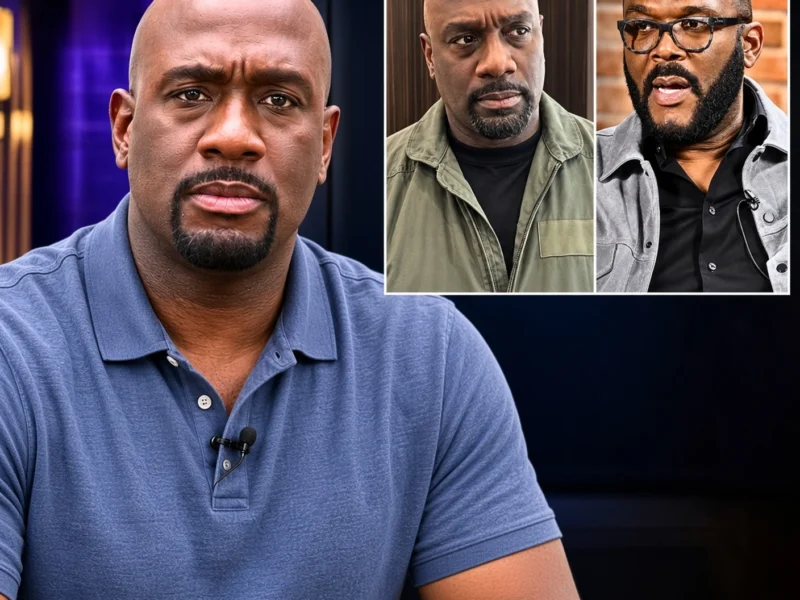
Richard T Jones FINALLY Admits What We Always Suspected!
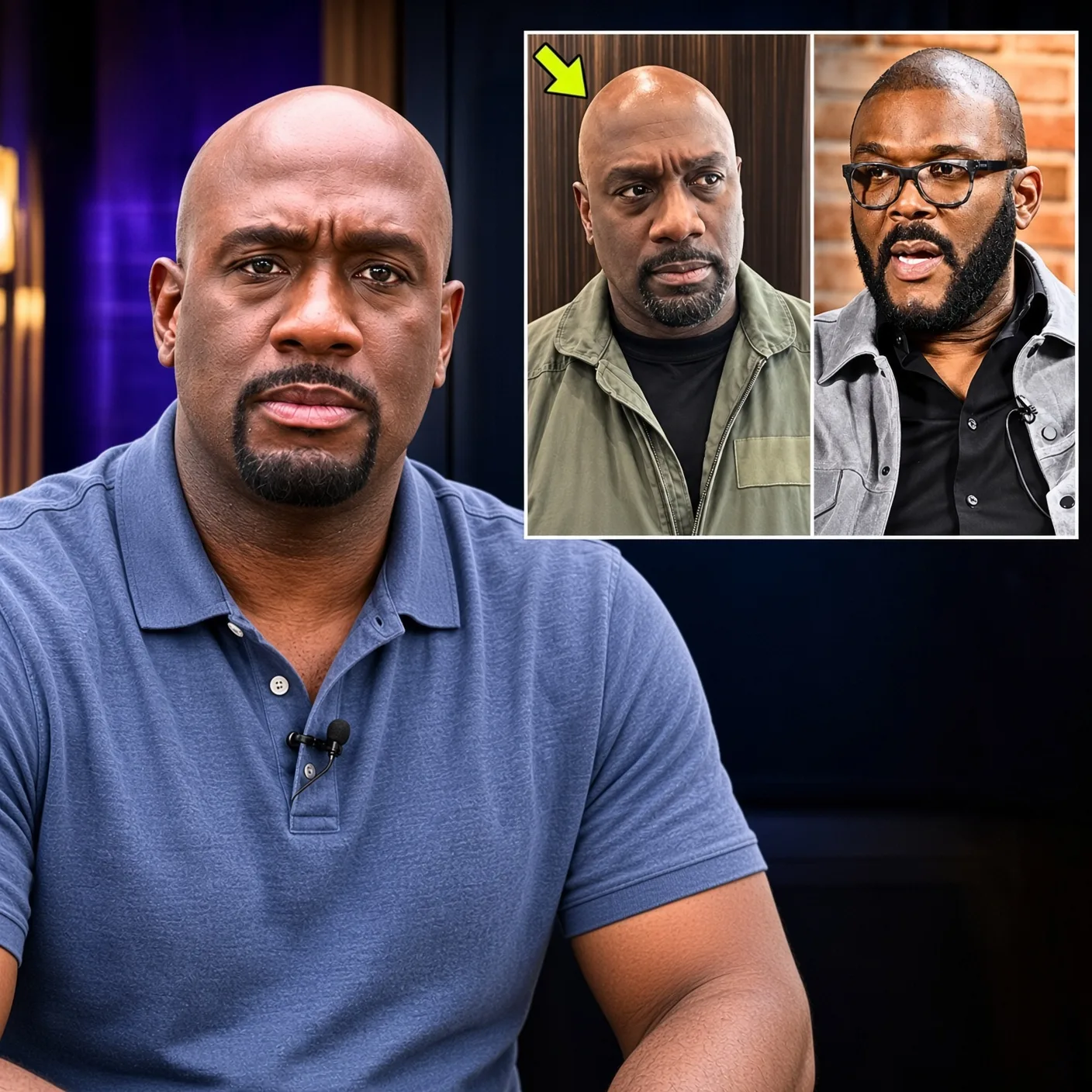
“Come on, girl. We got people waiting. Chop chop.”
“What?”
“Shut up, Slim.”
“Why I got to shut up?”
“‘Cause you probably said some to him to get him not to do this.”
“Y’all perfect for each other. I’m telling you. ‘Cause you’re both nuts.”
“Since yes, I have a daughter. And what I pray about day in and day out is how to prove to her that she has every right to stand up and be counted as a human being.”
“I was like—”
“I slept. Okay.”
“Um, Mike, have you called Sheila to make sure she’s okay?”
“No.”
“What you got? What you got? Stop.”
“That’s the dumbest thing I’ve ever heard. Marcus, do not tell this woman.”
“He’s an idiot. That’s why he is the idiot. Why the hell are you come up here to be just be an idiot?”
“My twelve on his hand.”
“How y’all doing?”
“What’s happening?”
“What up, Mike?”
“Hey, how you?”
“Damn, I really thought he could do it.”
“Damn.”
“Driver in custody. Bren, I take back every negative thing I’ve ever said about you.”
“What? You said negative things about me.”
“Make sure you drink the whole thing down.”
“A woman. I’m a grown ass man. I don’t need a juice box.”
“Wa.”
“There’s an abusive guy in every man ’cause we were taught to see women a certain way, which was a lie. I knew people who thought like that growing up. Not abusive in the way where they talking about their women, but they looked at their women a certain way. It’s like the air gets sucked out the room for a little bit and they were like, ‘Huh?’ Everybody thinks I’m joking at first ’cause I joke a lot. Um, but when I tell them I was like, ‘No, I was born in Japan. I’m Japanese.’ And they were like, ‘What?’ They were like, ‘Yeah, I was born in Kobe.’ And they were like, ‘Kobe?’ And I said, ‘Okay.’ And then I talk a little bit. I can’t speak Japanese. But when I started talking about Japan a little bit, they’re like, ‘Oh, really?’ I said, ‘Yeah, Mike got a passport, the whole nine. Everything says I’m from Japan.'”
Mike was like crucified.
I went to a Jill Scott concert.
I went to Jill’s concert.
She asked me to come and pray for the band and everything.
Literally every woman that was like, “How you going to be here with this?”
Like I was there with my wife.
I’m getting like smacked in the chest.
“Oh god. I’m like, ‘Are you kidding me? Are you kidding me right now?'”
Have you ever turned down the role that would define your entire career three times, taking it only because of a three-minute prayer, and then spent the next decade being physically assaulted by strangers in grocery store aisles?
“Y’all talking about me? You put my secret out there. Let’s put everybody’s secret on the table, shall we? Dan.”
January 16th, 1972.
In Kobe, Japan, a baby boy is born to a professional baseball player chasing home runs across the Pacific.
“I moved back here when I was four years old. But living in Japan was just knowing it as a child. It was quite a different experience ’cause I really didn’t know English. I actually had to learn English ’cause I had Japanese nannies. My dad played baseball in Japan. So when we came out here, when we came to California, it was a different thing. So everybody started speaking English. I didn’t know. I got scared. I would cry. I sat in the back of the class and it’s funny ’cause the little black kid in the back of the class didn’t speak—yeah, speaks Japanese. Yeah. Exactly.”
Thirty-five years later, that same boy, now a veteran actor with a hundred credits to his name, becomes the face of marital toxicity in Tyler Perry’s runaway box office phenomenon.
“We all know you know about cooking, baby.”
“You know what this mother—you know what? You got one more time to say something to her, Mike.”
“What is wrong with you, Terry? Please prescribe her some value.”
“You just such a—”
And what he said about that moment, about what it actually felt like to watch his own life change in real time, is where this story begins.
“It’s one of those roles I actually turned it down three times. I really didn’t want to play that guy. I really didn’t want to play that guy.”
In the summer of 2007, Tyler Perry was casting the screen adaptation of his hit stage play, Why Did I Get Married?
He wanted Richard T. Jones for the role of Mike, the insecure, wandering husband who serves as the film’s prime antagonist.
“Mike, are you hitting that?”
“No. I played the fifth. I say nothing.”
“And you bring up—oh—it was great working with Malik Yoba and Richard T. ’cause, you know, both of them are fantastic at what they do. And I knew that it’s always easier to direct people who know what they’re going to do, who know what they’re going to bring. And I could always say, ‘No, dial this back or pull this up.’ But it was great working with them.”
There was just one issue.
Jones didn’t want to play him.
“I play Mike. I played the antagonist. I guess I’m—he’s a man who’s misunderstood.”
He turned the script down three separate times.
He looked at the character and saw a walking landmine.
But looking back on the role years later, he offered a brutally honest assessment of what he thought he was stepping into and what scared him about it.
“There’s an abusive guy in every man ’cause we were taught to see women a certain way, which was a lie. I knew people who thought like that growing up. Not abusive in the way where they talking about their women, but they looked at their women a certain way.”
“And when you’re with the fellas, you be like, ‘Oh yeah, well that girl blah blah blah.'”
He didn’t want to be the guy America loved to hate.
So facing a final deadline from his representation, he did what he always did when a major pivot stood in his path.
He stopped.
He prayed.
And what he asked for and what he promised in exchange is the kind of thing that sounds like a man negotiating with the universe.
“It was one of those things where I prayed to God and said, ‘Look here, God, if you really want me to do this thing, I need three things. This, this, and this.’ Not within three minutes, my agent calls and said, ‘Okay, this is their last offer. They’re going to offer you this, this, and this to the tee.'”
The prayer was answered down to the last decimal.
He accepted the part, walked onto the set, and immediately began a psychological warfare campaign against his own character.
Every single night, after a brutal day of shouting, gaslighting, and tearing down Jill Scott’s character on screen, Jones had to perform a ritual that his co-star eventually had to intervene and stop.
“I literally watched him off every single day. So I would apologize after every take with Jill. Like, so much so, she was like, ‘Look, stop.’ It was so not me. I didn’t want people to even think it was me.”
It didn’t matter.
The movie dropped, smashed box office records, and changed the trajectory of his public life forever.
“Richard T. Jones is literally one of the nicest people on the planet. That poor man—”
“And so funny and so cool—”
“‘Cause he was abusive. He was brutal. He was a horrible human being.”
“He was horrible. So mean.”
“I would roll my eyes on him today if I saw him in the street.”
“Oh, I bite him.”
“How dare he do that?”
“I bite him and hug him. You do?”
“This is the sweetest.”
“How dare he? But that’s—that’s acting. Yeah. There people will still, you know, like, ‘Oh, Jill, you let that guy treat you like that.’ No, no, no. That was acting. And it was written.”
To understand how Richard T. Jones learned to survive Hollywood’s endless cycles of rejection, you have to go back to a maternity ward in Japan.
When people ask him where he’s from, he loves watching the room’s reaction.
And the way he tells that story, the pause, the delivery, the beat before the punchline, is a reminder that this man has been performing his whole life.
“It’s like the air gets sucked out the room for a little bit and they’re like, ‘Huh?’ Everybody thinks I’m joking at first ’cause I joke a lot. Um, but when I tell them it’s like, ‘No, I was born in Japan. I’m Japanese.’ And they were like, ‘What?’ They were like, ‘Yeah, I was born in Kobe.’ And they were like, ‘Kobe?’ And I said, ‘Okay.’ I talk a little bit. I can’t speak Japanese. But when I start talking about Japan a little bit, they’re like, ‘Oh, really?’ Then I say, ‘Hey, I got a passport, the whole nine. Everything says I’m from Japan.'”
He was born in Kobe in January 1972 because his father, Clarence Woodro Jones, was playing baseball for the Nankai Hawks.
Two years later, his father blasted thirty-eight home runs to become the first non-Japanese player to ever win a Pacific League home run title, eventually finishing his career with over two hundred home runs overseas before returning to the United States to coach the Atlanta Braves to a World Series ring in 1995.
But the household wasn’t a pristine athletic dynasty.
When Richard was four or five years old, his parents divorced.
His father remained in his life, but he cast a long, intimidating shadow.
Years later, Jones reflected on the man who raised him with the transparency that most public figures never allow themselves.
“Life is experience. There’s an experience in my life that really changed my life. A conversation I had with my father. Got divorced when I was about four or five. He was a part of my life, but not really a big part of my life for a long, long time of my life.”
What he said and how directly he said it lands differently once you understand how much of his acting career was shaped by what he was carrying.
“I always talked to my father, but you know, we just didn’t have a good relationship, put it that way. And I didn’t understand him. And frankly, I didn’t want to understand him at the time. I kind of feared him a little bit. Not because he was a violent man, just because there was an anger behind him, behind his eyes.”
That fear persisted until a single watershed conversation in his early adulthood completely rewired how he viewed his father and, by extension, himself.
What changed in that conversation and how quickly it happened is one of the most quietly powerful things he has ever said on camera.
“Hey, when I was eighteen years old, I remember this very vividly. He picked me up from college ’cause I went to college not too far from him, but still never went to see him. But this particular time, he picked me up and we had a nice long talk just about his life, his relationship with my mom, how he viewed his relationship with us. And I tell you, after hearing his story, it changed everything I saw in my father. Made me honor and respect him very differently. And it changed everything about my life in the simple fact that it’s not that I pursued different things in my life. It was just that because I saw him differently, I thought of myself differently. Everything I pursued after that, I pursued it differently.”
He took that newly found understanding and applied it directly to a craft he never actually planned on pursuing.
At Tuskegee University, Richard T. Jones was a dedicated pre-law student, convinced his future belonged in a courtroom.
Then a college professor intervened with a unique brand of academic blackmail.
What that professor said and how little wiggle room he left is the kind of moment that sounds like it was scripted.
“We—what theater? And they’re like, ‘Uh, what are you talking about? We have a theater on campus.’ ‘Cause I was like, ‘We do.’ I mean, because it was on the other side of campus and I was on the party side of campus.”
He was forced onto the stage for a production of A Raisin in the Sun.
Standing under the lights, the entire trajectory of his life shifted.
He later noted that he suddenly saw a vision of his future.
He didn’t want to be a lawyer.
He wanted to play one.
He packed his bags, moved to Atlanta, where his father was coaching, and started cutting his teeth in local theater.
When he told his mother his grand plan to drop law for acting, her reaction was less than cinematic.
“Came back home. My mom cried. She was like, ‘You’re going to be on my couch for the rest of your life.'”
“So she didn’t really believe in you at that time.”
“Oh, no. She was crying. My dad was like, ‘Look, man. Be like Burt Reynolds.'”
“He believed in you. He seen more.”
“No, no, he believed like he said, ‘Be like Burt Reynolds, like play sports, and then when you play sports, it’ll lead to acting.'”
When people asked him what his backup plan was, his answer was the kind of thing that sounds reckless until it works.
And then came the kind of Hollywood accident that sounds like bad fiction.
In 1993, Jones landed a background extra gig with zero lines on the Tina Turner biopic, What’s Love Got to Do with It?
“What happened? Who did this to you, Junior? Your father. You freaked out and kicked me out the house.”
On the morning of the shoot, his car broke down.
Desperate to make call time, he asked a fellow young actor for a ride to the set.
When they arrived, director Brian Gibson looked at the towering height of the actors, pulled Richard out of the crowd, gave him a script, and suddenly recast him as Ike Turner Jr., plucking him from total obscurity and putting him right into two major scenes.
“I want you to stay with me.”
“Well, some of you should know. I mean, he’s been saying crazy stuff. I mean, anybody mention you on the show at the Ritz, you just go nuts. You go nuts.”
There was just one catastrophic problem.
The role had originally belonged to the very same kid who had just driven him to work.
The panic that set in and how Jones describes what was running through his head in that exact moment is the kind of thing you have to hear directly.
“I just happened to be the tallest of all the kids. And he said, ‘Well, that doesn’t look right ’cause he’s the tallest.’ So he called me in privately and he said, ‘Here, read these lines.’ And I read them. He said, ‘Ah, you’re fantastic.’ Boom. And he switched roles there on the set. And I went from someone who had no lines to two big scenes in the movie.”
The young actor wasn’t bitter.
He was studying to be a pastor.
He took a breath, prayed about it, and what he said back to Jones in that moment is the line that echoes through the rest of this entire story.
“You know, switched our roles and now he goes from having scenes to not having a scene, which they did switch something up, so they added a scene for him, you know, thank God. But what was the most lovely thing about it was that this young man was studying to be a pastor at the time.”
Jones admitted he wasn’t walking a spiritual path at the time, caring only about getting home, but the prediction came true instantly.
Penny Marshall saw his work, loved the film, and did something that almost never happens at that level of Hollywood.
“That was probably the best moment of my career, was the beginning. And as it progresses, it’s just getting better and better and better and better. Now, like I will always say, it’s just like I understand that I’m a blessed, blessed man, and because of it, I just have to give all the praise and honor to God in every way I can.”
Doors blew open and he quickly learned the brutal math of the business from some of the heaviest hitters in the industry.
Around the age of twenty-one, Jones auditioned for a major role and lost out.
Sitting at a nearby table, brooding over the rejection, he experienced something that rarely happens in Hollywood.
Denzel Washington crossed the entire room, walked straight up to him, and what he said is the kind of advice that only lands when it comes from someone who has already been exactly where you are.
“‘Cause I actually auditioned for this movie, but like I said, it’s one of those reasons I didn’t get it ’cause I was too young. At the time I was like twenty-one, Denzel was in his thirties or something like that. And he was just like, ‘You’re too young. The character is supposed to be short. I was tall.’ You know what I’m saying? So it just didn’t fit.”
He took that lesson and combined it with the mental framework of his father’s profession.
The way he described looking at acting through the lens of a batter’s box and what it meant for every decision he made about which roles to take and which to leave reframes his entire career in about thirty seconds.
He didn’t chase every flashy lead role that crossed his desk.
When he read the script for the 1999 cult classic The Wood, he didn’t wait for an invitation.
What he did instead and how he forced open that particular door is exactly the kind of move the industry never expects.
“Y’all perfect for each other. I’m telling you ’cause you’re both nuts.”
Over the next three decades, that hyper-focused discipline quietly turned him into one of the most reliable utility players in television history.
“Oh. Oh, there you go. Put another one. Oh, thank God.”
“Oh, how’d it go? How it go, bro?”
“Pickle do.”
Racking up over a hundred credits across Judging Amy—
“Guy named Tracy called. He pick you up at seven and wear a sweater.”
“Thank you.”
—Terminator: The Sarah Connor Chronicles.
“Who do you think I am? Coming here asking about Sarah Connor.”
“Yes.”
“You’re from the future. One of them.”
“Oh, come on.”
Hawaii Five-0.
“What do you think you’re doing? This is the governor’s residence. Who are you and what are you doing here? Lieutenant Governor Denny.”
And Godzilla.
“They’ve already been briefed. We have no extraction plan. If you don’t walk out, you don’t come back at all.”
“Sir, I’ll do whatever it takes.”
Yet, through it all, he drew a hard boundary around his personal life.
When asked why he never chased runaway leading-man stardom at all costs, what he said about where his priorities actually sat tells you exactly who this man is when the cameras aren’t rolling.
“I want to spend three months—I want to spend six months doing a show with people I enjoy.”
“Why you want to be able to—why would you want to be miserable? I don’t got time for it.”
“No. Life’s too short. I got two—I got a wife. I got too many kids that—you know what I’m saying? I got four kids that, you know, you want to spend time with, and I’m not going to miss out on life being miserable just because I’m on TV. Are you—you know what I’m saying?”
The backlash from Why Did I Get Married was not theoretical.
People stopped him in public.
Strangers in grocery store aisles confronted him.
The character of Mike, manipulative, insecure, verbally abusive, had lodged itself so completely in the audience’s emotional memory that the line between the actor and the role collapsed in real time.
What he said about navigating that and the specific experience of being recognized not as himself, but as someone people genuinely despised is the kind of thing that makes you rethink how we consume fiction.
And it wasn’t just strangers.
The online commentary that emerged, particularly from women who had experienced relationships that mirrored Mike’s behavior, created a secondary wave of public scrutiny that followed him for years.
He addressed what that felt like and what it meant to be the face of something that real people were working through in their own lives.
His response to all of it was not what the internet expected.
What he said about the audience’s reaction and why he actually found something meaningful in the hostility reframes the entire backlash.
And when pressed on the question of where the character ended and the man began, what he was willing to say about the difference between performing damage and carrying it, his answer was more honest than most actors ever allow themselves to be.
By 2026, the irony of Richard T. Jones’ career had come full circle.
Decades after apologizing to Jill Scott in the shower for playing the ultimate cinematic villain, his personal life caught up with public scrutiny.
Following the quiet end of his long-term marriage and a subsequent remarriage—
“I got married. Um, I don’t know that—to a wonderful young lady. Her name is Christy.”
The internet, fueled by viral video commentary and old cinematic grudges, turned its eye toward him.
The audience that had spent sixteen years separating the man from the character suddenly blurred the two together.
Yet, when he stepped onto the red carpet in September 2026 for the release of the long-awaited sequel, Why Did I Get Married Again? on Netflix, he didn’t flinch.
“In a good way. In a good way. My point to you is I’m never gonna miss my little niece getting married.”
“Yeah.”
“Seemed like yesterday she was just a baby.”
He leaned right into the absurdity of it all.
And what he said about where his character’s mind was at after all these years is the most self-aware thing he has said in a press circuit in a long time.
“I think they’re going to look forward to evolution. You’ll see every character evolving except for me. I’m devolving. I don’t even know if that’s a word, but I devolve. You know, I just think Mike’s going through a midlife crisis. He’s very insecure. He’s trying to hold on to his friend group.”
He admitted that Mike was still navigating the same old midlife insecurities, trying desperately to hold on to his youth while running entirely off the rails.
How he described that internal landscape and how clearly he understood the man he was playing says something about the distance between Richard T. Jones and the character he keeps being asked to revisit.
“In that process, he’s gotten a little cray cray. That’s all. Well, he’s interesting. What’s the good thing about Mike? He’s truthful. And that’s hard to find.”
And even now, sixteen years after taking the heat of a nation, he still finds one bizarrely redeeming quality in the man everyone loves to hate.
What he said Mike actually has going for him is the last thing you would expect.
“So it’s like he’s one of those friends that—look, I know he gets on your nerves, but at least I can trust that he’s always going to be honest with me. It was amazing. I mean, these cats are brilliant.”
Offscreen, the man who once feared he’d be hated for eternity has quietly built an empire behind the scenes, producing content, writing produced screenplays, including Nickelodeon’s Asterisk Fantasy Football, starring as Lieutenant Wade Gray on ABC’s hit procedural The Rookie.
“If they were going to kill her, they would have done it the same time as Officer West. She’s still alive and I’m not going to lose another cop. Do you understand me?”
Where his co-stars spent half their time ambushing him with viral TikTok pranks.
“Give me my money! Give me my money! Give me my money!”
“Give me my money!”
“You got me wrong.”
He looks back on a life built on unexpected turns, broken-down cars, and difficult fathers with a perspective that took decades to earn.
And how he summed all of it up in a rare, quiet sit-down is the kind of thing that only makes complete sense once you know everything that came before it.
Away from the blinding lights of Hollywood sets and the lingering notoriety of his villainous film roles, Jones built a deeply grounded domestic life.
In 1996, he married Nancy Robinson, with whom he raised a close-knit family featuring three children, daughters Aubrey and Sydney and a son named Elijah.
For over two decades, while navigating grueling shooting schedules across television and film, he prioritized being a steady, present father and husband.
Though his marriage quietly concluded after twenty-five years, and he later found love again by marrying Christy Horiuchi, his children and family remained the constant anchor that kept him grounded through decades of shifting industry tides.
Which Richard T. Jones era do you know him best for?
The chaotic heartbreak of Mike in Why Did I Get Married, or laying down the law as Lieutenant Wade Gray on The Rookie?