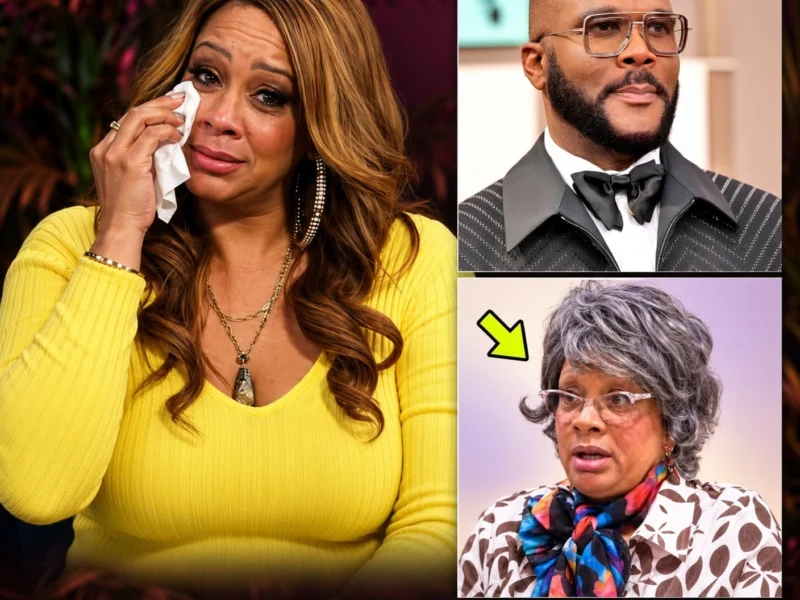
Patrice Lovely “Hattie Mae” STUNS The Entire Industry With This Bombshell Revelation…
“It is because I’ve never had a father figure in my life.”
“I never had a father in my life.”
“And then when I did finally meet him, he hits me. He molested me. My first child that I got pregnant with was from him. It was a test-tube baby, so they had to take one of the two.”
“I ran away from home when I was sixteen.”
“Sixteen years old. My mom and them doing bonfires, burning up TVs, floor-model TVs, because the devil was in it. They were burning up lunchboxes, t-shirts, anything that they thought was the devil. They had a big bonfire.”
“You know, Madea, sometimes I look at you, I don’t know if you have a razor or shaving cream.”
“You know damn well why you come here.”
“That old delicioso cooking that be going down up in here.”
“Mom, I’m scared out here.”
“Ain’t nothing out there.”
“Madea!”
“Stop playing around with you.”
Before Patrice Lovely became the scene-stealing Hattie Mae Love, what struggles and sacrifices shaped the woman behind the laughter?
That is Patrice Lovely, the woman who made a generation laugh as somebody’s meddling, pill-popping big mama.
“Daddy cheating on me?”
“You said Daddy cheating on me?”
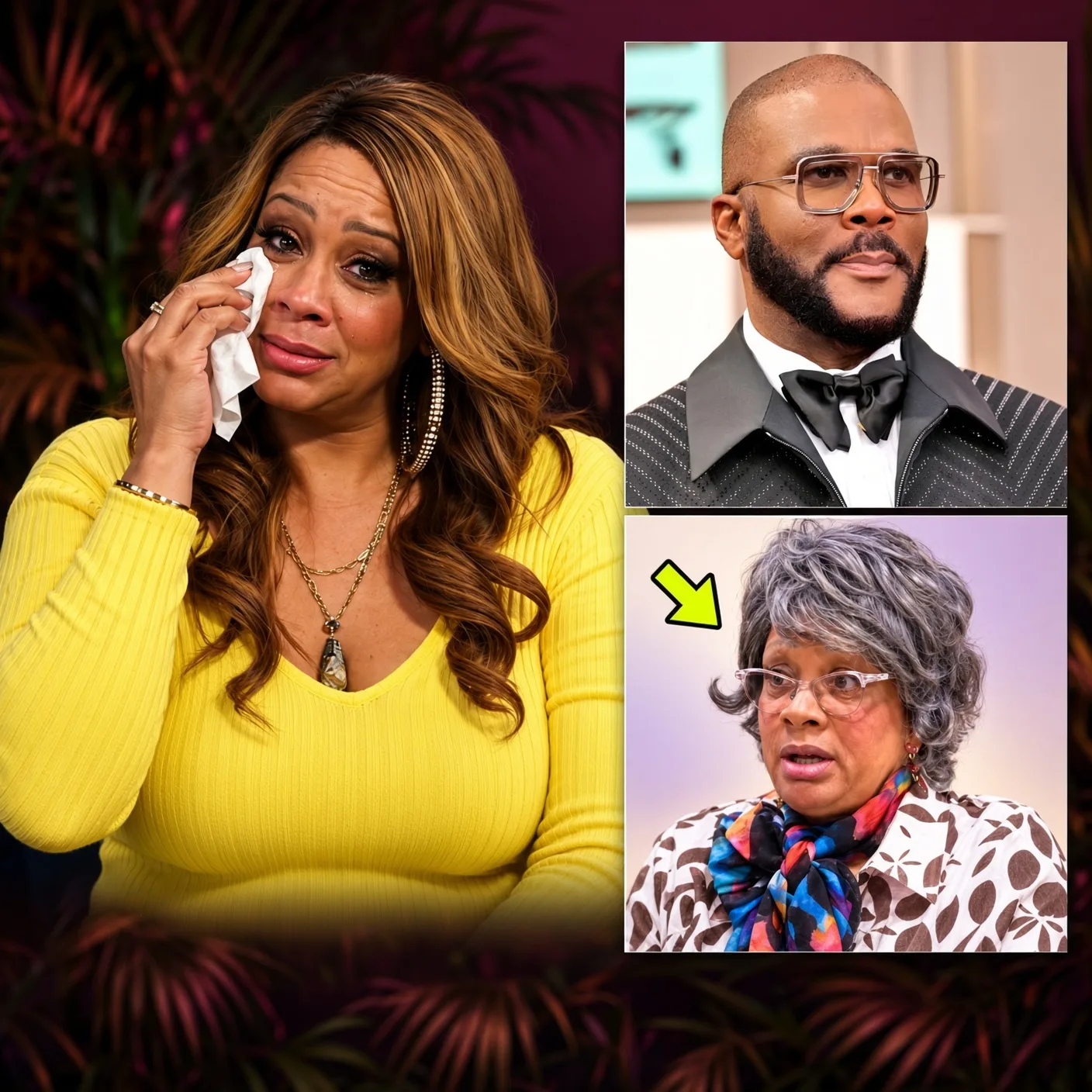
Saying out loud what she swallowed for most of her adult life.
She is a preacher’s daughter from the housing projects of Troy, Alabama.
And today, one of the most recognizable faces in Tyler Perry’s universe.
“I think Tyler is making his break.”
“When I got this script, I just broke down and I started crying, because it’s an honor to work with Tyler.”
“I love working with Cassi Davis and Patrice because, first of all, they’re so funny. They bring so many jokes. There’s so much left on the table that doesn’t even make it to the film. I just love working with people who have their own agenda and their own idea and their own characters. You know, I think that people found a voice with her, and the thing that is the best for me is that it made so many people laugh. It made so many people laugh. It made so many people have fun and have a good time. So, that is really, really inspiring to me.”
Only now, in her late fifties, is she saying the parts out loud that never made a single press junket.
Hold on to two things.
One, what she decided to do about that man afterward.
She has said it out loud exactly once, and it is not what most people would do.
Two, Tyler Perry has released two more Madea movies since 2019.
Patrice is in neither one.
Not her, not Perry, not the studio has ever said why out loud.
Patrice was born on January 4th, 1968, right in the middle of the Civil Rights Movement, up in the housing projects on Dunbar Drive in Troy, Alabama, and remembers standing at her bedroom window as a little girl saying out loud that she was going to be a star.
Her mother was a pastor, which makes Patrice what people in the Black church call a PK.
A pastor’s kid.
And by her own account, no soft landing.
She has said the church did more than shape her childhood.
There is one specific memory she goes back to every time the subject comes up.
“The church deprived me of my upbringing. When we were young, my mom used to take our toys and give them to the members of the church, so we didn’t have normal Christmases. And so, people look at you, and I hope I’m not getting too deep for you, Emma. People look at you, and they see because you on this stage. You see that? You don’t know what the hell I’d have been through through my childhood to get me here.”
She watched the saints do all kinds of crazy things inside those church walls, and that is why she keeps her distance from church people to this day, even though she never left God.
In that same pastor’s house, she grew up with exactly one sibling, a sister.
Whatever else was going on inside that house, she has never described it.
She has only ever put an age on it, and she says that age twice, like she still hears how it lands.
But something about that life did not sit right with her, and as a teenager, she made a decision.
“I ran away from home when I was sixteen.”
“Sixteen years old. My mom and them doing bonfires, burning up TVs, floor-model TVs, because the devil was in it. They were burning up lunchboxes, t-shirts, anything that they thought was the devil. They had a big bonfire. A big bonfire. My sorry self. In the back of the church, they were burning TVs.”
She has never laid out what she was running from.
What she has said is that the running eventually led her, as a grown woman, back into contact with her own biological father.
We will come back to that.
Long before Tyler Perry knew her name, Patrice Lovely was already a working gospel singer.
“Just in Montgomery, Alabama, I just finished my second album titled Glory Road, I believe. They had no idea I could act. So I went out to sing. And then, you know, the acting kind of outweighed the singing. And then, from there, we had to recreate a whole show overnight because the play had been out, and we didn’t know that, you know. They had taken the play out in that particular city, Detroit.”
And that was not even close to the strangest job title she was about to pick up.
She had already finished her second gospel record called Glory Road before anybody in entertainment knew she could do comedy at all.
“If I was you, I wouldn’t take that there foolishness. I’ll snatch that heifer up by her hair and sling her to— Oh, praise God from Zion.”
Around the same time, she did something no one ever expected of her and ended up with a job title that still surprises people who hear it today.
“I am the first African-American female ringmaster in the world for the Universal Circus. I did that. And that’s just a little bit about myself.”
That job put her under lights in front of thousands of strangers a night, and it handed her something she never once expected walking in.
“I actually met my first husband at the circus. He was doing sound. He was from Johannesburg, South Africa. I met so many people from Colombia, from everywhere, China. And just to see this talent, and I mean exquisite contortion, is to see your body—I mean—and to be there with them and to experience that, like nothing I had ever ever experienced before.”
One night under that same tent, a stranger told her something that had nothing to do with comedy at all.
“At the end of that show, there’s a young man came out of the audience and he said, ‘Patrice, I’ve never been to a circus.’ And he said, ‘I want you to know before I came here, I contemplated—’ And he said, ‘After I heard it and I came here and I seen this show and heard you sing, that changed my life.’ And he said, ‘I just, you know, I had given up.’ And just, you know, just just that. That’s the rewarding in itself.”
She still thinks about him.
Proof of impact no resume line can hold.
None of that turned out to be the biggest phone call of her career.
That one came from a man who had already tried to hire her more than once and gotten nowhere.
This time, he stopped asking.
What he did instead, she still tells like she cannot quite believe it happened to her.
“It just so happened he came at the right time. I was in Detroit and I was doing Marriage Material, Je’Caryous Johnson’s play. And he flew in and the rest is history. I was in his office the next day, because that tour was ending that Sunday night. Monday morning, I was on his couch.”
That man was Tyler Perry.
Yes, Tyler Perry.
What she was walking into was the same touring stage play machine that had already made a star out of Cassi Davis.
“My first show was with Tyler Perry. So, he took me under his wing, nursed me pretty much. Hattie’s antics, her charisma, her wisdom, all of that has always been there, but the fact that he took me and kind of toned me down, you know, made me bigger where I needed to be, just nurtured me. For that, I’m grateful.”
Hattie’s antics, her charisma, her wisdom, all of that had always been there, in her own words.
What Perry added was restraint, toning a stage-size character down for a camera, something she says she is still grateful for.
She has also said his sets run on control and freedom at once, and that watching one man write, direct, and act three roles in the same scene is crazy and inspiring in equal measure.
“Damn thing, working on my nerve. You know, I was watching the Animal Planet channel, and they say that when a car owner is trapped, it’ll eat his own foot off to get out of the trap. You want some hot sauce?”
But Hattie Mae was not built in a writer’s room.
She was built overnight out of an actual emergency.
“We was doing, you know, David Payton, God rest his soul, Good Man Is Hard to Find. He was out doing a play, and then there was another team out doing the same play, and they told us that we would have to go home if we didn’t change the play overnight, and that’s how this character was born. This character came from my Aunt Ruby Williams and my grandma and my mother. They always—you know how you got people in your family they don’t even know they funny as hell, but they just funny?”
“I need to talk to Danny!”
“Danny, what going on? What? You want to do something?”
Rewrite the whole show overnight or send the cast home.
Hattie is what came out of that scramble, the funny, no-filter aunt every Black family has at least one of.
“You trying to roll up on me in my play? Mama. Get the hell out the way, Linda.”
That overnight character came with a strange trick attached once cameras started rolling.
Patrice Lovely and Cassi Davis have both described what it is like acting across from Tyler Perry, especially the part other actors never quite get used to.
“You snap in and you snap out. When he has the Madea voice that we know, okay, hahaha. When he has Tyler’s voice, usually his legs spread out and the wig slides back, and he’s saying, ‘Okay, Cass, don’t do that. Could you try to do it whatever whatever whatever.’ So, even if you’re looking at makeup and all of that big fat suit and all of that stuff, you just still just say, ‘I’m sorry. What did you say, sir?'”
“And that’s a good thing. You have to, you know, be willing to, you know, pop in and out with him.”
“What the hell is that? It’s my costume. I’m Peter Pan.”
“Duh.”
“She said she peed up here. You know, you said she peed up here.”
Perry casts her as Hattie Mae Love across his stage plays, then his direct-to-video Madea films, and by 2013, built an entire OWN sitcom, Love Thy Neighbor, around the character.
“Oh, no, baby, don’t apologize. Because that there was a night to remember.”
It ran five seasons and over one hundred episodes before its final season aired in the summer of 2017.
Hattie also appeared in three theatrical Madea films.
Boo! A Madea Halloween in 2016.
“Oh, Miss Hattie, how you doing? Give me a hug.”
“Oh, no. Oh, no, no, I’ll pass on that. I’ll pass on that.”
Boo 2! in 2017.
“Lord, what the heck? Don’t go make me throw up.”
And A Madea Family Funeral in 2019.
“How you doing, baby?”
“I’m okay.”
“Well, you looks bad.”
When Love Thy Neighbor wrapped, Patrice Lovely’s public reaction was warmer than you might expect from someone losing her signature role.
There is a bigger loyalty sitting underneath that one, and she has been far more direct about it.
“The only family I know, my first movie, my first TV appearance, everything is with Tyler Perry Studios. I’m loyal. You know what I mean? That’s my family. Cassi, my deal, Joe, Bam, that’s my family. That’s all I know.”
Coming from a woman who left home at sixteen and never said why, that lands less like flattery and more like an answer to a question nobody had asked her.
But January of 2017, the exact same month that show was heading into its final stretch, is also the month Patrice Lovely says she walked away from something else entirely.
Hold on to that.
She has never named a husband publicly, and in that same sit-down, a direct question about her private life got a response nobody watching expected.
“And they said there’s nothing about her life out. We don’t know if she has children, if she’s married, if she has a boyfriend. I’m—and I’m going to leave it like that, because my life is my life. It’s my private life. Just know that Patrice Lovely loves to love. I love people. I give from my heart. I’ll give everything I have just to make sure the next person smile and that they’re happy.”
She has opened up about her romantic history in a way she rarely does on camera.
“I’ve been in love several times. I was married. I had two husbands. One of them was from Johannesburg, South Africa. And when he called my name, he said, ‘Patricia.’ And you know that right there, that’s just sexiness all in itself. And that turned you on by itself when he called my name. So anyway, yeah, I’ve been with—”
What she volunteered next, unprompted, is something you rarely hear from anyone discussing their own marriage in public, let alone a comedian whose entire brand runs on telling other people how to live right.
“But anyway, because I was so young and I wasn’t in a place mentally and spiritually as well as physically, I messed that up.”
As of that same 2021 appearance, at age fifty-three, she described her own relationship status plainly.
Single for roughly two years by then, with no husband and no boyfriend named on the record since.
For a pastor’s daughter raised inside a pulpit, it was not easy.
What she has said is that she spent years carrying a private belief about her own soul, and never once said it out loud from a stage.
“And for all of my life up until two years ago, I thought I was going to hell because they indoctrinated me, and they made me feel like everything I did, I was going to hell. Everything you do, you’re going to hell. And do you know I’ve never gone to a prom? I’ve never gone to a basketball game, and the only basketball game I went to, I had to cut a hole.”
She has never spelled out anywhere on record exactly what changed in 2019, only that something did.
Which brings us back to the most heartbreaking part of Patrice Lovely’s story.
“It is because I’ve never had a father figure in my life. I never had a father in my life. And then when I did finally meet him, he kissed me. He molested me. My first child that I got pregnant with was from him. It was a test-tube baby, so they had to take one of the two.”
What she says she chose to do next about her own father is the part of the story that still catches a room off guard.
“But what I did from that, even from that, I had to forgive that man in order for me to move. And I don’t talk about it. I don’t speak about it. Once I forgave you, it’s a wrap. Because the only thing it’s going to do is keep me in darkness, keep me bound, stagnate my growth. And that’s for any other man or anybody. It ain’t necessarily just a man. Anybody that hurt you, you got to release it and let it go. And it ain’t for them, it’s for you.”
She told that room she considers herself a survivor, not a victim, and that everybody in front of her was carrying some version of a story worth telling too.
None of that survival came with a fortune attached.
The most cited estimate of her net worth, tracked by Celebrity Net Worth, puts her around $2 million, unchanged since that page was last updated in 2018.
No fresher number has ever been published.
Which brings us to the other loop.
After close to two decades connected to the Madea universe, Patrice Lovely has not appeared as Hattie Mae in a theatrical Madea film since 2019’s A Madea Family Funeral.
She sat out 2022’s A Madea Homecoming.
Then sat out Madea’s Destination Wedding when it hit Netflix in July of 2025.
Neither she nor Tyler Perry has addressed it publicly.
Back in 2019, when asked directly whether Hattie was finished, she gave an answer that has aged in a strange direction.
“Just because Madea’s going to sleep doesn’t mean Hattie’s going to sleep. You can best believe I’m going to be right there.”
Six years and two Madea movies later, that has not happened, and nobody has said why.
Off camera, though, she never stopped moving.
Mama’s House and Mama’s Wild Adventures are both still streaming on Tubi right now, and she has taken a live show she calls Club Trice out on the road to different cities, all of it produced under her own banner, Lovely Diva Productions.
No award ever came with any of this.
No trophy we could confirm.
No NAACP Image Award nomination on record.
Nothing except nineteen years inside one studio and one character.
Maybe that is its own kind of prize.
She turned fifty-eight this past January.
That girl who once stood at a bedroom window in the Troy housing projects promising herself out loud that she would become a star is still standing.
Still Hattie Mae to millions.
Still recording.
Still touring.
Still writing the next chapter herself from her own production company as of this September of 2026.
She never made herself the villain of her own story, even in the parts that would have justified it.
She just kept working.
Kept singing.
Kept climbing back into character.
And let the audience decide the rest.
The laughter was real.
The pain was real.
The forgiveness was real.
And the woman behind Hattie Mae was never just a punchline.
She was a survivor who chose to make people laugh instead of making them carry what she carried.
That is the part the industry never put on a poster.
That is the part she finally said out loud.
And that is the part that will outlast every movie, every sitcom, every stage play, and every character she ever brought to life.









