Oklahoma 1982 Cold Case SOLVED — The Killer Who Outsmarted Police for 21 Years
A killer stands in a courtroom, raises his right hand, swears to tell the truth, and then points his finger across the room at an innocent man and sends him to death row.
Not because he was forced to. Not because someone threatened him.
He did it because the system handed him the perfect opportunity, and he took it.
That’s not the twist ending of this story. That’s where it starts.
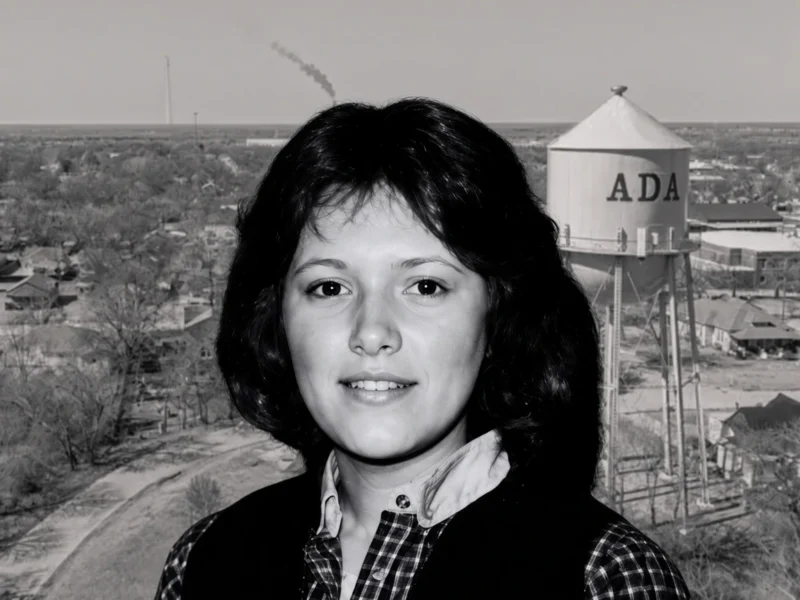
This is the case of Debra Sue Carter, a twenty-one-year-old waitress from Ada, Oklahoma, murdered in her own apartment in December of 1982.
It’s also the case of two men who didn’t kill her and lost eleven years of their lives anyway, and the one man who did kill her, who walked free for over two decades by exploiting every blind spot a small-town justice system had to offer.
Ada, Oklahoma, in 1982 was not a big place. Sixteen thousand people, give or take.
A handful of churches, a university, and a stretch of bars that stayed open later than the rest of the town liked to admit.
The country itself was hurting that year. Unemployment was sitting near eleven percent, the worst since the Great Depression, and rural Oklahoma was getting hit particularly hard.
In towns like Ada, that kind of pressure doesn’t just affect paychecks. It changes how people treat each other.
It makes communities tighter, more suspicious of outsiders, and a lot quicker to believe a story if it’s the story they want to hear.
Debra Sue Carter, friends called her Debbie, was twenty-one years old. She’d grown up in Ada.
In late 1982 she’d just moved into her own garage apartment for the first time, working three jobs to make rent, bartending and waitressing at the Coachlight Club, babysitting on the side, picking up whatever else she could.
People who knew her described her as full of life, mischievous, the kind of person regulars at the bar knew by name, not just by face.
She wore a western-style belt with her name stitched into it, Debbie, almost every shift. It became something people remembered her by.
On the night of December 7, 1982, a slow Tuesday, business was light because of the economy and the cold.
Debbie worked her usual shift at the Coachlight. Among the regulars that night was a twenty-two-year-old named Glen Gore.
He wasn’t a stranger. He’d known Debbie for years. Some accounts say they’d gone to high school together.
When the bar closed and people started heading to their cars, Gore walked out to the parking lot and approached Debbie at her car.
What exactly was said between them is contested.
Confirmed fact: he was the last person known to have spoken with her before she drove away alone.
Disputed: some witnesses who left the bar around the same time described the exchange as nothing unusual, two people who knew each other talking before heading home.
Other witnesses described something tenser, Debbie pushing him back, closing her car door to get away from him.
What we do know for certain is this. Debbie left the parking lot by herself. Gore went back inside and later left with a friend in his friend’s car.
Somewhere around 2:30, maybe closer to 3:00 in the morning, Debbie called a friend, Gina Vieta.
She said someone was in her apartment. She didn’t sound panicked exactly, more uneasy.
Gina asked who it was. Debbie’s response was strange. She just said, “Hold on,” and went quiet.
Gina could hear rustling in the background. She told Debbie she was coming right then.
Then the phone rang again. It was Debbie. She said never mind, she’d decided to stay home. No need to come over after all.
Gina asked again who was there. Debbie changed the subject completely, telling her just to call in the morning so she wouldn’t be late for work.
That was the last anyone heard Debbie’s voice.
The next morning, a longtime friend named Donna Johnson came by to check on her.
She walked into the bedroom and found Debbie on the floor.
She ran back to her car, called the family, and Debbie’s father, Charlie Carter, was the one who climbed those apartment stairs and found his daughter’s body.
A blood-soaked towel forced into her mouth. Broken glass scattered across the landing.
When police and paramedics arrived, the scene inside that apartment was bad enough that one of the paramedics got physically sick.
The bedroom looked like it had been torn apart. Clothes, bedding, and stuffed animals thrown everywhere.
Debbie’s body was on the floor between the bed and the wall.
But what really stood out wasn’t the chaos. It was what had been written.
On Debbie’s back, in ketchup, a name. Confirmed fact, according to the original police report, detectives at the scene read it as something close to Duke Graham.
On her chest, in nail polish, the word die.
And on a table nearby, also written in ketchup, a misspelled warning, something like, “Don’t look for us, or else.”
Phrased deliberately in the plural, as if more than one person had done this.
A bloody towel had been shoved deep into her throat. There was an electrical cord and a belt found near the body.
A ketchup bottle, uncapped, tucked inside a balled-up sheet. An open shampoo bottle nearby that appeared to have been used as part of the assault.
Money was scattered on the floor, not because anything was stolen, investigators concluded, but as part of a staged scene meant to look like a robbery gone wrong.
And then there was the broken glass.
At first it looked like a straightforward break-in, a window smashed from the outside.
But when crime scene analysts examined it more carefully, they found glass fragments on both sides of the window. Some that had clearly fallen outward, and some that had clearly fallen inward.
That’s not how a real break-in works. That’s how a break-in looks when someone stages it from the inside, trying to make police believe an intruder came from outside.
In other words, confirmed by crime scene reconstruction, this wasn’t a chaotic, multi-person home invasion.
This was one person, alone, deliberately constructing a false story out of nail polish, ketchup, and broken glass.
Someone who understood exactly what detectives would be looking for and built them a different narrative to follow.
The autopsy, conducted the next day by the state’s chief medical examiner, documented extensive bruising to her face and neck, defensive wounds on her arms, she had fought back, and a ligature mark consistent with strangulation.
Cause of death: asphyxiation from the combination of the towel and the ligature.
Investigators collected seventeen hairs from the scene, bodily fluid evidence, and a bloody fingerprint left on the bedroom wall.
In 1982, none of that evidence could be analyzed with anything like the precision we have today. So it sat for years.
While that evidence sat in storage, Ada kept living its small-town life, and one name in that town kept surfacing in conversations about Debbie Carter’s murder for reasons that had nothing to do with proof.
Ron Williamson had once been the closest thing Ada had to a celebrity.
As a teenager he was a standout baseball player, good enough that in 1971, at eighteen years old, he was picked in the national amateur draft and went on to play in the New York Yankees minor league system.
Then a shoulder injury ended it. By twenty-four his career was over, and he came home to Ada with nothing left of the dream that had defined him.
What followed was a steep decline. He was eventually diagnosed at various points with bipolar disorder, severe depression, and schizophrenia, conditions that according to multiple accounts went largely untreated.
He drank heavily. He lived with his mother, Juanita.
He became, in the language small towns use for people they don’t know how to help, the local eccentric, singing loudly on the street at night, showing up places at odd hours, behaving in ways that unsettled his neighbors.
He was a regular at the Coachlight Club, the same bar where Debbie worked, the same bar where Glen Gore had approached her that final night.
Dennis Fritz was nothing like Williamson on paper. He was a high school science teacher, stable job, no criminal history, nothing in his background suggesting violence.
His connection to this case was almost embarrassingly thin. He’d become friends with Williamson in 1981, and the two of them sometimes went to the Coachlight together.
That friendship is, as far as the record shows, the entire reason Dennis Fritz’s life was about to be destroyed.
In March of 1983, three months after the murder, Glen Gore went to police and told them he’d seen Williamson at the bar that night harassing Debbie.
Williamson was brought in for questioning. He denied any involvement and, notably, voluntarily handed over hair samples and saliva without resistance, the kind of thing someone does when they believe they have nothing to hide.
His mother told police he’d been home before ten that night, before the bar even closed. There was no physical evidence tying him to the apartment.
Meanwhile, Glen Gore, the man who just placed himself at the center of the story, the last confirmed person to speak with Debbie alive, walked out of that police interview without giving a fingerprint, without giving saliva, without giving a single hair sample.
Nobody asked him to.
That gap right there, that’s the opportunity this whole case turns on.
Not a single dramatic decision. A quiet, almost bureaucratic oversight.
One man gave every sample requested of him and was treated as a suspect. Another gave none and was treated as a witness.
In 1983 an Oklahoma State Bureau of Investigation fingerprint expert named Jerry Peters examined that bloody print on Debbie’s bedroom wall.
His conclusion at the time: it didn’t belong to Carter, didn’t belong to Williamson, didn’t belong to Fritz.
That finding was not shared with the defense.
That same year, Williamson took a polygraph test and, according to court records that surfaced years later, a videotaped statement of his was recorded that was favorable to his innocence.
The Pontotoc County District Attorney at the time, Bill Peterson, never disclosed that tape’s existence to Williamson’s attorneys.
And around the same period, a man named Ricky Joe Simmons reportedly went to police and confessed to killing Debbie.
That confession too was never disclosed.
The existence of these three pieces of evidence, the fingerprint exclusion, the videotape, and the Simmons confession, and the fact that they weren’t turned over to the defense, became central findings in Williamson’s later federal appeal.
What’s still disputed, even now, is exactly how deliberate or how negligent that non-disclosure was at the time it happened.
What’s not disputed is what happened next. Nothing. For almost five years.
The case went cold.
And cold, unsolved murders in towns of sixteen thousand people don’t stay quiet. They generate pressure.
Pressure on the police department, pressure on the DA, pressure that in 1987 finally produced a break of sorts.
That spring, Debbie Carter’s body was exhumed, officially to obtain a new set of fingerprints for comparison.
The same expert, Jerry Peters, who in 1983 said that bloody print didn’t match anyone involved, this time reached the opposite conclusion. The print matched Carter herself.
Same fingerprint. Same expert. And according to court findings later reviewed, this was the only time he ever reversed a conclusion on a piece of physical evidence.
The timing, exactly when prosecutors needed something, anything, to justify an arrest, is the kind of coincidence that should make anyone uneasy.
An arrest warrant followed.
On May 8, 1987, nearly five years after that final phone call to Gina Vieta, police arrested both Ron Williamson and Dennis Fritz.
Dennis Fritz went to trial first, in April 1988.
He had no real alibi, which five years after an ordinary Tuesday night isn’t unusual for almost anyone. And that absence of memory was used by the prosecution to suggest guilt.
The case against him leaned on two things: microscopic hair comparison evidence, and the testimony of a jailhouse informant who claimed Fritz had confessed to him.
That informant came forward just one day before prosecutors would have been legally required to release Fritz for lack of evidence.
The jury convicted him of first-degree murder. Sentence: life without parole.
Ron Williamson’s trial began two weeks later, and what happened in that courtroom is now studied in law schools as a case study in what happens when a justice system fails a mentally ill defendant.
Ron Williamson’s attorney was operating with severely limited resources. No one filed a motion to evaluate his competency to stand trial.
This despite the fact that he was, by all later accounts, in an active psychotic episode throughout the proceedings.
He shouted at witnesses. He overturned furniture. He lost control in ways consistent with untreated schizophrenia.
The jury didn’t see illness. They saw a dangerous man confirming their fears. Nobody in that courtroom explained the difference.
The prosecution’s central witness was Glen Gore.
By that point Gore was already incarcerated on an unrelated case, so his earlier preliminary hearing testimony was read into the record instead of him appearing live.
According to that testimony, Debbie had asked him to dance that night specifically because Williamson was bothering her, making Gore once again the only person to place Debbie anywhere near Debbie that evening.
Of the roughly two dozen other people at the bar that night, not one of them backed up his account.
Four separate pieces of evidence followed, each one a trap in its own way.
The first was hair analysis. An OSBI forensic analyst testified that multiple hairs recovered from the scene were microscopically consistent with Fritz and Williamson, with one even called a match.
It sounded scientific. It sounded conclusive. It wasn’t.
Microscopic hair comparison can only say two hair samples look similar under a microscope, not that they came from the same person.
Nearly thirty years later, the FBI formally acknowledged that this technique had been overstated in testimony across thousands of cases nationwide.
In 1988, none of that had come to light yet.
The second trap was jailhouse informants, people incarcerated alongside Fritz and Williamson who came forward with stories about confessions.
One claimed to have heard Williamson threaten to harm his own mother the way the killer had harmed Debbie.
Another produced the Fritz confession that conveniently surfaced the day before charges would have lapsed.
Jailhouse informant testimony is, to this day, one of the most well-documented sources of wrongful convictions in the American legal system, people who have every incentive to say whatever shortens their own sentence.
The third trap involved a dream.
While jailed separately in 1984 on an unrelated bad check charge, Williamson reportedly described a dream to a detective, one where he played the role of an investigator looking into the case, not a perpetrator confessing to committing it.
At trial, that account was presented to the jury without that context.
A man describing a dream about solving a murder was made to sound like a man confessing to committing one.
And the fourth trap was what never made it to the jury at all. The excluded fingerprint, the videotape, the Simmons confession.
Brady versus Maryland, a 1963 Supreme Court ruling, requires prosecutors to turn over evidence favorable to the defense.
That didn’t happen here. Not once, but allegedly twice.
On April 27, 1988, the jury convicted Ron Williamson of first-degree murder. His sentence: death.
Williamson was sent first to the Oklahoma State Penitentiary, then later transferred to an underground death row facility, windowless, designed for total isolation.
His cell measured roughly two meters by four and a half.
Reports from that period describe him going months without showering properly, barely eating, pacing, and screaming about his innocence in ways that those without an understanding of mental illness read as madness.
Nobody intervened.
By 1994 his execution date was set. September 27.
Five days before that date, his attorneys filed a federal habeas corpus petition. A stay was granted at the last possible moment.
Five days. That’s the distance between Ron Williamson and a wrongful execution that Oklahoma would never have been able to take back.
The federal court that eventually granted him a new trial laid out in detail the failures that got him there. The undisclosed videotape, the undisclosed confession, and an ineffective defense that never raised his mental competency.
Meanwhile Dennis Fritz, still in prison, still appealing, reached out to the newly formed Innocence Project.
He understood that the physical evidence from 1982 still existed, and that DNA testing, a technology barely available at the time of his trial, could potentially clear his name.
He filed a motion specifically to preserve that evidence before it could be lost or destroyed.
In 1999, that DNA testing finally happened.
The result? The hairs that had been called microscopically consistent with Fritz and Williamson, neither man matched.
The semen evidence collected during the original autopsy, neither man matched that either.
Every piece of physical evidence from that apartment pointed somewhere else entirely.
It pointed to Glen Gore.
On April 15, 1999, a Pontotoc County judge dismissed all charges against both men.
Williamson walked out of the same courthouse where he’d been sentenced to death eleven years earlier.
He reportedly said only three words to the judge. “Thank you, judge.”
Fritz, surrounded by his mother and the daughter who’d grown up without him, told reporters that the anger he’d carried for over a decade had become something he wanted to channel into making sure this never happened to anyone else again.
And Glen Gore, the man who’d stood next to Debbie’s car that final night, the only person never asked for a biological sample, the prosecution’s star witness who’d helped put two innocent men away, was by 1999 already serving time in Oklahoma’s prison system for an unrelated kidnapping and weapons conviction.
When the DNA results became public on April 14, 1999, one day before Williamson and Fritz walked free, Gore reportedly walked off a work release crew near Purcell, Oklahoma.
He didn’t get far. Within roughly a week he turned himself in through an attorney.
It wasn’t an escape plan. It was the reflex of a man who suddenly understood that seventeen years of freedom built on someone else’s conviction was about to end.
In 2001, prosecutors formally charged Gore with Deborah Carter’s rape and murder.
On June 24, 2003, twenty-one years after that final phone call, a jury convicted him and sentenced him to death.
His conviction was later overturned on appeal in 2005 over an evidentiary issue.
At his second trial in 2006, a jury convicted him again, this time deadlocking on sentencing, which under Oklahoma law meant an automatic sentence of life without parole.
The man who pointed the finger first, the man who testified under oath against an innocent former baseball player, the man who walked away from every request for a biological sample for seventeen straight years, that man was the killer the entire time.
And the system’s blind spots gave him every opportunity he needed to make sure nobody looked his way.
Freedom didn’t undo what happened to either man.
Williamson returned to Ada changed in ways that proved permanent. He was convinced, even after his release, the police would come back for him.
He carried a pocket knife out of fear, not aggression, fear that had nowhere rational to land anymore.
His family tried to keep him on psychiatric medication, but his drinking made that nearly impossible to manage.
He cycled through mental health facilities multiple times over the following years.
On December 4, 2004, Ron Williamson died in an Oklahoma nursing home, recently diagnosed with cirrhosis, surrounded by his sisters.
He was fifty-one. He’d lived just five years past his release.
Dennis Fritz rebuilt a quieter life back in Missouri.
He spoke about the hardest part not being the years inside, but everything those years took from him outside. Watching his daughter grow up through prison visits instead of at home.
He became an advocate for the wrongfully convicted, served on the board of the Midwest Innocence Project, and in 2008 published a memoir about the entire ordeal.
Both men were eventually awarded $500,000 each in a settlement with the city of Ada, with a separate undisclosed settlement from the state.
Dennis Fritz passed away in March of 2024 at seventy-four.
There’s one detail from after the exoneration worth sitting with.
Debbie Carter’s mother, Peggy, eventually built something like a relationship with Dennis Fritz, the man once convicted of murdering her daughter.
At an Innocence Project event years later, the two of them reportedly danced together.
Not because either of them had forgotten what happened, but because sometimes after a system fails everyone involved this completely, standing together is the only thing left to do.
So how does something like this happen in a justice system that’s supposed to have safeguards against exactly this?
It’s never one mistake. It’s never one villain.
In this case it was layer after layer of small failures stacking on top of each other until they built a death sentence for an innocent man.
The last person seen with the victim wasn’t tested for anything.
A fingerprint expert reversed a career-long conclusion at exactly the moment prosecutors needed him to.
Exculpatory evidence sat in a drawer instead of reaching a defense attorney.
Junk science was presented to a jury as if it were certainty.
And a man in active psychosis was tried for his life without anyone checking whether he was even competent to stand trial.
At the center of every legal reform that came out of this case is a twenty-one-year-old woman who never got to see her actual killer caught while it still mattered.
Debbie Carter worked three jobs to build an independent life for herself.
She made one phone call at 2:30 in the morning, scared enough to ask a friend to come get her, and then told her not to bother.
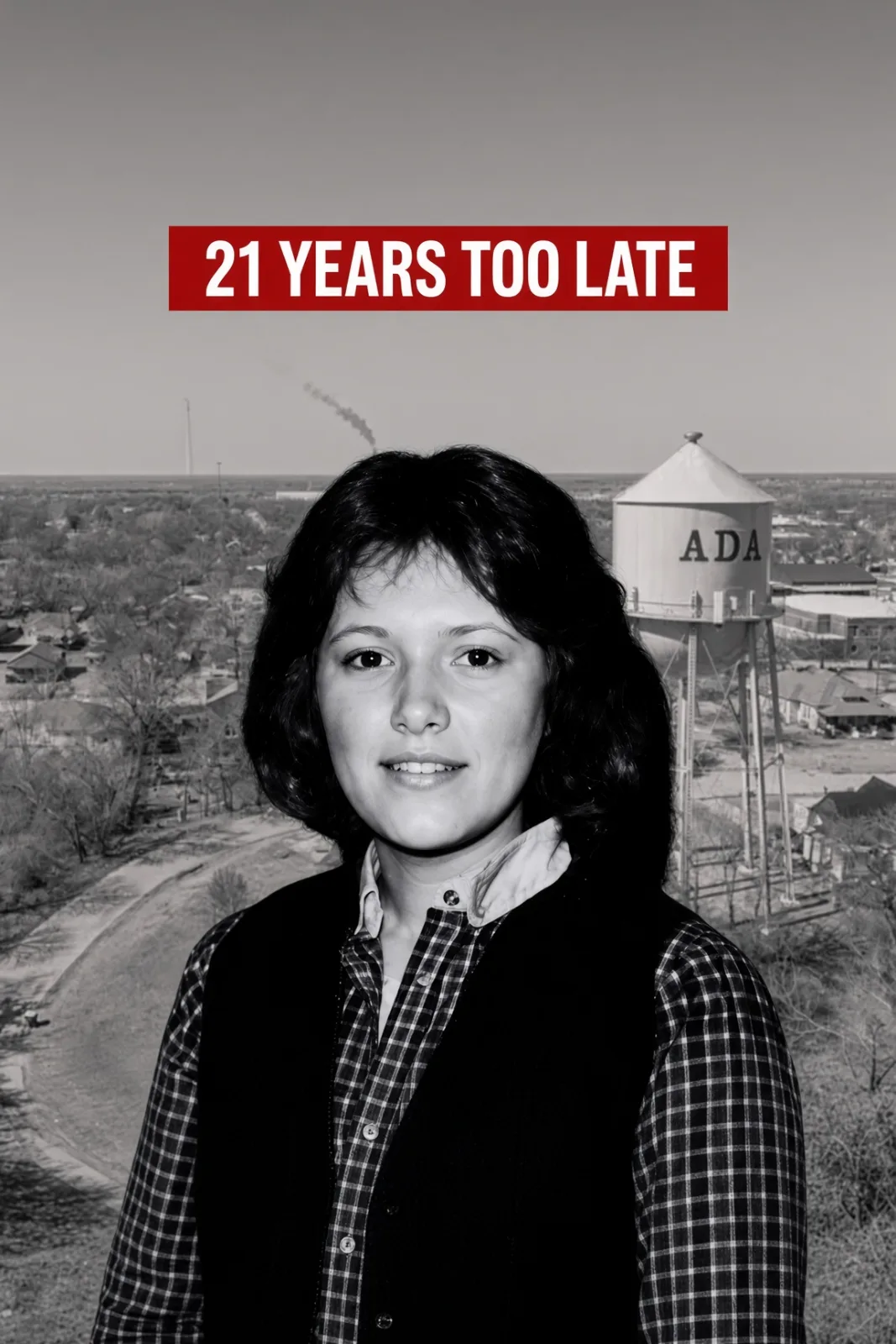
She deserved better than twenty-one years.
The ketchup on her back was a lie, the broken glass was a lie, and the finger pointed across a courtroom was a lie, and it took seventeen years and a DNA test for the truth to finally walk out of the same courthouse where two innocent men had been sentenced to die.









