Missing Kids Who Never Knew They Were Missing
18-year-old Alexis Manago’s world was turned upside down when she learned that the woman she thought was her mother allegedly kidnapped her from a Florida hospital in 1998.
“They had been looking for me and I didn’t even know that this was—that I was lost.”
What if I didn’t want to be found?
What if I didn’t need saving?
What if I was perfectly fine living in a lie?
I was perfectly fine.
Some people grow up believing a lie, then one day they discover their name is fake, and the people they call mom and dad are not really who they say they are.
These are missing kids who never knew they were missing.
In 1966, FBI agents made a terrible mistake.
They accidentally helped a couple steal a child, and that child spent the next fifty years living under someone else’s identity.
When he finally discovered the truth, he realized that his stolen identity was only one part of a much darker mystery.
On April 26th, 1964, Paul Fronczak was born in a Chicago hospital.
His parents were overjoyed, but less than twenty-four hours later, that happiness was gone.
The day after Paul was born, a nurse walked into his mom’s hospital room and said the doctor needed to examine the baby.
Paul’s mom had no reason to doubt her, so she handed baby Paul over.
The nurse walked out of the room, and she never came back.
Hours later, everyone realized that the woman was not a real nurse, and even worse, she had disappeared with baby Paul.
Hospital staff quickly called the police, and Paul’s parents were panicking.
His mother managed to give officers a description of the mysterious nurse.
“She was a female, approximately white, approximately forty years of age, five foot five, about one hundred forty-five pounds.”
Police were determined to find the baby.
They went door to door searching hundreds of homes in the area, and the case was reported in the newspaper, but they found no sign of baby Paul.
About two years passed with no answers, and then something unusual happened hundreds of miles away in New Jersey.
Someone found a toddler in a stroller behind a department store and carried the child to the nearest police station.
Announcements were made, and police expected his parents to come looking for him, but no one showed up to claim the child.
Officers started wondering whether this was really an abandoned baby, or whether he was the baby Paul that was stolen from Chicago.
He looked like Paul, and he was about the right age, but there was a problem.
There was no scientific way to confirm their suspicions.
DNA testing did not exist yet, and the hospital had no record of Paul’s blood type because he was taken a day after he was born.
They didn’t even have Paul’s fingerprints on file.
All they had was one photo of Paul, taken the day he was born.
Paul was lying on his side, so only one of his ears was visible, and that ear became the main piece of evidence.
“The FBI concluded that the little boy in Newark had the same ear structure as the kidnapped baby from Chicago.”
To the FBI, the ear was enough proof.
Baby Paul’s parents, Dora and Chester, were brought in to identify the boy, and the FBI was sure he was their missing son.
The moment Dora saw him, she believed it too.
“And then Dora yelled out, ‘Oh my God, that’s my baby.’ It was like a miracle.”
The Fronczak family was whole again.
Dora and Chester took the boy home and raised him as Paul Fronczak.
Everyone believed the nightmare was finally over, but they were wrong.
Paul grew up like any other kid, and eventually his parents had another son, so Paul had a younger brother.
When Paul was ten, he was searching for Christmas presents in the house and instead found a box with old newspaper clippings.
They were about him, and they revealed that when he was a newborn he had been kidnapped.
Paul was confused and ran straight to his mom for answers, but she didn’t want to discuss it.
All she would say was, “You were kidnapped. We found you. We love you. We’ll never talk about it again.”
But Paul never forgot that he was kidnapped as a baby, and as he grew older something else kept bothering him.
He didn’t look like anyone else in his family.
“For one thing, he looked nothing like his parents.”
“My brother looks exactly like my dad. Exactly. I don’t.”
Paul pushed those doubts aside, and decades passed.
He got married and became a father.
Then one day a doctor asked Paul a simple question.
Did any illnesses run in his family?
Suddenly Paul’s old doubts came rushing back.
He wasn’t sure if the Fronczaks’ medical history was truly his, and that uncertainty brought back the question he had carried since childhood.
Was he really Paul Fronczak?
“What if by chance I’m really not that kidnapped child Paul from Chicago? I think I should find out.”
By then DNA testing existed, so Paul asked his parents to take a test with him.
They agreed.
In 2012 the results came back.
Paul was not biologically related to Dora and Chester Fronczak.
The FBI had given the Fronczaks the wrong child, but that was only half the problem.
If he was not Paul Fronczak, it meant the real kidnapped baby was still missing.
Paul now needed to answer two questions.
Who was he, and what happened to the real Paul?
He asked a team of genealogists for help.
They compared his data with profiles stored in public genealogy databases, and when they found distant relatives, they used those matches to build possible family trees.
The process took years, but in 2015 the genealogists gave Paul an answer.
Paul discovered that his true identity was Jack Rosenthal.
His parents were Gilbert and Marie Rosenthal, and he had a twin sister named Jill.
He tracked down members of his biological family, and what they told him was heartbreaking.
His biological parents struggled with substance use and mental health problems, and they sometimes stayed out all night partying and drinking.
Relatives said the twins were often neglected.
When Jack and Jill were almost two years old, both children suddenly disappeared.
Family members asked where they were, but the parents came up with an excuse as to why the twins would no longer be at family meetings.
Neither twin was reported missing.
It seemed the children were simply abandoned.
That was how Jack ended up alone in a stroller in New Jersey.
The FBI mistakenly believed he was baby Paul, when instead he was a different abandoned child.
No one knew what happened to his twin sister Jill.
Paul, whose real name was Jack, finally knew who he really was, but solving one mystery created another.
If he was Jack Rosenthal, where was the real Paul Fronczak?
For the next four years, investigators searched DNA databases for anyone connected to Dora and Chester Fronczak.
In 2019 they found a match.
The real Paul Fronczak was alive.
He was living under the name Kevin Batty.
Kevin Batty was in his mid-fifties before he learned his true identity.
Paul Joseph Fronczak, abducted as a baby from a Chicago hospital in 1964.
Kevin was raised by a woman named Lorraine Fountain.
According to reports, Lorraine moved to Arkansas for a year and then returned with baby Paul, but no one knew exactly how she got him, and it was too late for police to question her because Lorraine had already passed away.
Kevin finally knew the truth about his identity, but he didn’t have enough time to get to know his biological family.
Kevin was already battling cancer.
He spoke with his biological mother, Dora, over the phone, but mother and son never got to meet in person.
Kevin passed away in April 2020, barely a year after he was found.
He was fifty-six.
It was a tragic end to a mystery that lasted fifty years.
When Kamaya Mobley was seventeen, she discovered she was kidnapped as a baby.
She even learned who took her.
But Kamaya didn’t go running to the police, instead she kept the secret to protect the woman who stole her.
In 1998 a woman named Gloria Williams experienced a personal tragedy.
Gloria had a miscarriage.
Losing a baby left her in a terrible emotional state.
“I was a different person. My head was in a different place. I was just broken. I had a broken heart. I had a broken spirit.”
She had already held a baby shower and chosen a name for the child.
Now her dream of being a mother was gone, but Gloria didn’t tell her friends or family that she lost the baby.
One week after the loss, she got in her car and started driving.
She ended up at a hospital in Florida.
Gloria walked into the maternity ward and just stood there looking at the babies, thinking about the child she lost.
At first she had no plans to steal a child, but when she was there, she snapped, and then she made a terrible choice.
Another woman named Shanara Mobley was staying at the same hospital.
She had just given birth to a baby girl named Kamaya.
While Shanara was resting, Gloria entered her room.
Gloria pretended to be a nurse and claimed she needed to check the baby’s temperature.
Gloria picked up baby Kamaya and walked out of the room.
She never returned.
News of the kidnapping spread fast.
Police searched everyone leaving the hospital, but Gloria was already gone.
Kamaya’s mom went on TV to plead for help.
“Please, I’m begging you. Please bring me my baby. Please.”
But finding Kamaya would be extremely difficult.
The police had very little to work with.
Kamaya was only eight hours old when she was taken, and the hospital didn’t even have a photo of the baby.
Experts had to create a sketch showing what Kamaya might look like, and people used that sketch to search for her.
“You see somebody pushing a baby in a stroller, you would stop and look to see if it resembled Kamaya’s composite.”
Thousands called in with tips, but they led nowhere.
It seemed the child was gone for good.
Gloria took baby Kamaya home to South Carolina and told her family and friends that she gave birth.
No one had any reason to doubt her.
Gloria gave the baby a new name, Alexis Kelly Manago.
It was the same name she originally chose for the baby she lost.
Alexis grew up believing Gloria was her biological mother.
The two were extremely close.
Years later Alexis recalled how her childhood felt.
“I do feel like she raised me right. I do feel like she raised me great. I feel like I had a good life.”
When Alexis was seventeen, she tried to apply for a job.
To complete the application, she needed her social security card and birth certificate.
She asked Gloria for the documents, but Gloria refused to give them to her.
For the first time, Alexis became suspicious.
She kept asking questions until Gloria couldn’t hide the truth.
“Gloria broke down and told her what happened. Told her she took her. And it was an emotional day.”
Alexis finally knew the truth.
Her name was Kamaya Mobley.
The woman she called mom actually stole her.
All Alexis had to do was go to the police and she could be reunited with her real family, but she chose not to.
Seventeen-year-old Alexis chose to stay with the woman who stole her as a baby.
To her, Gloria was still the loving and kind mother, so they continued living together as mother and daughter.
However, Kamaya struggled to carry such a huge secret alone.
She eventually confided in her best friend and made her promise not to tell anyone.
Unfortunately, secrets aren’t easy to keep.
One year later, that friend broke her promise.
She told her mom that Alexis was a missing child, and her mom went straight to the police.
In January 2017, police took a DNA sample from Alexis.
It was confirmed Alexis was Kamaya Mobley.
It became national news.
“It’s one of the biggest stories across the nation tonight. A baby stolen eighteen years ago is found alive.”
Gloria was arrested.
Kamaya met her biological family, but to her they were strangers.
She had spent her entire life loving Gloria as her mother.
Now Gloria was in handcuffs, and she was expected to accept a new family overnight.
When reporters asked what should happen to Gloria, Kamaya defended her.
“I understand what she said was wrong, but just don’t lock her up and throw away the key.”
In 2018 Gloria was sentenced to eighteen years in prison.
The judge gave her one year in jail for every year she kept the child.
Kamaya felt the punishment was too harsh, and she continued defending Gloria.
“From that one mistake, I was given the best life. I had everything I ever needed, wanted. I had love.”
But that loyalty to Gloria created another problem, particularly for Shanara, Kamaya’s biological mother.
She spent eighteen years waiting for her missing daughter to come home, but the girl who came back loved the woman who stole her.
Shanara felt she was being rejected for a kidnapper, and she made her feelings clear.
“I don’t have a relationship with my child, so what did I gain? Nothing. I wish sometimes she would have never came back.”
Shanara even gave her daughter an ultimatum.
It’s either her or me.
It became messy.
However, Kamaya did not cut Gloria off.
She still calls Gloria her mom.
At the same time, Kamaya is also trying to build a relationship with her biological mother, Shanara.
When Esther Frederick was two, she was kidnapped by the Chinese government.
They took her for a very strange reason.
Under China’s rules, she was never supposed to exist.
In other words, her birth was a crime.
In 1980, China introduced a rule called the one-child policy.
The government used it to limit how many children families could have.
For most couples the rule was simple.
They were allowed to have only one child, but in some places a second child was allowed.
If you lived in a Chinese city, you could only have one child.
If you lived in the countryside, you might be allowed a second if your first was a girl.
So couples living in cities could only have one child, and village couples were allowed two if their first was a girl.
Any child after that was against the law.
Breaking these rules could lead to serious consequences.
The government believed that families who violated the law created a burden on society.
Parents could face large fines, and if they worked for the government, they could be fired.
The government could seize the family’s property, and sometimes authorities took the additional child away.
In the 1990s, a Chinese couple lived in a village in China.
Their first child was a girl, so they were allowed to have a second.
Their second child was also a girl.
That was their limit.
Having another child could put the family in serious trouble, but in the year 2000 the wife became pregnant again.
She knew the government could punish the family if they found out, so she hid the pregnancy for nine months.
Then things became even more complicated.
She gave birth to twin girls.
Now they had four children, twice the number they were allowed to have.
At first the family hid and moved around, but they knew they couldn’t live that way forever.
To avoid detection, they decided to separate the children.
Their two older daughters stayed with relatives.
The parents moved to another village with one of the twins, and people there were less likely to know that the couple already had more children back home.
The other twin was sent to live with an aunt and uncle.
With the four girls living in different homes, the family hoped no one would discover the truth.
The plan worked for two years, and then the authorities found out.
They were reportedly tipped off by the midwife who delivered the girls.
Officials found the twin living with her aunt and uncle.
Five men working for family planning stormed the house and took her away.
They said the family could have her back if they paid a large fine.
They asked for fines amounting to more than one thousand dollars to return the girl.
One thousand dollars was a lot of money for them.
The family could not afford it, so the child was sent to an orphanage.
At the time, China had a law allowing foreigners to adopt Chinese children.
Before long, an American couple from Texas agreed to adopt her.
The couple asked the orphanage about the child’s past, but the orphanage lied.
Her adoptive family didn’t know anything about this, they were told that she had been found abandoned at the gates of a factory.
The couple named the girl Esther Frederick and took her to America with them.
Meanwhile, her biological family had no idea what happened to her.
To them, it was like she disappeared into thin air.
Esther grew up in a loving home in Texas.
Esther knew she was born in China, but her adoption papers said she was abandoned, so she believed her birth family didn’t want her.
That was far from the truth.
Back in China, Esther’s family never stopped thinking about her.
Esther’s twin sister grew up with their parents.
Her name was Shuang.
Esther had no idea Shuang existed, but Shuang knew she had a missing twin.
She often asked when her sister would come home.
“If my sister wasn’t taken away, she’ll be as old as me and we can play together.”
But no one knew where her sister was.
They didn’t even know if she was still alive.
Then in 2009 a journalist named Barbara Demick visited their village.
Barbara was investigating reports that Chinese officials took children and placed them for international adoption.
Shuang’s mom asked the reporter to help find her missing daughter.
Barbara promised to try.
She knew which orphanage the children were sent to, so the reporter searched for American parents who adopted children from that orphanage.
Eventually she found photos of a girl who looked exactly like Shuang.
Barbara traced the girl to Texas.
The missing twin was Esther Frederick.
But finding Esther was only the first step.
Now she had to tell the American family where Esther really came from.
Barbara contacted Esther’s adoptive family and explained everything about the one-child policy and how Esther was taken away.
At first, Esther’s adoptive mother didn’t want the families connected.
The news was difficult to process.
She adopted Esther believing the child had been abandoned, but eventually she changed her mind.
She agreed for Esther to meet Shuang.
Barbara connected the twin sisters.
They began sending messages to each other through a messaging app.
For about a year they slowly got to know each other, and finally they decided to meet in person.
In February 2019, Esther traveled to China with her adoptive family.
The reporter Barbara traveled with them.
After many years apart, the twins finally met.
Finally, a decade later, the twins, aged eighteen, got a chance to play together.
Esther also met her biological parents and her two older sisters.
The two families spent several days together.
When the visit ended, Esther returned to the United States, but she remained in contact with her family in China, especially her twin sister.
For most of her life Esther believed she was abandoned.
In reality, her family never stopped waiting for her to come home.
Almost every parent needs a babysitter at some point.
Usually it’s no big deal, but for one family in Texas, hiring the wrong babysitter ruined their lives.
In 1969, Alta and Jeffrey Highsmith had a baby girl.
They named her Melissa.
Not long after Melissa was born, Alta and Jeffrey separated.
Jeffrey moved to another state, so Melissa was raised by her mother, Alta, in Texas.
Alta was a single parent.
She got a job to pay the bills, but she couldn’t take Melissa to work with her, so she placed an ad in the newspaper looking for a babysitter.
Before long, a woman called Alta about the job.
Alta was desperate for help, so she hired the woman over the phone out of desperation.
She never met the babysitter face to face, and she didn’t even know what she looked like.
It was a decision Alta would regret for the rest of her life.
On August 23rd, 1971, Alta left for work.
Alta had a roommate, so she left baby Melissa with her roommate at their apartment.
The plan was simple.
The babysitter would pick Melissa up, watch her for the day, and bring her back that evening.
While Alta was at work, the babysitter arrived at the apartment.
She told Alta’s roommate that she was there to pick up the baby.
The roommate handed Melissa over.
Alta was at work all day, and she said she told the babysitter to drop Melissa back off around five or six when she got home.
But the entire day passed and the babysitter never brought Melissa home.
Even worse, Alta didn’t even have the babysitter’s address or telephone number.
Alta called the police.
Their first suspect was Jeffrey, Melissa’s father.
Because non-family infant abductions are pretty rare, they first went to Illinois thinking that maybe her father Jeffrey had coordinated her abduction, but Jeffrey knew nothing about it.
Police ruled him out as a suspect, and then he joined the search for his daughter.
Investigators tried to identify the babysitter, but they had very little information about her.
Eventually the case went cold, but Alta and Jeffrey refused to stop searching.
“We never gave up hope looking for her. Through the years, we had several tips. We would go off to other states.”
Every new tip gave the family hope, but none of them led to Melissa.
Years passed.
If Melissa was still alive, she was no longer a baby, so experts created pictures showing what Melissa might look like as she grew older.
Sadly, it didn’t bring the family any closer to finding her.
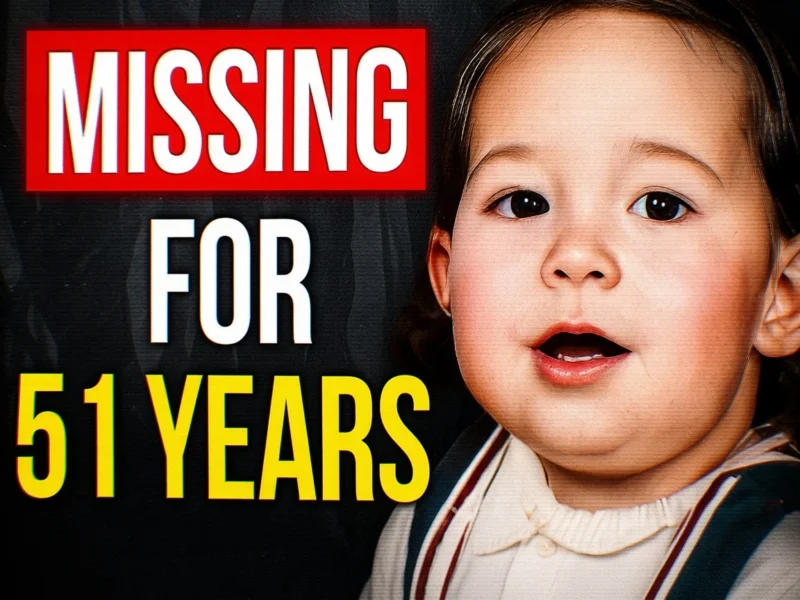
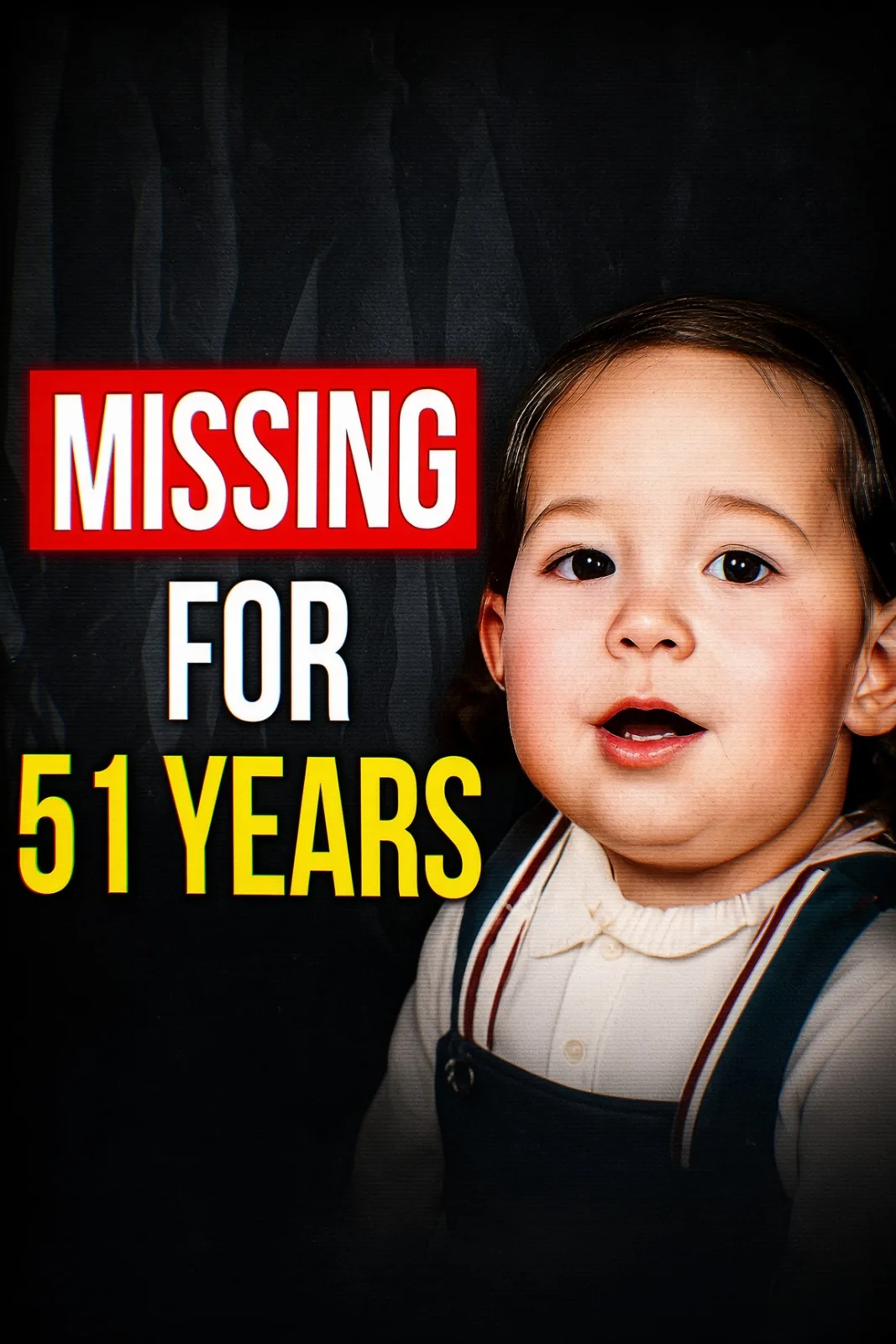
Fifty-one years passed without answers.
Then Melissa’s family tried something that did not exist when she disappeared.
They turned to DNA.
Jeffrey submitted his DNA to 23andMe, a service that matches relatives based on DNA.
In 2022 he got a match.
Based on DNA similarities, a woman named Melanie Miyoko was his daughter.
Jeffrey found her on Facebook and sent a message.
Melanie recounted seeing the message.
“He told me, ‘You know, I’ve been looking for my daughter for fifty-one years.'”
Melanie thought it was a scam, but she agreed to examine the evidence.
One detail stood out.
She realized that she even had the same birthmark on her back that baby Melissa did.
Melanie needed answers, so she confronted the woman who raised her.
“I asked her, ‘Is there anything that you need to tell me?’ And it was confirmed that she knew that I was baby Melissa.”
The woman admitted she wasn’t Melanie’s biological mother, but she swore she wasn’t the babysitter who kidnapped her.
She claimed she found the child on the street.
After fifty-one years apart, Melissa, now known as Melanie, met her biological parents.
She told them all about her life.
Sadly, she didn’t have a happy childhood.
“She never felt loved by the woman who raised her. And it was just really an abusive—abusive until I ran away from home when I was fifteen.”
Melissa survived that difficult childhood.
She grew up, got married, and had three children.
The incredible reunion soon made national news.
“Melissa Highsmith never even knew that she had been kidnapped. But fifty-one years later, she has finally been reunited with her birth parents.”
But one mystery remained.
No one knew the true identity of the babysitter who took Melissa.
It was also unclear how Melissa ended up with the woman who raised her.
Police said the investigation was still ongoing.
However, the statute of limitations for Melissa’s kidnapping expired in 2007, so even if police find the kidnapper, they would probably not face criminal charges.
Louise Albino lived the kind of life most people would call complete.
He served in the military, became a firefighter, and raised a family.
It seemed he had it all, but there was one thing Louise didn’t know.
His wonderful life started with him being kidnapped as a child.
In February 1951, two brothers were playing at a park in Oakland, California.
Their names were Louise and Roger Albino.
Louise was six and Roger was ten.
That afternoon a woman approached the brothers.
She promised to buy Louise candy if he followed her.
Louise wanted the candy, so he followed the woman out of the park.
Roger watched the strange woman lead his little brother away.
He followed them for a short distance, and then he did what most kids would.
He ran home to tell his mom what happened.
His mom, Antonia, rushed to the park, but she was too late.
The woman and Louise were gone.
The mother, Antonia, asked the police for help.
Officers searched the neighborhood but found no signs of Louise.
Louise’s picture was published in the newspaper, and still no useful information came in.
But Antonia never lost hope.
She believed Louise was alive and she would see him again.
She displayed his photo at their family home, and she always kept a newspaper clipping about his abduction in her wallet so she could easily ask anyone for information.
Her determination was so impressive that the local newspaper wrote a story about her.
As the years passed she continued asking for updates.
She went to the police station weekly, then monthly, then eventually annually, but the reunion she dreamed about never happened.
In 2005 Antonia passed away.
It was fifty-four years since Louise disappeared, and she passed away without knowing what happened to her son.
Antonia was gone, but the family never forgot Louise.
As the years passed, a new generation grew up hearing his story.
One of them was Louise’s niece, Alita.
Her mother was Louise’s sister, which meant Alita grew up hearing about an uncle who disappeared before she was born.
In 2020 Alita took an online DNA test just for fun.
She wasn’t searching for Louise, but the results connected her to a man she had never heard of.
It showed she shared twenty-two percent of her DNA with a man living on the East Coast.
That was a very close match, so Alita searched the man’s name and photo online.
She compared his face to her family’s.
“And then there was one picture that he really, really looked like my grandmother. That one kind of gave me chills and I said, ‘No, there’s something here.'”
The grandmother he resembled was Antonia, Louise’s mother.
Alita was convinced that this stranger was her missing uncle, so she took everything she found to the police.
Investigators tracked the man down, took his DNA, and checked.
The results confirmed the truth.
That man was Louise Albino.
Louise was now seventy-nine years old.
Investigators asked Louise what happened after the woman took him.
He didn’t remember clearly because he was a child.
All he knew was that he ended up with a couple on the East Coast.
The couple gave Louise a new name and raised him as their son.
No one told him that he was kidnapped.
Louise went on to build a full life.
He joined the Marines and served two tours in Vietnam.
After leaving the military he became a firefighter, and Louise also started a family of his own.
He became a father and a grandfather.
Once the authorities confirmed his identity, it was time for the reunion.
In June 2024 Louise flew to Oakland to meet his biological family.
Alita was waiting for him.
“It was just hugs and tears, lots of hugs and tears. He hugged me really tight and he said, ‘Thank you for finding me.'”
Alita drove him to see Roger, his big brother, who was with him at the park.
Roger was now eighty-three years old.
The brothers grabbed each other and had a really tight, long hug.
Then they sat together and talked.
Roger spent seventy-three years wondering what happened to his little brother.
Now he finally had his answer.
Two months after the reunion, Roger passed away.
The woman who took Louise was never identified.
No one knows why she took him or how he ended up with a couple who raised him.
In April 1997, a new mother trusted the wrong person for just a few minutes.
It was a decision she would regret for the rest of her life.
Her name was Celeste, and she was at a hospital in South Africa.
She had given birth to her daughter Zephany only three days earlier.
Celeste was exhausted and her baby was crying.
Then a woman dressed as a nurse walked in and offered to help.
The nurse promised to watch the baby while Celeste got some sleep.
Celeste believed the woman worked at the hospital, so she handed over baby Zephany and closed her eyes.
It was only after she woke up that she realized the horrifying truth.
The woman was not a nurse.
She was only dressed like one so she could steal a baby.
Zephany was only three days old when she was taken.
Police searched the hospital and the surrounding area, but they found no sign of Zephany or the woman who took her.
Eventually the case went cold, but Celeste never stopped thinking about her missing daughter.
“That’s heartbreaking. As a mom, you can’t stop thinking about her. Is she okay? Is she loved?”
And every year the family found a special way to keep their hope alive.
They never gave up hope, even celebrating their missing daughter’s birthday every year.
But even as they searched, life continued.
A few years later, Zephany’s parents had another daughter.
They named her Cassidy.
Cassidy grew up knowing that she had a missing older sister.
Seventeen years passed without an answer, but Zephany was alive and growing up.
In fact, she lived only a few miles away.
The woman who took Zephany was named Lavona Solomon.
Lavona desperately wanted a child, but she had experienced numerous miscarriages.
In 1997 she lost another pregnancy, but she told no one.
Lavona kept pretending to be pregnant, and that’s when she went to the hospital and stole a newborn.
When she returned home, Lavona’s husband and family believed the child was hers.
Lavona gave the baby a new name, Miché Solomon.
Miché grew up in a loving home.
She had no idea who she really was.
Meanwhile, her biological sister Cassidy was growing up nearby.
In 2015 Cassidy started attending high school.
Miché was already a student at the same school, a few grades ahead.
Almost immediately, other students noticed something.
Miché and Cassidy looked like twins.
“‘Cause they used to ask us, ‘Are you guys sure you’re not sisters?’ And we used to joke like maybe in another lifetime.”
Soon Miché and Cassidy became close friends.
Neither of them knew they were biological sisters.
One day they took a selfie together.
Cassidy showed the photograph to her parents.
They couldn’t stop staring at the girl beside her.
The resemblance was impossible to ignore.
So Cassidy’s father asked to meet Miché.
When they met, he studied the way she looked and behaved.
The way she spoke, the way she laughed, the way she walked, everything about her was just Celeste.
He asked Miché when she was born.
Miché said her birthday was April 30th, 1997.
That was the exact day Zephany was stolen from the hospital.
Cassidy’s father didn’t tell Miché what he suspected.
He simply went home and called the police.
After seventeen years, the case was open again.
Police began investigating Miché’s identity.
They questioned Lavona, the woman who claimed she gave birth to her.
Officers asked to see Miché’s birth certificate.
The certificate said Miché was born at a nearby hospital, but the police didn’t just accept it as fact.
They went to the hospital to check.
That was when the story started to fall apart.
The hospital had no record of Miché being born there.
Now the police had a serious reason to investigate.
They asked Miché to take a DNA test.
She agreed.
The results came back.
Miché Solomon was actually Zephany Nurse.
Miché was reunited with her biological mother, Celeste.
Celeste was emotional.
“I couldn’t stop crying. I said, ‘Finally, I found you. For seventeen years, I’ve been looking for you.'”
Miché now found herself caught between two families.
After thinking about it, she made a controversial decision.
She chose to stay with the family who raised her.
She also kept the name she grew up with.
Many people didn’t understand her choice, but Miché explained how the situation felt to her.
“I didn’t feel kidnapped. I didn’t feel like I’m missing. I felt like I was supposed to be where I was supposed to be.”
Meanwhile, the police arrested Lavona.
In 2016 she was convicted of kidnapping and sentenced to ten years in prison.
But Miché still cared about the woman who raised her.
So even after learning the truth, Miché still visited Lavona in prison.
Lavona was released on parole in August 2023.
Some of these people spent decades not knowing who they really were, and still they became firefighters, parents, and good people along the way.
Your past isn’t always something you get to choose, but you always get to choose your future.
The birth certificate was the thing, and the thing was the birth certificate, and the birth certificate was a piece of paper that said a name and a date and a hospital, and the paper was a lie, and the lie was a life, and the life was real.
The birth certificate was the thing.
The birth certificate is always the thing.