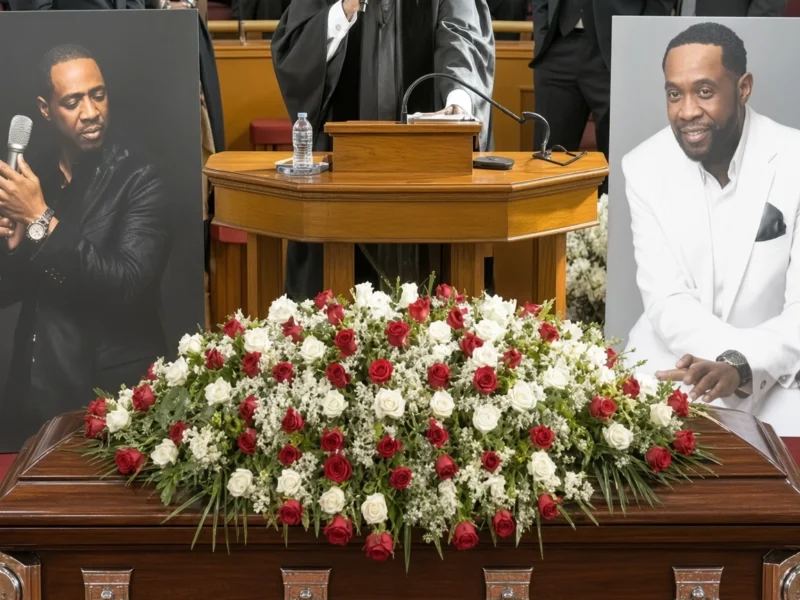
Freddie Jackson’s Celebration of Life & Funeral: Powerful & Emotional Sermon Rev. Dr. Johnnie Green
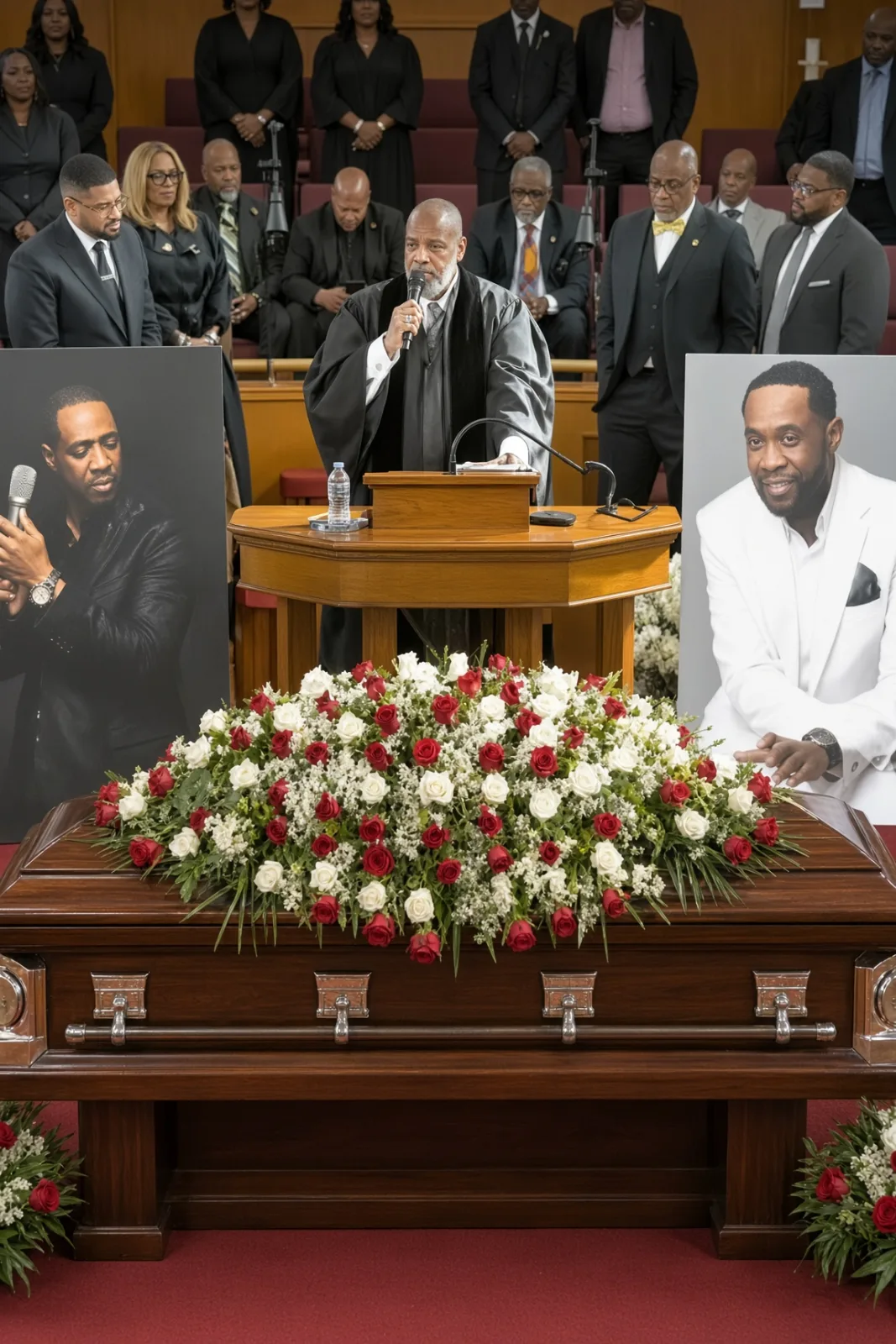
The sanctuary of Mount Nebo Baptist Church in Harlem smelled like lilies and old wood and the faint lemon scent of furniture polish, and every pew was full.
The stained glass behind the pulpit caught the afternoon light and threw red and blue across the floor like a promise somebody made a long time ago.
A program in every hand said Freddie Jackson on the cover, and the photographs inside showed a young man from the fire escapes of Harlem who had become one of the most recognizable voices in rhythm and blues.
But the pastor who stood to preach had known him before the records, before the tours, before the world found out what Harlem already knew.
“God bless you today,” Reverend Dr. Johnnie Green said, and his voice filled the room the way a voice does when it has spent decades filling rooms.
He thanked the worship leader, Reverend Dr. Sean P. Gardner, and the moderator, Reverend Dr. Renee Francis Washington.
Then he turned toward the family. “He was the most famous member of Mount Nebo, hands down,” Green said. “And I love Freddie. Freddie loved me as his pastor. When he come to church, people would ask me if I would ask him the same. And I would say, absolutely not. Because he’s come to worship, and his soul needs to be fed also.”
That was the promise of the afternoon, the debt the sermon would pay: that a famous man still needs a shepherd, and a mother’s prayers still travel further than any tour bus, and a fire escape in Harlem can be as holy as any cathedral.
“Stand with me for the reading of the word of God,” Green said, and the sanctuary rose in one long rustle of coats and Bibles.
“Freddie was a Christian. Someone asked me, ‘What are you going to do with Freddie’s funeral?’ I say, ‘I’m gonna do what I do at every funeral. I’ma preach it.'”
The congregation laughed the way a congregation laughs when the preacher has just told them the truth wrapped in a joke.
“Psalms number 40, verses 1 through 3,” Green said. “I waited patiently for the Lord, and he inclined unto me and heard my cry. He brought me up also out of a horrible pit and out of the miry clay and set my feet upon a rock and established my goings. And he hath put a new song in my mouth, even praise unto our God. Many shall see it and fear and shall trust in the Lord.”
He let the words settle. “This is the word of the Lord for the people of God. Thanks be unto God. You may be seated in the presence of the Lord.”
“I want to look at the first phrase of verse three,” Green said, and he held up one finger like a man flagging down a bus. “It says, ‘And he has put a new song in my mouth.’ And from that I want to tag this text and talk with you for just a few minutes from the subject: Freddie sang your new song.”
He looked out over the sanctuary. “Look at a neighbor. Look them squarely in the eye and tell them, ‘Neighbor, the preacher’s preaching today from the idea that Freddie sang your new song.'”
The sanctuary murmured and shifted, and somebody near the back said amen.
“I wanted to begin my eulogistic reflections today, brothers and sisters, by saying there are some voices that you hear and you immediately recognize. There are some voices that need no introduction. There are some voices that possess such distinction, such richness, such beauty and such unmistakable quality that the moment they begin to sing, you know exactly who they are. You don’t need an announcer. You don’t need a television screen. You don’t need somebody to tell you whose voice you are hearing. All you need is the sound. And for generations of music lovers around the world, one of those unmistakable voices belonged to a young man who grew up right here in the village of Harlem.”
He paused. “You all know him as Freddie Jackson.”
“As we come to celebrate today his remarkable life and career, let me submit to you, Freddie was more than a singer. He was more than an entertainer. He was more than a recording artist. He was a musical phenomenon.”
The church said amen.
“Let the church say he was a musical phenomenon. It was a musical phenomenon whose voice, madam moderator, became the soundtrack of love, the soundtrack of romance, relationships and celebrations and unforgettable moments in the lives of millions of people. His music accompanied couples as they fell in love. His songs filled the air at weddings and anniversary celebrations. His melodies brought comfort to broken hearts, and his unmistakable voice created memories that would last a lifetime. For some people, his music was the background music of their first date. For others, it was the music of their first dance. For still others, it was the music that helped them express feelings they could not find the words to communicate.”
He looked at the congregation. “You would agree with me, wouldn’t you, that Freddie had a remarkable gift? He could take an ordinary love song and make it extraordinary. He could take a simple melody and turn it into a masterpiece. He could sing about love in such a way that people who had never experienced love wanted to find it. And people who had lost love wanted to experience it again.”
Somebody laughed, and somebody else said amen. “Look at your neighbor and tell him, ‘I know what he’s talking about.'”
“But today, brothers and sisters, we have gathered for something far more significant than a concert,” Green said, and his voice dropped into that lower register where preachers keep the truth. “We’ve gathered to celebrate a life. We’ve gathered to honor a legacy. We’ve gathered to remember a son. We’ve gathered to remember a brother, a friend, a neighbor, an uncle. Somebody talk back to me. We’ve come to celebrate a church member and one of Harlem’s most celebrated musical treasures. And while our hearts are heavy because his earthly voice has been silenced, I want you to know our faith reminds us that death may silence a singer on earth, but it cannot silence the song of the redeemed in heaven.”
The church stood up in its own way, the way a church does, with amens and hands and the creak of pews.
“I want to suggest to you today, ladies and gentlemen, that Freddie Jackson’s musical journey did not begin in a recording studio. It didn’t begin on a concert stage. It didn’t begin under the bright lights of the Apollo Theater. It did not begin with a recording contract. Freddie Jackson’s musical journey began in the church.”
He let that land. “Are y’all going to help me here? And not just any church in Harlem. It began right here at the Mount Nebo Baptist Church in Harlem, New York. When the church was located on 8th Avenue and 127th Street, long before Freddie Jackson became a household name, there was a woman by the name of Wanita Jackson. Around here on these hallowed grounds, we called her for years Mother Jackson.”
The church said amen before he even asked. “Let the church say amen for Mother Jackson. She was the mother of our church until the Lord called her home and she moved upstairs. Mother Jackson was a woman of faith. She was a woman of prayer. She was a woman who loved her family and raised her children up in the fear and the admonition of the Lord. She didn’t send them to church. She brought them to church.”
The amens came faster now. “She loved her church. She loved the members of the church. She loved all of her pastors that she served under. She loved William Daniel Gardner. She loved Richard Watkins. And she loved Johnny Green. And I had the same responsibility of eulogizing her as I have for Freddie today.”
He smiled. “Everybody shout, ‘Mother Jackson.'”
“Mother Jackson was a faithful member of Mount Nebo Baptist Church where she lifted her voice in the choir singing praises unto Almighty God,” Green said. “She understood something about the verse that says, ‘Let the redeemed of the Lord say so.’ And there’s a beautiful story connected to Freddie’s entrance into this world. His sister Pat told me the other day when I was talking to her, soliciting information from her. She said, ‘One Sunday morning, Mother Jackson came to the church for worship. She joined the choir, lifted her voice, she sang praise to the Lord.'”
The preacher paused and looked out over the sanctuary like a man about to set down something heavy. “Lord, y’all help me preach today. And after singing in the house of God that Sunday morning, she went home and went into labor. And soon thereafter, she gave birth to a baby boy who would one day become one of the most celebrated voices in rhythm and blues music.”
The church made a sound like a wave breaking. “Can you imagine that? Try, just for a moment, to wrap your mind around that. A mother singing praises to God on Sunday morning, not knowing that the child she was carrying would one day sing before audiences around the world. She had no way of knowing that the baby boy she was about to deliver would become a music icon.”
He looked at the congregation. “Go on and touch your neighbor and tell him, ‘There is no secret what God can do. What he’s done for others, he’ll do the same thing for you.’ Have I got a witness here?”
“She had no way of knowing that the little boy she would raise in Harlem would one day stand on stages around the world,” Green said. “But I believe there is something beautifully providential about that story. Pat, before Freddie ever sung a song, his mother was singing praises to God. Before Freddie ever held a microphone, his mother was lifting holy hands in the sanctuary. Before Freddie ever received applause from an audience, his mother was giving glory to Almighty God. And I submit to you today that there is something significant about a life whose earliest memories were surrounded by the music, the prayers and the praises of the church.”
He raised one hand. “From the church choir to the fire escape of their tenement apartment. Freddie began singing at an early age. Like so many great African-American singers, his musical roots were planted in the fertile soil of the black church. My good brother and social justice mentor, Reverend Al Sharpton, always talks about the importance of knowing your roots. Some of you all won’t last because you don’t have roots. You just pop up.”
The church laughed. “Have I got a witness here? And when you don’t have no roots and you just pop up, anything can wipe you out. But when you have roots—somebody shout, ‘You need roots.'”
“Freddie knew the importance of his roots,” Green said. “He was spiritually rooted in this church. Even after becoming a global icon, his mother and sisters reminded him often that the people were his fans.”
He held up a finger. “Catch that. Don’t miss that. The people were his fans, but we are your family.”
The church said amen. “You know how it is sometime when God is elevating you, you forget everybody ain’t your fan. Have I got a witness here? They were his family. Look at your neighbor and tell your neighbor, ‘Freddie had a family.’ Come on, tell them again. Freddie had a family. He knew his roots. He sang in the children’s choir, learned the songs of Zion, listened to the choir, heard the hymns. He experienced the power of gospel music and the church. Dr. Sean Gardner helped cultivate a gift that would eventually bless the world.”
“But Freddie didn’t confine his singing to the sanctuary,” Green said, and the room leaned in. “He took his music to the streets of Harlem. Grew up in a neighborhood where apartment buildings stood close together, where neighbors knew one another, where families looked out for each other. I wish we could get back to the old way, where fire escapes became gathering places during warm summer afternoons. Anybody here know what I’m talking about? And young Freddie would make his way out onto the fire escape of his apartment building and begin to sing. Now you have the picture, don’t you? There was no expensive sound system, no professional microphones. There were no backup singers. Help me somebody. No flashing lights, no sequined outfits, no orchestra. There was just a young boy from Harlem with a God-given voice. God had to give Freddie that voice. And when Freddie started singing, something remarkable happened. Women in the neighboring apartment buildings would come out on their fire escapes. Some would be hanging clothes on the clothesline. Others would be sitting outside enjoying the afternoon breeze. And when they heard Freddie singing, they would stop what they were doing and listen.”
The church was quiet now, the way a church gets quiet when the preacher is painting a picture everybody can see. “And sometimes those women would call across the courtyard and request a particular song. ‘Freddie, sing that song again. Freddie, sing something for us.’ And that little boy would oblige. And with his legs hanging and dangling through the bars of the fire escape, Freddie would start to sing. Long before he performed before sold-out audiences, Freddie was performing for the women of Harlem. Long before he received standing ovations in concert halls, he was receiving applause from apartment windows and fire escapes. Long before the world discovered Freddie Jackson, Harlem already knew that boy could sing.”
“And isn’t that something, church?” Green said, and his voice began to climb. “God began developing a great gift in the most ordinary places. He can do it, church. How many of you know today that God can take an ordinary person and make somebody extraordinary? I need the Bible to help me here. Moses was ordinary. Moses had a speech impediment. Moses had a wilderness, but God gave him a marching army. David had a pasture. Joseph had a prison. And Freddie had a fire escape. What is that tailored to teach us? That’s tailored to teach us that you ought not ever despise small beginnings. Don’t judge people too soon because you don’t ever know what God is going to do with them. Be careful who you talk about. Be careful who you laugh at. Be careful who you make fun of. Have I got a witness here? You don’t know what God is in the process of doing. Somebody shout, ‘He keeps on doing great things.’ Have I got a witness here?”
“Freddie went from Harlem to the world,” Green said, and he began to name the songs like a man counting his blessings. “Eventually, that young boy from Harlem would become an international recording star. His extraordinary voice produced songs that became classics in the world of rhythm and blues. Who could forget ‘Rock Me Tonight (For Old Times Sake)’? A song that helped introduce his remarkable voice to the world. Who could forget ‘You Are My Lady’? A beautiful declaration of love that became one of his signature recordings. Who could forget ‘Have You Ever Loved Somebody’? A song that gave expression to the joys and complexities of love. How many of you know sometime love is complex? How many of you can remember ‘Jam Tonight’? A recording that brought energy and excitement to audiences everywhere. ‘Tasty Love.’ Come on, somebody. Don’t act like you’ve been in church all your life. Some of you all are so heavenly minded, you are no earthly good. Hunt your neighbor and tell them, ‘Loosen up a little bit. This is Freddie Jackson’s funeral.'”
The church laughed and clapped and somebody near the front sang a few bars of “You Are My Lady” and the sanctuary swayed.
“How can we forget ‘Nice and Slow’?” Green said. “What about ‘Hey Lover’? Oh, I’m going to get y’all with this one. ‘Do Me Again.’ Preach, Johnny Green. I’m doing the best I can. Y’all just not saying nothing. Come on a little closer. A song that continued his remarkable recording success. Those songs helped define an era, became a part of the soundtrack of a generation. Freddie’s music crossed geographical boundaries, cultural barriers, and generational divides. He sang in cities across America and traveled internationally. You know this to be true, Pat, because you was with him, sharing his remarkable talent with audiences who loved his music. Go on and raise your hand and tell somebody, ‘I loved his music too.'”
“Whenever he went, wherever he went, he carried something of Harlem with him,” Green said, and his voice softened. “Carried the musical influence of the church. Carried the prayers of his mother. Carried the memories of his childhood. Carried the sounds of the neighborhood where his musical journey began. And although he traveled the world over, there was one place he never completely forgotten: Mount Nebo Baptist Church. Freddie was the son who came back home. Have I got a witness here? One of the most moving chapters in Freddie’s life was written during the last year of his earthly journey. For all the places he had traveled, all the stages upon which he had performed, and for all the recognition he had received, Freddie found his way back home. Back to Harlem, back to his roots, back to the church where his mother had worshiped, back to the sanctuary where his musical journey began. And during the last year of his life, it became increasingly common to see Freddie sitting in Sunday morning worship here at the church in his mother’s seat. Sat on the same row, the same seat where his beloved mother, Mother Jackson, had faithfully worshiped until the Lord called her home. She had occupied that seat with dignity, devotion, and faithfulness. And now her son, the internationally acclaimed recording artist, had returned to occupy the place where his mother had worshiped.”
“What a beautiful picture, church,” Green said, and he let the silence do its work. “The little boy who once watched his mother sing in the choir had become a grown man sitting where his mother once sat. The young man who had left Harlem to share his music with the world had returned to the sanctuary where his mother had prayed. The musical star had come home. And I want to tell you something: there’s something about the prayers of a mother that will follow you wherever you go. Look at your neighbor and tell them, ‘My mother prayed for me. Had me on her mind, took the time to pray for me.’ She prayed for Freddie when he traveled across the ocean. She prayed for Freddie when he stood before kings and queens. Prayed for Freddie when he received awards and recognition. You can have a name illuminated on marquees, but you can never travel beyond the reach of your mother’s prayer. And I believe that when Freddie sat in that familiar seat, he was surrounded by memories. Memories of his mother, memories of his childhood, memories of his days in the youth choir, memories of the church that helped shape his life.”
“That brings me to our text, and I’ll be finished in just a minute,” Green said, and the church laughed because they knew he was not going to be finished in just a minute. “Our text comes from one of the most beautiful psalms of thanksgiving in the Bible. Psalms 40 is attributed to David. It is the testimony of a man who had experienced trouble, distress, uncertainty, and divine deliverance. And don’t act like Freddie had no troubles in his life. Somebody shout, ‘Trouble get in my way.’ I have to cry. Sometimes I lay awake at night, but that’s all right, because I know Jesus is going to fix it after a while. Can you high-five your neighbor and tell them, ‘Jesus is going to fix it’? Tell them, ‘I don’t care what you’re going through, he’s going to fix it. I don’t care what sickness you suffer from, Jesus is going to fix it.’ Somebody might want to ask you, ‘How do you know he’s going to fix it?’ Respond to him by saying, ‘He fixed it for me.’ And if he fixed it for me, he’ll fix it for you. Have I got a witness here?”
“But David also knew what it meant for God to hear his prayers,” Green said. “And when David looked back over his life and considered what God had done, he declared, ‘He has put a new song in my mouth, even praise unto our God.’ Now, the question we must ask is, why did David say that God had put a new song in his mouth? I’m glad y’all are asking good questions. What happened to David in his life that caused him to sing differently? What had God done that produced this new melody? The answer is found in the first three verses of this psalm. David’s new song was not the result of favorable circumstances alone. His new song was the result actually of divine intervention. He cried and God heard his cry. I wonder today, is there anybody here who knows that God will hear your cry? You see, God had heard David when he cried, and he heard Freddie when he cried. Do you hear what I’m saying? And after experiencing the delivering power of Almighty God, David couldn’t remain silent. He had to start singing.”
Green paused and looked out over the sanctuary, and the light through the stained glass had shifted from red to gold. “He’s been singing his songs. But the last few years of his life, he struggled and became the face of the kidney foundation. Do I have any? And I know there were many nights when he must have prayed, ‘Lord, touch my kidney.’ Do I have a winner? But somebody might be saying, ‘God did not answer his prayer.’ But I beg to differ with you. God answered his prayer. Do I have a witness? God didn’t give him a new kidney. God gave him a new home.”
The church rose to its feet, and the sound of it was like a river coming up over its banks.
Green stepped back from the pulpit and lifted both hands, and the choir came in behind him, and for a moment the sanctuary of Mount Nebo Baptist Church held the whole afternoon like a cup holds water.
The program in every hand said Freddie Jackson, and the photographs inside showed a young man from the fire escapes of Harlem, and the preacher had just told the church the only thing that mattered: that a mother’s song had followed her son all the way home, and that the new song in Freddie’s mouth had been the old song in his mother’s heart, and that God does not always give you a new kidney, but God will always give you a new home.









